By: London Williams

Barbie has been loved for many generations. She’s the plastic doll we’ve all grown to love. She’s fantastic, and so is this film! ‘Barbie’ came out this past Summer on July 21, 2023. Competing alongside “Oppenheimer” as one of the year’s most anticipated movies. This movie has made over 1.34 billion at the Box Office (for the US) just so far! Barbie jumped out of her box and has been crushing it at the box office ever since the release of this film! The feeling after watching ‘Barbie’ is unlike any movie I’ve ever seen. This movie is so charming and nostalgic. It has you thinking about it long after watching. It manages to have a perfect balance of relatable, real-life issues while keeping its innocent, humorous, and lighthearted approach.
The plot of Barbie is pretty simple; Barbie has an existential crisis and goes to the real world to figure out why her perfect life seems to be falling apart. Ken tags along, and they both go their separate ways in self-discovery. Barbie runs into the mother-daughter duo that has the answers to all her problems, while Ken is convinced that the real world is run by men. (Which of course, makes him go back to Barbieland to make a world full of Mojo Dojo Casa houses and horses.) This movie perfectly handles the topic of equality. After Barbie goes back to Barbieland and sees what Ken has done she is torn and devastated, things didn’t go well in the real world, and now Barbieland is falling apart too. It feels like the “man vs. woman” situation Barbie felt in the real world. The way Barbie feels is clear and relatable for women while being easy to understand and empathize with for someone who couldn’t personally relate.
I believe that the casting for the movie was perfect. Margot Robbie and Ryan Gosling did a fantastic job capturing their roles. It felt like Barbie and Ken came to life by how their humanization was portrayed. Robbie and Gosling took one-dimensional characters and gave them more depth and life. Margot Robbie and Ryan Gosling are already extremely beloved actors. That’s another reason I think the casting is perfect. Who wouldn’t want to see the latest Margot Robbie or Ryan Gosling film? ‘Barbie’ also features many other well-known actors, including; Will Ferrel (as Mattel CEO), Michael Cera (as Alan), Dua Lipa (as Mermaid Barbie), and John Cena (as Male Mermaid), and that’s just to name a few! The casting for all the Barbies and Kens was epic, to say the least. It felt like every time I blinked there was an actor that I recognized. They even got Nicki Minaj and Ice Spice to create the song “Barbie World”! After that song came out, it was everywhere. I found myself having the song stuck in my head before and after finishing the movie. The release of “Barbie World” was one of the perfect buildups for the premiere of this film. Some would say it was also a “full circle” moment for Nicki Minaj since she frequently associates herself with the character. The song is also great as a standalone track that worked great with the end credits of the film. Who wouldn’t want to see this exceptional movie?
I found the maturity rating for this movie very interesting. It’s definitely PG-13, but I noticed people being confused that a Barbie movie would be rated PG-13 instead of just PG. When I went to see this movie, there was an abundance of very small children walking in. This made me wonder about its advertising approach. This could just be parents assuming it was PG or just not caring if their 7-year-old sees a PG-13 movie; which definitely isn’t abnormal, but I thought it was worth noting. When I mentioned Barbie to a few adults in my life, they actually made comments about how they were surprised about the rating. After actually watching Barbie, it’s clear why it’s rated how it is; one very subtle sex joke, its mentions of death, and its topics of womens rights and equality. It feels like Barbie was in between PG-13 and PG, and they went with PG-13 to be safe.
This movie has many beautiful moments. A notable one is when Barbie is sitting on a bench in the park by an older woman. She tells the woman that she is beautiful, as she is crying. Barbie realizes how beautiful people and the world are. Barbie is seen by a lot of people as a vision of the “perfect woman” who lives a “perfect life”. When Barbie sees the real world it makes it clear that it isn’t true. Nothing is perfect and that is what is beautiful. Things aren’t as simple as Barbie had originally thought. Beauty is all around us, and Barbie makes us realize that. Barbie truly is a beautiful experience you don’t want to miss!

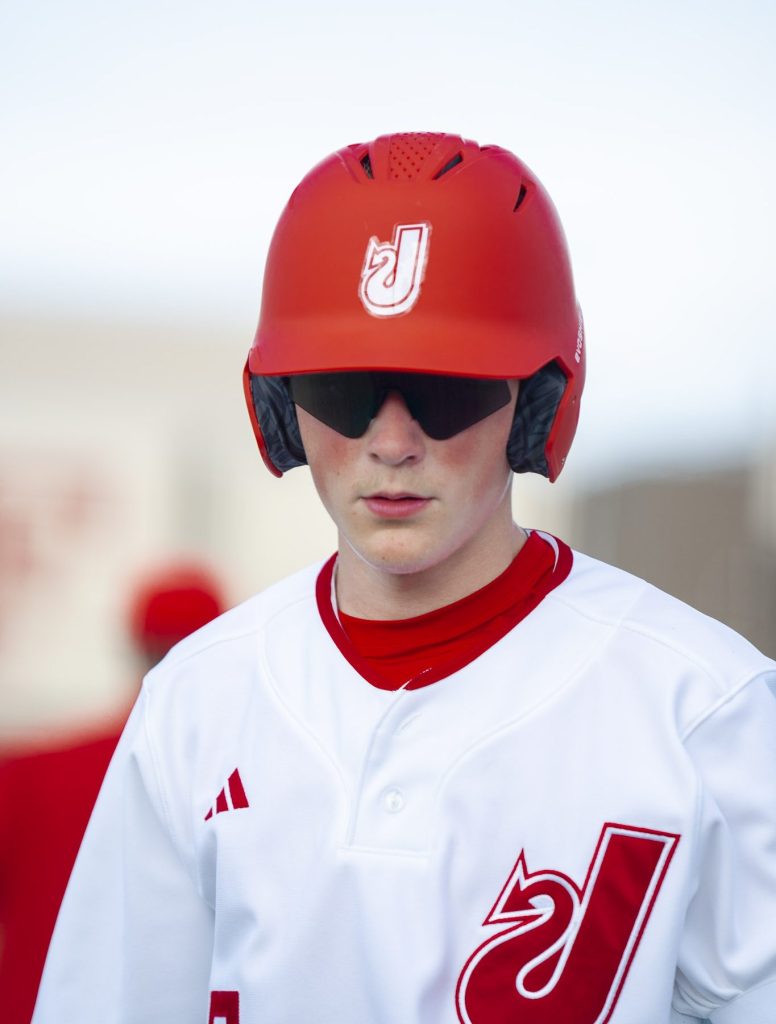
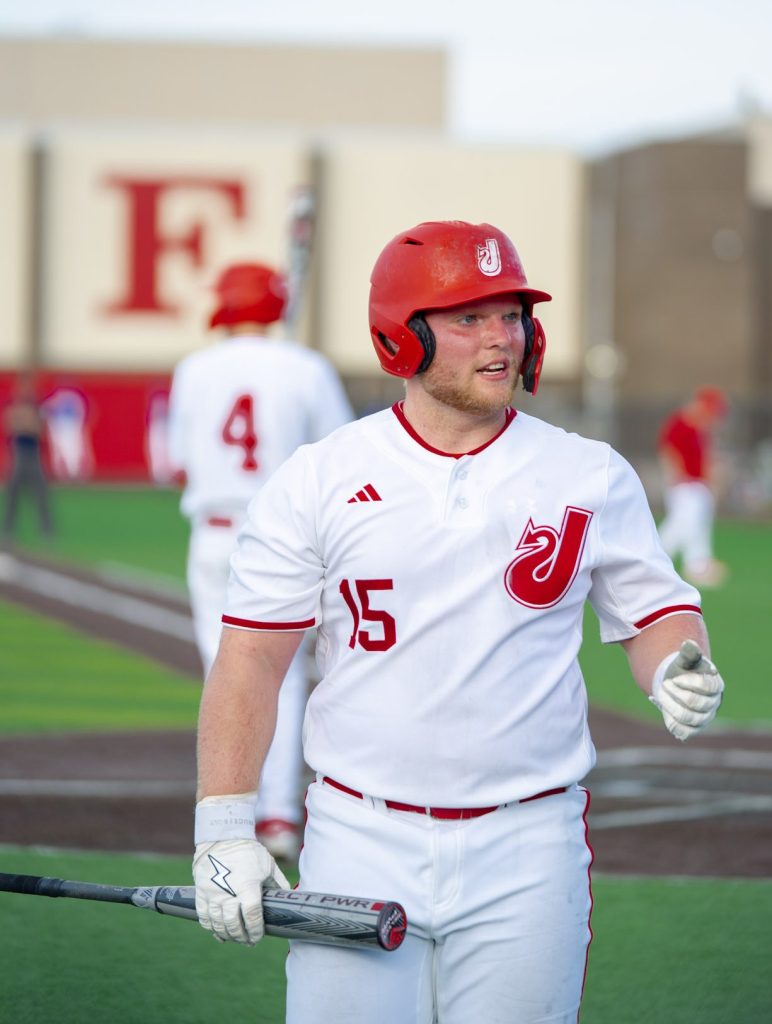
Baseball team wraps up trio of games, will face Columbus North tonight
All photos by Parker McCloskey and Magdalene Conrad. Click on each image to view each photo in the gallery below.










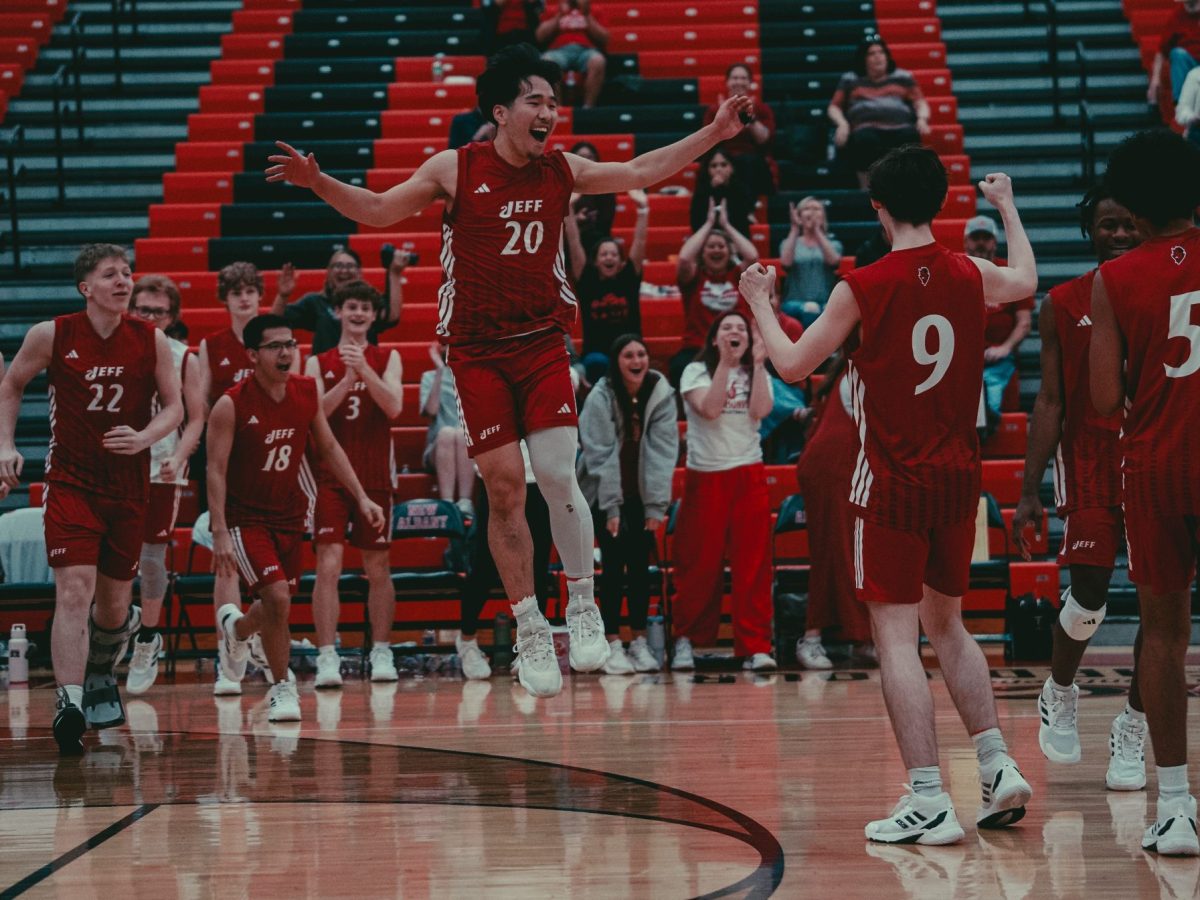
JHS defeats New Albany in volleyball last night
Red Devils face Columbus North Thursday
All photos by Malachi Conrad. Click on each image in the gallery below to view the photograph.



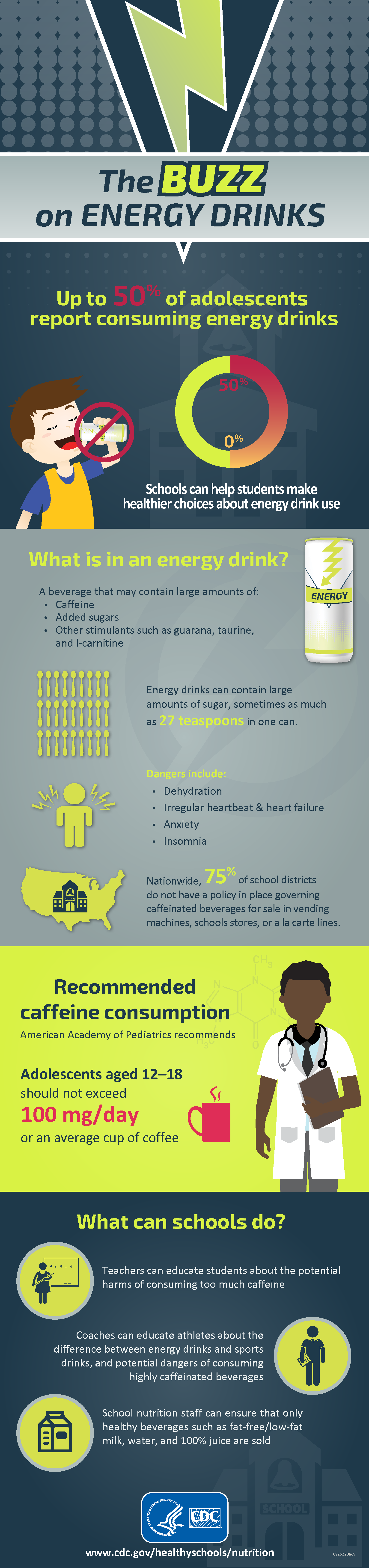
High caffeine energy drinks linked to negative health effects
by Jackson Anderson
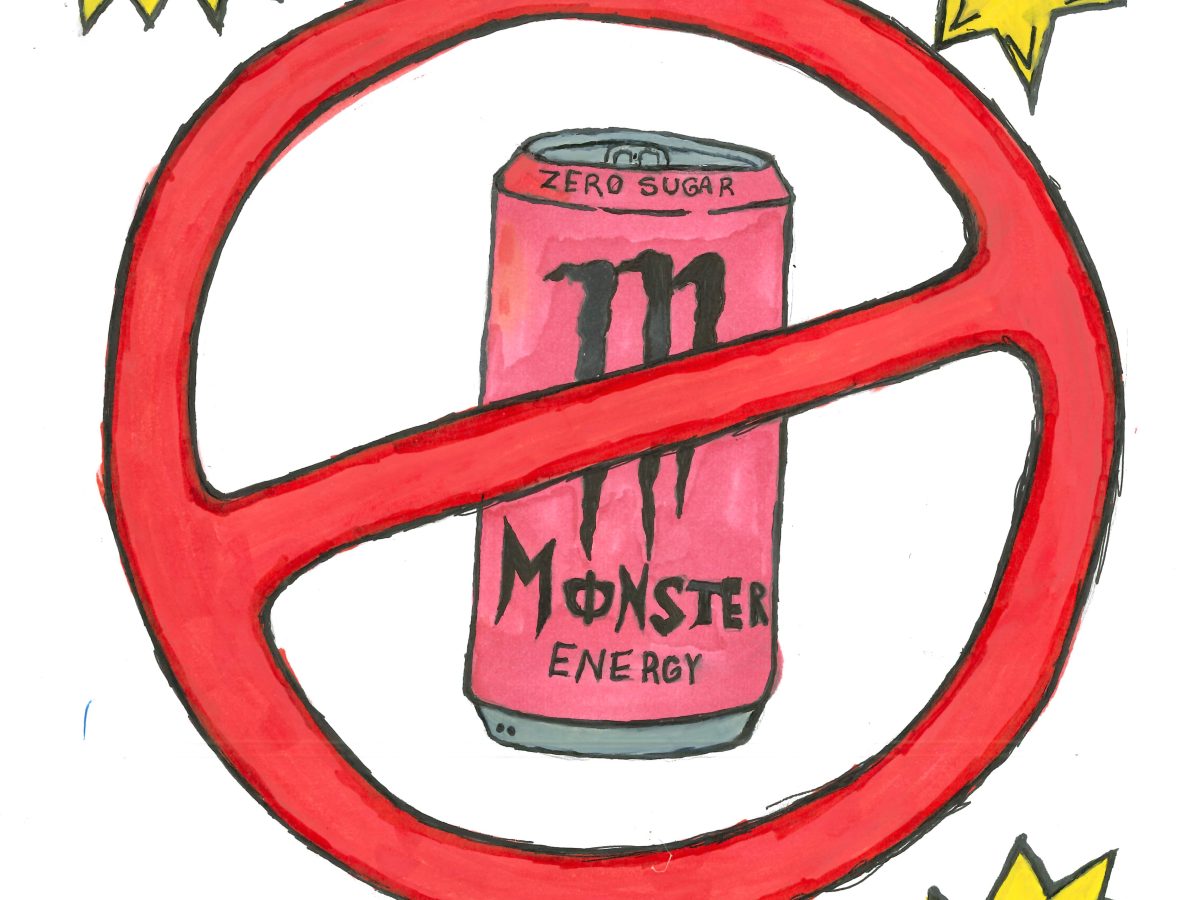
While energy drinks have been popular among students, side effects have been a concern for teachers, nurses, and parents.
The popularity of high caffeine and sugar drinks worries many parents and teachers, including nursing assistant Donna Poole, who described the side effects she sees working in the JHS health office.
“All of these things can be side effects — high blood pressure, mental health. You can have anxiety, irritability, restlessness — all of those things can be affected by too much caffeine,” she said.
Poole said these side effects can be activated by consuming energy drinks on a daily basis. This excessive amounts build up a negative dependency in human systems.
“If you drink them on a daily basis, you are building up a dependency. So then if you don’t have them, like I said, you’re going to get side effects — headaches, not feel good. You’re going to be lethargic,” she said.
Abusing the consumption of these drinks can highly affect children’s growth, restricting bone acquisition and causing hormonal imbalances due to the high caffeine and sugar levels that energy drinks carry.
“It’s better if you can just not get to that situation, where you are dependent. Everyone has to make their own decisions about that; we just need to be educated on what it’s doing to us,” said Poole.
The American Academy of Pediatrics warns these drinks can be harmful and addictive, increasing the risk of excess weight gain, cavities, heart disease, diabetes and fatty liver disease.
These energy drink companies just market their products as fun drinks with bright colors with trendy styles and formats, designed specifically to attract teenagers, according to The Guardian. Poole described these advertising techniques as a negative way to hook teenagers.
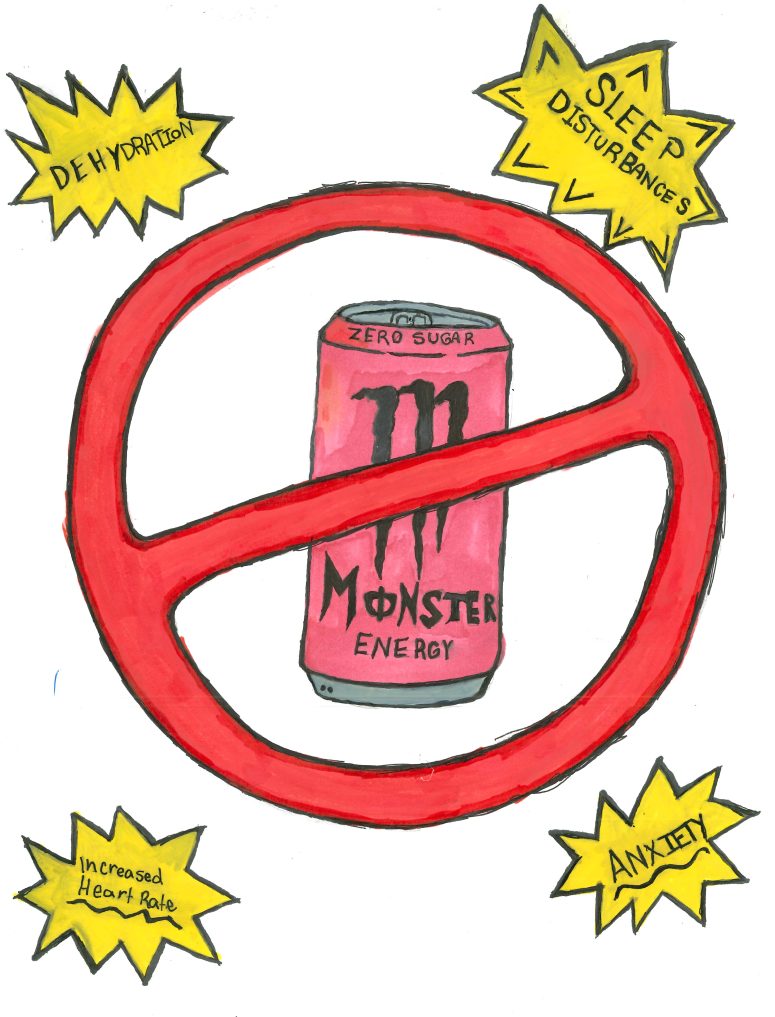
“They package them to target kids; they make them look good. They make you want them, so I mean it’s just that we need some healthier alternatives.”
Sophomore Makenzi Middleton said she drinks energy drinks, listing a variety of flavors, and described how the brand Alani listens to their consumers.
“One reason why I really like that brand is because they listen to people’s ideas a lot, like people will talk about ideas they like, and then you might see it coming out. Like the cotton candy energy drinks were limited, and people wanted them back, so they brought them back, as well as two other flavors,” she said.
The company Alani creates new flavors based on consumer recommendations. However, Poole finds even these tactics to be a problem — “tricking teens” to buy their product that is advertised to be positive and give a “quick boost of energy,” but still doing damage.
“I just hate to see the damage that’s being done by energy drinks. Personally, I don’t think kids should be allowed to buy them, but they’re going to get them anyway. I mean that’s how kids are, we always find a way, doesn’t matter if you’re supposed to or not,” she said.
Poole explained that educators and health officials still make it known that energy drinks carry dangers and the effects that they can cause, especially to young audiences.
“You live and learn. I do know everybody here is concerned and knows the dangers, the teachers and the staff know the dangers for kids,” she said.
There is no federal legal age requirement for teens to purchase energy drinks in the United States. While no national law exists, both the American Academy of Pediatrics and the Center for Disease Control and Prevention (CDCP) recommend that adolescents from ages 12-18 limit their caffeine consumption to 100 milligrams per day.
These drinks hold a dangerous level of caffeine, all the way up to 200-plus milligrams. For comparison, the average cup of coffee is 80-120 milligrams. That’s about less than half the usual energy drink
It is highly recommended for consumers to drink one a day maximum, considering the average intake of caffeine in a day should be around 100 milligrams, which is far less than many cans hold.
AP biology teacher Melissa Brewer supported limiting caffeine, saying, “You’re not supposed to have that much caffeine maybe in a whole day, but I see kids drinking two or three of those a day.”
Coffee may be better slightly statistically than an energy drink, but Brewer said teens must be wise with the amount and consistency they drink to avoid addiction.
Poole agreed. “I like my coffee a lot, but your brains are still developing, so it affects you all more. A lot of these kids, they drink so much of it, they really feel the effects of it, so I mean everybody has to use their own everything in moderation.”
For senior Natalie Hollins energy drinks are something she can control on a daily basis.
“I consume energy drinks because they give me a boost through days that I’m tired or having a bad day, but I don’t drink them as often as I used to, so l’d say maybe twice a week.”
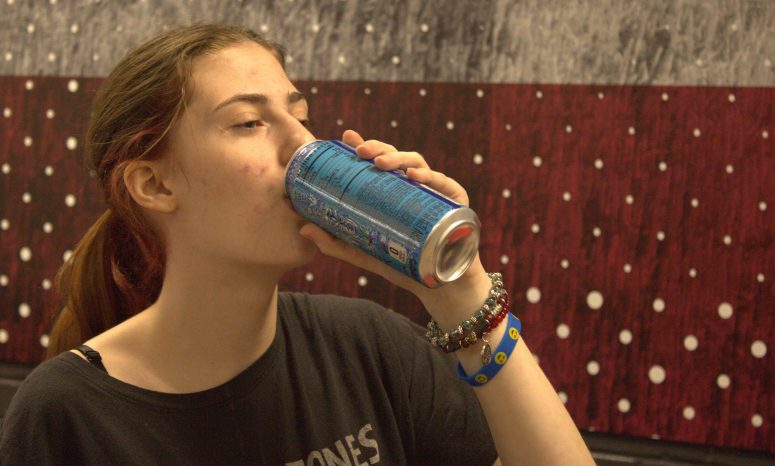
While some teens control their energy drink intake, others avoid the drinks altogether.
Sophomore Ethan Jenkins said, “I don’t consume energy drinks because it can ruin your sleep schedule, it’s unhealthy and for some even unsafe for your heart and blood sugar levels. I wouldn’t try one — it seems too dangerous and not worth it at all.”
Sophomore Dana Romero Regalado said she has noticed these side effects, too.
“At times, I have experienced side effects such as feeling jittery, an increased heart rate, and difficulty falling asleep if consumed later in the day.”
At the end of the day, research links energy drinks and caffeine to negative health effects, which is why JHS does not sell them at lunch and stocks vending machines with lower calorie drinks that are all zero sugar.

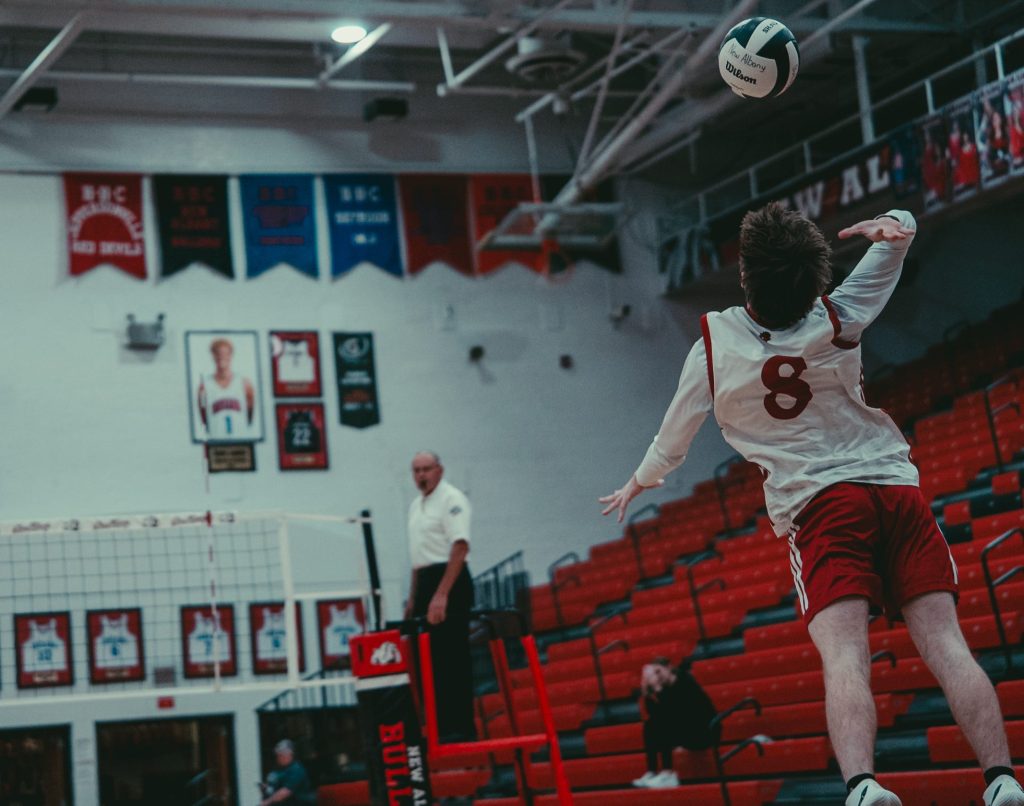
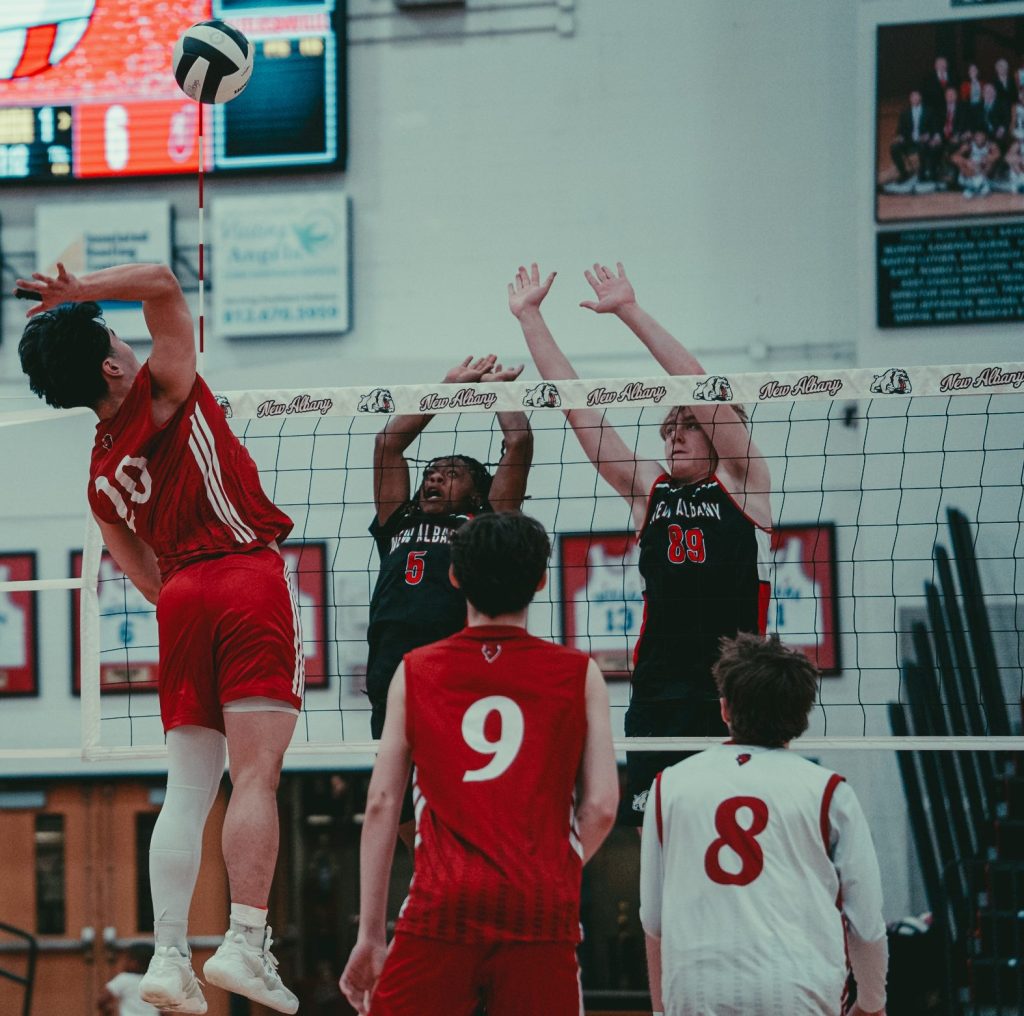
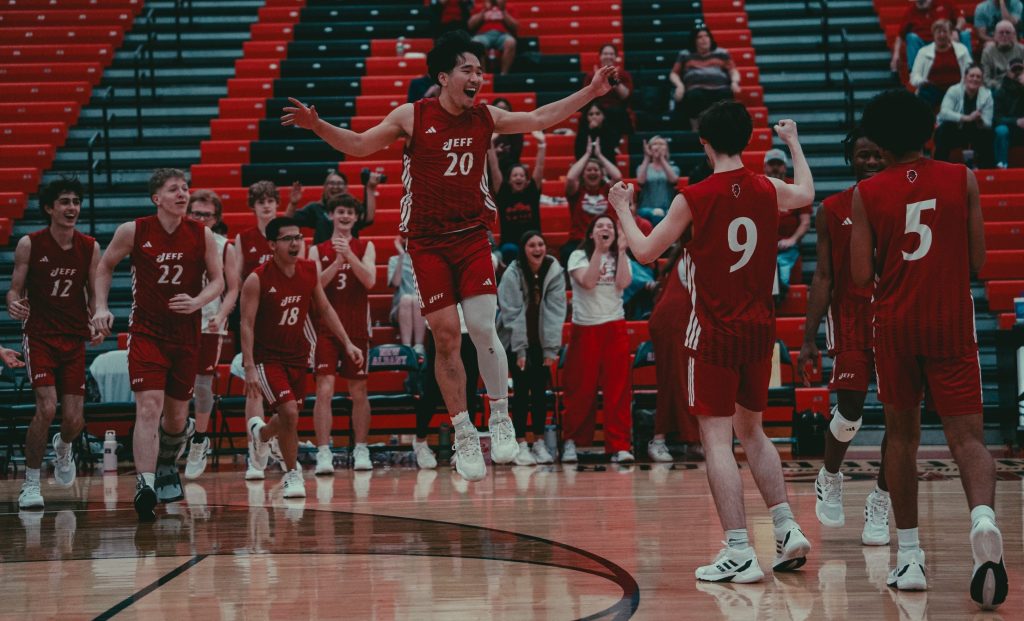
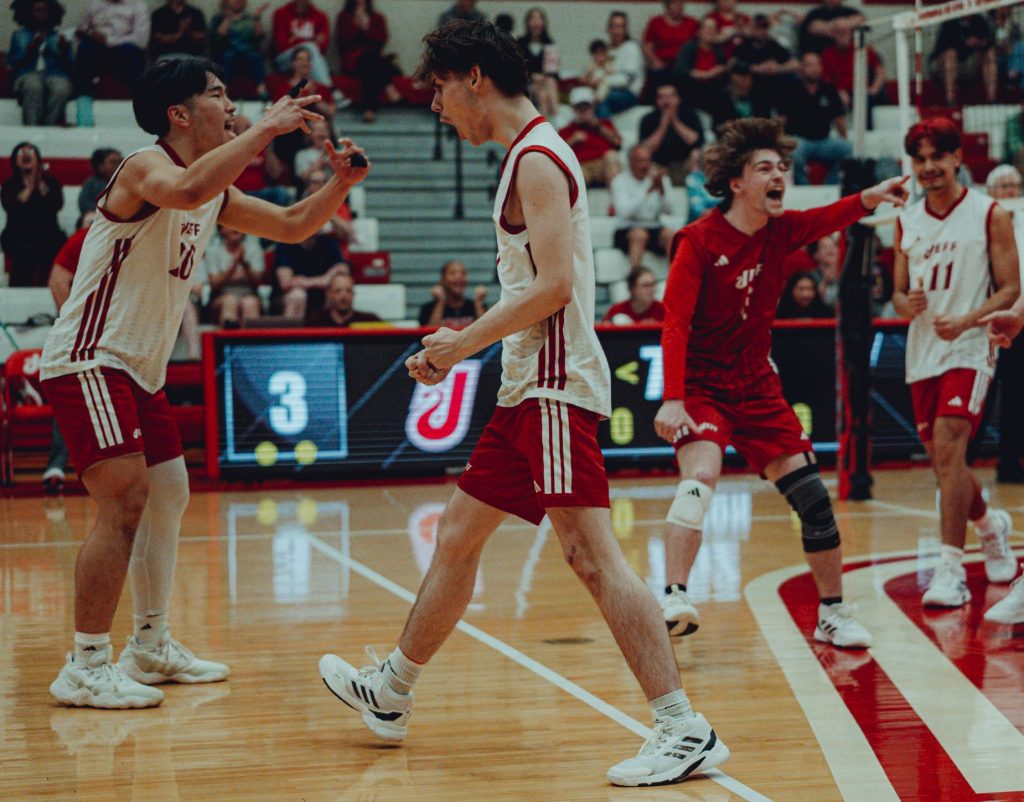
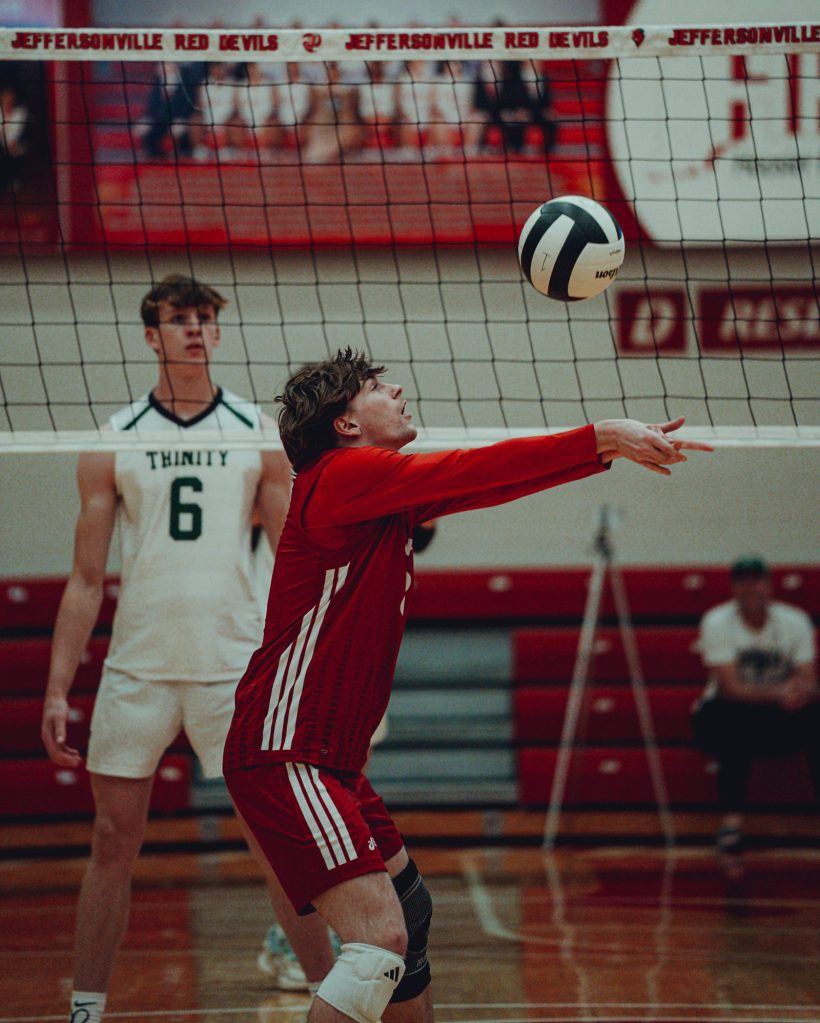
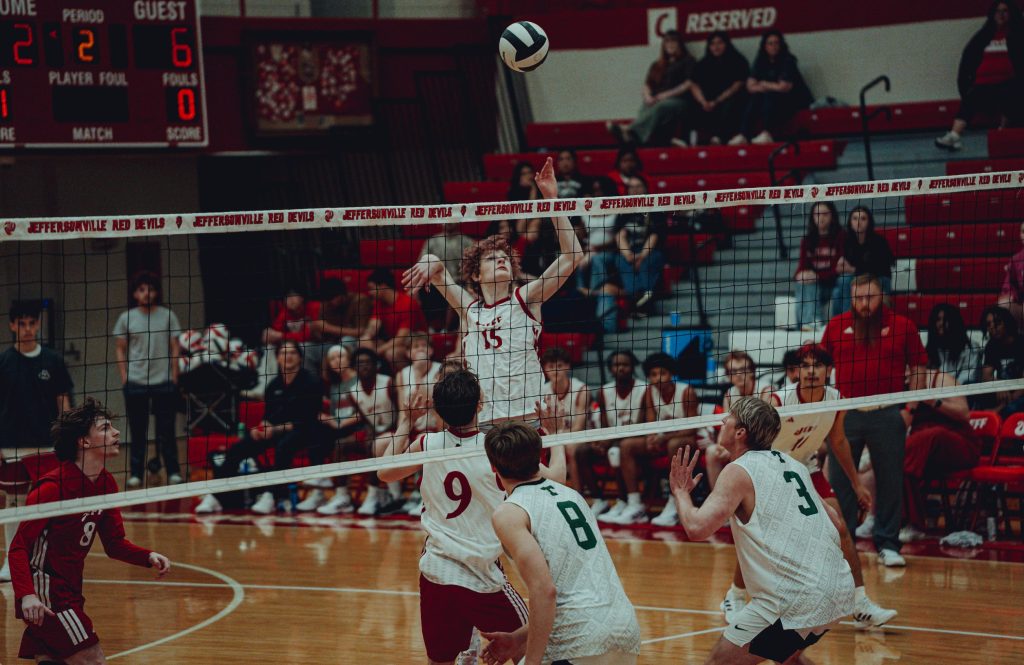
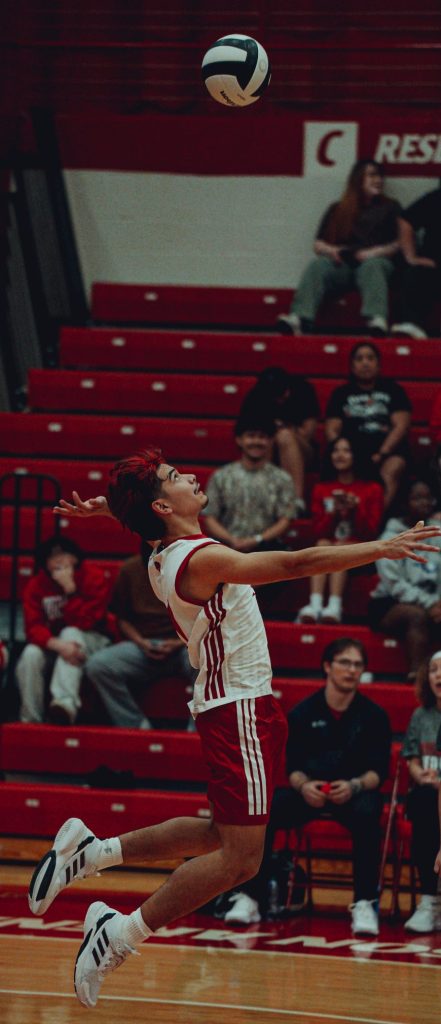
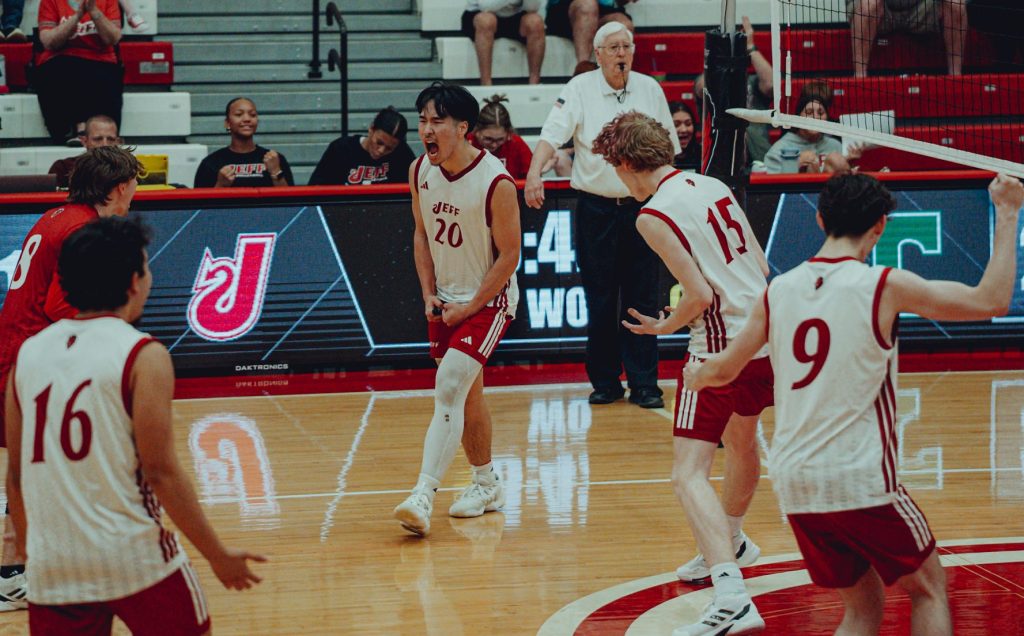
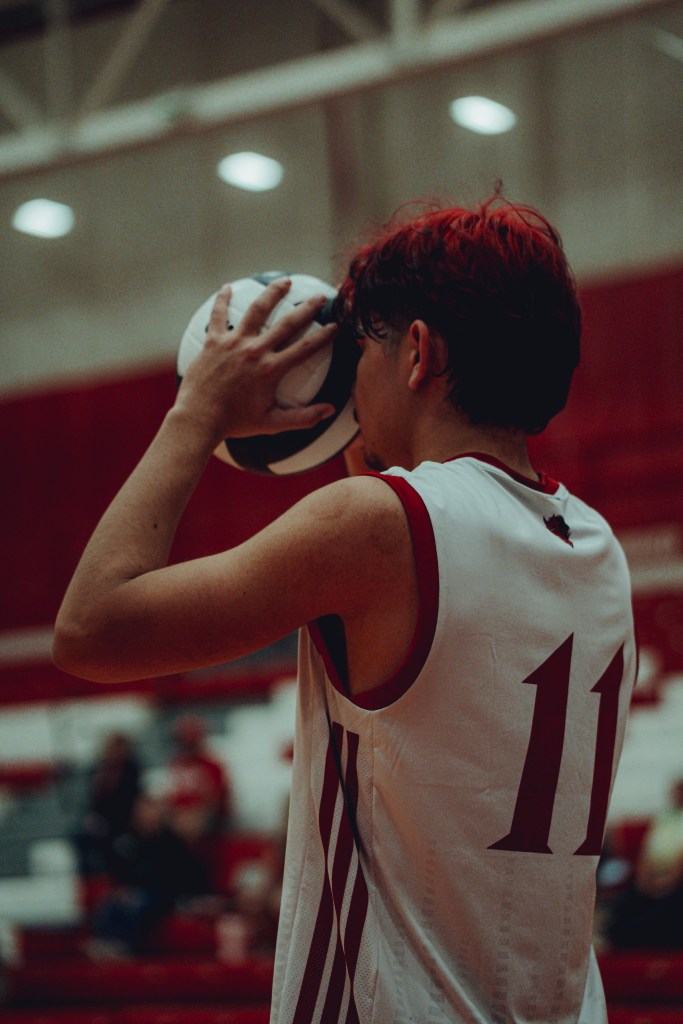
Trinity defeats JHS 3-1 in boys’ volleyball
All photos by Malachi Conrad. Click on each image in the gallery below to view photographs.

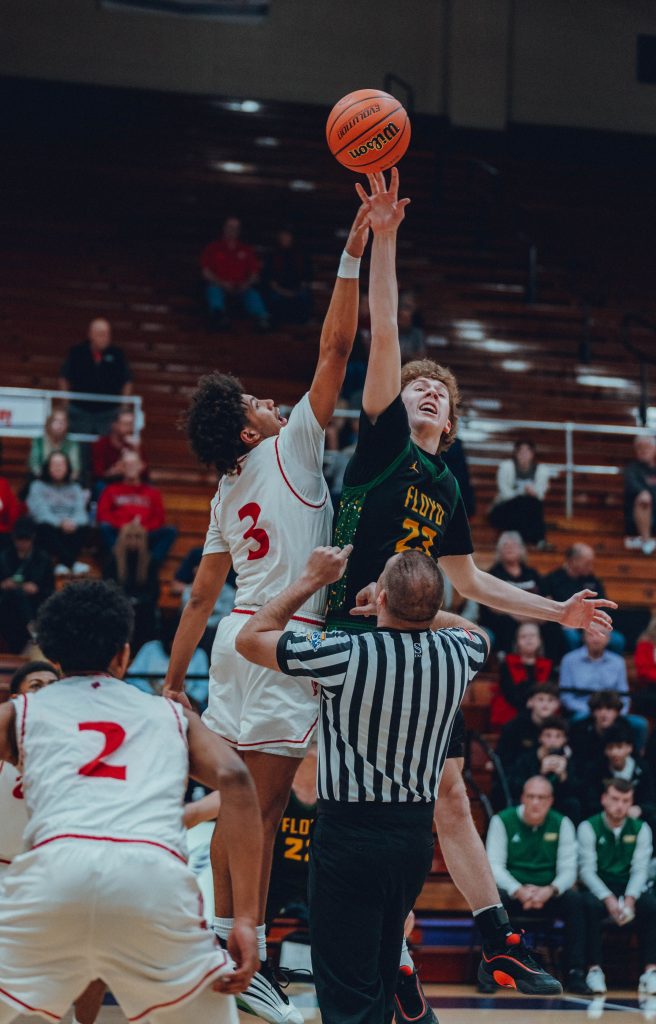
Column: Indiana basketball needs a shot clock
by Marquel Garner
How would implementing the shot clock in Indiana high school basketball affect teams and players?
The ‘shot clock’ shall refer to the timing device that displays a countdown of the time within which the team in possession of the ball must attempt a field goal.
Thirty-two states have implemented a 35-second shot clock in high school basketball, and 18 states have not or said no to implementing a shot clock.
After the Indiana Basketball Coaches Association announced the results of a survey that said 68 percent of coaches polled favored a shot clock, a proposal went before the IHSAA at its Feb. 20 executive committee meeting for a 35-second shot clock. The proposal, if passed, would be implemented for the 2026-2027 or the 2027-28 schoolyear.
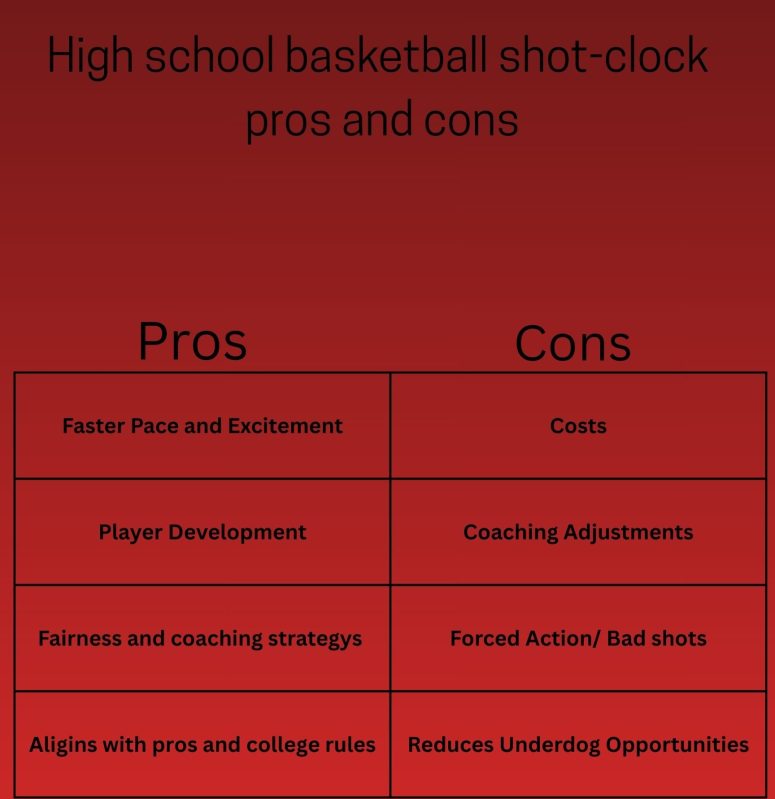
Some advantages of having a shot clock include increasing the pace of the game and preventing teams from holding the ball for minutes at a time to protect a small lead, a tactic often disliked by fans and players.
Graphic by Marquel Garner.
Having a shot clock will make a faster-paced game, resulting in more possessions; more scoring opportunities; and higher-scoring, more exciting games, which can boost spectator attendance.
The shot clock will also help with player development, helping players learn to handle time-management pressure, make quicker decisions, and play at an uptempo pace, better preparing them for college-level basketball.
The last advantage of having a shot clock is that teams will have to practice to execute their offense better and more effectively within a timeframe than relying on holding the ball to win. It also prevents the “end-of-game stall” where teams play keep-away for the final minutes, forcing competitive basketball until the buzzer.
Some cons would be the cost of installing it and maintaining the shot clock, and it requires an extra, trained operator for varsity, and potentially for junior varsity and freshman games.
With a shot clock, less talented teams wouldn’t be able to slow the game down and reduce possessions to pull off an upset. The shot clock would favor more talented teams by giving them more opportunities to score.
Other issues would be teams playing zone defense because they would only need to play defense for 30-35 seconds. And some coaches may argue that a shot clock leads to rushed, poor-quality shots and more turnovers for less experienced teams, rather than better gameplay.
I feel adding a shot clock would be good for Indiana basketball. The main reason for me is that teams are eating up the clock with a small lead. When they play “keep away” with a small lead, it forces the other team to foul, and as a spectator, that is not fun to watch. Also, as a player, I think it could force players to develop skills, such as playing at a faster pace, managing time, and reading defenses under pressure
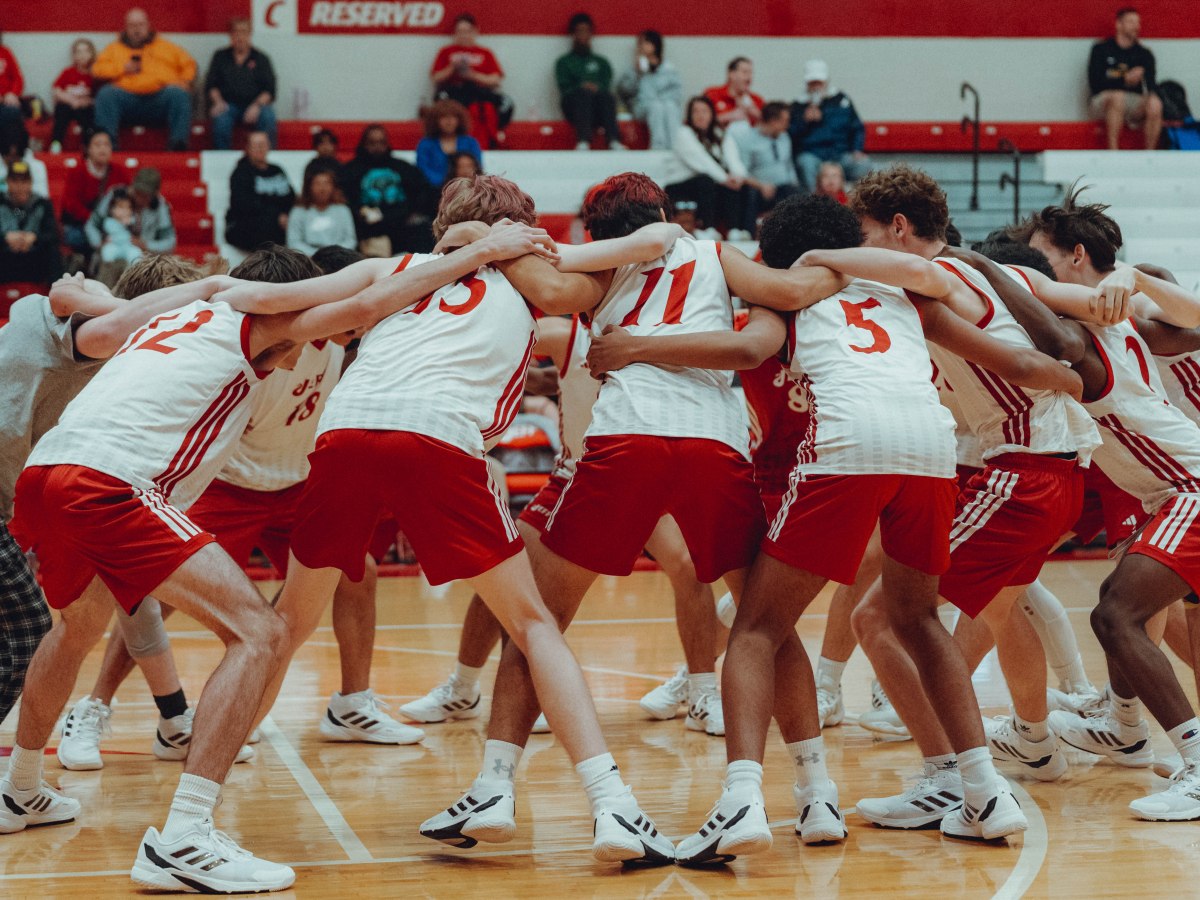
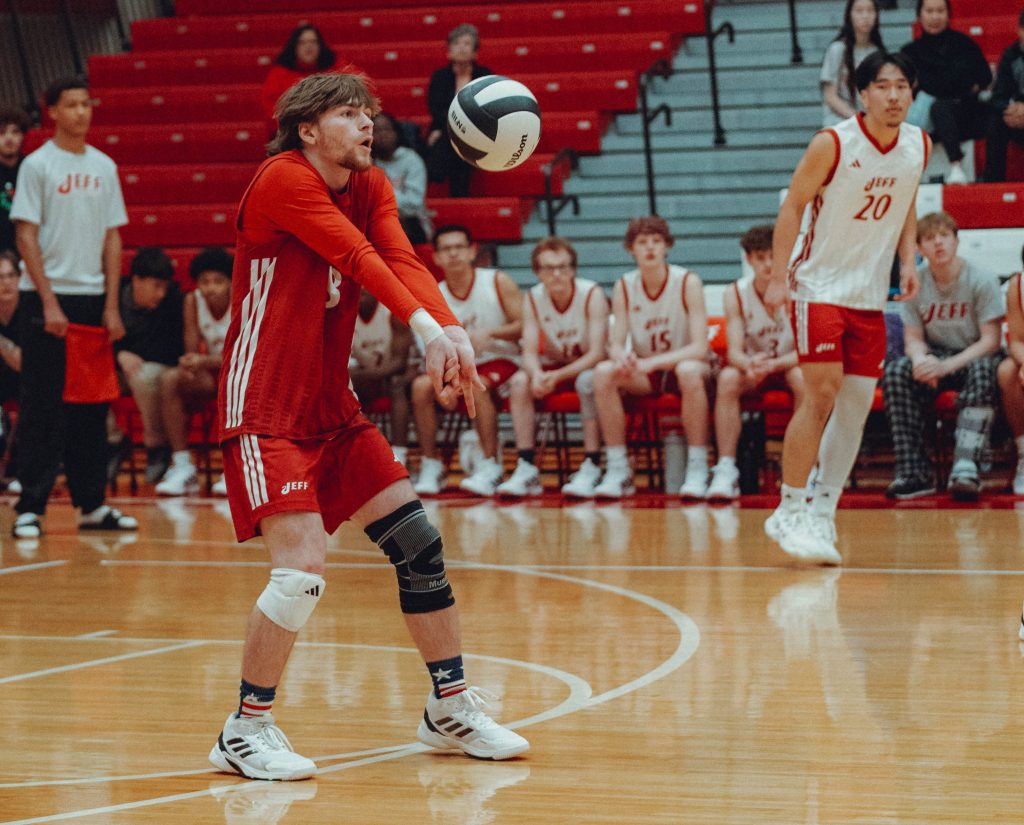
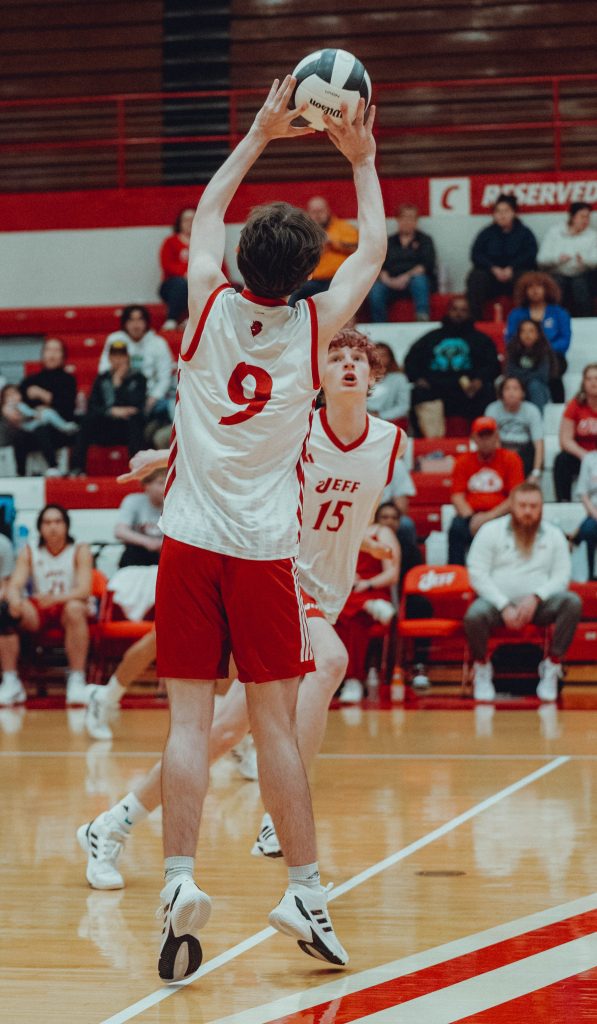
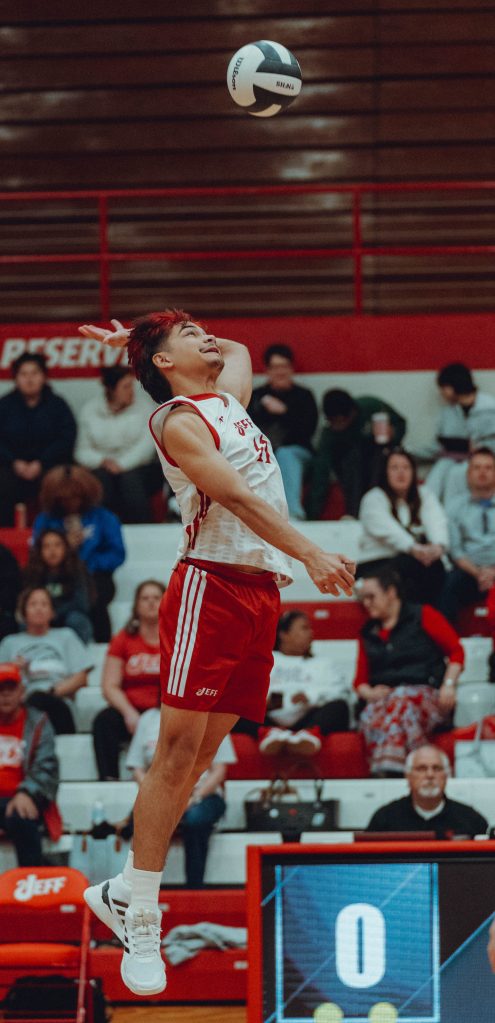
Red Devils face Trinity tonight in volleyball
All photos by Magdalene Conrad. Click on each photo in the gallery below.


JHS theatre presents ‘Cerano de Bergerac’ during the next two weekends
by Aurora Grisham
Cyrano de Bergerac will take to the Jeff High stage this weekend to try to romance Roxane.
Show dates include:

Friday, March 27 — 7 p.m.
Saturday, March 28 — 7 p.m.
Sunday, March 29 — 2 p.m.
Friday, April 3 — 7 p.m.
Saturday, April 4 — 7 p.m.
On-stage performers include Blessing James, Finn Matzek, Jayden Trevell, Jackson Fried, Sarah Proctor, Jalen Nifong, Tristan Cooley, Lucas Dimmit, Wyatt Clements, Sophie Ellis, Jude Polete, Roberto Castro, and Natalie Creagh.
Behind-the-scenes crew members include McKayla Hannan, Parker Grubbs, Kira Timberlake, Elianna McCurdy, Shiann Spalding, Nataly Barragan, Lindsay Austin, Ada Morrill, Hailey Littrell, Bella Roman, Chloe Kallbreier, Zoe Schwieman, Kenzie Stone, and Sage Mace.
Sophomore actress Natalie Creagh said, “We take a more modern take on the original story of ‘Cyrano de Bergerac’.”
The advice Creagh has for those who want to take theater is to keep believing in themselves even though it’s a lot of hard work.
Theatre arts teacher Derrick Ledbetter said, “The story behind Cyrano de Bergerac is, in a war-ridden France, there is a love story that takes place that is very complicated.”
Ledbetter said he’s most excited to see the students act out the script, since it’s his most complicated one yet.
Tickets are free for staff — and general admission tickets are $10, according to Ledbetter.
Tickets can be purchased through the Jeff High Theatre website.
















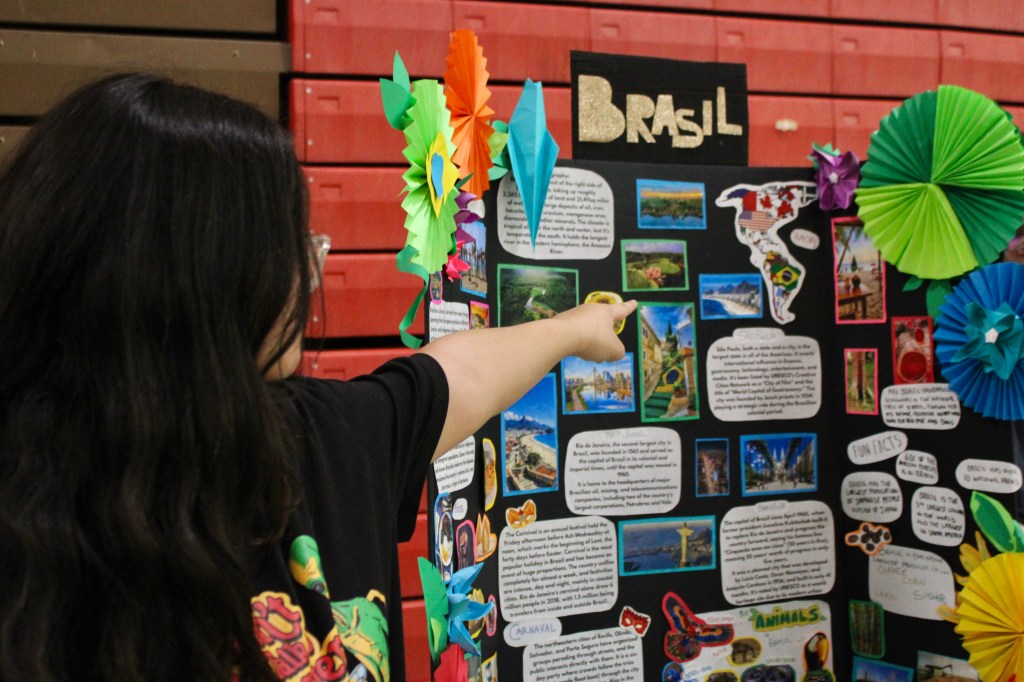
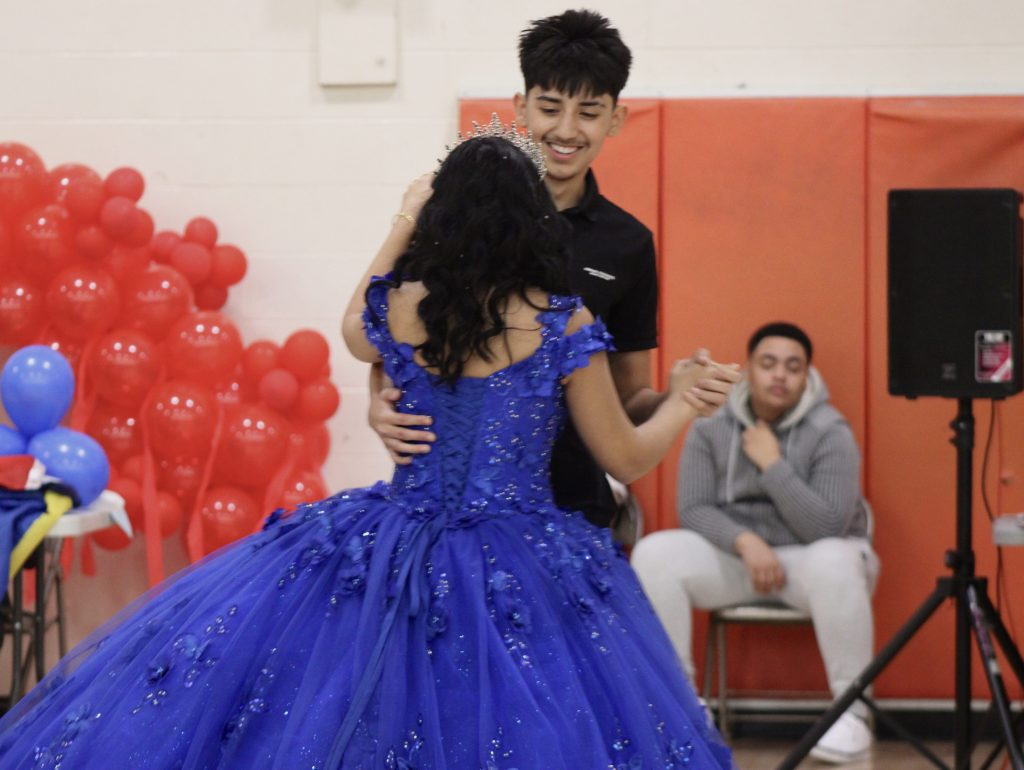
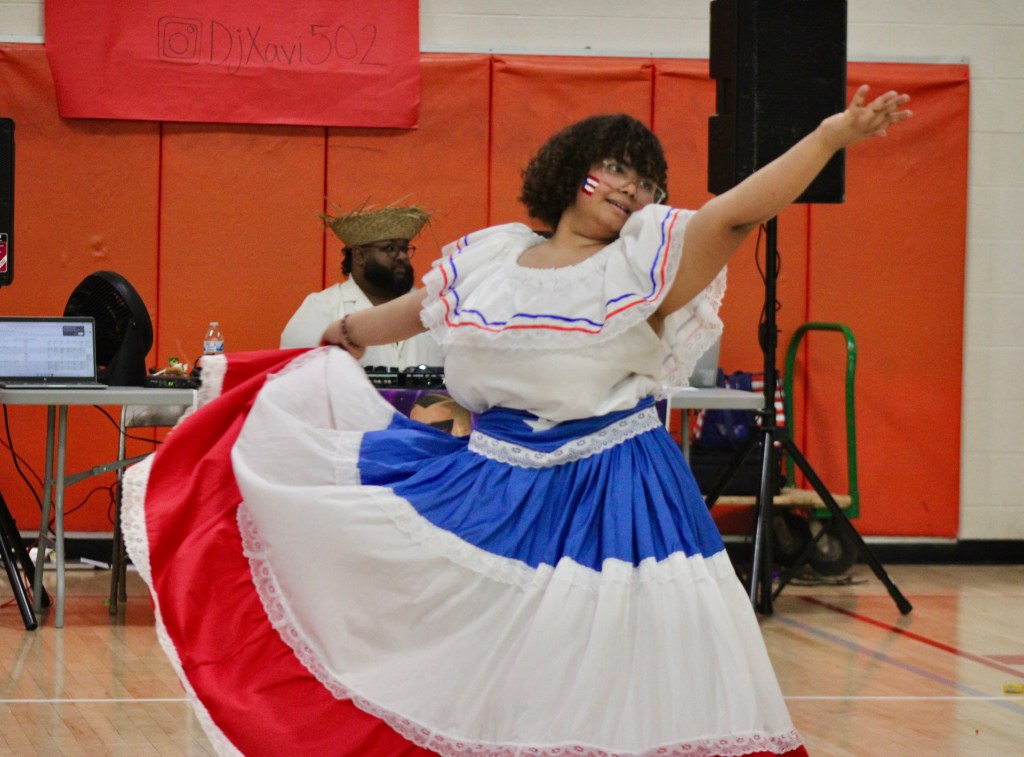
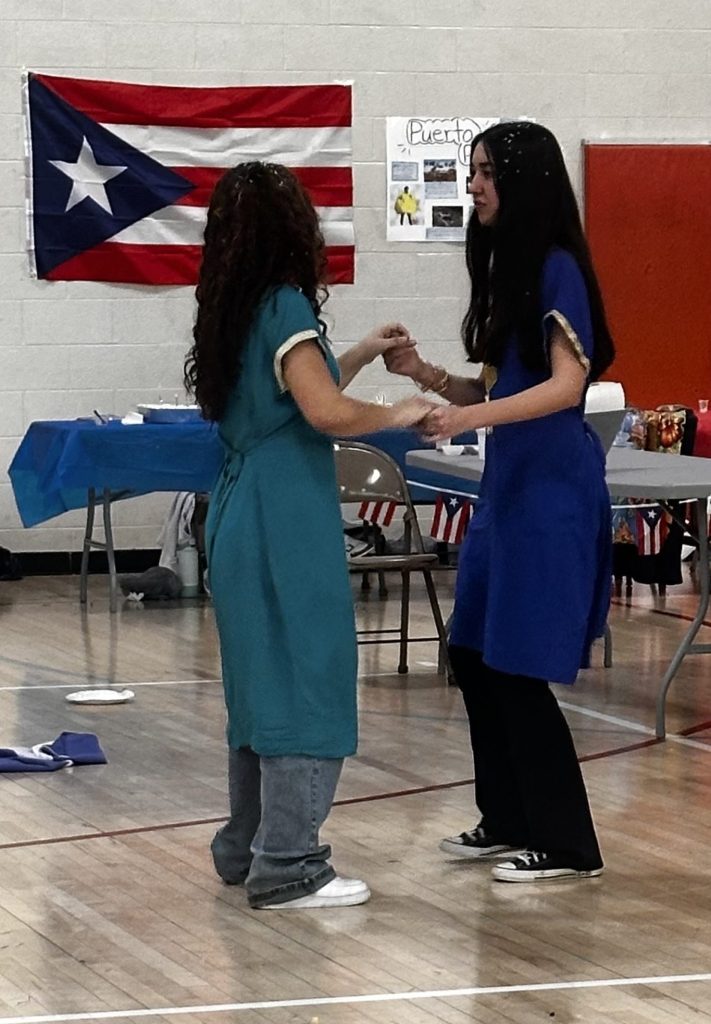
Annual showcase allows students to share highlight their cultures
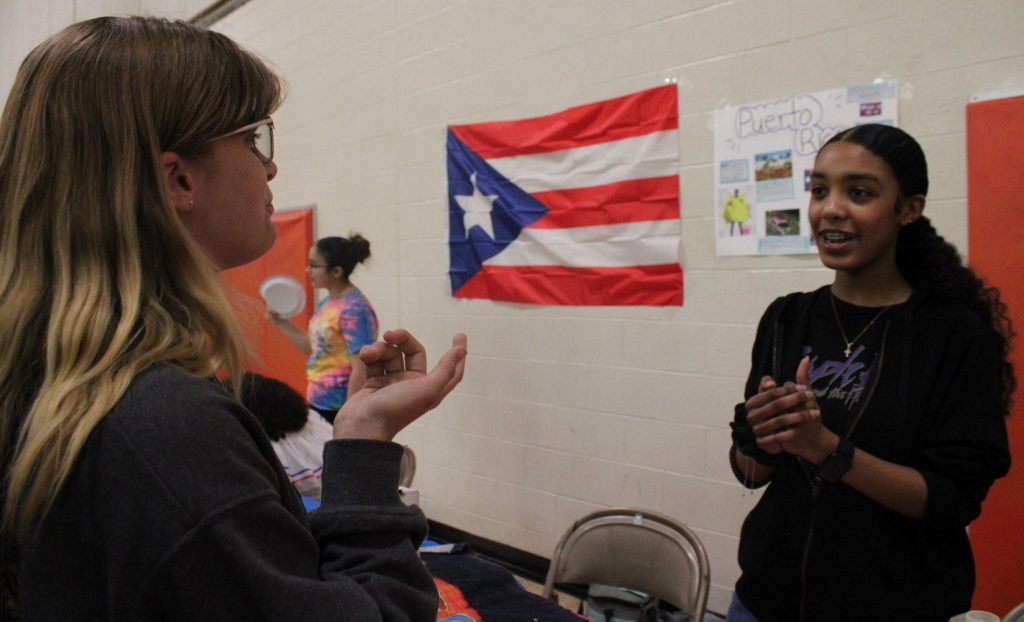
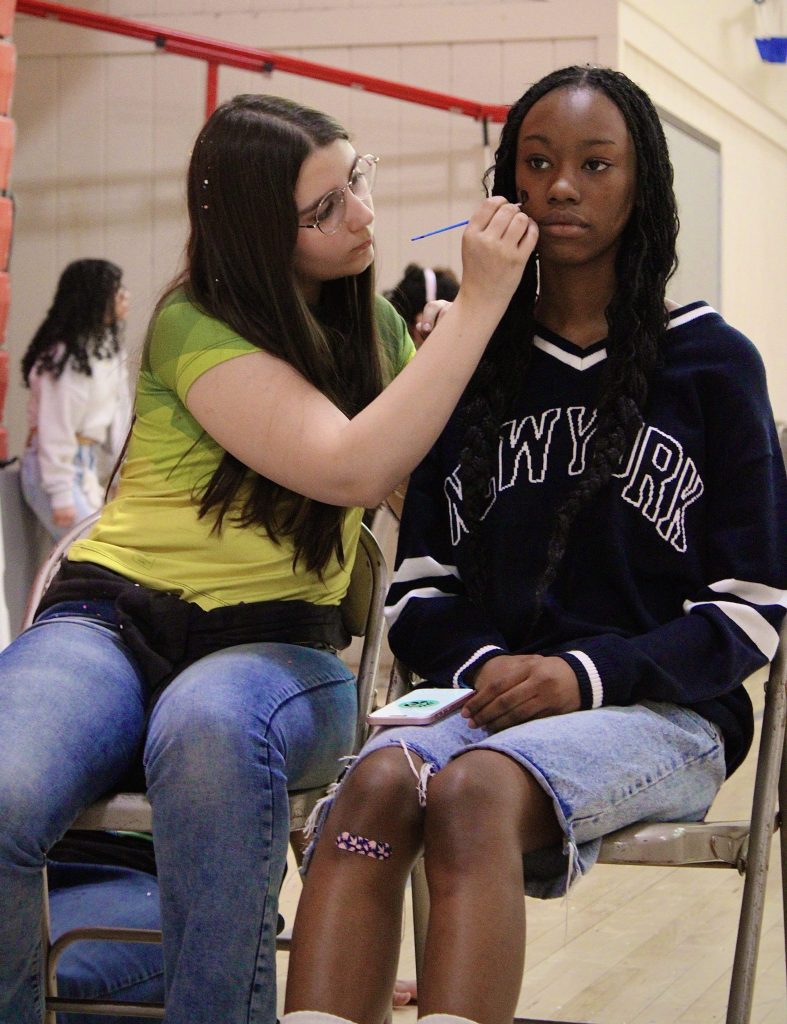
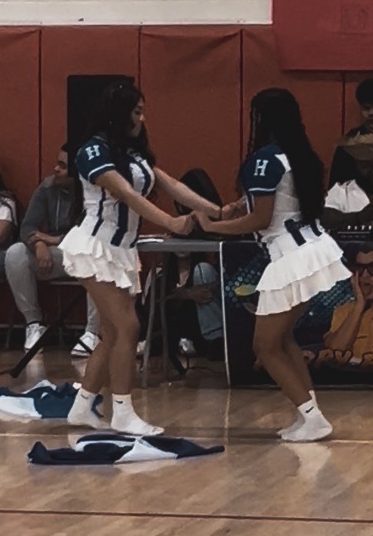
JHS students participated in the annual Multicultural Showcase on Thursday, March 12, sharing their cultures through presentations, dance, food, and dress with their fellow students and staff in the auxiliary gym.
Click on each photo in the gallery below.







Review: Influence of ‘Twin Peaks’ lives on
by Abigail Hall
Twin Peaks (directed by David Lynch) – an eerie, surreal show about Agent Dale Cooper working to solve the murder of Laura Palmer, a high school girl in the logging town of Twin Peaks.
The show is considered groundbreaking and it is still world renowned for its impact on the television industry. It brought a cinematic and supernatural program to TVs in the 1990s. Twin Peaks combines themes of supernatural activity, police and crime, and horror to create its iconic status.
It continuously asks the question of “Who killed Laura Palmer?” while incorporating the town’s stories. The show is known for diving deep into the world of traumatic evil in the form of Laura’s tragedy. It starts out as a straightforward, typical murder mystery, but it quickly transitions into something deeper psychologically.
Twin Peaks moves slower than other shows being aired, but its pace allows the town to settle into the viewer, making it seem more suspenseful and dreamlike.
Laura Palmer and her story has stuck with many watchers of the show, integrating herself into the fanbase like no other. Her youth and experiences reflect that of her viewers, making her an important character to millions of people. Her complexity adds many layers, including her loveability because of her trauma and the way she handles it. She is not painted to be a saint like many victims in horror shows.
She is not the first loveable character that David Lynch has brought to life, though. Lynch is known for his directing style, mixing themes of surrealism and horror with a unique charm. He has directed many other iconic films and television shows, including Mulholland Drive, Blue Velvet, and Eraserhead.
While all of his work is widely regarded as memorable and fascinating, Twin Peaks seems to have latched itself into his fans’ lives, as well as other directors and film-makers.
The series has influenced many other famous shows, including the likes of X-Files, Stranger Things, and Lost. The show proved that fans would follow complex characters and dark storylines, allowing these other shows to follow suit.
Lynch introduced genre blending through Twin Peaks, mixing a sense of comedy with the small town’s uniqueness with the horror of Laura’s mystery.
Twin Peaks sparked some controversy with its mixture of comedy and heavy themes, like drug abuse, assault, and murder, without romanticizing the trauma. However, this creates an air of surrealism that drags people in.
Lynch has a specific style of cinematography that many people link with Twin Peaks, as well. Featuring wide shots, darker colors, muted lighting, and unconventional camera angles to make his episodes feel more like a hand-crafted masterpiece than anything.
Twin Peaks has wormed its way into many people’s hearts, as well as the film industry. Television and films will never be the same, whether they’re inspired subconsciously or not.
Column: When Policy Creates Casualties
Immigration enforcement harms children, fuels global instability, and turns protest into tragedy
by Dana Romero Regaldo
It’s been 3,249 days since Roger Rayson, a 42-year-old man, took his last breath because the Trump administration failed to provide proper care. He suffered from dehydration, and upon further evaluation, he was diagnosed with Burkitt’s lymphoma. Since then, thousands of days have passed, yet the same system that failed him continues to fail others.
What was framed as “law and order” became a machine that separated families, overwhelmed borders, and fueled unrest far beyond the United States. This is not just a immigration crackdown; it is a policy era that treated human lives as collateral damage in pursuit of political control.
The pain of these policies is not abstract — it lives in the voices of families who have experienced it. When the Trump administration separated families at the border, one migrant father, later reunited with his child, told reporters, “They took my son from my arms, and I didn’t know where they were taking him or when I would see him again.”
Doctors who worked with separated children said the trauma was immediate and visible. Dr. Colleen Kraft, former president of the American Academy of Pediatrics, warned, “This kind of prolonged toxic stress can carry lifelong consequences.” These were not just administrative decisions. They were moments that reshaped childhoods forever.
Conditions inside detention facilities have also drawn widespread criticism. Human Rights Watch documented cases of overcrowded cells, lack of access to hygiene, and delayed medical attention. In some facilities, detainees reported waiting days or even weeks to see a doctor. Others described being denied basic necessities such as soap, clean clothing, or privacy. These are not luxuries; these are basic human needs. When they are denied, detention becomes something else entirely.
In 2026, Geraldo Lunas Campos died while in ICE custody. His death was initially reported as a suicide, but a medical examiner later ruled it a homicide caused by asphyxia, and witnesses said he had been restrained by officers before he stopped breathing. His death became a symbol of what many advocates say is a system with too little accountability and too much power over vulnerable people.
Families of those who died in custody have spoken with grief and anger. After her father died following time in immigration detention, one daughter told reporters, “He begged for help. He told them he was in pain. They didn’t listen.” The father of Jakelin Caal, a 7-year-old girl who died after being taken into U.S. border custody, said through tears, “They didn’t save her. They let her die.” His words reflect the devastation of a parent who trusted a system with his child’s life and lost her instead.
Supporters of strict immigration enforcement argue that detention is necessary to uphold the law and maintain order. But enforcing the law does not require abandoning humanity. A system can uphold borders and still uphold dignity. It can enforce rules and still protect life.
What is happening now forces a difficult question: how many deaths are acceptable in the name of enforcement? These are not just statistics. They are people who had families, futures, and lives that mattered. Their deaths challenge the idea that this system is working as intended. When people die from preventable causes while in government custody, it is not just a policy issue — it is a moral one.
Advocates and attorneys who have witnessed these cases say the suffering was preventable. Lee Gelernt, deputy director of the ACLU’s Immigrants’ Rights Project, said about family separations under Donald Trump, “There is no question that this policy inflicted extraordinary harm on children and families.” He and others argued that the government knew the damage it was causing but continued anyway. Even some detention staff later described the emotional toll. One worker told The Atlantic, “The children would cry themselves to sleep. They didn’t understand why their parents were gone.”
Inside facilities run under the authority of U.S. Immigration and Customs Enforcement, detainees themselves described fear and neglect. One man held in detention told The Guardian, “You feel like you don’t exist. Like if you die here, nobody will know.” That fear became reality for dozens of families who received devastating phone calls instead of reunions. Their stories reveal a system that, to them, did not feel like enforcement — it felt like abandonment.
One day, history will look back on this era and measure it not by how strictly laws were enforced, but by how human beings were treated. It will ask whether we chose enforcement at any cost — or whether we chose humanity.
Column: Algorithms control our lives more than we think
by Chloe Newton
Every time someone opens TikTok, Instagram, YouTube, or even Google, they make a simple choice: what to click first. What many people do not realize is that this choice is rarely as free as it feels. Behind every scroll, like, and pause is an algorithm quietly deciding what content deserves attention. While algorithms are often marketed as tools designed for convenience, they influence what we think, buy, and believe far more than most people recognize.
Algorithms are designed to learn from user behavior. They track what videos are watched, how long someone stays on a post, what links are clicked, and even what content is skipped. Using this data, platforms prioritize content they believe will keep users engaged the longest. Over time, this creates a highly personalized feed that feels natural and accurate, almost as if the app “knows” the user. In reality, the algorithm is shaping what users see just as much as it is responding to them.
One of the most powerful effects of algorithms is their ability to reinforce existing beliefs. When users interact with certain opinions or viewpoints, similar content is shown more frequently. This can create what is often called an “echo chamber,” where users repeatedly encounter the same ideas while opposing perspectives are filtered out. As a result, people may begin to believe that their views are more widely shared than they actually are. This can influence opinions on politics, social issues, and even personal values, often without the user being aware.
Algorithms also influence behavior beyond opinions. Social media platforms use recommendation systems to promote products, trends, and lifestyles. Targeted advertisements appear based on browsing history and online activity, making it more likely that users will purchase items they were not actively searching for. In addition, viral trends and challenges spread rapidly because algorithms prioritize content and receive high engagement. This can pressure users, especially teenagers, to participate in trends to feel included or relevant.
Another concern is how algorithms affect attention spans and mental health. Short, fast-paced, and emotionally engaging content is often prioritized because it keeps users scrolling. Over time, this can make it harder for people to focus on longer tasks or engage deeply with information. While social media is not solely responsible for changes in attention, algorithms play a significant role in shaping how content is consumed and how long users remain engaged.
Some argue that algorithms simply reflect user preferences and improve the online experience by making content easier to find. In many ways, this is true. Recommendation systems can introduce users to new creators, helpful information, and entertainment they might not have discovered otherwise. However, the issue is not the existence of algorithms themselves, but the lack of awareness surrounding their influence. When users do not understand how their feeds are curated, it becomes easy to mistake algorithmic choices for personal ones.
As algorithms continue to shape digital spaces, awareness becomes increasingly important. Understanding that online content is filtered and prioritized for engagement allows users to be more critical of what they consume. While it may not be possible to escape algorithms entirely, recognizing their influence is the first step toward regaining control. In a world driven by data and clicks, being informed may be the most powerful choice users can make.

Senior Litzy Rubio leads while appreciating friendships
by Aubrey Cummings
2026 Lilly Endowment Scholarship winner, senior Lizty Rubio, is a significant part of JHS and her community beyond Jeff. She is an active member of the swim team, the Anchor Club, the National Honor Society, and represents the school as a student ambassador.
“Litzy is a compassionate, strong, and dependable person. Because she’s in such high classes and she works for so much of what she has, and her leadership positions just show how dependable she can be, and for each of those, she has to be very compassionate,” stated junior Macyn Jackson.
Rubio is known as a leader in everything she does. In her junior year, she served as the co-president of the Student Council, along with representing the Senior Class as vice president this year.
“I feel like being involved in the school allows me to be better prepared for my future. I used to be shy and kept to myself, but my sports and clubs have allowed me to expand on everything,” explained Rubio.

Being a student-athlete can make or break a person. They have to have a strong will and determination to succeed, along with balancing the aspects of school, sports, and life in general. But it can also lead to so much more than just medals and trophies.
“Some of my best memories and friendships have come alongside the sports I have done,” said Rubio. “The people are like a second family to me; we wake up early in the morning for practice and leave late at night from meets. I am with them all the time, even during the holidays.”
These friendships could last a lifetime.
“Litzy truly is someone I look up to. She sets an example for everyone, showing that if you really want to do something, you can,” senior Mari Bush explained.
Rubio plans to potentially attend Purdue University to pursue her bachelor’s degree in civil engineering and possibly earn her master’s degree in architecture to become an architectural engineer.
Column: Winter weather requires early communication with community
by Liddia Waterbury
Snow days are supposed to keep students safe, but late cancellations could do the opposite. When schools wait until the last minute to cancel classes, students are forced to wake up early and prepare to travel on icy, dangerous roads. This delay can create unnecessary stress and put safety at risk, especially for students who walk, bike, or ride buses to school.
According to the National Weather Service and local weather stations, winter storms and icy road conditions in southern Indiana are often predicted at least a day in advance. This raises questions about why school cancellations are sometimes delayed until early morning.
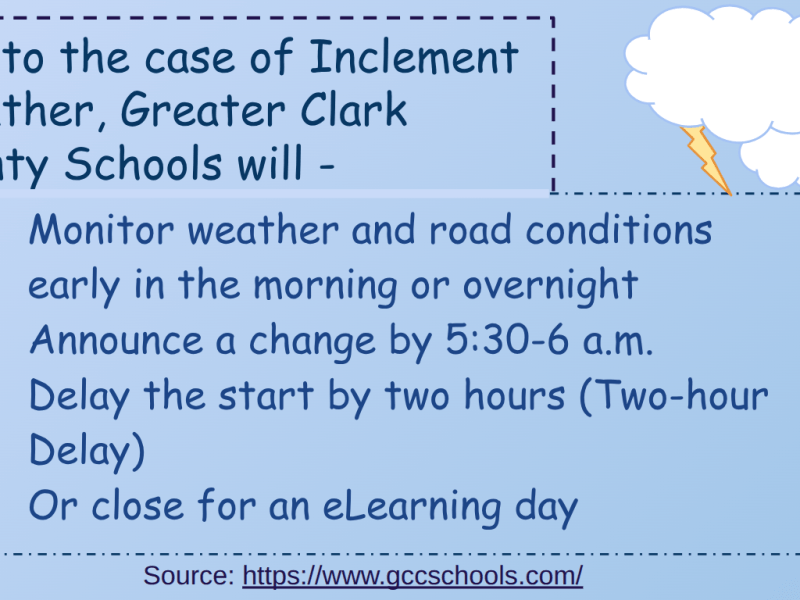
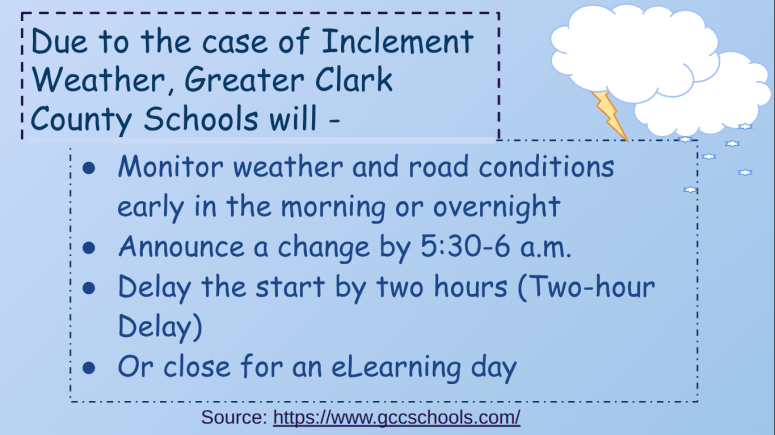
We’ve had snow days with asynchronous learning this school year. This is because the night before, there was snow. It was under 32 degrees, and that caused the snow to freeze and the roads to be icy. But Greater Clark County Schools didn’t call off school until the next morning.
This caused students to wake up early and could have caused stress for them, their parents, and people like bus drivers.
As well as stress, situations like this can also cause major safety concerns. According to Zipdo, there are an average of 10,800 winter weather-related crashes per month in the U.S.
Then the National Weather Service says that 24% of weather-related crashes occur on snowy/icy roads, and about 15% occur during active snowfall.
With this safety risk, driving in bad weather can cause fear and anxiety about accidents, especially for parents and teachers who commute. If the decision comes very late, students and teachers might not get enough rest. Sleep loss can make people more irritable, tired, and less focused.
If people feel the decision could have been made earlier, it may lead to frustration or the feeling that their well-being isn’t being considered. With the loss of sleep, people can also lose focus on homework, grading, or preparing lessons if they are unsure if school will be in session.
When people lose trust in an organization, like Greater Clark County Schools, it creates more frustration and uncertainty. Without trust, communication suffers, and problems worsen.
Late snow day decisions can increase safety risks, stress, and sleep loss for many students, staff, and families. Making earlier, well-communicated decisions can help protect well-being and maintain trust within the school community.
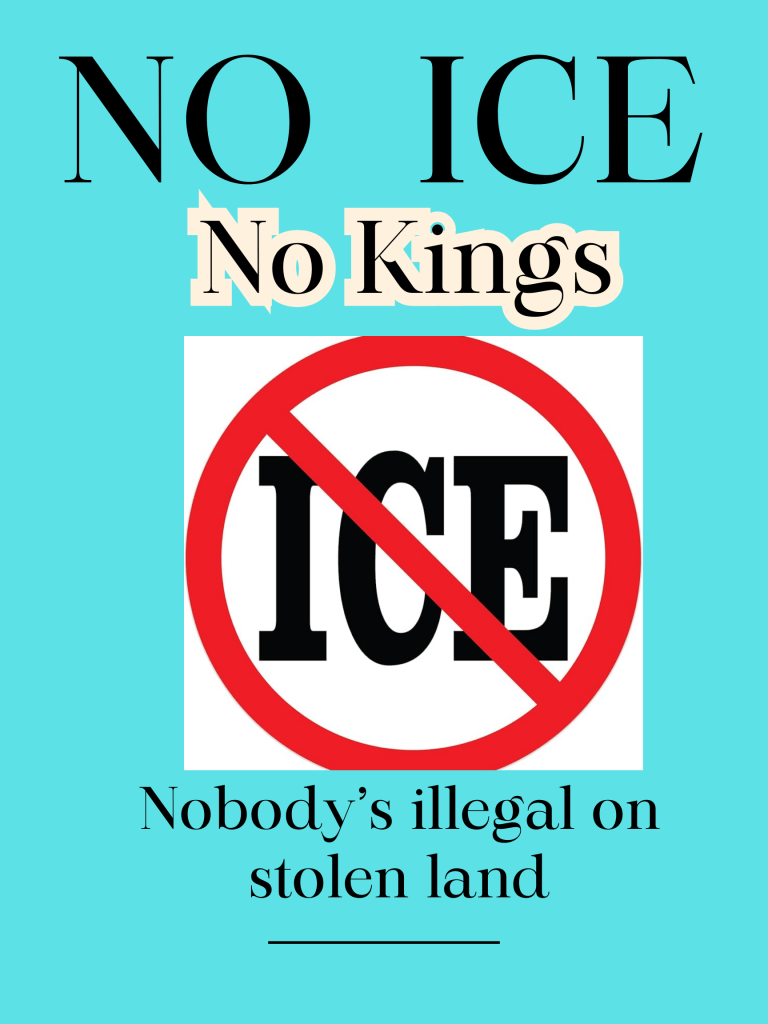
Column: ICE actions damage ‘Land of the Free’
by Kaylee Borelli
ICE, the U.S. Immigration and Customs Enforcement, enforces immigration laws and conducts investigations into undocumented immigration and arrests and deports undocumented immigrants. Their mission is to protect America through criminal investigations and enforcing immigration laws to preserve national security and public safety, but recently, this doesn’t seem like the case.
In January, ICE agents shot and killed two American citizens in Minneapolis, Minnesota. One of them was a 37-year-old mother of three, Renee Nicole Good. She was shot when ICE ordered her out of her car and briefly reversed before moving forward. The second victim was 37-year-old intensive care nurse Alex Pretti on Jan. 24. He was shot while he was both protecting a woman who was pushed to the ground by an agent, during a protest, and filming law enforcement. The Department of Homeland Security claimed that he was in possession of a weapon and “violently resisted.” But video analysis and witnesses say otherwise, ICE agents removed his pistol from his holster while he was pinned to the ground, before shooting him in the back. These two people weren’t shot in self-defense; they were murdered.
ICE hasn’t just been responsible for murdering two American citizens, but they have also detained and deported people with legal documents and no criminal record, even though they claim they are targeting criminals.
According to Brookings, since Donald Trump took office in January 2025, more than 540,000 people have been deported. Along with this, one-third of people who have been arrested by ICE have no criminal record. If they really cared about targeting criminals, they would actually target criminals and not allegedly bust out car windows just to justify arrests. On top of this, a total of 32 people have died while in ICE custody in 2025. This isn’t about making America a “safer place.” This is racism and a complete abuse of power by Trump.
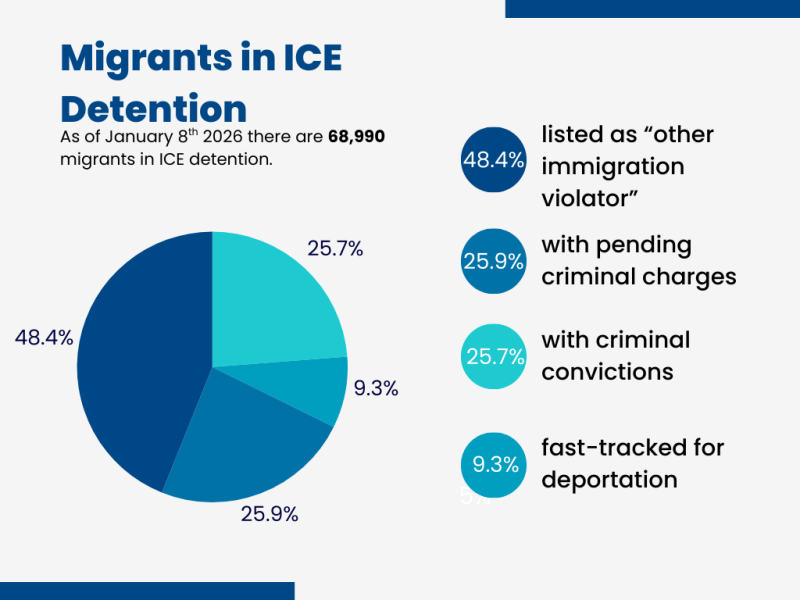
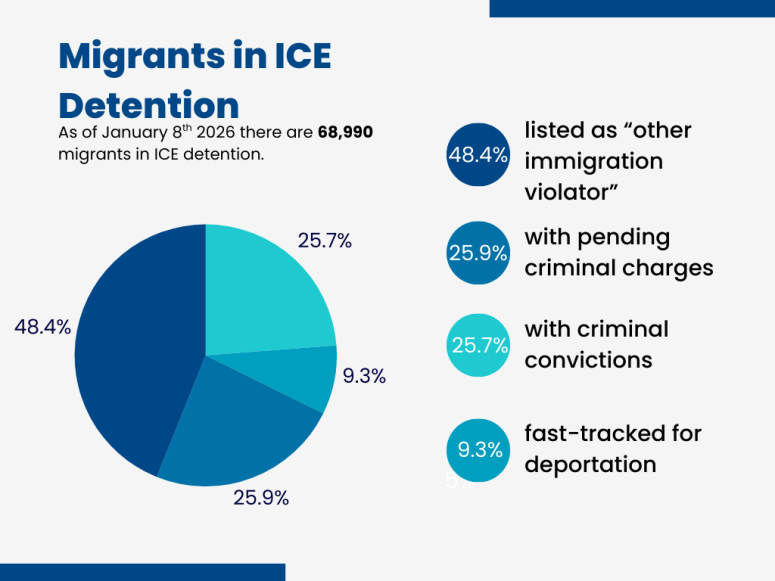
Along with the over 540,000 that have been deported, according to WLRN, as of December 2025, 74% of around 70,000 immigrants in Immigration and Customs Enforcement detention have zero criminal convictions. And yet Trump is still saying he is only targeting criminals when ¾ of the people in detention centers aren’t even criminals.
On Jan. 20, according to CNN, 5-year-old Liam Conejo Ramos was detained along with his father in Minnesota while arriving home from his preschool. They were then flown more than 1,300 miles to a family detention facility in Texas. Liam and his family are originally from Ecuador, and in December 2024, they presented themselves to border officers and applied for asylum, but still, the DHS labels them as “illegal aliens.” Also, according to CNN, the Trump Administration has repeatedly said that they are targeting people who are “violent criminals” and the “worst of the worst.” So why are they arresting a 5-year-old boy and a father who were in the process of becoming American citizens? Luckily, on Jan. 30, Liam and his father were released and returned home to Minnesota, but they shouldn’t have ever been detained in the first place.
ICE isn’t just detaining people for no reason, but they are also violating the amendments of the United States.
The Fourth Amendment states that the right of the people to be secure in their persons, houses, papers, and effects, against unreasonable searches and seizures, shall not be violated, and no warrants shall issue, but upon probable cause, supported by oath or affirmation, and particularly describing the place to be searched, and the persons or things to be seized. This means that people are protected from unreasonable searches and seizures by the government. According to the National Immigration Justice Center, ICE officers will knock on people’s doors and claim they have a warrant to enter and search your house. These “warrants,” though, are not signed by judges; they are forms signed by ICE officers, so they do not allow agents to enter your home without consent. But still, agents are entering homes illegally and detaining people even if they have legal documents or are in the process of obtaining legal documents.
Not only is ICE violating the rights of people to detain them, but once they are detained, the facilities they send them to are disgusting and deadly.
The ICE detention centers are now notorious for both violating the rights of immigrants and for the harsh conditions. According to the ACLU, Fernando Vieira Reyes, who was held in one of these detention centers, faced many problems while there. He tried to get proper treatment for his prostate cancer, which he discovered he had while in the center. He had requested to see a urologist but was constantly ignored, and when he reported pain, they just prescribed him some Vitamin C and Tylenol. The conditions in the facility were also horrible. They were held in small concrete cells that were the size of a parking space, along with being without adequate food, water, and clothing for hours on end.
Even though it is repeatedly said that ICE only targets undocumented immigrants with criminal convictions, pending criminal charges, or those who are deemed as threats to public safety and national security, it has been very clear that this is not how it is. From arresting a 5-year-old who had done nothing wrong to the 74% of immigrants who have no criminal record, it is very clear that this is racism and an assessment of power.
Hopefully, soon this will change, because innocent immigrants and people who have done nothing wrong shouldn’t be getting arrested, being put in centers that neglect their basic needs, and even being murdered in the so-called “Land of the Free.”
Column: Modern schools should focus on real learning
by Sanae Ittu
High school is a place of education for teenagers. A place filled with opportunities. A place that provides time for self-discovery. And a place to become more marketable for college. However, there are mixed opinions if high school is slowly losing its purpose or not.
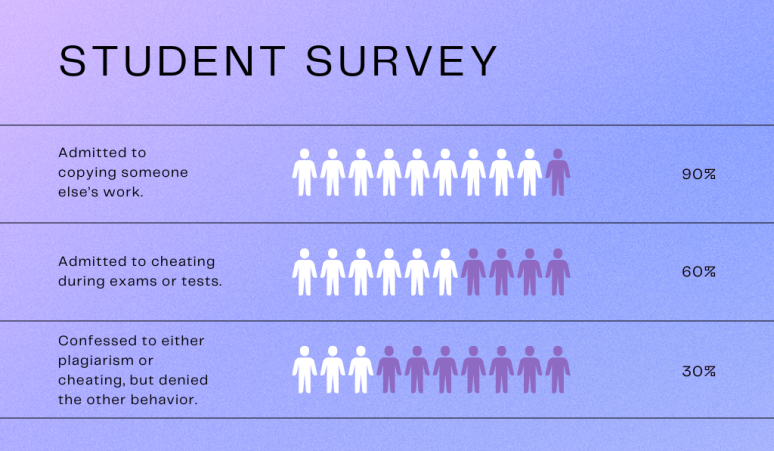
Students are focused more on passing classes than actually taking the time to learn. It’s absurd how normalized it is for students to cheat to escape failure instead of using failure as a chance to grow. The real question is “Why do students feel the need to cheat?”
According to story in edutopia, students feel the need to cheat because either they don’t find any value in certain assignments, they have the fear of losing social status, or just finding comfort with being rebellious.
So how can we fix this problem?
We are living in a society that tells us that how we perform in school can determine our whole future. But aren’t we forgetting that there are successful people living among us that didn’t do well in school academically?
Like Richard Branson, who dropped out of school at the age of 16 but is now a billionaire entrepreneur. Or one of the most famous scientists in human history, Albert Einstein. He dropped out of school at the age of 15 and trained himself for the following year.
We would assume that this can be an easy fix. Like increasing strict punishments and surveillance, focus more on grades and testing, and assigning group works. These so-called solutions may sound promising but it will not work in the long run.
Harsh punishments and intense surveillance can make students feel mistrust, leading to secretive cheating.
Harvard University’s website explains,“Students assigned to high-suspension schools are more likely to be arrested and incarcerated later, and less likely to attend a four-year college.”
Focusing more on grades and testing can limit sutdent’s creativity and critical thinking and increase stress and anxiety, leading to more cheating.
According to Queens University, “When students are mainly motivated by getting good grades, they tend to focus on memorizing information instead of deeply understanding new concepts…”
Assigning group work does not address why students cheat or lack passion, students can use it to rely on others to do all the work.
High school senior Yun F. Zheng shared on the Education Week website, “Assigning only individual work outside the classroom removes the risk of group members being overly reliant on others.”
To avoid any of these consequences, administrators should focus more on restorative practice, formative assessment and mastery learning, and structured collaborative learning with individual accountability.
According to PowerSchool, formative assessment and mastery learning have benefits, including defined learning goals, increased rigor, and improved academic achievement.
So take this as a suggestion that education should focus more on genuine learning rather than just passing tests or chasing grades. Success can come in many forms. Creativity, emotional intelligence, and practical skills that matter just much as a test score.
Column: Teens must be protected from unsafe online behavior
by Rain Gresham
On April 21st 2000, Children’s Online Privacy Protection Act of 1998 or COPPA became effective, due to parents fearing the growing internet and lack of online safety. That law should have laid many parents’ fears to rest but today over 25 years later we still struggle with children’s guaranteed protection on the big wide web.
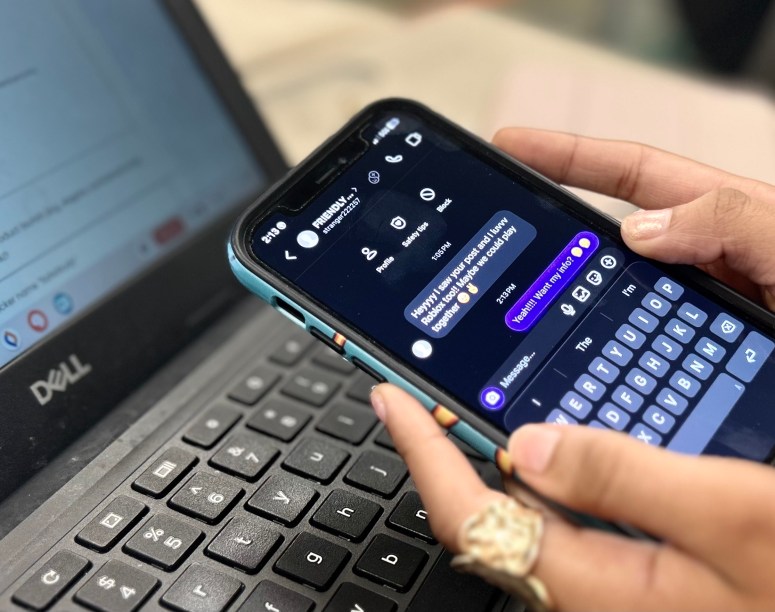
If you were to scroll on TikTok or Instagram for more than a few minutes past the feel good quotes and useless commentary you would likely find someone talking about a personal experience of theirs; it’s not likely anyone dangerous is going see it, so who cares if someone opens up about their personal life?
Except a dangerous person might.
One third of missing children in 2024 were enticed or lured online. Maybe the creeps aren’t in white vans with “Free Candy” painted on the front, but that doesn’t mean they aren’t there. They are the ones liking and saving your videos. The ones complimenting you and asking to be online friends. The ones you trust, posing as innocent.
Other governments outside of America are taking a more headfirst approach to online safety. In Australia children under 16 can’t even access certain social media platforms like TikTok, X, Facebook, Instagram, YouTube, Snapchat and Threads, but is this the right way to go? Young teens aren’t babies and are capable of finding work arounds, often by simply changing their age or not listing it at all on these websites.
So if we can’t take the internet from them, then should we just change it for them? However, even if you were to bubble wrap the entire internet, it would never be a totally safe place — it’s simply too big for that. The real major issue is that in the last few years people have stopped seeing it as what it is – full of strangers.
If I had a penny for the amount of times I’ve heard, “You guys are like my best friends” from an influencer, I’d be rich enough to pay someone to give them online safety lessons. They have fostered an environment where parasocial relationships are the norm. Anything outside of that is seen as strange or overtly paranoid.
This mindset didn’t always used to be the case. The world witnessed a great shift during COVID where anything and everything that could inherently be done online would be done online.
Even when the world did start to open up again, those third spaces that were there previously didn’t. So people both young and old were forced to turn to the only available and free one they had, the internet.
So, how should we ensure online safety for teens?
Well, throughout my life I have seen that the simplest ideas work the best. A simple conversation about the dangers of the internet and all the bad situations that can happen there. Check in on your kids and just who‘s following them if they happen to have public accounts and who is following you on yours as well. You never know. The world is full of creeps.
I find that there are very few problems with children that can’t be fixed with a simple sit down and present parenting.
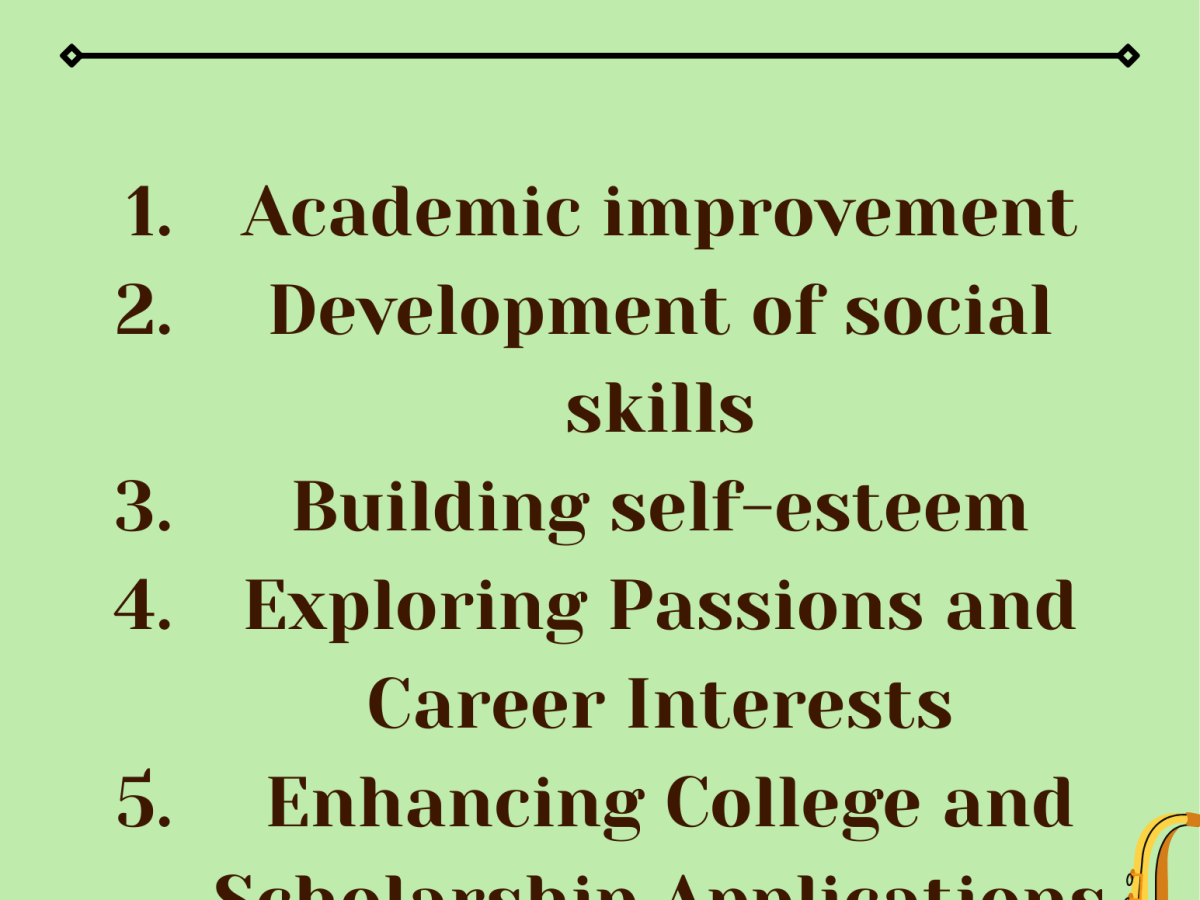
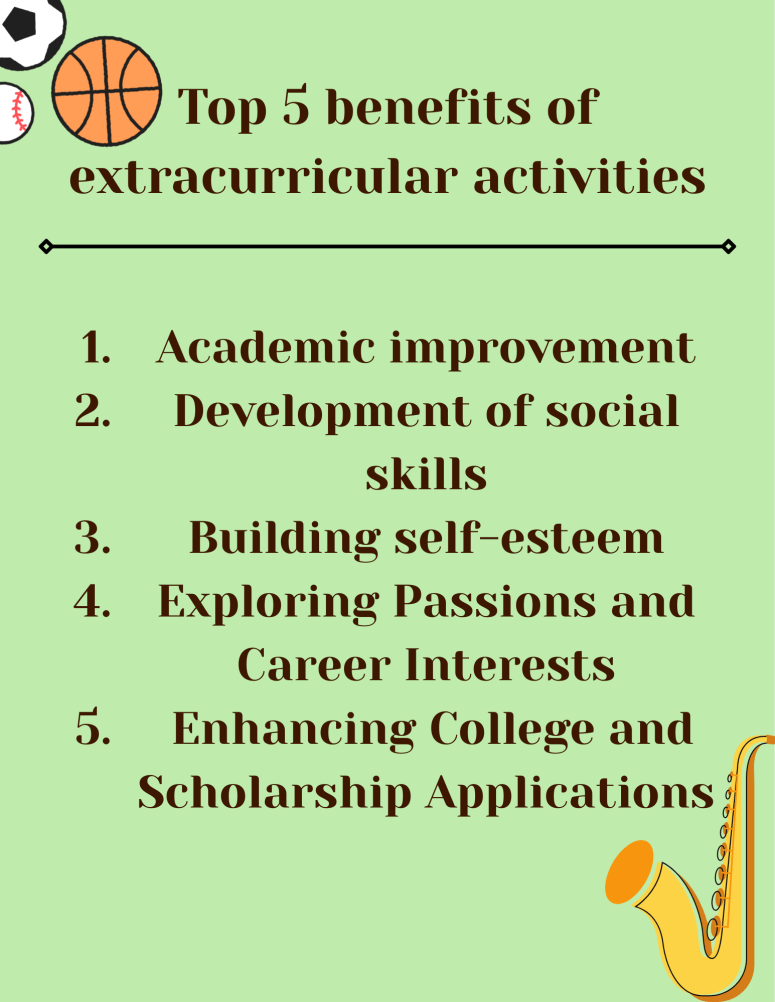
Extracurricular activities benefit students in a variety of ways
by Breslyn Dozal
Extracurricular activities offer students crucial lessons in teamwork, discipline, leadership, and resilience, helping develop skills outside of just academics.
High school is full of opportunities. Some of those opportunities are extracurricular activities. Most extracurricular activities are after-school activities, but in some cases they can go on during school.
Many students have found that extracurricular activities build up their confidence and decrease social anxiety. They build up many skills such as communication, problem-solving, and adaptability. Extracurricular activities can be sports or clubs.
“Confidence, it helped me through soccer and it made me a better player,” said freshman Jacqueline Escobar, who plays club soccer, not related to school. She added that playing a sport outside of school has helped her with time management with her school work by having to balance practices, games and school work simultaneously.
Senior Kendall Curry agreed that participating in extracurricular events has helped her find balance with not only clubs and school work, but also with working at her job. In all these areas, Curry said that she was around diverse groups of people. Because of this, she learned how to work among a variety of individuals from different backgrounds as hers.
By participating in extracurricular activities, students can also gain insight into fields of interest they may want to pursue in the future.
Curry learned from being a football manager that she will likely pursue a career working in sports.
Freshman Alayla Hickerson learned by being in band that she would like to continue it in college and maybe as a career.
Special life skills can be derived from participation in extra curricular activities as well.
Freshman Eva Harbeson appreciates the marksmanship skills she has learned in JROTC. She said that she likely won’t use those skills in a future career, but she is glad she can protect herself for knowing them now.
Curry, Hickerson, Escobar and Harbeson all described common lessons they learned from participating in extracurricular activities: they gained confidence, time management skills, and the willingness to try new things.
All of these skills are useful in future goals outside of high school, proving how beneficial extracurricular activities can be.

















 thehyphennews.com