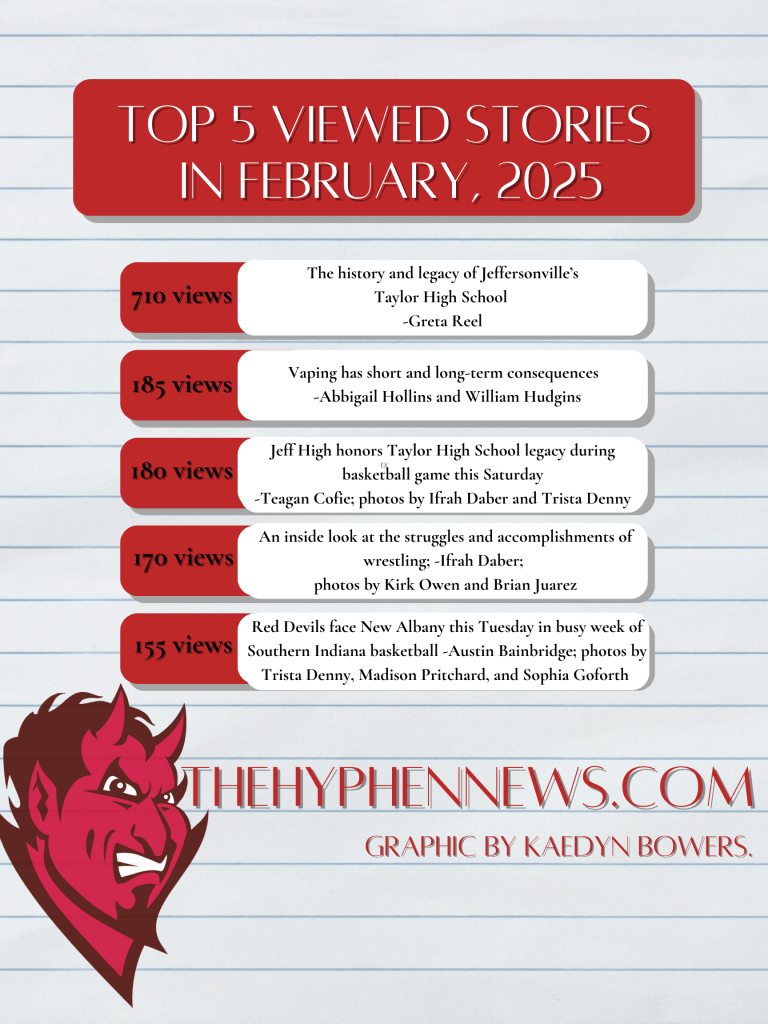
Total views in February, 2025: 4534 views from 1727 visitors
Total posts published in February, 2025: 23 posts
Total views in 2025: 9501 views (21,598 this school year)
Total posts published since beginning of 2024-25 school year: 122 posts
Total views in February, 2025: 4534 views from 1727 visitors
Total posts published in February, 2025: 23 posts
Total views in 2025: 9501 views (21,598 this school year)
Total posts published since beginning of 2024-25 school year: 122 posts
by Kenzie Stubblefield
Teen mental health issues have become a growing concern, affecting millions of teenagers worldwide. Suicide is currently the eleventh leading cause of death in the U.S., according to the Center for Disease Control.
Some students have spoken out about having anxiety, depression, and stress-related disorders as some of the most common challenges teens face, which are often triggered by academic pressure, social expectations, family dynamics, and personal insecurities. The rise of social media has also contributed to increased feelings of inadequacy, cyberbullying, and social isolation.
Freshman Jan Vissing said, “It could be better; a lot of issues are caused by other students and some staff members’ immaturity.”
Students and staff alike sometimes have issues getting along with each other, and the words of others can spread like wildfire.

Another student, sophomore Darryl Cordova, shared, “The class grades and the stress that comes with all the classwork can cause problems for a teen’s mental health. We also have to wake up at 6 a.m. almost every morning. That can get stressful for a lot of teenagers.”
This just goes to show that the environment teens are in every day has a real impact on their behavior and mental health.
The COVID-19 pandemic further intensified these struggles, leading to a surge in loneliness, uncertainty, and disrupted routines. Many teens have reported difficulties in maintaining motivation, focusing on schoolwork, and managing emotions.
Peer relationships, which play a crucial role in adolescent development, have also been impacted, leading to feelings of detachment and low self-esteem.
Senior Koy Raymer said, “Students’ mental health was, and still is, affected by COVID, and to add to that, the older generations were affected and don’t know how to help the younger generation.”
Warning signs of mental health struggles in teens include mood swings, withdrawal from activities, changes in eating or sleeping habits, and a decline in academic performance. Without proper support, these issues can lead to severe consequences such as self-harm, substance abuse, and suicidal thoughts.
Fortunately, JHS has faculty and staff ready to offer support.
Administrative assistant and staff member Torin Clapp, said, “There’s a greater need for mental health resources now more than ever. We need more people in the mental health field to help students out. Not only is it a lot for the students to handle, but the staff can also become stressed by those situations.”
History teacher John Santry said JHS has resources to help students. “I think the help and resources students have here are great. The students have teachers and counselors that they can always go to for help; the only negative thing is that the state has cut services for mental health.”
To address these concerns, open communication, professional counseling, and school-based mental health programs are essential. Encouraging healthy coping mechanisms, fostering supportive environments, and reducing stigma around mental health can help teens navigate these challenges and build emotional resilience.
Counselors can help teens address these challenges, but Indiana lags far behind other states in the number of health care professionals in school buildings.
In TheStatehouseFile.com article “Bipartisan bill pushes to improve mental health in Indiana public schools,” Kate Breeden writes, “In 2021-2022, Indiana ranked the worst among student-to-counselor ratios, with only one counselor for every 694 students. The American School Counselor Association recommends a 250-to-1 ratio. Although the numbers have progressively decreased in the past years, Indiana still has a 497-to-1 ratio, almost double the recommended amount.”
The Indiana Suicide Prevention Program (ISPP) posted information entitled “Understanding Suicide,” which stated, “The more you know about how you are feeling and the help available to you, the better you can manage your stress. Learn more about teen suicide, including risk and protective factors, warning signs, and how to handle the situation when a friend talks about suicide or dies by suicide.”
So, if you, a friend, or a loved one is having thoughts of suicide, call the suicide and mental health hotline at 988.
“I feel like, for teen mental health, in particular, I think it’s important to address any issues you’re having in or out of school and to address those with your counselor because I think that students need to have good mental health to be able to perform well and be successful academically,” said counselor Amy Colangelo.
Ultimately, Colangelo said everyone should have a person to lean on and talk to.
“I always say that whether it’s a teacher, student, staff member, counselor, or friend, it’s important to identify the people you can lean on when you need that extra help,” she said. “I think what’s great about Jeff is that we have so many people that want to help, so there is somebody that everybody can lean on.”
Students facing mental health struggles, emotional distress, concerns about alcohol or drug use, or just need someone to talk to can contact the JHS counselors, who are here to assist.
by Keegan Fountain
A monster, a beast, Dragon Ball Z’s devil, Broly the legendary super Saiyan.
Even if you’re not a Dragon Ball fan, chances are you’ve heard of Broly. He was first introduced on March 6, 1993, in the movie: “Dragon Ball Z: Broly the legendary super Saiyan.” He was introduced as this huge, menacing villain that was a threat to even the likes of Goku. However, his character was rewritten to fit a new movie that released Jan. 16, 2019, titled: “Dragon Ball Super: Broly.” In this review, I’ll go over both the change with this new Broly, and how he contrasts the old one.
When the movie starts, we’re placed on Planet Vegeta. We meet many characters — King Vegeta, Frieza, Bardock — but who we want to focus on is Broly. He was only an infant, but displayed immense power. To protect both his planet and his pride, King Vegeta sends Broly off to another planet, Vampa. Broly’s father, Paragus, steals a spaceship and flies after him, finding and training his son for 40 years due to them being stranded.
After Frieza makes a move and steals 6 of the 7 dragon balls from Goku and the others, they track the last one down to intercept Frieza and his soldiers. However, that’s when they meet Broly, and Paragus immediately recognizes Vegeta as Prince Vegeta’s son. He sends Broly after him, and there’s a huge fight with Vegeta and Goku versus Broly, each of them pushing their limits and going through multiple forms. The fight eventually ends with Goku and Vegeta fusing into Gogeta, defeating Broly before he is ultimately teleported back to Vampa. Goku befriends a calmed down Broly and that’s where the movie ends.
This movie is beautifully written. The visuals are stunning, the characters are extremely well written, and I can never stop admiring the story in this film — it always makes me smile.
Another nod to an old Dragon Ball Z movie, the fusion Gogeta was first introduced in the 1995 movie: “Dragon Ball Z: Fusion Reborn,” where Gogeta was made to defeat Janemba. They both share similar characteristics, despite Gogeta being more serious in his first appearance, so I won’t stay on him.
The differences between Z Broly and Super Broly are obvious. Z Broly is more one dimensional and flat, while Super Broly is much more developed and characterized. Z Broly was made purely for the instance of having a villain stronger than Goku, and that’s evident in his size and muscle mass. However, Super Broly was made to turn Broly into a more deep and sympathetic character. He is soft spoken, honest, kind, and only fights with Goku and Vegeta because his father wants (and forces) him to. There’s a moment near the middle of the movie that really shows Broly’s difference in the two versions of him.
After Broly and Paragus are found and rescued by Cheelai and Lemo, Frieza Force soldiers, Cheelai offers Broly proper food. Broly takes it and scarfs it down, but after which he is reminded by his father to use his manners. He thanks Cheelai, and even tries to replicate her little thank-you gesture she does. It’s also shown at the end when Goku befriends Broly. Broly doesn’t attack Goku at all, letting him speak and even smiling as he leaves.
This movie is a beautiful representation of the difference between two versions of one character that can be made. It also shows the symbolism between Dragon Ball characters. The world of Dragon Ball is met by two kinds of characters, good and evil. Without the good, the evil takes over and tips the scale, and if there’s no evil, vise versa. Broly perfectly shows this, because good and evil of him exist, both movies showing what could happen if he is good or evil. What I’m trying to say is, Broly perfectly encapsulates the path characters in Dragon Ball can go — they’re either Goku’s friend, like Vegeta, or his enemy, like Frieza.
This movie is beautifully written. The visuals are stunning, the characters are extremely well written, and I can never stop admiring the story in this film — it always makes me smile.
Movie title: Dragon Ball Super: Broly
Starring: Christopher Sabat, Vic Mignogna, and Sean Schemmel
Director: Tatsuya Nagamine, Kazuo Ogura (Art director), and Naohiro Shintani (Animation director)
Writer: Akira Toriyama
Rated: PG
My Grade: A
Platforms to watch: Disney Plus, Hulu, and Crunchyroll
by Abbigail Hollins and William Hudgins
At JHS a growing number of teenagers are turning to vaping, unaware of the hidden dangers that come with each puff. As e-cigarette use skyrockets, many people are concerned about the issue of students vaping.
Health professionals warn of the potential long and short-term consequences.
Registered nurse Julie Semones said there are a number of long- term effects to the unhealthy habit.
“It can affect, say, your brain function, cognition, brain and lung damage, and women can have reproductive issues.”
Semones also warns the long term effects on vaping
“For short term effects, it will cause coughing, sneezing, headache, diarrhea, nausea, vomiting, appetite loss, and many different side effects that can happen.”
Teachers express the concerns about the impact vaping can have on their students. They want to better educate students regarding the issue of vaping.
Science teacher Megan Phelphs said, “Actually having a conversation about it, or doing a lesson on it” is one way teachers can educate their students.
Phelphs said enforcement in school to prevent vaping among students is important. “A good check-in with students or asking to see their purse or on their person with parent consent. Also, having posters all over the room is a very effective way.”
Some teachers prefer their students to be disciplined to learn from the mistake of vaping.
Algebra teacher Scott Lowe said, “I would immediately send them to ISAP but I will also report them directly via email to (freshman principal) Dr. Bernard-Bramblett. Then I would let her take over from there.”
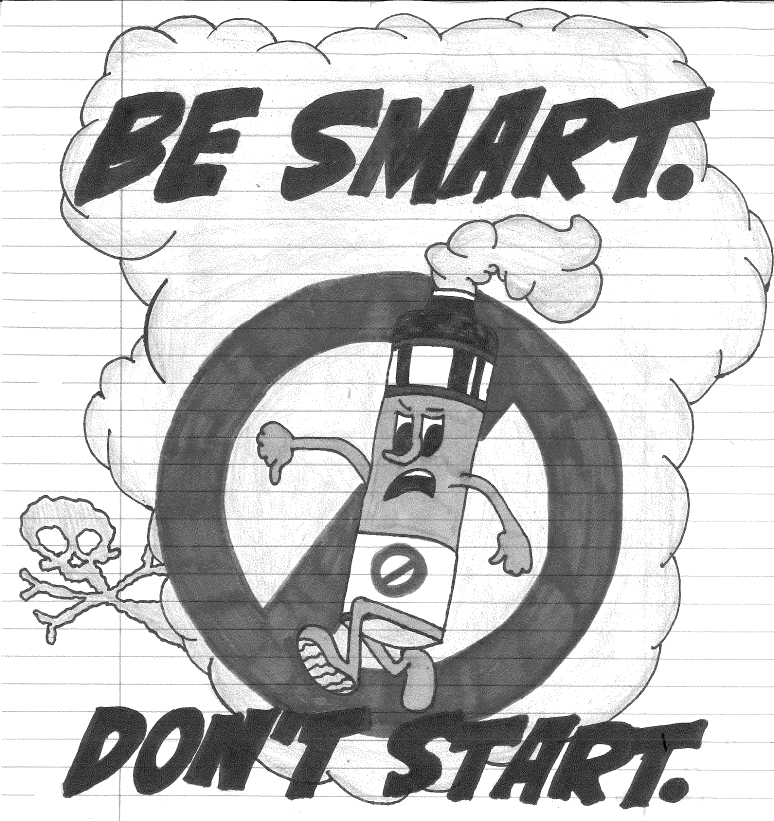
According to safety and security supervisor Brian Mitchell, there are even greater consequences for vaping that may involve the law.
“It depends. If it’s nicotine, it’s a school suspension and your parents will be notified. If it’s THC, a second offense right now is an arrest; a first offense they can give you an opportunity to go to a drug class and the paperwork will be submitted to the prosecutor and you possibly could still be charged.”
School Resource Officer Tyler Robinson said one way to prevent problems with vaping is to never start.
“For students to avoid it, don’t start and don’t feel peer pressured into doing it.”
Some students are against vaping and are worried the school is not addressing the issue.
Sophomore Shelby Ramge expressed her idea of how the school can improve the vaping issue.
“The school can improve with the vaping issue by monitoring kids who walk in and out of the bathroom and see which ones stay in there longer than the others, and keep track of the girls/boys who go in there repeatedly after every passing period.”
Freshman Wade Van Duyn expressed a different route of how the school can better improve the issue.
“I think we could improve the issue of vaping with better facilities for those who are struggling mentally and a less toxic environment.”
Greater Clark County Schools Board of School Trustees vice president Teresa Perkins said the school corporation must follow the law when enforcing guidelines to prevent vaping.
“We must follow the law if the vape contains controlled substances. Just like cigarettes, punishments can range from in-school suspensions to out-of-school suspensions. If they contain controlled substances, the police will intervene and the student could be arrested.”
by Franki Jones
We are often inspired by social media and the influencers that come with it, whether the topic is about new clothing or shoes that have come out, or anything involving a celebrity. This is where the majority of us get our information from.
One thing that I find to be very overlooked when it comes to emphasizing and piquing the young adults’ interest is anything involving body shaming and body positivity.
I find this to be very interesting and it’s one of the problems with this generation. Many men and women often feel pressured to measure up and match the strict and unrealistic social and cultural beauty ideals. I believe that this is because it’s not hard to catch the attention of the new adults and even older people that may acquire social media.
Everyone is beautiful and we need to learn to love ourselves for who we are and who we were made to be. We are all here for reasons that nobody else in this world will understand unless we make it known.
Social media is the place where we see others that we believe look better than us or that may have a better body than us. It’s truly very sad that this is a common problem and society makes us feel badly for speaking up about it. They make us feel like loving ourselves for who we are and who we were made to be is one of the worst things to be done, and it’s truly not.
Body shaming is something that I never really understood. “Nobody is better than any other, so why do they treat people that way?”, is a question that I asked myself growing up.
Getting into my teen years, I started to see how others were treated because of how different they were from other people’s standards. It was wrong for a girl to be taller than 5’3, wrong for a boy to be shorter than 6’0. The difference in reactions that were given when someone that was bigger wore a skirt compared to someone who may be slimmer wore it conflicted me.
Why did it have to be this way?
Many of us do not realize that some of the people that we look up to and who we want so badly to be like or look like are some of the same that look right back at us, wishing that they had what we have.
We are beautiful and we need to learn to love ourselves for who we are and who we were made to be. We are all here for reasons that nobody else in this world will understand unless we make it known.
To read an objective story on the impact of social media on teens, click on the link below:
by Layla Anderson, Isabella Murray, and Lola Mays
Social media impacts many people, but severely influences teenagers due to their generous use of time on social media.
One of the most popular apps among teenagers is TikTok. The Pew Research Center states, “…94% of teens say they use social media, with 46% of all teens saying they use it almost constantly.”
Social media is one of the contributing factors to the increasing poor mental health of teenagers. Yale Medicine states, “Over the last decade, increasing evidence has identified the potential negative impact of social media on adolescents. According to a research study of American teens ages 12-15, those who used social media over three hours each day faced twice the risk of having negative mental health outcomes, including depression and anxiety symptoms.”
French teacher Dana Schenk agreed, saying, “It can be a potent influence on their mental health because they do not have the tools to protect themselves when it comes to things that make them depressed or sad or unhappy with their lives. They do not know how to find resources in themselves to move on and not pay attention to all that.”
Talkspace therapist Cynthia Catchings said on September 2023, “Mental health can be affected by social media when there is no clear understanding of how it works. Although teens know that not everything on social media is real, they may still be influenced and experience negative emotions that create feelings of worthlessness or low self-esteem.”
Teachers over the years have been seeing an increase in poor mental health in teenagers. But, poor mental health isn’t the only danger of social media. The influence of social media is alarming. Teenagers are being pushed to do all kinds of things, good or bad because they see someone online doing it or want to be like another person on social media.

A very common social media influence we see in teenagers is body image. Teenagers are driven to want to have this “perfect” body because they see someone online have it.
English 12 teacher Emmaly Rose said, “Teenagers are influenced the most by body image standards, materialism, and social validation. Social media platforms often prioritize beauty, wealth, and social status, which creates unrealistic expectations of what is ‘normal.’ Teens may feel pressured to conform to certain trends or viral challenges.”
When students feel badly about themselves, studies show that students project it onto other students and pick on or even bully their peers to make themselves feel better.
“Social media is one of the main contributors that we see when students are being picked on. Social media makes it easy because people can hide behind it. Sometimes they don’t even know who the identity is, which means it’s really hard to monitor inside and outside of school, and it’s very hard to control,” said assistant principal Jennifer Gohmann.
Social media isn’t just a problem online. It also brings in problems inside the school. If students argue over social media they will bring those problems into the school.
Rose said, “These outside problems can create a hostile or stressful school environment, making it harder for students to focus on learning. It can create tension in school hallways, among peers, and even in the classroom.”
Misinformation is also a result of relying too much on social media rumors.
“Some things to be wary of is: becoming isolated and not learning in depth. A lot of times we don’t verify the information. Believe everything you see. And nobody questions it if you have too much information. How do you sort through all that to make sure it’s from a verified source? Make sure you’re not following somebody that is giving you dangerous ideas and promoting bad things,” Gohmann said.
Just because there are some bad influences on social media doesn’t mean they can’t be good ones too. Some common good social media influences are better communication, finding your voice, growing businesses, building communities, connecting with new friends, and many more.
“You have a lot of very interesting people posting stuff on social media because it’s a platform for everybody, so as long as you have that good part and good influence that you have that you follow things that can teach you something and make you a stronger person or more understanding person or that you learn something, then it could have a very good influence,” Schenk said.
Teenagers can protect themselves by distancing themselves at times from social media distractions.
Schenk said, “Set a timer, be economical with your time, be greedy with the quality of what you’re watching. Always think of ‘Did I learn something today?’”
To read senior Franki Jones’s opinion column on social media and body image, click on the link below:
JHS defeated the Brownstown Central Braves 61-43 last night, ending their 18-game winning streak and improving their record to 15-5.
The Red Devils face off with Evansville Reitz (14-3) tonight at 8 p.m. in Johnson Arena.
Click on the photographs in the gallery below for coverage of last night’s game, and check out thehyphennews.com next week for coverage of tonight’s game against Reitz.
All photos by Madison Pritchard.
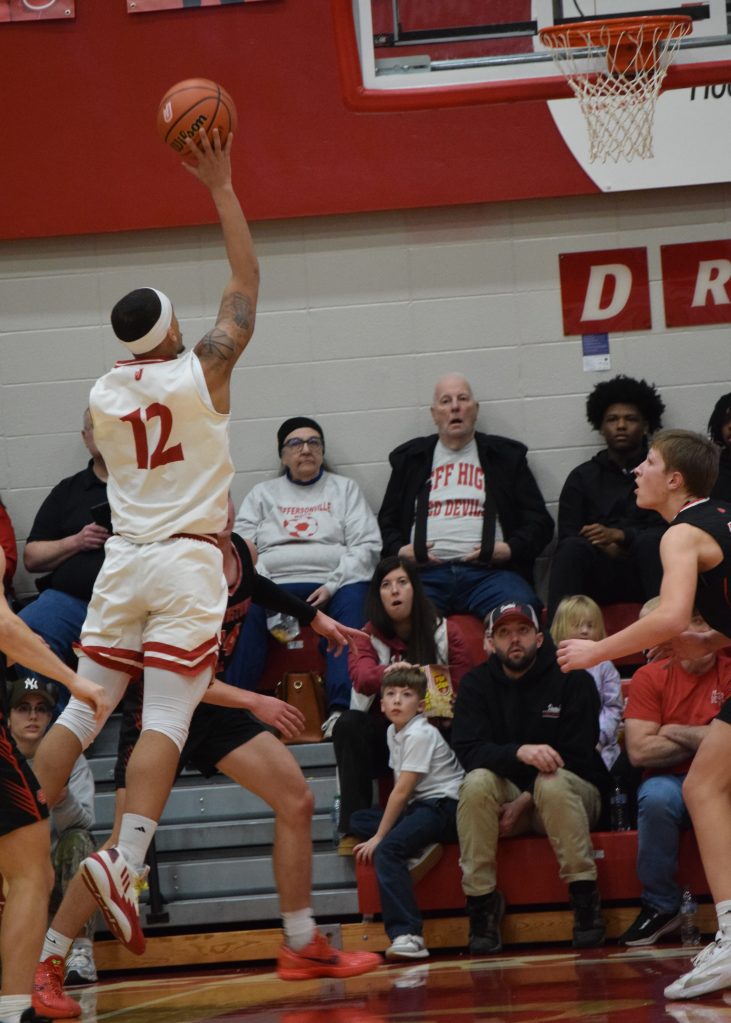
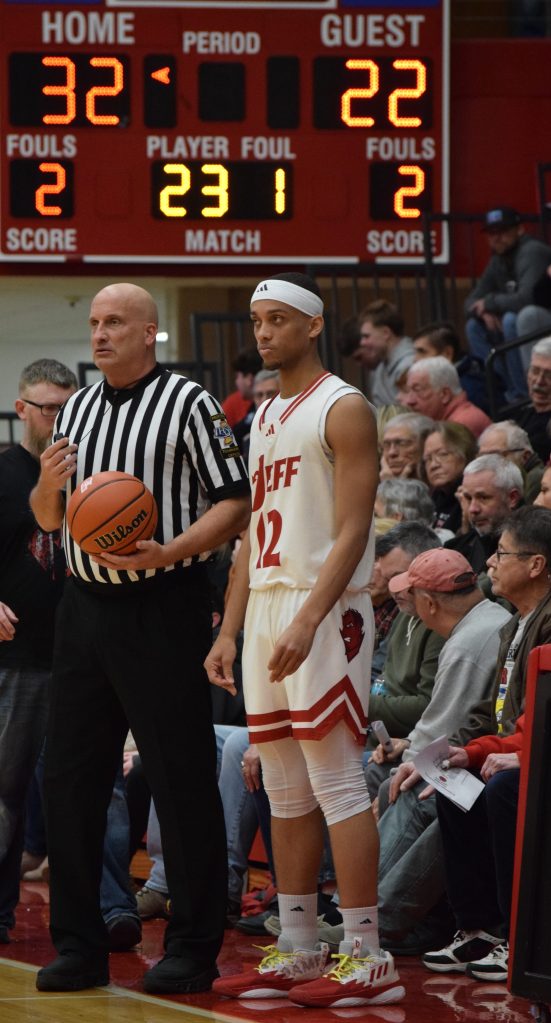

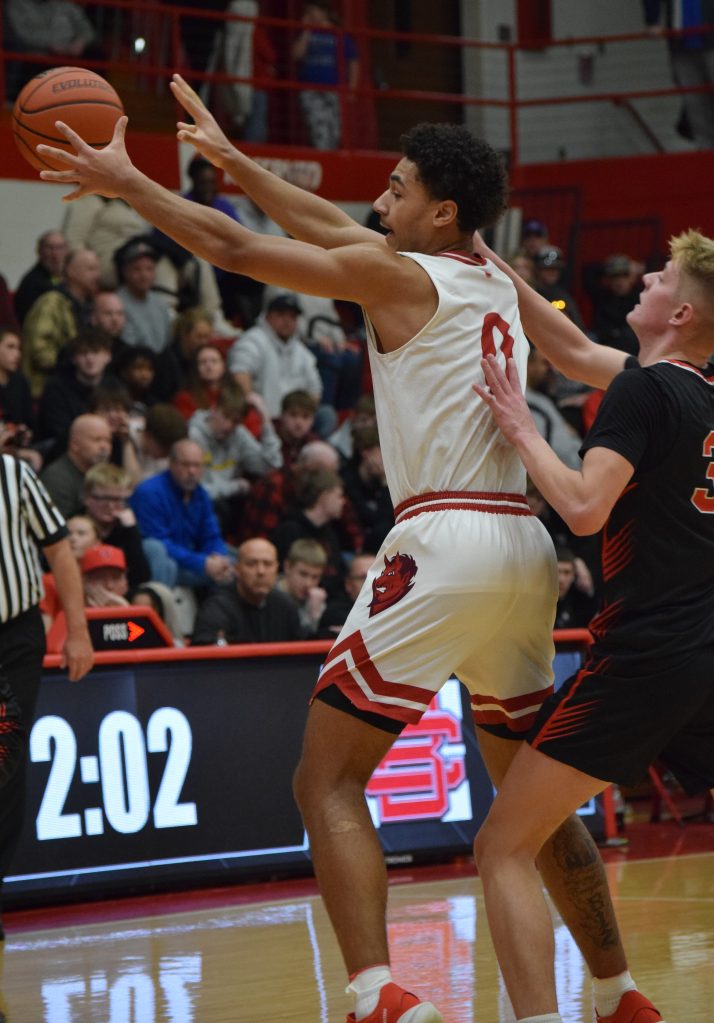

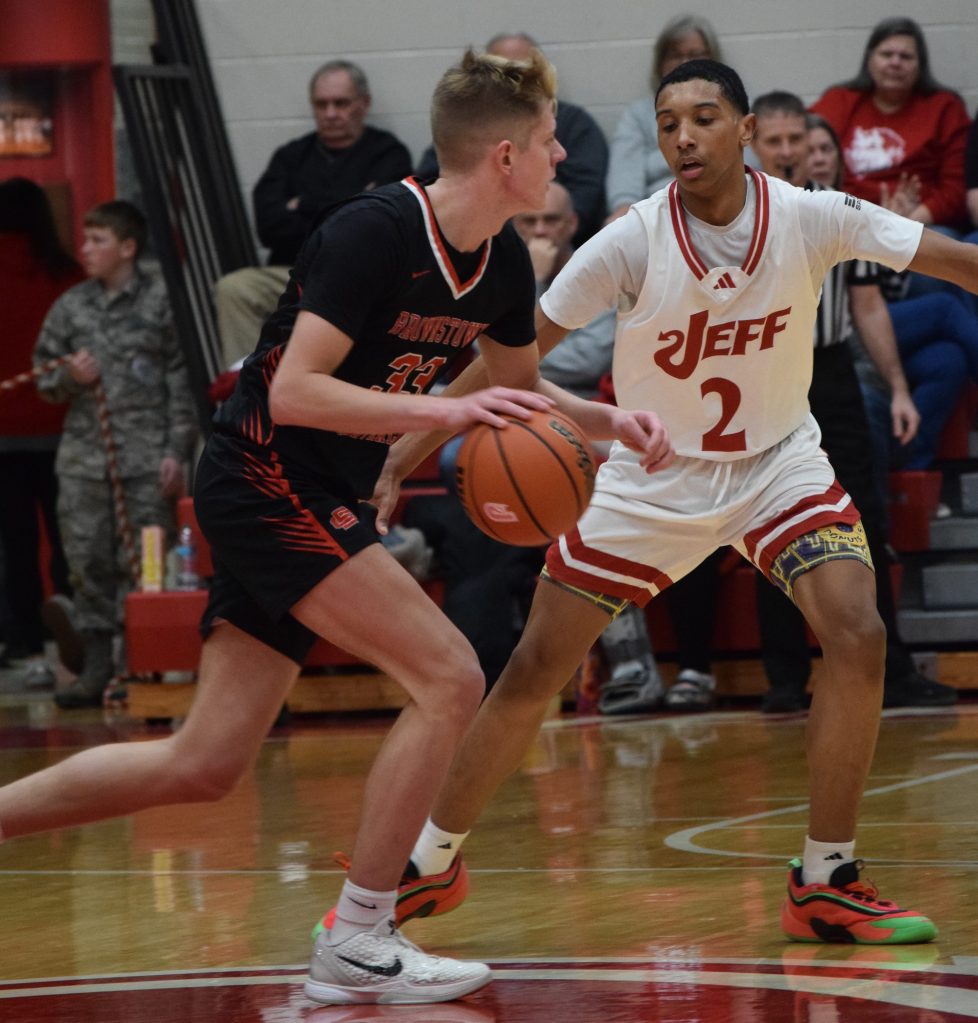

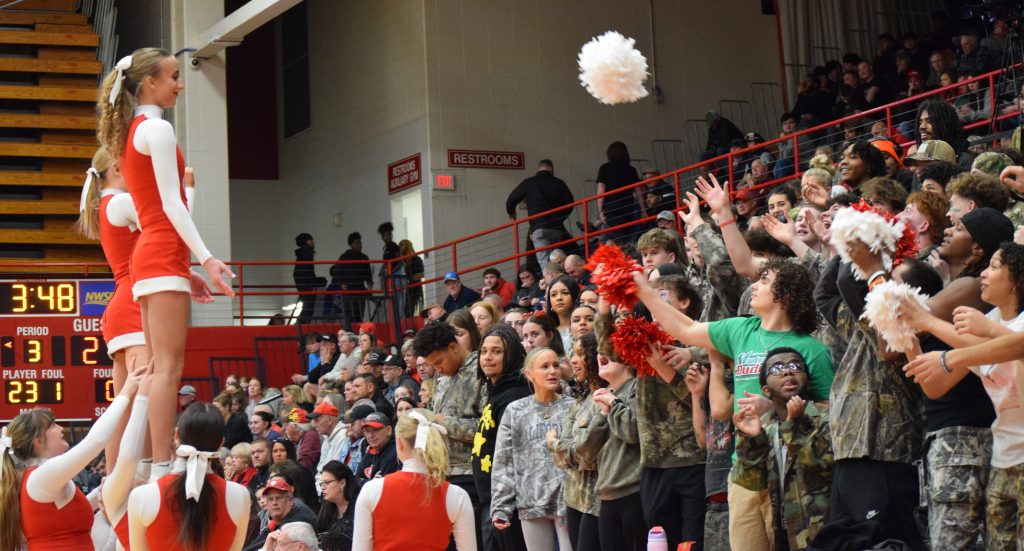

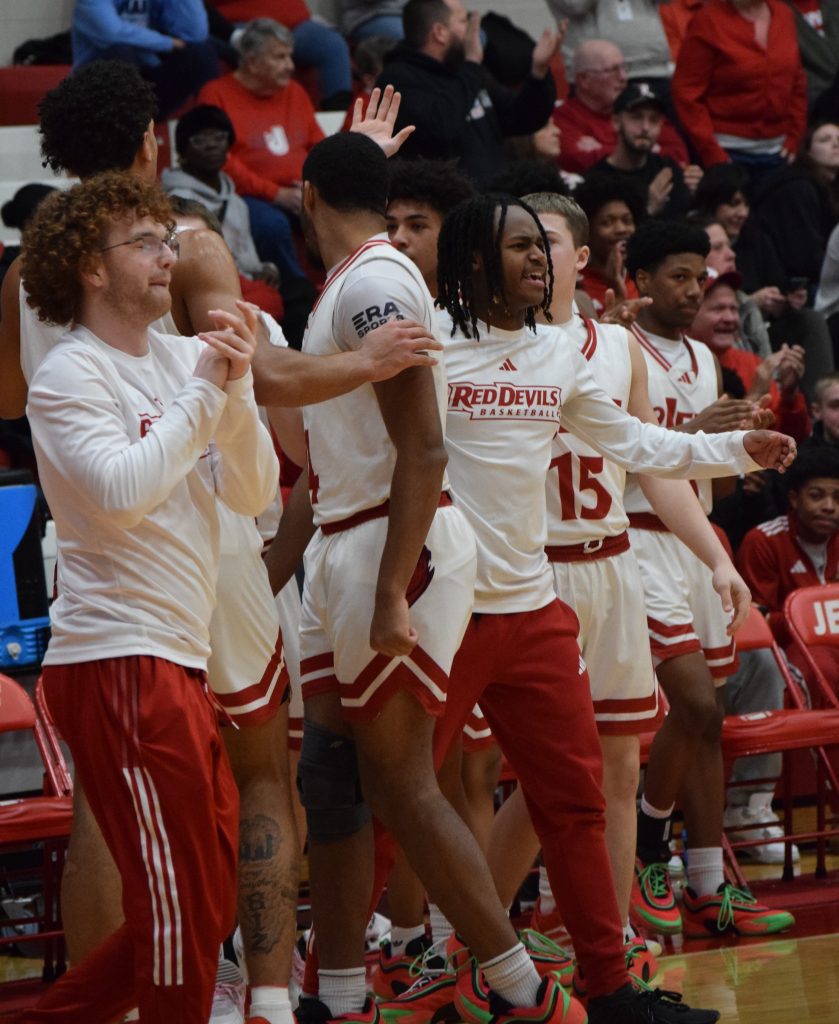
Update: 9:15 p.m. Thursday — JHS beats Brownstown Central 61-43, improving to 15-5.
by Austin Bainbridge
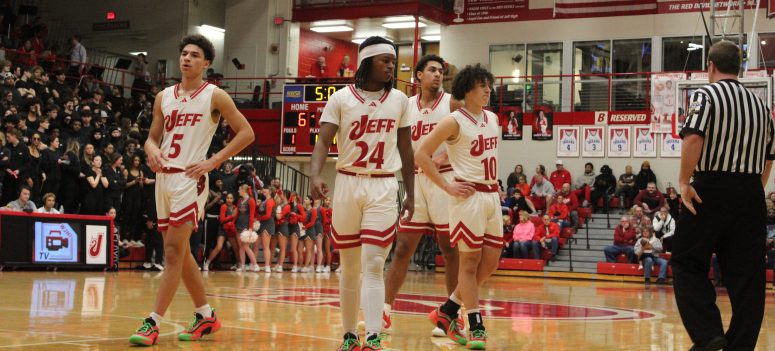
With Sectional knocking on the door, the JHS boys’ basketball team is facing two tough opponents tonight and tomorrow, both contenders for the state championship.
After securing first place in the Hoosier Hills Conference against New Albany and defeating Jennings County 72-69 last weekend, JHS (14-5) will play Brownstown Central (18-0) tonight, and Evansville Reitz (14-3) tomorrow night, both at home.
“This is a benchmark game. I think Brownstown is the epitome of high school basketball. I think if coach Bobby Knight were alive he would be extremely pleased with the way Brownstown plays the game of basketball. I think when you play teams and programs like this it offers you a true test of where your program is and your ability to win,” said head coach Sherron Wilkerson.
Brownstown Central has not lost since Jan. 5, 2024. Their record stands at an untarnished 18-0 on the season.
“To beat Brownstown, I think we are going to have to play extremely well on the offensive side of the floor. I think we will have to limit our turnovers, and we will have to make our free throws,” said Wilkerson.
With Sectional and the IHSAA state tournament right around the corner, the players and coaches know how to prepare for the pressure of big playoff moments.
“To prepare for the playoffs we make every practice as tough as possible. In fact, we create scenarios that get unfair to our guys so we can get used to playing under pressure,” said Wilkerson.
The fans are also geared up and ready for the playoffs.
“With the playoffs coming up soon I think Jeffersonville has a good chance of winning the state championship. I hope that they will come out with everybody healthy and ready to play. If they keep practicing to get better and play their style of game they will find success in the postseason,” said freshman fan Jacob Fifer.
In the playoffs the team expects four-star center Tre Singleton to get most of the attention from defenses, but that could open up opportunities for other players.
“Tre is the center of attention for our opponents’ scouting reports, and so with him, that can give other guys opportunities,” said Wilkerson.
Jeff won the Hoosier Hills Conference against rival New Albany, but the coaching staff still is focused on winning it all.
“Winning the division is a goal that we have had since the start of the season, and I think us doing that has shown our maturity and our ability to deliver under pressure, but we still have a larger goal of winning the state championship,” said Wilkerson.
Even though Brownstown is better than Evansville Reitz the coaching staff sees them both equally.
“We see both games equally. We might even see Reitz again if they win their sectional and everything shakes out right; they could be a regional opponent,” said Wilkerson.
The JHS-Brownstown game is tonight at 7:30 p.m. The Red Devils face Evansville Reitz tomorrow night at 7:30. Both games are in Johnson Arena.
by Romier Hunter-Lawrence
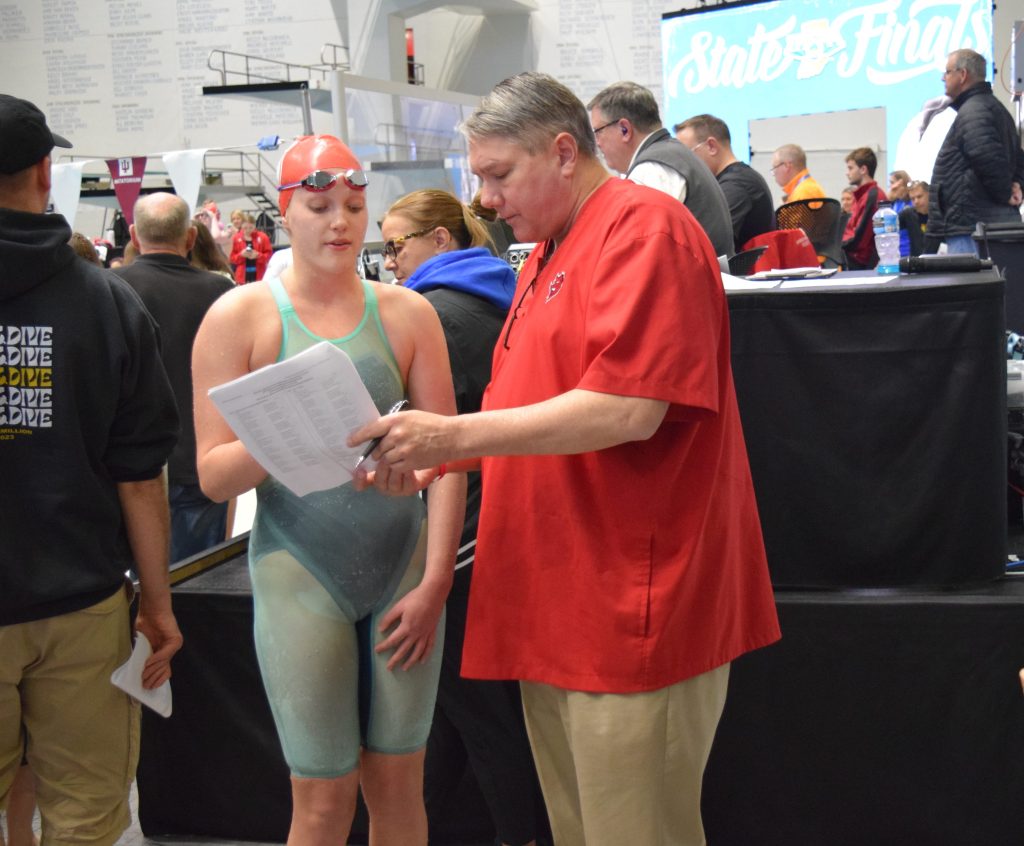
A 9-picture photo gallery from varsity senior swimmer Maggie Nifong competing at state for the third year in a row.
Nifong competed in the 200 IM and 100 fly. This was her last high school meet, wrapping up her high school swim career. She will continue to swim at a Division 1 level at Indiana University Indianapolis.
Click on the photographs in the gallery below.




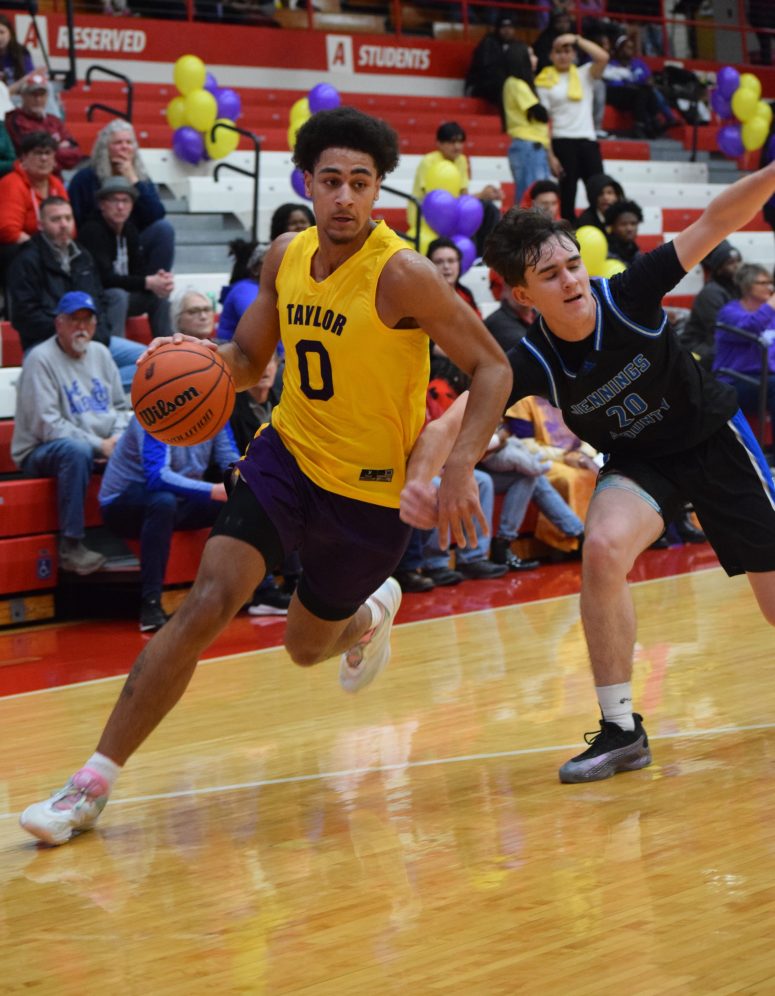
JHS hosted a community celebration of Taylor High School on Saturday, Feb. 15 in Johnson Arena, an event that featured competitive Southern Indiana basketball and recognitions of former faculty, administrators, and students of Taylor.
This story and gallery will be updated throughout the next few days, so check back for more photographs.
All photographs by Madison Pritchard and Brian Juarez.


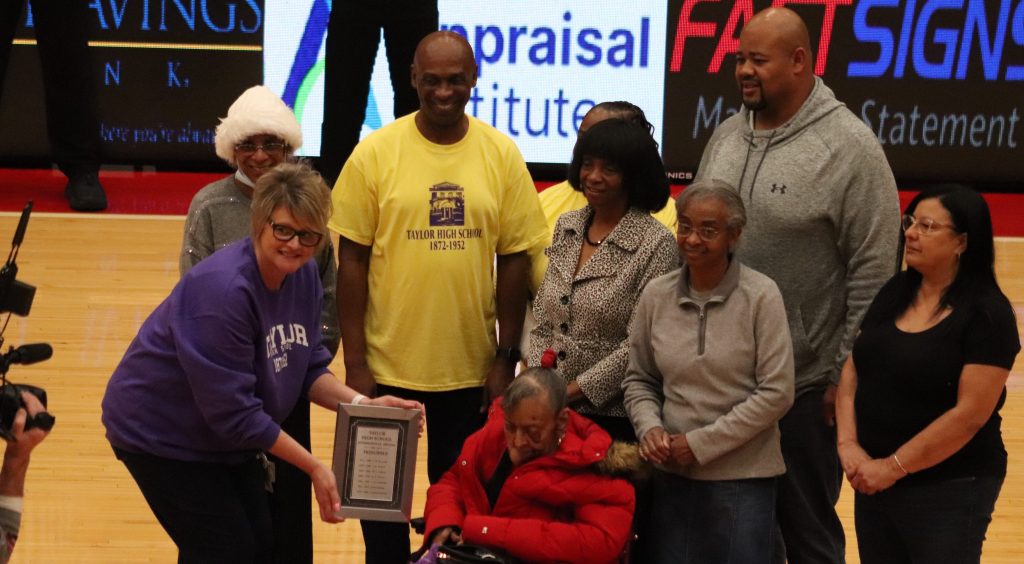


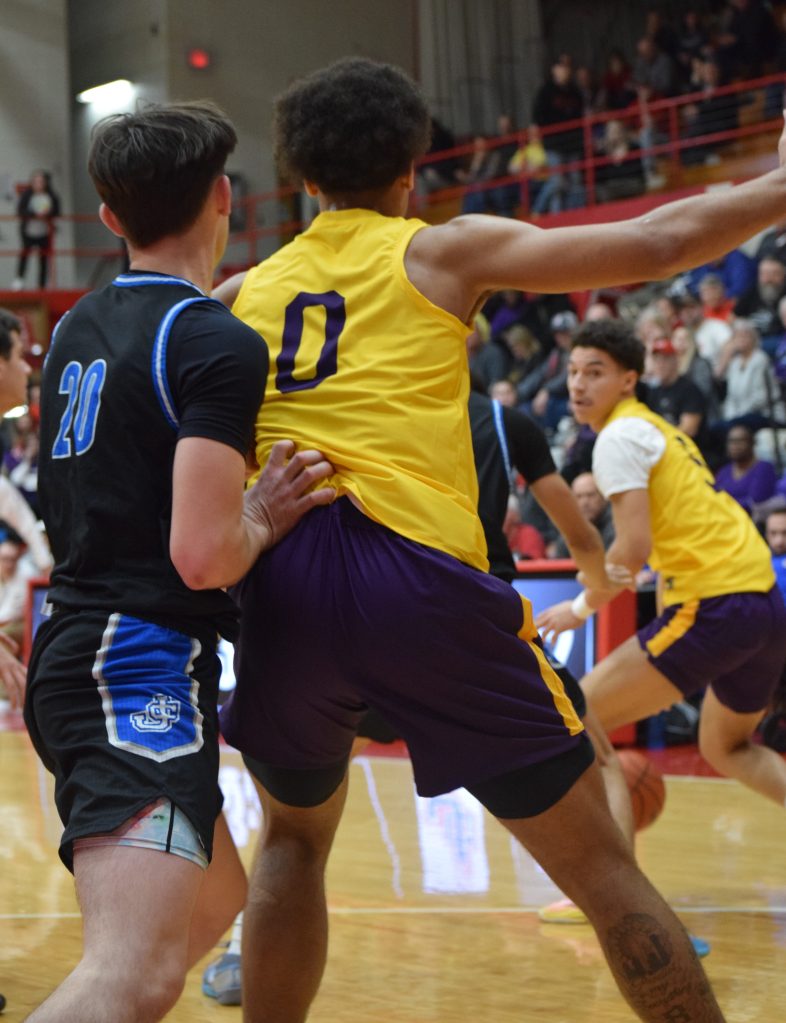


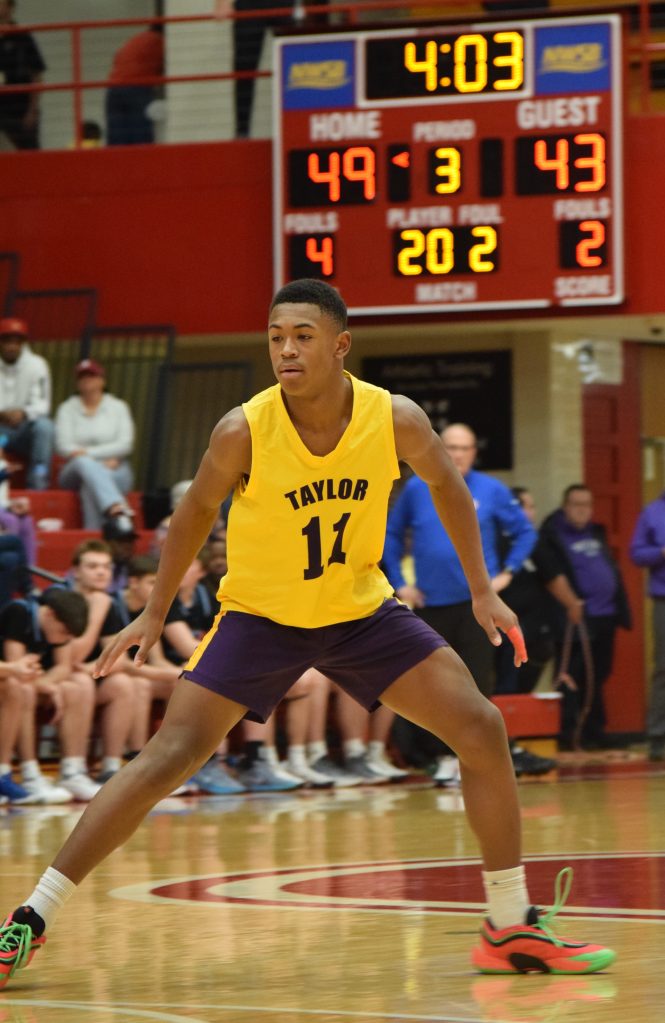
by Brian Juarez
Valentine’s Day isn’t just for couples — it’s the perfect time to celebrate self-love and independence. While the world may be filled with heart-shaped chocolates and romantic dinners, being single doesn’t mean you have to miss out on the fun.
This day can be an opportunity to treat yourself, spend time with loved ones, or indulge in activities that make you happy. Whether it’s a solo adventure, a night of relaxation, or a gathering with friends, there are countless ways to make the day special.
So, instead of dreading Feb. 14, here’s a list to do on Valentine’s Day single:
Being single on Valentine’s Day is just another reason to celebrate yourself. Do whatever makes you feel happy, loved, and fulfilled.
No matter how you choose to spend Valentine’s Day, remember that love isn’t just about romance — it’s about celebrating yourself, your happiness, and the people who make life special.
by Teagan Cofie
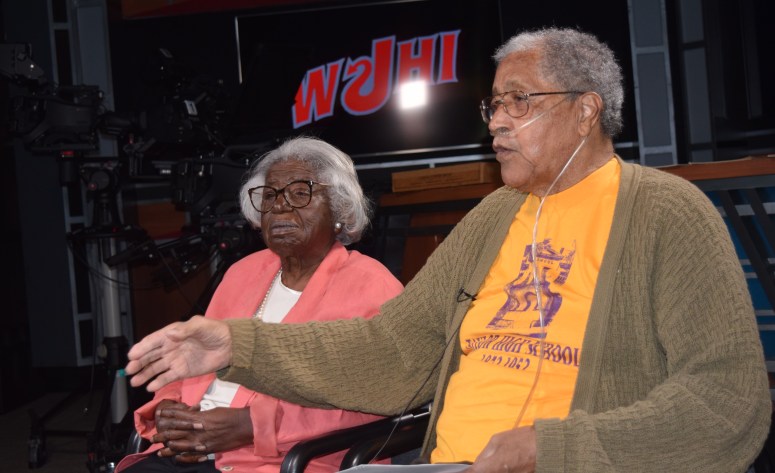
A historical marker with a long history, Taylor High School at 821 Wall Street in Jeffersonville was first built in 1891. It is a living representation of the turmoil and struggles that African Americans had to overcome just to receive an education.
Originally named “City School,” then later renamed after its first principal Robert Frank Taylor, Taylor High School stood as Jeffersonville’s designated black school until Jeff High’s integration in 1952.
Though segregation legally ended in 1954, before then many African American students in Jeffersonville had to overcome many obstacles to receive a fair and equal education. Both Flora Clipper and Frank Baines attended Taylor High School during its operation as a segregated school in the mid-1900s.
“The time, the times are different,” said Clipper, Taylor Class graduate of 1940.
According to Clipper, the typical day at Taylor had similarities and differences to modern schooling. Now, most students are driven by bus to and from school; however, there was none of this convenient transit at Taylor. To get to school, students’ legs were their best friends.
“I remember all was walking,” said Clipper. “There was no transportation. You would start [class] by about 8. School would start and you get in your classroom and we would move from class.”
Class sizes were also significantly smaller because of the modest size of the school. ”This is my graduating class – seven girls and six boys,” said Baines, holding up a photo of 13 former Taylor students.
The school did not contain any designated room or section for extracurriculars due to lack of funding. As Clipper shared, “Taylor High School had no auditorium or anything that could accommodate. Even the high school that we had, they were just rooms.”
Flora said the lack of extracurriculars included a lack of yearbooks during her time there.
“We didn’t when I was coming up, we didn’t have any yearbooks…we [Taylor students] couldn’t afford it. But not long afterward when Frank came… in his days they had nice yearbooks.”
There were a few electives or skills that those who attended could participate in. Baines specifically spoke of typing classes. These classes were a way to give Baines opportunities in the military.
“I’m in the military and I spent the three years in the military as a clerk typist from learning typing,” he said.
Though opportunities like these were not often given to students, it’s very clear how beneficial they were in the long run for students like Baines who took these skills into the real world.
This lack of funding and extracurricular activities limited the opportunities and didn’t give the students of Taylor the same array of choices that might have been given or received by white students just around the street.
Because of the school’s underfunding and society’s prejudice, others’ opinions regarding their intelligence were often unfairly misconstrued when compared to students at other local schools.
“Jeff High, even though it was a segregated school, it was a privilege to live on the street with some white girls, who were [white], but became as close as my own sister,” Clipper said.
She had one friend in particular, who she’d expressed her thoughts to.
“I would tell her about how he would make us feel bad about it, ” Clipper stated, referring to a teacher who would compare Taylor High to Jeff.
“It’s even assumed that the students were doing much better than we…and sometimes she would help me with my work or I would help her,” she continued.
The inherent racial prejudice and judgment that was placed on the shoulders of Taylor students just because of the color of their skin and the school they attended was not an accurate representation of the intelligence of Taylor students.
There were many issues that affected the livelihood of these students at the time, such as what is referred to as the Great Flood of 1937, from the destruction of many buildings and homes. Many students were forced to quit school and get jobs to support their families. Situations out of students’ control greatly affected their lives.
Yet despite all these barriers, many African Americans still went on to have successful futures, examples like Clipper who worked for the United Methodist Church as a deaconess for over 38 years, all in community centers working with young children while living in seven different states.
Additionally, Baines played for the Taylor basketball team and then joined the military as a clerk, typing for the military. He and Clipper both said they lived successful and complete lives, despite all they both had to overcome.
There has been a major push in the last few years for some way to recognize the history of Taylor High School and its students and faculty.

In addition to being designated as a historical marker, Jeff High will commemorate the Taylor school and community this Saturday, Feb. 15, during the Jennings County basketball game in Johnson Arena. Purple and gold Taylor High School gear will be worn by players, cheerleaders and staff as a way to pay tribute to the school’s long and important history. Taylor students and staff will be recognized, and WJHI will show a documentary during Saturday’s festivities.
Principal Pam Hall said Saturday’s event will bring light to the history of Taylor.
“It’s important to commemorate the impact it had on the city and community,” said Hall.
Senior forward P.J. Douglas said Saturday is “something that we need to know, something everybody needs to know. It’s important.”
Festivities will begin on Saturday after the junior varsity basketball game.
Check back next week at www.thehyphennews.com for coverage of Saturday’s event.
To read more about Taylor High School, read these Hyphen stories:
The History and Legacy of Jeffersonville’s Taylor High School
Taylor High School graduates share Clark County history in interview with Hyphen, WJHI
Additional reporting by Arissa Washington and Trista Denny.