by Jackson Anderson
While energy drinks have been popular among students, side effects have been a concern for teachers, nurses, and parents.
The popularity of high caffeine and sugar drinks worries many parents and teachers, including nursing assistant Donna Poole, who described the side effects she sees working in the JHS health office.
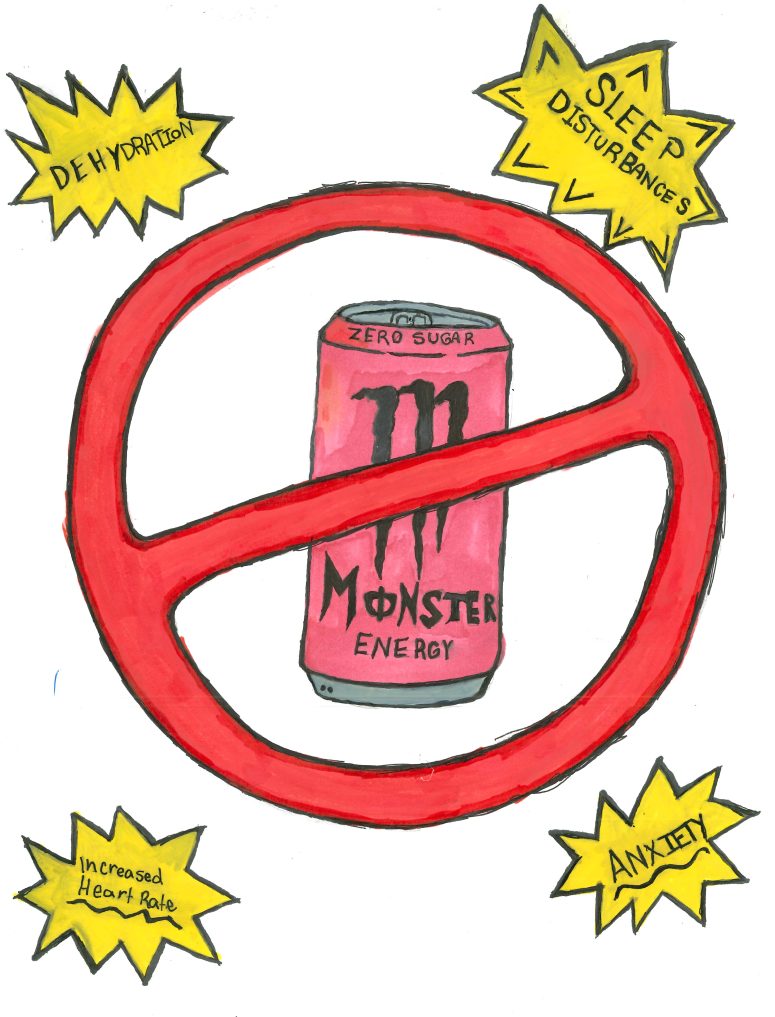
“All of these things can be side effects — high blood pressure, mental health. You can have anxiety, irritability, restlessness — all of those things can be affected by too much caffeine,” she said.
Poole said that these side effects can be activated by consuming energy drinks on a daily basis. This excessive amounts build up a negative dependency in human systems.
“If you drink them on a daily basis, you are building up a dependency. So then if you don’t have them, like I said, you’re going to get side effects — headaches, not feel good. You’re going to be lethargic,” she said.
Abusing the consumption of these drinks can highly affect children’s growth, restricting bone acquisition and causing hormonal imbalances due to the high caffeine and sugar levels that energy drinks carry.
“It’s better if you can just not get to that situation, where you are dependent. Everyone has to make their own decisions about that; we just need to be educated on what it’s doing to us,” said Poole.
The American Academy of Pediatrics warns that these drinks can be harmful and addictive, increasing the risk of excess weight gain, cavities, heart disease, diabetes and fatty liver disease.
These energy drink companies just market their products as fun drinks with bright colors with trendy styles and formats, designed specifically to attract teenagers, according to The Guardian. Poole described these advertising techniques as a negative way to hook teenagers.
“They package them to target kids; they make them look good. They make you want them, so I mean it’s just that we need some healthier alternatives.”
Sophomore Makenzi Middleton said she drinks energy drinks, listing a variety of flavors, and described how the brand Alani listens to their consumers.
“One reason why I really like that brand is because they listen to people’s ideas a lot, like people will talk about ideas they like, and then you might see it coming out. Like the cotton candy energy drinks were limited, and people wanted them back, so they brought them back, as well as two other flavors,” she said.
The company Alani creates new flavors based on consumer recommendations. However, Poole finds even these tactics to be a problem — “tricking teens” to buy their product that is advertised to be positive and give a “quick boost of energy,” but still doing damage.
“I just hate to see the damage that’s being done by energy drinks. Personally, I don’t think kids should be allowed to buy them, but they’re going to get them anyway. I mean that’s how kids are, we always find a way, doesn’t matter if you’re supposed to or not,” she said.
Poole explained that educators and health officials still make it known that energy drinks carry dangers and the effects that they can cause, especially to young audiences.
“You live and learn. I do know everybody here is concerned and knows the dangers, the teachers and the staff know the dangers for kids,” she said.
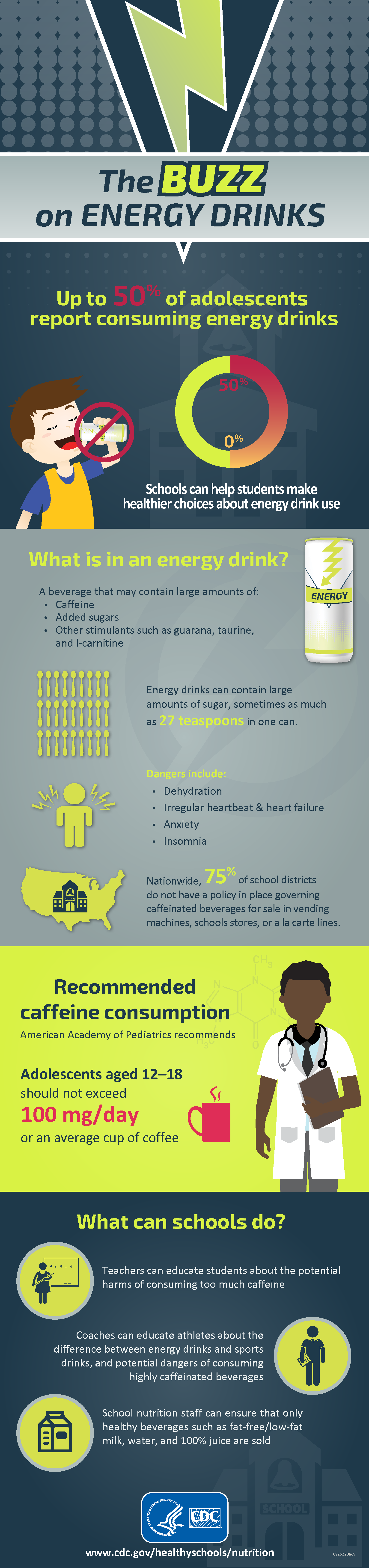
There is no federal legal age requirement for teens to purchase energy drinks in the United States. While no national law exists, both the American Academy of Pediatrics and the Center for Disease Control and Prevention (CDCP) recommend that adolescents from ages 12-18 limit their caffeine consumption to 100 milligrams per day.
These drinks hold a dangerous level of caffeine, all the way up to 200-plus milligrams. For comparison, the average cup of coffee is 80-120 milligrams. That’s about less than half the usual energy drink
It is highly recommended for consumers to drink one a day maximum, considering the average intake of caffeine in a day should be around 100 milligrams, which is far less than many cans hold.
AP biology teacher Melissa Brewer supported limiting caffeine, saying, “You’re not supposed to have that much caffeine maybe in a whole day, but I see kids drinking two or three of those a day.”
Coffee may be better slightly statistically than an energy drink, but Brewer said teens must be wise with the amount and consistency they drink to avoid addiction.
Poole agreed. “I like my coffee a lot, but your brains are still developing, so it affects you all more. A lot of these kids, they drink so much of it, they really feel the effects of it, so I mean everybody has to use their own everything in moderation.”
For senior Natalie Hollins energy drinks are something she can control on a daily basis.
“I consume energy drinks because they give me a boost through days that I’m tired or having a bad day, but I don’t drink them as often as I used to, so l’d say maybe twice a week.”
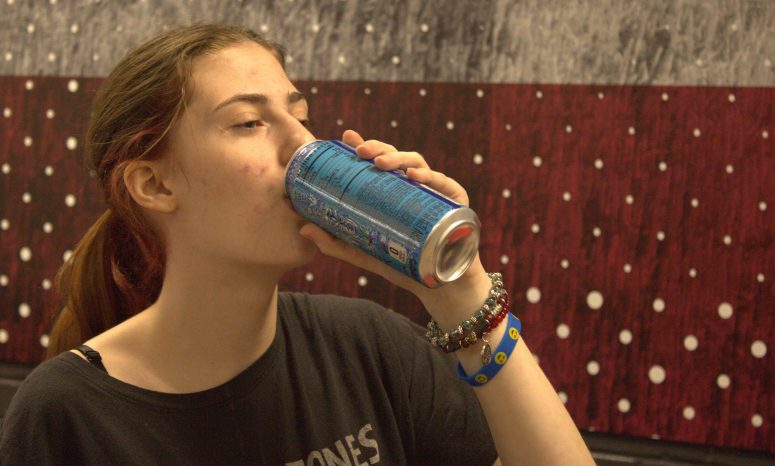
While some teens control their energy drink intake, others avoid the drinks altogether.
Sophomore Ethan Jenkins said, “I don’t consume energy drinks because it can ruin your sleep schedule, it’s unhealthy and for some even unsafe for your heart and blood sugar levels. I wouldn’t try one — it seems too dangerous and not worth it at all.”
Sophomore Dana Romero Regalado said she has noticed these side effects, too.
“At times, I have experienced side effects such as feeling jittery, an increased heart rate, and difficulty falling asleep if consumed later in the day.”
At the end of the day, research links energy drinks and caffeine to negative health effects, which is why JHS does not sell them at lunch and stocks vending machines with lower calorie drinks that are all zero sugar.
 thehyphennews.com