Click on the link below to view the December, 2025 issue of the JHS Hyphen that was distributed on Wednesday, Dec. 17, 2025:
Tag: Jeff High
Columns: The Devil’s in the Details
Behind-the-scenes look reveals the challenge of performing and competing in marching band
Editor’s Note: Check out pages 12 and 13 of the December, 2025 print Hyphen for a photo essay on the marching band season.
by Cherish Brown
“You’re just walking, it’s not that hard.”
This is what I hear when I try to express that marching band is just as hard as a sport. I wouldn’t be too upset if people told basketball players that “you’re just throwing a ball in a hole,” or told baseball players that “you’re just hitting a ball with a stick.” But no. Instead, they get praised for their hard work, while people overlook ours. So here’s what actually goes into the halftime show that you see at football games.
The first lesson we had to learn was how to march correctly. It might look like walking to some, but it’s a little bit more than that. There’s a specific technique that we have to use going forwards and backwards. To go forwards we had to learn to walk while keeping our legs straight, and also roll stepping. Roll stepping is rolling off your foot into the next step to make it look smooth instead of robotic.
Now for backwards. We have to walk on our tippy toes, while keeping our legs straight, and we can’t look backwards. If we don’t march on our tippy toes when we go fast, we will fall.
Now that we know how to go forwards and backwards, we now have to learn how to go sideways. The weird part about it is, we can’t have our shoulders facing anywhere but forward unless we are told otherwise. So, to march sideways, our bottom half has to face sideways, but our top half is facing forwards. The only people who don’t do that are the drumline, who crabwalk, and the battery, who don’t move.
“So no, we’re not just walking. We’re working hard, competing, and most of all, performing.”
We can’t just have you watch us march, though; that would be too boring. We had to learn how to play the music. To be honest, it’s really hard music. In the first piece we all have to play 16th notes, which is four notes per beat, which means you have to be quick with the notes, even at a slow tempo. And the second piece is at 160 beats per minute, which is double the speed of the second piece. And all that is hard enough while sitting down and looking at it, but when we’re marching, we have to play off of memory.
Now, we have to learn where we’re going, and how the music relates to how we march. The thing is, we aren’t just marching to random places. If you’re high enough in the stands, you can see that we make shapes with where we’re standing. We have to march to specific places, which are called our sets. And we have to learn the entire song while only marching before we can even grab our instruments.
Then we start playing. We have to go by each set (or spot we’re marching to) and learn which part of the music goes where. It takes a long time, especially because there are three different pieces we have to put together. So, we take many days of practice just learning how the music and our sets relate to each other, when we’re supposed to get where, and how big or small of steps that we have to take to make it on time.
Then, we have to make it look cool. We add what we call our choreography. It’s not actually dancing, like the color guard does with their flags. We do different things. Our choreography includes lunges, pliés, and forced arches. And we usually do those while we’re not moving, so we don’t look like we’re just awkwardly standing there. We also do these while we’re playing our music, so it has to match up with what’s happening musically.
Now we take all of this, that we started learning before school even started, and put it together for everyone’s entertainment. But there is something we do that many people don’t get to see.
We perform and represent the Jeffersonville Red Devils at our own competitions. We competitively perform in front of judges, against many bands in our district. This season our hard work led to an appearance at the state finals, where we placed 15th.
Our hard work got us there — work done over many months, and for some of us, years. I hope this season we’ve made everyone proud, especially the seniors, who have helped us all throughout this season.
So no, we’re not just walking. We’re working hard, competing, and most of all, performing.

Marching band is clearly a sport
by Caitlyn Brock
Marching is a sport.
I’ve done my first season now in drumline, and it was some work. We had to learn how to march, and we stood for hours on end and didn’t get many breaks. During a typical school week, we practice for 8 1/2 hours of just practice alone, not counting all of band camp and competition days, with some Saturday rehearsals We went to scholastic prelims to qualify for finals and ended up getting 6/7 bands and went to scholastic finals, which took place in October.
Marching band is obviously a sport. First off, it requires physical exertion and skill, just like football or soccer. Next, we compete against other marching bands for a score which also can lead to finals, which other sports have, such as basketball. Finally, it’s done for entertainment, especially because of all the visuals and drill.
Initially, people would think that marching bands are laid back and easy, that all the instruments are not that big and don’t weigh that much, but that is wrong.
Drums can go from being 16 pounds all the way up to 70 pounds with gravity, which can be super difficult. Sousaphones weigh about 50 pounds, and all of those weights can be difficult depending on the person and size, with also having the marching around for 6-9 minutes (depending on the show length) while hitting all of the visuals and drill spots and playing all of the music by memory. That is a lot of expectations for high school musicians.
“Marching band is obviously a sport. First off, it requires physical exertion and skill, just like football or soccer. Next, we compete against other marching bands for a score which also can lead to finals, which other sports have, such as basketball. Finally, it’s done for entertainment, especially because of all the visuals and drill.”
Nobody talks about the demand for marching bands. We’re expected to learn music and hit the drill fairly quickly, given the limited time available, as rehearsals are often lengthy. Some days we are expected to start rehearsal as early as 6:30 a.m., going as late as 5 p.m., and marching in the heat is a whole different story.
We compete just like other sports. We have scholastic prelims — which would be called sectionals for other sports — and scholastic finals, which we get to go to. But we compete against other bands at different schools and get a score. Our scoring may be different than other sports, but we still compete.
Others may say that we don’t run around and throw around a ball or even have the same scoring as other sports, and we don’t do it for any entertainment, and that’s where they are wrong.
That comes to my final reason. Doing all of this work for one show is all for entertainment. We make the whole show look good just for the eyes of the judges and the people watching. We play music that people know for their enjoyment, too.
So that brings us back to one question. Is a marching band a sport? Yes, it is. We dedicate a lot time to it, and we march and play music for hours on end and compete for a score.
And we obviously do it for entertainment, because that is what it is all for in the end.
Review: ‘Blue Weekend’ remains a favorite among Wolf Alice fans
by Abigail Hall
Wolf Alice, a familiar name for fans of the indie-rock genre.
The band is made up of lead vocalist Ellie Rowsell, guitarist Joff Oddie, drummer Joel Amey, and bassist Theo Ellis. They started as an acoustic duo in London around 2010, consisting of Rowsell and Oddie, but Amey and Ellis joined in 2012.
Since then, they have released four albums; their newest release, titled “The Clearing,” came out in 2025. However, one album of theirs has remained a favorite among their fans: “Blue Weekend.”

Released in 2021, the album explores themes of love, heartbreak, past experiences, and new places, all wrapped up in 11 songs lasting 40 minutes combined.
It opens with Track 1 named “The Beach.” The song begins with a faint guitar solo and references Shakespeare’s Macbeth, which sets a tone of impending drama and questions like “When will we meet again?”
The song then gradually fades into a verse voicing Rowsell’s frustration with inconsistent relationships that involve a push-and-pull trope, speaking of her experiences with trying to keep her friendships without ego. “We don’t need to battle, and we both shall win.”
Following right after is Track 2: “Delicious Things.” This song features heavy themes involving the disillusionment of fame and the feeling of being alone in a big city such as Los Angeles, describing Rowsell’s experiences with trying to fit in with the superficial crowd while also wondering where she truly belongs. “I don’t belong here, though it really is quite fun here.”
The band covers the heavy themes with a catchy beat, featuring a lot of building drums and dreamy bass guitar, accompanied by Rowsell’s ethereally wistful vocalizing.
The track fades out with a hazy, pensive repetition of a lyric describing the underlying theme, filling listeners with a sense of existential dread. “Don’t lose sight.”
One of the most meaningful songs on the record is Track 6, a heartfelt plea for happiness, titled “How Can I Make It Ok?”
The song features lyrics about trying to heal ourselves and the people closest to us, using a memorable rhythm and beat to get the point across. The whole album has an underlying sense of love, whether platonic or romantic, but especially this song. The music slowly builds from an anxious-sounding introduction to an almost desperate, angry ending, which symbolizes the growth of a selfless love.
With lyrics such as “How can I make it okay? Nothing else is as important as that to me.” and “How do we sell you the world?” the band makes it clear that they are so desperate for a close friend or significant other’s happiness that they would do just about anything, something that can resonate with people all over the world.
The album closes out with “The Beach II,” a sort of sequel to the opening number, which ties the record together in a perfect ending.
The track opens with a contrasting introduction to its predecessor, a breezy, lighthearted combination of string instruments. Unlike the themes of anxiety in previous songs from the album, “The Beach II” focuses more on closure and acceptance of the life we’re living. Through the lyrics and the softer melodies, it offers a sense of peace and solace in our friendships, rather than trying to keep hold of the stressful, contradicting experiences going on around us.
With the final lyrics being “Happy ever after” and “It’s okay,” the song closes out the album on a lighter, happier note, giving the listener a respite from the heavy heartedness laced in all the tracks.
Wolf Alice, the band as a whole, leaves listeners with a sense of fulfillment after ending the record. Their distinct, memorable style influences their fans greatly, whether they realize it or not.
Don’t lose sight.
Column: Teenagers are too young to have their whole futures figured out
by Liddia Waterbury
Teenagers shouldn’t be forced into choosing a career before they even know themselves.
Freshmen, especially here at school, are encouraged to select a career academy and are required to be in the college and career program.
Indiana added readiness seals to the diploma last year, “to better prepare Hoosier students for the future.” Out of the three, one seal is required to be on our diplomas when we graduate. One of these seals is the employment seal.
The employment seal requires students to complete a market-driven credential of value aligned to a specific occupation, three courses in a Career and Technology Education (CTE) pathway, an approved career preparation experience aligned to Indiana’s CSA program, or an approved, locally-created pathway.
With the employment seal or the plus version, students need 150+ hours of pre-apprenticeship or moderate youth apprenticeship of work-based learning. This can cause a lot of stress, as it requires choosing a pathway and completing all these hours to obtain this seal.

Teens often feel pressured to choose a career path early due to expectations from parents, society, and schools, which include programs such as college and career readiness initiatives and seals of approval. This pressure can lead to anxiety, burnout, or regret later, especially if our early decisions don’t align with our evolving interests.
Many teenagers don’t feel they have enough information to make such a big decision. According to an OECD report, a large number of students feel unprepared. 47% agree “I worry that I am not prepared for life after… school.” 34% say they don’t feel well-informed about possible career paths.
Adolescence is a period of “storm and stress,” marked by emotional changes, identity formation, and uncertainty about the future, particularly in school. This is because teens’ self-identity and interests are still developing. Forcing a career decision too early can limit our exploration and lead to a poor long-term fit.
Long-term stress in adolescence doesn’t just affect well-being now; it can also impact participation while doing work in early adulthood.
Teenagers might lock into a career choice too early, only to realize later we don’t enjoy it. This can lead to switching majors, careers, wasted time, or regret. As our interests and identities evolve, early commitments can limit our future options.
College and career programs, as well as readiness seals, play a crucial role in shaping our future in college and the workforce. However, schools should emphasize exploration over commitment.
As teens, we need time to understand ourselves before making significant decisions about our futures. When we are rushed into choosing a career, we are only pressured and confused. Giving us space to explore helps us choose a path that truly fits who we are.
Column: All Eyes on Sudan
Americans must learn about modern humanitarian crisis
by Ameerah Gbadamosi
Sometimes there are problems that exist on the other side of the world that we don’t know about or pay much attention to. For example ,Sudan.
Sudan is facing one of the worst humanitarian crises in modern history due to the ongoing conflict happening between the Sudanese Armed Forces (SAF) and the parliamentary Rapid Support Forces (RSF) plunges the nation deeper into turmoil.
The war, which started in April 2023, has devastated communities, displaced millions and worsened an already dire humanitarian crisis.
Even before the war erupted in 2023, Sudan was already experiencing a severe humanitarian crisis that left 15.8 million people in need of aid. Now over two years of war have drastically worsened the living conditions, displacing over 12 million people and leaving 30.4 million people, more than half of Sudan’s population in need of humanitarian support.
More than two years of the civil war going on in Sudan, the civilians are subject to frequent attacks and human right violation, while the country’s health care system has collapsed as life-threatening famine sets in. The attacks on humanitarian aid workers have made it difficult to deliver life saving aid to some of the most fragile and vulnerable communities in the world.
The famine spreading around Sudan as violence hinders humanitarian’s ability to deliver food. Meanwhile soaring food prices and collapse of food supply left families starving.
Between December 2024 and May 2025, over 26.4 million are trapped in a health deteriorating food insecurity, over 630,000 people including in the country’s largest camp for displaced people are experiencing extreme famine conditions and a very high risk of death, the severe food shortage also leaves people vulnerable to illness and infection due to lack of essential nutrients.
Children are among the most vulnerable to famine. An estimated 15 million boys and girls require humanitarian assistance in Sudan, nearly double the 7.8 million at the start of 2023. More than 2.9 million children in Sudan are acutely malnourished, and an additional 729,000 children under five suffer from severe acute malnutrition.
Despite the threats of the famine ongoing in Sudan, both the SAF and RSF are actively restricting aid delivery across Sudan. International organizations like the World Food Programme say they cannot access 90% of the people facing emergency levels of hunger in Sudan.
As if the famine and their suffering isn’t enough, there is an increased risk of sexual violence and an alarming rise of gender based violence against women and girls during times of armed conflict.
In war torn Sudan, rape is likely being used as a weapon of war, and in less than two years, the number of people at risk of gender-based violence has more than tripled.
An estimate of 12.1 million people or 25 percent of the population are at risk of gender based violence with frontline responders and survivors reporting alarming rates of rape, abuse, coersion, and child marriage, trafficking, while survivors struggle to access support.
In Darfur alarming rates of sexual violence underscore the immense suffering endured in those dire situations, which reveals the exceptional vulnerability of women and girls that live there.
As of April 2025, nearly 13 million people living in Sudan have been forced to flee their homes in search of safety. 8 million have been internally displaced by the conflict in Sudan, 1 million refugees lived in Sudan prior to the current conflict-the second highest refugee population in Africa.
The war and genocide in Sudan has not been talked about enough, with what they go through each day. People fear for their own lives because they never know when the war will end or what will happen to them. Women and little girls being raped, famine spreading everywhere, People fleeing their homes because of bombings.
What we can do to help the people living in Sudan is donate anything to a charity cause that helps Sudan, make videos or posts about what’s happening so others can know or donate.
10 facts about Sudan
- Sudan is located in Northeast Africa sharing its border with seven countries.
- Sudan is home to more pyramids than Egypt.
- The capital of Sudan is Khartoum, with an estimated population of 9.3 million in the city.
- Arabic is the main language of Sudan.
- The majority of Sudan’s population is Muslim.
- Sudan hosts over 500 ethnic groups.
- Sudan was once home to the Kingdom of Kush, an African kingdom.
- Sudan was the largest country in size until 2011.
- There are over 100 indigenous languages spoken in Sudan.
- The Arab population makes up approximately 70% of the country.
‘Leader by example’
Junior Abi Lemon gives her all in four different sports
by Aubrey Cummings
Four different sports each school year seems impossible. How exactly does one do it?
Junior Abi Lemon does just that and has every year since she started high school. She participates in football, soccer, wrestling, and tennis.

“They are all so different but also help each other in their own way,” she explained.
She doesn’t just participate in these sports, though. She leads in them. She is the person coaches look to for an example. She is also the person her teammates look to when they need help.
Wrestling coach Danny Struck described Lemon as a leader on and off the mat.
“She leads by example. She’s involved in so many things. It’s what leaders do — they get involved. But she doesn’t just participate, she gives them her all.”
Lemon is constantly doing whatever she can to get better in each sport she participates in.
“I am constantly training, whether it’s for one sport or multiple. During soccer I’m also training for football, and when those are over, wrestling begins. And when in tennis I also train with the track team on occasion,” she said.
Her family plays a big role in why she plays the sports she plays.
“My mom is a really big soccer fan, so getting into it was for her, but I also found a love for it myself,” Lemon explained. “And my family is always playing tennis together.”
Lemon isn’t just an athlete, though — she is also a student, an employee and a friend. She is constantly having to find a way to balance all of this, which isn’t always easy.
“I am basically always busy, which means doing school work on the way to meets or games or even the period before it’s due,” Lemon said with a laugh.
Throughout the time Lemon has participated in these sports she has made friendships that she never would have had she not been a part of the team.
“Until I joined to football team, I never would’ve never even considered being friends with the guys, but when I joined I met them and now they are some of my closest friends.”
Lemon is a role model for those who want to try something new and for those who are already in the sports they love. She shows people how to push through challenges and she teaches people what it means to be a leader.

Column: Why we should still read physical books
by Chloe Newton
In a non-stop motion world that just keeps speeding up, we can be tempted to let screens take over every aspect of our lives – even our reading. E-books are convenient, and our phones are always in reach; it might seem like the easier option. But there’s a reason physical books are still around and continue to hang on, even when the rest of our world and routine has gone digital. A real book does something a screen can not replace, and pretending they are the same experience is selling reading short.

Firstly, a physical book forces you to be present. When you’re holding a book, you are not constantly checking the time or flipping to another app every time our mind wanders to something new. There’s a kind of focus that only physical media can give you – it requires you to sit and stay for a moment without thinking about all of the other distractions in our lives. That kind of slow attention is getting rare, and it is worth protecting.
There is also something physical about the memory of these moments. People often remember where something happened on the page, whether it be in the middle of the chapter or the top left corner. That spatial awareness helps us absorb and recall information better than reading on a glowing screen. Reading books physically helps our brain build a map of the story, not just a trail of scrolling or hitting the turn page button.
“Reading is supposed to be more than content consumption. It’s supposed to be an immersive experience. While technology can have a place in our lives, there’s still nothing better than the feeling of opening and closing a book, turning physical pages, and letting the rest of the world take a backseat.”
Honestly, there is the simple pleasure of the book itself. A book has weight. It ages with the world. It can be loaned, shared, annotated, or thrown in a bag without worrying about a charger or if you will have internet access. A shelf of books tells a story about the kind of person you are in a way a Kindle or tablet never will. When you finish a book and can close it, there’s a sense of accomplishment-something real in our hands, not just a digital checkmark or finish line.
Finally, physical books give us a break from the constant digital noise. We spend so much time on screen at school, work, home, and even in communication that reading becomes one of the only chances to unplug. It’s healthy to step away from the fluorescent light and algorithms and just let our mind wander through our thoughts and through a story that isn’t competing for attention.
Reading is supposed to be more than content consumption. It’s supposed to be an immersive experience. While technology can have a place in our lives, there’s still nothing better than the feeling of opening and closing a book, turning physical pages, and letting the rest of the world take a backseat. That is something worth keeping in mind.
Archery Club members sharpen their skills at practice
All photos by Malachi Conrad. Click on the photos in the gallery below.
Editor’s Note: To view more coverage of the Jeff High Archery Club, see the feature story by Liddia Waterbury in the Hyphen print issue, handed out on Wednesday and Thursday during lunchtime this week.


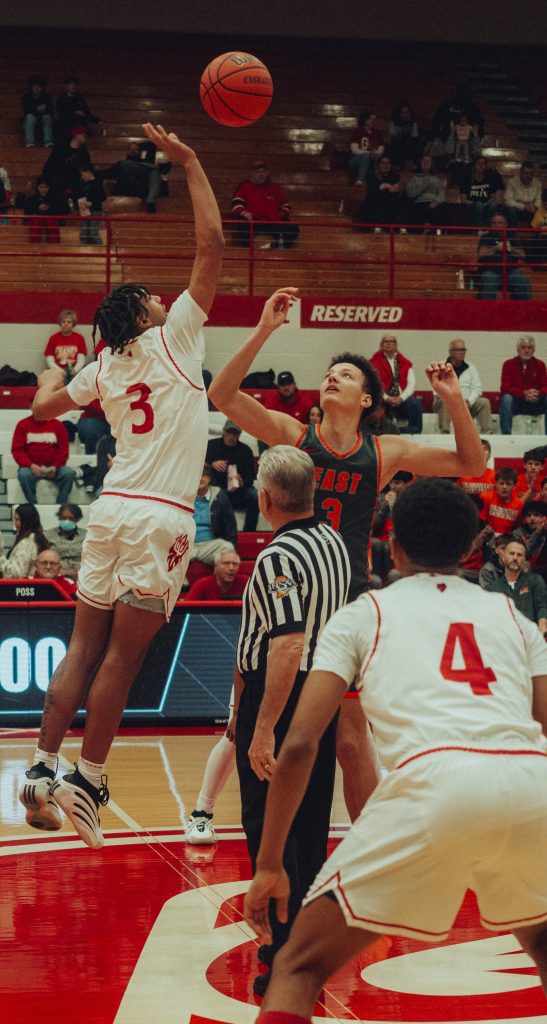
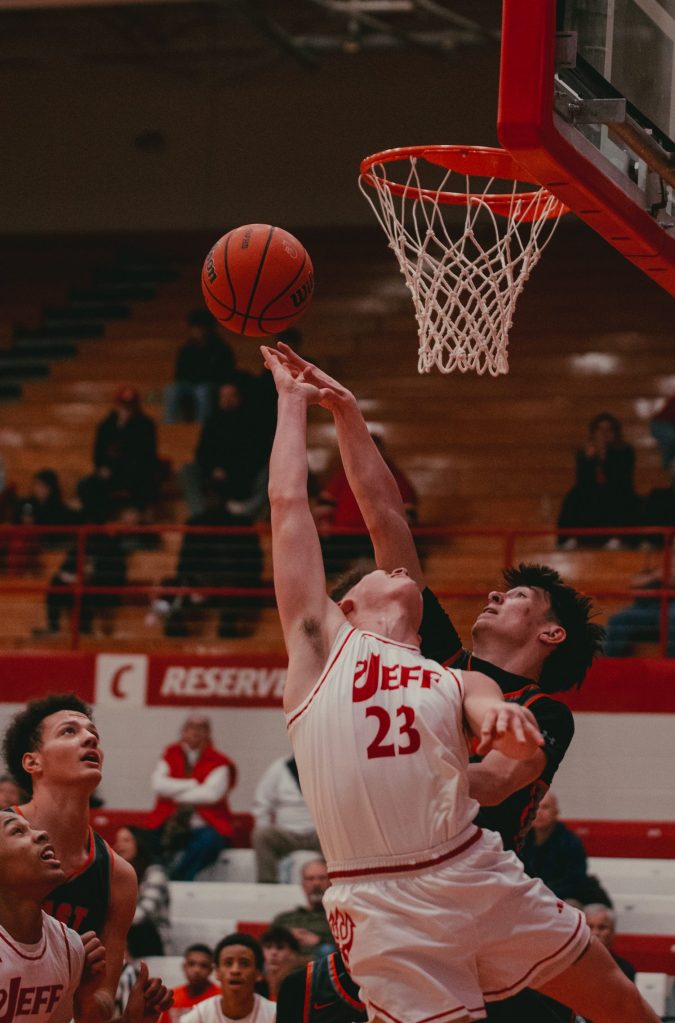
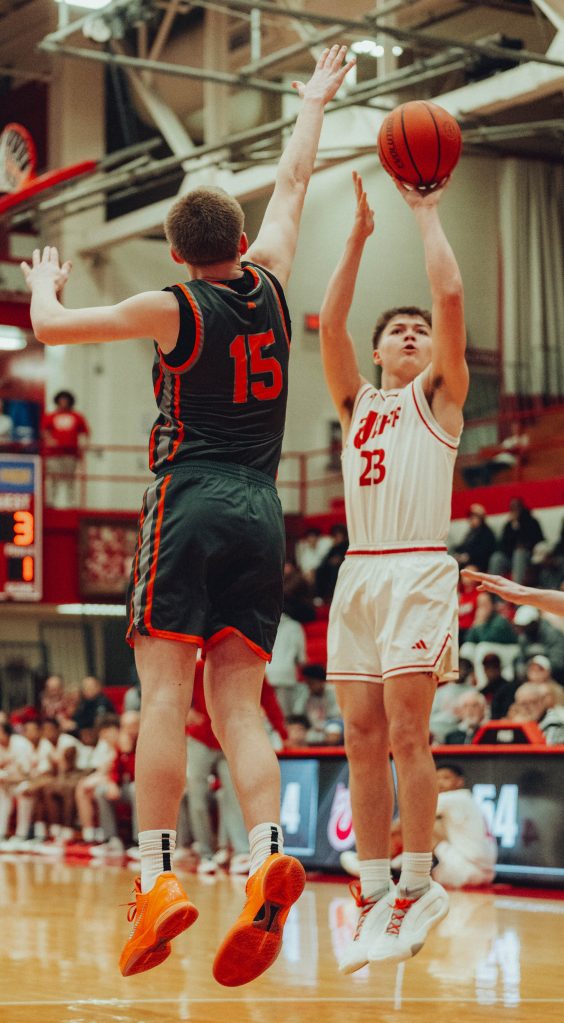
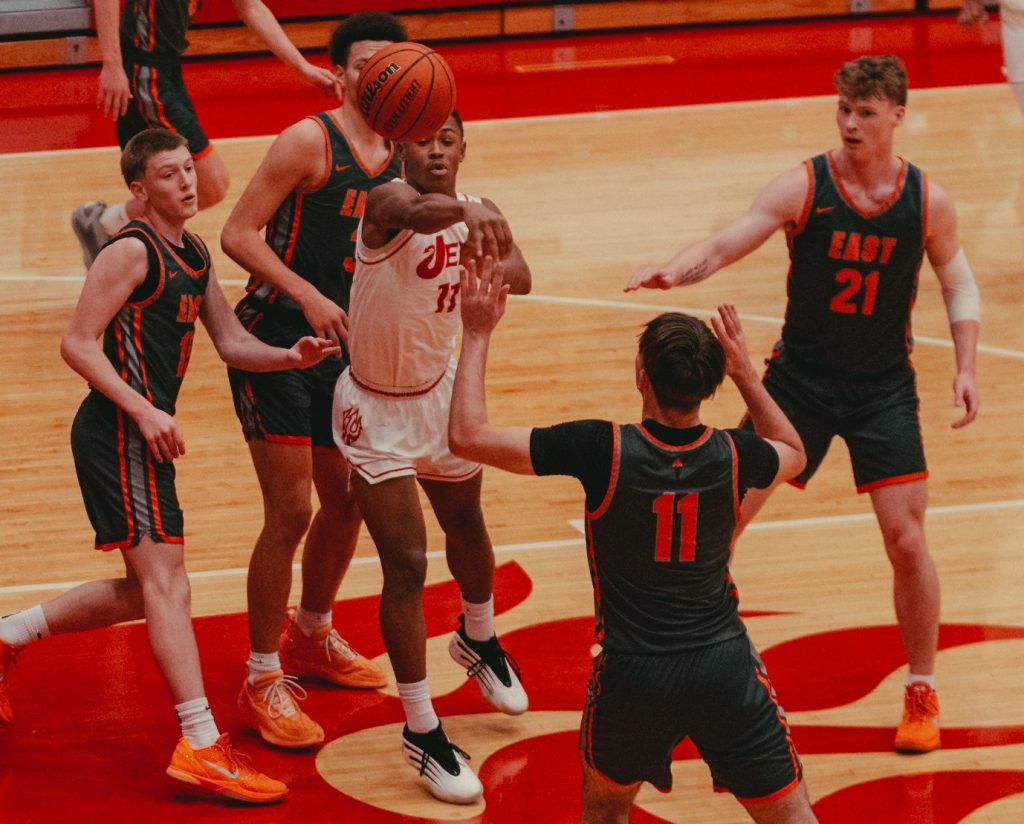
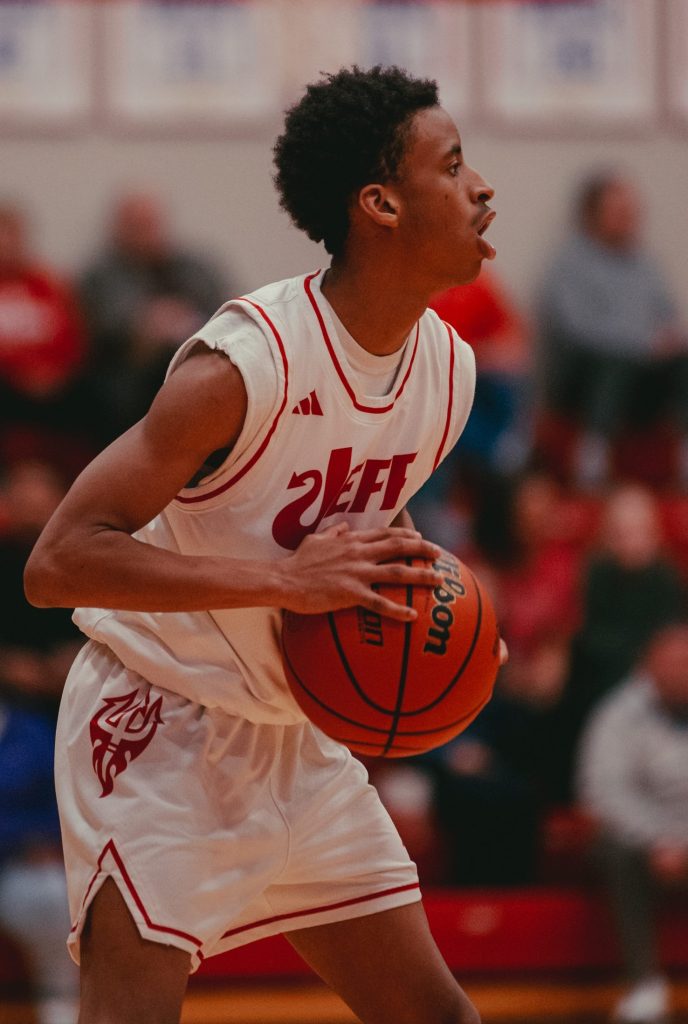
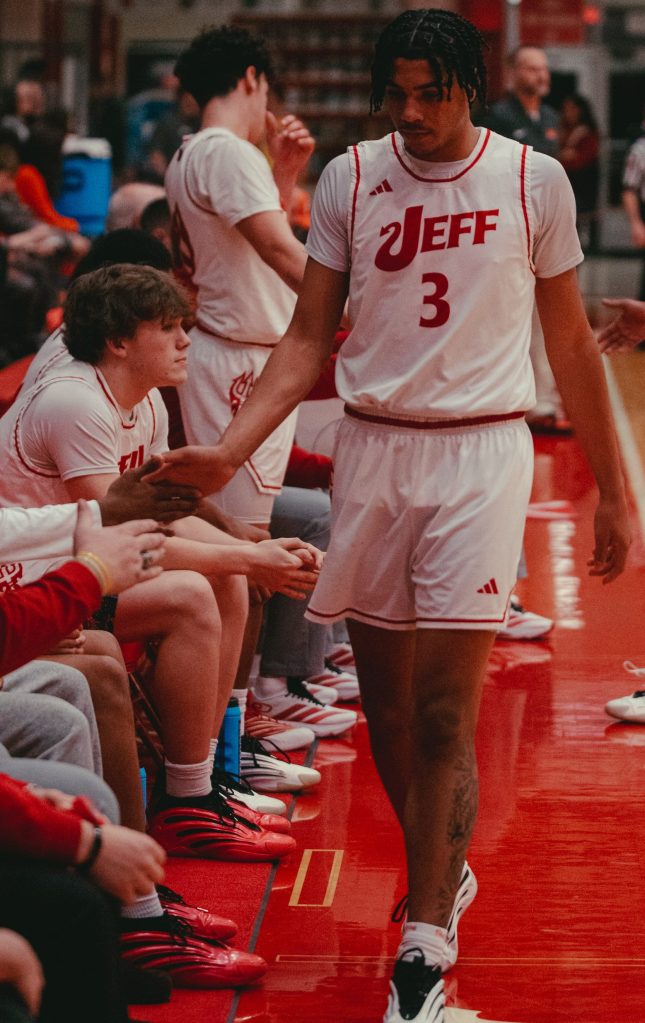
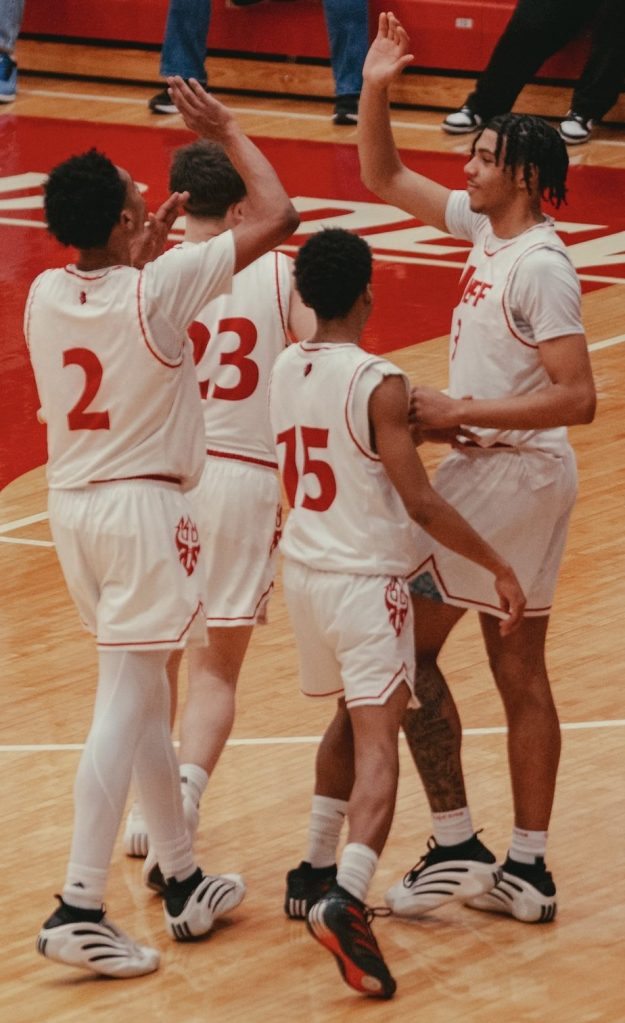
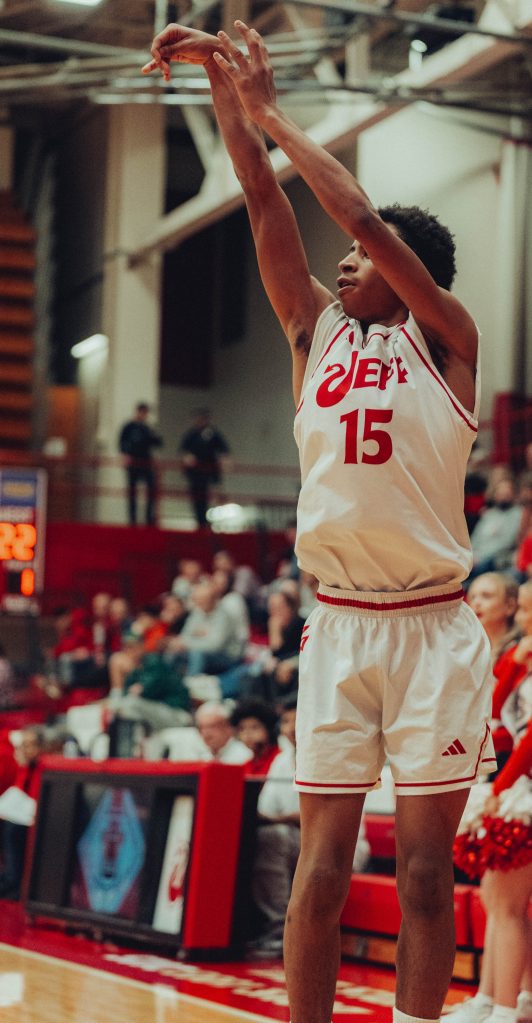
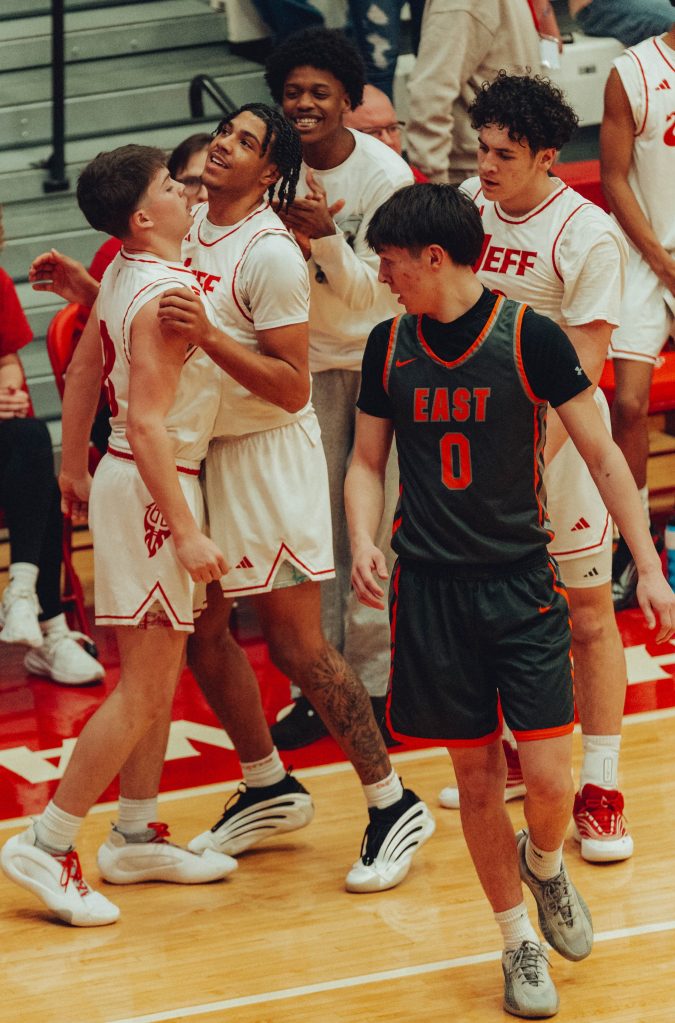
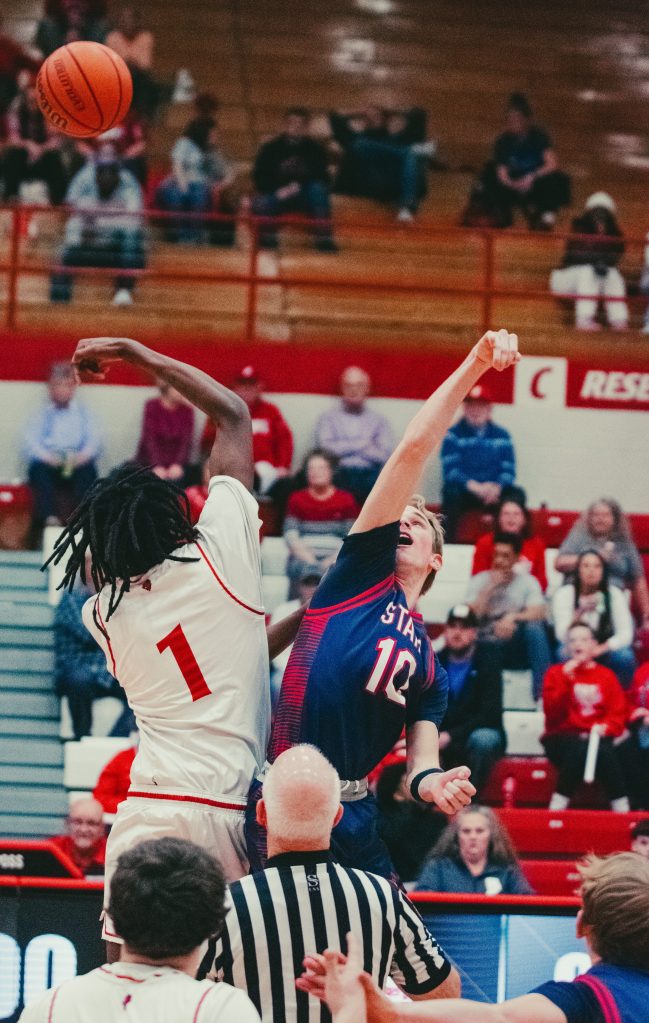
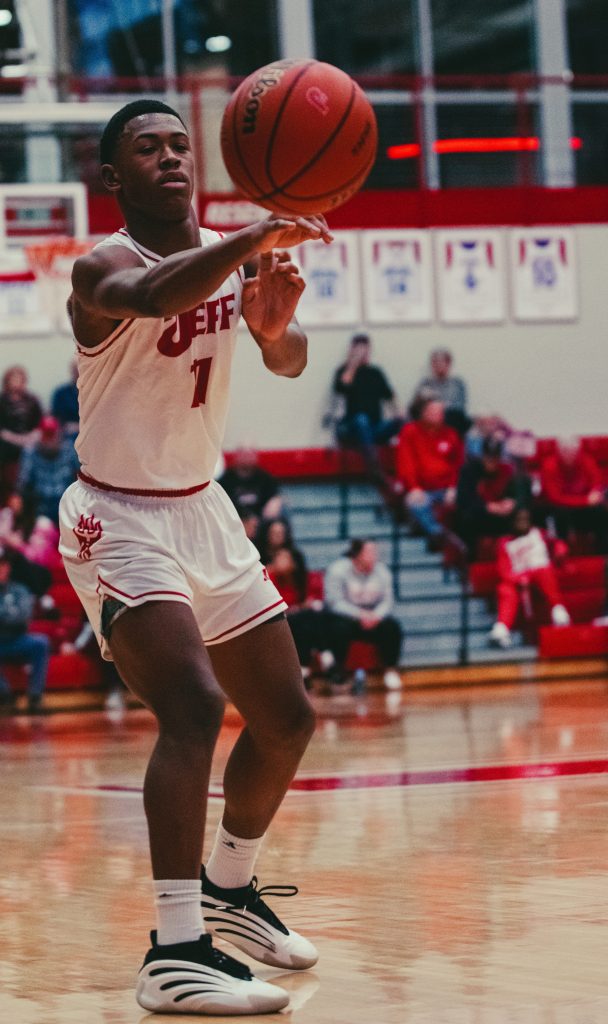
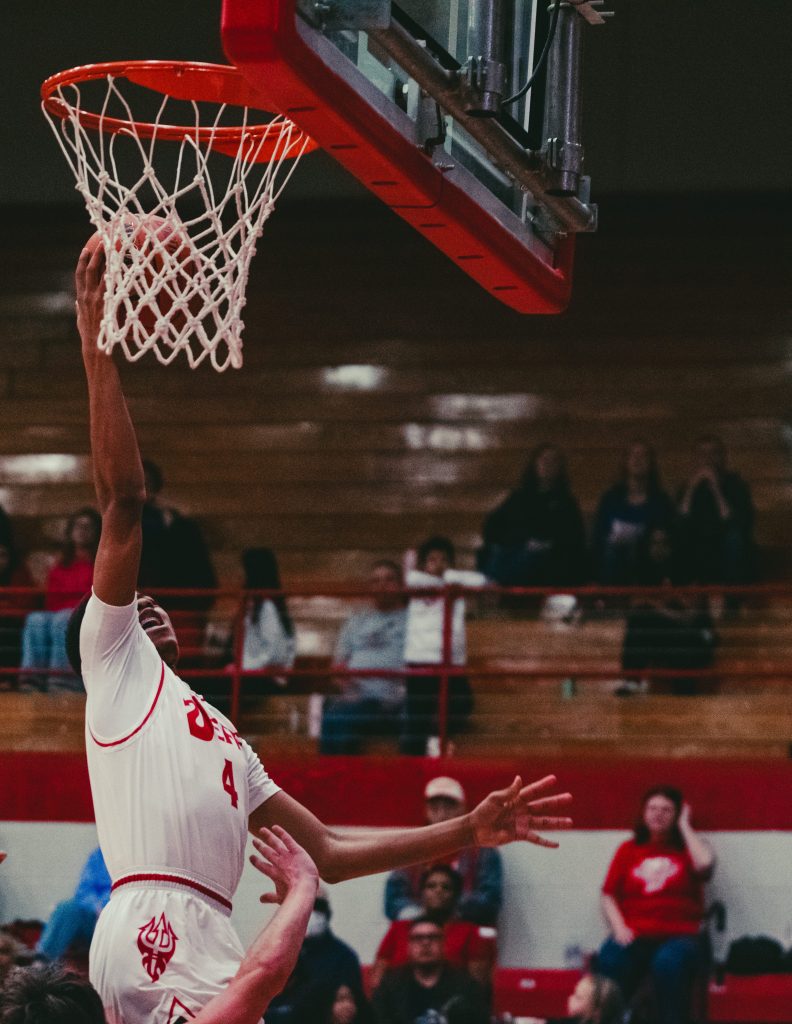
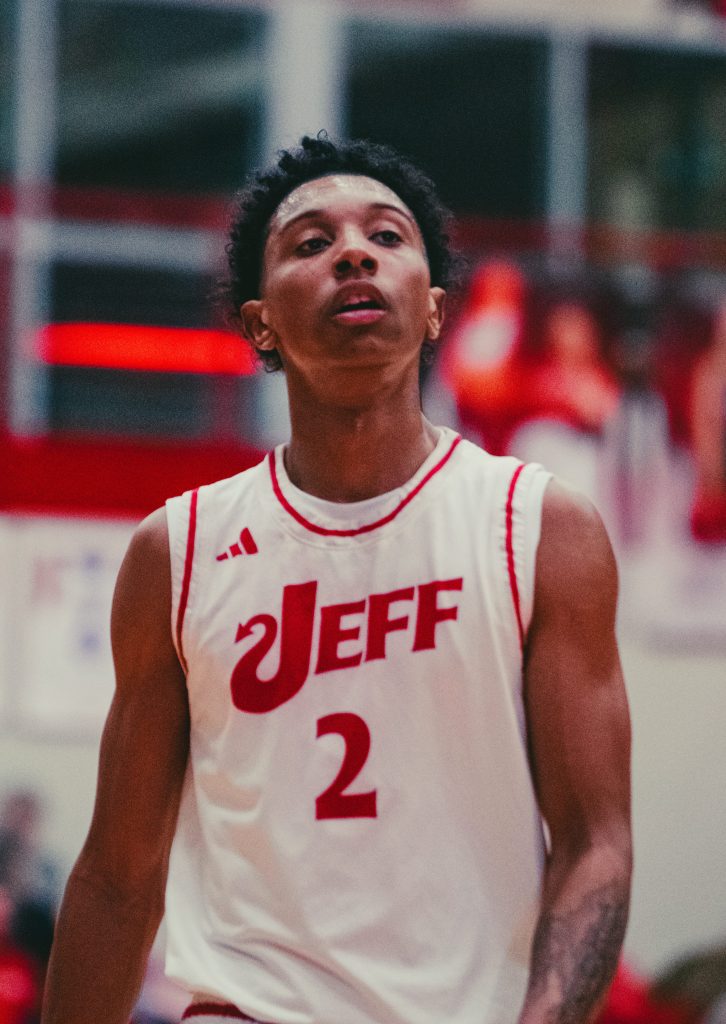
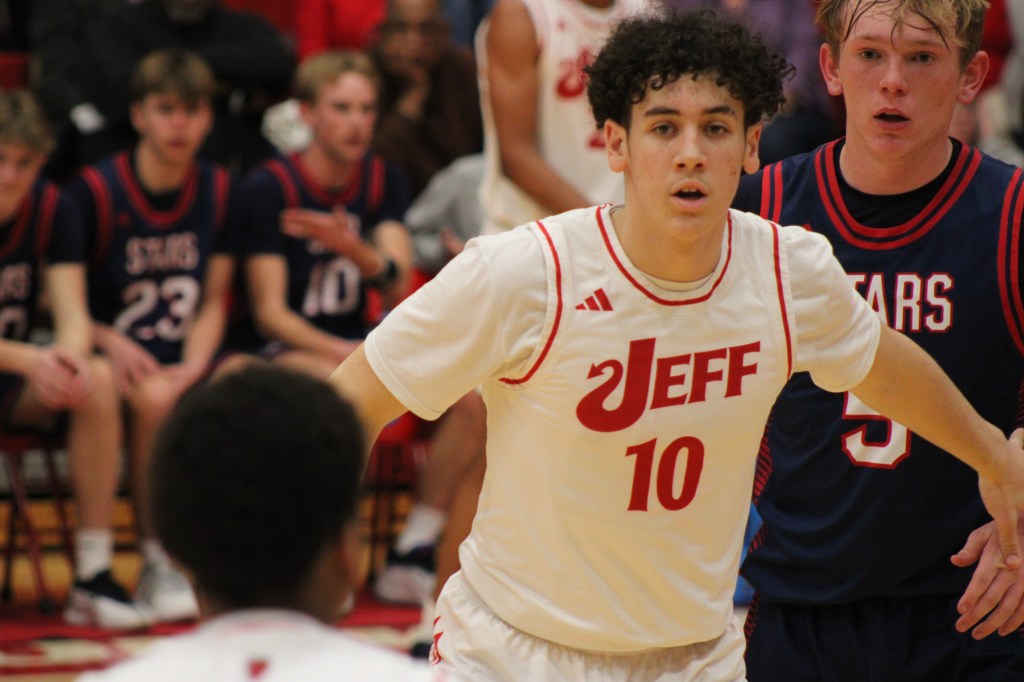
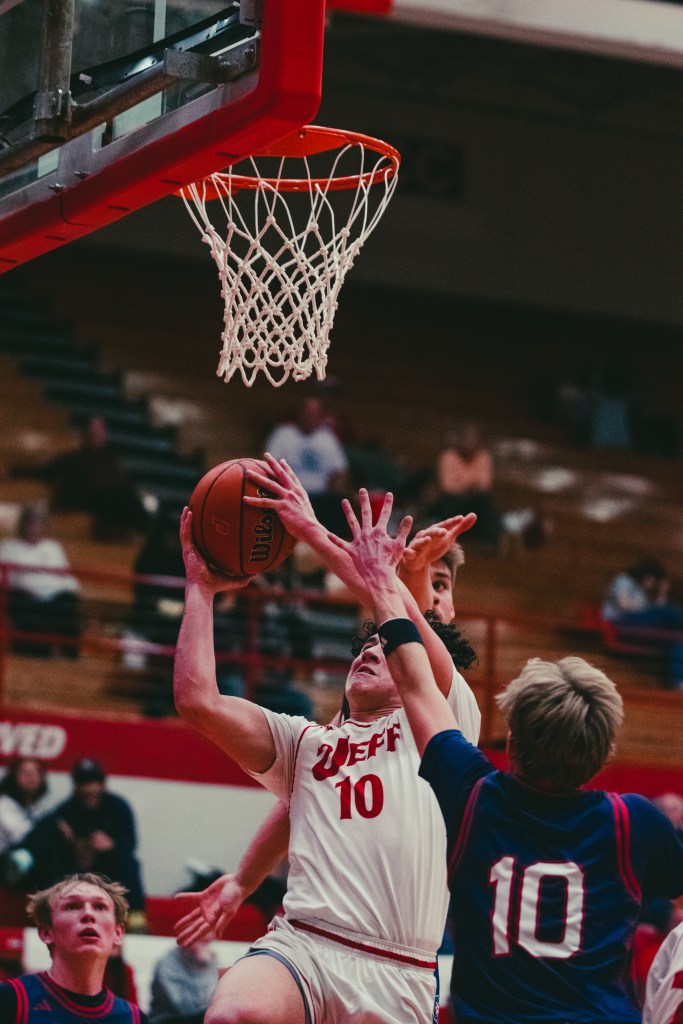
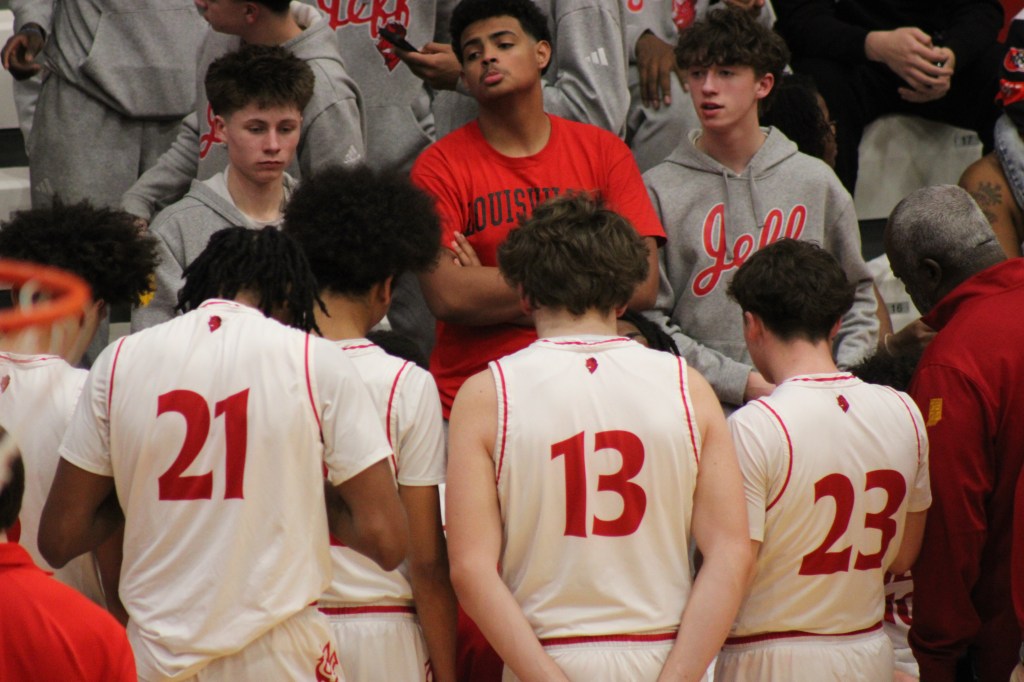
Red Devils defeat Columbus East 61-31 last Saturday, face Charlestown at home tonight
Photos by Gabrielle Watkins. Click on the photos in the gallery below.


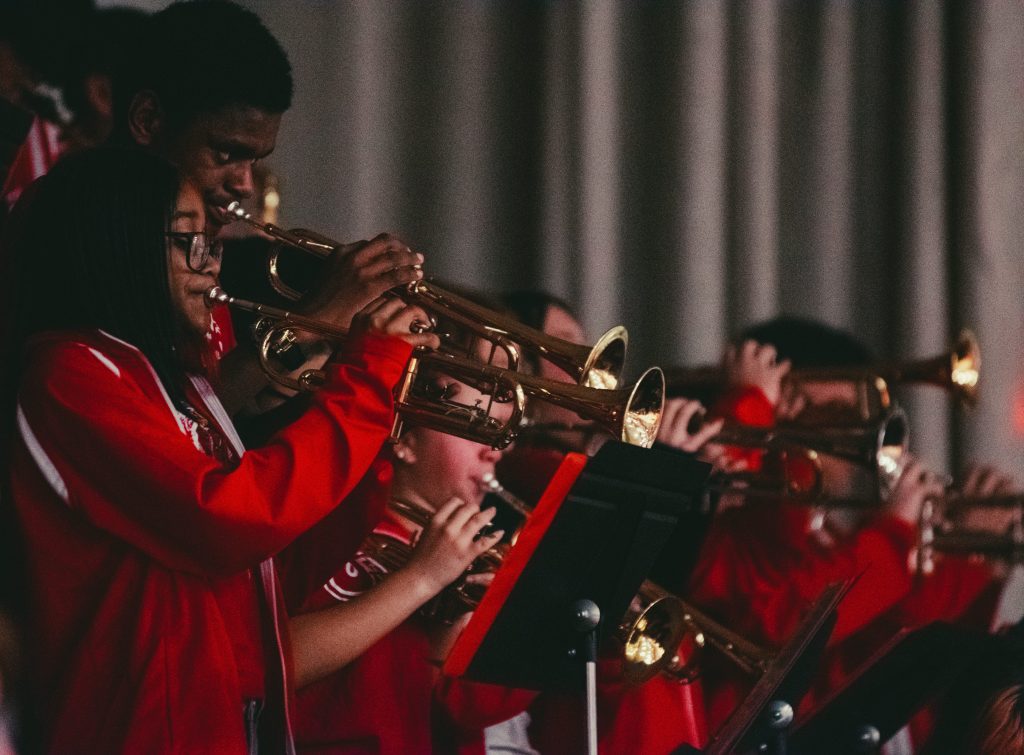
Winter Fantasy brings holiday music to Jeffersonville
Musical arts groups will perform again tonight
All photos by Magdalene Conrad and Malachi Conrad. To view the gallery, click on the photographs below.


JHS wrestlers use their competition to improve skills and confidence
by Isabella Stewart and May Smith
This year’s boys’ wrestling team is one of the “youngest teams” that they have had. This young team of wrestlers has not only grown throughout the first half of their season, but they have also worked hard to improve and win.
This upcoming weekend is one of the hardest weekends of their season. Varsity wrestlers travel to Evansville, followed by some of the junior varsity and varsity B teams heading to Louisville.

Junior Will Honaker has been practicing every day, preparing for this upcoming weekend. He said practicing with Coach Jeremiah Cain has benefited him the most “because he has taught me to practice harder; practicing with my teammates has allowed me to gain strength, sportsmanship, and confidence.”
Many coaches come to wrestling practice every day. Head coach Danny Struck not only been attending practices and coaching, but he has also been attending middle school meets and helping any athlete who needs it.
Varsity freshman Logan Vidt said, “Coach Struck is just an amazing coach to me. In practice, he is so helpful, and he makes us drill hard and go hard every time because he knows in time it will add up and we will be our best we can be, and I really do respect that.”
Sophomore Julian Alvarez talks about how much practice defines real-world situations that he can always overcome because “Coach Struck always tells us how wrestling is the hardest thing we do, and I believe that is true because without wrestling, I wouldn’t be who I am today. I have a tough mindset, strong skills, and great sportsmanship, and I think that all can go into defining your own character.”
Honaker said, “As much as I would like to win this weekend, I’m not just looking for a win — I’m really hoping that going against tough wrestlers will make me tougher. I think it’s all about my mentality. I believe if we really try as a team whole, we could make it this weekend.”
The boys’ wrestling team is on their climb for the gold, but every wrestler knows it’s not just about the gold and the glory, but it’s about the privilege they earn to wrestle and the people they do it with.
Vidt said, “We have our ups and downs, but the most important part of it all is that we keep our heads up and keep walking and never look back. I am so grateful to be a part of a team that pushes me past all my goals to go above and beyond.”

Pepa’s dedication to helping his athletes improve reveals the life of a swim coach
by Marcus Baker
Michael Pepa is the head coach of the boys’ and girls’ swimming and diving team, his second stint at JHS as a swim coach. For the second stint here, this is his tenth year as well.
He coached for two or three years in the early ‘90s. He has also been a swim coach for 34 years altogether, including college and high school teams on both sides of the Ohio River, as well as club, masters, and age- group teams.

His favorite aspect of coaching is that the interaction with the student-athletes is fun, and the biggest joy for him is helping other athletes reach their greatest potential, whether that’s at any level or their first year swimming, or whether they’re trying to win a state championship.
Having that student-athlete reach their potential is very rewarding, Pepa said. “Swimming is inherently motivating because you get to see your personal time drop. You see that empirical objective improvement that comes from self-motivation.”
He also said that he thinks it’s one of the joys of swimming. Regardless of what level an athlete is at, everyone’s goals are the same — trying to get a faster time.
He hopes by the end of the season that his Red Devil team is going to certainly improve. He said that his girls’ team is in a bit of a rebuild this season, while his boys’ side has a little more depth than he had in the past.
He expects his group of swimmers to train really hard and expects each one of them to get much much better position in February than they are in December.
Head dive and assistant swim coach Holden Henderson has been coaching for 10 years and has known Pepa since 2015.

Henderson said that coach Pepa always encourages the swimmers to practice like they want to compete. He tries to motivate his team so they can give it their all at practice, so it can be easier at the meets.
Henderson also helps his team out by helping them and supporting them, and wants to help out as much as he can.
Athletic director A.J. Moye met Pepa in the early summer of 2025, going to the Aquatic Center for swimming practice, and from then on, they have had a great relationship.
Moye attends swim practice three times a week to observe and help out. He said he would help the swimming team in any way he could throughout the season.
They have also been building a new place just for the swimming team, which will be an Olympic-level pool just for them.
Senior Litzy Rubio has been swimming since sixth grade and is now in her last year of swimming for JHS.
Rubio describes how she really likes his motivation, and she loves how he’s always supportive and makes her feel good. She said that his coaching style has a great blend of both strict and fun.
After she completes her final season she will miss her family on her team. Her teammates and her coach always supported her along and cheered whether she swam good or bad.
“Always cherish your team; they’re the ones who have seen you at your worst and your best, so don’t take your moments with them for granted,” said Rubio.
Freshman Christian Miller has been swimming since he was 11 years old. He made it to clubs, national states, and other more.
Miller said he likes how Pepa takes care of his swimmers and how much effort he puts into their training.
He said he helps him by breaking down his sets, which is what’s best for the swimmers. He also says his coaching style is unique and that he has a good way of coaching himself and his teammates.
Pepa encourages his student-athletes to become better swimmers and have fun during their season.
“Our goal is the same, to improve, get faster, and have fun.”