Junior author Jeremy Baker publishes his own faith-based books

by Shelby Keesee

Recently, a book titled Living for God was published by JHS student author Jeremy Baker, a junior. The book’s inspiration came from Baker’s own reflection and experiences and discusses daily faith and intentional living.
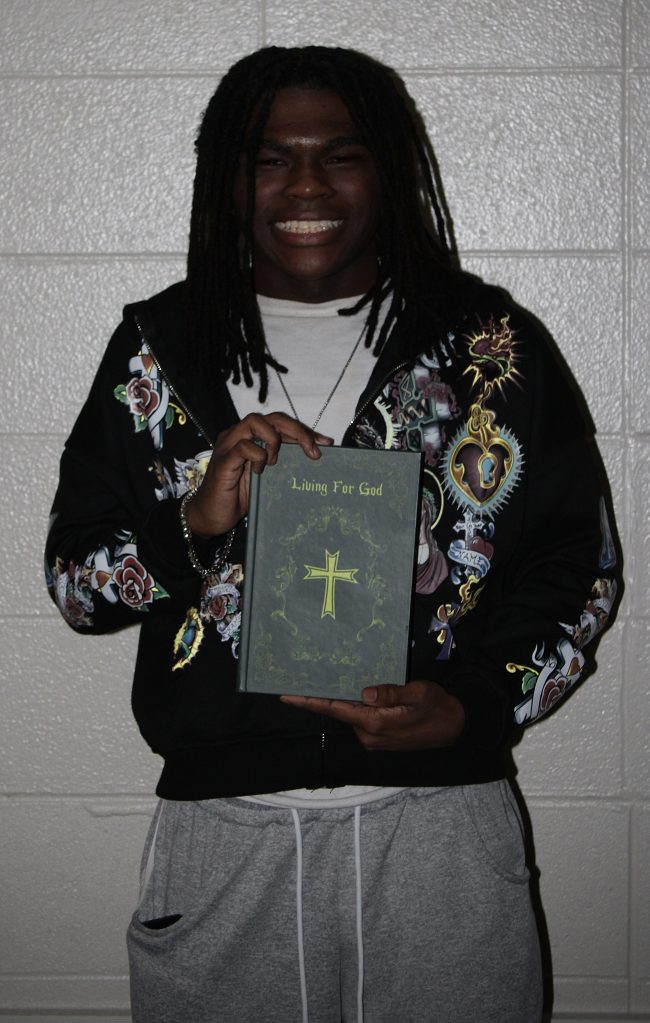
Junior author Jeremy Baker displays his most recently-published book, Living for God. Photo by Shelby Keesee.

Baker has published two books, A Heart for God and Living for God on Amazon. Both books provide guidance and acceptance through God. A Heart for God, Baker’s first book, originates from a time where Baker realized he wanted God to be part of his life. This experience later developed into the book’s cover and overall concept.

“I have experience in journaling a lot, especially about situations, struggles, lessons and conversations I had with God,” said Baker. “What started it all was I had an image in mind of a torch with a blazing flame; then I thought about a heart – my own heart, and it made me think about having a burning desire for God in your heart.”

A Heart for God rewarded Baker with personal growth, reflection, and an idea for Living for God, Baker’s recent book.

“From there, I started growing more and more, and there was a time when I was reflecting on what I’ve been doing and how much I changed, and how much I was wanting to live for God, which became the idea for my second book, Living for God,” he said.

Baker summarized both of his works, offering insight for anyone interested in his books”

A Heart for God

A Heart for God is a guide for anyone who feels lost, feels emptiness in their heart, or is spiritually distant and wants something that’s real. This book guides the readers through recognizing the emptiness they have, to understanding purpose, overcoming struggles like temptations and distractions and builds a strong spiritual foundation.”

Living for God

Living For God is a book that is like, shifting from that desire of the heart for God, to daily action and applying it once you have that heart for Him. The first book focuses on developing the heart; Living for God focuses on living it out.”

The two books contain progression, starting from transformation to applying faith and belief our daily lives.

Junior Jeremy Baker’s two self-published books, A Heart for God and Living for God. Photo by Shelby Keesee.

Baker said his favorite book was A Heart for God because it was the first book he published, and due to its topics of desire and faith.

Describing his first book as the start for everything, Baker said, “Before you can truly live intentionally or live for God, there has to be a genuine desire in your heart, [and] without that desire, it doesn’t last. It’s also my favorite because it represents the beginning of my journey, which without it I probably would’ve never made the second book, Living For God.”

An experience on the school bus opened a door for Baker to explore his own faith and eventually begin his writing journey.

“What inspired me to write my books started on the bus when school was over. I saw this one girl who was speaking about God and strong foundations; it deeply impacted me a lot and I felt so much peace in the area. It sparked a strong desire in me to pursue God intentionally.”

Baker said this strong desire led him to follow God, which allowed him to write about his experiences and gain another desire: impacting his readers.

“The impact I want to make with my books is helping (young/adults) people feel very purposeful and hopeful, and reminding them that they were placed here intentionally by God,” stated Baker. “I want the readers to recognize that God is present in every moment of their lives, whether they’re happy, angry, or going through something difficult. I want people to think more deeply about their actions, their motives, and the direction of their lives.”

Faith and purpose are both crucial to Baker because he believes in individuality and that each person has his or her own talents and purposes in life.

“This is important to me because I’ve seen how people, especially around my age, get distracted,” he said. “A lot of people live by only the moment without asking, ‘What can I do now that will matter in the future?’ I feel called to speak to my generation about faith in a way that encourages discipline and intentional living. I don’t want people to waste the gifts and the potential that God has given them.”

Both works are recommended by Baker if readers need faith, purpose and direction.

“I would recommend these books to anyone, young and older. Or if anyone feels maybe unsure about their direction in life, or feel distracted. I also want readers to know that faith is about being willing to seek, grow, and live intentionally.”

Canva’s beginner-like tools enabled Baker to design his book covers. Baker has experience in graphic design and recommends Adobe Illustrator for advanced designs.

Baker discovered the Amazon Kindle Direct Publishing platform, which guided him to publishing his books online.

“I researched the Amazon Kindle Direct Publishing (KDP) and watched tutorials on YouTube to understand each step on how I can get my book on Amazon,” said Baker. “I learned about formatting, trim sizes, and cover dimensions. At one point I was hiring someone through Fiverr to fix some errors with my book, but after looking into Amazon’s Cover Creator tool, I was able to fix the errors myself, which is how I was able to publish my second book.”

Not only is Baker a growing author, but he is working in the fashion industry.

“In addition to writing, I’m also at the moment working on a future clothing brand business, working in the fashion industry, which is a long term thing I am committed to doing.”

Additionally, he is committed to publishing a third book, which remains untitled for now, as he is in the “researching stages of working on a third book, taking time to study, reflect and gather everything I need before I fully jump into it.”

Baker said he wishes to reach readers from every religion and inform them about their worth.

“Even for those who may not believe, I do hope my books at least encourage them to recognize that their life has purpose, and that they were placed here for a reason.”
Financial stress affects high school students 

by Chloe Newton

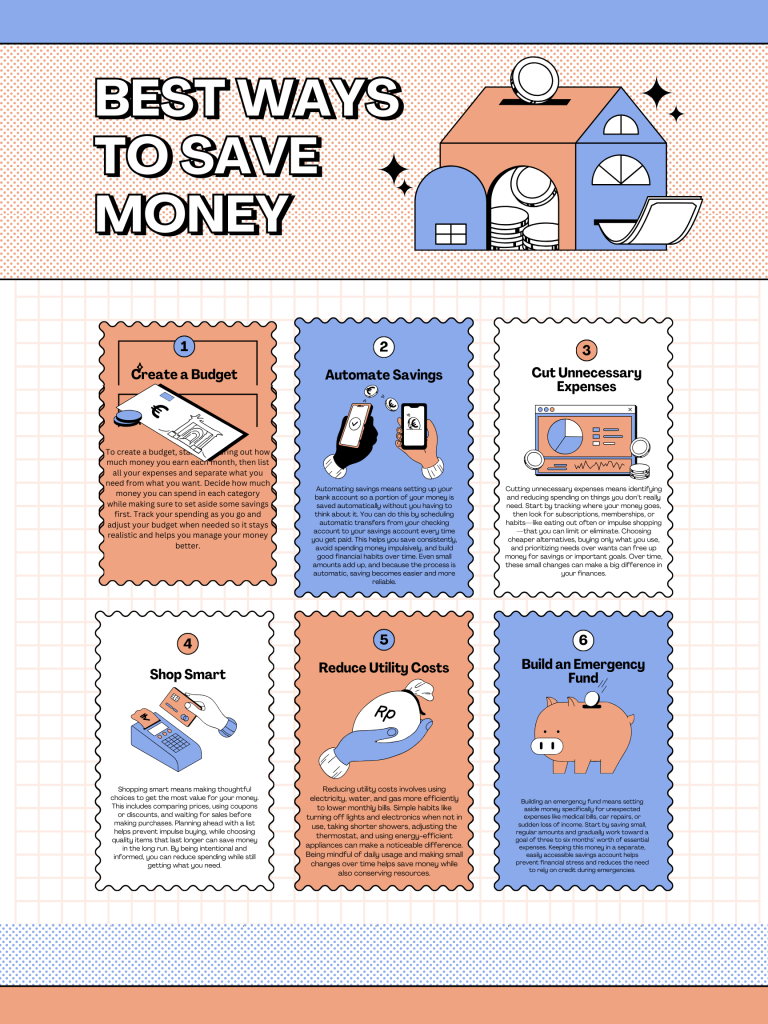
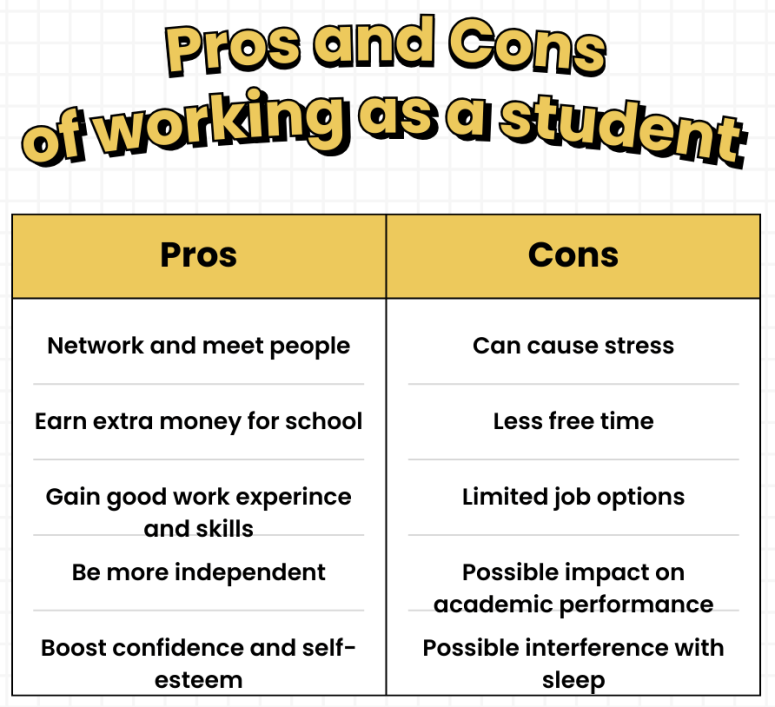
For many high school students, the day doesn’t end with the last bell. After class, some head to part-time jobs, others to extracurriculars, and many try to balance both, often because of financial pressure.  At Jeffersonville High School, students say that money plays a growing role in their daily decisions, from whether they can attend school events to how many hours they work each week.

“I started working to sell smoothies because I wanted to help pay for my own things,” junior Onesty Gipson said, “but once I started. I realized  how hard it is to manage schoolwork and a job at the same time.” 

According to students, common expenses include gas, clothing, food, phone bills, and saving for college. While some work to cover personal spending, others say their income contributes directly to household expenses.

Sophomore Shane Adkins works around 20 hours a week at a local department store. “I help pay for my clothes, phone bill, and sometimes groceries,” he said. “It’s stressful,l but it feels good paying for my own expenses.”

Teachers have noticed similar patterns as well. French teacher Dana Schenk said students who work longer hours sometimes struggle to keep up academically.

“They’re motivated and responsible, but there are only so many hours in a day.”

Not all students experience financial stress in the same way. Some students say they do not need to work and receive financial support from their families. Sophomore Vivianna Hill said money is not a major concern for her right now. 

“I don’t have a job so I can focus more on school and clubs, but I know that’s not everyone’s situation.” 
The difference in financial responsibility can affect social life as well. Several students said they skip outings or school events because of cost. 

“Sometimes I just say I’m busy; it’s easier than explaining I can’t afford it,” said sophomore Monseratt Gonzalez.

Despite the challenges, some students say working has taught them important skills. Sophomore Lucy Roberts said managing her paycheck has helped her learn budgeting.

“It’s stressful, but it’s also made me more aware of how money works,” she said.

Schenk also encourages students feeling overwhelmed to seek support. 

“Whether it’s adjusting work hours, accessing school resources, or just talking it through, students don’t have to handle financial stress alone,” she said. 

As students juggle academics, work, and personal responsibilities, financial pressure remains a quiet but significant part of high school life, and it is something that will always affect students differently depending on their circumstances. 

Graphic by Chloe Newton.

Planning and support help JHS teens balance school with part-time jobs

by Breslyn Dozal

Balancing school and a job can be tough for students. It takes good time management to handle both without falling behind.

All students are different. Whether it’s studying or dressing a certain way, there’s one thing they all have in common. They need jobs! The real thing is, how do they maintain a job while being a student?

“I usually only work at least three days a week unless I pick up more shifts, but I try and get most of my school work done if I work that specific night. Sometimes I’ll plan out my week just so I know everything that I have going on,” said senior Kendall Curry, who works at 7brew Coffee.

When planning a routine, making sure students have everything sorted out is one of the hardest things. Many steps come when making a routine or schedule. The biggest thing teens can do is set a goal and have self motivation.

“I would say, my mindset helps me focus on what the next step is to the ending step,” said sophomore Marcus Baker, who works at Taco Bell.

Graphic by Breslyn Dozal.

Being a student athlete may also be a challenge when it comes to balancing work and school. On top of school work, students have practice and games which might make it hard to get to work on time or get there in general. 

“Do school work quick, work the days I can, and practice when I can,” said sophomore Kaden Waters, who works at Culver’s

When asked, Baker said being considerate of the time given and managing time well helps him most when it comes to being a student athlete and balancing work.

Talking to coaches and employers about working around students’ schedules is the best way to form a good working relationship alongside school work. Most coaches find a way to plan important stuff around athletes’ schedules. 

Another good way to plan is asking others in the same situation how they do things. What their strategies are and how they manage everything. How they keep up with school, work, and sometimes sports too.

“I keep up with my job by working no more than 30 hours and not working multiple days back to back,” said senior Maxwell Schoonover, who works at Kroger.

It’s also important for students to enjoy high school years. If students are always spending time doing work or sports and school, they’ll forget to have fun. Another thing is overwork. Working too much and not giving enough will make everything 10 times harder.

“It is important to work but it’s also important to have fun in high school and school is already like a job so it’s important to give yourself a rest,” said Schoonover

One thing that Jeffersonville High School offers is academic pathways. These pathways are mandatory but very useful. It helps students to take certain classes to be prepared for out of school work. It also offers real job sites during students senior and junior year. Helping them prep and know what you’re stepping into.

Another thing being offered is Prosser. Prosser is a real life learning experience. With work based teaching, Prosser helps students get the experience they need.

“One of the beautiful things now about high school education is because of the ways the pathways are able to work your senior year during the school day and that is a part of your academic portfolio. You can get a grade for it, you get release time from school. You can get school credit, earn money, get your job during the school day. And that’s a part of the state’s initiative on this work- based learning,” said Jeffersonville High School principal Pam Hall

Balancing work and school takes effort, but with good planning and support, students can succeed in both. It’s all about staying flexible and focused on their goals.

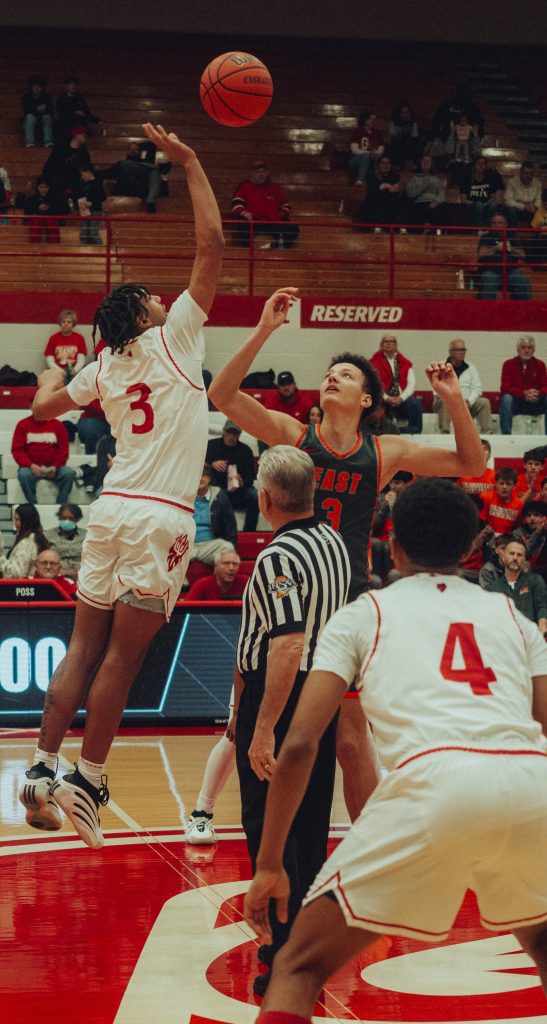
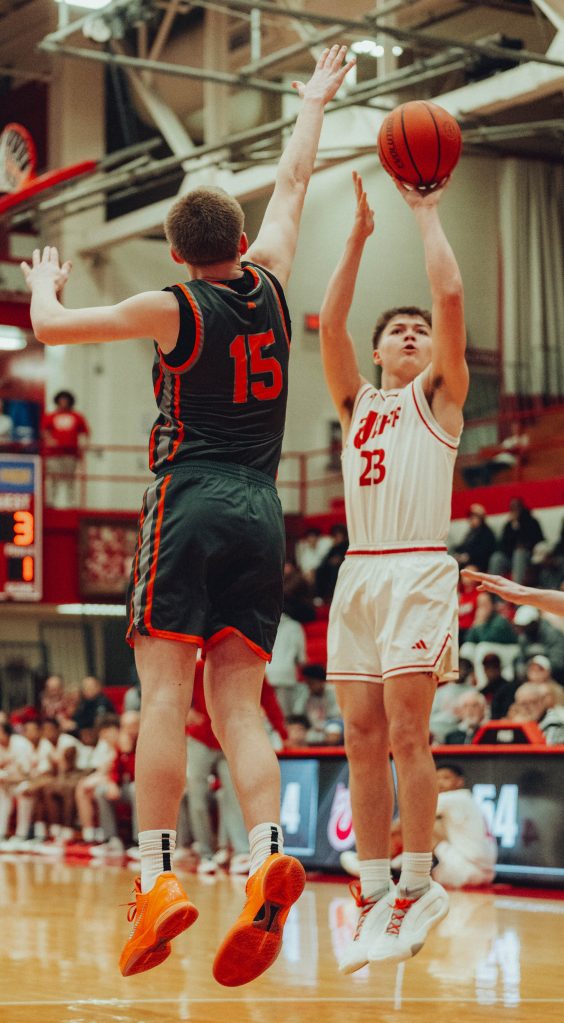
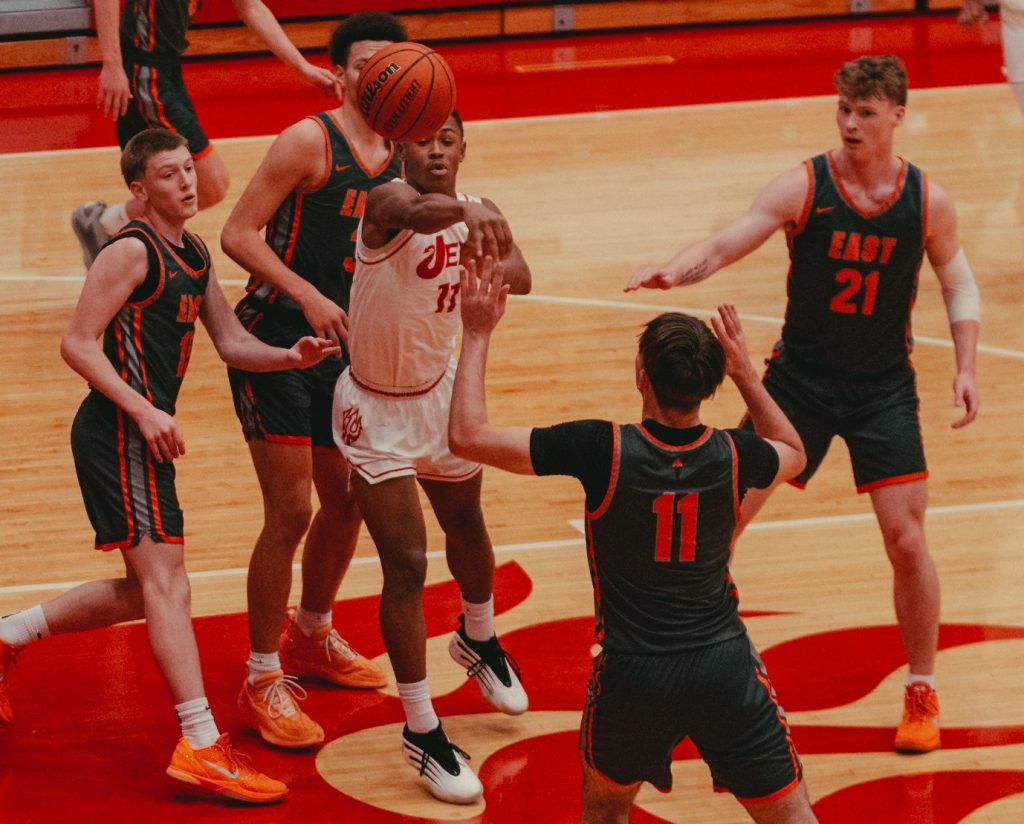
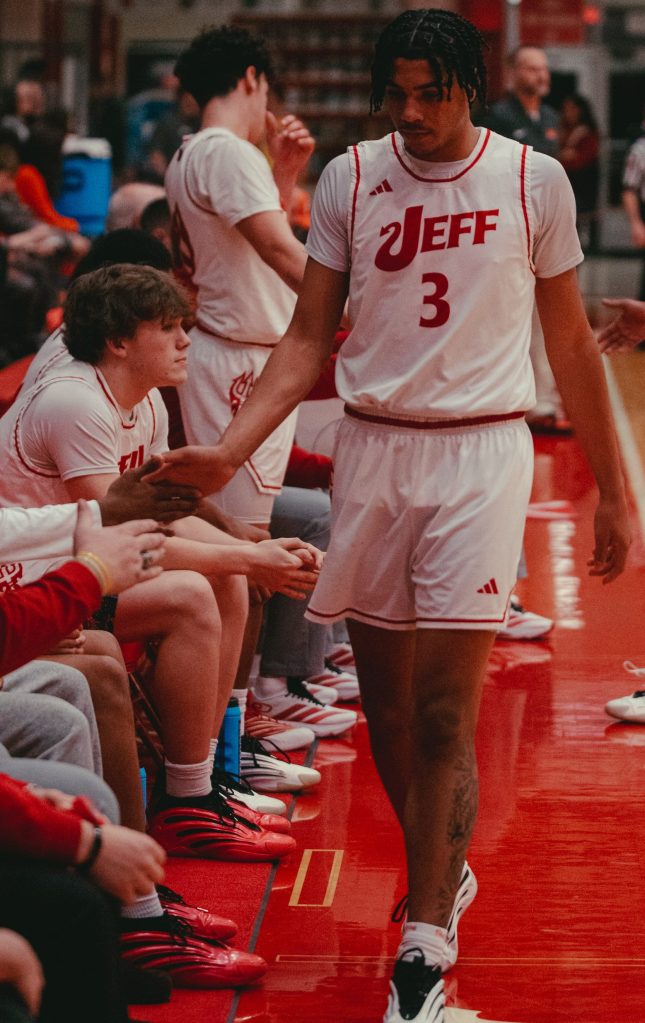
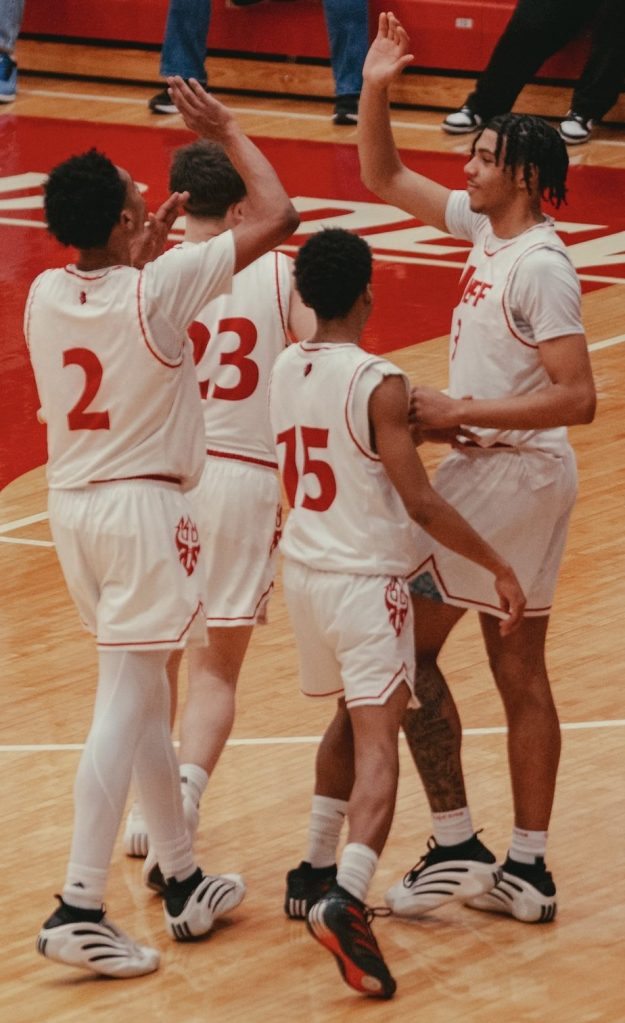
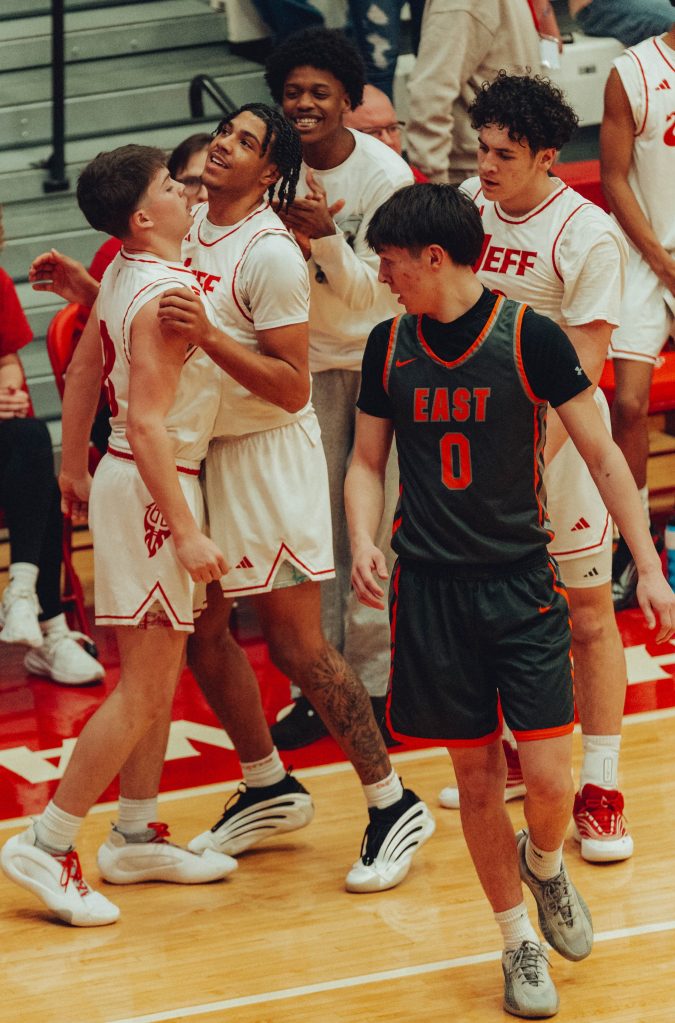
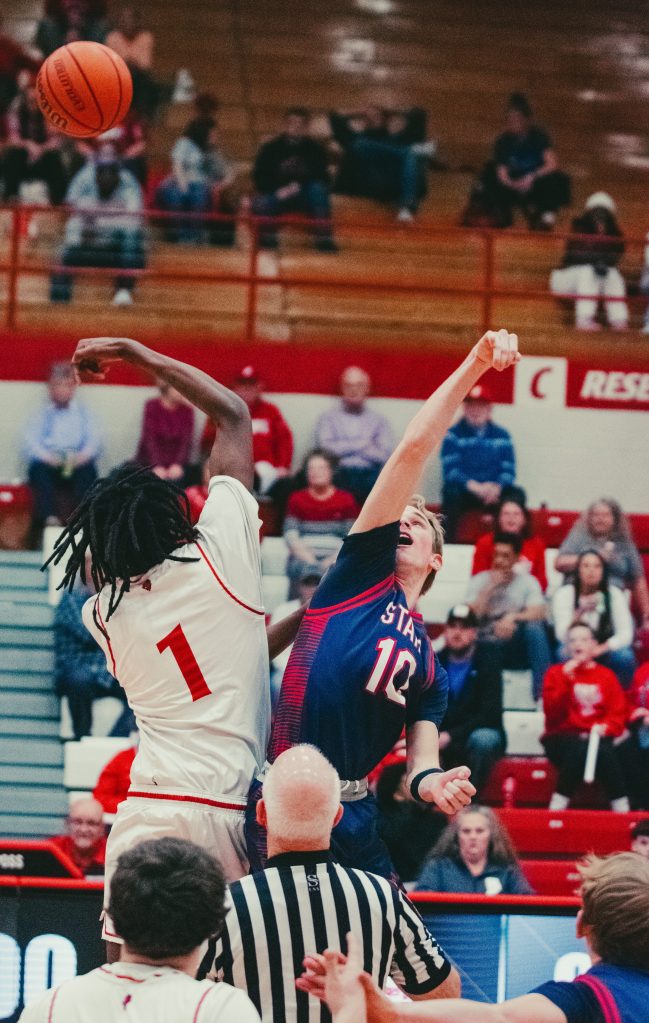
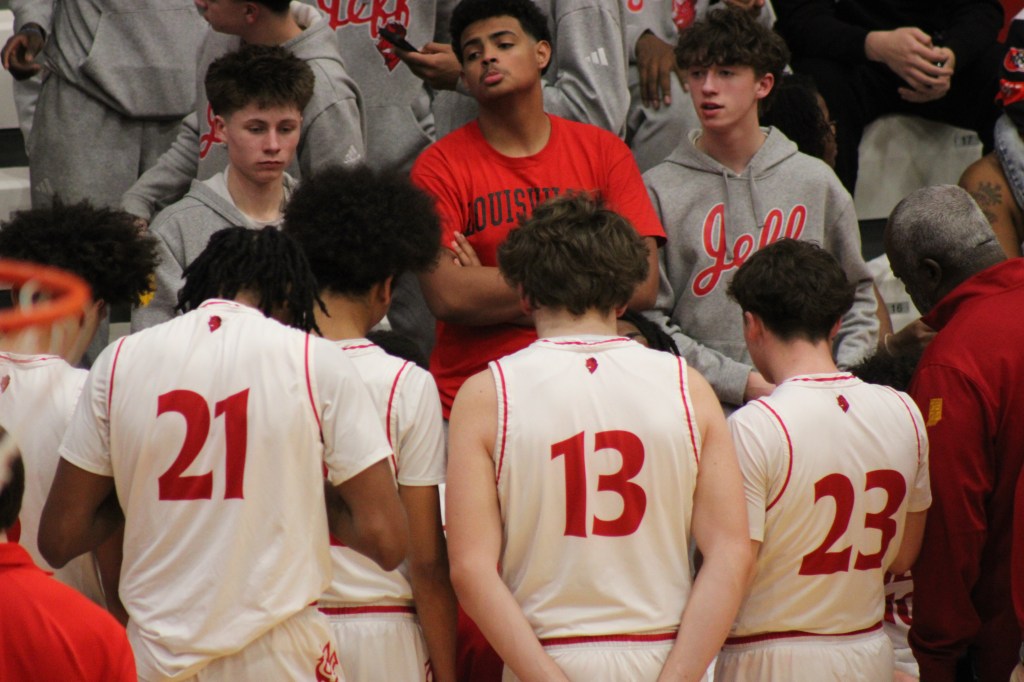
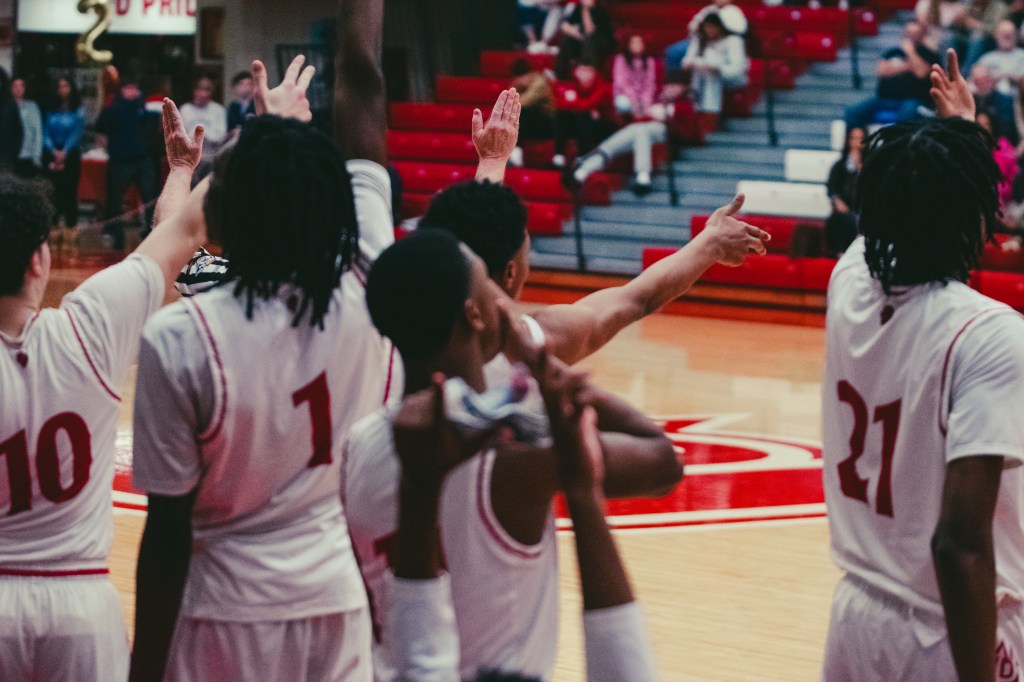
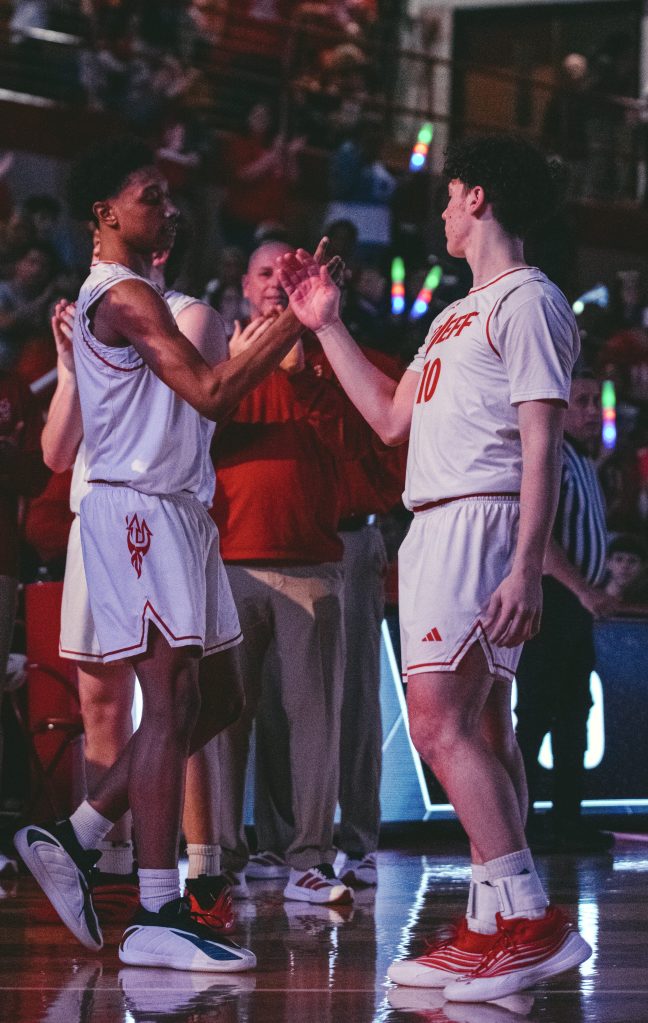
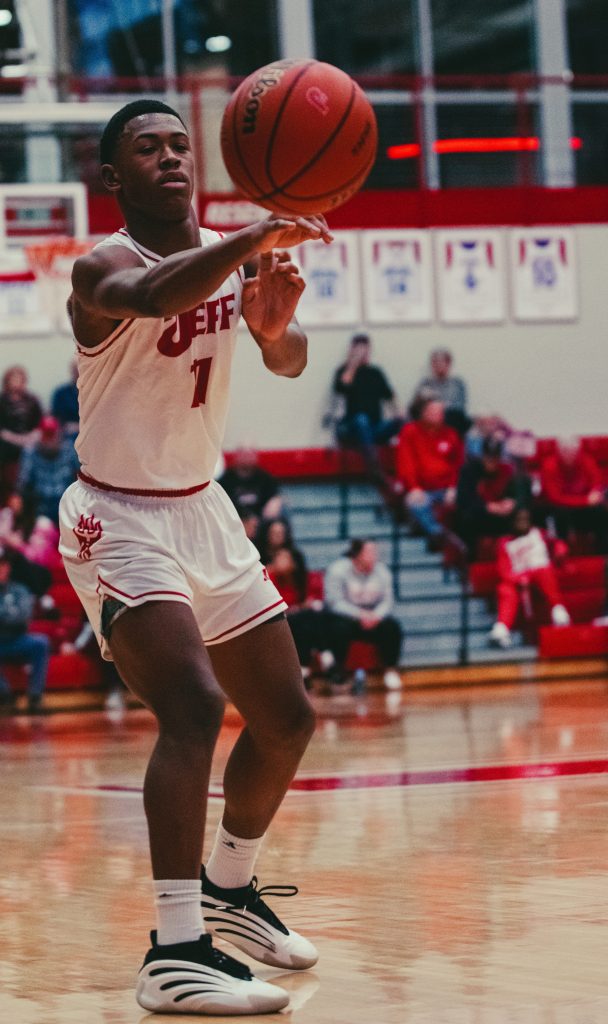
Red Devils defeat Columbus East 77-52 on Saturday as cheerleaders celebrate Senior Night

All photos by Magdalene Conrad and Malachi Conrad. Click on the images below to view the gallery.

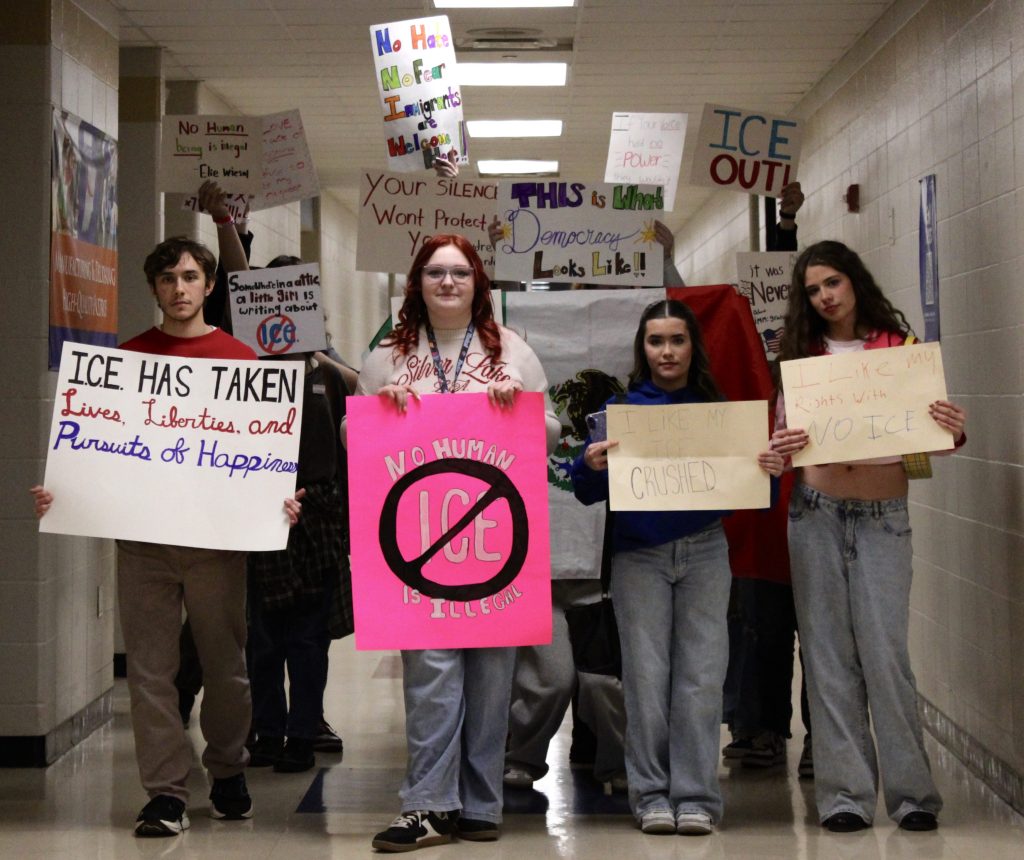
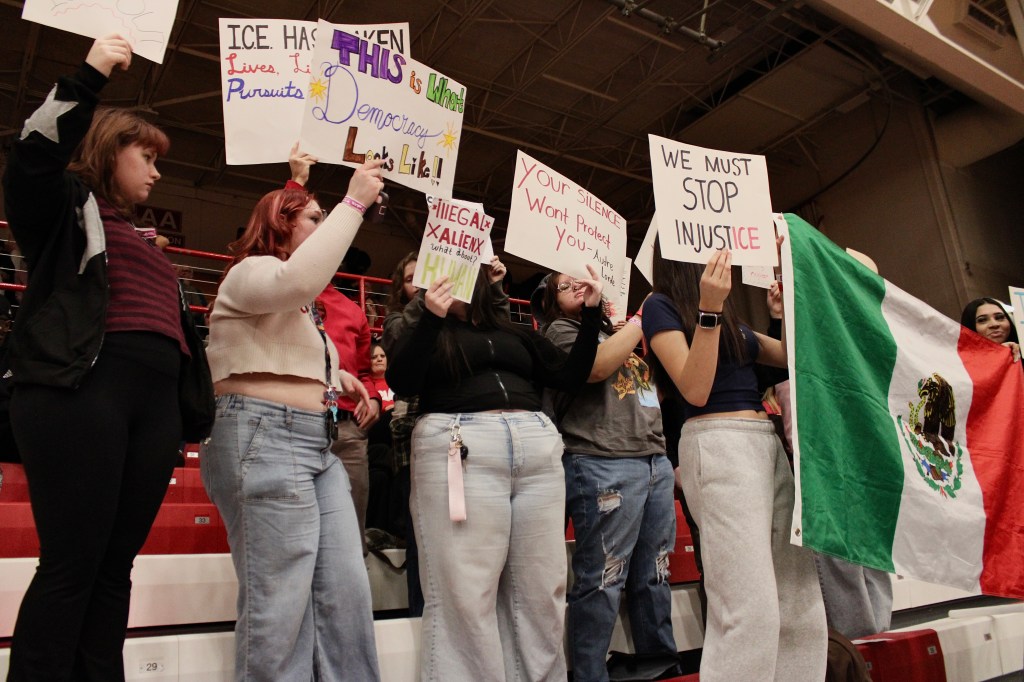
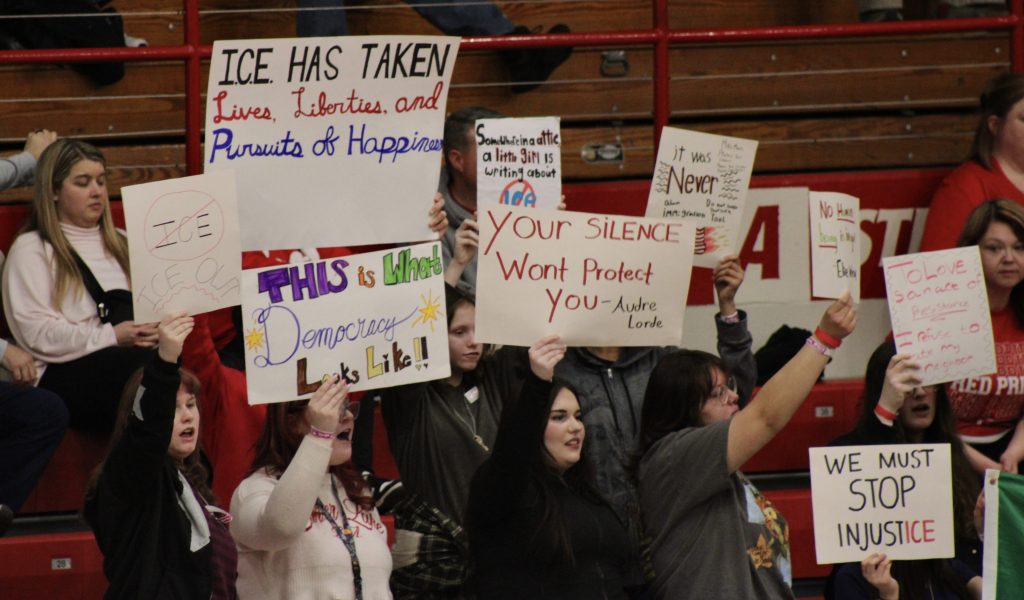
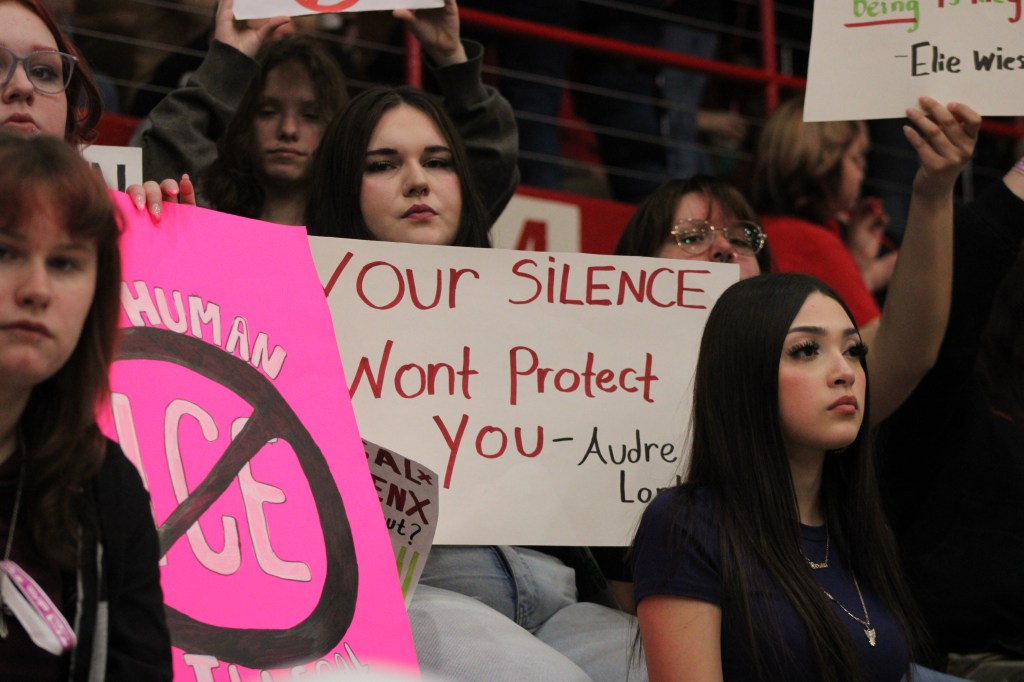
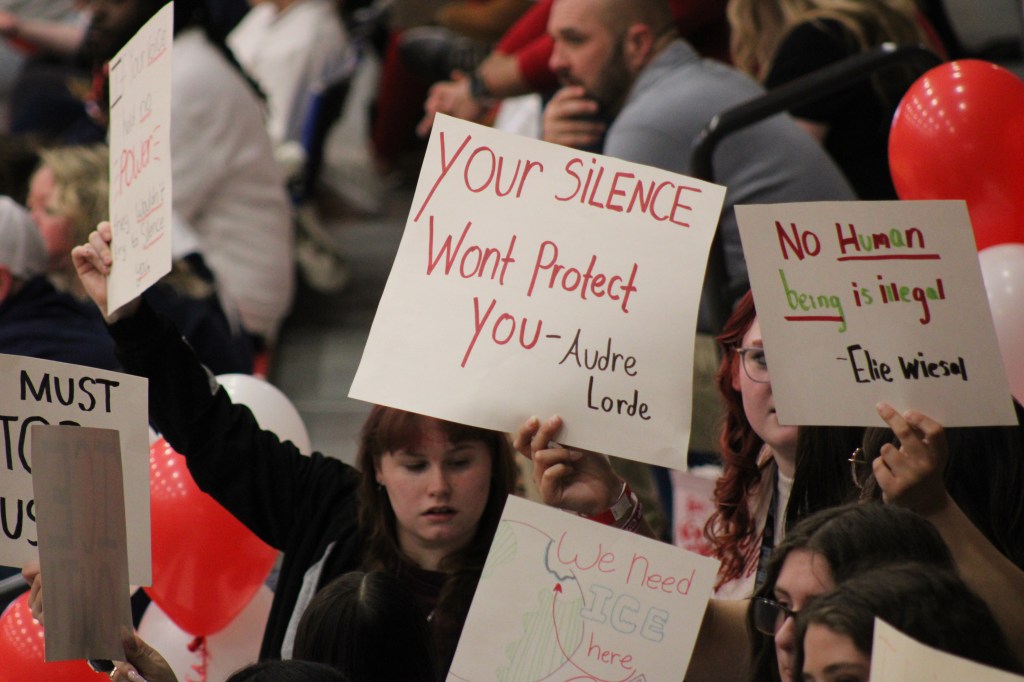
Students protest ICE during Friday’s homecoming game

by Areli Hernandez

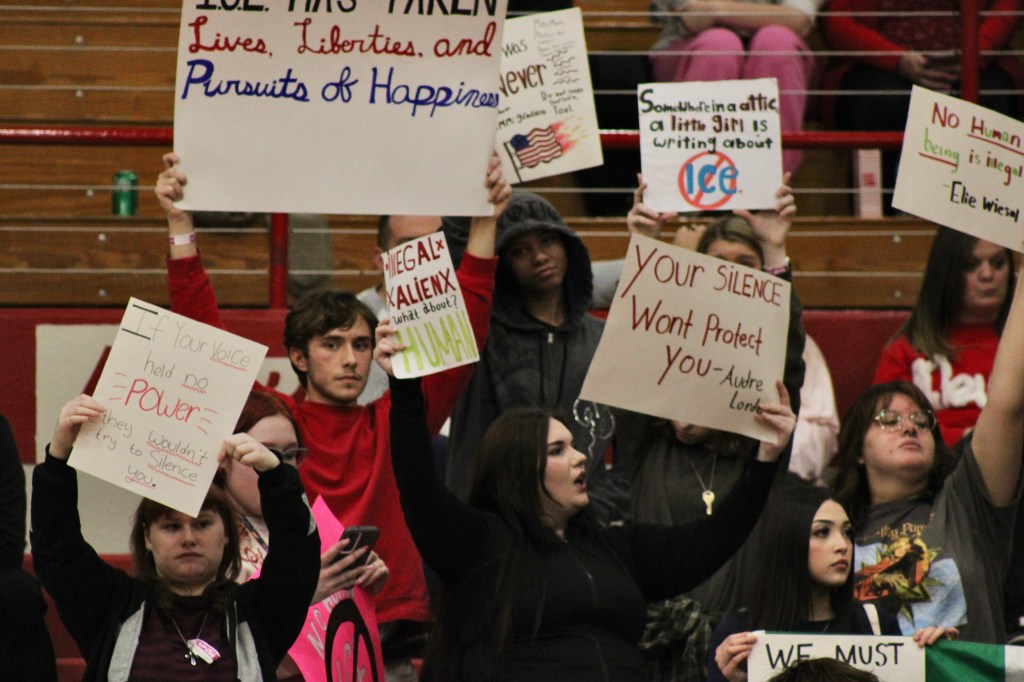
While student walk-outs protesting ICE (U.S. Immigration and Customs Enforcement) have occurred at several local high schools and across Indiana recently, a small group of JHS students stood together to make their voices be heard at last Friday’s homecoming game to bring awareness to current events.

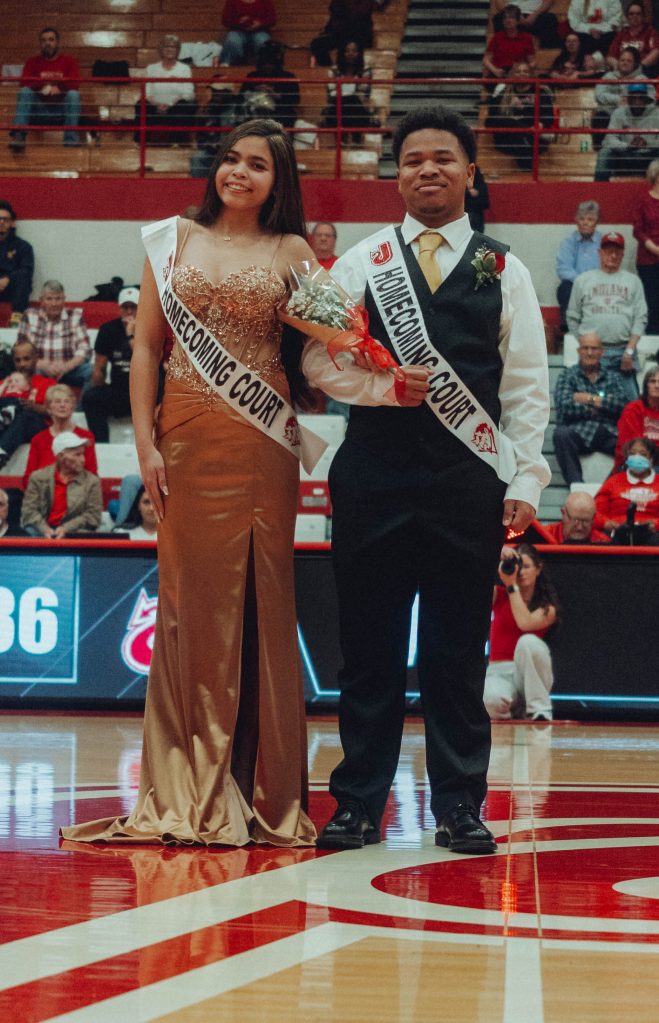
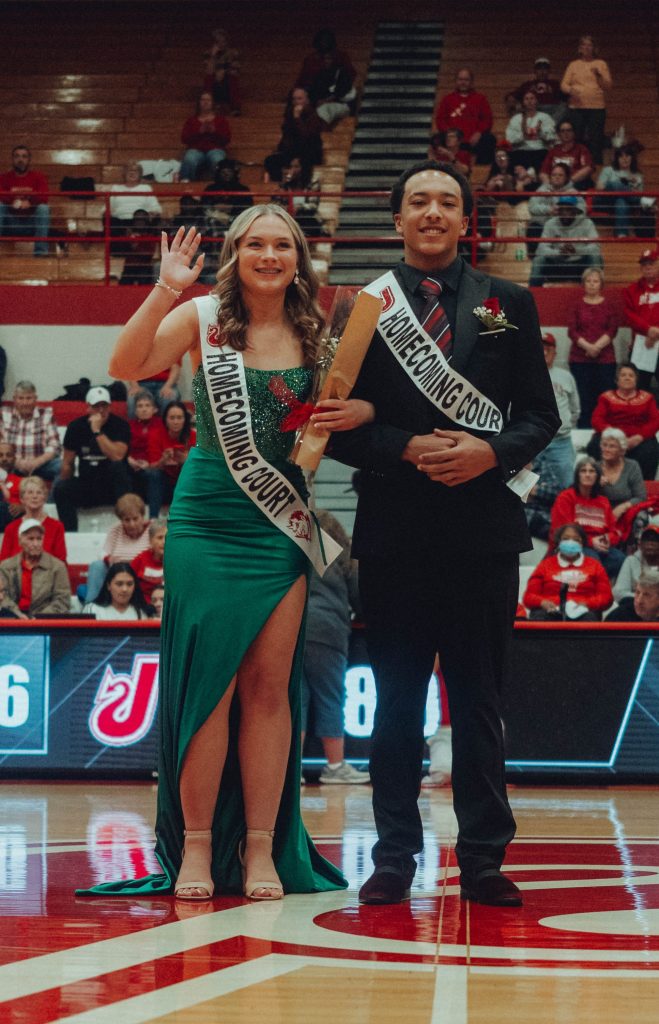
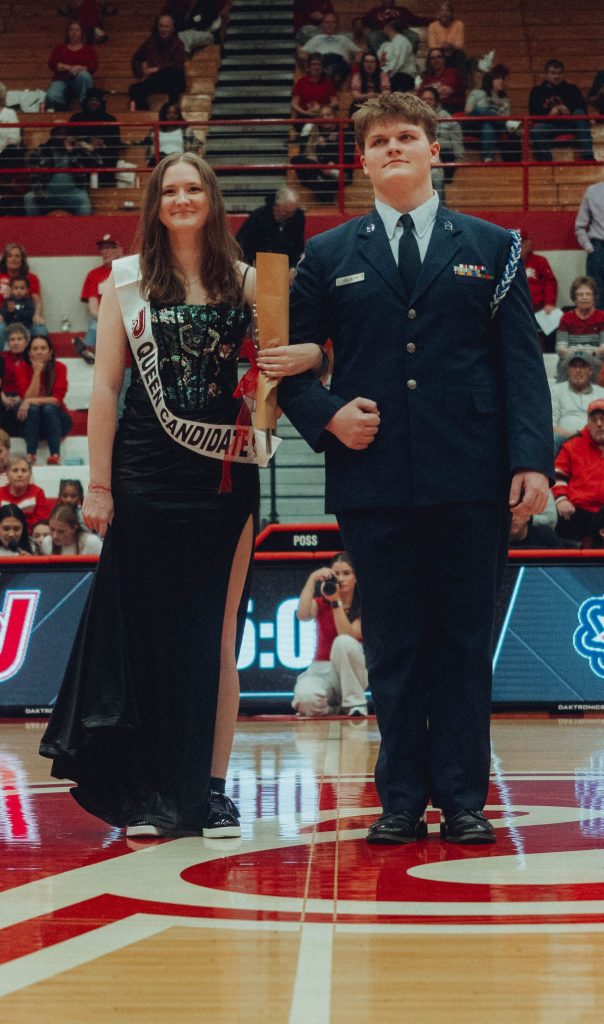
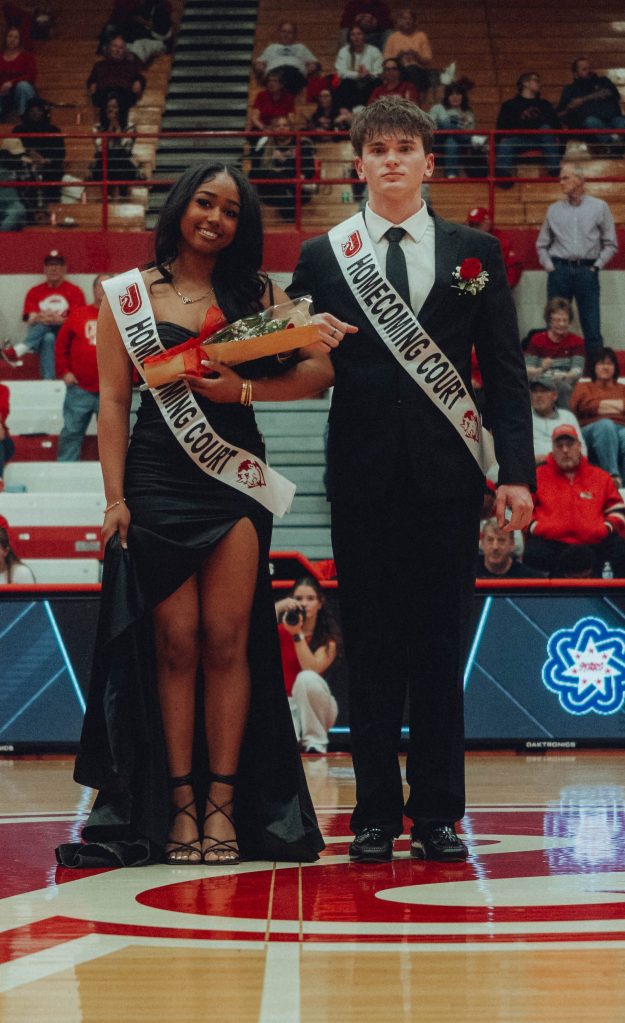
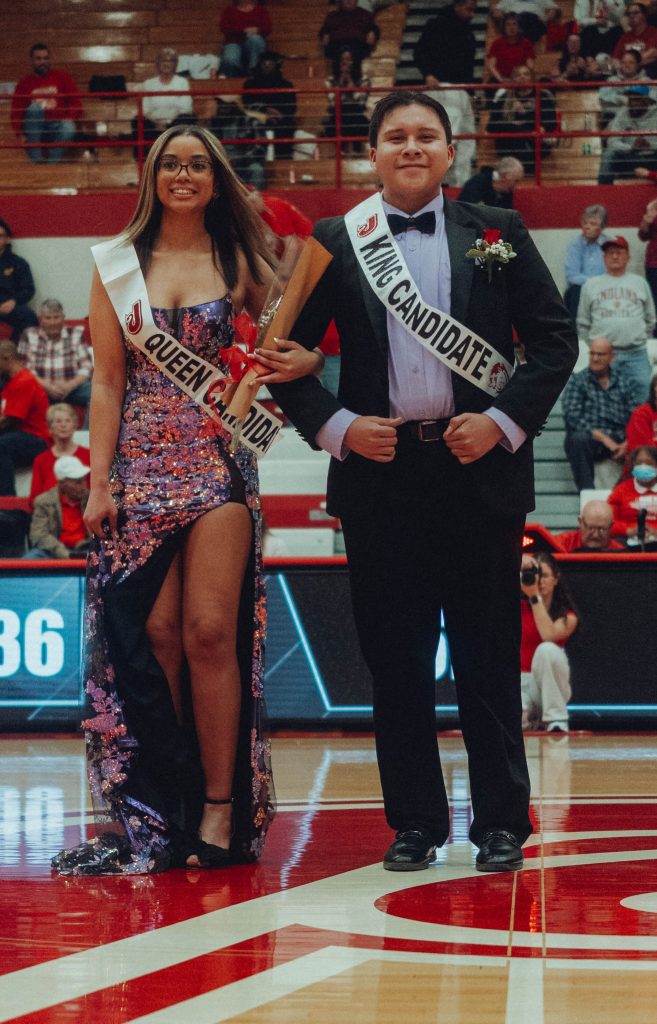
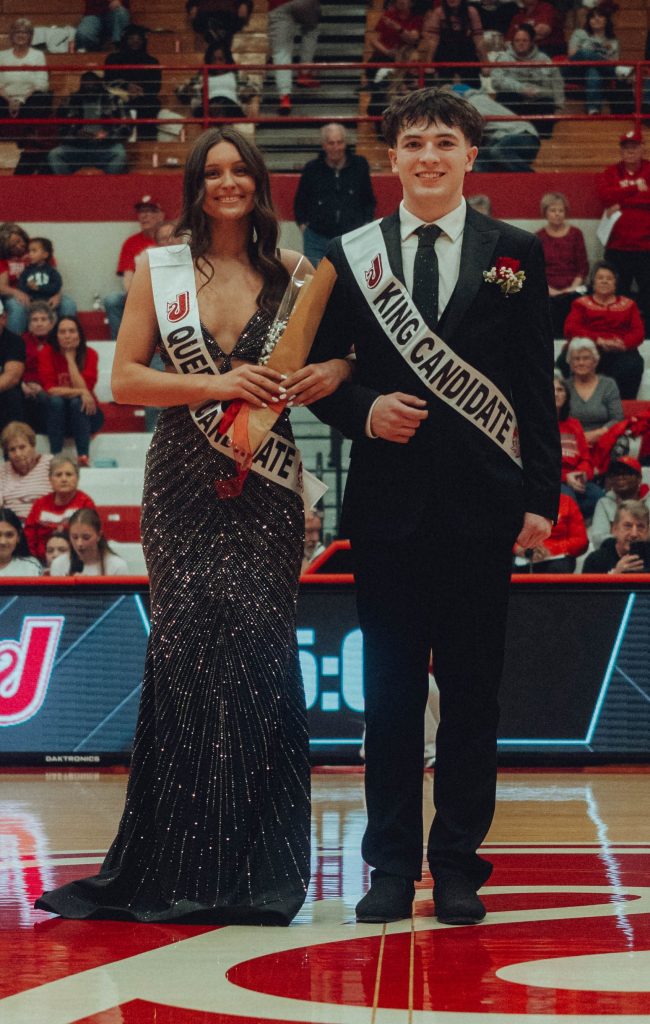
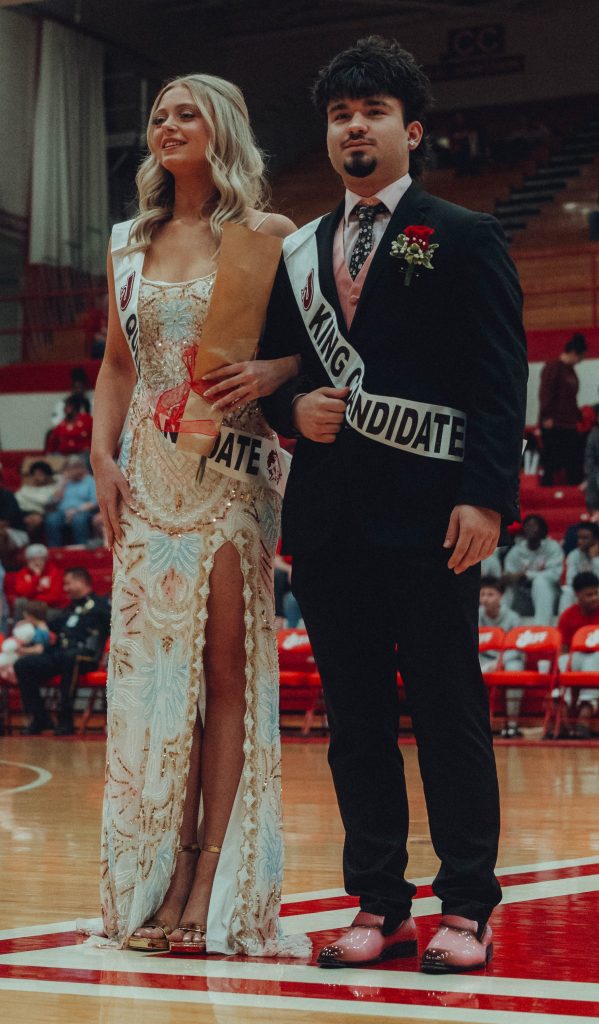
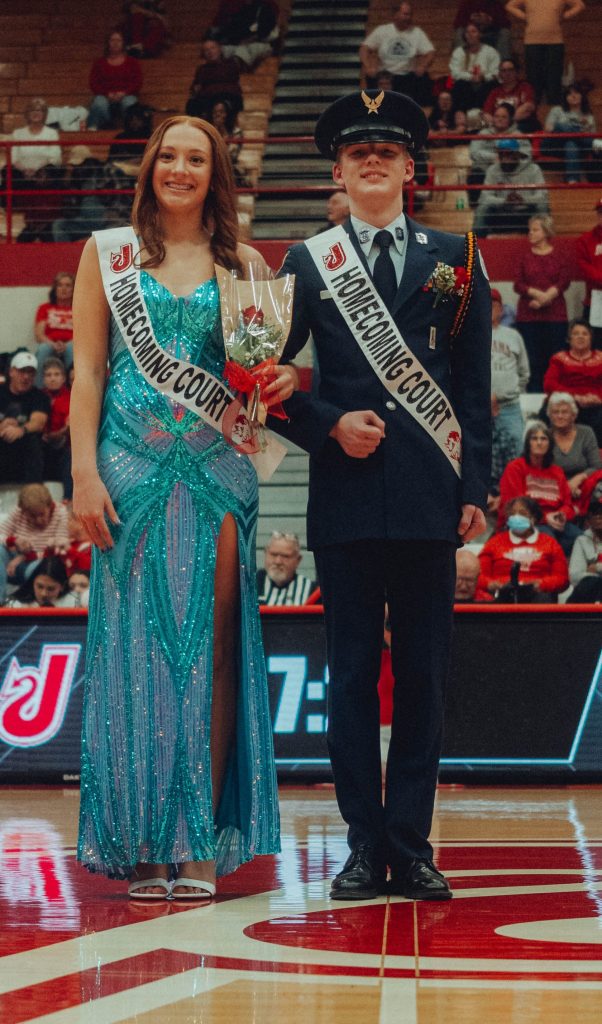
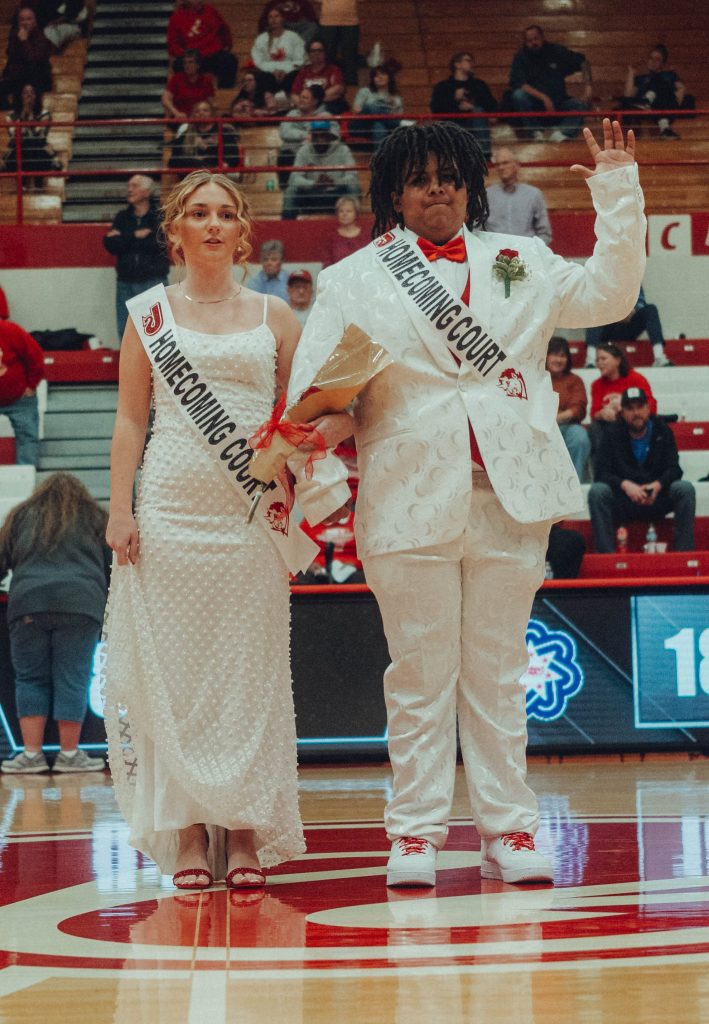
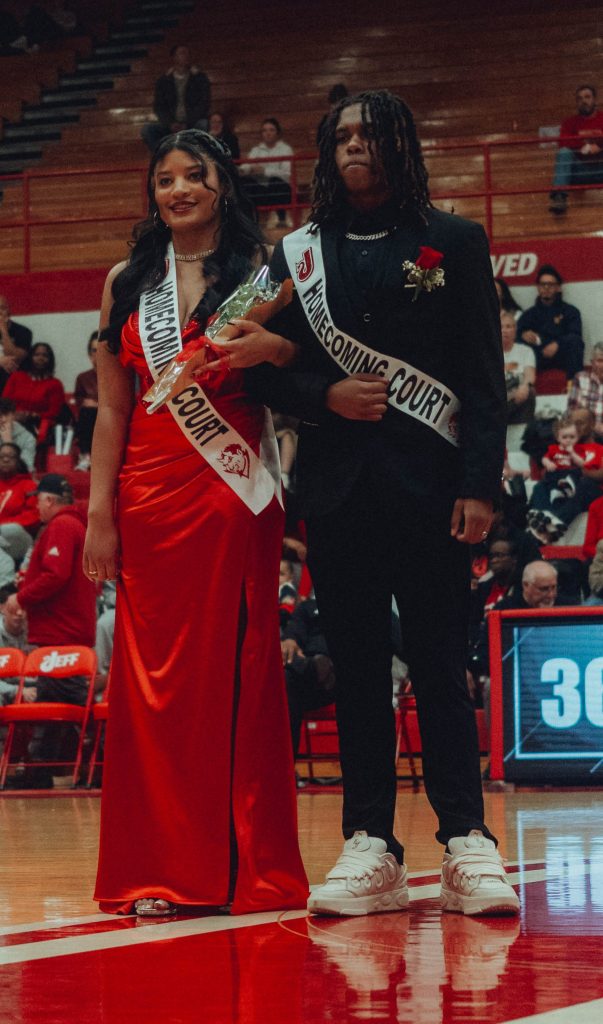
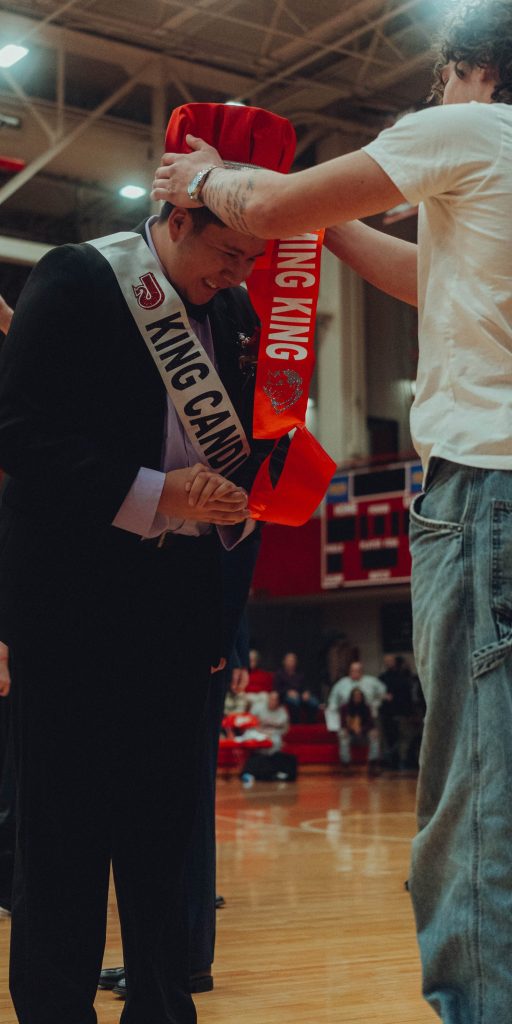
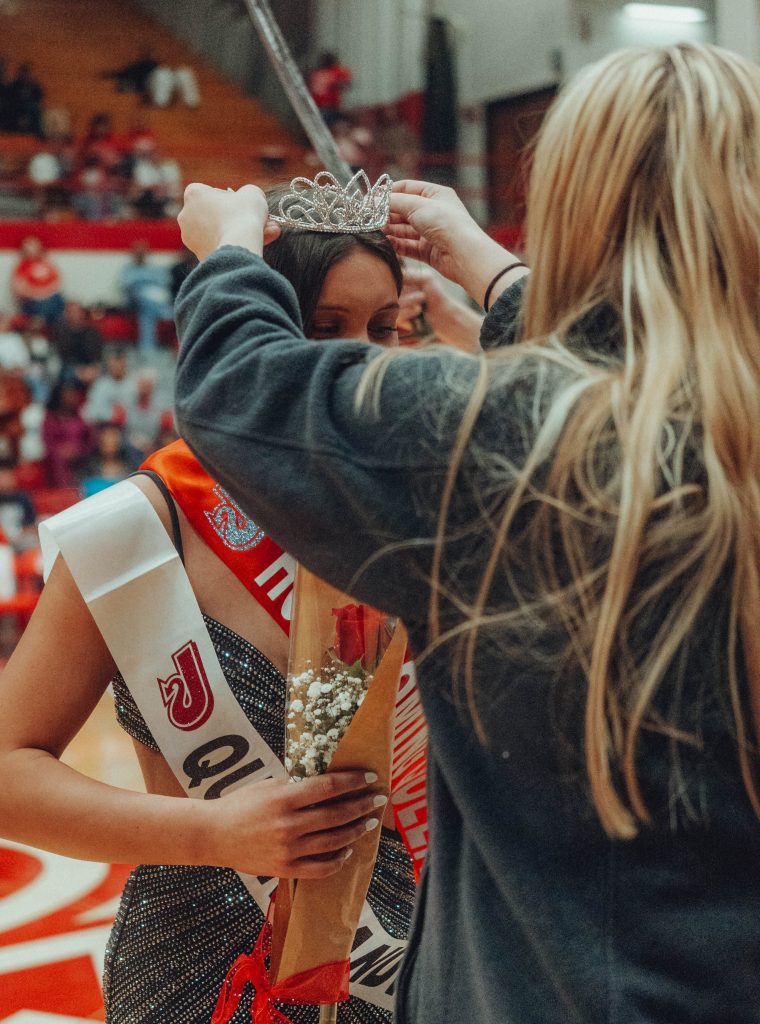
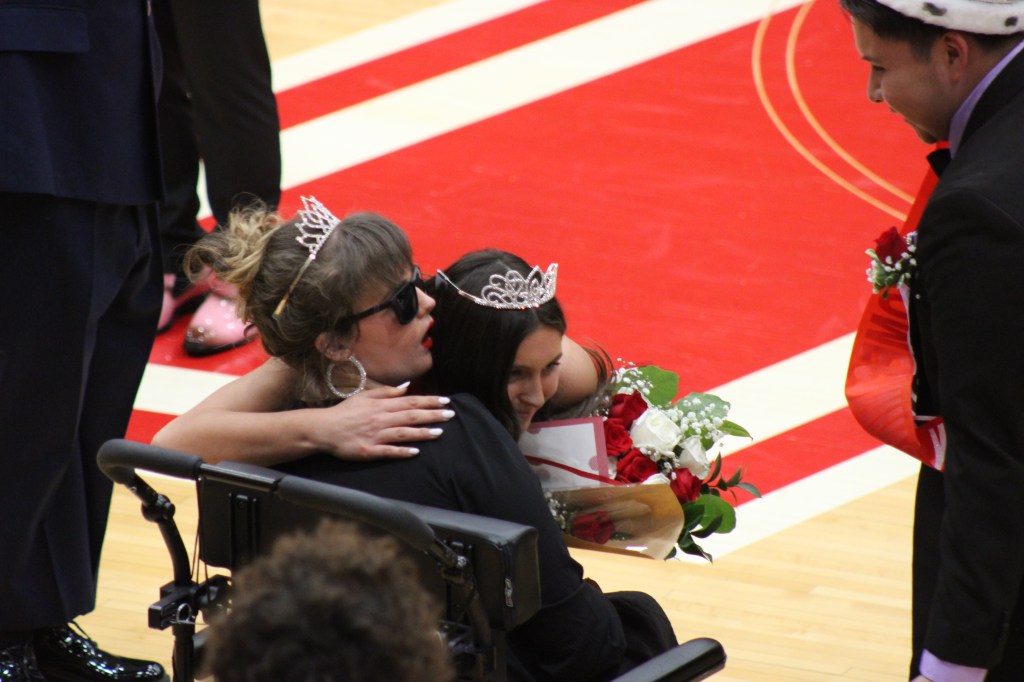
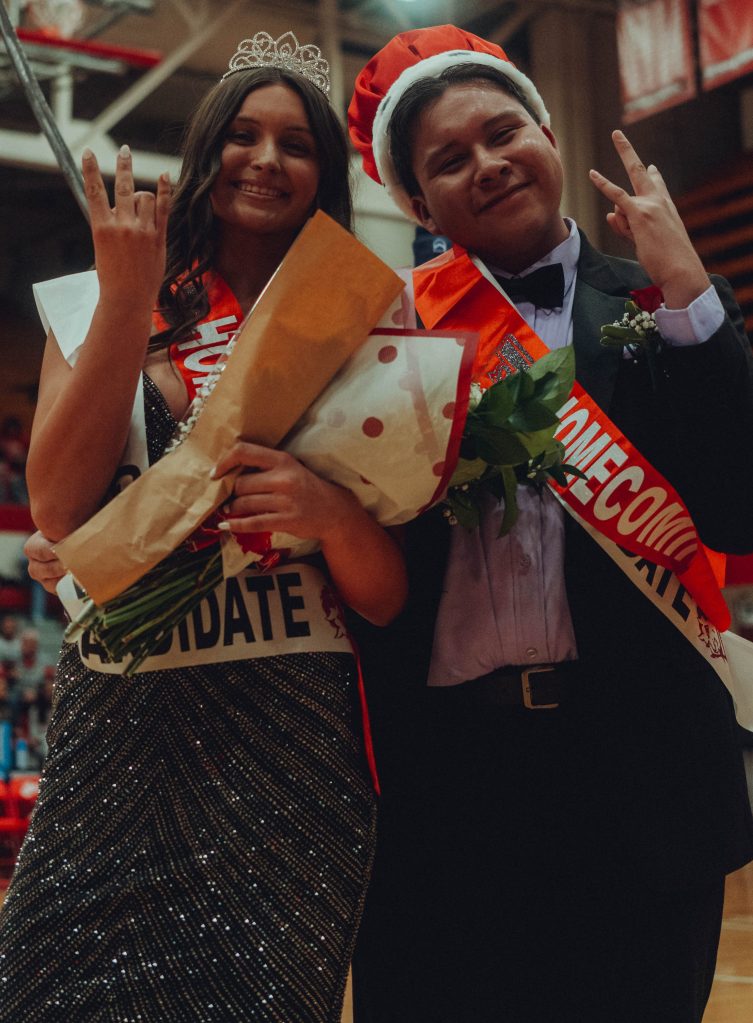
Homecoming royalty crowned at Friday night’s JHS-Bedford game

All photos by Magdalene Conrad and Abygail Lawson. Click on each photo below to view the gallery.

JHS defeats Bedford North Lawrence 75-42 on Friday as Red Devils celebrate homecoming

Some students displayed signs protesting ICE during the game

All photos by Malachi Conrad and Abygail Lawson. Click on each image in the gallery below to view photographs.

Check back tomorrow for homecoming festivity photographs, including images of the crowning.

Faculty, students believe AI, cell phone technology should support rather than distract from learning

by Liddia Waterbury

In today’s classrooms, phones and AI are powerful tools that can support learning. They can also be major distractions that pull students’ attention away. 

Phones and AI in classrooms are changing how students learn and how teachers teach. Some people believe that they help with research and organization, while others worry they cause distractions. Teachers and students show different views on how these tools impact learning.

“Teachers are afraid of students getting lazy and say, ‘AI type me out a three-page paper,’ and they wouldn’t have actually done anything. Like, in college, if you have to turn in major research papers, professors can scan them into something to see if they’ve been copyrighted or already written. If it was already written somewhere else, you’d get kicked out of school for plagiarism or the use of AI,” said college and careers teacher John Moody.

Some teachers focus on the serious consequences of using AI improperly, while others are more concerned about how AI affects learning. Many teachers believe students rely on AI too much and are worried about how it changes the way students work, such as writing essays.  

“The issues I see are that students tend to either try to get AI to write essays all for them, where they’re doing nothing and learning nothing. Or, they’ll write it, and then they’ll have AI just completely rewrite it for them to make it better. They don’t learn how to improve their writing themselves,” said English teacher Holden Henderson.

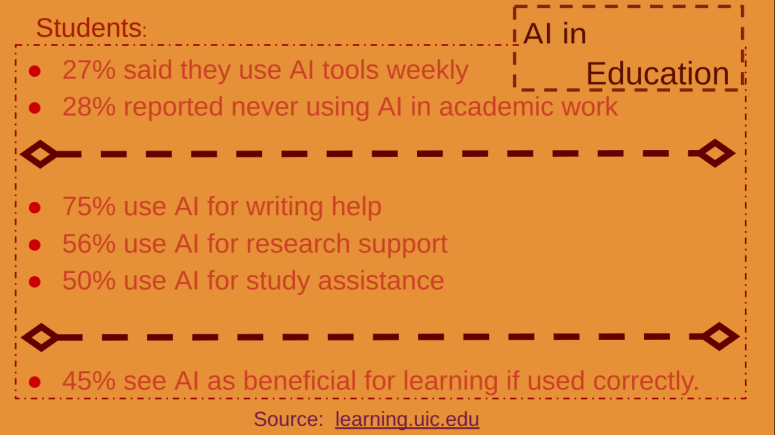
Graphic by Liddia Waterbury.

Even though teachers are concerned about students depending too much on AI, they believe that technology can still be useful. When used as a tool, it can help students understand and learn properly. 

“For reading, if you don’t know what a word means or there’s something that doesn’t make sense, you can quickly look it up so you have more context to the story. For writing, I would use my phone for the same thing, like if I’m unsure how to spell a word, I’ll hop on my phone and try to look up an answer really quickly,” said Henderson.  

In addition to phones being used as a tool, AI can be utilized in the same manner.

“In math, I would use AI as a fact checker. If you don’t have the answers to something, you would try to answer the mathematical problem yourself and then put it on AI to see if you got the answer right. And for English, I would use it as a guide to add to the information that I would already have,” said Moody.

Although teachers see AI as a helpful tool, other teachers worry that it can hurt students’ problem-solving skills.  

“I know kids ask why we learn this, but I think math can teach how to solve problems, and once you get older, life gets hard, and learning how to struggle through problems and learning how to solve problems comes from math. AI changes that because they just want to get to the problem fast; they don’t want to struggle or challenge themselves,” said math teacher Alyssa Jones. 

Technology affects students in more ways than just how they solve problems. It can also make it harder for students to stay focused and pay attention in class. 

“Phones definitely affect focus for a lot of kids. Five minutes into class, they check out, and they just want to start scrolling immediately. Sometimes in life we’ve got to do boring things, but it’s really important to focus in class because if you don’t, you can become super behind, and then you’re not going to want to catch up,” said Jones.  

Teachers say how phones hurt students’ focus in class. This problem is also noticed by other students. They see how phones easily distract them and their classmates from learning. 

“My classmates like using phones in class. They sometimes get distracted because all they want to do is scroll on TikTok, listen to music, or just be on social media in general. They’re distracted because they prioritize their phones before school,” said freshman Kaden Eurton.

While some students see phones as a major distraction in class, others think they can help focus when used correctly. 

“My phone can sometimes be distracting if I really have to focus on work, but when I use my AirPods to listen to music, it helps me focus better. I just sometimes use AI, like science, because I can use it as a base. Only if I really need help formatting my notes,” said freshman Aby Lawson.   

While some students see AI as a helpful tool, teachers are more cautious and focused on its limits and downsides. 

“AI is kind of the way of the future. The good things about it are that it will help you with some information. However, the downside is that it doesn’t always have a clear reasoning. It will only spit out the direct question without researching,” said Moody. 

AI and phones are the future. They can help students during class, even though they might be distracting at times. Teachers believe that, if used in the right way, they can be a very beneficial tool, even when they don’t fully support these tools. 

“I try to avoid AI for the most part, but I do try to suggest good ways to use it, like when we are doing a project, you could use AI to come up with topics to brainstorm, but it shouldn’t be used to generate actual content,” said Henderson. “Phones are so distracting because we are so used to checking them every time we get a notification. Using them for research, like looking up a word, checking if your grammar is correct on an essay, listening to music for focus, are really the only ways phones benefit students.”  
Proposed legislation may expand cell phone restrictions in Indiana schools

by Areli Hernandez 

As cell phone use has become a controversial topic nationwide, Indiana lawmakers debate a stricter measure that could prevent any cell phone usage by Hoosier students during the school day. 

Indiana State Representative Wendy Dant Chesser, who represents District 71 that includes Jeffersonville, finds the proposed legislation effective to improve students’ education and health. 

“I do support this legislation. The goal is to improve students’ focus in class and increase face-to-face interactions with their peers. About 46% of teens say they’re online almost constantly, which is worrisome. We know that a high amount of screen time can negatively impact teens’ self-esteem, social interactions, and mental health,” she said. 

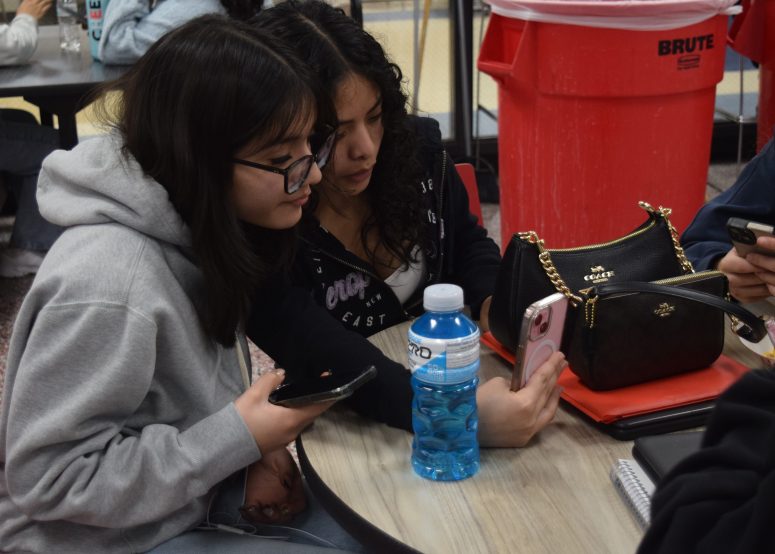
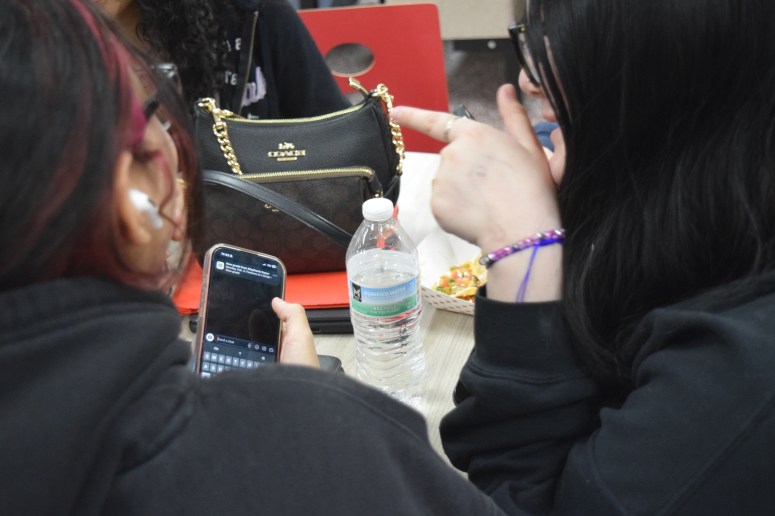
Senior Camila Levario glances over at sophomore Hailey Franco’s phone on Feb. 3 during lunch hour. Many students like Levario use their personal devices once lectures are over or even further to continue working. “I use my phone mainly when the teacher isn’t teaching; my laptop I use for my work 100% of the time,” she said. Photo by Mackenzie Stubblefield.

Math teacher Jaclyn Fifer breaks down current issues students have encountered with phones in her classroom.

“The regulation policy is that students are not supposed to have phones during instructional time. Unfortunately, we don’t have all students abiding by that, and because I also deal with upperclassmen, I do feel like they make a lot of decisions for themselves and need to learn about responsibility,” said Fifer. 

As technology continues to integrate to the daily life of students, it has also become an issue with students complying with certain expectations. 

“It just seems as phones have become so much more social; it’s hard to ask the students to try to do something on their phone educationally because they are so drawn to what else they can do beyond other sites. That is even true with chromebooks and technology,” said Fifer.

Chesser agreed that putting a stop to cell phones during school hours allows students to become responsible about their devices. 

“By giving them the full school day without phones, we can help teens learn to self-regulate their phone use before they become adults,” said Chesser. 

Even though this hasn’t become a severe issue for Anatomy and AP biology teacher Missy Brewer, she hopes for a better alternative to help students. 

 “I think students understand that the phones are a distraction, but they’re unable to put them away without someone forcing them to. I wish we were able to teach students strategies for not needing their phones all the time rather than just making that a rule, but we’ve tried that, and it doesn’t work,” Brewer said. 

Brewer also has certain expectations for her classroom in order to maintain their efficiency. 

“I start each class reminding students to clear off their desks, including their phones. If I see someone on their phone, I’ll say something to them. I let them have their phones for the last five minutes of class and also have them put their phones in a ‘caddie’ during testing. I think it’s important that students don’t have that physical distraction in front of them,” she said. 

Radio/TV teacher Fred Cowgill finds himself questioning the legislation regarding students’ educations and well-being. 

“l’ve got very mixed emotions on what’s being done or trying to be done. I disagree with it at the end of the day, honestly, because I don’t want someone to tell me what I can or can’t teach, and this is an important ingredient because kids would rather tear off an arm than give you their phone, and we’ve got to be able to educate these kids in a better way so they don’t feel that way anymore,” Cowgill said. 

Cell phone usage is a serious topic for Cowgill, whose lessons rely on media equipment on a daily basis. 

“The problem for us is that we use our phones; the kids use their phones as part of the process of doing what we do here, which is turning in stories for social media, for the internet, and for our newscast we do every Tuesday,” he said.

On the other hand, he is also concerned about the amount of screen time dominating teenagers’ lives. 

“Attention spans are down to five minutes at a time, that’s it. I’m like, ‘Wow.’ Apparently the peak was two hours before smartphones came out; the smartphones and the internet have damaged that quite a bit. It’s a serious topic, I won’t fib, and there are a lot of layers to it, which is why so many people react to it in such a negative way, especially teachers,” he said. 

While the current law limits cell phone usage during instructional time and allows students to use devices during lunches and passing periods, Chesser said the new legislation would add more restrictions if passed by the Indiana legislature and signed into law.

“This year’s proposed legislation, Senate Bill 78 from Sen. Jeff Raatz, would completely restrict cell phone use in schools,” said Chesser, who mentioned several ways schools could comply with the proposed legislation.

“Schools could choose between two enforcement policies: students can’t bring phones to school at all, or schools can implement a secure storage policy. It expands the definition of a wireless communication device to include smartwatches that connect to cell phones,” she said.

Senior Camila Levario finds the proposed legislation unwise and even dangerous for not only herself, but for other students who are self-aware of current events impacting their lives. 

“A complete cell phone ban would not kill me, but with everything going on in the world right now it’s not a good idea at all. I understand if anything important happens the office will notify us, but what if by the time they tell us or find us it’s already too late? I just wouldn’t be able to live with that,” she said. 

Senior Susan Ochoa expects a message from a friend while conversing with junior Kennedy Arthurs on Feb. 3 during lunch hour. With the proposed legislation, the limitations of cell phone use might affect students like Ochoa. “I use it very often to be in contact with friends and family. I also use it for music and for school-related stuff,” she said. Photo by Mackenzie Stubblefield.

With the number of students having their devices, Cowgill said this would be prominent for the safety of students and the school. 

“God forbid anybody ever tries to break into the school and do some harm to us. In our case, right now we have roughly 24-2500 people who would have phones and would get the message out to their loved ones and authorities,” he said. 

For sophomore Arieslie Tejeda, a near-total ban for cellphones would be an adjustment. 

“I wouldn’t think a complete phone ban would affect me personally because if I put my mind into learning I’ll get the work done without AI, but I feel like we should still be able to listen to music or get on our phones when we have free time and during lunch time. We should also still be able to carry them in case of an emergency,” she said. 

Many students find cellular devices useful as it increases focus when completing certain tasks. Senior Susan Ochoa said a cell phone ban would not improve learning or safety. 

“Things would be changed around since I wouldn’t be able to quickly contact my parents in case of an emergency and wouldn’t be able to listen to music to focus in class. It would  be hard to communicate with friends if we need to borrow a Chromebook or school notes,” she said. 

Senior Luis Rebolledo is apprehensive about the current cellphone issues, emphasizing the importance of having a cell phone for safety precautions. 

“A complete phone ban wouldn’t bother me at all. You’d get used to it eventually. What would concern me though is — what if we or our loved ones were in a situation and we had to contact each other? Stuff goes on around the world and we could be involved in a dire situation. The office wouldn’t act fast enough to contact the other. Scenarios like these are where we would need our phones to alert anyone and let them know about our well-being,” said Rebolledo. 

Cell phone use has been a debatable topic for several Indiana school corporations. While some are in favor of a complete cell phone ban that would enhance the education and performance of Hoosier students and teachers, others oppose to the potential outcomes this legislation would create for several students. 

“It’s the state’s job to provide Indiana students’ with a quality education. We also have a role to play in ensuring teachers and administrators can do their jobs to the best of their ability — cell phone use hinders both,” said Chesser.

Additional reporting by Jackson Anderson and Magdalene Conrad.

New diploma standards emphasize work-based learning for Hoosier high school students

by Tyler Conley and Parker Vibbert

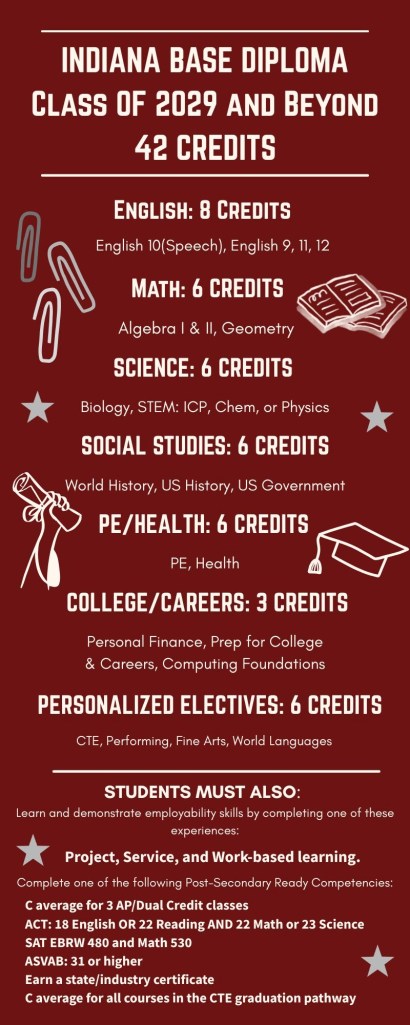
In December 2024, the Indiana State Board of Education adopted new high school diploma standards, which will take effect beginning with the Class of 2029. These new standards will affect all current and future Indiana freshmen.

With the Indiana High School diploma remaining significantly unchanged for several years, the Indiana Department of Education aims to provide students with more work-based learning opportunities and increased chances to achieve their goals. 

Engineering Academy counselor Whitney Roberts said the new standards are in response to employers’ increased need for employees who are ready to enter the workforce upon graduation.

“They are trying to get away from a college-focused curriculum, and instead are trying to keep up with employers that need a more ready workforce,” she said.

According to Roberts, the new standards feature a base diploma and three core principles.  

“The new diploma splits, it’s three E’s: Employment, if you want to go to work after high school; Enrollment, if you want to enroll into a college, and Enlistment, if you want to go into the military,” she said.

“They are trying to get away from a college-focused curriculum, and instead are trying to keep up with employers that need a more ready workforce.”

Engineering Academy Counselor Whitney Roberts

Greater Clark County Schools wants to ensure that students meet their work-based learning goals while still enjoying extracurricular activities.

“Greater Clark County has purchased an online system to allow students who have lots of after-school commitments to still meet work-based learning goals for high school students,” she said. This should help students meet some work-based requirements through their extracurriculars.

Freshman Academy counselor Andrea Schedler explained that the biggest change from the previous diploma is that the number of credits needed for graduation has increased.

“The biggest thing is now it’s 42 credits instead of 40,” she said.

Graphic by Daysha Gray.

Indiana Diploma Standards have been well known as the “Core 40” for 15 years, since it took effect in 2011, owing to the now-outdated 40-credit graduation requirement. Before this, the diploma standards had not seen any changes in a decade.

Among these new standards, some classes have now been labeled as graduation requirements.

“For English 10, they are going to either take Speech or an advanced English class.  Another big change is the College and Careers Credit, which, along with Computing Foundations and Personal Finance, has become a required graduation class,” Schedler said.

Prior to the new standards, College and Careers was not a graduation requirement, nor did Computing Foundations exist until this school year. Preceding Computing Foundations as the semester 2 successor to College and Careers, was Personal Finance, which has now become a required senior class.

Unlike the “Core 40” diploma, the new standards feature more honors academic options.

“In the old diploma, there was only the base diploma, academic honors, and technical honors. Now there are more options, like the honors seal and the honors plus seal,” Schedler said.

Each diploma (Enrollment, Employment, and Enlistment) have their own specific requirements to obtain the honors and honors-plus seals to ensure success in each field. 

Schedler said that there are advantages and disadvantages to these changes, and they could put a lot of stress on students’ shoulders

“I think there’s good and bad. The good thing is that we give students more options, but the requirements for the honors plus seal for employment can be very difficult. It requires 650 work hours,” she said.

Public Service Academy Principal Chelsea Jordan elaborated on the difficulties of building direct relationships between students and their work.

“We’re going to have to work with teachers to find ways to build more career-driven, hands-on experiences in the classroom,” she said.

Principals and teachers alike are taking any step necessary to stay informed on the new changes to better help the students meet their goals.

“We’ve already spoken with our teachers about it and kind of brainstormed different ideas within the academies of how to make adjustments,” Jordan said.

Jordan, however, is more skeptical about the changes and how they actually benefit the majority of students.

“I think it’s a little extreme. You have kids in sports, or other extracurricular activities, and it can be hard for them to meet their diploma requirements,” she said.

College and Careers teacher Michael Moody believes giving kids more options other than enrolling in college is a benefit.

“College isn’t for everybody. One of my friends actually went into the military, and they paid in full for her college after serving for nine years,” he said.

Moody helped create the college and careers program at Jeff High and described it as a gateway into figuring out what teens would like to do during their high school careers.

“We have basic jobs that we’re supposed to do mainly to help you have an idea of where your skills and aptitudes match in the pathways,” he said.

With college not being for everyone, the new diploma also helps students realize easier paths to success in their future fields.

“Why should you go to a four-year college and spend tens of thousands of dollars to get a job when you can go and get training and you get started getting paid right out of school?” he said.

Ultimately, teachers, counselors, and the State Board of Education all agree that the changes to this diploma were made to encourage and support students to achieve their goals, whether that be Employment, Enrollment, or Enlistment.

Winter ’26 Photo Essay: JHS photographers capture Southern Indiana winter weather

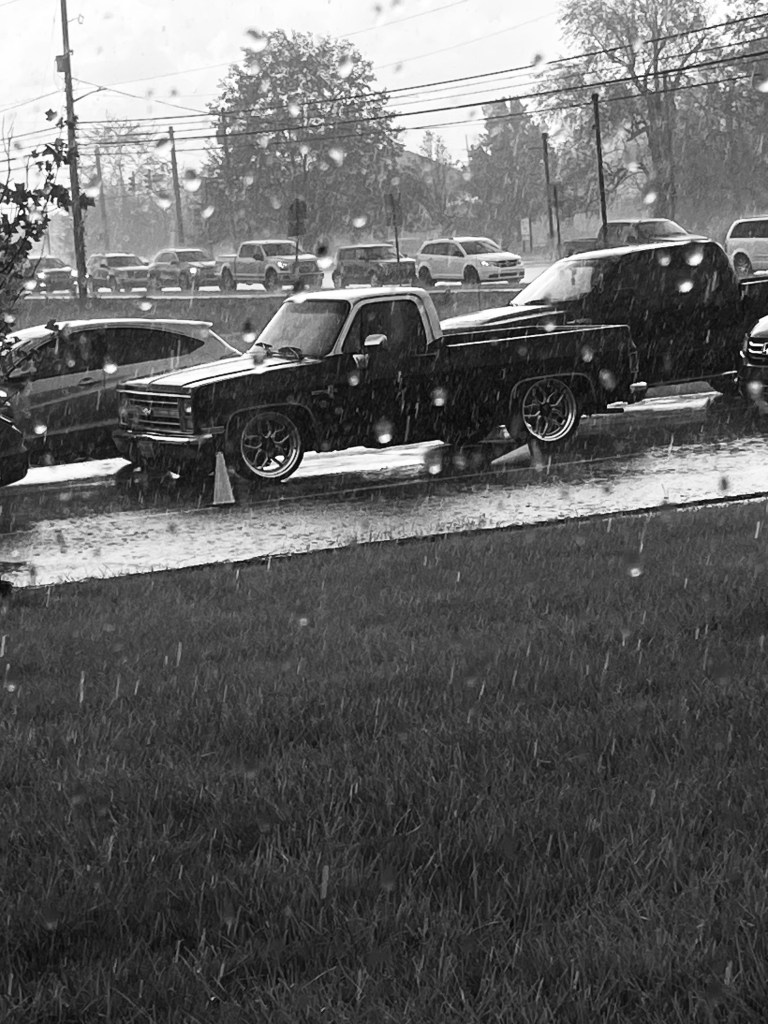
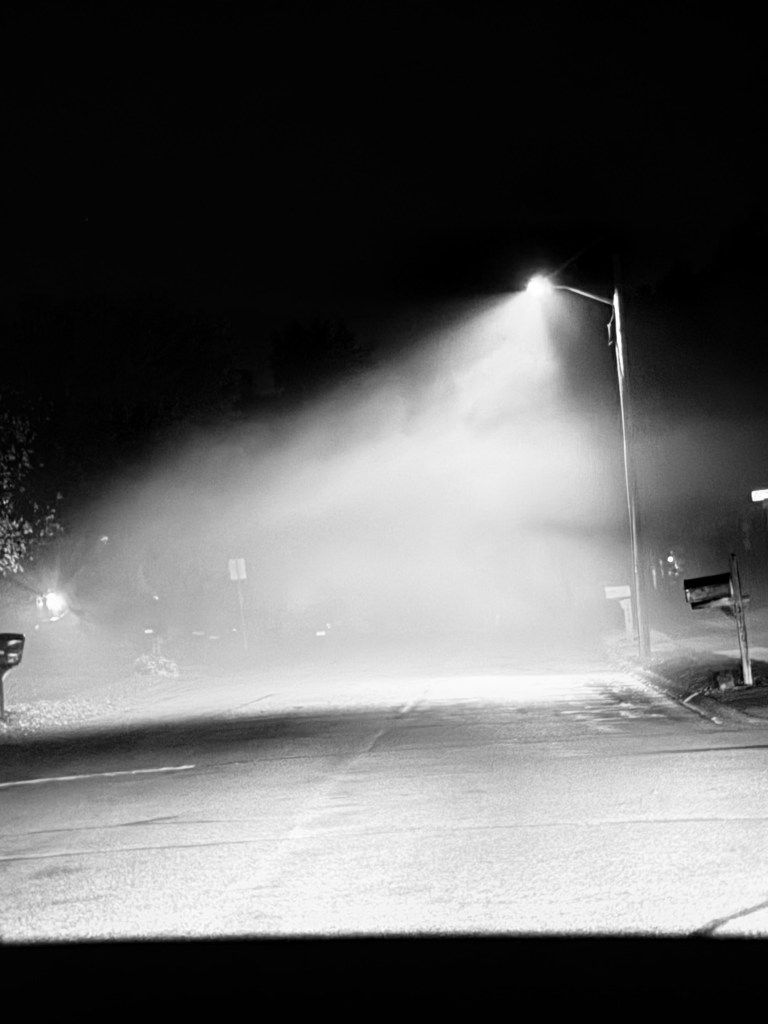
Despite the snow, ice, and on-line classes, JHS student photographers photographed some images of January’s cold weather as part of their Digital Photography class.

Most images are a part of their unit on black and white photography as they study the work of Ansel Adams this month.

Click on the images in the gallery below to view their photographs.