Click on the link below to view and/or download the April print issue, distributed on April 9, 2026.
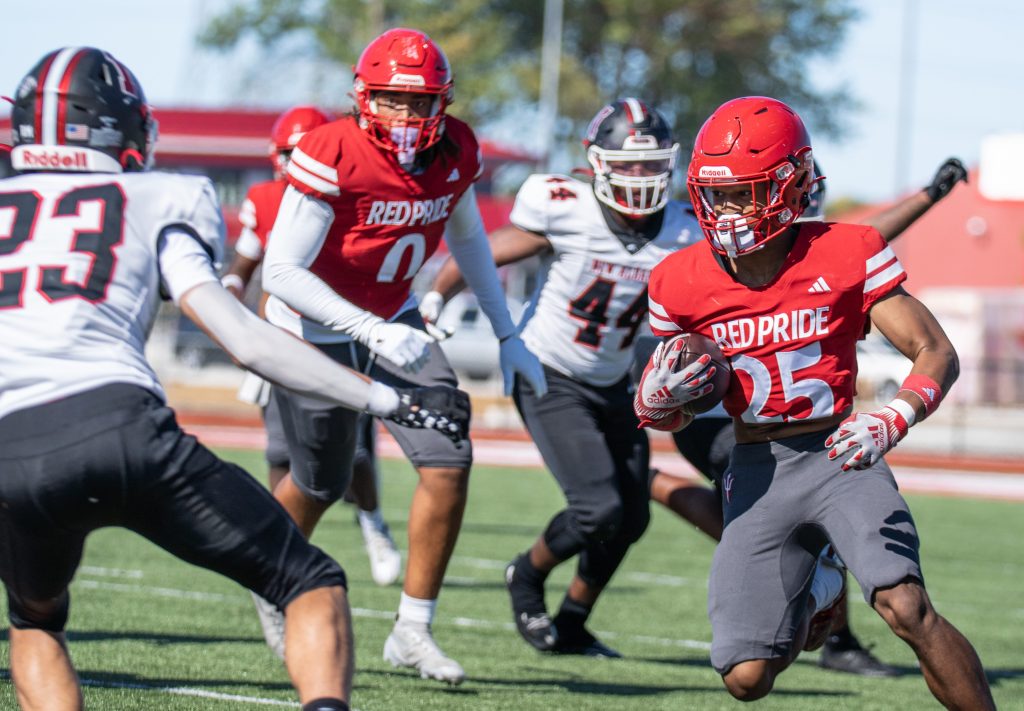
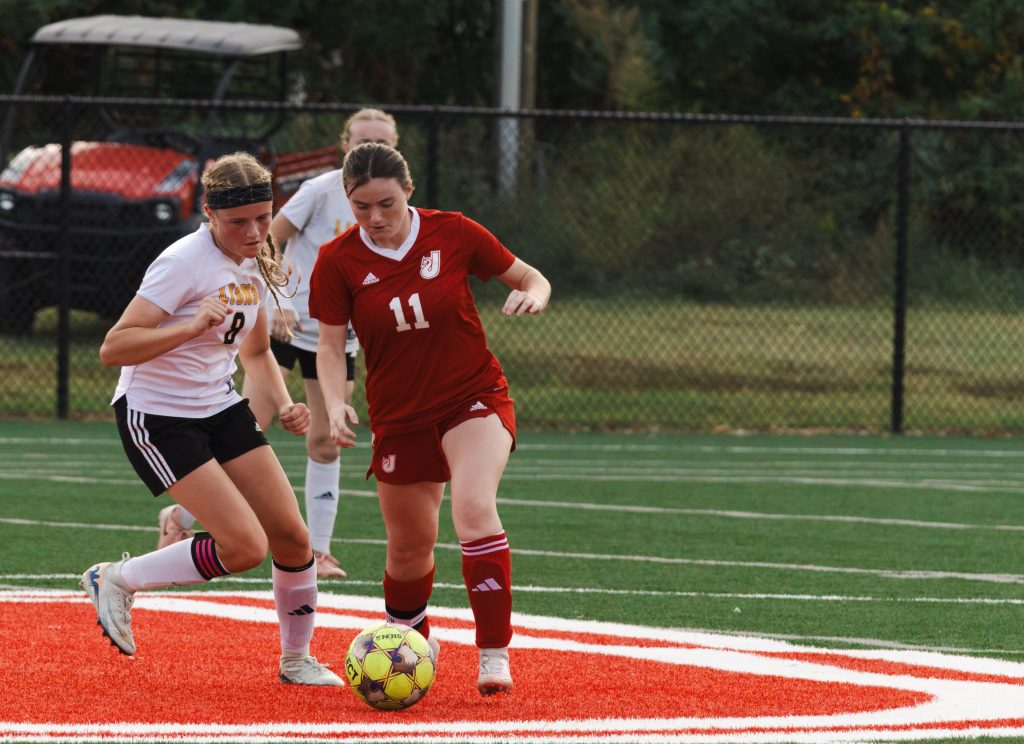
All photos by Parker McCloskey and Magdalene Conrad. Click on each image to view each photo in the gallery below.


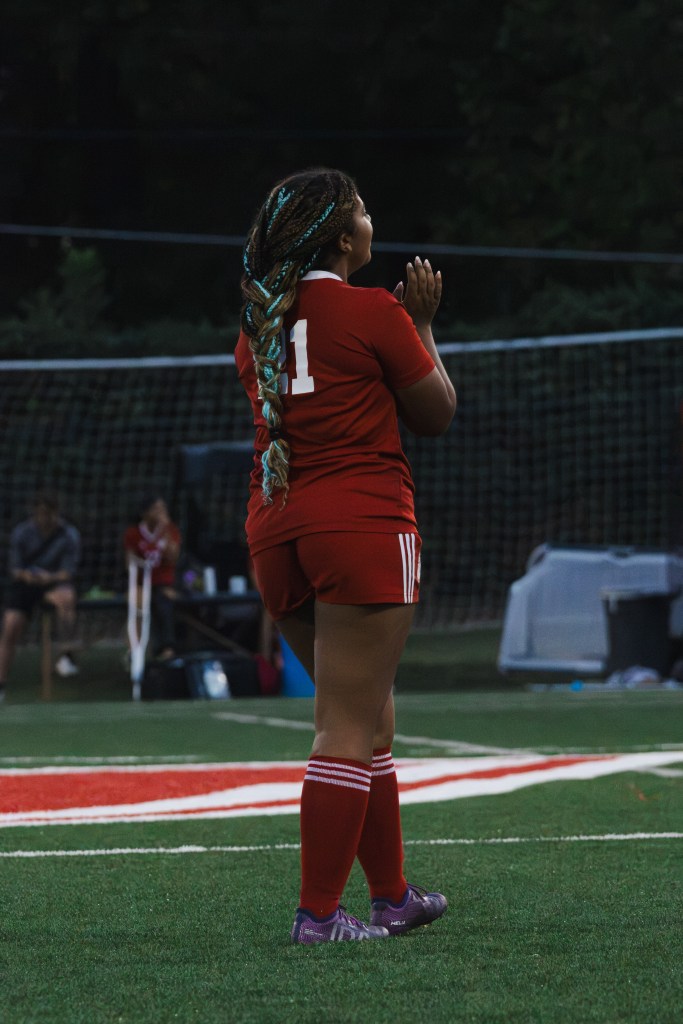
All photos by Malachi Conrad. Click on each image in the gallery below to view the photograph.


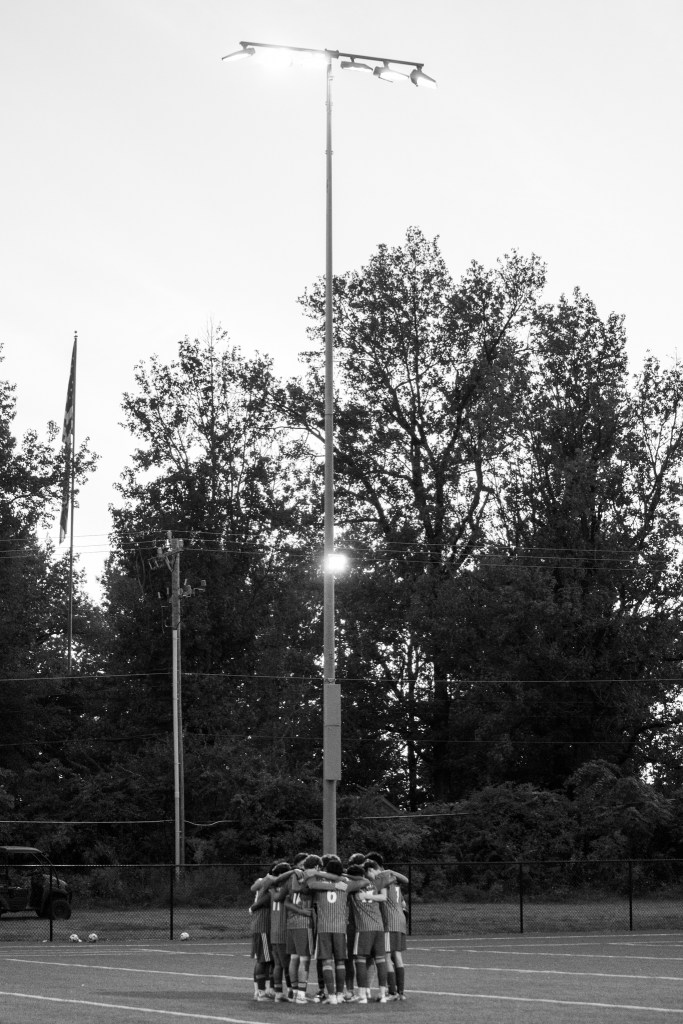
All photos by Malachi Conrad. Click on each image in the gallery below to view photographs.


by Marquel Garner
How would implementing the shot clock in Indiana high school basketball affect teams and players?
The ‘shot clock’ shall refer to the timing device that displays a countdown of the time within which the team in possession of the ball must attempt a field goal.
Thirty-two states have implemented a 35-second shot clock in high school basketball, and 18 states have not or said no to implementing a shot clock.
After the Indiana Basketball Coaches Association announced the results of a survey that said 68 percent of coaches polled favored a shot clock, a proposal went before the IHSAA at its Feb. 20 executive committee meeting for a 35-second shot clock. The proposal, if passed, would be implemented for the 2026-2027 or the 2027-28 schoolyear.
Some advantages of having a shot clock include increasing the pace of the game and preventing teams from holding the ball for minutes at a time to protect a small lead, a tactic often disliked by fans and players.

Having a shot clock will make a faster-paced game, resulting in more possessions; more scoring opportunities; and higher-scoring, more exciting games, which can boost spectator attendance.
The shot clock will also help with player development, helping players learn to handle time-management pressure, make quicker decisions, and play at an uptempo pace, better preparing them for college-level basketball.
The last advantage of having a shot clock is that teams will have to practice to execute their offense better and more effectively within a timeframe than relying on holding the ball to win. It also prevents the “end-of-game stall” where teams play keep-away for the final minutes, forcing competitive basketball until the buzzer.
Some cons would be the cost of installing it and maintaining the shot clock, and it requires an extra, trained operator for varsity, and potentially for junior varsity and freshman games.
With a shot clock, less talented teams wouldn’t be able to slow the game down and reduce possessions to pull off an upset. The shot clock would favor more talented teams by giving them more opportunities to score.
Other issues would be teams playing zone defense because they would only need to play defense for 30-35 seconds. And some coaches may argue that a shot clock leads to rushed, poor-quality shots and more turnovers for less experienced teams, rather than better gameplay.
I feel adding a shot clock would be good for Indiana basketball. The main reason for me is that teams are eating up the clock with a small lead. When they play “keep away” with a small lead, it forces the other team to foul, and as a spectator, that is not fun to watch. Also, as a player, I think it could force players to develop skills, such as playing at a faster pace, managing time, and reading defenses under pressure
All photos by Magdalene Conrad. Click on each photo in the gallery below.


by Aurora Grisham
Cyrano de Bergerac will take to the Jeff High stage this weekend to try to romance Roxane.
Show dates include:

Friday, March 27 — 7 p.m.
Saturday, March 28 — 7 p.m.
Sunday, March 29 — 2 p.m.
Friday, April 3 — 7 p.m.
Saturday, April 4 — 7 p.m.
On-stage performers include Blessing James, Finn Matzek, Jayden Trevell, Jackson Fried, Sarah Proctor, Jalen Nifong, Tristan Cooley, Lucas Dimmit, Wyatt Clements, Sophie Ellis, Jude Polete, Roberto Castro, and Natalie Creagh.
Behind-the-scenes crew members include McKayla Hannan, Parker Grubbs, Kira Timberlake, Elianna McCurdy, Shiann Spalding, Nataly Barragan, Lindsay Austin, Ada Morrill, Hailey Littrell, Bella Roman, Chloe Kallbreier, Zoe Schwieman, Kenzie Stone, and Sage Mace.
Sophomore actress Natalie Creagh said, “We take a more modern take on the original story of ‘Cyrano de Bergerac’.”

The advice Creagh has for those who want to take theater is to keep believing in themselves even though it’s a lot of hard work.
Theatre arts teacher Derrick Ledbetter said, “The story behind Cyrano de Bergerac is, in a war-ridden France, there is a love story that takes place that is very complicated.”

Ledbetter said he’s most excited to see the students act out the script, since it’s his most complicated one yet.
Tickets are free for staff — and general admission tickets are $10, according to Ledbetter.
Tickets can be purchased through the Jeff High Theatre website.
All photos by Shelby Keesee. Click on each image below to view.


JHS students participated in the annual Multicultural Showcase on Thursday, March 12, sharing their cultures through presentations, dance, food, and dress with their fellow students and staff in the auxiliary gym.
Click on each photo in the gallery below.


by Abigail Hall
Twin Peaks (directed by David Lynch) – an eerie, surreal show about Agent Dale Cooper working to solve the murder of Laura Palmer, a high school girl in the logging town of Twin Peaks.
The show is considered groundbreaking and it is still world renowned for its impact on the television industry. It brought a cinematic and supernatural program to TVs in the 1990s. Twin Peaks combines themes of supernatural activity, police and crime, and horror to create its iconic status.

It continuously asks the question of “Who killed Laura Palmer?” while incorporating the town’s stories. The show is known for diving deep into the world of traumatic evil in the form of Laura’s tragedy. It starts out as a straightforward, typical murder mystery, but it quickly transitions into something deeper psychologically.
Twin Peaks moves slower than other shows being aired, but its pace allows the town to settle into the viewer, making it seem more suspenseful and dreamlike.
Laura Palmer and her story has stuck with many watchers of the show, integrating herself into the fanbase like no other. Her youth and experiences reflect that of her viewers, making her an important character to millions of people. Her complexity adds many layers, including her loveability because of her trauma and the way she handles it. She is not painted to be a saint like many victims in horror shows.
She is not the first loveable character that David Lynch has brought to life, though. Lynch is known for his directing style, mixing themes of surrealism and horror with a unique charm. He has directed many other iconic films and television shows, including Mulholland Drive, Blue Velvet, and Eraserhead.
While all of his work is widely regarded as memorable and fascinating, Twin Peaks seems to have latched itself into his fans’ lives, as well as other directors and film-makers.
The series has influenced many other famous shows, including the likes of X-Files, Stranger Things, and Lost. The show proved that fans would follow complex characters and dark storylines, allowing these other shows to follow suit.
Lynch introduced genre blending through Twin Peaks, mixing a sense of comedy with the small town’s uniqueness with the horror of Laura’s mystery.
Twin Peaks sparked some controversy with its mixture of comedy and heavy themes, like drug abuse, assault, and murder, without romanticizing the trauma. However, this creates an air of surrealism that drags people in.
Lynch has a specific style of cinematography that many people link with Twin Peaks, as well. Featuring wide shots, darker colors, muted lighting, and unconventional camera angles to make his episodes feel more like a hand-crafted masterpiece than anything.
Twin Peaks has wormed its way into many people’s hearts, as well as the film industry. Television and films will never be the same, whether they’re inspired subconsciously or not.
Immigration enforcement harms children, fuels global instability, and turns protest into tragedy
by Dana Romero Regaldo
It’s been 3,249 days since Roger Rayson, a 42-year-old man, took his last breath because the Trump administration failed to provide proper care. He suffered from dehydration, and upon further evaluation, he was diagnosed with Burkitt’s lymphoma. Since then, thousands of days have passed, yet the same system that failed him continues to fail others.
What was framed as “law and order” became a machine that separated families, overwhelmed borders, and fueled unrest far beyond the United States. This is not just a immigration crackdown; it is a policy era that treated human lives as collateral damage in pursuit of political control.
The pain of these policies is not abstract — it lives in the voices of families who have experienced it. When the Trump administration separated families at the border, one migrant father, later reunited with his child, told reporters, “They took my son from my arms, and I didn’t know where they were taking him or when I would see him again.”
Doctors who worked with separated children said the trauma was immediate and visible. Dr. Colleen Kraft, former president of the American Academy of Pediatrics, warned, “This kind of prolonged toxic stress can carry lifelong consequences.” These were not just administrative decisions. They were moments that reshaped childhoods forever.
Conditions inside detention facilities have also drawn widespread criticism. Human Rights Watch documented cases of overcrowded cells, lack of access to hygiene, and delayed medical attention. In some facilities, detainees reported waiting days or even weeks to see a doctor. Others described being denied basic necessities such as soap, clean clothing, or privacy. These are not luxuries; these are basic human needs. When they are denied, detention becomes something else entirely.
In 2026, Geraldo Lunas Campos died while in ICE custody. His death was initially reported as a suicide, but a medical examiner later ruled it a homicide caused by asphyxia, and witnesses said he had been restrained by officers before he stopped breathing. His death became a symbol of what many advocates say is a system with too little accountability and too much power over vulnerable people.
Families of those who died in custody have spoken with grief and anger. After her father died following time in immigration detention, one daughter told reporters, “He begged for help. He told them he was in pain. They didn’t listen.” The father of Jakelin Caal, a 7-year-old girl who died after being taken into U.S. border custody, said through tears, “They didn’t save her. They let her die.” His words reflect the devastation of a parent who trusted a system with his child’s life and lost her instead.
Supporters of strict immigration enforcement argue that detention is necessary to uphold the law and maintain order. But enforcing the law does not require abandoning humanity. A system can uphold borders and still uphold dignity. It can enforce rules and still protect life.
What is happening now forces a difficult question: how many deaths are acceptable in the name of enforcement? These are not just statistics. They are people who had families, futures, and lives that mattered. Their deaths challenge the idea that this system is working as intended. When people die from preventable causes while in government custody, it is not just a policy issue — it is a moral one.
Advocates and attorneys who have witnessed these cases say the suffering was preventable. Lee Gelernt, deputy director of the ACLU’s Immigrants’ Rights Project, said about family separations under Donald Trump, “There is no question that this policy inflicted extraordinary harm on children and families.” He and others argued that the government knew the damage it was causing but continued anyway. Even some detention staff later described the emotional toll. One worker told The Atlantic, “The children would cry themselves to sleep. They didn’t understand why their parents were gone.”
Inside facilities run under the authority of U.S. Immigration and Customs Enforcement, detainees themselves described fear and neglect. One man held in detention told The Guardian, “You feel like you don’t exist. Like if you die here, nobody will know.” That fear became reality for dozens of families who received devastating phone calls instead of reunions. Their stories reveal a system that, to them, did not feel like enforcement — it felt like abandonment.
One day, history will look back on this era and measure it not by how strictly laws were enforced, but by how human beings were treated. It will ask whether we chose enforcement at any cost — or whether we chose humanity.