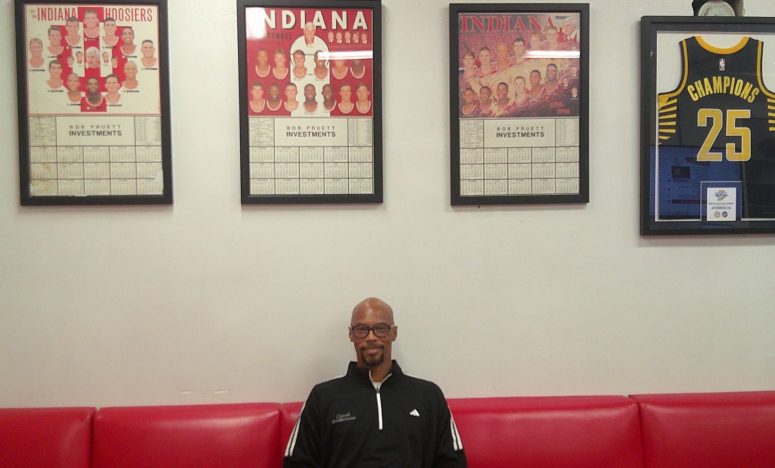
Head boys’ basketball coach Sherron Wilkerson scans the hallway by the lunchroom, looking for problems to solve. Most students know him as the coach behind the game plan for JHS players.
“I coach basketball to teach kids and get to help them and teach them the things teachers and others don’t really get to teach them,” said Wilkerson.
Wilkerson played basketball at Jeff High before he ever coached here, as he was on the 1993 state championship team. He has carried what he learned from playing in that game through college and now to his players.
“Everything I learn from college I teach all at the high school level to show them what it takes, because if you’ve never been there before, you don’t know what it takes to be there.”
Those who know Wilkerson describe him as a good person and role model, saying the way he chooses to teach his players is a view of his character.
“Sherron cares a lot about the kids, making sure to teach them life lessons and put them on the right path in life. People just see his intensity, not how much he cares and helps the kids, and the kids that come back after graduation, he still helps them,” said safety and security officer Brian Mitchell.
Junior and varsity player Shyne Scruggs agreed. “Coach Wilkerson is very serious and a hard worker when it comes to basketball and very smart and intelligent.”
Wilkerson wants his players to succeed on and off the court. He also supports them when they leave for college.
“He is always thinking about coaching when he’s not coaching, also making sure the kids are good and taken care of at home and if they need something to let him know,” said Mitchell.
Wilkerson demonstrates the ability to bring out the best in every athlete, pushing them to reach their full potential and setting them up for success for success in the way he views losses.
“We don’t judge off our losses; we judge off performance and growth.’’ said Wilkerson.
Boys’ basketball coach Sherron Wilkerson. Photo by Natalia Martinez.
Any eligible child can now receive voucher, regardless of family financial status
by Parker Vibbert
The Indiana Choice Scholarship, commonly known as a school voucher, was created in 2011 in an effort led by former Governor Mitch Daniels, R-IN, with the goal of providing lower and middle-class Hoosiers the opportunity to attend Private Schools.
Daniels advocated for the program and signed it into law to help Hoosier students.
“My intention was to give low-income citizens the same range of choices for their children’s education as their wealthier neighbors have,” Daniels stated in an email interview.
Daniels was also critical of the mandate that students must attend specific schools.
“We don’t tell them where they must buy their groceries or where they have to get their haircut, but in this most crucial of life decisions we had been telling them that their kids will attend a specific school, even if they found that school unsafe or of poor quality,” he stated.
With that goal in mind, the vouchers opened the door for students in poor or failing schools to attend private, often religious, schools whose tuition they otherwise could not afford.
It quickly grew into the largest school voucher program in the United States, with 76,000 Hoosier students using school vouchers in the 2024-25 school year.
Daniels served as president of Purdue University from 2013 to 2022, and has again served as interim president since July. No stranger to helping students and their families financially, he froze the tuition at the university for 11 straight school years during his prior tenure, and it has continued into the 2026-27 school year, reaching the university’s 14th consecutive year of frozen tuition.
Daniels says this is a priority because he has seen the financial burden Hoosiers face in their daily lives.
“I arrived at Purdue after 10 years of daily personal contact with the people of Indiana, and I was highly conscious of the pressure high college costs were imposing on our low- and middle-income families. I thought it was especially important for our public universities to prioritize affordability, and Purdue, the state’s land-grant school, most of all. In business and government, I had found again and again that large bureaucracies will always charge more if they can get away with it.”
Despite the annual tuition freezes, Daniels said Purdue never wound up with a deficit, which was enough for the practice to continue.
“When we broke the annual increase pattern, and found that we could still break even, I was able to persuade our board to do it a second time, then a third, and the success became self-reinforcing,” Daniels said.
Now, Governor Mike Braun, R-IN, and the Republican supermajorities in both houses of the Indiana General Assembly have removed the $220,000 yearly income cap for a family of four on the voucher program, allowing any eligible child to receive a voucher, regardless of financial status.
State Representative Wendy Dant Chesser, D-Jeffersonville, criticized the move, pointing to data showing the average yearly income of a school voucher recipient is around $102,840, nearly 50% higher than the average annual Hoosier income of roughly $70,000.
“In the 2024-25 school year, more voucher dollars went to families earning over $100,000 than to families earning less,” Dant Chesser said.
Dant Chesser also criticized the method in which the income cap was removed, being included in the state budget.
“The income cap change was included in the 2025 state budget bill instead of being passed as standalone legislation. I voted for the state budget because of what it did for our community, including funding for skilled trade education. If removal of the income cap had been its own bill, I would have voted against it.”
Critics argue the state is now giving money to families who don’t need it so their children can attend an elite private school at little to no cost to them.
Daniels rebukes that argument.
“The duty of the state is to provide for children’s education, not to dictate where, or what form that education should take. Regardless of their income, parents are simply directing tax dollars they have paid to the schools they believe [are] best-suited to their children.”
Louder Than Life is one of the largest rock and metal festivals in America. Every year, thousands of people travel to Kentucky to watch their favorite band perform in the cooling days of September. However, it wasn’t always as popular as it is now. The history of Louder Than Life is quite a rich one.
Louder Than Life started in 2014 in Champion’s Park, founded by Danny Wimmer Presents, and debuted as a two-day event with their headliners being Judas Priest, Korn, Stone Temple Pilots, and Limp Bizkit.
In 2015, the WWE COO Triple H announced that Louder Than Life would feature in-ring WWE NXT Superstar matches, selling the show out. The headliners that year were Rob Zombie, ZZ Top, Lynyrd Skynyrd, and Godsmack.
A few years later, in 2019, the event extended into three days and was moved to the Highland Festival Grounds after flooding the previous year. The headliners then were Slipknot, Guns N’ Roses, Disturbed, and Marilyn Manson.
In 2021, the event expanded again into the four-day event we now know. Additionally, that year, Snoop Dogg canceled his appearance at the festival and was replaced by the band Falling in Reverse, with headliners being Korn, Metallica, Nine Inch Nails, and Machine Gun Kelly.
In 2023, Louder Than Life broadened their music genre based on fan-requested headliners, dipping more into the alternative and punk lineup, with the headliners being Foo Fighters, Tool, Avenged Sevenfold, and Green Day.
2024 was the celebration of the 10-year anniversary since Louder Than Life opened, with a record of over 140+ booked bands. The headliners that year were Slipknot, Mötley Crüe, Korn, and The Offspring.
In 2025, the event relocated again, now to the Kentucky Exposition Center, expanding the footprint to 2.8 million square feet, with festival passes now including free rides at the adjacent Kentucky Kingdom amusement park. The record attendance was broken for a second time, totaling about 240,000 fans. The headliners that year were Slayer, Avenged Sevenfold, Deftones, and Bring Me the Horizon.
Louder Than Life happened on Sept. 17, 18, 19, and 20th, so what did people think of the show?
It was sophomore Braylen Martin’s first year going, saying, “I went for the fun of it and that; if given the chance, I wouldn’t be able to choose a favorite band to see because of my love for music.”
Senior Gabe Collens said that it was also his first year going and that his favorite band he saw was BABYMETAL.
“The mosh pit was crazy, and their music is incredible,” he said.
Collens went because his friend had a free ticket for him. He said that he would want to see Mom Jeans if given the chance.
Junior Grace Bentley is a repeat goer. Out of all the bands she’s seen at Louder than Life, her favorite was Weezer.
“It made me very emotional; it was really good. It sounded like the studio recording. It changed me,” said Bentley.
Bentley went to see My Chemical Romance, and she would want to see the band Norma Jean.
English teacher Patrick Wentworth did not go this year, but he’s been going to Louder than Life for decades.
“While I like Shinedown, Slipknot, all those bands, I got to see Kiss on their final tour, and it was electric. They have great showmanship,” he said.
He skipped this year because of the previous year, describing it as getting “a little rough during Bad Omens” and “no longer the local experience.” He added that it’s also gotten expensive. Though if he had to choose a band to see, he would want to see either Pink Floyd or Led Zeppelin. He said that Led Zeppelin has more music he’d choose from, but Pink Floyd is a band he’d constantly put on.
Despite the expenses being raised and the experience no longer being a local one, Louder than Life is a concert experience that everyone can appreciate and find something enjoyable in it. With all the years that have gone by, there’s always something for people to appreciate; whether it be the lineup or the food, there’s something for everyone.
Walking past science teacher Chris Bradley’s classroom, students would see a room full of dinosaurs.
“Earth and space are important, and it’s something we deal with every day,” stated Bradley.
Walking around JHS or to class, students might see Bradley or his classroom. Not many underclassmen would know him, but most upperclassmen do.
For example, junior Shyne Scruggs stated, “His class is enjoyable, and it’s good to know about fossil fuels, and it’s also an easy class, and I love an easy class.”
“I think upperclassmen are more mature, and they know what they want to do in a classroom and outside of school,” said Bradley. “They’ve become more dependent on technology. They’re more willing to ask questions.”
Bradley enjoys the students he teaches, and he finds the subject interesting.
Bradley’s wife, Jodi Bradley, who teaches PE, stated. “I do think this is his dream job because he likes kids and dinosaurs.”
Bradley somewhat agreed with his wife.
“I don’t know if it’s my dream job, but I do enjoy it. I like the kids, and what I teach is interesting.”
Bradley’s main class is teaching dinosaur science as an elective; he was teaching earth and space science at first, but after a while he was also able to teach his dinosaur elective class.
“Earth and space science is what I’m certified in, but I teach dinosaurs because it’s an area of interest for some students.”
Students in his classes say Bradley adapts the subject to keep it interesting and understandable.
“I adapt to Bradley’s teaching style by listening to what he says in class, and I read and look over notes,” stated Scruggs.
Upperclassmen continue to come back to take Bradley’s class because of his teaching style and his expectations for his students, which Bradley finds rewarding.
“Seeing kids after I taught them and seeing what they do with their lives makes me feel that I did something right,” he said.
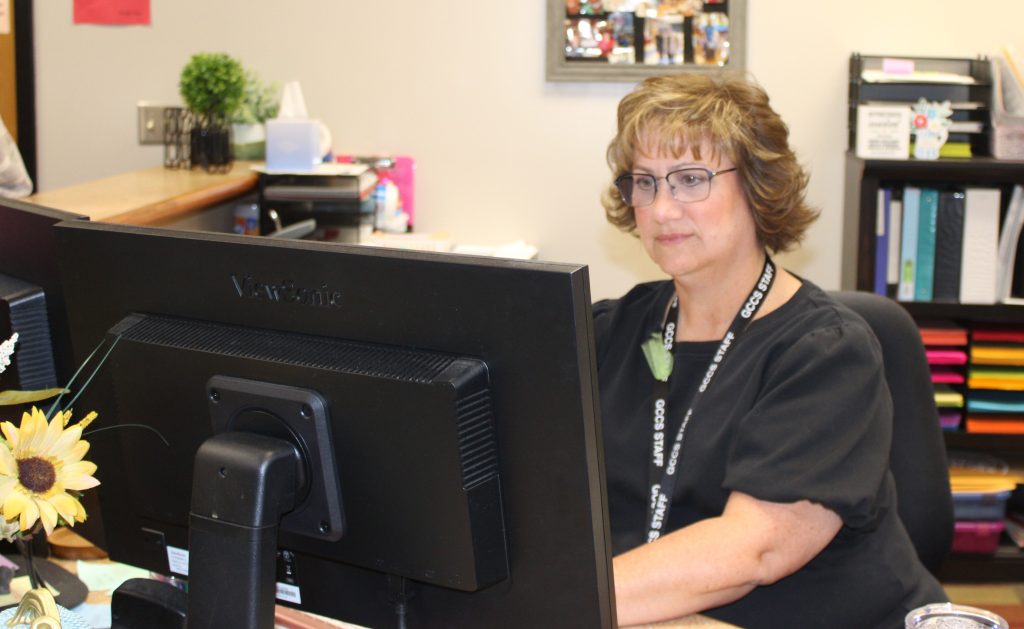
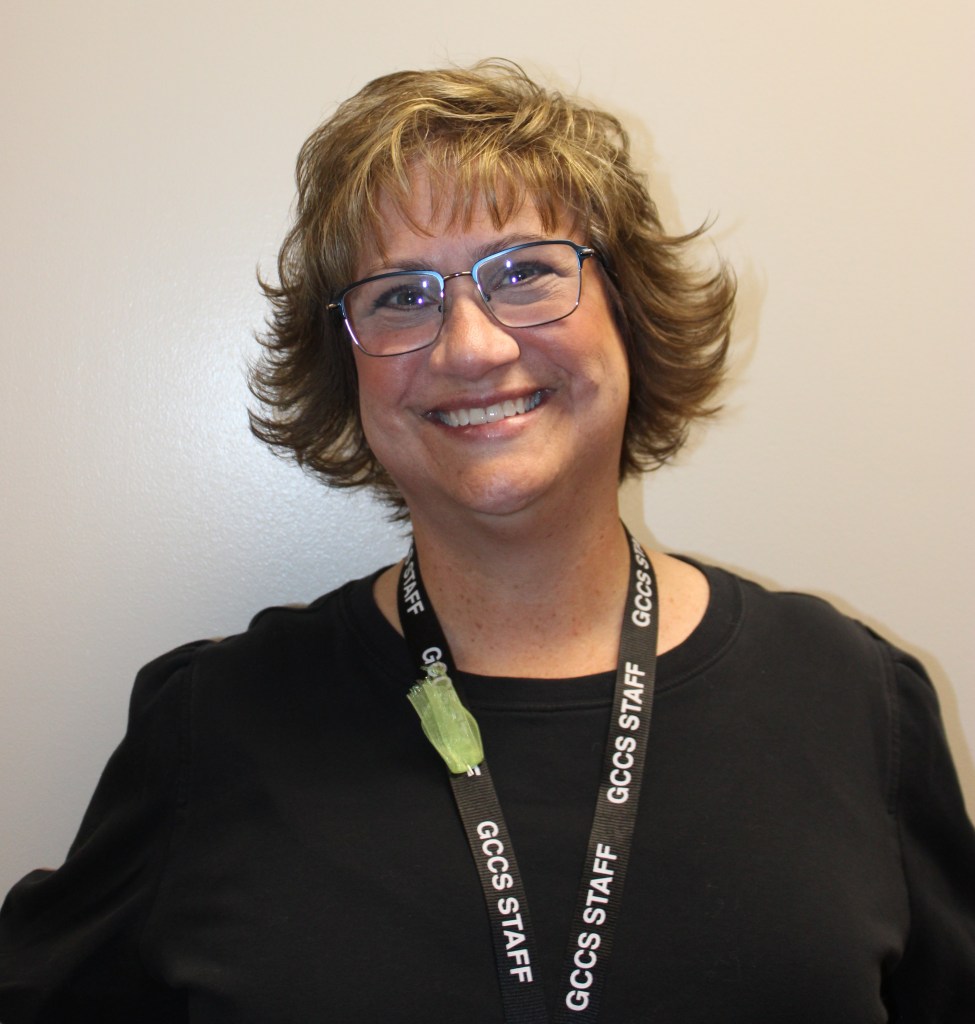
Administrative assistant counselor Jennifer Mitchell does work on her computer. “I’m proud to be a JHS graduate and work with fantastic staff. I enjoy watching the students grow and develop into mature adults through their high school careers.” She started at River Valley Middle School, then transferred to JHS in 2020. But she was a 1989 graduate and worked in the front office. Photo by Kayleen Alvarado.Administrative assistant counselor Jennifer Mitchell
The sixteenth-century Spanish card game, Ombre, has shaped the style of card games as we know it within Western society, from its revolutionary Entrada and Vuelta bidding mechanics to its exact, unforgiving calculation of cards needed to win. These aspects of Ombre have influenced other well-known classics such as poker, blackjack, and even newer card games such as Yu-Gi-Oh.
While students aren’t able to find Ombre within the walls of JHS, they’re still able to find many other popular games that have derived from it at Games Club, including Pokémon TCG, Magic: The Gathering, Dungeons and Dragons, and even Yu-Gi-Oh.
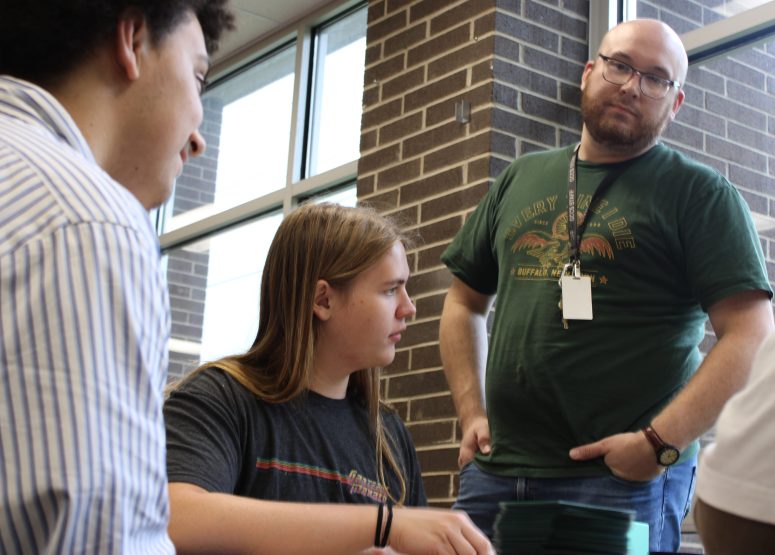
JHS math teacher Cory Densford takes note of his younger and older students’ insights and interests, which were used to create Games Club.
“13 years ago, I was teaching an Algebra I class, and we had a ton of free time at the end of the year,” said Densford. “A student brought in the card game Yu-Gi-Oh and asked me to play. I instantly found it extremely fun! So when the next year came around, we started what’s now known as Games Club.”
Math teacher Cory Densford talks to sophomore Maxwell Semones and sophomore Elijah Hatfield during Games Club. Photo by Ashton Walcott.
Densford said the best part of the club is getting to know students better.
“My favorite part of Games Club is getting to know the kids in a non-classroom setting and getting to understand them on a better level. We don’t have a whole lot of downtime while in class, so I feel like this is a great way to connect with them more.”
Games Club is a friendly and inviting environment. Densford is always looking for more participants. Students who may be just starting or have been involved in these games for years are welcomed. Many students already involved in this club enjoy getting to know their peers outside of a classroom and making friends with similar interests.
Junior Samuel Stifler, who is a one-year veteran at Games Club, gave his insight into the nature of the club.
“I love that it allows aspiring gamers to come together, play games as a group, as well as learn about other games. I do wish there were a little more game variety, but that is a change planned for the future.”
Stifler said the club interested him from the beginning.
“As a freshman, I noticed that the club was an option through the school Pride Slides, and I was instantly interested. I had a group of friends that wanted to start a DND session, and now I can easily contact the group and play a game of our choice. Games Club provides a perfect place to meet with friends outside of school and build a world that we can all be a part of.”
Junior William Ponsford, who’s a former Games Club member, stated the club helped him meet fellow gamers.
“I joined Games Club because I wanted to meet new people and socialize through games; I find it very enjoyable to game, and I can socialize with my peers around me while expressing myself through gaming.”
Ponsford said the atmosphere of the club is a bonus.
“What I personally like and find the most enjoyable is how much game variety there is. You’re able to be very open-minded, express your ideas freely, and there were a lot of different people with unique personalities. I loved Densford as a teacher and president of Games Club because he is a very kind and warm person,” he said.
Ponsford said the club helps members be more creative, too.
“My favorite part is that it’s a place where many people, no matter their social status, are able to meet up, have fun, express creative ideas, expand game culture, socialize, and really open people’s minds to different games in general,” said Ponsford.
Junior Kenneth Norton, who’s in his second year of Games Club, agreed that Games Club is a wonderful place to meet new people.
“I love that this club allows me to play games with the people that I like, as well as people that I haven’t ever met before,” said Norton. “I’ve gotten to learn and experience games with other amazing students that I didn’t know very well beforehand.”
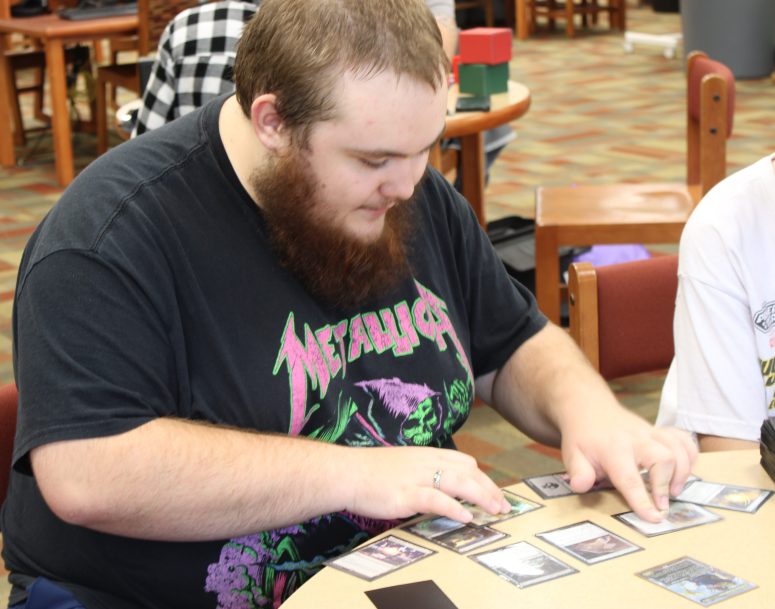
Junior Kenneth Norton plays Magic The Gathering during a Games Club meeting in the media center. Photo by Ashton Walcott.
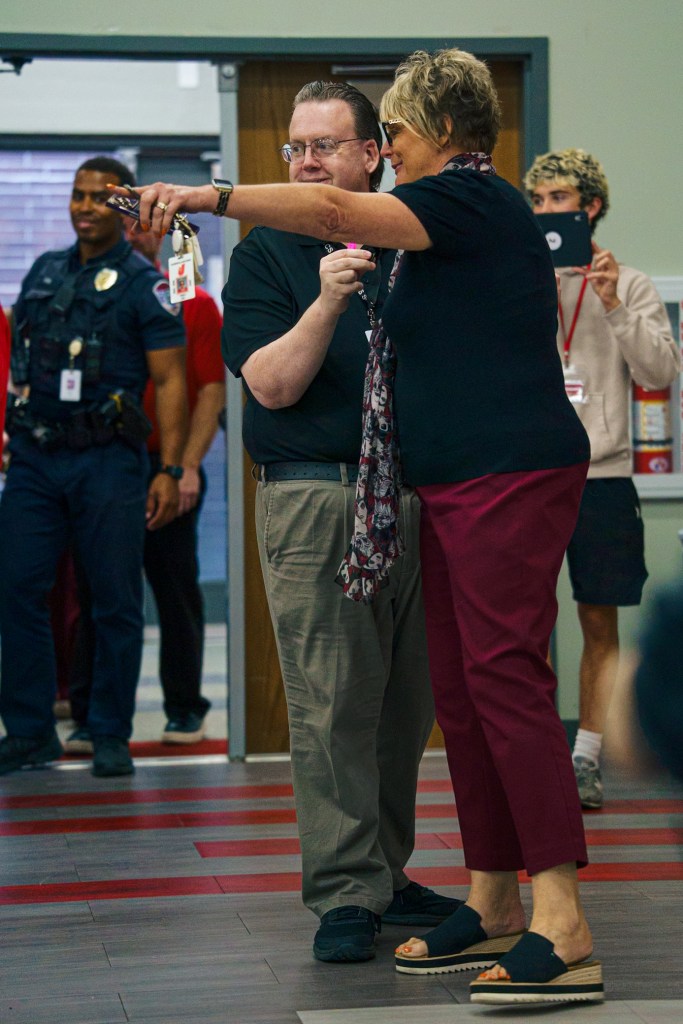
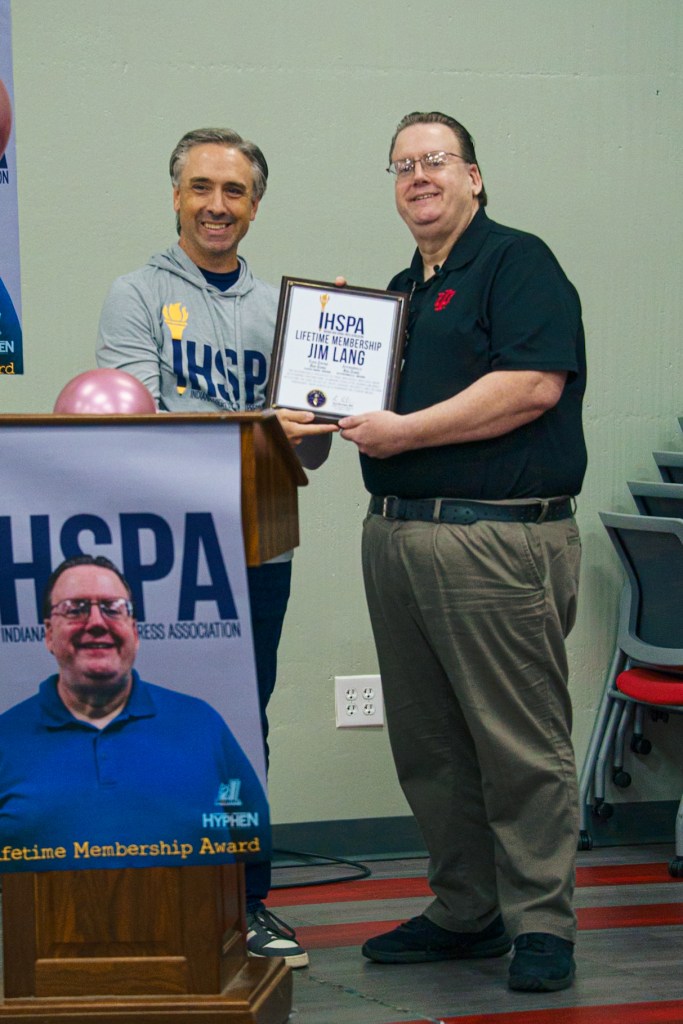
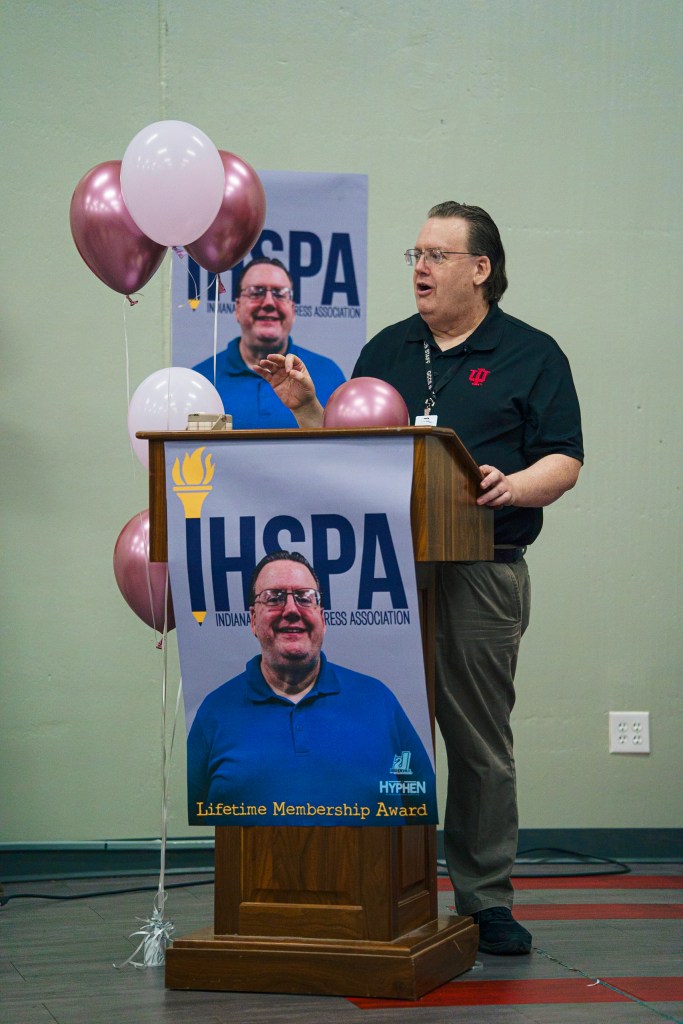
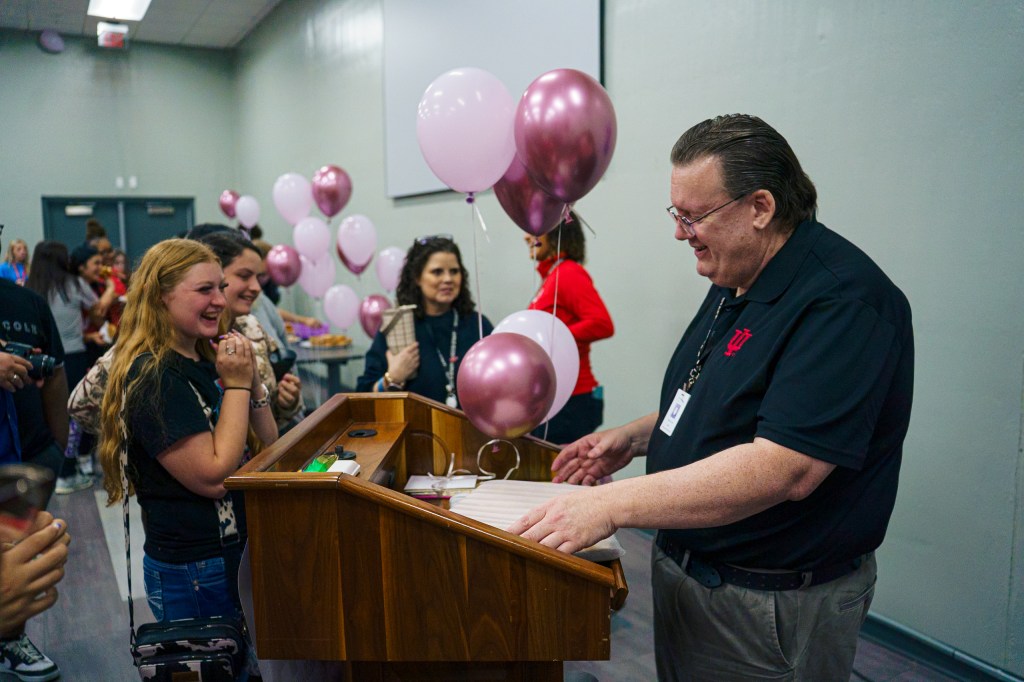
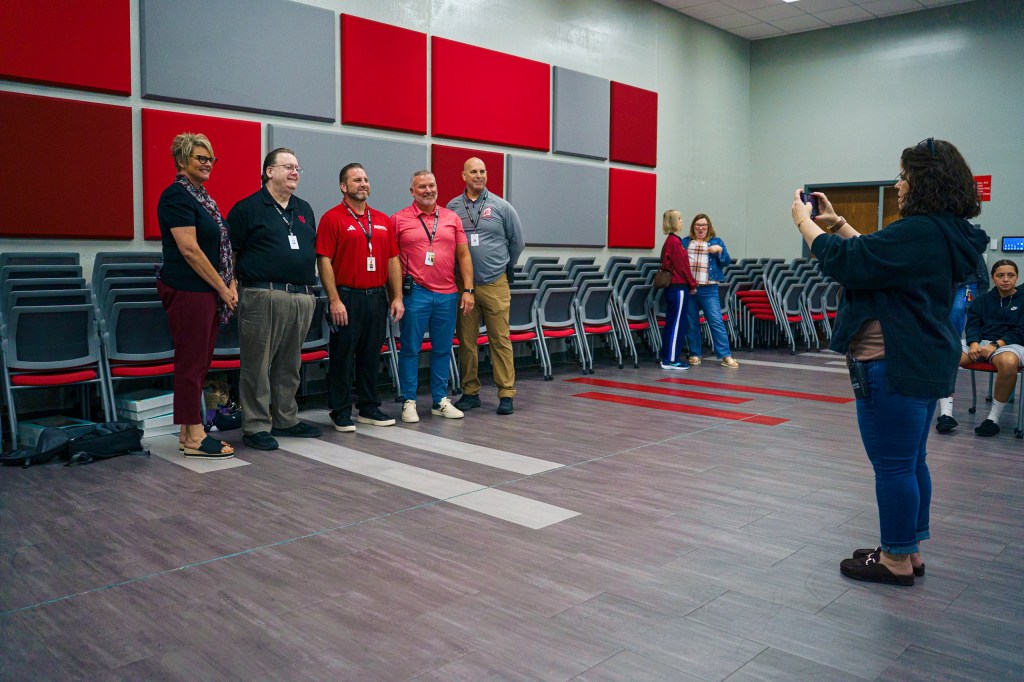
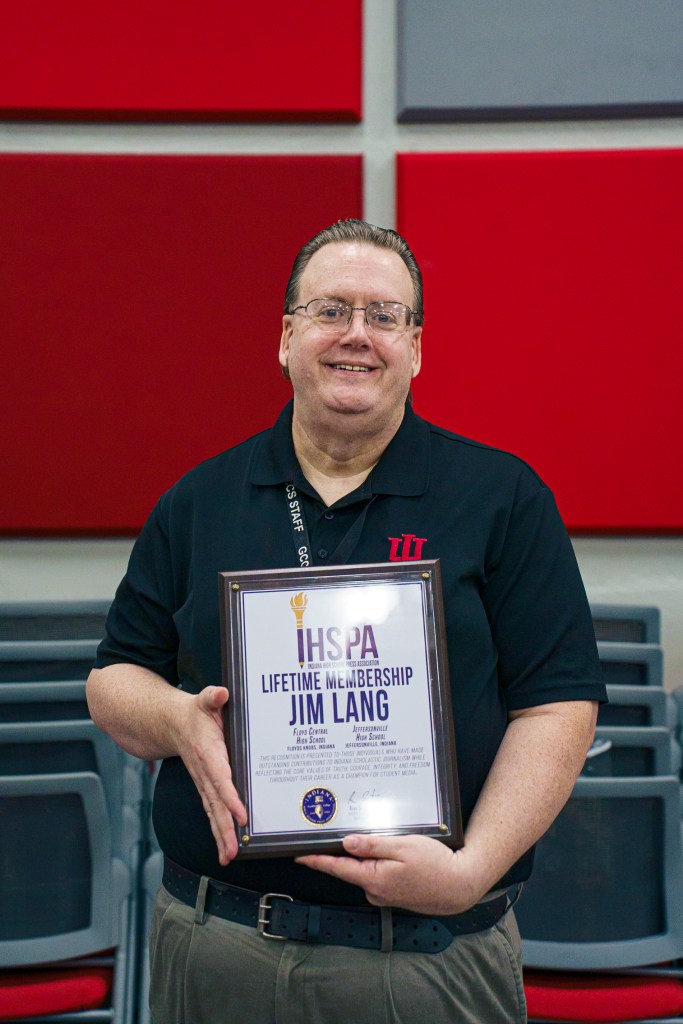
Hyphen adviser Jim Lang is shocked as he walks into the Marshall Center, not knowing that the award being presented was for him, as principal Pam Hall points to where he needs to go. Photo by Malachi Conrad.Hyphen adviser Jim Lang poses with Indiana High School Press Association executive director Ryan Gunterman, who presented the IHSPA Lifetime Membership award on Friday in the Marshall Center. Photo by Malachi Conrad.Hyphen adviser Jim Lang gives a speech after he was presented his award from the Indiana High School Press Association. Photo by Malachi Conrad.Hyphen adviser Jim Lang talks to students and teachers about his award while the room celebrates the nomination. Photo by Malachi Conrad.Hyphen adviser Jim Lang and other administrators pose for a photo taken by yearbook adviser Nicole Curry. Photo by Malachi Conrad.Hyphen adviser Jim Lang with his Indiana High School Press Association Lifetime Membership award on Friday, Oct. 16. Photo by Malachi Conrad.
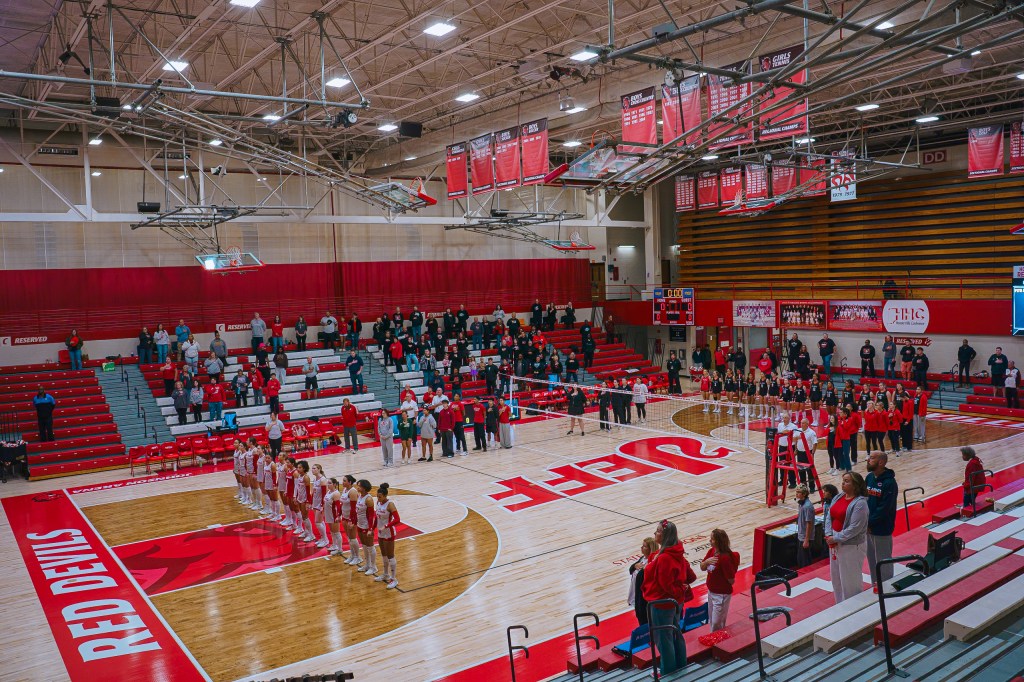
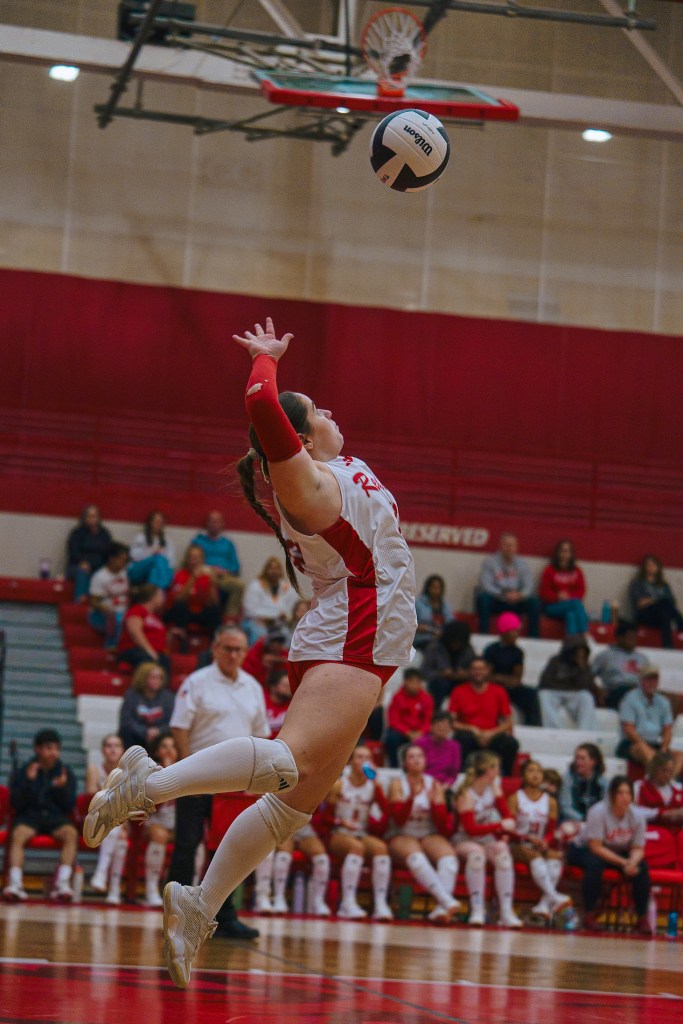
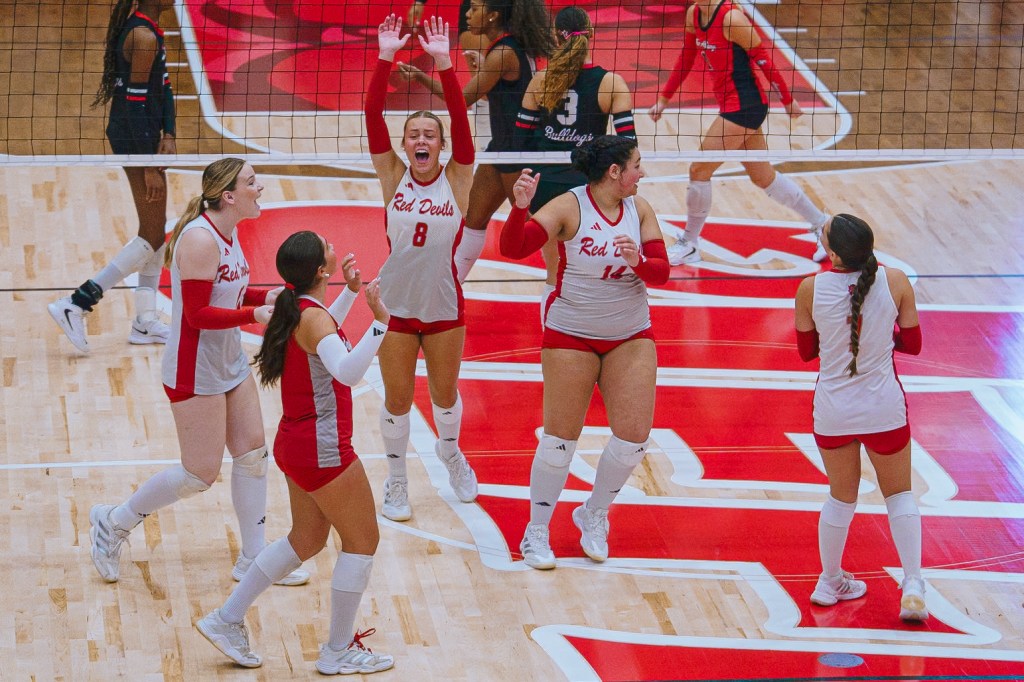
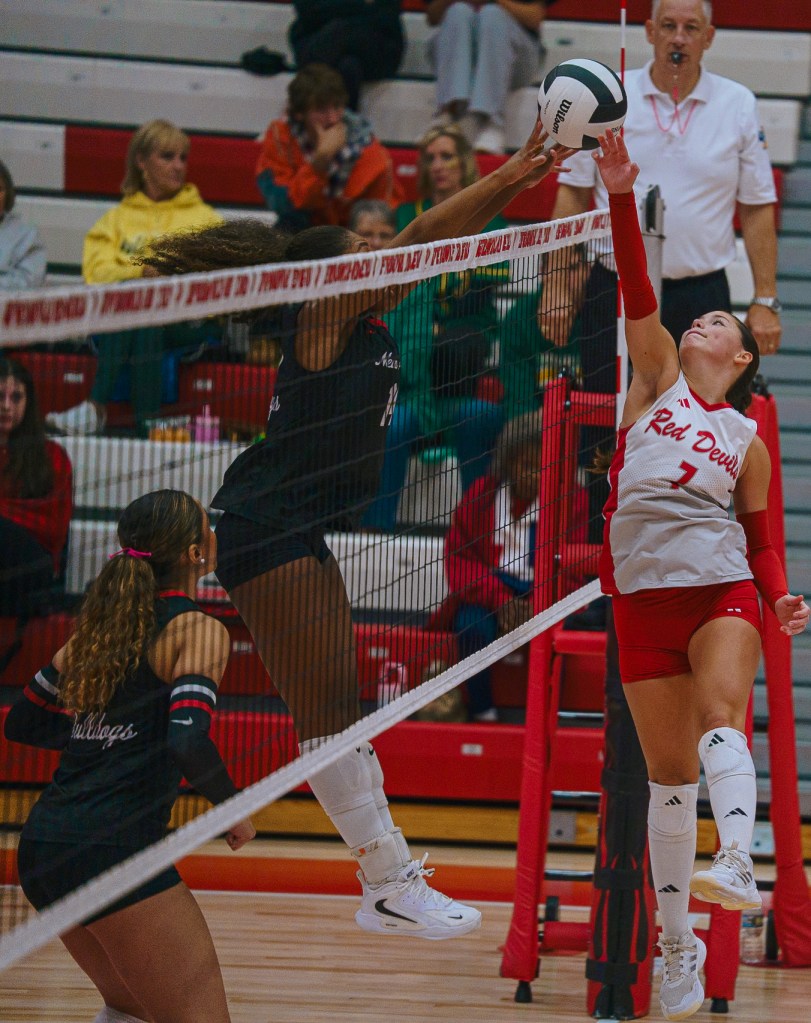
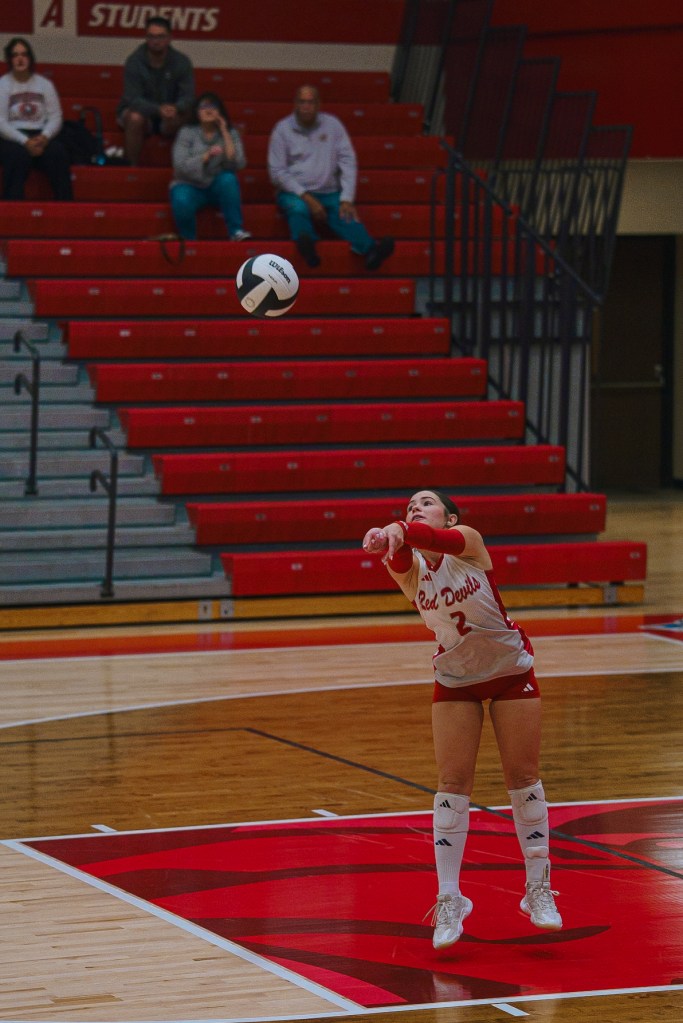
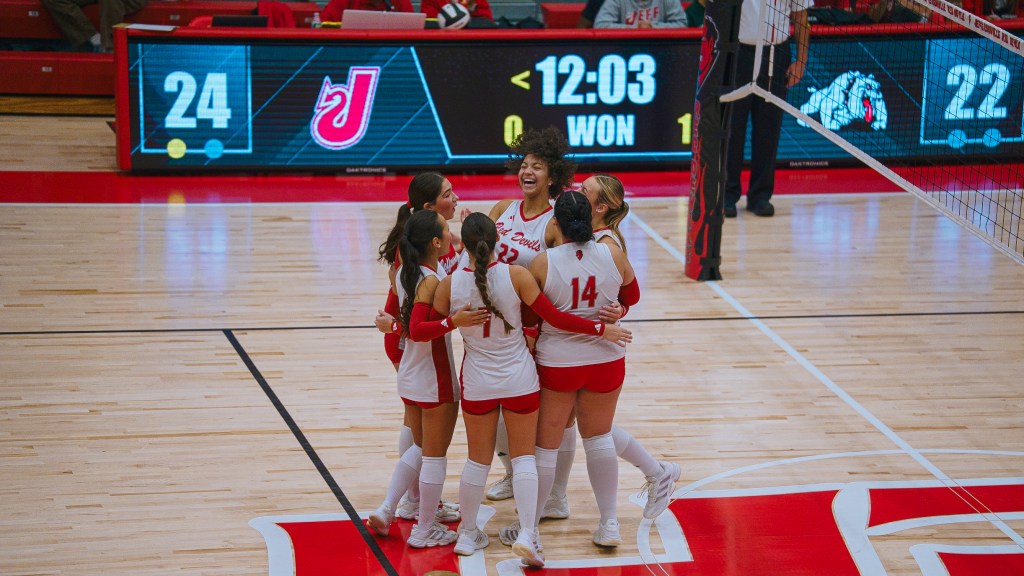
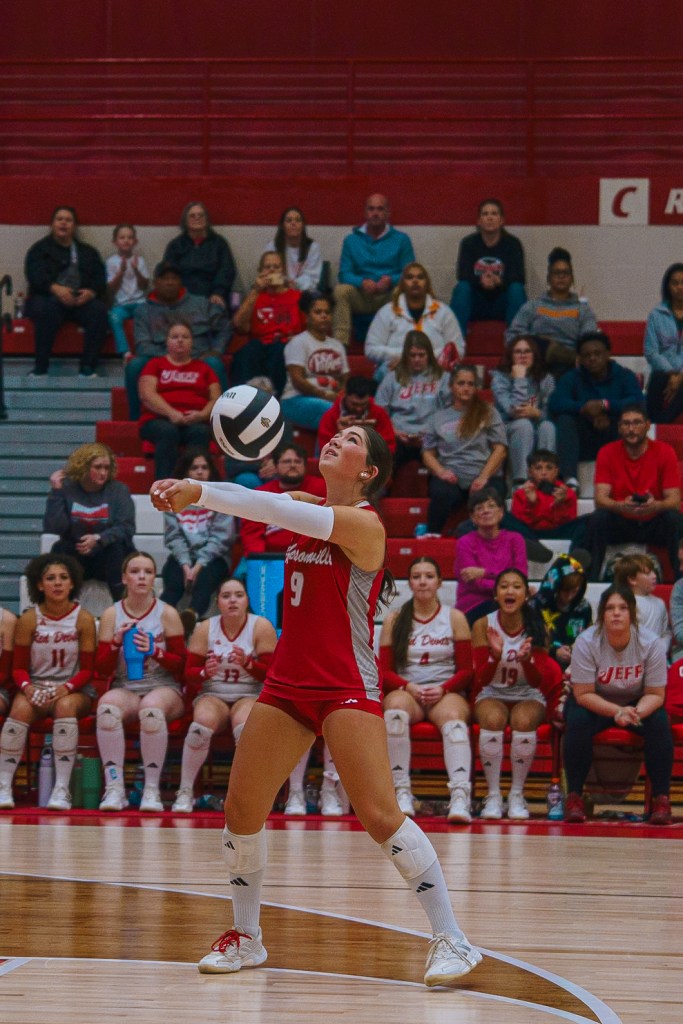
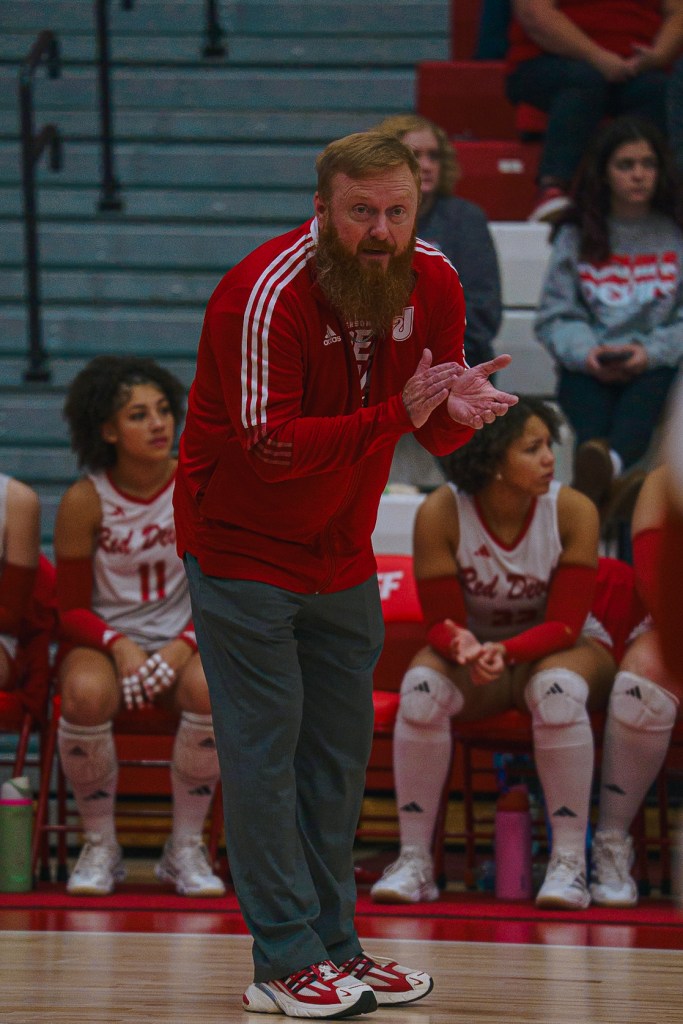
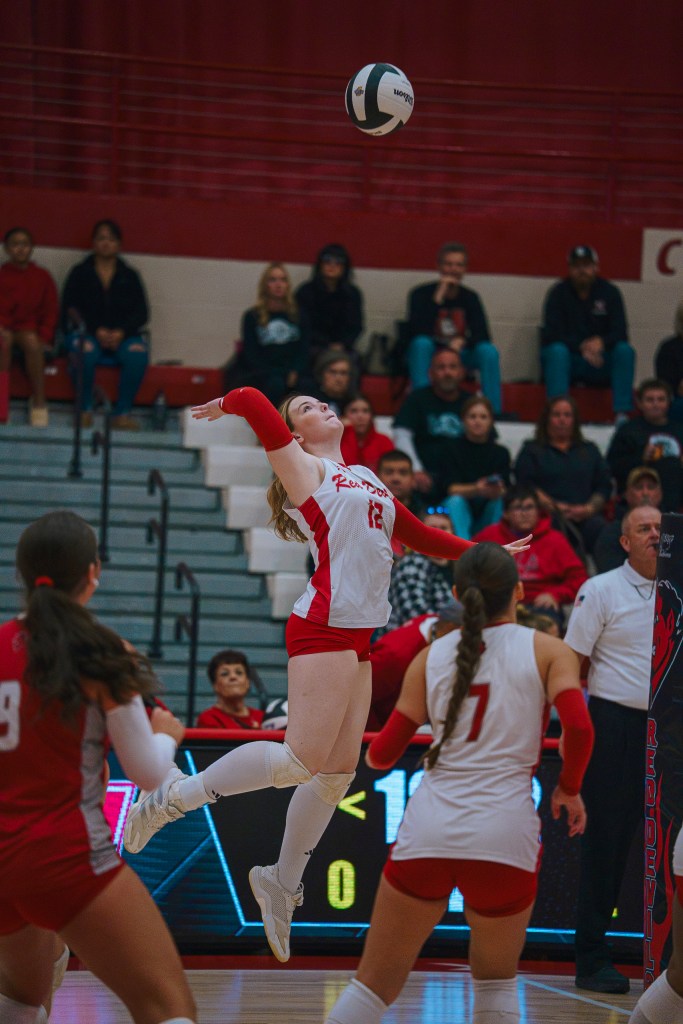
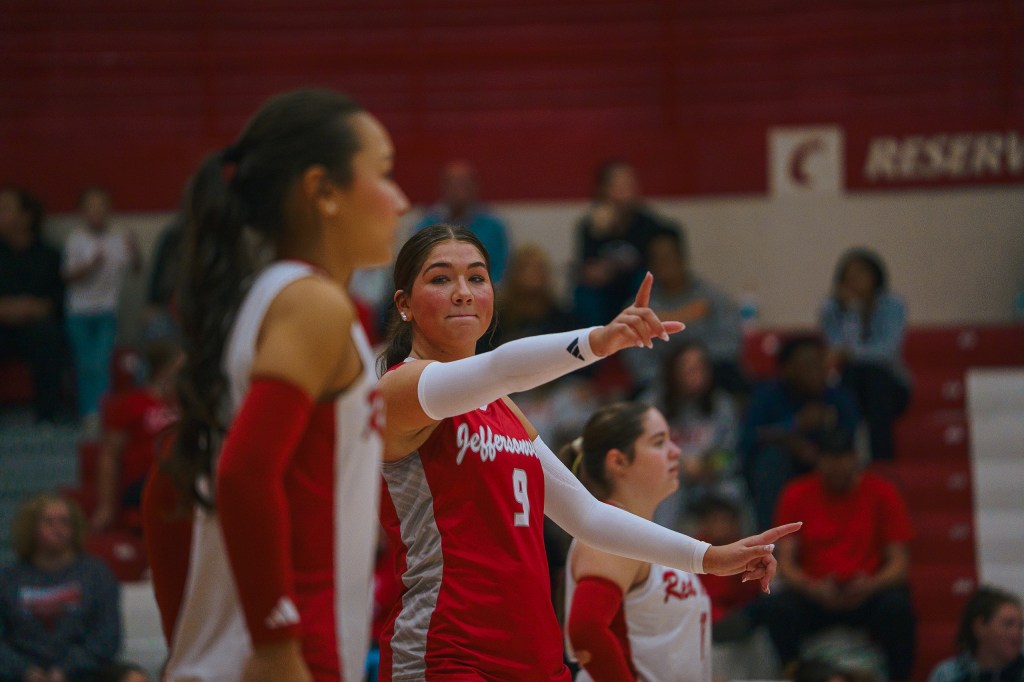
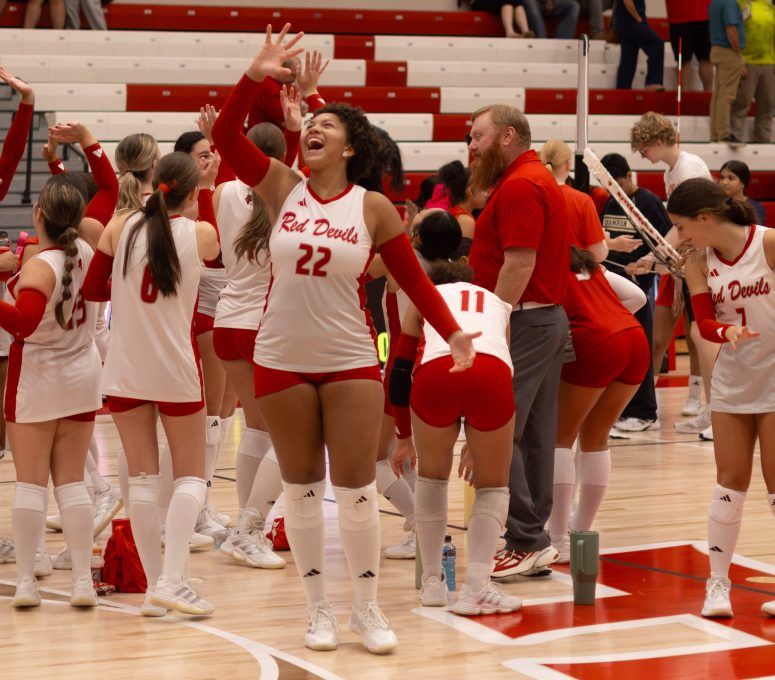
Jeffersonville and New Albany stand for the Pledge of Allegiance before Saturday’s sectional match-up in Johnson Arena. New Albany defeated Jeffersonville 3-0; for all three sets, both teams final scores were within five. Photo by Malachi Conrad.Junior Celina Lamm serves the ball in the first set against New Albany on Saturday. New Albany won 3-0 to advance to the sectional title game, losing to sectional champions Floyd Central later that day. Photo by Malachi Conrad.The Red Devils celebrate a hard-earned point over New Albany in Saturday’s sectional game. Photo by Malachi Conrad.Sophomore Charlotte Hatfield fights for the point trying to tip the ball to New Albany during Saturday’s sectional game. New Albany won 3-0 and advanced to face Floyd Central. Floyd Central later defeated the Bulldogs 3-0 to win the sectional. Photo by Malachi Conrad.Junior Samantha Dues bumps the ball back to her teammates in the second set on Saturday. Photo by Malachi Conrad.The Red Devils huddle together after winning the point and being one point away from winning the set in Saturday’s sectional game against New Albany. Photo by Malachi Conrad.Senior Mattie Barker bumps the ball in the third set. Photo by Malachi Conrad.Head coach Wes Briscoe tries to keep the season alive by giving his players some advice down 2-0 in the third set against New Albany. Photo by Malachi Conrad.Junior Kylee Doehrman spikes the ball in the first round of sectionals against New Albany. Photo by Malachi Conrad.Senior Mattie Barker looks at junior Haliun Otgonbayer, giving some advice to her in Saturday’s sectional game against New Albany. Photo by Malachi Conrad.
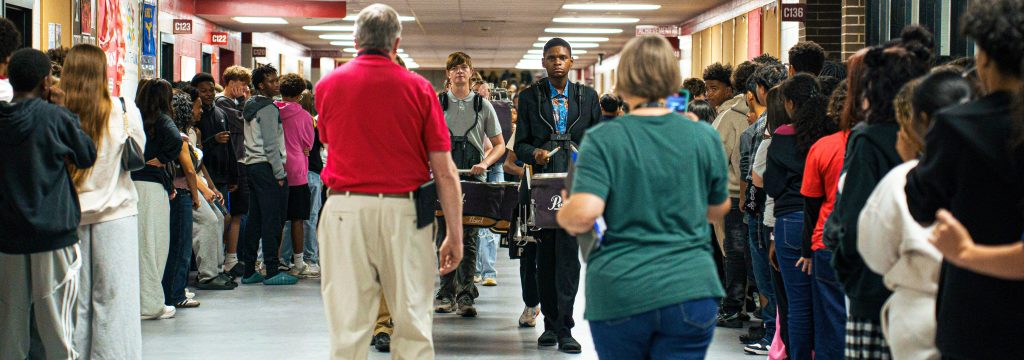
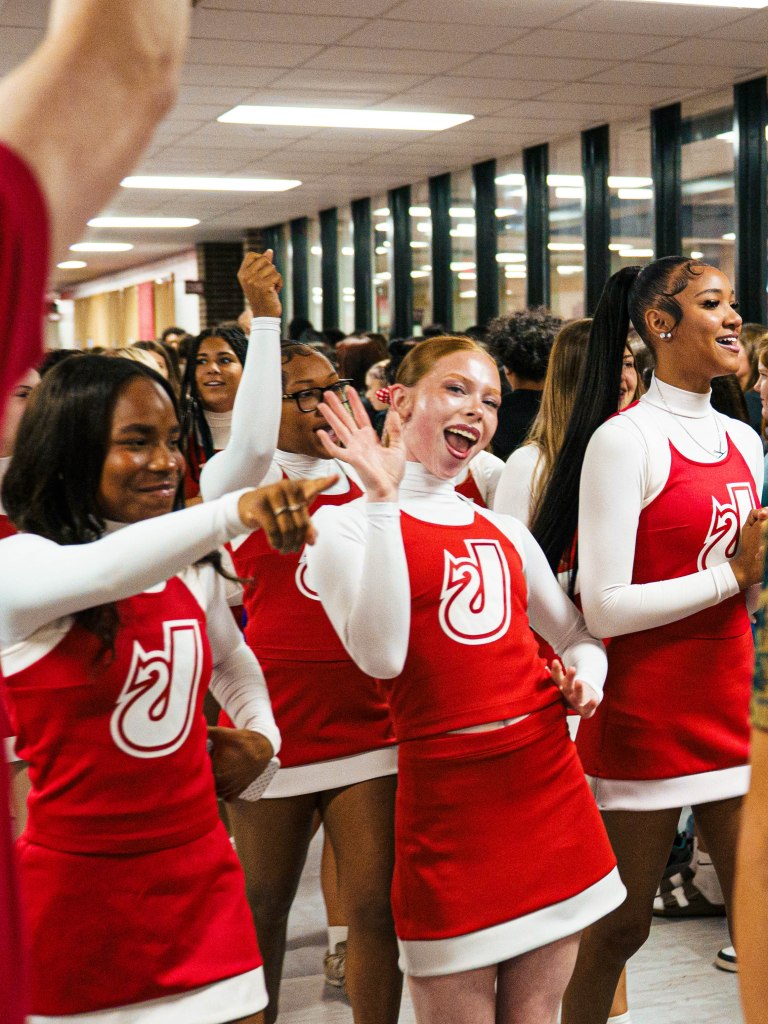
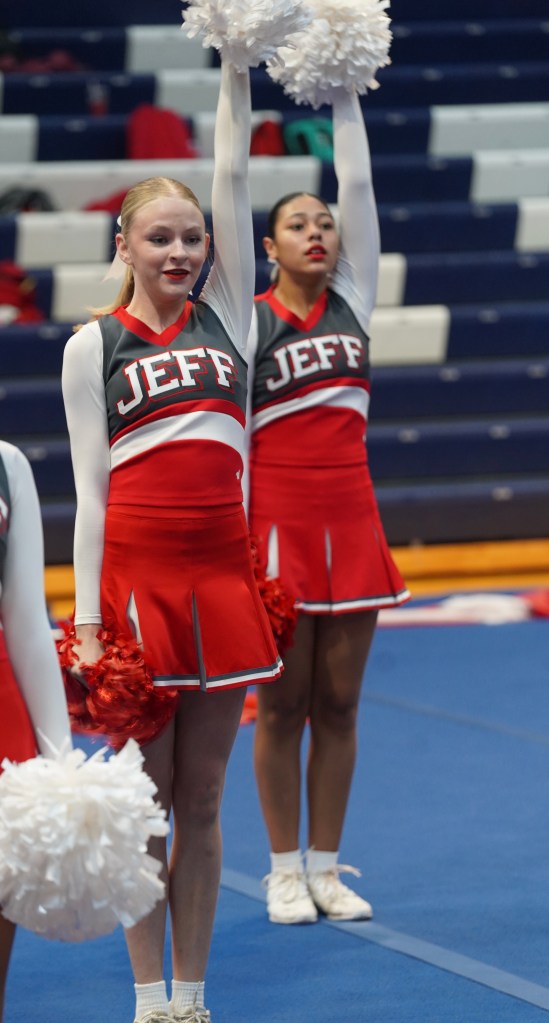
JHS students and staff celebrated the marching band today during third hour as they prepare to compete in state competition tomorrow. Photo by Malachi Conrad.JHS cheerleaders were celebrated ahead of their state competition, taking place next weekend on Oct. 24. Cheerleaders joined the marching band as Red Devil students and staff celebrated them during third hour today. Photo by Malachi Conrad.
Volleyball team places New Albany for chance to play for sectional title
by Austin Bainbridge
The Jeff girls’ volleyball team has a chance to win the sectional championship by just winning two games today. They will play a 8-23 New Albany squad, which has been 2-14 since Sept. 22. Then, if Jeff wins they will take on the winner of a Seymour (10-18) and Floyd Central (26-5) contest.
Junior Jayli Burris waves goodbye as the Red Devils celebrate their win against the Rock Creek Lions. The Red Devils face New Albany on Saturday for a chance to compete for a sectional championship. Photo by Shelby Keesee.
“Only being two wins away (from the championship) is really exciting, and I think we have a good shot to go all the way,” said coach Wes Briscoe.
Players like junior outside hitter Jayli Burris feel the excitement around this team for an opportunity like this after finishing the regular season 10-20.
“We’re all feeling really hyped right now and we’re really excited about being able to get out there against New Albany and giving them a good game,” said Burris.
Burris boasts the second most kills for the Red Devils with 136 on the year, and she’s ready to keep the momentum going in this weekend’s playoffs.
“I know personally and as a team, we’ve been swinging harder than we have all season, and we’re going to hit well against New Albany,” said Burris.
Jeff has had a week to prepare and watch film on their opponents on Saturday and are ready to use that knowledge.
“We’ve been watching film all week, and I think we’re really prepared — we know their defense, Floyd also I’m feeling pretty good and prepared,” said sophomore Jordyn Miller.
Briscoe hopes that with the extra preparation the term “prepared” will be understatement for this team.
“The greatest coach of all time, John Wooden, said he wants his team to be so prepared he could be a spectator while they play and not have to coach. I’m hoping we can have something like that on Saturday,” Briscoe said.
Red Devil fans can listen to the game on 98.5 Jeff FM this Saturday at 11 a.m. and then 6 p.m. if Jeff advances.
JHS cheerleaders signal the kickoff to the homecoming game against Kokomo earlier this season. Photo by Malachi Conrad.
Junior Reese Dobson displays leadership on the mat and in the classroom
by Eliza Wooden
As cheerleader and junior Reese Dobson steps onto the mat, she yells out to her teammates, “You’ve got this! Let’s go, Jeff,” and steps into position.
The music begins, and Dobson is prepared. She is tight, supportive, and ready to do whatever it takes to end this routine on a high note.
“I make sure I come to practice with a good attitude and a good work ethic, and make sure that I am here to be positive, happy, help others, and work as hard as I can,” said Dobson.
Dobson is a leader and a strong representative for JHS, often friendly, extroverted, and compassionate, especially toward underclassmen.
Freshman Jamie Hatton said, “Reese is very kind, outgoing, smart, and positive. I have known Reese for about one year, and she has helped me be more confident in myself.”
Dobson is not just involved in cheerleading; she is also a student ambassador. That’s where she gets most of her leadership experience.
Senior Averi Burdette said, “Reese improves the cheer team by always having an outstanding attitude and being a great team leader. She encourages everyone and helps keep the team motivated, even when things get stressful or difficult.”
Dobson cares a lot about her school work, which is why she works to balance her student ambassador work, classes, and cheerleading with her roles as Junior Class president and Student Council.
Dobson said, “The most important thing is remembering to take a break sometimes and relax. Something that I struggle with is doing too many things at a time and letting it affect how I do those things and letting it get in my head.”
Adding to her busy schedule, Dobson takes Advanced Placement classes, which can be very hard for a student-athlete.
“My AP classes require a lot of studying, and I make sure to set off time aside each night to go over what I learned or what I need to prepare for a test,” she said.
That discipline shows up everywhere. Whether she’s in class, at a student ambassador event, or leading a Student Council meeting, teachers and teammates say Dobson brings the same energy she brings to the mat.
While some athletes focus only on the routine, Dobson checks in on teammates and runs through the cheer again with anyone who might have missed a count.
That mindset has made her a role model and leader. For underclassmen, she isn’t just the upperclassman who can hit a stunt; she’s the person who will help with homework or hype them up before their next varsity game.
Dobson said, “Something that I do is take a second and remember that everything is going to work out and that it’s okay if things get stressful or hard. I always want to do everything with my best intent, so sometimes the best thing for you to do is to take breaks and come back to it.”
When the music stops and Dobson steps off the mat, her job as a leader isn’t over. She immediately high-fives her teammates and tells them how well they did. Tight, ready, and positive, just like she started.
Freshman Cora Holt brings positive work ethic to cheerleading
by Evelyn Speedy
Freshman cheerleader Cora Holt walks in to practice, adjusts her backpack on her shoulder, and then sits down to warm up, preparing herself for a successful, productive practice.
On first thought, you might think that she is just there to cheer on the football and basketball players.
However, what some people don’t know is that she is much more than that.
Not only does Holt cheer on the sidelines, but she also competes with her team and puts in the work to get better everyday, all while being on four separate teams at JHS.
“Cheerleading is not just a club; it’s way harder than it looks,” said Holt.
Even when Holt was a little kid joining Jeff High’s cheer kiddie clinic, she has seen herself being a cheerleader in the future.
“High school cheer is something I’ve looked forward to for years, and now I finally get to be a part of it,” she said.
Even though this is Holt’s first time cheering for JHS, she still feels like she is where she should be and that she belongs both in and out of the gym.
“I enjoy being a cheerleader because it feels like my environment, it’s what I’m good at, and I truly feel like I belong there and it’s what I’m meant to do.”
Not only do her coaches feel as if she is a good teammate and cheerleader, but so do her teammates.
“She is a very good athlete with an amazing work ethic. She is always trying to get help from people and do what she can for her team,” said freshman cheerleader Adeline Bainbridge. “She brings a positive attitude everyday, even on hard practices she is always there and trying to uplift everyone.”
However, Holt did not get to where she is without putting in a massive amount of effort.
“Cora gives 110% effort in everything she does. She always makes sure she is doing her best, giving it her all, and she is always the first person to be willing to try something new,” said freshman cheerleader Jamie Hatton.
The work that she puts into her sport does not go unnoticed.
“I have seen her become a much stronger athlete this season and a lot more confident in herself and her skills,” said Bainbridge.
Holt also has many qualities and features that help her in the sport she loves.
“I feel as if my very loud and deep voice helps me cheer because we have to be very sharp with our voices and I think that it is something I have naturally, so it helps me be the best cheerleader I can be.”
She provided an “inside look” at the unique cheerleading experience.
“You can describe what cheer is, but you can’t describe what it feels like. That’s something you have to experience for yourself.”
At A Glance
Birthday: Feb. 11, 2012
Hometown: Jeffersonville, Indiana
Favorite Food: Caesar salad
Favorite Color: Baby blue
Favorite Movie: “Tangled“
Cheerleading provides opportunity and friendships to freshman Chloe Wyatt
by Gabriella Linares
Freshman Chloe Wyatt has just started her first year as a JHS cheerleader, but she has already begun to make an impact on all the people around her.
She may seem like just an ordinary girl who wants to cheer for the players of the school. However, there is more to her cheerleading story than it seems.
Most people wouldn’t think that she has been cheering almost all her life.
“When I was little, my mom put me into the kiddie clinic at JHS in 2018, and ever since then I fell in love with it,” stated Wyatt.
Cheer has been different for her almost everywhere she goes, but so far at JHS, it has treated her well.
“It has been fun and has helped me get to know the people and the school.”
JHS cheer has helped her in so many ways other than just getting out of her comfort zone. She has learned a lot about herself during the time she has been a cheerleader.
The Red Devils cheer at the cheer competition at Providence High School, on Sept. 26. “I love cheering with this team because they express themselves so well and are always there for me,” stated freshman cheerleader Chloe Wyatt. Photo by Trinity Broadway.
“Cheer helps me be myself and express my feelings and emotions. It has helped me become a better person and it’s also taught me about myself.”
Wyatt has a dream after she leaves high school, and this dream of hers still involves cheerleading.
“My dream after high school is to be a cheerleader at the University of Kentucky, be a pediatrician, and or to be on a Worlds cheerleading team.”
Outside of cheer, she is a role model to others and in general a genuine person. She strives to be understanding and helpful for others, even if she isn’t in that situation.
“I try to always be there for my friends and understand what they’re going through.”
Wyatt’s friends have learned a lot from her, like learning to be better people. They say she brings out the best in the people she is around and makes whatever room she walks in brighter.
“Chloe has taught me to just be myself no matter what others think. She brings out a different side of me. Being around Chloe makes me feel happy and safe. Every time I’m with her, I feel like I can be myself,” freshman Lailah Miller stated.
She brings a passionate smile to everyone she is around, in and out of cheer. She is filled with a bright and bubbly personality, according to her friends.
“She is a very passionate person in anything she believes. She carries a smile through everything and is confident in what she does. When I’m around her, it is constant laughter and smiles,” said freshman Willow Williams.
Cheer is always seen as an extracurricular activity, but to Wyatt, it has given her lifelong friends and mentors.
“My coaches and teammates are always there for me and show up when I need them.”
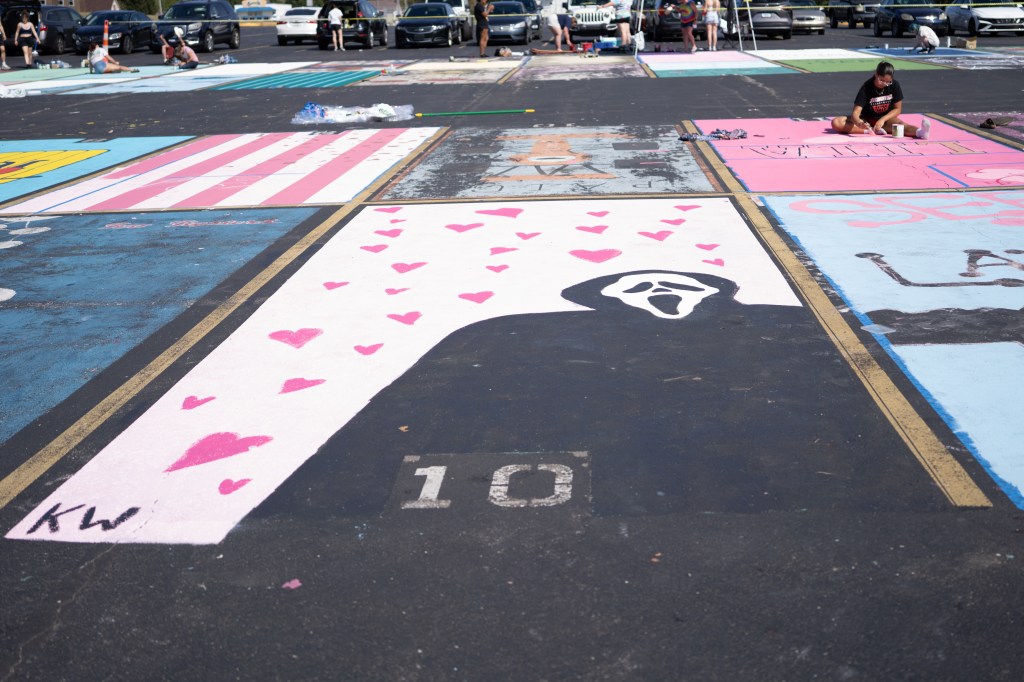
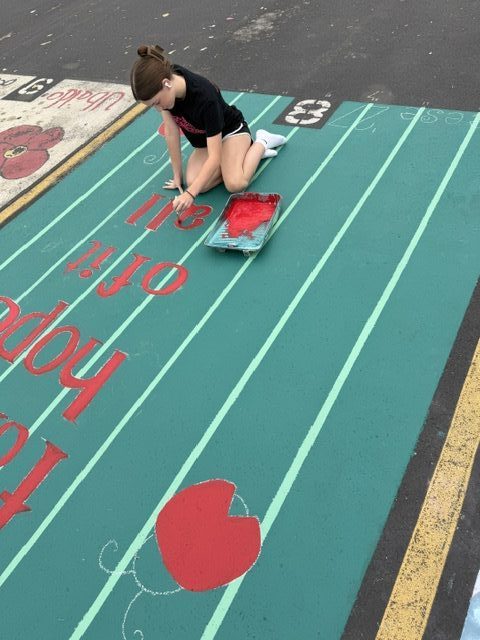
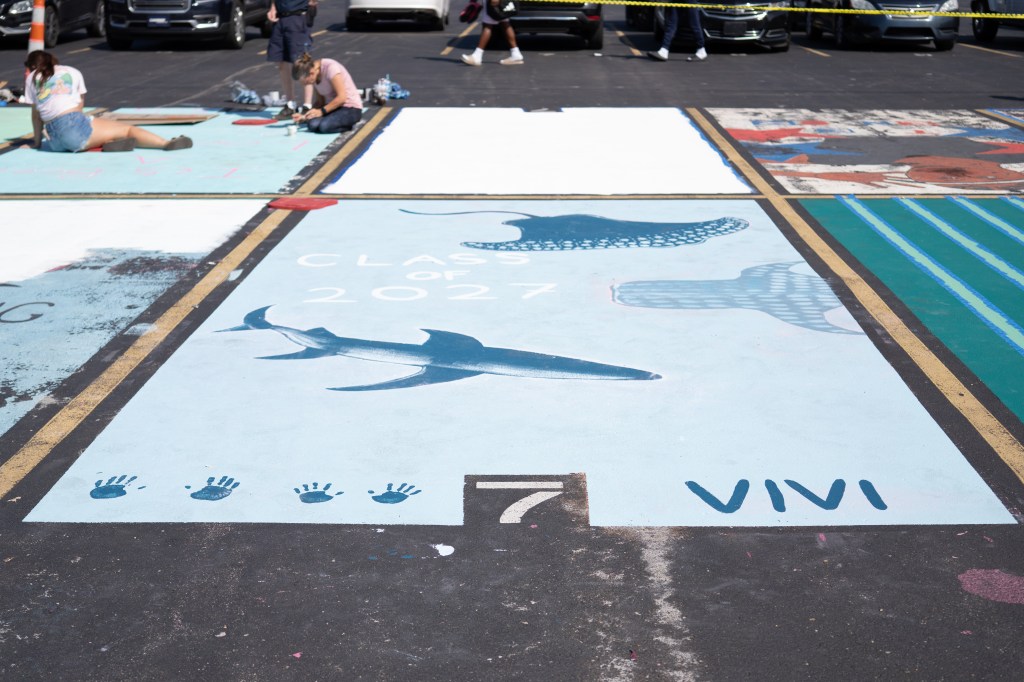
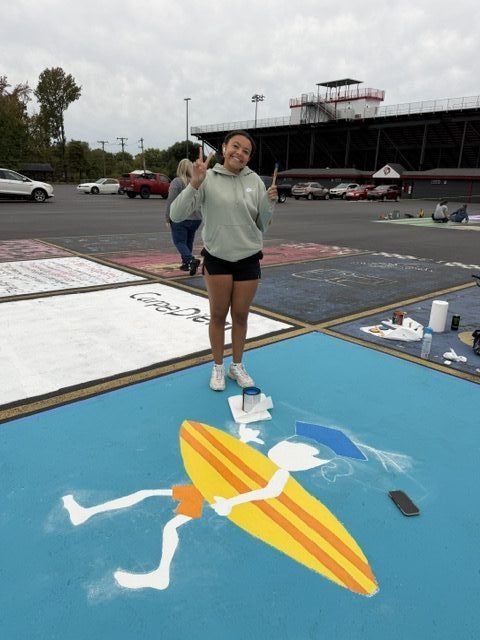
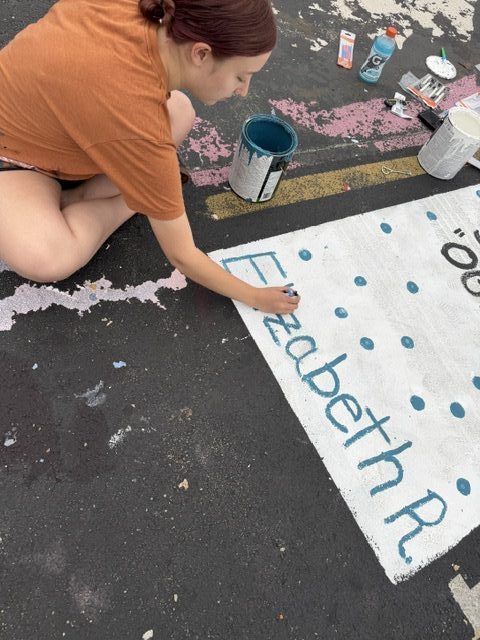
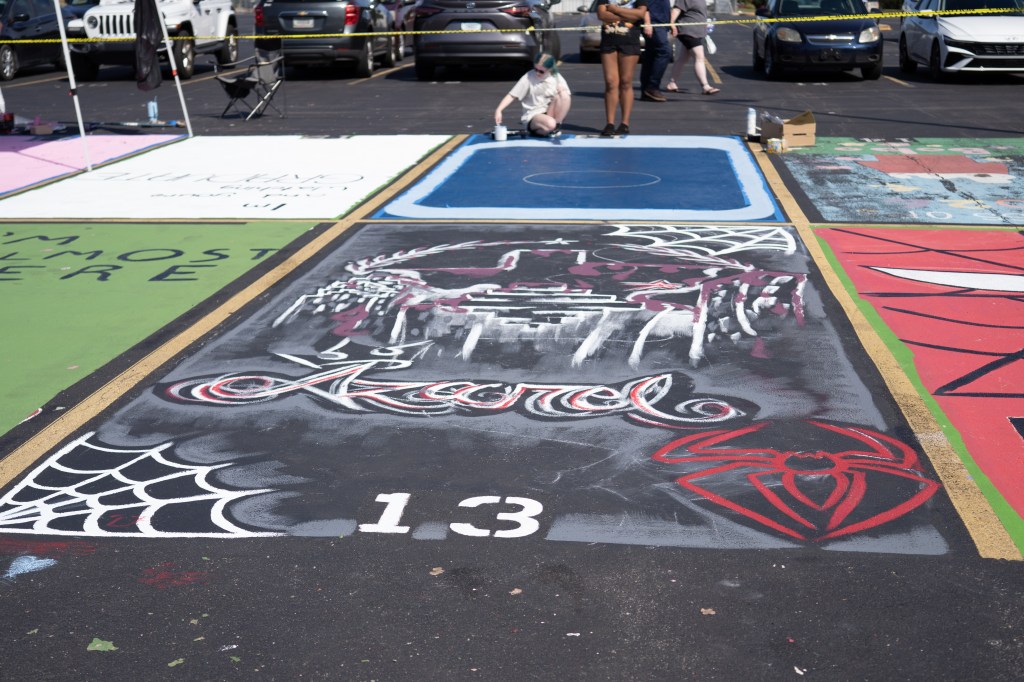
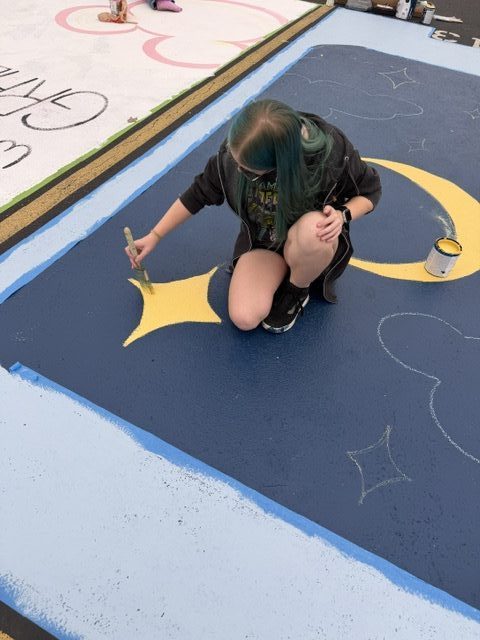
Senior Kylie Parsons works on her Disney-themed parking spot over fall break. Photo by Gabrielle Watkins.Senior Kaniyah Woodley’s Scream-inspired parking spot. Photo by Shelby Keesee.Senior Reese Somerville paints the letters of her senior parking spot. Photo by Gabrielle Watkins.Senior Viviana Gonzalez’s marine-themed parking spot. Photo by Shelby Keesee.Senior Ariana Adams poses with her surfer-themed parking spot. JHS Seniors had the opportunity to work on their parking spots during fall break. Photo by Gabrielle Watkins.Senior Egypt Whitehead’s Spiderman-themed parking spot. Photo by Shelby Keesee.Senior Elizabeth Roberts works on her parking spot containing multiple quotes. Photo by Gabrielle Watkins.Senior Azarel Hernandez’s Spiderman-themed parking spot. Photo by Shelby Keesee.Senior McKayla Hannan paints the stars on her tarot card-themed parking spot. Photo by Gabrielle Watkins.