Puss in Boots: The Last Wish – Review

By: Sam Broady

2022 was a good year for movies. With “Top Gun: Maverick,” “The Batman,”  “Glass Onion: A Knives Out Mystery,” “Bullet Train,” “Everything Everywhere All at Once,” cinema was back. Oddly enough, there was one other film in theaters that nobody asked for, nobody expected it to be good, and nobody hated it. That film is “Puss in Boots: The Last Wish.” Out of all the possibilities for a sequel, “Puss in Boots” turned out to have one and it happened to be amazing. I was blown away in theaters. I have a good memory of it and I look forward to re-watching it because it may be my favorite Dreamworks film. “How to Train Your Dragon” held that title for a long time.

The best thing about this film is by far the animation. In all honesty, it is the best animation I have ever seen. “Spider-Man: Into the Spider-Verse” is well known for its top notch animation, but while its visuals have the highest highlights, I think this film has better visuals overall. The action looks especially good. I love how the frame rate slows down in all the fight scenes. My favorite scene is the fight between Puss in Boots and Death because the color scheme looks amazing. I adore the use of colors and lighting in this film.

Another thing I love about this movie is the characters. I think it’s really important for a film to prioritize its characters if it wants to be memorable; luckily, that’s what happened. I highly enjoy Puss in Boots in this film. I don’t remember anything about the prequel but it doesn’t matter. Antonio Banderas gives the character such energy and he keeps his vibrant personality among the challenges he faces. I like his reunion with Kitty: she gets the job done. Perrito the dog is a funny addition. He brings love and comfort to the story. Goldilocks and the three bears are a delight to see and I didn’t expect them to be so fun. However, my favorite character is the wolf. His name is Death and he is the coolest character in fiction. Every time he’s on screen, he gives me the creeps. 

Surprisingly, the themes are conveyed with more depth than I expected. This film explores the fear of dying, which many can relate to. With Puss in Boots being on one out of nine lives, he is running for his life for the first time. His objective in the story is to make a wish for more lives so he can be the legend everyone knows him as. But, in the end, he realizes one life is enough when he gets to spend it with the people he loves. Or should I say animals. Everyone else cancels their wish as well when they learn to appreciate what they have. Having someone to trust, having a family, having friends; there’s a heartfelt message about sticking with what you have in life and it’s done in a rather subtle manner that complements the characterization of our protagonist.

Extra aspects that I enjoyed are the voice acting, the humor, and the music. I don’t know why Dreamworks went so hard on this film, but I am so glad they did. We need more animated masterpieces like these; films that specialize in the telling of a story and the style of animation rather than serving as a formulaic cash grab that intends to sell merchandise and teach kids nothing. You can feel the passion that went into every frame of this film. I cannot feel anything when watching films produced by Illumination like “Minions”. The difference in quality between Illumination and Dreamworks is unreal. By all means, I think it’s safe to say that “Puss in Boots: The Last Wish” is the best animated film of 2022 and I am very thankful for its release.
National Honor Society inducts new members

All photographs by Jackson Anderson. Click on each image to view the gallery below.

JHS defeats Oldham County 16-1 last night

Red Devils face rival New Albany tonight at 7 p.m., play Bedford North Lawrence and North Oldham this weekend

All photographs by Malachi Conrad; click on each image to view the gallery below.

First year of high school provides challenges, lessons for freshmen

by Liddia Waterbury

Freshman Eden Stewart sits down at the lunch table. She puts her belongings and lunch box down, then proceeds to take her food out of the box. While eating her food, she takes out her computer. She starts working on homework or missing assignments while eating.   

“Honestly, I don’t know. I usually prioritize finishing easier work in classes and taking more time to complete my harder work. This means doing work during lunch, advanced band, Spanish, and any other time I can. It’s really hard to do homework at home with all my band activities, but I usually manage my time well,” said Stewart.  

High school can feel overwhelming at first, but freshmen learn how to adapt and succeed. Their experiences reveal why the lessons they learn in their first year truly matter. 

For many freshmen, the transition to high school comes with challenges, but it also leads to growth. Stewart shares how they adjusted to this new environment and why it will help them to succeed.

“It was really hard. High school was really difficult to get into the flow with, especially because of my constantly full schedule between marching band, winter percussion, and all advanced classes. I’m still adjusting to it, and I know that with all the struggles this year, it will be easier next year. I will be able to have fun without a lot of stress,” said Stewart.

Although the transition can be difficult for many students, teachers support freshmen by making it easier and less overwhelming. 

Math teacher Alyssa Jones helps freshman student Onah Barns with work during class on April 9. “To support freshmen, I listen to their problems and help with anything they need. Just caring about them and giving them extra time if they need it,” said Jones. Photo by Liddia Waterbury.

“It’s important to help freshmen adjust to high school because when you’re in middle school, you’re not really used to switching classes. Then, if you fail a class in high school, you have to retake it, and they’re not used to that either. To support freshmen, I listen to their problems and help with anything they need. Just caring about them and giving them extra time if they need it. Especially because you can get really behind on school work from seven classes if you don’t have that support,” said math teacher Alyssa Jones.  

Support isn’t only about helping students adjust. It’s also about motivating them when they feel overwhelmed. Teachers play a crucial role in helping freshmen stay focused and confident during stressful times. 

“If their lack of motivation is because they’re overwhelmed, then what I try to do is make it more manageable. I help them look at their grades in class and in other classes. I help them pick the most important grades and push to make sure they stay focused on them. They are the assignments that are going to help their grades the most. If they can just narrow their focus to one thing at a time, and get that done, they can make progress,” said English teacher Holden Henderson. 

This shows how teachers help students feel less stressed by breaking work into smaller steps. While that support is important, students also need to find other ways to get motivated on their own. 

“How I usually stay motivated is when I think about graduation. I usually end up thinking about how, like, if I don’t finish this, I won’t be able to succeed. I also stay motivated by thinking about how I want to make my family proud with good grades. This influences my hobbies and stuff because after putting in that much effort, they feel more relaxing. I look forward to doing my hobbies and other things,” said freshman Onah Barns. 

Students motivate themselves through their own goals. At the same time, teachers can strengthen that motivation by building supportive relationships with their students.   

“I just try to be myself, be relatable, and share my interests. I know that my interests overlap with a lot of yours. I feel a little bit more in touch with social media and modern media than other teachers. I just try to be relatable and make sure students know that I care about them as people and not just the numbers in my grade book,” said Henderson. 

“It’s really important to have a good relationship with a teacher because you’re more likely to pay attention to what they say. If you don’t have a good relationship, you’re more likely to tune them out and do the bare minimum and not learn what they teach you,” said Henderson.

Strong relationships with teachers can impact how much students engage in class. When students feel comfortable, they are more likely to listen, learn, and reach out for help when they need it.      

“To ask for help with school, I raise my hand, go up to the teacher, and ask questions. I know that they are here to help me and help me succeed. When I ask the teacher about work, they help me to understand it better. This also gets rid of a lot of stress when the material is important and I don’t know how to do it,” said freshman Madisyn Maratty. 

Asking for help is important, and it also shows something bigger. Teachers are there to guide students and support them when they struggle, making help a key part of their role.

“Remember, there are so many trusted adults in this building who want to help you succeed, so find one and develop a relationship with them. Talk to your teachers about topics or things you may be struggling with. They are here to help you and truly appreciate hearing from you over hearing from a guardian or another adult.”

Freshman Counselor Andrea Schedler

“Remember, there are so many trusted adults in this building who want to help you succeed, so find one and develop a relationship with them. Talk to your teachers about topics or things you may be struggling with. They are here to help you and truly appreciate hearing from you over hearing from a guardian or another adult,” said freshman counselor Andrea Schedler. 

Support from adults doesn’t stop at just being available when students ask for help. Teachers also take an active role in guiding freshmen, helping them build skills and habits they’ll need to succeed throughout the rest of high school.

“I make sure freshmen understand what is expected, that there’s certain behaviors that are not acceptable. I make sure that they know that teachers have deadlines to get work done. At first I try to push and guide them, then I get stricter, if they are still lacking in maturity,” said biology teacher Joe Somerville. 

The freshman experience includes challenges, growth, and support. Students build habits and maturity while teachers continue to guide and push them towards success.

JHS defeats Shawe Memorial 3-0 in volleyball last night

All photographs by Malachi Conrad. Click on each image to view the gallery below.

Floyd Central defeats Red Devils 15-2 in softball last night

All photographs by Malachi Conard. Click on each image to view the photo gallery below.

Freshmen share tips for succeeding in the first year of high school

by Kaylee Borelli

The school year coming to an end, and throughout the year, freshmen have learned to adapt to the new environment of high school.

Teachers and counselors at have noticed how this year’s freshmen adjusted to the rigors of high school and how they’ve grown over the school year.

“Some of this year’s freshmen have adjusted well to the rigors of high school. I have witnessed growth in attendance, getting to class on time, balancing the workload of seven classes, becoming more confident in themselves, and learning how to handle conflict and minor issues on their own,” said freshman counselor Andrea Schedler. “I have also witnessed a lot of students grow in their involvement in athletics and extracurricular activities.”

Adjusting to the challenges of high school does not always happen easily, though.

“Overall, as a freshman class, they haven’t adjusted very well to high school,”  said freshman college and career teacher John Moody. “Some have figured out how to live outside of middle school and have been mature, while others have been immature and are still stuck in middle school.”

Moody shared some tips on how future freshmen can prepare themselves for high school and adjust to the rigor of JHS.

“What you’re going to experience here is going to be much different. You’re going to be expected to meet deadlines. You’re going to be expected to work on things you don’t know, and you’ll have to ask questions,” said Moody. “You just need to be as prepared as you can be. Make sure things are turned in on time because some teachers won’t even accept late work. Also, don’t fall behind because if you don’t fall behind, you won’t have to worry about catching up.”

Freshmen Cherish Brown, Lauren Beck, and Arianna Black work on a Coca-Cola group project in Michael Moody’s college and careers class. Photo by Kaylee Borelli.

This year’s ninth graders have also detailed some advice for incoming students next year.

“I would definitely just be yourself so you can find more people that are like you,” said freshman Donnie Muncy. “I feel like that’s a big part of it, being around people like you helps you be yourself and be happy. But overall, just being around people like yourself will make your overall high school experience better.”

Similarly to Muncy, freshman Sophie Ellis also detailed a way to make friends as a freshman.

“Go to all the events, even if you don’t think they’re going to be fun,” said Ellis. “It’s a great way to make friends and bond, and you get to see the school community.”

In addition to the students sharing their tips, some freshmen shared how they succeeded in their first year of high school.

“This year, I never let my work slip and was able to turn in my work on time,” said freshman Katie Higdon. “I just made sure I didn’t procrastinate and got my work done before the due date, so I wasn’t stressed the day before an assignment was due.”

Freshman Kaden Eurton said organization made school less stressful.

“Instead of stressing over my work, I would stay organized and balance my work and free time so I never fell behind,” said Eurton. “I would say as long as someone stays organized and stays up-to-date with work, high school will be more enjoyable and not as stressful.”

Regular attendance is another suggestion that freshmen shared with their peers.

“You really can’t miss much school because of how much work there is,” detailed freshman Parker Vibbert. “It takes a while to get caught up, but as long as you have good attendance, school will be much easier.”

Meander Into the Manosphere

Clawing for meaning gets people scratched

by Tristan Darvin

hyphenarticle1.jpg

Internet star and former kickboxer Andrew Tate.

“What colour is your Bugatti?”

That was a rhetorical question said by Andrew Tate. Rhetorical questions such as this one serve as jabs at the logic or moral fiber of an opponent. With the question of money and cars being used as a moral criticism, the question is based on the idea that money is morality and greed is good. In being based on such an idea, it brings a lot of questions about those who are asking it.

What created this void of meaning that’s been filled by this nasty materialism, who is this void in, and how is it better filled?

To take a look at the father of the aforementioned rhetorical question to get some insight, the phrase was coined by internet celebrity, kickboxer, self described misogynist, and likely human trafficker Andrew Tate. Tate was raised on an estate in Luton, England by his chessmaster father and his catering assistant mother, with Tate gaining television and kickboxing fame; Tate’s fame was short-lived due to a leaked video of him beating a woman with a belt. But Tate clawed out of his exile as the rising star of the online ‘Manosphere’.

An online coalition of disenfranchised men known as the ‘Manosphere’ has raised a myriad of pro-male figures into stardom from Andrew Tate to Jordan Peterson. The members of this coalition dwell in their own world, rejected by all else, that even has its own slang and lingo. These men often cite unfair rejection and mistreatment from others, especially women, for their behavior of sexual harassment and sexism. Whether or not those complaints are valid or a strawman is debatable.

The manosphere often leaves the internet to affect the material world. Elliot Roger, killer of six and self-described “supreme gentleman”, subscribed to these defeatist ideas of loneliness and despair and used them to justify his rampage. However, his behavior as described by himself and others had shown him not as a lonely soul, but one who drives others away while blaming them for leaving him behind. This demonstrates not the state of victimhood these men describe, but a state of hostile misogyny that makes everyone miserable and these men hateful.

However, with all of this in mind, one thing escapes us: how do we solve this?

Andrew Tate, just like the entire subculture he dwells in, spreads via shocking and rule breaking content. They take hold on the minds of men via scandal and unleashing repressed desires. They take hold, but they can be shaken off. We can be better, but we have to do some things.

Just like romance, communication is key in deradicalization. By unsealing the lid on these emotions by normalizing conversations about loneliness as opposed to ‘tolerating masculine solitude’ we may give these feelings an escape valve that isn’t as dangerous as when they come bursting out directed by muscled misogynists. Just as one can be pulled in, one can be pulled out by openness and acceptance of the other. And thus, the other may cease to be so terrifying and the hate may be quelled in the end.

Staff Editorial: Climate Change Coming Home

For many years now, students at Jeff High have only encountered climate change through indirect information. We have read about it in textbooks and seen its effects from watching the news. But climate change is no longer limited to distant coastal cities and extreme weather events like hurricanes and wildfires. The effects of climate change are growing, and something must be done to tackle this threat.

In the past, when climate change was discussed in this newspaper, we primarily relied on non-local stories and scientific predictions, but recent weather events have caused us to wonder about the impact of climate change on students at Jeff High. This is a fact that many athletes know all too well considering the number of canceled practices this fall due to extreme heat.

Although the cost of climate change has only resulted in a few missed practices so far, future heatwaves may have more severe consequences for students playing sports at Jeff High. According to The New York Times, temperatures from June to August across the United States were the hottest on record. If we fail to respond to the climate crisis, then these heatwaves will continue into the unforeseeable future.

While it’s hard to attribute any one event to climate change, a recent report published by the Union of Concerned Scientists draws a devastating connection between climate change and an increase in the number of heatwaves across the U.S. Midwest. Unfortunately, these increases are expected to continue as humans pump more greenhouse gases into the atmosphere. Even under the best-case scenario, in which fossil fuels are curbed quickly, the report claims that “The average number of days per year over 90 degrees Fahrenheit are projected to increase 2-3 times by end-of-century.”

Heat is just one of many changes that we can expect to see until something is done to combat climate change. Although most of our readers are high school students, hoping for a bright future in the face of a global crisis created long before they were born, we can still take action to reverse the effects of climate change in our daily lives by conserving energy, reducing the use of plastics, and recycling, and by reaching out to our leaders, at all levels of government and business, by asking them to do their part to rescue this planet and preserve it for future generations

9/11: Remembering the Attacks After Twenty Years

By Yousaf Quereshi

My mother was a 15 year old Sophomore attending New Albany High School on September 11, 2001. I don’t think that she was ever really worried about anything in the world, especially on that day, except for maybe passing math class so that she could eventually graduate high school. That was the story of most American teenagers living in the early 2000s⸺absorbed in their immediate surroundings and worried only about their own lives. However, September 11 would awaken everyone, including my mother, to the dangers of living in the world and the interconnectedness of everyone. 

At 8:46 in the morning, the first hijacked plane flew into the World Trade Center’s North Tower. It was apparent that a terrible accident had happened in New York City. Then, 17 minutes later, the second hijacked plane flew into the World Trade Center’s South Tower. This wasn’t an accident⸺this was deliberate. America was under attack. The Pentagon was attacked not long after, and a fourth plane crashed into a field in Pennsylvania. Nearly three thousand people died immediately as a result of the attacks…and thousands more died as a result of it. But September 11 had consequences for those who survived as well. For many Americans, the attacks on September 11 awoke the sleeping dragon of fear. Fear about living in a dangerous globalized world that most people had forgotten about since the attacks on Pearl Harbor when President Franklin D. Roosevelt had told us that the only thing we had to fear was “fear itself”.

But now, it’s been twenty years since 9/11, so why should we still remember? Why should high school students who weren’t alive during 9/11, like my mother had been on 9/11, continue to remember this event?


We should remember to honor the men and women who died in the World Trade Center Towers and on the hijacked planes. We should remember to honor the first responders to the attacks. We should remember to honor the survivors of the attacks and the families of the fallen.


We must continue to remember 9/11 to honor the loss, the rescue, the fear, and the hope of that tragic day. You didn’t have to be alive for 9/11 to remember the horror and the heroes. We remember so that we will never forget what happened on that day, and how we overcame it as Americans.


Now, twenty years after 9/11, America is under attack again. The terror of the Covid-19 pandemic has killed and continues to kill innocent Americans and first responders everyday, leaving behind long haul survivors and grieving families. Although Americans may not always agree on politics, when our homeland is under attack and innocent American lives are lost, I have hope that we will put aside our differences, and come together as we did during 9/11 to overcome any existential threat, including a global virus.

Readers: Remember 9/11. For the good it brought, for the bad. For the very ugly. I will always remember and be moved by the fact that this nation could come together on that day, forget differences and pray for each other, remove hate from our hearts and build compassion within our souls. Remembering 9/11 elevates the belief that we can exist as a unified American people, to pass on our love and care to those we hold dear and those we lost. Why can’t we be that country again?

Staff Editorial: Moving Forward

This year, our coverage has been dominated by one topic: COVID-19. The pandemic has altered every aspect of our lives. Articles about what were the usual high school moments – sports, dances and clubs now included precautions and notes about how the pandemic affected the event. 

Despite this, we don’t believe the pandemic was over-covered, as its effect can barely be understood even now. Its impact has been all encompassing and has forced us to reconcile with long held beliefs and norms in the face of unprecedented change. We too have reflected not only on our work, but what this pandemic has taught us about ourselves and our world.

As vaccination rates rise and cases fall, life will start to look more normal. However, we as a school and a community should not immediately snap back to the ways of before without question. We would be remiss if we allowed this pandemic to come and go without teaching us something about ourselves.

Here are some things we have learned:

1.) We need community. While America has always been a nation that prides itself on individualism, we must realize that some issues are too widespread and important to face alone. In times of trouble we need help; we need each other.

2.) Division is our weakness. There are important differences in politics today, and those disagreements should be hashed out and vigorously debated. But it is when we fail to recognize our common humanity that those small differences become irreconcilable. That’s when we fail.

3.) School is more complicated than we thought. With virtual school, our learning drastically changed. For some it was a dream come true – the chance to work at your own pace and make your own schedule. For others it was a nightmare – sitting in bed on your chromebook with motivation decreasing by the second. But as we move forward we understand that school is about more than learning in a classroom. It’s about social interaction; it’s about the structure of the school day and it’s about our personal growth.

4.) We all can benefit from some personal changes. In quarantine most of us took up new activities. Whether it was crafting, meditation, or baking, we learned new skills, and as life slowed down we were able to make the changes that we needed. Many people also had changes to their friend group and peers. While change isn’t always easy, sometimes change is what we need.

5.) We need to pay more attention to local government. Often all eyes are on our national government. We hold our breath for presidential and congressional elections, but often the most important governing is done at the local level.In the beginning of the pandemic it was state governments that took action, shutting down businesses and schools in the name of public safety. As we attempted to reenter school this year, it was the school board who set guidelines and rules for how we went back to school safely. While sometimes hard to understand or less exciting, local government matters.

As we enter our new normal, we hope all people learn the lessons this past year has given us. As we head optimistically into the future, let’s make sure to not return to the status quo, but rather, to re enter our normal routines with an open mind, an appetite for improvement and the will to change our lives for the better.

To Be Canceled, or Not To Be Canceled

The argument over political correctness on social media has reached its highest point yet.

Dateline January 8, 2021: The outgoing President of the United States of America, Donald John Trump, is officially banned from his Twitter account…after being accused of inciting the insurrection which occurred at the Capitol just days earlier…where and when, thousands marched on the Capitol in objection to the certification of the electoral college. Politico among other news organizations termed it as a “coup attempt.” And of course, following the insurrection, Trump wasn’t just banned from Twitter. He was also banned from virtually every other major social media platform: Facebook, Instagram, Snapchat, Twitch, Reddit, YouTube and even Pinterest.


If the sitting President of the United States can be essentially shut off from social media, it demonstrates something creepily true: You can have 80 million followers, you can be leader of the free world, and EVEN YOU aren’t exempt from a full social media ban. The ban on Donald Trump is much larger than him as an individual alone. It touches on one of the most heated issues of our times: political correctness.

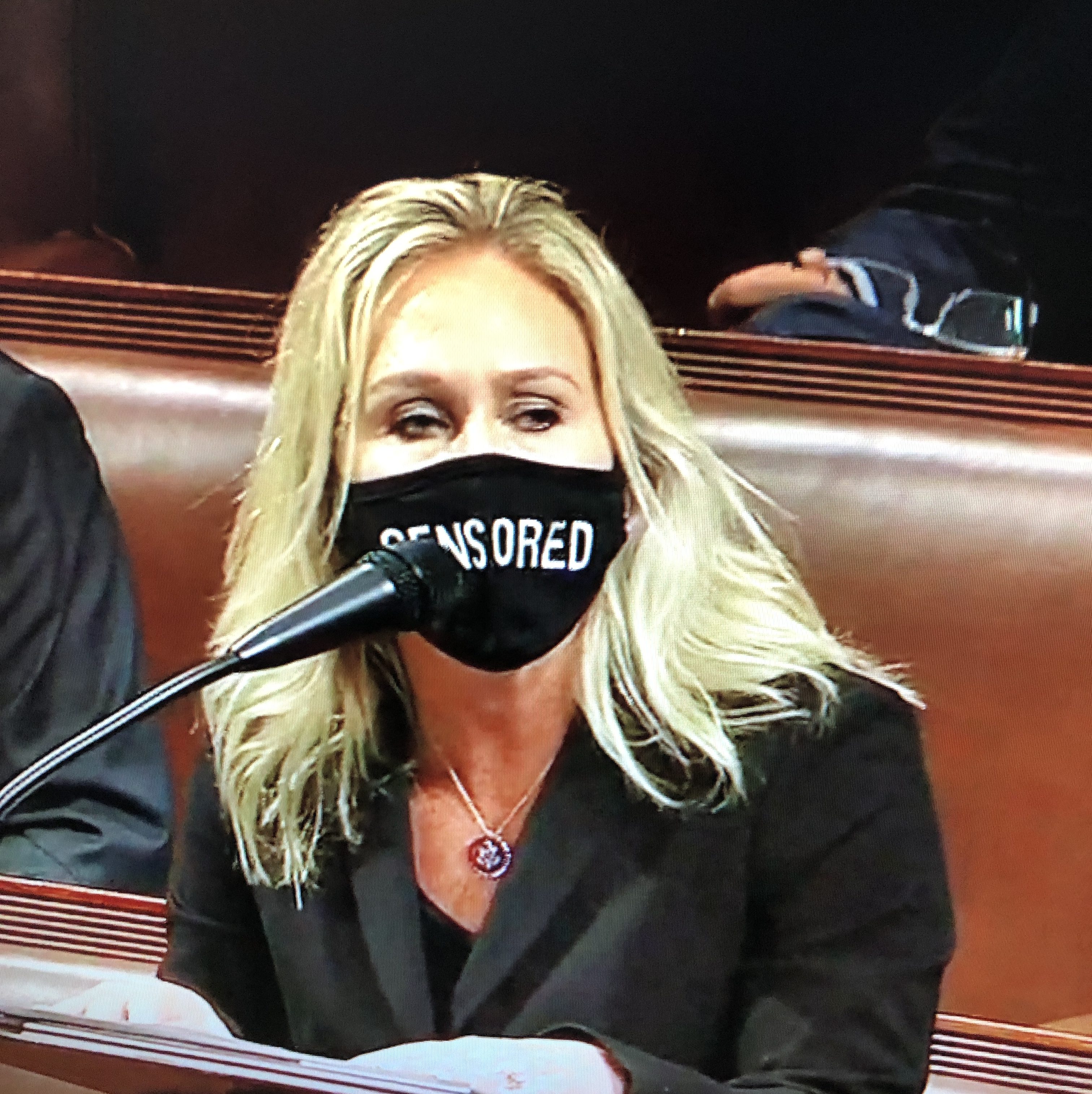
After social media accounts were restricted in the wake of the U.S. Capitol insurrection on January 6, Republican Congresswoman Marjorie Taylor Greene of Georgia wore a “Censored” mask while speaking on the floor of the House of Representatives. Hyphen Staff Photo


The definition of political correctness, according to Oxford, is “the avoidance, often considered as taken to extremes, of forms of expression or action that are perceived to exclude, marginalize, or insult groups of people who are socially disadvantaged or discriminated against.” And here comes the catch: While Donald Trump has been “politically incorrect” quite a few times, he’s often been left off the hook, but this time his words didn’t fit the definition of “political correctness.” His words incited “an insurrection,” according to these big tech giants. The controversy the bans bring is pretty explicit in terms of opening the debate for the new question: how far should political correctness go? So here, we’re going to take a look at the history of political correctness, the pro and con arguments supporting it and opposing it (respectively), and why this could have huge ripple effects on the ways you might use social media.


When the term “political correctness” came into common usage in the 1970s (when it was mentioned in a novel), it was really a term of ridicule relating to taboo subjects. The history of political correctness is really summed up by an article written by Richard Bernstein for the New York Times more than 30 years ago. In the article, Bernstein stated, “across the country the term p.c., as it is commonly abbreviated, is being heard more and more in debates over what should be taught at the universities.” In the same article, Bernstein explained, “The term `politically correct,’ with its suggestion of Stalinist orthodoxy, is spoken more with irony and disapproval than with reverence.”


At that time, if you were politically correct, it meant you were careful not to offend anyone or adopt opinions that may be dismal to other individuals. Colleges were termed as politically correct by conservatives. They accused colleges of “brainwashing” and “subjecting” their general opinions on students, leaving no room for open-minded and objective opinions. Of course, some (or many) of these opinions were in one way or another, offensive.


Today is a much different case. With the introduction of social media, people who didn’t like being “politically correct” gained an entire world wide web to surf upon. From here, it got bigger and bigger. Now anyone could be a conservative talk show host, you could share your opinion with all of your delight. You could now create profiles with different names and some profile pictures of deceased politicians and hawks, engaging in banter of all sorts.


These opinions aren’t just hidden in the dark outer reaches of the internet. They’re everywhere. I discovered this myself when using discord for coding. In various chats, individuals would be discussing why the holocaust was justified. I experimented, heading to disboard.org, (the place to get advertised discord server links), and I ended up finding multiple discord servers of a Nazi background. It got worse. I even found a white supremacist discord server, riddled with memes supporting the KKK, and mentions of streaming “Birth of a Nation,” a 1915 silent-film which portrays the KKK as heroes. And guess what? The non-white population is termed as “an attack on society” and the remnant evil which remains. This is outrageously racist. Of course, the server was deleted not long after for promoting the alt-right conspiracy theory known as “QAnon.” But that’s just discord, a friendly app which lets you create servers for multiple topics and variations. Close it down in one place and it pops up in another, like an internet version of whack-a-mole.


In thousands of forums all the way to the corners of the internet, the alt-right lives. But what I’m mentioning only scratches the surface.


There’s no place for this in today’s society. These opinions are racially charged and one of the highest levels of harassment. People and companies who stand up against such opinions shouldn’t be chided for being “politically correct.” They should be lauded for their efforts. They should be commended for showing respect for other human beings. They should be held up as the voice of reason rather than the voice of hate.

By Yousaf Quereshi

Opinion: We Are Reaching a Breaking Point

Opinion by The Hyphen Staff

Editor’s note: This piece was written collaboratively by the 14 members on The Hyphen staff. Since this group makes up 0.0067 percent of the student population at Jeff High, we aren’t exactly a representative sample. That being said, our job is to serve as the voice of the students — and we’ve done our best to represent every single one of you.

The alarm goes off at 6:00 a.m. Or maybe it’s noon. Or maybe there is no alarm at all.

The Google Classroom is overflowing with dozens of to-do items. Or maybe it’s just a few. Or maybe it’s none.

The agenda for the day is to log in to four Google Meet sessions. Or maybe it’s just two. Or maybe it’s none.

By the end of the day, we will have completed eight hours of work. Or maybe it’s just a few hours. Or maybe it’s none.

If there is one thing consistent about the experience of a Jeff High student during Coronavirus, it is inconsistency. Specifically, we have noted inconsistencies in:

  • Amount of work
  • Whether the class has live Google Meets
  • Whether Google Meets are required
  • When the Google Meets take place
  • When the assignments are due
  • Whether work can be turned in late

The result is that we are constantly dealing with conflicting priorities — and we are overwhelmed, exhausted, and confused.

Yes, we realize there are bigger issues. Because of Coronavirus, some students don’t know how they will get their next meal. Some are in abusive situations at home that they can’t get away from. Some are dealing with depression and anxiety made worse by isolation.

We can’t fix everything, but we can suggest some changes the school district could consider as a way to lessen stress and increase motivation:

1 – Standardize expectations. Do teachers have Google Meets or not? Are they required or not? Are assignments due in an hour or a day? Are office hours for My School students or everyone? When do office hours happen? What’s the best way to reach out to my teacher?

2 – Respect the block. Although opinions on block scheduling are mixed, we agree that it does help us focus. Please avoid posting to-do items for classes on their “off” day or having a Google Meet during another class period.

3 – De-emphasize writing. We are used to showing what we know in class, not just writing all day. Writing takes longer than speaking or thinking, and it is challenging for a lot of people who are otherwise good communicators. If there’s a way to have us show what we know without writing (for instance, draw something and snap a picture), please do that. It is more work to do everything in writing, and it just gets repetitive after a while.

4 – Keep our other commitments in mind. During a typical school year, students have other obligations that keep them busy: jobs, sports, household responsibilities. It’s no different with Coronavirus. In fact, many students are working more hours because their workplaces see “online” as “on call all the time.” Many are also taking on more responsibility for watching siblings and helping around the house. 

5 – Consider the impact of last spring. The entire fourth quarter was a dud for students. For more than a month, students were not expected to keep the same level of academic focus as we are used to. Most students didn’t even take final exams. Due to this, many are more likely to struggle. 

6 – Be kind. A lot of students are going through a really tough time. They don’t show it. They don’t say it. Yes, sometimes we let you down. Sometimes we get overwhelmed and can’t keep up. Please show forgiveness and kindness. We’re all trying to get through this and get back to “normal” (whatever that is). 

These times are not normal. It’s important to realize that the student body is simply a reflection of the world. We’re just as overwhelmed, exhausted, and confused about our future as adults are. We are just as eager for rays of hope, for a light at the end of the tunnel, for life “after all this is over.” 

Also, we know that our teachers are overwhelmed and stressed, too. We aren’t placing all the blame there. In fact, we want to say thank you to some of the people who make this difficult time a little easier. 

  • Mr. Densford, Ms. Paul, Miller and Martinez: Thank you for caring about how we are doing, not just what we are doing.
  • Mr. Hornickel: Thank you for keeping us engaged and active.
  • Mr. McDonald, Ms. Johnson and Mr. Robinson: Thank you for being clear and consistent.
  • Mrs. Rector, Mr. Wigginton, and Mr. Dench: Thank you for always reaching out and making sure everyone’s up to speed. 
  • Principal Hall and the Assistant Principals: Thank you for everything you are doing to keep us safe.

What Do You Want More: Money or Happiness?

It isn’t uncommon to hear the saying, “Money can’t buy you happiness.”  Is this really true? We decided to ask readers of The Hyphen what they think. On an Instagram poll with 32 respondents, 25 said they would choose happiness over money, while the
other seven chose money. Some people say for a successful life you need both happiness and money. Stability is not just present in someone’s life, one way or the other.

Sophomore Claire Storz said, “I want happiness because that is the only thing money can’t buy. I’d rather be poor and happy than rich and sad.” Storz also noted that the whole ordeal is also situational. In fact some people who have an abundance of money can find happiness through donating to charities, or taking care of a family, adopting, running an organization to help real people, etc.

Money can only get you so many places, when you get to much of it, it can bring out the worst in you and the people you associate with. Once you have everything there is nothing to strive for, nor anything left to get. It can drive you insane knowing that you are just stuck in space, with a life controlled by what is in your bank account without a bit of happiness.

On the other hand, some people say that money does indeed create a sense of happiness. Sophomore Dustin Liston said, “I have a lot of great ideas that can bring others happiness but it requires a lot of money.”

With this statement he describes he wants to help others and that would bring
him happiness. Money is something people need to support themselves and others.
According to givingusa.org, in 2017 $390.05 billion was donated in just that year.  People who have a lot of money are big contributors to nonprofit organizations. It is said that giving to others will make you more happy, so through donation and assisting others you can bring yourself happiness.

In a life with happiness you could be poor and make the best out of your life. Strive daily to try to get somewhere to better your life. If you live a life where you do not love your job, it always feels like work. If you truly enjoy your job, you will never feel like you are at work a day in your life.

Opinion: The Flaw in FAFSA

The student aid application process has a fatal flaw: it presumes if parents CAN help with college costs that they WILL help with college costs.

Thinking about college can be extremely stressful. Not just the anxiety that comes with an unknown future, but something even more nerve wracking… money.

bellamadAs we all know, seniors or not, college can be very expensive. With scholarships, however, a lot of weight can be taken off your shoulders. But here’s the problem, how do you get scholarships if your parents make an above average amount of money? Most of the time, you don’t. And I’m sure you’re thinking, “Why would you need a scholarship if your parents make a lot of money?”
Well, not everyone whose parents make a decent amount of money actually gets help from their parents when it comes to paying for college. That seems to be the situation that a lot of students here at Jeffersonville High School are experiencing.

That little question concerning parent income included in scholarship applications assumes parents will aid financially with college, but that is not always an accurate assumption. Of course, they have scholarships for all different kinds of things that don’t require information about your parent’s yearly earnings.

If you’re a senior, I’m sure you’ve heard of the Free Application for Federal Student Aid (FAFSA). This can be a big help, but only if you qualify. Part of the application asks you what your parents’ annual income is, which is the dreaded question for those whose parents are well-off.

No one ever complains that their parents “make too much money” until it comes to paying for college. It practically takes you out of the running for these types of things, and that is absolutely awful if you’re one of those students whose parents aren’t contributing.

According to the Indiana Financial Aid and Activity Program Report from the 2013-2014 school year, “…financial need is equal to the cost of tuition and fees minus the expected contribution of the student and his or her family.” This sounds great, truly need-based, but I have yet to run into a scholarship application that asks for income as well as how much support you are receiving from your parents financially.

As reported by the 2017 Indiana College Readiness Report, out of the 456 students that graduated from Jeff High in 2017, only 40 of those students were 21st century scholars. The 21st century scholarship program offers Indiana students a chance to get up to four years of fully paid tuition at multiple Indiana colleges. However, this only applies to students whose family income does not exceed $45,000 (for a family of 4). Who says those parents aren’t providing more financial help than parents who make more than that?

People tend to expect that when your parents make a lot of money, you don’t have to worry about college debt – but that’s not really how it works. Bigger paychecks tend to mean bigger bills. This means that even parents that make a lot of money don’t have enough to save for their children’s college tuition by the time all the bills have been paid.

What can we do? We could just make college kids rack up more and more student debt over the years, or we could get rid of that sickening question and give scholarships based on actual need, not assumed need.

Written by Kristen Jacobs

Opinion: Schnatter’s Donation to Jeffersonville Baseball Puts Him on the Right Path

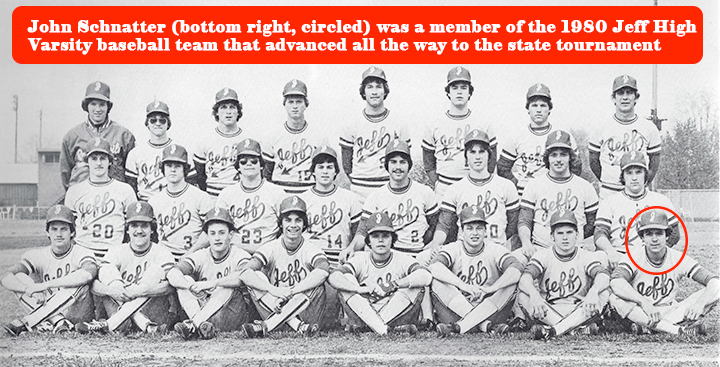
It was July 11, 2018, when John Schnatter (Papa John) resigned as Board Chairman of Papa John’s Pizza. His resignation came after he used the N-word on a public relations conference call, but his fall from power began earlier. Schnatter is most known for his work as Papa John and his fall from power. However, many don’t know he graduated from Jeff High in 1980.

schnatter-baseball-1980

Schnatter’s problems began in November 2017 when he expressed his disappointment over the peaceful protest of African-American NFL athletes taking a knee during the national anthem. The company tried to smooth over his comments, but the damage had been done.

In January 2018 John Schnatter stepped down as Chief Executive of Papa Johns, following a sales decline, partly linked to the NFL scandal, and in February 2018 Papa Johns ended their partnership with the NFL.

In May 2018 the conference call occurred in which Schnatter used the racial slur, yet the incident would remain unknown until July 11. The day John Schnatter lost everything. Soon after the news of his resignation spread, multiple partners and contracts were suspended. The University of Louisville began the process of renaming “Papa John’s Cardinal Stadium,” and many others began the process of removing the brand from their own.

Then, less than a week later, July 17, Schnatter started talking. He first walked back his resignations saying, “he was kinda provoked” in saying the racial slur. He also expressed regret over his decision to resign before the board did a full investigation. Despite his fight, by August 1, 2018, John Schnatter had been erased from all forms of advertising of Papa Johns.

Despite the loss of his company, Schnatter still maintains the John Schnatter Foundation which makes many charitable contributions. He has recently been using his foundation to help the Southern Indiana and Louisville community.

Most recently, Schnatter gave $500,000 to Jeffersonville High School for a turf baseball field and a replacement of the outer fencing, The stadium and facility will be named the John Schnatter Stadium, but the field will remain Don Poole Field.

John Schnatter has made many mistakes, and his use of racial slurs is inexcusable. However, this is the real world. John Schnatter has expressed remorse, and he is trying to help. Through this donation, he is helping his community and our school.

I believe in principles, but I also believe in practicality. This donation helps everyone, and while many will always associate his name with accusations of racism, we must also acknowledge the good his actions have and will do for the community.

Speaking of Labels…What’s the Q+ About?

For many years, people used the term “LGBT” to describe the Lesbian, Gay, Bisexual
and Transgender community. In recent years, you might have noticed a new addition at the end: “Q+”. The Q+ is meant to be more inclusive of people who identify with something that’s not in the traditional LGBT framework (such as Asexual
and Pansexual).

While it might not seem like a big deal, the distinction is important to many people —
and has actually become a hotly debated issue. A Jeff High student who wanted to be anonymous for this story says the Q+ isn’t needed: “Trans covers FTM (female to male), MTF (male to female), and non-binary (the feeling of being genderless). Lesbian and Gay cover that, and Bi covers Pan so that’s about it.”

On the other side is Amber Walker, a Jeff High student who prefers the Q+ addition because “Personally, I feel that there is a whole spectrum of possibilities that don’t fit into just four labels.”

On a recent Instagram poll, the votes for the acronym LGBT was just one person while the votes for LGBTQ+ were 17 people. Most of those polled were from the area, but some were not. An LGBTQ+ community member who voted is from a country where being a part of the community is looked down upon and it is illegal to attend Pride festivals and have samesex marriage without punishment.

Is this debate pointless? While representation is important, the LGBTQ+ community, whether you believe in the Q+ or not, is an accepting community for those of different sexualities and genders. Even though LGBTQ+ won our poll, your opinion is your opinion as long as you aren’t hurting anyone with it.

Me Oh My! Xe, Xir, Zye!

When you hear “them” what do you think? Most will think that use of “they” means multiple people. There are occasions where this is no longer the case. They is a pronoun used for someone of unspecified gender, or in some cases, someone who doesn’t identify with a gender at all. They/them pronouns are often used when someone is non-binary and/or agender. Being non-binary is when someone identifies out of the male/female dichotomy, in other words, are outside of the binary. While he/him and she/her are specifically gendered to male and female, they/them pronouns are not.

There is a debate brewing in queer and non-queer spaces about pronouns. “How much meaning should we prescribe to them?” “Are he/him lesbians valid?” You hear the murmurs of these questions constantly. 

Pronouns are sensitive, as they relate exactly to identity. The singular they has been around for centuries. The works of William Shakespeare, Jonathan Swift, Jane Austen and William Thackeray all include a singular they. However, now this use of singular they has come into question. Why has this use of singular they become controversial? The Merriam-Webster dictionary provides this answer to the question of if you can use a singular they; “The use of they, their, them, and themselves as pronouns of indefinite gender and indefinite number is well established in speech and writing.”

Then it comes to neo-pronouns. These new pronouns take on lists, the time of creation spanning from the early 1970s to yesterday. Ey/em pronouns were introduced to the queer scene in 1973, as an alternative to binary pronouns, plural, or “object” pronouns (it/its.) The queer disconnect from binary is something inherent and unique to queer spaces: the grotesque, the tacky, the beautiful, all smashed together in a revolution of beauty standards. This is apparent in the strict disregard of binary provided by the nonbinary and trans community, the butch/femme lesbian community, and the other sects of identification language in queer spaces. The pronouns are important as a badge of identity, what you call me will be what I’m most comfortable with.

Likely the reason we come to dispute these occasions of singular they, or the use of new pronouns be because this is a use in the context of queer people, and their refusal of typical gender binary. Even if you don’t want to listen to Shakespeare because language changes over time from his version of English, I pose another question: then why can’t it change now? If people are more comfortable using a different pronounーwhether it be they, he, she, or a newer oneーwhat right do we have to say, “no, this makes you more comfortable in expression, but no.” why should we be able to do that, refuse changing our language to benefit others? A simple switch of pronounsーsomething so easy we do it for dogsーwe can’t do for other people?