Most Recent

Opinion: The Flaw in FAFSA

The student aid application process has a fatal flaw: it presumes if parents CAN help with college costs that they WILL help with college costs.

Thinking about college can be extremely stressful. Not just the anxiety that comes with an unknown future, but something even more nerve wracking… money.
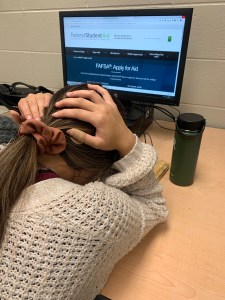
bellamadAs we all know, seniors or not, college can be very expensive. With scholarships, however, a lot of weight can be taken off your shoulders. But here’s the problem, how do you get scholarships if your parents make an above average amount of money? Most of the time, you don’t. And I’m sure you’re thinking, “Why would you need a scholarship if your parents make a lot of money?”

Well, not everyone whose parents make a decent amount of money actually gets help from their parents when it comes to paying for college. That seems to be the situation that a lot of students here at Jeffersonville High School are experiencing.

That little question concerning parent income included in scholarship applications assumes parents will aid financially with college, but that is not always an accurate assumption. Of course, they have scholarships for all different kinds of things that don’t require information about your parent’s yearly earnings.

If you’re a senior, I’m sure you’ve heard of the Free Application for Federal Student Aid (FAFSA). This can be a big help, but only if you qualify. Part of the application asks you what your parents’ annual income is, which is the dreaded question for those whose parents are well-off.

No one ever complains that their parents “make too much money” until it comes to paying for college. It practically takes you out of the running for these types of things, and that is absolutely awful if you’re one of those students whose parents aren’t contributing.

According to the Indiana Financial Aid and Activity Program Report from the 2013-2014 school year, “…financial need is equal to the cost of tuition and fees minus the expected contribution of the student and his or her family.” This sounds great, truly need-based, but I have yet to run into a scholarship application that asks for income as well as how much support you are receiving from your parents financially.

As reported by the 2017 Indiana College Readiness Report, out of the 456 students that graduated from Jeff High in 2017, only 40 of those students were 21st century scholars. The 21st century scholarship program offers Indiana students a chance to get up to four years of fully paid tuition at multiple Indiana colleges. However, this only applies to students whose family income does not exceed $45,000 (for a family of 4). Who says those parents aren’t providing more financial help than parents who make more than that?

People tend to expect that when your parents make a lot of money, you don’t have to worry about college debt – but that’s not really how it works. Bigger paychecks tend to mean bigger bills. This means that even parents that make a lot of money don’t have enough to save for their children’s college tuition by the time all the bills have been paid.

What can we do? We could just make college kids rack up more and more student debt over the years, or we could get rid of that sickening question and give scholarships based on actual need, not assumed need.

Written by Kristen Jacobs

PDF: Nov. 7, 2019

img_7093

With the “real world” just around the corner, that first move in The Game of Life seems a lot more relevant (and scary) than it used to be. Is college really the foundation for success? And if it is, how can a typical student afford it without taking on a lot of debt? Check out our cover story as we explore the trade-offs today’s high school graduates face.

This issue also contains:

  • An opinion column about the “fatal flaw” in FAFSA
  • Reader voices on school start time and whether money or happiness is more important
  • A preview of the new Disney streaming service
  • And more …

Download PDF

Opinion: Schnatter’s Donation to Jeffersonville Baseball Puts Him on the Right Path

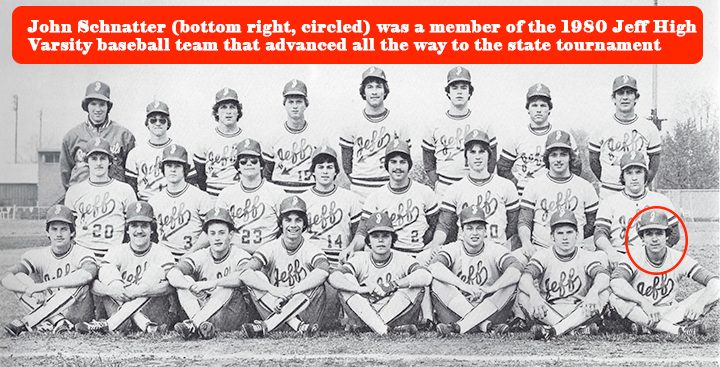
It was July 11, 2018, when John Schnatter (Papa John) resigned as Board Chairman of Papa John’s Pizza. His resignation came after he used the N-word on a public relations conference call, but his fall from power began earlier. Schnatter is most known for his work as Papa John and his fall from power. However, many don’t know he graduated from Jeff High in 1980.

schnatter-baseball-1980

Schnatter’s problems began in November 2017 when he expressed his disappointment over the peaceful protest of African-American NFL athletes taking a knee during the national anthem. The company tried to smooth over his comments, but the damage had been done.

In January 2018 John Schnatter stepped down as Chief Executive of Papa Johns, following a sales decline, partly linked to the NFL scandal, and in February 2018 Papa Johns ended their partnership with the NFL.

In May 2018 the conference call occurred in which Schnatter used the racial slur, yet the incident would remain unknown until July 11. The day John Schnatter lost everything. Soon after the news of his resignation spread, multiple partners and contracts were suspended. The University of Louisville began the process of renaming “Papa John’s Cardinal Stadium,” and many others began the process of removing the brand from their own.

Then, less than a week later, July 17, Schnatter started talking. He first walked back his resignations saying, “he was kinda provoked” in saying the racial slur. He also expressed regret over his decision to resign before the board did a full investigation. Despite his fight, by August 1, 2018, John Schnatter had been erased from all forms of advertising of Papa Johns.

Despite the loss of his company, Schnatter still maintains the John Schnatter Foundation which makes many charitable contributions. He has recently been using his foundation to help the Southern Indiana and Louisville community.

Most recently, Schnatter gave $500,000 to Jeffersonville High School for a turf baseball field and a replacement of the outer fencing, The stadium and facility will be named the John Schnatter Stadium, but the field will remain Don Poole Field.

John Schnatter has made many mistakes, and his use of racial slurs is inexcusable. However, this is the real world. John Schnatter has expressed remorse, and he is trying to help. Through this donation, he is helping his community and our school.

I believe in principles, but I also believe in practicality. This donation helps everyone, and while many will always associate his name with accusations of racism, we must also acknowledge the good his actions have and will do for the community.

Preventing Suicide: Avoidance Isn’t the Answer

Suicide is a raw topic that most people like to avoid. The ones trapped by suicidal thoughts often feel alone and don’t talk about their feelings. People who were left behind after a loved one’s suicide are left with questions and pain, often causing them to stay quiet. Those without experience with the heartbreaking topic don’t know how to talk about it.  But the idea of avoiding conversations about suicide and everything related can be deadly, especially since according to the National Institute of Mental Health, suicide is the second leading cause of death in teenagers and 4,969 of those deaths were Indiana residents. 

Suicide is preventable, so how do we prevent it?  

Gage Donohue, coordinator of a Survivors of Suicide Support group who lost his 19-year-old daughter (a Jeff High graduate) to suicide, says, “We can reduce the suicide rate by encouraging people to ask for help when they need it, to educate the public about the warning signs and risk factors and let people know there are a lot of people willing to help.” 

According to Donohue, one way to prevent suicide is simply looking for signs in your friends and peers. Donohue says, “Listen to what people are saying when they are talking to you, look in their eyes, watch the body language and ask questions.  Put down your phone and really listen. Do not be afraid to ask, ‘Are you thinking about suicide?’ You will not put the idea in their head if it is not already there.” In addition to offering support, Donohue says you should encourage them to contact the Suicide Prevention Hotline or a health care professional right away.

Donohue also says that is important not to degrade or dismiss someone’s feelings or thoughts. He says that people with suicidal thoughts or depression are not weak. “People do not really want to die, they just want the mental or physical pain to end.”

Most importantly, if you feel yourself having these destructive thoughts or feelings, talk to someone. Tell your parents, your friends, a doctor, or a trusted adult. Remember that you are not alone and millions of people feel the same way. You are worthy of life and everything it holds. 

Suicide Prevention Hotline:
Call 1-800-273-8255 OR
Text CONNECT to 741741

Speaking of Labels…What’s the Q+ About?

For many years, people used the term “LGBT” to describe the Lesbian, Gay, Bisexual
and Transgender community. In recent years, you might have noticed a new addition at the end: “Q+”. The Q+ is meant to be more inclusive of people who identify with something that’s not in the traditional LGBT framework (such as Asexual
and Pansexual).

While it might not seem like a big deal, the distinction is important to many people —
and has actually become a hotly debated issue. A Jeff High student who wanted to be anonymous for this story says the Q+ isn’t needed: “Trans covers FTM (female to male), MTF (male to female), and non-binary (the feeling of being genderless). Lesbian and Gay cover that, and Bi covers Pan so that’s about it.”

On the other side is Amber Walker, a Jeff High student who prefers the Q+ addition because “Personally, I feel that there is a whole spectrum of possibilities that don’t fit into just four labels.”

On a recent Instagram poll, the votes for the acronym LGBT was just one person while the votes for LGBTQ+ were 17 people. Most of those polled were from the area, but some were not. An LGBTQ+ community member who voted is from a country where being a part of the community is looked down upon and it is illegal to attend Pride festivals and have samesex marriage without punishment.

Is this debate pointless? While representation is important, the LGBTQ+ community, whether you believe in the Q+ or not, is an accepting community for those of different sexualities and genders. Even though LGBTQ+ won our poll, your opinion is your opinion as long as you aren’t hurting anyone with it.

Me Oh My! Xe, Xir, Zye!

When you hear “them” what do you think? Most will think that use of “they” means multiple people. There are occasions where this is no longer the case. They is a pronoun used for someone of unspecified gender, or in some cases, someone who doesn’t identify with a gender at all. They/them pronouns are often used when someone is non-binary and/or agender. Being non-binary is when someone identifies out of the male/female dichotomy, in other words, are outside of the binary. While he/him and she/her are specifically gendered to male and female, they/them pronouns are not.

There is a debate brewing in queer and non-queer spaces about pronouns. “How much meaning should we prescribe to them?” “Are he/him lesbians valid?” You hear the murmurs of these questions constantly. 

Pronouns are sensitive, as they relate exactly to identity. The singular they has been around for centuries. The works of William Shakespeare, Jonathan Swift, Jane Austen and William Thackeray all include a singular they. However, now this use of singular they has come into question. Why has this use of singular they become controversial? The Merriam-Webster dictionary provides this answer to the question of if you can use a singular they; “The use of they, their, them, and themselves as pronouns of indefinite gender and indefinite number is well established in speech and writing.”

Then it comes to neo-pronouns. These new pronouns take on lists, the time of creation spanning from the early 1970s to yesterday. Ey/em pronouns were introduced to the queer scene in 1973, as an alternative to binary pronouns, plural, or “object” pronouns (it/its.) The queer disconnect from binary is something inherent and unique to queer spaces: the grotesque, the tacky, the beautiful, all smashed together in a revolution of beauty standards. This is apparent in the strict disregard of binary provided by the nonbinary and trans community, the butch/femme lesbian community, and the other sects of identification language in queer spaces. The pronouns are important as a badge of identity, what you call me will be what I’m most comfortable with.

Likely the reason we come to dispute these occasions of singular they, or the use of new pronouns be because this is a use in the context of queer people, and their refusal of typical gender binary. Even if you don’t want to listen to Shakespeare because language changes over time from his version of English, I pose another question: then why can’t it change now? If people are more comfortable using a different pronounーwhether it be they, he, she, or a newer oneーwhat right do we have to say, “no, this makes you more comfortable in expression, but no.” why should we be able to do that, refuse changing our language to benefit others? A simple switch of pronounsーsomething so easy we do it for dogsーwe can’t do for other people? 

Staff and Student Views on Jeff High Dress Code Changes

This school year, Jeffersonville High School implemented small changes to the student dress code. The most significant change involves shorts and skirts. The new rule is that they should be longer than fingertip length. Previously, they needed to be knee length. The same fingertip rule applies to holes in jeans. The dress code was also changed to allow exposed shoulders if the shirt has some kind of sleeve. The JHS Student Council, working with the JHS Administration Team, then clarified that students cannot wear completely off the shoulder tops.

“The new dress code is definitely a positive step forward for the student body but could still be revised to include more, still appropriate, changes.”

Alexa Roach, Senior

“You don’t come to an institution to be fashionable. You come to learn skills to better you in the working field.”

Sean Hyatt, Junior

“I think it’s okay, but it’s never been a problem for me because I don’t understand the thing about kneecaps or shoulders.”

Kaitlyn Hill, Freshman 

“I like the change to the dress code and I really like that the students got a say in it. But I feel like this dress code is harder to enforce, because a lot of outfits are borderline.”

Mr. Esarey, Social Studies

Story by: Leia DeGeorge

Diversity Among Student Leaders

Diversity has become an important thing around the Jeffersonville community. The amount of diversity in our student leaders has been growing in our community and across America. As individuals, we might not always think about the diversity in our community — but across America, it is becoming more important to people’s everyday lives.

Jeffersonville High School has over 2000 students, giving us the chance to have more diverse leaders in different positions of different clubs. Since our school has so many students, I believe it is important for diversity to happen because diversity helps bring different backgrounds and cultures to our community. People from different backgrounds can bring new ideas to the table that we haven’t thought of before due to their different perspective on the world.

That is why having Amelia Epperson, who is from Australia, and Bethia Busingye, who is from Rwanda, as our student leaders on Student Council is so important to our community. They’re both from different countries, so they both have experienced different things and can offer some great new ideas to Student Council. As someone who ran for office myself (I ran for Class President for the class of 2022), I understand what might motivate someone to seek a school leadership position. I wanted to help make students’ voices be heard, help change things in the school and apply my life experiences in a way that would help others.

The fact that Bethia and Amelia are doing that, while also bringing cultural diversity to our student leadership, is icing on the cake. Some people are on the opposite side and don’t like the increasing diversity in America. The opposite side is the people who want America to stay the same and not change. One person being our president, Donald J. Trump, who has been attacking people of color in America and telling those people to go back to their countries. Diversity should not set us apart; diversity should bring us together. Schools are becoming more diverse because of the changes that are happening. The changes that are happening involve different people from different cultures that are coming to America.

As schools are becoming more diverse, the students’ leaders have become more diverse — here and around America. Increasing diversity is why Jeffersonville High School is one of the best schools in Indiana, in my opinion. We have many diverse leaders who can help the school and change the community in a big way.

The topic of diversity is becoming more important every day to us as individuals and us as students — as it should be, because it is a very important topic. Having diverse leaders is not only going to affect our community but the world as a whole. All in all, having diverse leaders is not only going to help change our community, but change the world for the better.

Opinion by: Nana Spio

Leaders From the Other Side of the World

Staff Photo

Student Council co-presidents Bethia Busingye and Amelia Epperson are not only from different countries, they’re from different continents. Busingye immigrated to the United States from Rwanda, Africa four years ago, and Epperson moved to the United States from Melbourne, Australia about three years ago. 

Epperson and Busingye joined Student Council together when they were sophomores and now run the club together. 

“It’s good that we’re already friends, because we already know how to work with each other,” Epperson said. “Look at us, (Student Council) presidents, three years later.” 

Despite being in the United States for several years, the two seniors have had challenges, especially adjusting to life in a foreign country. “Well, I have family here,”  Epperson said. “I came here once before when I was 10. So I kind of have a feel for it. I wasn’t terrified, but it was still kind of scary and, it’s a new school, it’s way bigger than any school I’ve ever been to. It was a little culture shock.” 

“People have different, really weird questions to ask you,” Busingye said. “And I had to make a lot of adjustments, like with my accent. I had to start putting on an American accent in order for people to understand me, because kids would (be) like ‘That’s not how you say that.’ So it was kind of a big difference, and people were a lot less nice.” 

Epperson agrees with this, saying, “I feel like there was a little bit of discrimination with us. Like, your (Busingye’s) accent, people are like, ‘Oh my God that’s weird, what are you saying?’ and (with) my accent people are like, ‘Oh my God it’s so great.’” 

Epperson and Busingye feel that it’s important to have an example of foreigners running a school club. “It makes other students (feel) like they are welcome to come,” Busingye said. 

“I’ve seen many students who are foreign, and…they don’t join any clubs, (because) they feel like they’ll be out of place. (But they’ll) be like, there’s two foreigners running Student Council.” 

Natalie Bronson, the sponsor of Student Council, feels that Epperson and Busingye represent Jeff High well. “I truly feel that Amelia and Bethia, both being from different countries, genuinely and accurately represent the dynamics of Jeff High,” Bronson said. “We have a diverse group of students and it is not only shown in the student body as a whole, but in the leadership roles we have throughout the school that students hold.”

Story By: Greta Reel

Three… Two… One… Bing! Mario Kart Tour Sets Off Suddenly

Popping into all Apple and Android devices has come a new game that almost everyone has downloaded already. Mario Kart Tour, since its release in App stores around 12:00 a.m. today, has been the talk amongst the folks of Jeffersonville High School and many other places. 

Though an hour after its release, it was taken into maintenance. This causes some people to freak out for a good second, but thankfully they were quickly able to put it back up and working again — letting people calm down and be able to keep enjoying it. 

Mario Kart Tour has become a fast growing addiction with the younger audiences (12 years and older). Many teens can be seen playing the game during their free time. 

Even though the game does not have the option to play with friends, people have created fun little competitions amongst each other. Seeing who can get this many races done first in a certain amount of time, or who can finish the most tracks done by the end of the week. 

One of the ups of this game, is that it gives its players a sort of nostalgic feeling. Those who had played the Mario Kart games as kids, whether on the Wii or nintendo devices, can now relive those fun moments through  the simple tap of a finger. 

Mario Kart Tour, only being out a few hours, has certainly made a wide fan base. And will no doubt be argued as one of the most popular games of the year. 

During 2017 and 2018 Fornite took over the video game industry. Now it’s time for an old family favorite to take over the reins for the remainder of 2019 and through 2020.


Written by Lydia Church

New GCCS Five-Year Plan Proposes Investments in Jeff High

On Sept. 17, 2019, Greater Clark County Schools Superintendent Mark Laughner presented his five-year strategic plan to the school board. Some of the proposed expenditures for Jeff High include:

  • Year one – 1 million dollars for a new football turf, 300 thousand dollars for a new track, and 2.4 million dollars for new football bleachers and press box.
  • Year two – 75,000 dollars for Radio and TV lighting
  • Year 3 – 2.8 million dollars for new locker rooms and weight rooms and 750,000 for HVAC

Jeffersonville High School Principal Julie Strait believes the bleachers are smart investments, saying, “Take a good look… it would be a much wiser investment, and something we could take pride in if we replace them.” She also was supportive of the new turf saying, “We’re the only high school in 6A without a turf football field. It’s part of pride in your community”

These proposed expenditures were part of a larger plan to support the school district’s goals in four focus areas. 

The first area is climate and culture, and the primary goal being to increase trust and communication. The district proposed many tasks in order to achieve this goal, including releasing a newsletter, providing more professional development, overhauling the website, increasing the marketing budget, and increasing many other forms of communication. 

The second focus area is community partnerships. The first goal is to engage diverse partners. The district hopes to implement a more formal tracking process to acquire more diverse partners that better represent the community. The second goal of this focus area is to make sure that these partnerships have mutually beneficial results. 

The third focus area is financial stability and responsibility. Within this focus area, a primary goal is maximizing and sustaining enrollment. The district proposed many solutions including creating more options for dropouts and homeschool children, adding a bus on Salem Noble Road to stop migration to other districts, transporting more students to their school of choice, redrawing school lines, and sending letters of intent to all 5th-8th grade parents. The second goal being reducing costs of programs and facilities. Some solutions proposed include a restructuring of the preshool system, a changing of instruction with elementary related arts, closing the River Valley Middle School Pool, and a possible retirement buyout. The third goal of this focus area is upgrading and updating facilities. The tasks of this goal include keeping the tax rate steady, implementing a five-year facility plan, reducing energy costs, and completing a five-year facility and demographic study. 

The fourth focus area is quality academics. The first goal is to improve student achievement by increasing the percent of students above their grade level in math and reading. The second goal of this focus area is to reduce the achievement gap in literacy, numeracy and PRIDE by transforming teaching and learning to increase student achievement. 

The school board will meet next on Tuesday, Oct. 1, at 7 p.m.


Written by Maxwell Fisher

Chris Moore takes the top coaching spot for Jeff High Boys Basketball

New head coach has experience at the college level


chris-moore-coach-announcement-submitted
Moore (in blue) is announced as head coach at the GCCS board meeting on Sept. 17, 2019. (Photo: @JHSRedDevils on Twitter)

During the Greater Clark County Schools board meeting on Tuesday night, Chris Moore was announced as the new head coach for the Jeffersonville boys basketball team. Moore joined Jeff High this fall as an assistant coach. Prior to that, he coached at the college level at schools including Indiana University Southeast, Bellarmine University, the University of Cincinnati and Wright State University. Most recently, he served as an assistant coach at Southeast Missouri State. 

Because so many players who helped the team secure a 2019 sectional championship are expected to be back this year, expectations are high for the upcoming season. Moore acknowledges that taking over as head coach under those circumstances is stressful, yet exciting. “A lot of both,” he said. “I’ve taken over teams before,” he added, “but this one has the talent and potential to go a long way.”

jacob-jones-kyle-tincher
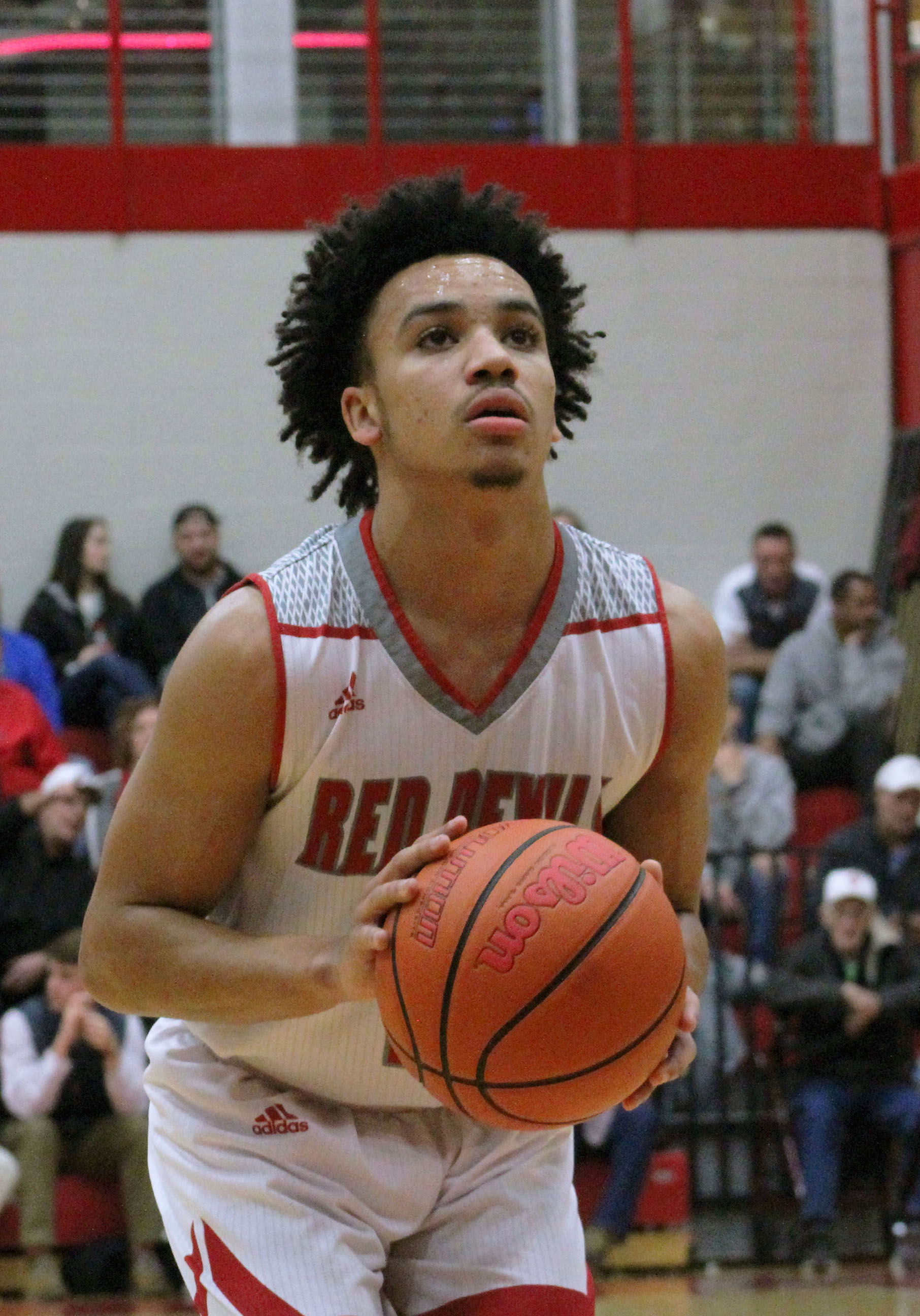
Senior point guard Jacob Jones (Photo: Kyle Tincher)

Jacob Jones, a senior point guard for the Red Devils who recently verbally committed to playing college basketball at the University of Wisconsin-Green Bay, is pleased with the coaching decision. “He’ll be a good coach,” said Jones. “He has a lot of experience coaching at colleges.” 

Moore holds a bachelor’s degree in Criminal Justice from Kentucky State University and a master’s degree in sport administration from the University of Louisville.

Moore succeeds Joe Luce, who joined the Red Devils as head coach in 2015.  Luce resigned from his position as head basketball coach and principal of the Engineering and Manufacturing Academy on Aug. 29, 2019.

sectional-2019-kyle-tincher
The Jeffersonville boys basketball team celebrates their 2019 sectional win. (Photo: Kyle Tincher)