Most Recent

Is College Needed?

Most children in school are constantly told the benefits of college and getting a college
degree. As generations of children are graduating thinking college is the only option, many jobs are being left open in manufacturing and skilled labor fields. It begs the question, is college the best decision for all students?

According to the Bureau of Labor Statistics, 69.1-percent of 2018 high school graduates attend a college or university. This number has stayed about the same (65 to 70-percent) for almost 15 years.

Many skilled labor employers are seeing the effect, Market Watch’s Jefferey Bartash notes that this is the “tightest labor market in decades forcing companies to pay up.” Many young people enter the workforce with a bachelor’s degree, yet not the technical experience to take on these high paying jobs.

College is also becoming increasingly expensive. According to Nitro College, a college financial service provider, the average student will acquire $37,172 in student debt. Nitro also states it take on average 19.7 years for student loans to be paid for a four year education.

The cost of college is also rising. Since 1971, the average cost of a public institution has gone from $8,730 to $21,370. Private institutions have also increased from $18,140 to $48,510 during the same time period. With the costs of college rising, and the increased pay for skilled trades and other careers not requiring a college degree, many high school students are seriously considering whether college is really the best path.

Despite this, college does have its economic benefits. On average, those with a high school degree make about $712 a week. For those with an associates degree, weekly pay averages $836. For those with a bachelor’s degree, it’s $1,173. Those with even further education range from $1,400-1,836 weekly on average. So there is clearly an economic advantage to attending college; however, the opportunity cost must be factored in, as well.

Many high schools are putting in place programs to get students on the path to success, even if that path doesn’t include college. For example Greater Clark County Schools’ adoption of the academies sets up many students up for specific training toward certain careers without a college education. At Jeffersonville High School and around the country, many are realizing that college isn’t always the answer.

RED! WHITE! RED! WHITE! We all fight for the Jeff High Spirit Stick — but WHY?


 It’s homecoming season. You’ve waited all week and the pep rally is finally here. You are separated by classes. Underclassmen are wearing red and upperclassmen are wearing white. You’re screaming back and forth, yelling ” RED!” and ” WHITE!” at the top of your lungs, all to win the spirit stick. But why is a red cardboard tube worth so much to Jeff High students? 

Principal Julie Straight says the answer is simple: “There’s pride in fighting for the school together, just showing that spirit and pride for the school.” A Jeff High graduate, Straight remembers battling over a spirit stick when she was a student — although it wasn’t the same spirit stick we have now. 

The current spirit stick came from Nancy Molnar, a former teacher at Jeff, who made it herself in the early 1990s. She says, “I had new carpet installed in my house. When it was completed…the installer asked if I needed the carpet roll. I looked at it and immediately knew it would work. I sawed the length I knew I could handle at school and big enough for students to see. I fluffed up the plastic at the end to appear like something…perhaps a flame. I placed it on my husband’s sawhorses and painted it red, bought the striped ribbon and glued it down on the stick.” 

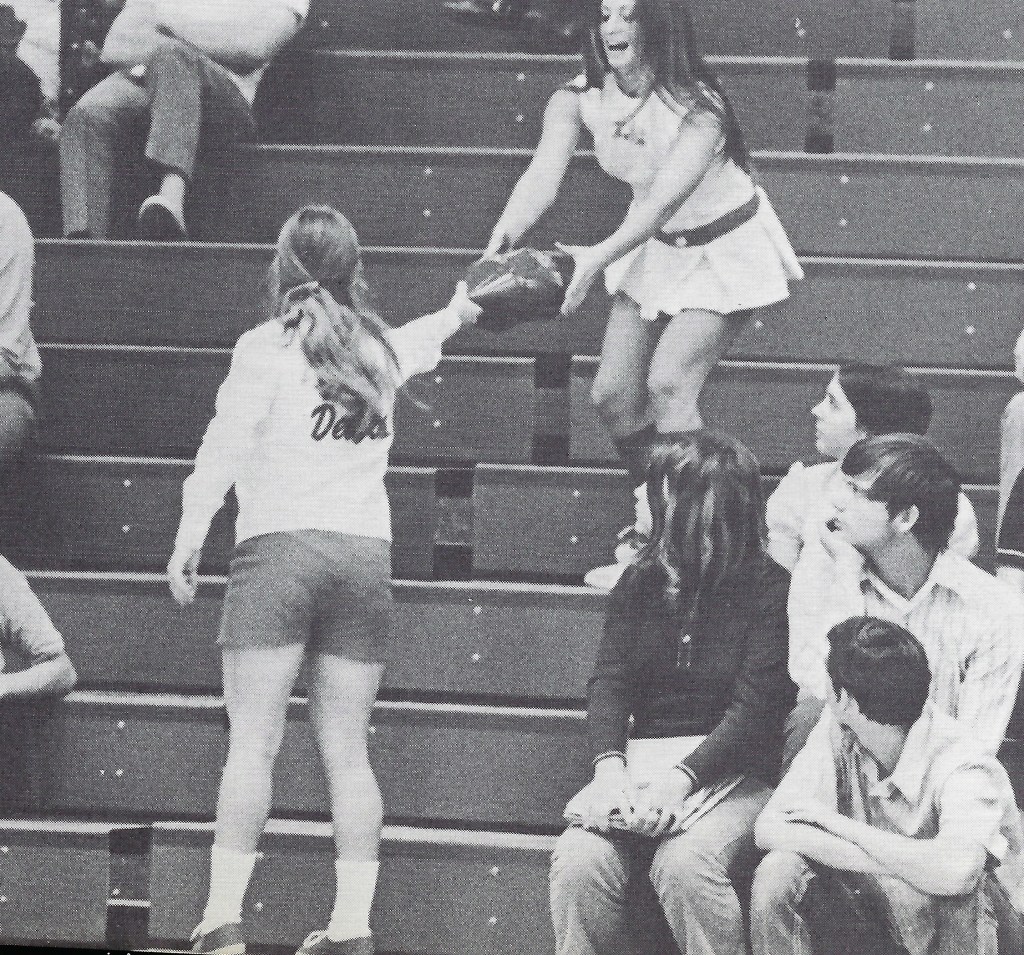
Although we don’t know exactly when Jeff High students started battling over some form of stick, we do know that a similar tradition that has been around for many decades. A 1972 yearbook photo shows students claiming a “spirit jug” at a pep rally.  

Principal Straight says that this history and tradition is part of what makes every battle over the spirit stick great. “It brings that bit of nostalgia.”

The seniors claimed the spirit stick at this year’s fall homecoming pep rally.
The 1972 Jeff High yearbook shows a predecessor to the spirit stick: the spirit jug. The caption reads, “J.V. cheerleader, Vanessa Rorrer accepts the spirit jug for the Sophs. from varsity cheerleader Bev Brogan.”


Story by Kaitlyn Monroe


What Do You Want More: Money or Happiness?

It isn’t uncommon to hear the saying, “Money can’t buy you happiness.”  Is this really true? We decided to ask readers of The Hyphen what they think. On an Instagram poll with 32 respondents, 25 said they would choose happiness over money, while the
other seven chose money. Some people say for a successful life you need both happiness and money. Stability is not just present in someone’s life, one way or the other.

Sophomore Claire Storz said, “I want happiness because that is the only thing money can’t buy. I’d rather be poor and happy than rich and sad.” Storz also noted that the whole ordeal is also situational. In fact some people who have an abundance of money can find happiness through donating to charities, or taking care of a family, adopting, running an organization to help real people, etc.

Money can only get you so many places, when you get to much of it, it can bring out the worst in you and the people you associate with. Once you have everything there is nothing to strive for, nor anything left to get. It can drive you insane knowing that you are just stuck in space, with a life controlled by what is in your bank account without a bit of happiness.

On the other hand, some people say that money does indeed create a sense of happiness. Sophomore Dustin Liston said, “I have a lot of great ideas that can bring others happiness but it requires a lot of money.”

With this statement he describes he wants to help others and that would bring
him happiness. Money is something people need to support themselves and others.
According to givingusa.org, in 2017 $390.05 billion was donated in just that year.  People who have a lot of money are big contributors to nonprofit organizations. It is said that giving to others will make you more happy, so through donation and assisting others you can bring yourself happiness.

In a life with happiness you could be poor and make the best out of your life. Strive daily to try to get somewhere to better your life. If you live a life where you do not love your job, it always feels like work. If you truly enjoy your job, you will never feel like you are at work a day in your life.

JHS Theatre to Present Alice in Wonderland November 8-10

This weekend the Jeffersonville High School Theatre Department will take audiences through the looking glass with three performances of Alice in Wonderland, a production based on Lewis Carroll’s classic story about dreaming and identity.

Shows will be held at 7 p.m. on Friday, November 8 and Saturday, November 9. There will also be a 2 p.m. matinée on Sunday, November 10.

Tickets are $10 for Jeff High students and senior citizens. The general admission price for others is $15. The ticket price includes a tea party with the cast after the show.

JHS Theatre director Derrick Ledbetter describes the show as “free-wheeling, highly imaginative and fast-paced.”

The show stars Anna Lowe as Alice. Other cast members include Gavin Van Fleet, Joryn Burns, Jesse Crull, Becken Maddox, Madison Conway, Hannah Dickens, Cassie Hawkins, Kennedy Smith, Hailey Hughes, Claire Storz, Abby Napper, Alex Seifert, Katie Dorman, Lydia Church, and Nathaniel Garner.

Written by Chloey Trinkle

Opinion: The Flaw in FAFSA

The student aid application process has a fatal flaw: it presumes if parents CAN help with college costs that they WILL help with college costs.

Thinking about college can be extremely stressful. Not just the anxiety that comes with an unknown future, but something even more nerve wracking… money.

bellamadAs we all know, seniors or not, college can be very expensive. With scholarships, however, a lot of weight can be taken off your shoulders. But here’s the problem, how do you get scholarships if your parents make an above average amount of money? Most of the time, you don’t. And I’m sure you’re thinking, “Why would you need a scholarship if your parents make a lot of money?”

Well, not everyone whose parents make a decent amount of money actually gets help from their parents when it comes to paying for college. That seems to be the situation that a lot of students here at Jeffersonville High School are experiencing.

That little question concerning parent income included in scholarship applications assumes parents will aid financially with college, but that is not always an accurate assumption. Of course, they have scholarships for all different kinds of things that don’t require information about your parent’s yearly earnings.

If you’re a senior, I’m sure you’ve heard of the Free Application for Federal Student Aid (FAFSA). This can be a big help, but only if you qualify. Part of the application asks you what your parents’ annual income is, which is the dreaded question for those whose parents are well-off.

No one ever complains that their parents “make too much money” until it comes to paying for college. It practically takes you out of the running for these types of things, and that is absolutely awful if you’re one of those students whose parents aren’t contributing.

According to the Indiana Financial Aid and Activity Program Report from the 2013-2014 school year, “…financial need is equal to the cost of tuition and fees minus the expected contribution of the student and his or her family.” This sounds great, truly need-based, but I have yet to run into a scholarship application that asks for income as well as how much support you are receiving from your parents financially.

As reported by the 2017 Indiana College Readiness Report, out of the 456 students that graduated from Jeff High in 2017, only 40 of those students were 21st century scholars. The 21st century scholarship program offers Indiana students a chance to get up to four years of fully paid tuition at multiple Indiana colleges. However, this only applies to students whose family income does not exceed $45,000 (for a family of 4). Who says those parents aren’t providing more financial help than parents who make more than that?

People tend to expect that when your parents make a lot of money, you don’t have to worry about college debt – but that’s not really how it works. Bigger paychecks tend to mean bigger bills. This means that even parents that make a lot of money don’t have enough to save for their children’s college tuition by the time all the bills have been paid.

What can we do? We could just make college kids rack up more and more student debt over the years, or we could get rid of that sickening question and give scholarships based on actual need, not assumed need.

Written by Kristen Jacobs

PDF: Nov. 7, 2019

img_7093

With the “real world” just around the corner, that first move in The Game of Life seems a lot more relevant (and scary) than it used to be. Is college really the foundation for success? And if it is, how can a typical student afford it without taking on a lot of debt? Check out our cover story as we explore the trade-offs today’s high school graduates face.

This issue also contains:

  • An opinion column about the “fatal flaw” in FAFSA
  • Reader voices on school start time and whether money or happiness is more important
  • A preview of the new Disney streaming service
  • And more …

Download PDF

Opinion: Schnatter’s Donation to Jeffersonville Baseball Puts Him on the Right Path

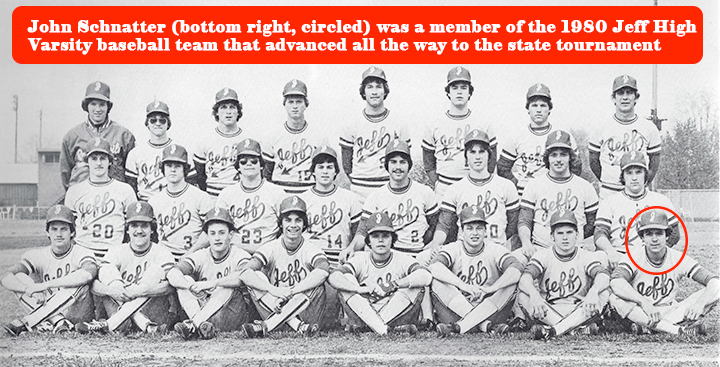
It was July 11, 2018, when John Schnatter (Papa John) resigned as Board Chairman of Papa John’s Pizza. His resignation came after he used the N-word on a public relations conference call, but his fall from power began earlier. Schnatter is most known for his work as Papa John and his fall from power. However, many don’t know he graduated from Jeff High in 1980.

schnatter-baseball-1980

Schnatter’s problems began in November 2017 when he expressed his disappointment over the peaceful protest of African-American NFL athletes taking a knee during the national anthem. The company tried to smooth over his comments, but the damage had been done.

In January 2018 John Schnatter stepped down as Chief Executive of Papa Johns, following a sales decline, partly linked to the NFL scandal, and in February 2018 Papa Johns ended their partnership with the NFL.

In May 2018 the conference call occurred in which Schnatter used the racial slur, yet the incident would remain unknown until July 11. The day John Schnatter lost everything. Soon after the news of his resignation spread, multiple partners and contracts were suspended. The University of Louisville began the process of renaming “Papa John’s Cardinal Stadium,” and many others began the process of removing the brand from their own.

Then, less than a week later, July 17, Schnatter started talking. He first walked back his resignations saying, “he was kinda provoked” in saying the racial slur. He also expressed regret over his decision to resign before the board did a full investigation. Despite his fight, by August 1, 2018, John Schnatter had been erased from all forms of advertising of Papa Johns.

Despite the loss of his company, Schnatter still maintains the John Schnatter Foundation which makes many charitable contributions. He has recently been using his foundation to help the Southern Indiana and Louisville community.

Most recently, Schnatter gave $500,000 to Jeffersonville High School for a turf baseball field and a replacement of the outer fencing, The stadium and facility will be named the John Schnatter Stadium, but the field will remain Don Poole Field.

John Schnatter has made many mistakes, and his use of racial slurs is inexcusable. However, this is the real world. John Schnatter has expressed remorse, and he is trying to help. Through this donation, he is helping his community and our school.

I believe in principles, but I also believe in practicality. This donation helps everyone, and while many will always associate his name with accusations of racism, we must also acknowledge the good his actions have and will do for the community.

Preventing Suicide: Avoidance Isn’t the Answer

Suicide is a raw topic that most people like to avoid. The ones trapped by suicidal thoughts often feel alone and don’t talk about their feelings. People who were left behind after a loved one’s suicide are left with questions and pain, often causing them to stay quiet. Those without experience with the heartbreaking topic don’t know how to talk about it.  But the idea of avoiding conversations about suicide and everything related can be deadly, especially since according to the National Institute of Mental Health, suicide is the second leading cause of death in teenagers and 4,969 of those deaths were Indiana residents. 

Suicide is preventable, so how do we prevent it?  

Gage Donohue, coordinator of a Survivors of Suicide Support group who lost his 19-year-old daughter (a Jeff High graduate) to suicide, says, “We can reduce the suicide rate by encouraging people to ask for help when they need it, to educate the public about the warning signs and risk factors and let people know there are a lot of people willing to help.” 

According to Donohue, one way to prevent suicide is simply looking for signs in your friends and peers. Donohue says, “Listen to what people are saying when they are talking to you, look in their eyes, watch the body language and ask questions.  Put down your phone and really listen. Do not be afraid to ask, ‘Are you thinking about suicide?’ You will not put the idea in their head if it is not already there.” In addition to offering support, Donohue says you should encourage them to contact the Suicide Prevention Hotline or a health care professional right away.

Donohue also says that is important not to degrade or dismiss someone’s feelings or thoughts. He says that people with suicidal thoughts or depression are not weak. “People do not really want to die, they just want the mental or physical pain to end.”

Most importantly, if you feel yourself having these destructive thoughts or feelings, talk to someone. Tell your parents, your friends, a doctor, or a trusted adult. Remember that you are not alone and millions of people feel the same way. You are worthy of life and everything it holds. 

Suicide Prevention Hotline:
Call 1-800-273-8255 OR
Text CONNECT to 741741

Speaking of Labels…What’s the Q+ About?

For many years, people used the term “LGBT” to describe the Lesbian, Gay, Bisexual
and Transgender community. In recent years, you might have noticed a new addition at the end: “Q+”. The Q+ is meant to be more inclusive of people who identify with something that’s not in the traditional LGBT framework (such as Asexual
and Pansexual).

While it might not seem like a big deal, the distinction is important to many people —
and has actually become a hotly debated issue. A Jeff High student who wanted to be anonymous for this story says the Q+ isn’t needed: “Trans covers FTM (female to male), MTF (male to female), and non-binary (the feeling of being genderless). Lesbian and Gay cover that, and Bi covers Pan so that’s about it.”

On the other side is Amber Walker, a Jeff High student who prefers the Q+ addition because “Personally, I feel that there is a whole spectrum of possibilities that don’t fit into just four labels.”

On a recent Instagram poll, the votes for the acronym LGBT was just one person while the votes for LGBTQ+ were 17 people. Most of those polled were from the area, but some were not. An LGBTQ+ community member who voted is from a country where being a part of the community is looked down upon and it is illegal to attend Pride festivals and have samesex marriage without punishment.

Is this debate pointless? While representation is important, the LGBTQ+ community, whether you believe in the Q+ or not, is an accepting community for those of different sexualities and genders. Even though LGBTQ+ won our poll, your opinion is your opinion as long as you aren’t hurting anyone with it.

Me Oh My! Xe, Xir, Zye!

When you hear “them” what do you think? Most will think that use of “they” means multiple people. There are occasions where this is no longer the case. They is a pronoun used for someone of unspecified gender, or in some cases, someone who doesn’t identify with a gender at all. They/them pronouns are often used when someone is non-binary and/or agender. Being non-binary is when someone identifies out of the male/female dichotomy, in other words, are outside of the binary. While he/him and she/her are specifically gendered to male and female, they/them pronouns are not.

There is a debate brewing in queer and non-queer spaces about pronouns. “How much meaning should we prescribe to them?” “Are he/him lesbians valid?” You hear the murmurs of these questions constantly. 

Pronouns are sensitive, as they relate exactly to identity. The singular they has been around for centuries. The works of William Shakespeare, Jonathan Swift, Jane Austen and William Thackeray all include a singular they. However, now this use of singular they has come into question. Why has this use of singular they become controversial? The Merriam-Webster dictionary provides this answer to the question of if you can use a singular they; “The use of they, their, them, and themselves as pronouns of indefinite gender and indefinite number is well established in speech and writing.”

Then it comes to neo-pronouns. These new pronouns take on lists, the time of creation spanning from the early 1970s to yesterday. Ey/em pronouns were introduced to the queer scene in 1973, as an alternative to binary pronouns, plural, or “object” pronouns (it/its.) The queer disconnect from binary is something inherent and unique to queer spaces: the grotesque, the tacky, the beautiful, all smashed together in a revolution of beauty standards. This is apparent in the strict disregard of binary provided by the nonbinary and trans community, the butch/femme lesbian community, and the other sects of identification language in queer spaces. The pronouns are important as a badge of identity, what you call me will be what I’m most comfortable with.

Likely the reason we come to dispute these occasions of singular they, or the use of new pronouns be because this is a use in the context of queer people, and their refusal of typical gender binary. Even if you don’t want to listen to Shakespeare because language changes over time from his version of English, I pose another question: then why can’t it change now? If people are more comfortable using a different pronounーwhether it be they, he, she, or a newer oneーwhat right do we have to say, “no, this makes you more comfortable in expression, but no.” why should we be able to do that, refuse changing our language to benefit others? A simple switch of pronounsーsomething so easy we do it for dogsーwe can’t do for other people? 

Staff and Student Views on Jeff High Dress Code Changes

This school year, Jeffersonville High School implemented small changes to the student dress code. The most significant change involves shorts and skirts. The new rule is that they should be longer than fingertip length. Previously, they needed to be knee length. The same fingertip rule applies to holes in jeans. The dress code was also changed to allow exposed shoulders if the shirt has some kind of sleeve. The JHS Student Council, working with the JHS Administration Team, then clarified that students cannot wear completely off the shoulder tops.

“The new dress code is definitely a positive step forward for the student body but could still be revised to include more, still appropriate, changes.”

Alexa Roach, Senior

“You don’t come to an institution to be fashionable. You come to learn skills to better you in the working field.”

Sean Hyatt, Junior

“I think it’s okay, but it’s never been a problem for me because I don’t understand the thing about kneecaps or shoulders.”

Kaitlyn Hill, Freshman 

“I like the change to the dress code and I really like that the students got a say in it. But I feel like this dress code is harder to enforce, because a lot of outfits are borderline.”

Mr. Esarey, Social Studies

Story by: Leia DeGeorge

This slideshow requires JavaScript.

Diversity Among Student Leaders

Diversity has become an important thing around the Jeffersonville community. The amount of diversity in our student leaders has been growing in our community and across America. As individuals, we might not always think about the diversity in our community — but across America, it is becoming more important to people’s everyday lives.

Jeffersonville High School has over 2000 students, giving us the chance to have more diverse leaders in different positions of different clubs. Since our school has so many students, I believe it is important for diversity to happen because diversity helps bring different backgrounds and cultures to our community. People from different backgrounds can bring new ideas to the table that we haven’t thought of before due to their different perspective on the world.

That is why having Amelia Epperson, who is from Australia, and Bethia Busingye, who is from Rwanda, as our student leaders on Student Council is so important to our community. They’re both from different countries, so they both have experienced different things and can offer some great new ideas to Student Council. As someone who ran for office myself (I ran for Class President for the class of 2022), I understand what might motivate someone to seek a school leadership position. I wanted to help make students’ voices be heard, help change things in the school and apply my life experiences in a way that would help others.

The fact that Bethia and Amelia are doing that, while also bringing cultural diversity to our student leadership, is icing on the cake. Some people are on the opposite side and don’t like the increasing diversity in America. The opposite side is the people who want America to stay the same and not change. One person being our president, Donald J. Trump, who has been attacking people of color in America and telling those people to go back to their countries. Diversity should not set us apart; diversity should bring us together. Schools are becoming more diverse because of the changes that are happening. The changes that are happening involve different people from different cultures that are coming to America.

As schools are becoming more diverse, the students’ leaders have become more diverse — here and around America. Increasing diversity is why Jeffersonville High School is one of the best schools in Indiana, in my opinion. We have many diverse leaders who can help the school and change the community in a big way.

The topic of diversity is becoming more important every day to us as individuals and us as students — as it should be, because it is a very important topic. Having diverse leaders is not only going to affect our community but the world as a whole. All in all, having diverse leaders is not only going to help change our community, but change the world for the better.

Opinion by: Nana Spio