Most Recent

Tearing up the House with Bill 1608

By: Savannah Ottinger

On May 4th, 2023, Governor Eric Holcomb signed the House Bill 1608 into law; this was after the bill got a vote of 65 to 29. Once 1608 was signed, it was put into effect on July 1st of the same year. Some may hear this and think that it isn’t important to mention this specific bill, but to those it directly attacks, well, they would beg to differ. House Bill 1608 was originally written as Indiana’s version of Florida’s “Don’t Say Gay” bill, yet it was changed once in court and dropped most of its parts that closely aligned with Florida’s original version, specifically changing the necessary consent for a name change. Sadly, that doesn’t mean that members of the LGBTQ community are safe from attack. For now, this bill specifically targets trans youth and their right to a private identity. It has now put children in possible danger, though the publishing group would like to say they only care about keeping the kids ‘safe’, and has even gotten rid of many people’s only public safe space. To numerous individuals, this is a ridiculously unnecessary law which ultimately does more harm than any possible good. And the problem isn’t just for trans individuals, but also people who just prefer to be called a shortened name.

The passage of House Bill 1608 truly shines light on a frustrating pattern of hits against LGBTQ rights and individual autonomy. While the advocates might try and argue that this bill is about child protection and prioritizing their safety, yet a slightly closer look, or even an interaction between these groups of people, reveals a thinly veiled attempt to undermine the personal rights of a vulnerable demographic. When interviewing someone, who would like to remain unnamed, they echoed the same sentiments of many, that since this law was put in place, they have felt more in danger than before because of how the notification of their chosen name being revealed could lead to harmful reactions from their parents (going against the entire supposed purpose of this bill). The publishing group’s claims of ‘protecting kids” ring hollow as their actions take away an essential lifeline for many. By stripping away this seemingly minor act of personal preference, the legislation highlights a bigger concern – the intrusion of the state into the private matters of their citizens.

By targeting trans youth and their right to a private identity, the legislation inadvertently perpetuates an environment of fear and discrimination, thus pushing these young individuals further into the shadows. The impact goes beyond just hypothetical issues, but it directly affects the sense of safety and community for LGBTQ youth in every aspect. The bill’s passage effectively erases what was once a sanctuary of self-expression – a public safe space where these individuals could seek refuge and affirmation, for once one section of the community is forced to take a step back, the others will surely be dragged behind as well. All of the people who were interviewed all stand against what they see as an unjust and harmful measure. The battle line has been drawn, and the discourse with the legislation, heard from people around our school, will undoubtedly shape the future of LGBTQ rights within schools and the state.

In the end, House Bill 1608 stands as a stark reminder that even in an era of progress, there are those who would willingly turn back the clock on personal freedom and equality. The consequences of this bill go far beyond its original intent, sparking debates about individual autonomy, safe spaces, and the fight for justice in a society that should be moving forward, not backwards.

Guide to Surviving Freshman Year 

By: Ifrah Daber 

How sweet was 8th grade? You used to be a big fish in a small pond. You were at the top of the food chain, and now? You have been thrown into the ocean with the sharks. Welcome to Freshman Year! The school, the number of classes, the number of students— everything is vast, and now you are forced to swim. But don’t stress yet, because I, your wise upperclassman, am here to help! With my survival guide for freshman year, I will give you tips and tricks to help you get through it, so let’s get to it! 

First, you must understand the difference between quarter and semester grades. Your quarter grade is the sum of your assessments and assignments. Assessments take up 70% of your grade, while assignments take up the other 30%. So each quarter you will get a final grade, and that affects your semester grade. You have four quarters and two semesters (two quarters per semester). So if you get an A in your first quarter and a C in your second quarter, then you will likely get a B as your semester grade. Simple, right? Well, your grades determine your GPA, and depending on that, they will give you a number between 0 and 4. 0.0 GPA means you have done zero work, getting Fs across the board, and the numbers go up, representing the letter grades. 3.0 GPA means you get mostly B’s, and 4.0 means mostly A’s. I know that all sounds extremely boring, but it’s important to know. 

I could go on for many pages, but who wants to read that? Plus, there is more to school than work. One of the joys of attending a high school like Jeff’s is the number of clubs they offer. From my experience as a young freshman, my biggest problem was just being too scared to join clubs or not knowing where they were. The latter is easier to solve since a lot of clubs promote themselves on the pride slides. These are slides that should be shown to you during impact, but just in case your teachers don’t show them, don’t panic. A lot of clubs also promote themselves during morning announcements. So in the morning after the pledge, you will hear about all the essential information for the day. Also keep in mind how clubs will greatly affect your schedule. High school is the perfect time to branch out and try new things. So don’t miss out on the new opportunities that Jeff High has to offer!

Freshman year can feel overwhelming. It may feel like it will never end, but it’s shorter than you think. Many have survived the torture of freshman year, and so will you. I have put together a list of advice from different groups of people, including graduates, mental health specialists, and upperclassmen. 

The first list of advice is from your upperclassmen; some of them have been kind enough to pass down their logic to you. 

1. Don’t Date Upperclassmen. Just remember the classic rule! If the grades don’t touch, neither should you. 

2. Develop Good Study Habits. You have a decent amount of work to do and tests to complete. So developing a solid study habit now can help you in the future. If you don’t wanna fail, STUDY! STUDY! STUDY! 

3. Don’t Stand In Big Groups. It may seem like no big deal, but once you have experienced the stress of rushing to class only to end up being blocked by a sea of kids moving as fast as morning traffic, you will understand the frustration. You try to go left, you try to go right, but alas, there is no way around them. It’s annoying; If needed try to stay near the sides. don’t be those kids; no one likes traffic. 

4. Stay Caught Up! You get a lot of schoolwork during the school year, so it’s a pain for both you and your teachers to have a lot of missing assignments. So make sure to stay caught up! 

The second list of advice is from a mental health specialist; high school is a hard time for most people mentally. It is hard for a lot of people to deal with the stresses of school, so here is some advice and some resources for you. 

1. Develop a Routine With Your Mental Health In Mind. Just like your study habits, your mental health needs routine; doing certain activities every week or day can help with this. Either exercise, meditate, or do anything that works for you.

2. Don’t Be Afraid To Ask For Help! Whether it’s schoolwork or something more personal, don’t stop yourself from getting help if you need it. I have added some mental health resources at the end of the article in case you ever need someone safe to reach out to. 

The third list of advice is given by previous students, long past their freshman year. These graduates were kind enough to take their years of wisdom and pass it down to you, naive young folk. 

1. Figure Out Your Interest. High school is a great opportunity to explore your interests with a sense of security because you are likely not paying for them. So try new things; don’t be afraid to explore your interests. One of the joys of attending a high school like Jeff’s is the number of clubs they offer. From chess to archery, Jeff is filled with different opportunities to broaden your horizons. 

2. Don’t Go Exploring The Hallways During Passing Periods.You only have five minutes in the hallway. Don’t waste it on unnecessary exploration. You ain’t Dora the Explorer, so just go to class. 

Well that is all I have for you. I wish you the best of luck in your journey of discovery and hope you have a fun and exhilarating freshman year. 

Mental Health Resources: 

Suicide and Crisis Helpline: 1-800-784-2433 

National Eating Disorder Association: 1-800-931-2237 

For LGBTQ Youth: TrevorLifeline at 1-866-488-7386, TrevorText -Text START to 678-678 Substance Abuse and Mental Health Services Administration Treatment Referral Helpline: 1-877-726-4727

Student Jobs 101

By. Juan Carrillo, Lola Mays, Wesley Lanham, Rhianna Ledbetter

Getting your first job is something all parents and guardians dread, but it’s also  something teenagers can’t wait for. Getting a job means you gain more responsibility and freedom, but there are so many questions one might have about picking that one special place to work: How much do they pay? How do I apply? What’s the work like? In this, we will be discussing answers to all of these questions, as well as some tips for that first day on the job! 

Some may say it is bad for teenagers to get a job because it could add stress to the ever changing balance of school and social life. Having to balance school, work, and other activities builds your resume and helps one to develop time management skills. Speaking of resumes, that might be one thing you need for that first job. Most places hiring highschool aged people don’t require a resume, but it might be wise to offer one to show previous credentials. Points that you can add to your resume include the sports you play, hobbies, or extracurriculars. Employers like to see what you have to offer, so having a resume can show them your character and teamwork skills. 

Applying for a job may sound daunting but it’s a lot easier than you would think. A lot of businesses have online applications that you can fill out by looking up the website or by typing certain keywords into your browser. For example, if you wanted to work at a pizza place in Jeffersonville, Indiana you could type, “Pizza place hiring in Jeffersonville, IN”. You can also ask for an application in person, just by asking an employee if their job is hiring; the worst they can say is no.

One location that is perfect for a first job is Chick-fil-A, typically they begin hiring at 16 years old. The Hyphen interviewed a tenth grader who goes to JHS about her experience working there. “I like my job most of the time, customers and co-workers can be exhausting and not worth it, but it can be said the same vice versa.” The pay may vary based on location, experience, and age. That is why we recommend asking your interviewer about wages like how often you will get paid and what your pay will be. A majority of employers pay every two weeks, but some pay once a week or by the shift as well. 

Another local employer is Stone Cold Creamery, an ice cream shop located near Kroger on Tenth Street. They hire aged 16 and up. We interviewed a few students who said the hours can be demanding at times, and would not recommend working there if you are focused on school but that doesn’t take away from the friendly environment. The employee also said “It’s chill and I love basically playing Papa’s Freezeria in real life.”

Other businesses hiring 16-year-olds around Jeffersonville are Kroger, Meijer, and Rural King. These are great options if you are looking for a retail position, and if you like talking to people and enjoy walking around this job might be for you. In most cases, you will be stocking shelves and helping people with their questions. Some days you might be in different departments or working the cash register. Their paying range is around $12-16 depending on the location.

Other things you will need to know while entering the workforce is how income taxes, state and federal, will affect your paychecks. It is also important to know your rights at your job to make sure you are not being taken advantage of by your employer. Depending on your age you can only work a certain amount of hours a week. Make sure to do your proper research about federal and state labor laws concerning minors before you get a job.

Getting a job is something that can bring responsibility to any teenager. It’s part of becoming who you are and shaping your life. It’s always necessary to make sure you’re going through the correct steps of applying for a job. It is also important to have someone who is experienced to check things over on your application like your grammar and spelling and the correct information you want to be known. We hope you take in consideration the considerable amount of jobs in our article and get inspired to try to make some money.

The Newly Implemented Halo Sensors

What are they?

By: Teagan Cofie

As the teen vaping rates rise once again, High schools across the nation (including ours) have been trying to eliminate the usage of nicotine by its students. To accomplish this, schools have turned to HALO smart sensors to solve their nicotine predicament. As stated on the HALO Smart Detector’s website, HALOs have won over 60 awards and can detect flammables, hazardous chemicals, and air quality changes such as vaping and smoking and changes in temperature and humidity but will it truly help prevent vaping in schools altogether? 

One could definitely say that vaping is a large problem that our school faces in the 21st century, but it’s not just us. As of 2022, about 1 in 10 high school students currently use e-cigarettes. An Oct. 25, 2021 study found that the number of vaping teens doubled between 2013 and 2020, and the number of minors who stated they’d vaped in the past 30 days rose from 1.6% to 8.4% in the same time. But because of the implementation of HALO sensors, this number could potentially decrease and improve the well-being of our school. One review available on their website claims that prior to the installation they had over 20 EMS calls for students that they believed were suffering from effects of vaping and they said that since the devices had been in place they have not had to make any. According to feedback from our staff, they said that overall there are probably fewer kids vaping as often so they think there’s been improvement post installation. When asked about the environment before the sensors “it was so bad that there were times I would walk in the bathroom and it would look like I was in a sauna, it was literally like hazy air…it was crazy, ” said Mr. Henderson, 9th grade English and bathroom monitor. 

Based on these opinions alone it seems as though in the short amount of time the sensors have been put in place they’ve been improving the vaping issue to a certain degree, and will hopefully make a larger impact on vape use in our school. If all goes well the HALOs, the #1 vape detector worldwide that is in over 1,500 school districts throughout the country, will make this year healthier and potentially form Jeff into a smoke free campus.

How Do We Deal With Subconscious Trauma?

By: Lacy Blanton

Image: “Mind Vomit” by Saira-Jayne Jones, the Perspective Project

Imagine this: you’re mindfully strolling through life in a cheery manner. All is well until you are met with an unwelcoming memory, a memory from the past that you look back on with regret, cringe, or even resentment. 

The negative memory can be a variety of events. Was it about you saying some hurtful things to someone when you were in the heat of anger? Or was it that bitter time of feeling socially rejected by your fellow classmates at school? No matter the situation, it’s something that seems to follow you like a shadow. Frequently, the image pops into your mind and leaves you emotionally defeated.

This incident is, what I call, subconscious trauma, and from personal experience, it’s definitely not an enjoyable time when having its discouraging episodes. Fortunately, through time, I’ve found a solution in how to cope with these negative thoughts.

When feeling an episode starting to come on – i.e. thinking about a memory and sensing my emotions toward the subject: I seclude myself to a quieter room, sit down and close my eyes, turn on meditation music through my phone, and begin talking to myself.

Firstly, I admit the negative emotions I’m feeling and the trauma I’m having. Then, I focus on navigating myself through the situation by talking about a potential solution to the problem and remind the positives about myself. 

The sessions of mine are usually a tremendous success with moving forward.

Of course, there are other plentiful methods in coping through such a problem, and this is evident through the several students of Jeffersonville High School I had the chance to interview.

The following Q & A is from my interview with a Jeff High Senior:

Q: Do you have any bad memories that haunt you? If so, would you mind sharing?

A: Honestly, when my dog passed away. It really affected me.

Q: I’m sorry for your loss. What was your dog’s name?

A: His name was Shadrach. It’s a biblical name. He was the best dog I’ve ever had.

Q: How does it make you feel when the memory pops up?

A: It makes me upset and reminisce on the good times we had together.

Q: How do you cope with this bad memory?

A: Whenever I’m upset about the memory, I write. It’s very peaceful and relaxing. Whenever you write, it’s like being in your own world.

In my interview with a Jeff High Junior, the student expressed how there was indeed a negative memory that haunts them in life, and how they feel upset and even humiliated when reflecting back on the moment. In their copings, they found journaling and communicating with another person to be the most therapeutic.

 These different techniques of different students show how there is no official “right” way to cope through a personal crisis. Everyone is unique, but we struggle similarly at the same time, and that should be a comforting fact to know of.

Another helpful mechanism that many also look to is seeking mental evaluation through a professional (counselors, therapists, psychologists, etcetera). 

If one’s subconscious trauma appears more severely dire, or struggling with unhealthy coping habits, this solution is the most appropriate for that situation. 

Mental health still carries a plethora of stigma. It isn’t easy for one to reveal their vulnerability to others or even themselves. 

However, today’s climate has become more accepting in acknowledging such problems, and its door is something that will most likely continue to open as time progresses.

Barbie (2023) Review

By: London Williams

Barbie has been loved for many generations. She’s the plastic doll we’ve all grown to love. She’s fantastic, and so is this film! ‘Barbie’ came out this past Summer on July 21, 2023. Competing alongside “Oppenheimer” as one of the year’s most anticipated movies. This movie has made over 1.34 billion at the Box Office (for the US) just so far! Barbie jumped out of her box and has been crushing it at the box office ever since the release of this film! The feeling after watching ‘Barbie’ is unlike any movie I’ve ever seen. This movie is so charming and nostalgic. It has you thinking about it long after watching. It manages to have a perfect balance of relatable, real-life issues while keeping its innocent, humorous, and lighthearted approach. 

The plot of Barbie is pretty simple; Barbie has an existential crisis and goes to the real world to figure out why her perfect life seems to be falling apart. Ken tags along, and they both go their separate ways in self-discovery. Barbie runs into the mother-daughter duo that has the answers to all her problems, while Ken is convinced that the real world is run by men. (Which of course, makes him go back to Barbieland to make a world full of Mojo Dojo Casa houses and horses.) This movie perfectly handles the topic of equality. After Barbie goes back to Barbieland and sees what Ken has done she is torn and devastated, things didn’t go well in the real world, and now Barbieland is falling apart too. It feels like the “man vs. woman” situation Barbie felt in the real world. The way Barbie feels is clear and relatable for women while being easy to understand and empathize with for someone who couldn’t personally relate. 

I believe that the casting for the movie was perfect. Margot Robbie and Ryan Gosling did a fantastic job capturing their roles. It felt like Barbie and Ken came to life by how their humanization was portrayed. Robbie and Gosling took one-dimensional characters and gave them more depth and life. Margot Robbie and Ryan Gosling are already extremely beloved actors. That’s another reason I think the casting is perfect. Who wouldn’t want to see the latest Margot Robbie or Ryan Gosling film? ‘Barbie’ also features many other well-known actors, including; Will Ferrel (as Mattel CEO), Michael Cera (as Alan), Dua Lipa (as Mermaid Barbie), and John Cena (as Male Mermaid), and that’s just to name a few! The casting for all the Barbies and Kens was epic, to say the least. It felt like every time I blinked there was an actor that I recognized. They even got Nicki Minaj and Ice Spice to create the song “Barbie World”! After that song came out, it was everywhere. I found myself having the song stuck in my head before and after finishing the movie. The release of “Barbie World” was one of the perfect buildups for the premiere of this film. Some would say it was also a “full circle” moment for Nicki Minaj since she frequently associates herself with the character. The song is also great as a standalone track that worked great with the end credits of the film. Who wouldn’t want to see this exceptional movie?  

I found the maturity rating for this movie very interesting. It’s definitely PG-13, but I noticed people being confused that a Barbie movie would be rated PG-13 instead of just PG. When I went to see this movie, there was an abundance of very small children walking in. This made me wonder about its advertising approach. This could just be parents assuming it was PG or just not caring if their 7-year-old sees a PG-13 movie; which definitely isn’t abnormal, but I thought it was worth noting. When I mentioned Barbie to a few adults in my life, they actually made comments about how they were surprised about the rating. After actually watching Barbie, it’s clear why it’s rated how it is; one very subtle sex joke, its mentions of death, and its topics of womens rights and equality. It feels like Barbie was in between PG-13 and PG, and they went with PG-13 to be safe. 

This movie has many beautiful moments. A notable one is when Barbie is sitting on a bench in the park by an older woman. She tells the woman that she is beautiful, as she is crying. Barbie realizes how beautiful people and the world are. Barbie is seen by a lot of people as a vision of the “perfect woman” who lives a “perfect life”. When Barbie sees the real world it makes it clear that it isn’t true. Nothing is perfect and that is what is beautiful. Things aren’t as simple as Barbie had originally thought. Beauty is all around us, and Barbie makes us realize that. Barbie truly is a beautiful experience you don’t want to miss! 

Senior Litzy Rubio leads while appreciating friendships

by Aubrey Cummings

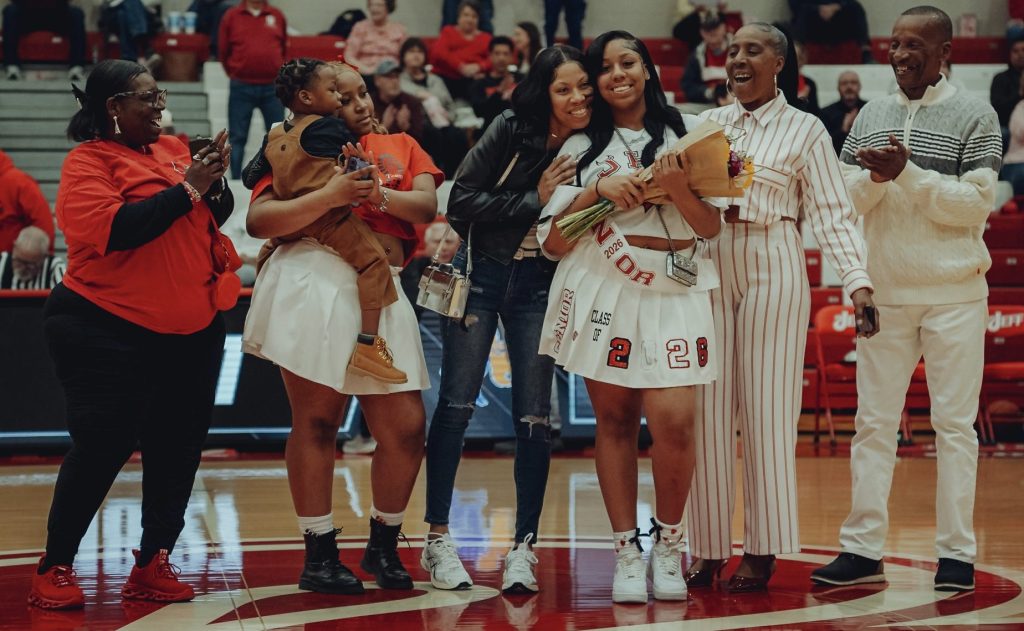
2026 Lilly Endowment Scholarship winner, senior Lizty Rubio, is a significant part of JHS and her community beyond Jeff.  She is an active member of the swim team, the Anchor Club, the National Honor Society, and represents the school as a student ambassador.

“Litzy is a compassionate, strong, and dependable person. Because she’s in such high classes and she works for so much of what she has, and her leadership positions just show how dependable she can be, and for each of those, she has to be very compassionate,” stated junior Macyn Jackson.

Rubio is known as a leader in everything she does. In her junior year, she served as the co-president of the Student Council, along with representing the Senior Class as vice president this year. 

“I feel like being involved in the school allows me to be better prepared for my future. I used to be shy and kept to myself, but my sports and clubs have allowed me to expand on everything,” explained Rubio.

Senior Litzy Rubio displays leadership and friendship in a number of JHS activities, including the swim team. Submitted photo.

Being a student-athlete can make or break a person.  They have to have a strong will and determination to succeed, along with balancing the aspects of school, sports, and life in general.  But it can also lead to so much more than just medals and trophies.

“Some of my best memories and friendships have come alongside the sports I have done,” said Rubio. “The people are like a second family to me; we wake up early in the morning for practice and leave late at night from meets. I am with them all the time, even during the holidays.” 

These friendships could last a lifetime.

“Litzy truly is someone I look up to. She sets an example for everyone, showing that if you really want to do something, you can,” senior Mari Bush explained.

Rubio plans to potentially attend Purdue University to pursue her bachelor’s degree in civil engineering and possibly earn her master’s degree in architecture to become an architectural engineer.

Column: Winter weather requires early communication with community

by Liddia Waterbury

Snow days are supposed to keep students safe, but late cancellations could do the opposite. When schools wait until the last minute to cancel classes, students are forced to wake up early and prepare to travel on icy, dangerous roads. This delay can create unnecessary stress and put safety at risk, especially for students who walk, bike, or ride buses to school.

According to the National Weather Service and local weather stations, winter storms and icy road conditions in southern Indiana are often predicted at least a day in advance. This raises questions about why school cancellations are sometimes delayed until early morning.

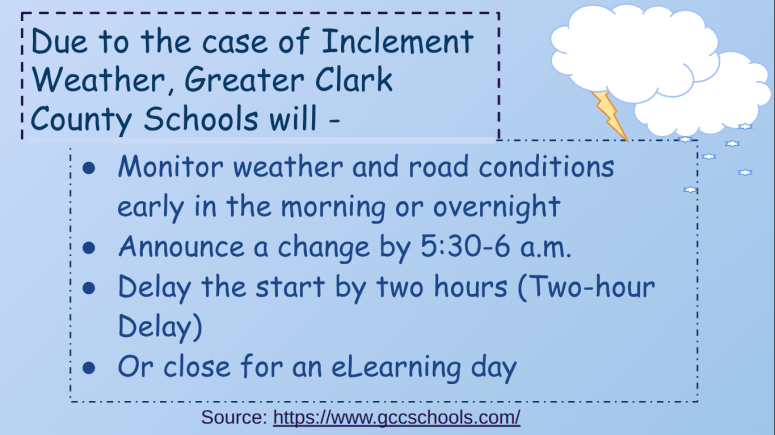
We’ve had snow days with asynchronous learning this school year. This is because the night before, there was snow. It was under 32 degrees, and that caused the snow to freeze and the roads to be icy. But Greater Clark County Schools didn’t call off school until the next morning.

This caused students to wake up early and could have caused stress for them, their parents, and people like bus drivers.

Graphic by Liddia Waterbury.

As well as stress, situations like this can also cause major safety concerns. According to Zipdo, there are an average of 10,800 winter weather-related crashes per month in the U.S.

Then the National Weather Service says that 24% of weather-related crashes occur on snowy/icy roads, and about 15% occur during active snowfall.

With this safety risk, driving in bad weather can cause fear and anxiety about accidents, especially for parents and teachers who commute. If the decision comes very late, students and teachers might not get enough rest. Sleep loss can make people more irritable, tired, and less focused. 

If people feel the decision could have been made earlier, it may lead to frustration or the feeling that their well-being isn’t being considered. With the loss of sleep, people can also lose focus on homework, grading, or preparing lessons if they are unsure if school will be in session. 

When people lose trust in an organization, like Greater Clark County Schools, it creates more frustration and uncertainty. Without trust, communication suffers, and problems worsen. 

Late snow day decisions can increase safety risks, stress, and sleep loss for many students, staff, and families. Making earlier, well-communicated decisions can help protect well-being and maintain trust within the school community. 

Column: ICE actions damage ‘Land of the Free’

by Kaylee Borelli

ICE, the U.S. Immigration and Customs Enforcement, enforces immigration laws and conducts investigations into undocumented immigration and arrests and deports undocumented immigrants. Their mission is to protect America through criminal investigations and enforcing immigration laws to preserve national security and public safety, but recently, this doesn’t seem like the case.

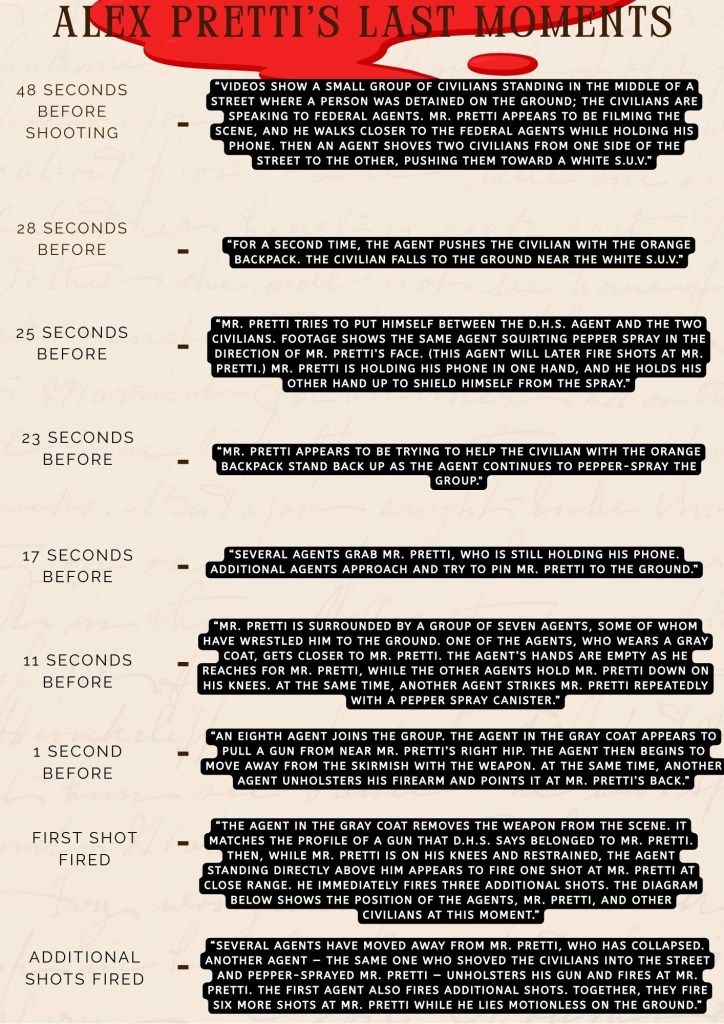
In January, ICE agents shot and killed two American citizens in Minneapolis, Minnesota. One of them was a 37-year-old mother of three, Renee Nicole Good. She was shot when ICE ordered her out of her car and briefly reversed before moving forward. The second victim was 37-year-old intensive care nurse Alex Pretti on Jan. 24. He was shot while he was both protecting a woman who was pushed to the ground by an agent, during a protest, and filming law enforcement. The Department of Homeland Security claimed that he was in possession of a weapon and “violently resisted.” But video analysis and witnesses say otherwise, ICE agents removed his pistol from his holster while he was pinned to the ground, before shooting him in the back. These two people weren’t shot in self-defense; they were murdered.

Graphic by Kaylee Borelli.

ICE hasn’t just been responsible for murdering two American citizens, but they have also detained and deported people with legal documents and no criminal record, even though they claim they are targeting criminals.

According to Brookings, since Donald Trump took office in January 2025, more than 540,000 people have been deported. Along with this, one-third of people who have been arrested by ICE have no criminal record. If they really cared about targeting criminals, they would actually target criminals and not allegedly bust out car windows just to justify arrests. On top of this, a total of 32 people have died while in ICE custody in 2025. This isn’t about making America a “safer place.” This is racism and a complete abuse of power by Trump.

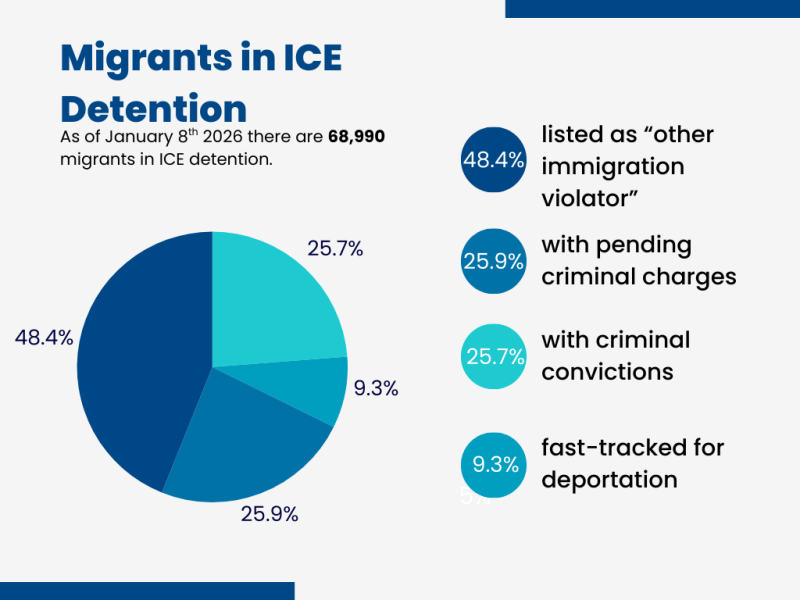
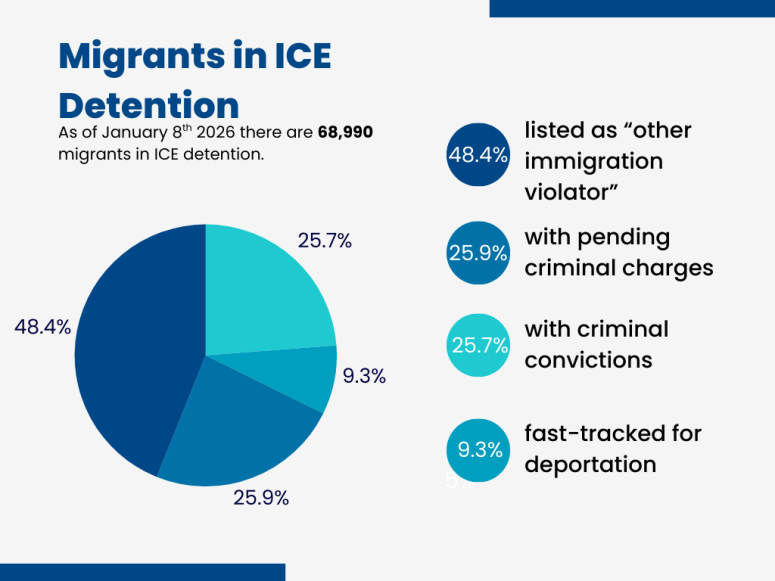
Along with the over 540,000 that have been deported, according to WLRN, as of December 2025, 74% of around 70,000 immigrants in Immigration and Customs Enforcement detention have zero criminal convictions. And yet Trump is still saying he is only targeting criminals when ¾ of the people in detention centers aren’t even criminals.

On Jan. 20, according to CNN, 5-year-old Liam Conejo Ramos was detained along with his father in Minnesota while arriving home from his preschool. They were then flown more than 1,300 miles to a family detention facility in Texas. Liam and his family are originally from Ecuador, and in December 2024, they presented themselves to border officers and applied for asylum, but still, the DHS labels them as “illegal aliens.” Also, according to CNN, the Trump Administration has repeatedly said that they are targeting people who are “violent criminals” and the “worst of the worst.” So why are they arresting a 5-year-old boy and a father who were in the process of becoming American citizens? Luckily, on Jan. 30, Liam and his father were released and returned home to Minnesota, but they shouldn’t have ever been detained in the first place.

ICE isn’t just detaining people for no reason, but they are also violating the amendments of the United States.

The Fourth Amendment states that the right of the people to be secure in their persons, houses, papers, and effects, against unreasonable searches and seizures, shall not be violated, and no warrants shall issue, but upon probable cause, supported by oath or affirmation, and particularly describing the place to be searched, and the persons or things to be seized. This means that people are protected from unreasonable searches and seizures by the government. According to the National Immigration Justice Center, ICE officers will knock on people’s doors and claim they have a warrant to enter and search your house. These “warrants,” though, are not signed by judges; they are forms signed by ICE officers, so they do not allow agents to enter your home without consent. But still, agents are entering homes illegally and detaining people even if they have legal documents or are in the process of obtaining legal documents.

Not only is ICE violating the rights of people to detain them, but once they are detained, the facilities they send them to are disgusting and deadly.

The ICE detention centers are now notorious for both violating the rights of immigrants and for the harsh conditions. According to the ACLU, Fernando Vieira Reyes, who was held in one of these detention centers, faced many problems while there. He tried to get proper treatment for his prostate cancer, which he discovered he had while in the center. He had requested to see a urologist but was constantly ignored, and when he reported pain, they just prescribed him some Vitamin C and Tylenol. The conditions in the facility were also horrible. They were held in small concrete cells that were the size of a parking space, along with being without adequate food, water, and clothing for hours on end.  

Even though it is repeatedly said that ICE only targets undocumented immigrants with criminal convictions, pending criminal charges, or those who are deemed as threats to public safety and national security, it has been very clear that this is not how it is. From arresting a 5-year-old who had done nothing wrong to the 74% of immigrants who have no criminal record, it is very clear that this is racism and an assessment of power.

Hopefully, soon this will change, because innocent immigrants and people who have done nothing wrong shouldn’t be getting arrested, being put in centers that neglect their basic needs, and even being murdered in the so-called “Land of the Free.”

Column: Modern schools should focus on real learning

by Sanae Ittu

High school is a place of education for teenagers. A place filled with opportunities. A place that provides time for self-discovery. And a place to become more marketable for college. However, there are mixed opinions if high school is slowly losing its purpose or not.

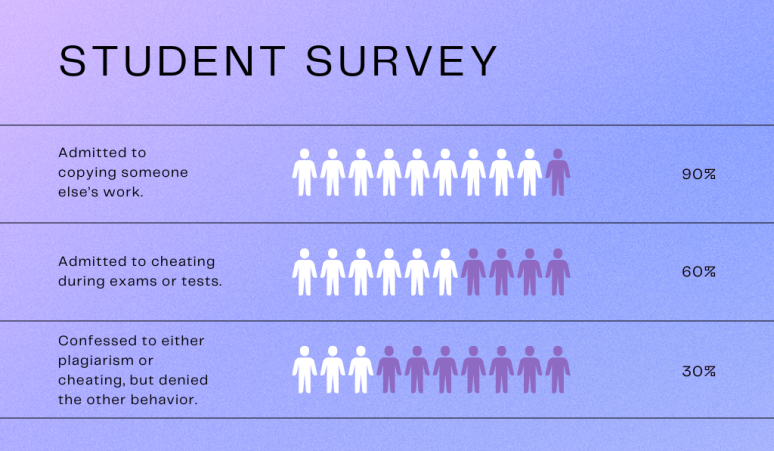
Students are focused more on passing classes than actually taking the time to learn. It’s absurd how normalized it is for students to cheat to escape failure instead of using failure as a chance to grow. The real question is “Why do students feel the need to cheat?”

According to story in edutopia, students feel the need to cheat because either they don’t find any value in certain assignments, they have the fear of losing social status, or just finding comfort with being rebellious.

So how can we fix this problem? 

We are living in a society that tells us that how we perform in school can determine our whole future. But aren’t we forgetting that there are successful people living among us that didn’t do well in school academically?

Like Richard Branson, who dropped out of school at the age of 16 but is now a billionaire entrepreneur. Or one of the most famous scientists in human history, Albert Einstein. He dropped out of school at the age of 15 and trained himself for the following year.

Graphic by Sanae Ittu.

We would assume that this can be an easy fix. Like increasing strict punishments and surveillance, focus more on grades and testing, and assigning group works. These so-called solutions may sound promising but it will not work in the long run. 

Harsh punishments and intense surveillance can make students feel mistrust, leading to secretive cheating. 

Harvard University’s website explains,“Students assigned to high-suspension schools are more likely to be arrested and incarcerated later, and less likely to attend a four-year college.”

Focusing more on grades and testing can limit sutdent’s creativity and critical thinking and increase stress and anxiety, leading to more cheating. 

According to Queens University, “When students are mainly motivated by getting good grades, they tend to focus on memorizing information instead of deeply understanding new concepts…”

Assigning group work does not address why students cheat or lack passion, students can use it to rely on others to do all the work.

High school senior Yun F. Zheng shared on the Education Week website, “Assigning only individual work outside the classroom removes the risk of group members being overly reliant on others.”

To avoid any of these consequences, administrators should focus more on restorative practice, formative assessment and mastery learning, and structured collaborative learning with individual accountability.

According to PowerSchool, formative assessment and mastery learning have benefits, including defined learning goals, increased rigor, and improved academic achievement.

So take this as a suggestion that education should focus more on genuine learning rather than just passing tests or chasing grades. Success can come in many forms. Creativity, emotional intelligence, and practical skills that matter just much as a test score.

Column: Teens must be protected from unsafe online behavior

by Rain Gresham 

On April 21st 2000,  Children’s Online Privacy Protection Act of 1998 or COPPA became effective, due to parents fearing the growing internet and lack of online safety. That law should have laid many parents’ fears to rest but today over 25 years later we still struggle with children’s guaranteed protection on the big wide web. 

Photo illustration by Xavier Bridges.

If you were to scroll on TikTok or Instagram for more than a few minutes past the feel good quotes and useless commentary you would likely find someone talking about a personal experience of theirs; it’s not likely anyone dangerous is going see it, so who cares if someone opens up about their personal life?

Except a dangerous person might.

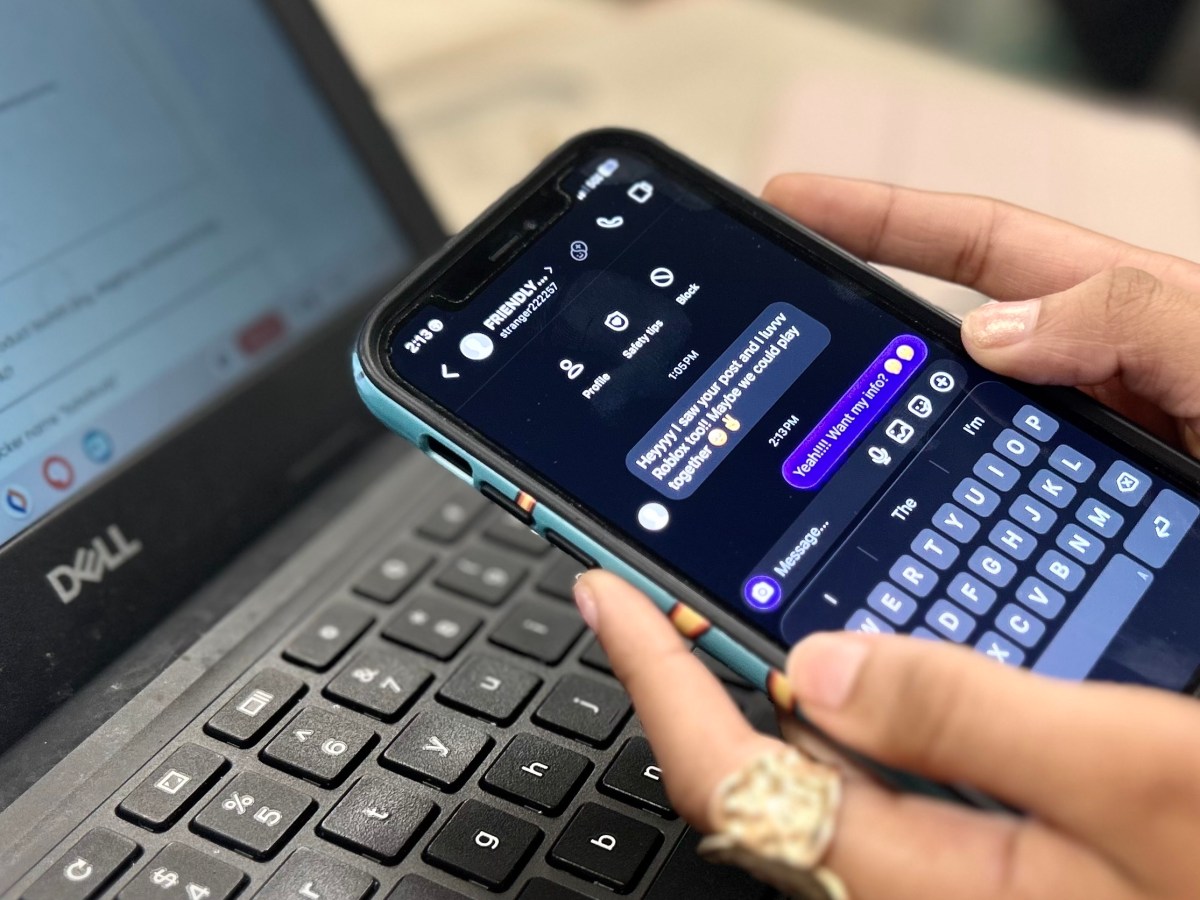
One third of missing children in 2024 were enticed or lured online. Maybe the creeps aren’t in white vans with “Free Candy” painted on the front, but that doesn’t mean they aren’t there. They are the ones liking and saving your videos. The ones complimenting you and asking to be online friends. The ones you trust, posing as innocent.

Other governments outside of America are taking a more headfirst approach to online safety. In Australia children under 16 can’t even access certain social media platforms like TikTok, X, Facebook, Instagram, YouTube, Snapchat and Threads, but is this the right way to go? Young teens aren’t babies and are capable of finding work arounds, often by simply changing their age or not listing it at all on these websites. 

So if we can’t take the internet from them, then should we just change it for them? However, even if you were to bubble wrap  the entire internet, it would never be a totally safe place — it’s simply too big for that. The real major issue is that in the last few years people have stopped seeing it as what it is – full of strangers. 

If I had a penny for the amount of times I’ve heard, “You guys are like my best friends” from an influencer, I’d be rich enough to pay someone to give them online safety lessons. They have fostered an environment where parasocial relationships are the norm. Anything outside of that is seen as strange or overtly paranoid. 

This mindset didn’t always used to be the case. The world witnessed a great shift during COVID where anything and everything that could inherently be done online would be done online. 

Even when the world did start to open up again, those third spaces that were there previously didn’t. So people both young and old were forced to turn to the only available and free one they had, the internet.

So, how should we ensure online safety for teens? 

Well, throughout my life I have seen that the simplest ideas work the best. A simple conversation about the dangers of the internet and all the bad situations that can happen there.  Check in on your kids and just who‘s following them if they happen to have public accounts and who is following you on yours as well. You never know. The world is full of creeps. 

I find that there are very few problems with children that can’t be fixed with a simple sit down and present parenting.

Extracurricular activities benefit students in a variety of ways

by Breslyn Dozal

Extracurricular activities offer students crucial lessons in teamwork, discipline, leadership, and resilience, helping develop skills outside of just academics.

High school is full of opportunities. Some of those opportunities are extracurricular activities. Most extracurricular activities are after-school activities, but in some cases they can go on during school.

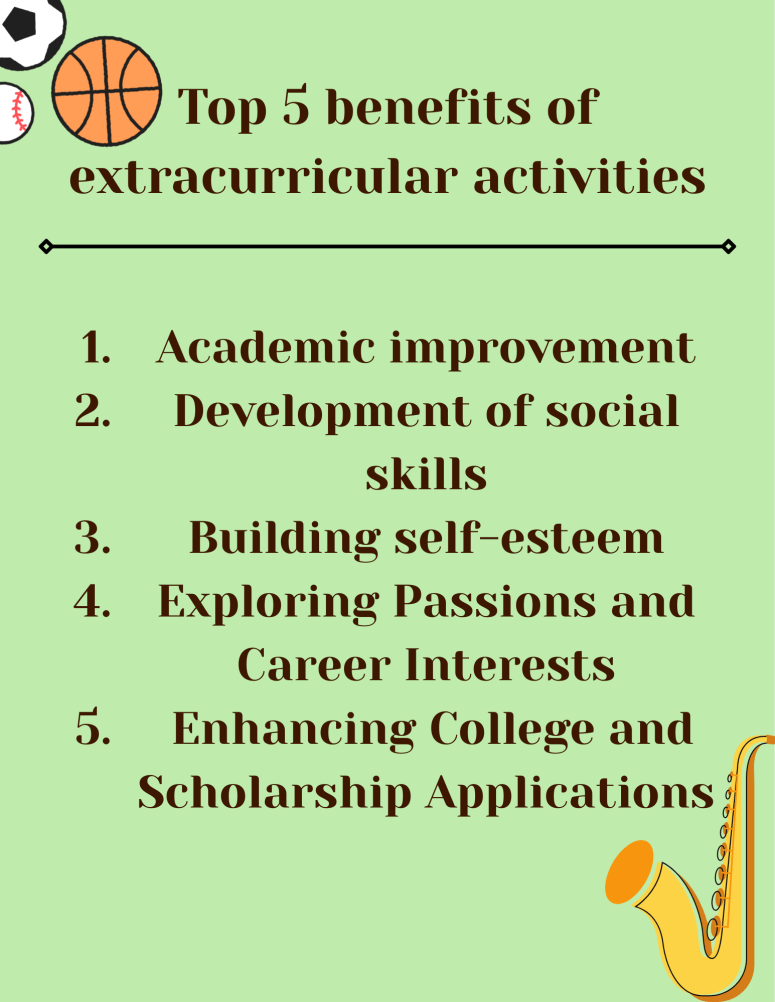
Many students have found that extracurricular activities build up their confidence and decrease social anxiety.  They build up many skills such as communication, problem-solving, and adaptability. Extracurricular activities can be sports or clubs.

Graphic by Breslyn Dozal.

“Confidence, it helped me through soccer and it made me a better player,” said freshman Jacqueline Escobar, who plays club soccer, not related to school. She added that playing a sport outside of school has helped her with time management with her school work by having to balance practices, games and school work simultaneously. 

Senior Kendall Curry agreed that participating in extracurricular events has helped her find balance with not only clubs and school work, but also with working at her job. In all these areas, Curry said that she was around diverse groups of people. Because of this, she learned how to work among a variety of individuals from different backgrounds as hers. 

By participating in extracurricular activities, students can also gain insight into fields of interest they may want to pursue in the future.

Curry learned from being a football manager that she will likely pursue a career working in sports.

Freshman Alayla Hickerson learned by being in band that she would like to continue it in college and maybe as a career. 

Special life skills can be derived from participation in extra curricular activities as well.

Freshman Eva Harbeson appreciates the marksmanship skills she has learned in JROTC. She said that she likely won’t use those skills in a future career, but she is glad she can protect herself for knowing them now. 

Curry, Hickerson, Escobar and Harbeson all described common lessons they learned from participating in extracurricular activities: they gained confidence, time management skills, and the willingness to try new things.

All of these skills are useful in future goals outside of high school, proving how beneficial extracurricular activities can be.

Column: America was built by immigrants

by Gabriella Kraft

America was built by immigrants. They have built it up from the ground, and then others decided that they had founded the land, even if Native Americans had been there years before them. They were colonizers who decided they could take what they wanted and have no repercussions.

“Nobody is illegal on stolen land.”

Graphic by Gabriella Kraft.

It’s becoming a common saying, sadly, to get people to understand that nobody is illegal here, and no one should be getting arrested and killed for their skin color or their accents. 

“Nobody is illegal on stolen land.” It is a way of telling most people who are in support of the current administration that nobody is after their jobs. Nobody wants to harm them. Nobody wants to take away their position in life. Just as they are trying to get by in life, so is everybody else. 

According to the Council on Foreign Relations, “Since returning to office in 2025, U.S. President Donald Trump has taken major steps to reshape immigration policy and enforcement in pursuit of his campaign promise to execute ‘the largest domestic deportation operation’ in U.S. history. As part of this effort, his administration has carried out deportation flights, sometimes to third countries where migrants have no existing ties; ramped up nationwide immigration raids; and granted expanded or new powers to various federal, state, and local officials to enforce domestic immigration laws.” 

His whole point in doing this is to do what the rich politicians in the U.S. want right now. He is simply a poorly strung puppet who needs to be held accountable for the lives he has helped ruin and take.

More from Council of Foreign Relations: “In January 2026, the administration’s enforcement push reached a controversial new phase after federal agents fatally shot two U.S. citizens, Renee Good and Alex Pretti, in separate incidents in Minneapolis.”

There have been more unaccounted-for deaths and families this administration has ripped apart. Is it so hard to let people live in peace? Most, if not all, of these people just wanted to be here and live their lives when it was ripped from them.

It has turned into such a serious cause that whole schools are having walkouts in support of stopping them, including Hoosier schools. 

According to WFYI in early February, “Hundreds of students across Indianapolis and in nearby suburbs walked out of class Monday, bundled in winter coats and carrying handmade signs to join a growing national movement of young people protesting federal immigration enforcement.”

Students have gone through the effort of skipping class, missing a test, and possibly getting arrested for a cause they believe in. Not only does this put pressure on the school system, but also on government officials.

Young adolescent teens understand what’s going on in the country better than most adults. We see what’s happening and want to help stop our country from turning into a warzone, simply because some people don’t like others’ ethnicities or accents.

The impact immigrants have had on America is incomparable; without them, our economy would plummet. 

As stated by the Migration Policy Institute,“Immigrants were involved in the development of 30 percent of patents in strategic industries in recent years, and more than 40 percent of Fortune 500 companies were founded by immigrants.”

Immigrants are embedded in all types of American culture and food. For example, according to the Food Timeline, nearly all of today’s popular American foods originated in other countries.

This country is so much more than different skin colors and different views, but we can only grow and build on what we have if it has a good foundation. What’s happening in the country right now is destroying that foundation as we know it. So I encourage you to do what you can to help the cause and fight for what’s right.

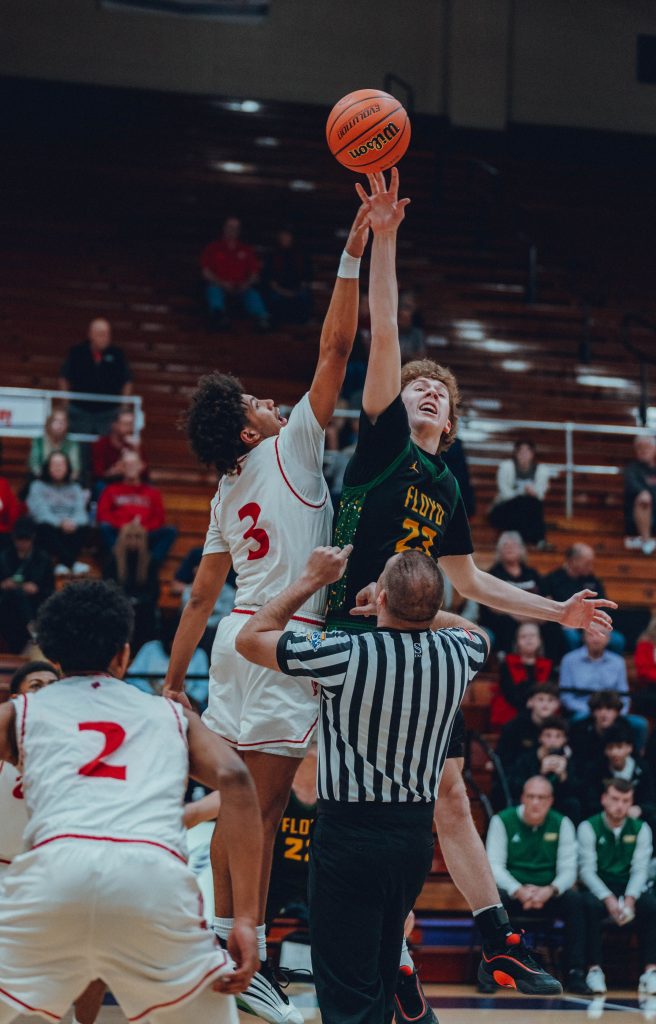
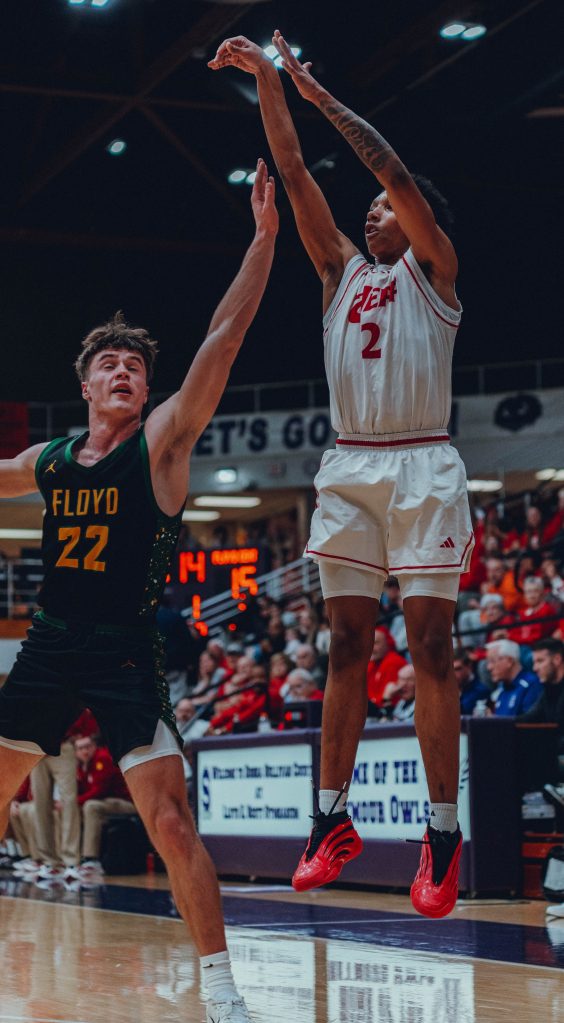
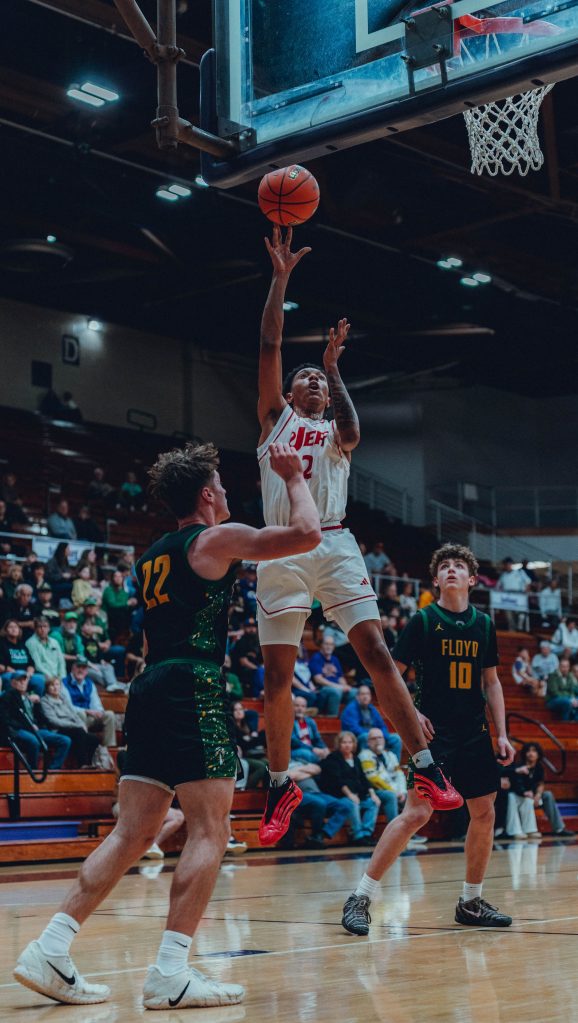
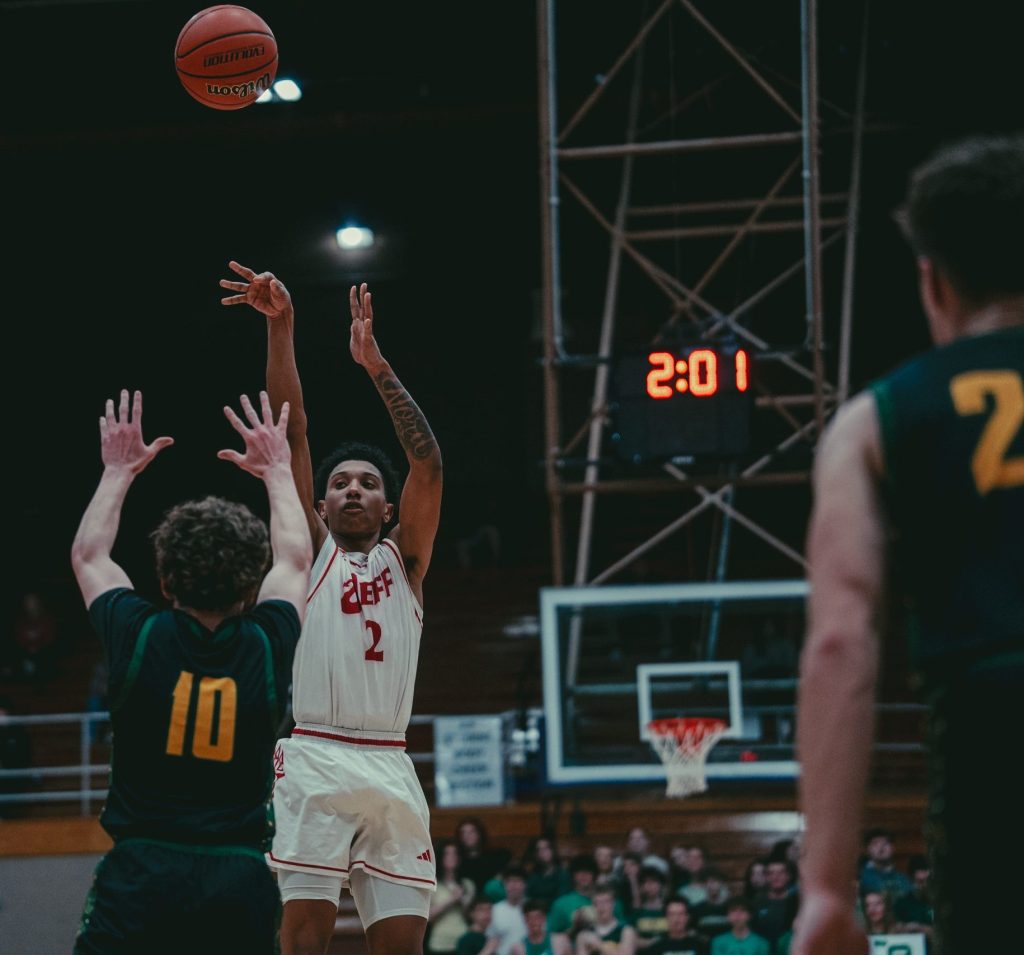
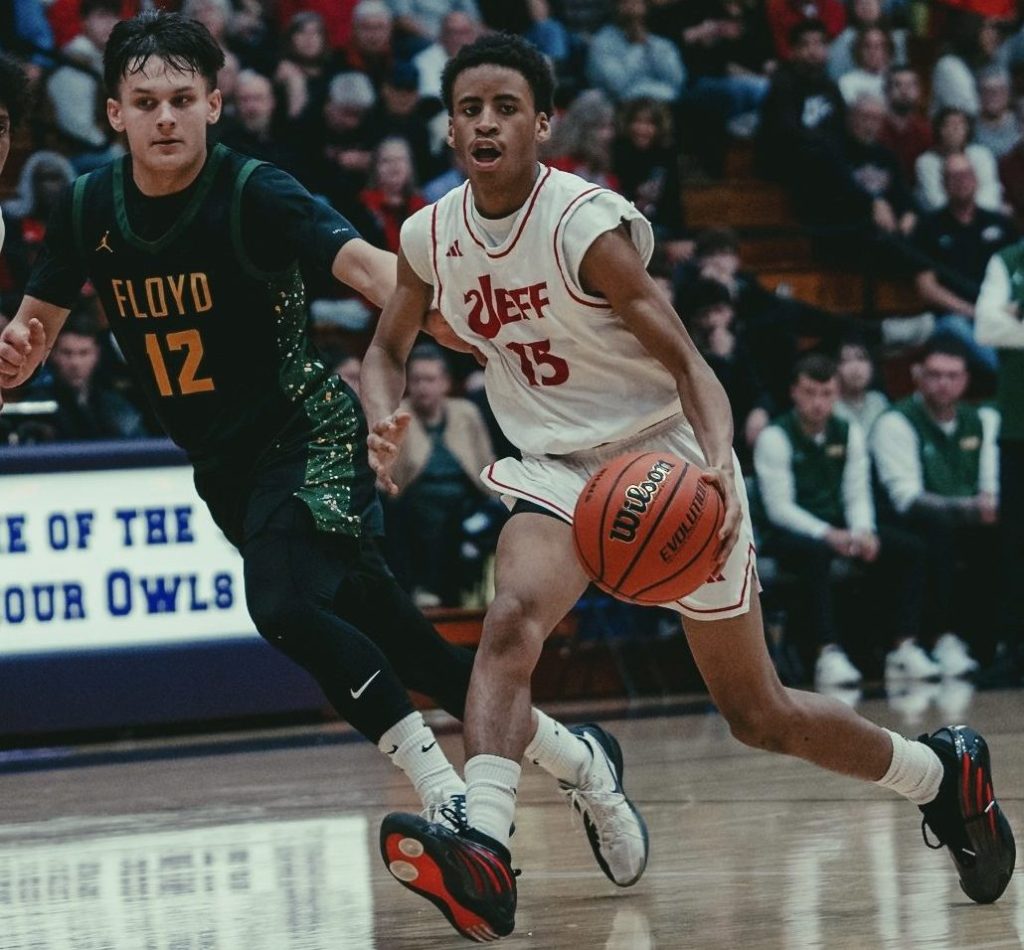
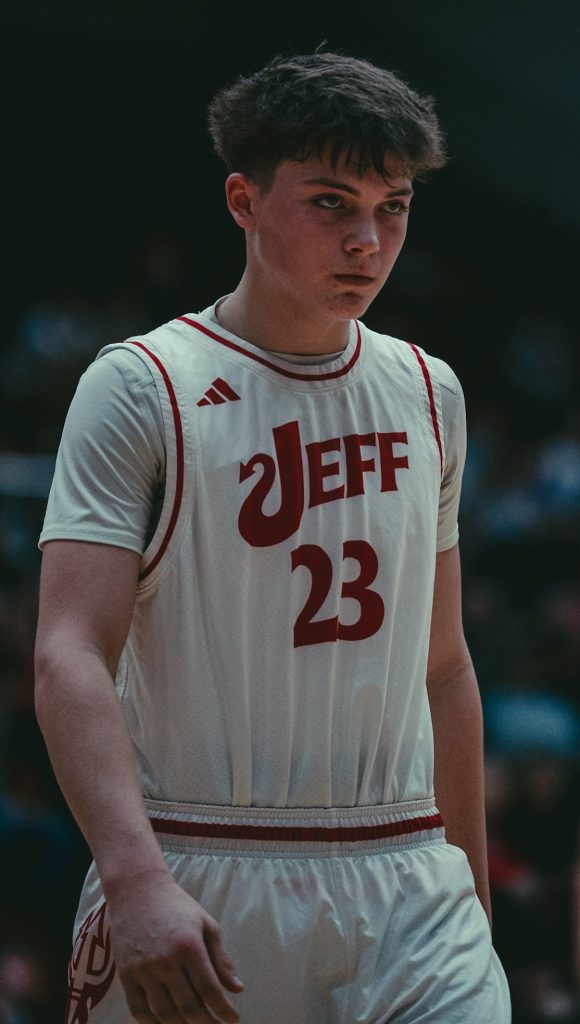
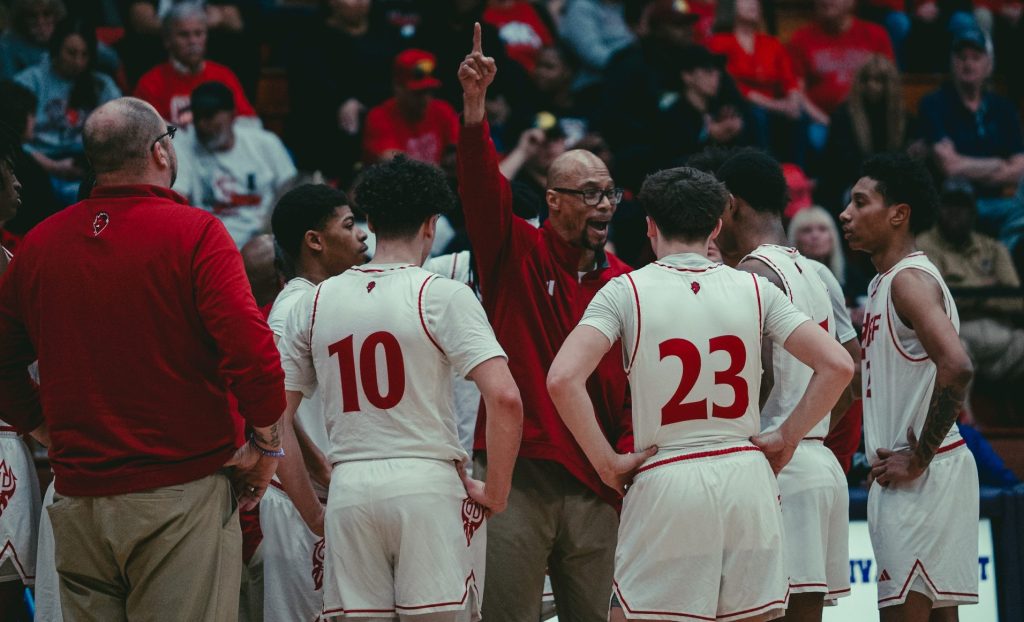
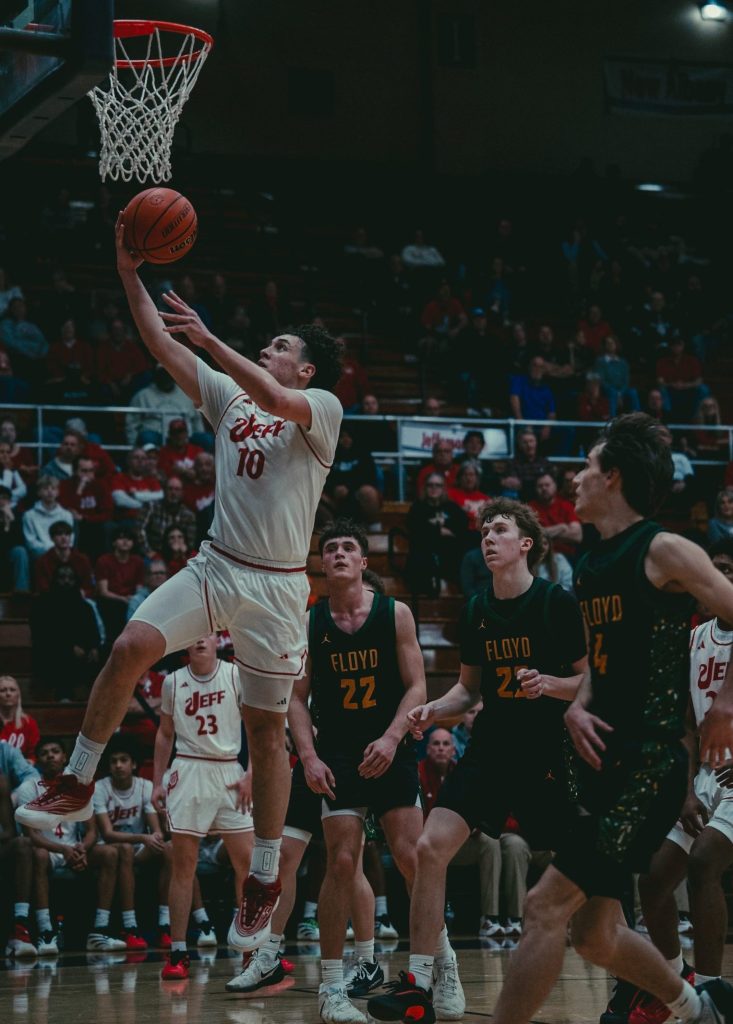
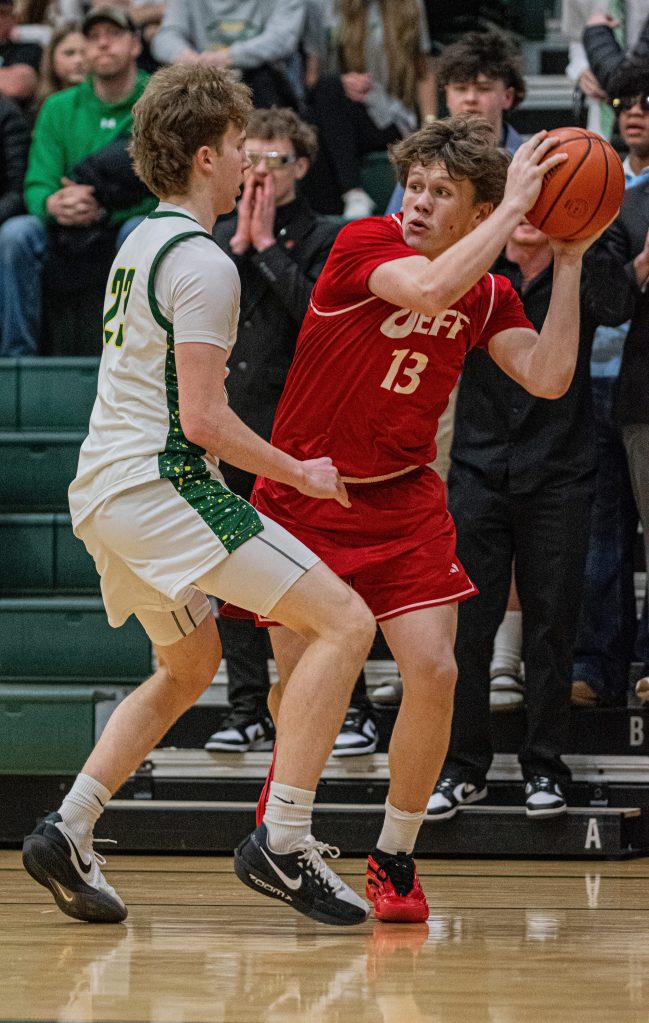
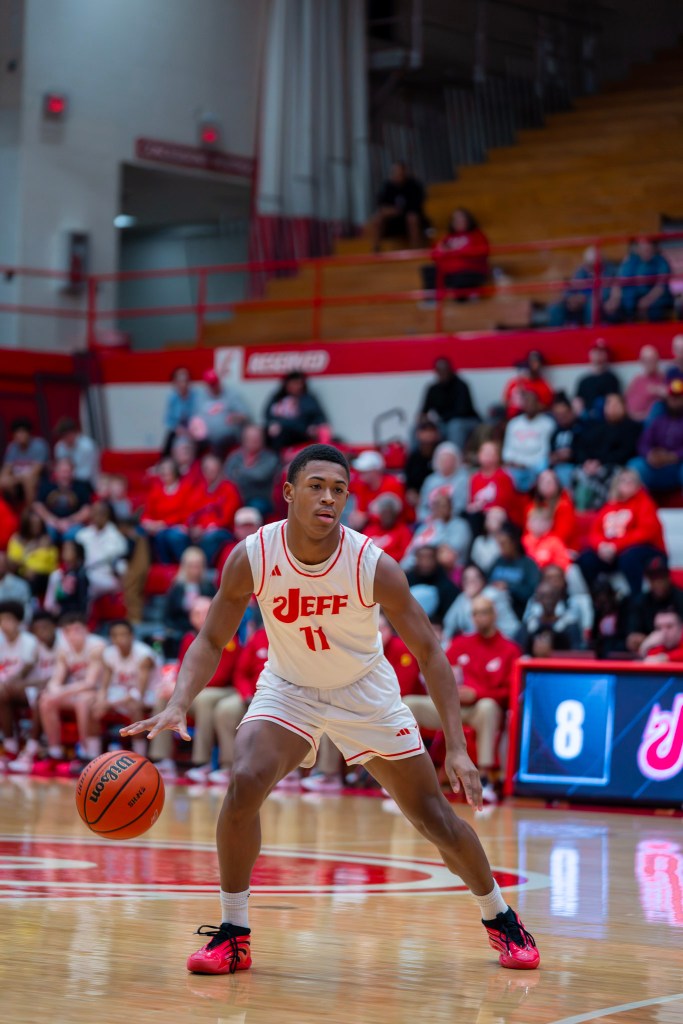
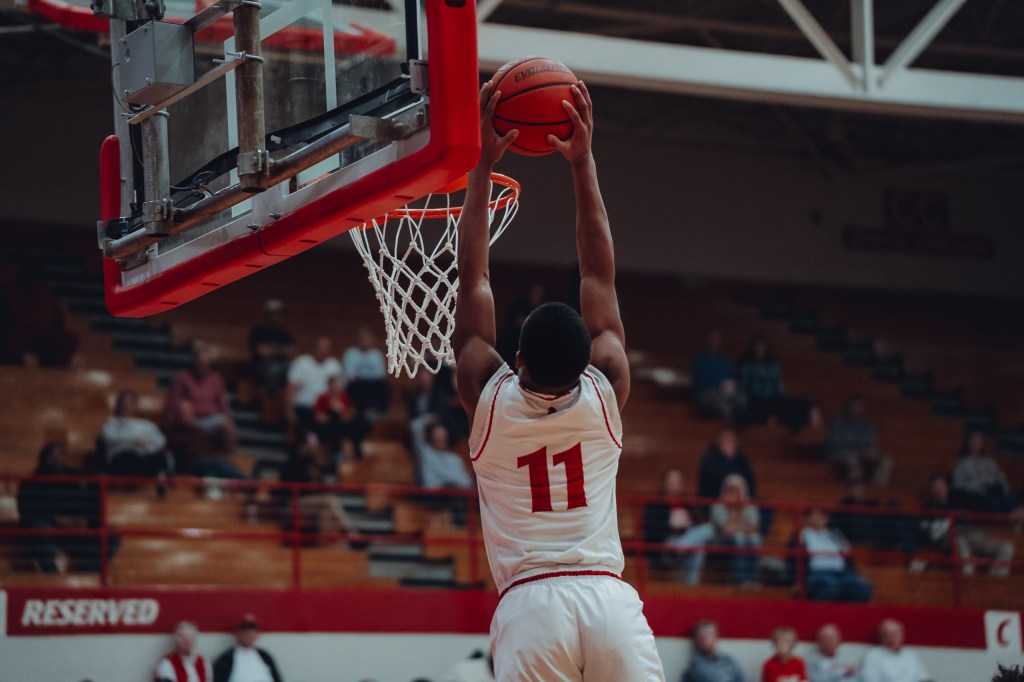
JHS defeats Floyd Central 72-54 to advance in sectional play

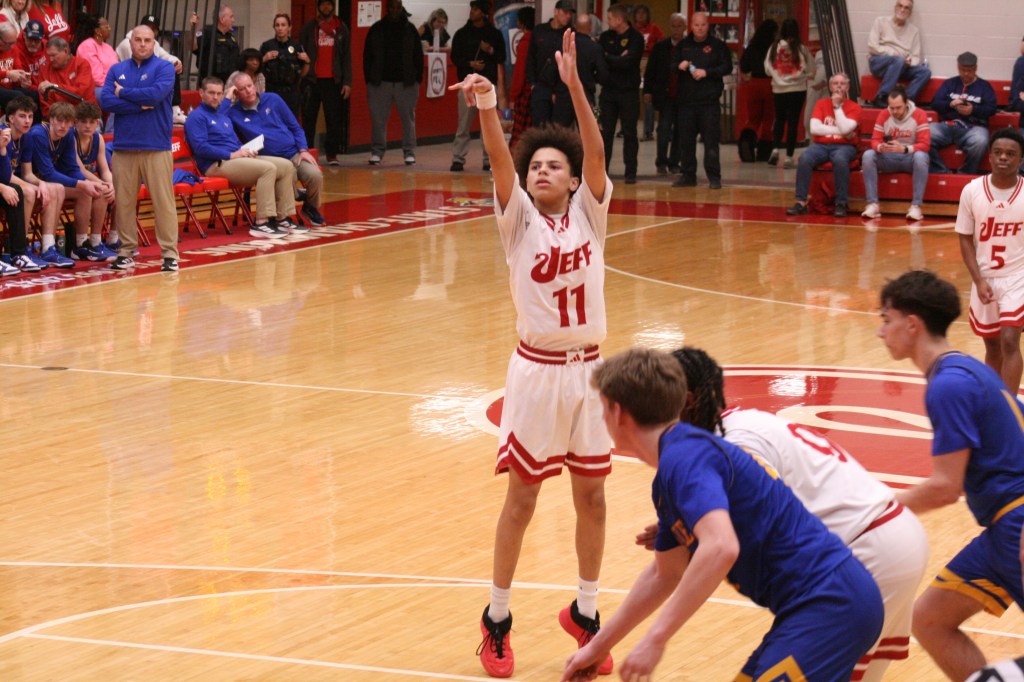
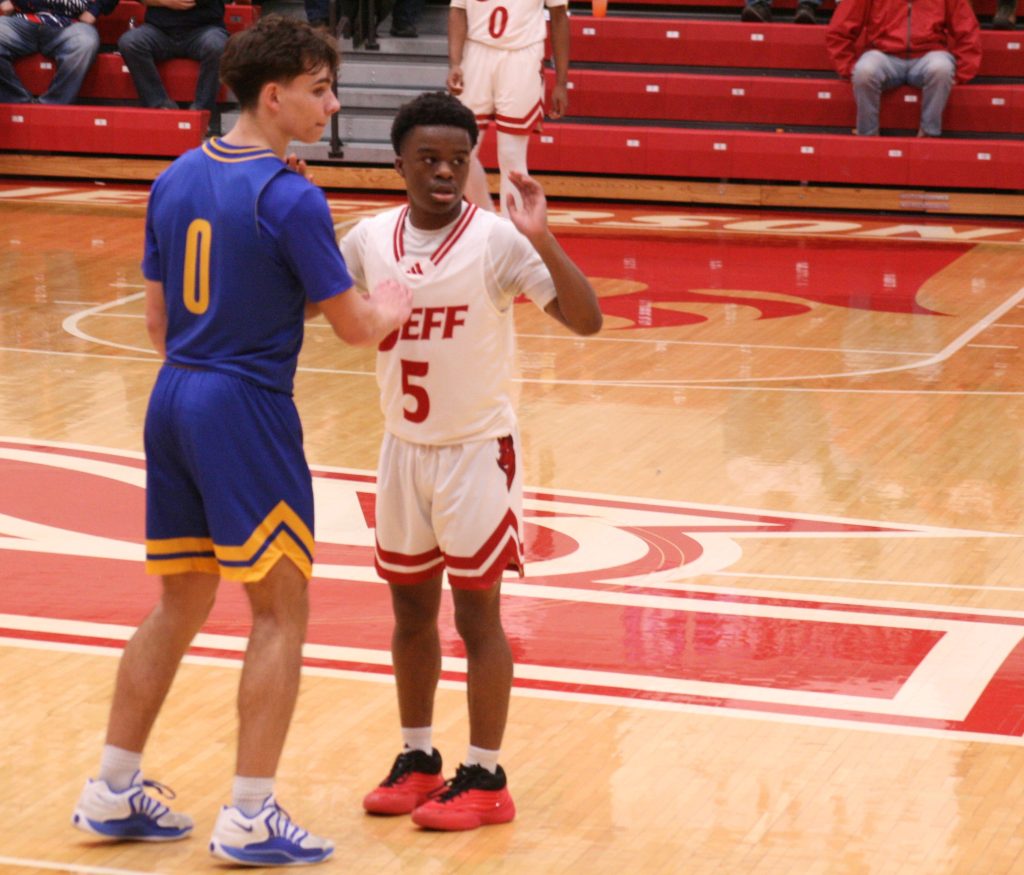
All photos by Magdalene Conrad and Malachi Conrad. Click on each photo in the gallery below.

Red Devils begin sectional play tonight against Floyd Central

by Austin Bainbridge

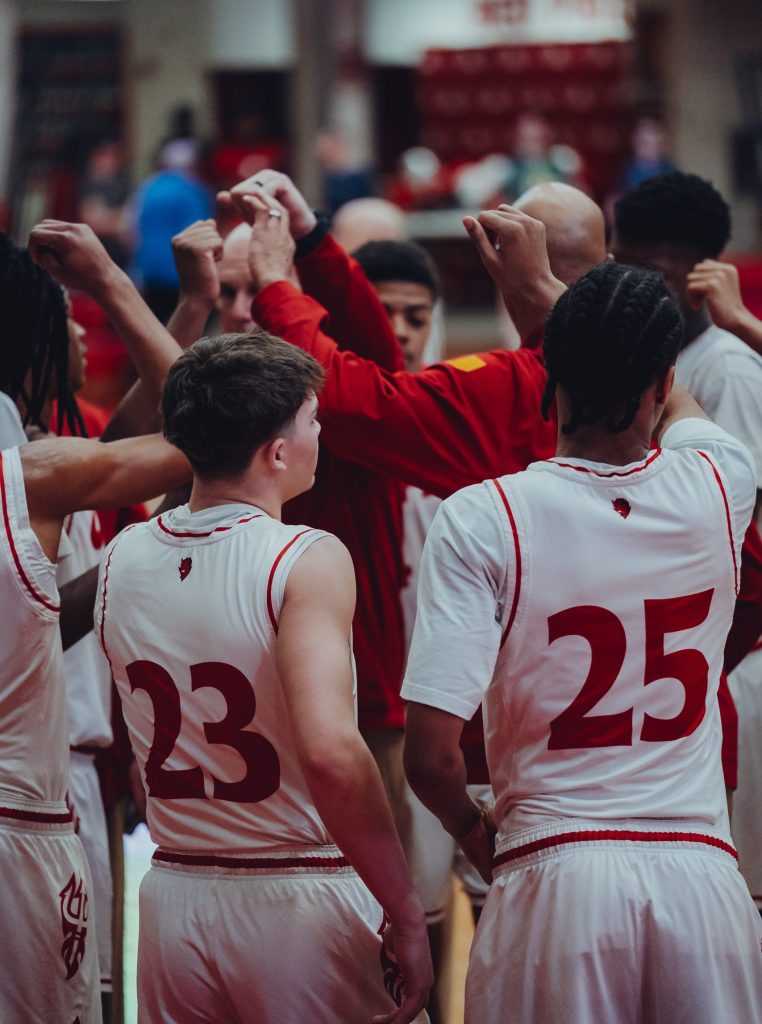
Jeff is looking for a sectional win over Floyd Central tonight, a team they beat with a buzzer beater 49-48 in January.

“We are a better team than we were when we first faced Floyd; it’s not going to take any late game scores to get us the win this time,” said sophomore center Cornelius Weobong

Jeff isn’t the highest ranked team in the sectional, but head coach Sherron Wilkerson said anything can happen in the post-season.

“On paper, I think that we can win the sectional. I know that we were probably third right now, I would say, in the segments. But I would say if everything came together, I think that we can win the sectional for sure,” said he said.

Sophomore Mason Longest looks to pass the ball while being defended at Floyd Central in January. JHS won 49-48 in the closing seconds of the game. The Red Devils play FC in a rematch in sectional tonight in Seymour. Photo by Malachi Conrad.

The Red Devils know the stakes in playing against a rival in a win or go-home game and need to keep themselves in check.

“We have got to mature really fast. I think there are two things that we have to do — number one, we have to understand how much effort it takes to play at this level. 
And then I think the second thing that we have to realize is how much we have to control our emotions,” said Wilkerson

The roster has been cut down to just 12 players for sectionals and they are expected to play unselfishly for the team.

“I think it’s really just like the entire team’s going to step up. You know, we’re all going to come together as one and play for the name on the front. There may be some specific players, but I feel like we’re all just going to play for the name on the front, try to get the win,” said sophomore center Demauri Crosby.

Jeff comes in winning both of their last games by 24+ points and expects that momentum to carry into the playoffs.

“Those wins certainly have given us a boost that we can ride through this whole thing to make it back to state,” said Weobong.

For the team it’s business as usual they want to keep everything the same to keep the players in flow.

“Nothing out of the ordinary. Just our normal day-to-day preparation. Our preparation has been the same since the first day that I took the job up until now. We’re preparing to finish these last three games in the sectional, like we prepared to win the state championship,” said Wilkerson.

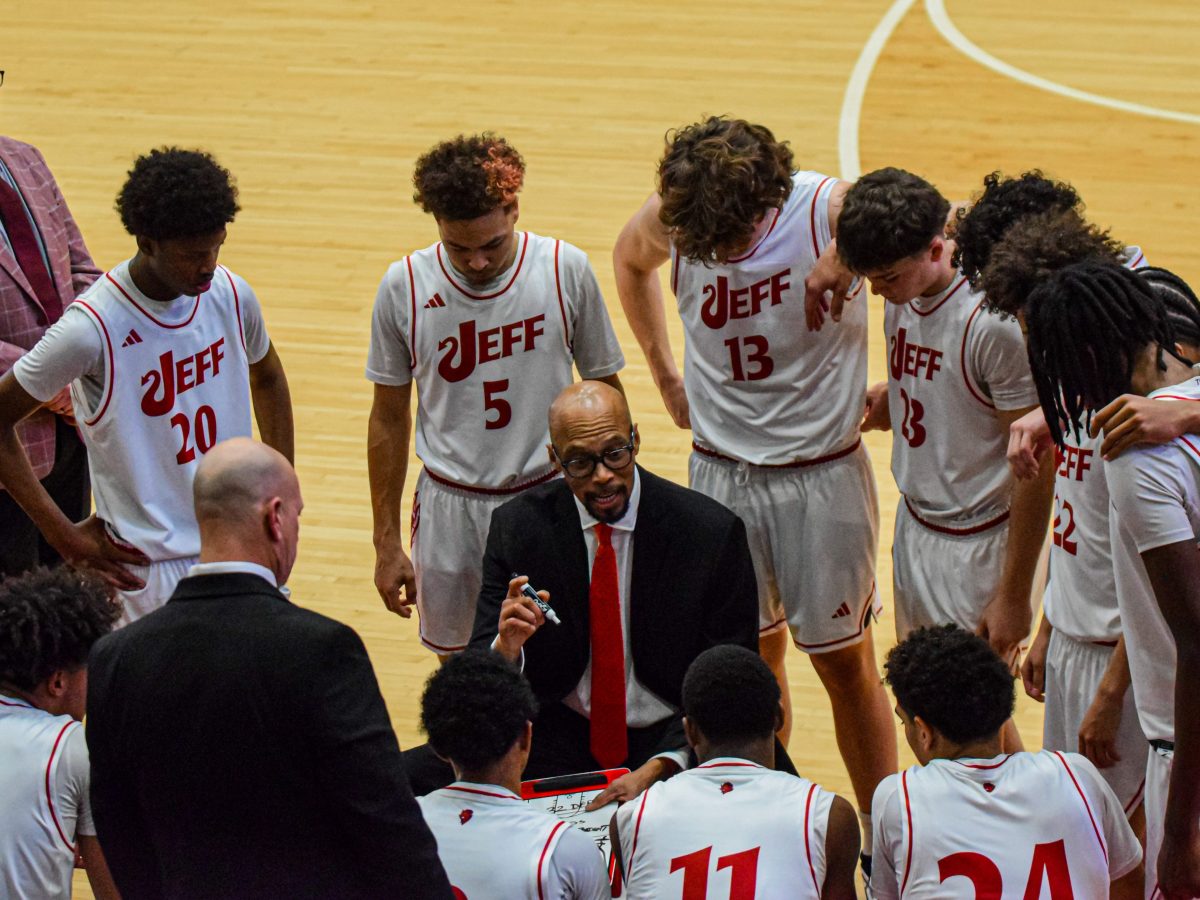
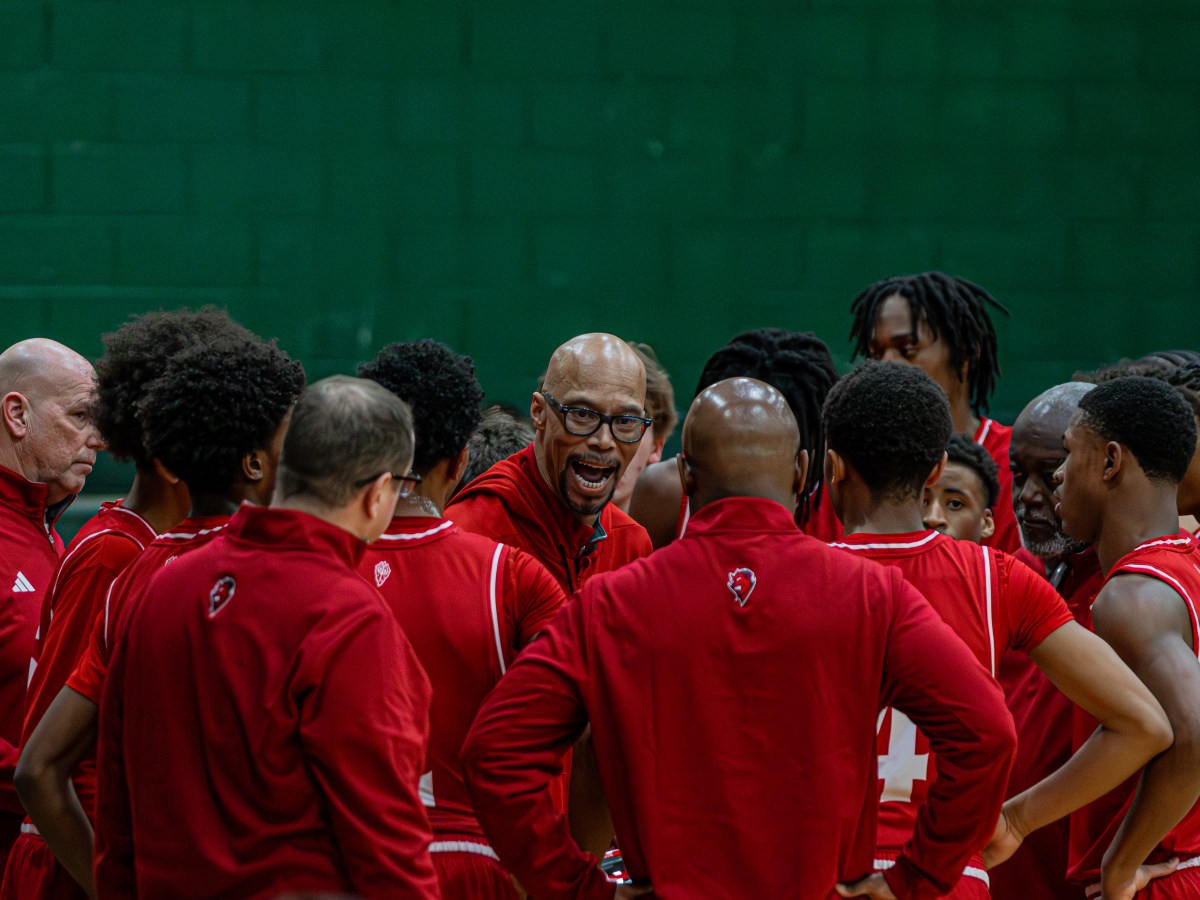
Head coach Sherron Wilkerson gives the Red Devils the game plan against SIlver Creek earlier in the season. Wilkerson said preparations for sectional and the state tournament remain the same as always. “Our preparation has been the same since the first day that I took the job up until now.” Photo by Malachi Conrad.


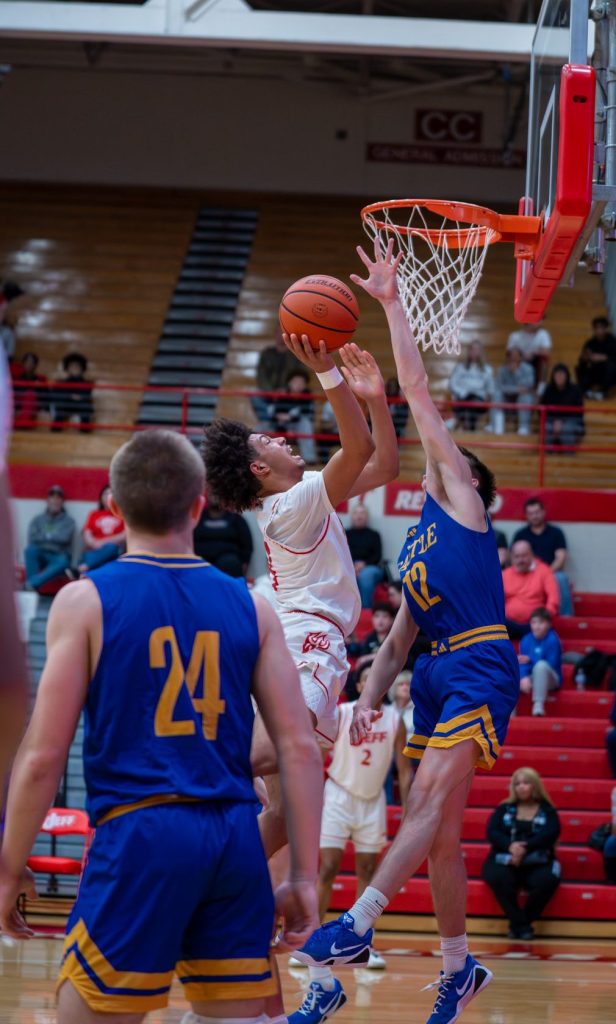
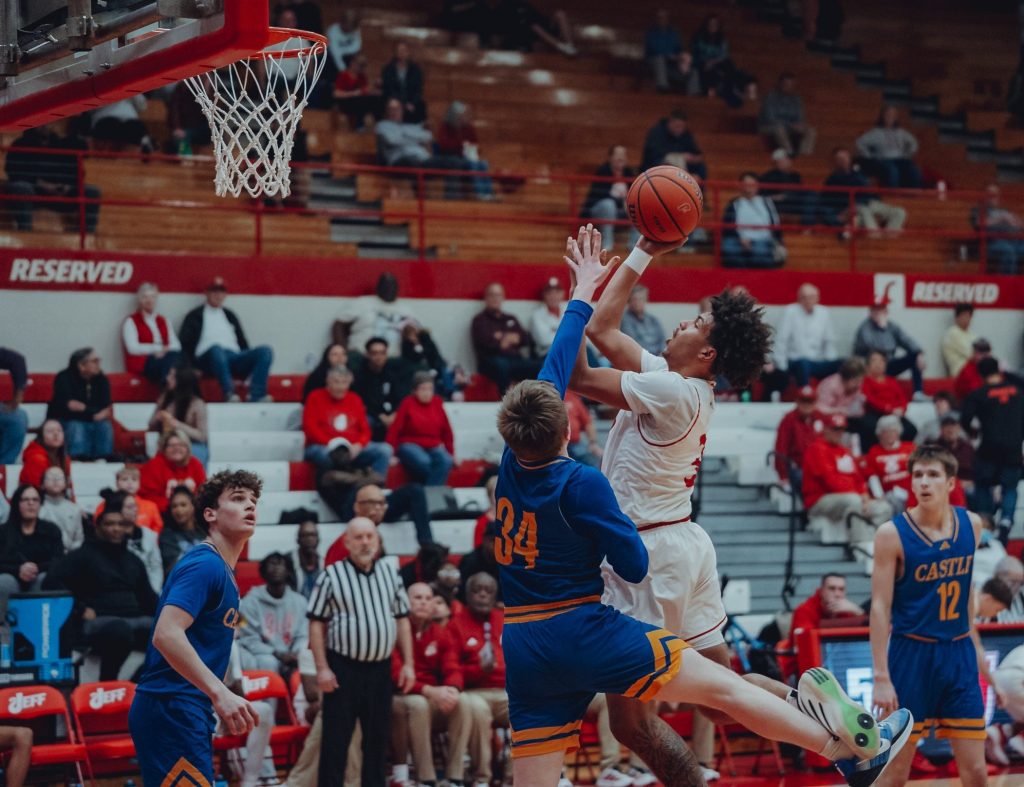
JHS defeats Castle heading into sectional play this week

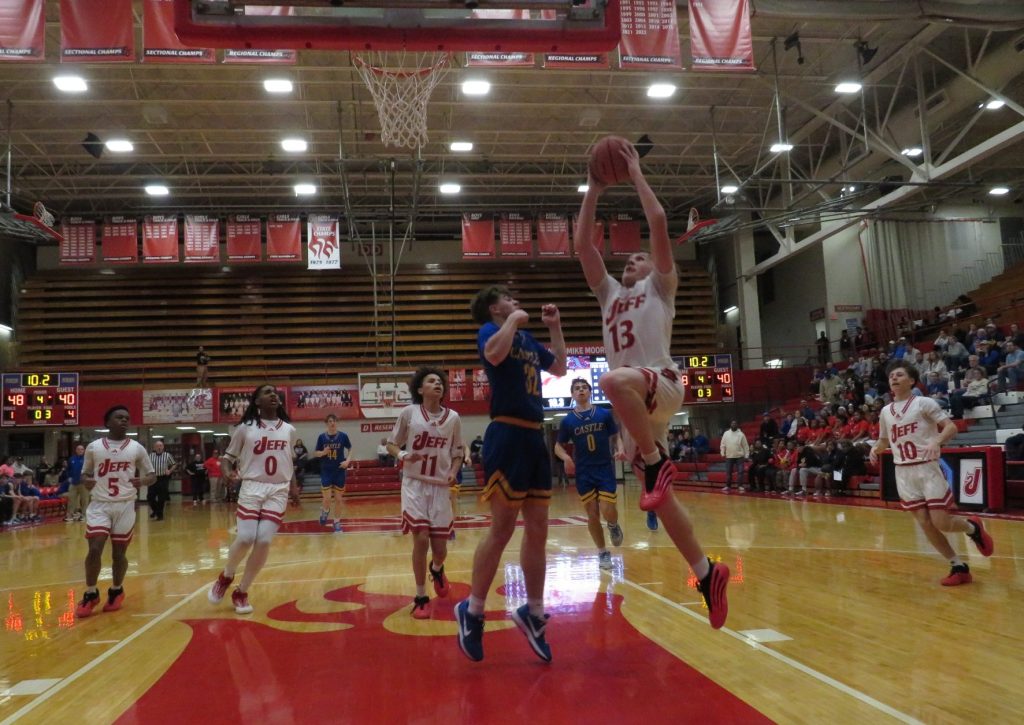
All photos by Malachi Conrad, Parker McCloskey, Mackenzie Stubblefield, and Charlie Perissi. Click on each photo below to view the gallery.

Column: NBA drop-off means new talent must emerge

by Kaiden Middleton 

The dominant stretch of the NBA is coming to end. 

Lebron James, the face of NBA for over 15 years, is the all-time leading scorer with 42,947 points; 11,826 assists (which is fourth all time), and 11,930 rebounds (which is 24th all time), but his career is coming to an end because he is in Year 23 of his career. 

Stephen Curry enters year 17 in the NBA known as the greatest shooter of all time – 4,233 points, which is ranked number one, as he has shot over 40% from three-point range in his career. Curry is also a four-time NBA champion and a one-time NBA finals MVP. In 2014-15  Curry was the first and only unanimous  MVP. 

Kevin Durant enters his 19th year in the NBA and is known as one of the greatest scorers to play the game. Durant is a two-time NBA champion and a two-time NBA finals MVP. He has scored 31,862 points, which ranks at sixth-place all-time in scoring. 

Russell Westbrook is in his 18th year in the NBA. Known as the king of the triple-double, Westbrook was the NBA MVP in 2016-17.  

Graphic by Kaiden Middleton.

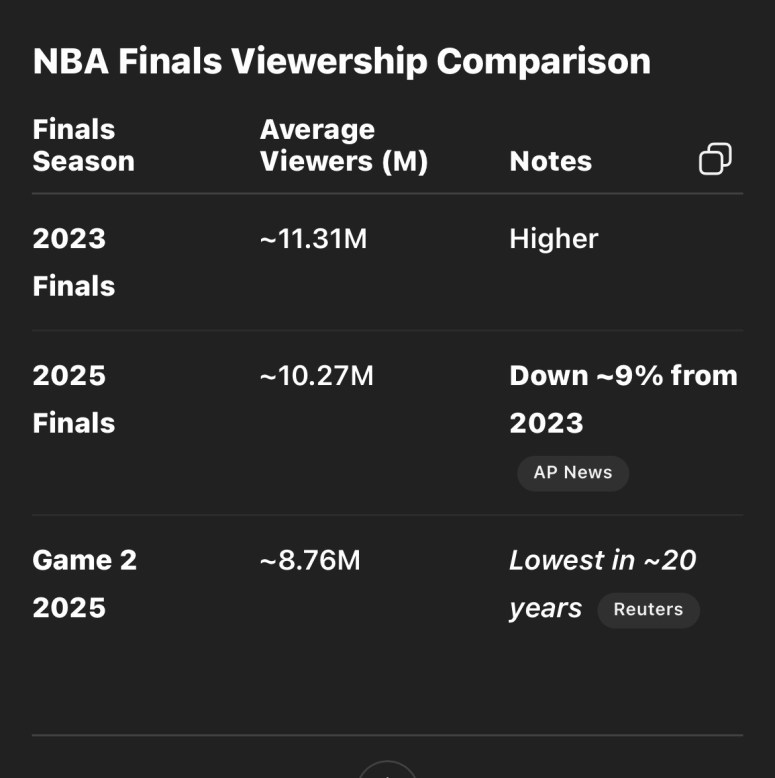
With these players’ careers coming to an end, NBA viewership has decreased over 50% The game has changed — it used to have fewer 3-point attempts. Now teams are taking almost 40% of 3s and it is not as enjoyable for the because every game is a high scoring shootout.   

The All Star game for the NBA is dying as well. The game used to feature some of the best players in the NBA all coming together on two teams. The players would leave it all on the line, but it does not have that same feeling anymore because the players don’t seem to care as much as they have in the past.  

The NBA is still in good shape with many rising stars in the league, including Cooper Flagg, Victor Wembanyama, and Anthony Edwards. In addition, the incoming draft class is reported to be one of greatest draft classes since 2003 when Lebron James,D Wade, Chris Bosh, and Carmelo Anthony came into the league.           

Red Devils battle Castle tonight as they begin sectional play next week

by Austin Bainbridge

The JHS basketball team has their last home game of the season today, and players and coaches look forward to finishing the season right.

“I think a win tonight would really propel us into sectionals with the mindset of winning and really get us ready to go,” said sophomore Cornelius Weobong.

The players are confident in their ability to get a win against a struggling 7-15 Castle. 

“I am very confident in what we can do; everyone’s going to be hating on us, but we’ll show them what we can do and just execute our game plan,” said senior Elijah Cheeks.

This season has been a difficult one for Jeff, standing at 8-12, and the coaches are looking for answers.

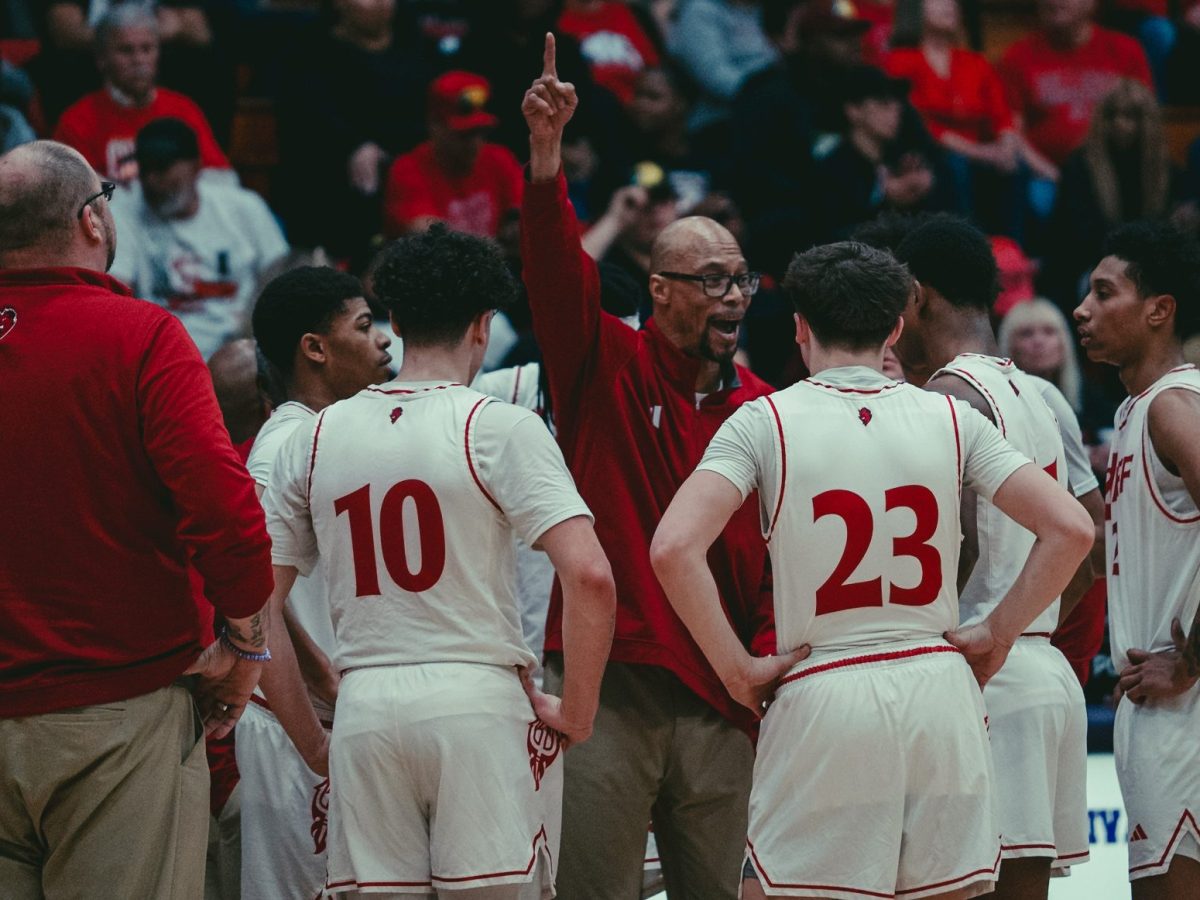
Coach Sherron Wilkerson gives his team advice and motivates them to win the game. Jeff beat Floyd Central 49-48 in the closing seconds of the game in January. They face the Highlanders in the first round of sectional next week. Photo by Malachi Conrad.

 “It’s been really difficult to find our identity. I think that we’ve had certain games where we were comfortable with our personnel, but then I think that for the most part of the season, it’s been a huge hurdle for us,” said head coach Sherron Wilkerson.

The players also look for a connection with each other.

“I think a lot of our chemistry has just been playing together and getting everybody in early in the season against a lot of Indy teams, so we’re able to connect and grow playing those tougher opponents,” said Cheeks.

While the season hasn’t been up to Wilkerson’s expectations, he still sees a good run down the stretch. ` 

“It’s been a little bit difficult  because it seems like every time we take a step forward we take two steps back. Whether it’s an injury, somebody gets sick, whatever the case, it just seems like we haven’t been able to catch a break this year, like we’ve had in the previous years. But moving forward, the last game is moving into the sectional. We kind of feel like we have an opportunity. 
We have an opportunity to right the ship after all that we’ve learned through this year,” said Wilkerson.

With sectionals coming next Tuesday March 3, just four days away, this would be a great opportunity to prepare.

“This could be the final test before we open up for the tournament. And I think that people must keep in mind that we’re still going to finish as champions,” said Wilkerson.

The players also have to prepare before kicking off sectionals.

“The main thing is just getting your mind right. People usually think about your body but it’s all in your mind. Putting in enough work (that) I know I can trust myself when the time comes,” said Cheeks.

The Red Devils open sectional play against Floyd Central next Tuesday night. JHS defeated the Highlanders 49-48 in January.

Column: Americans live in a state of propaganda

by Ayianna Maddox

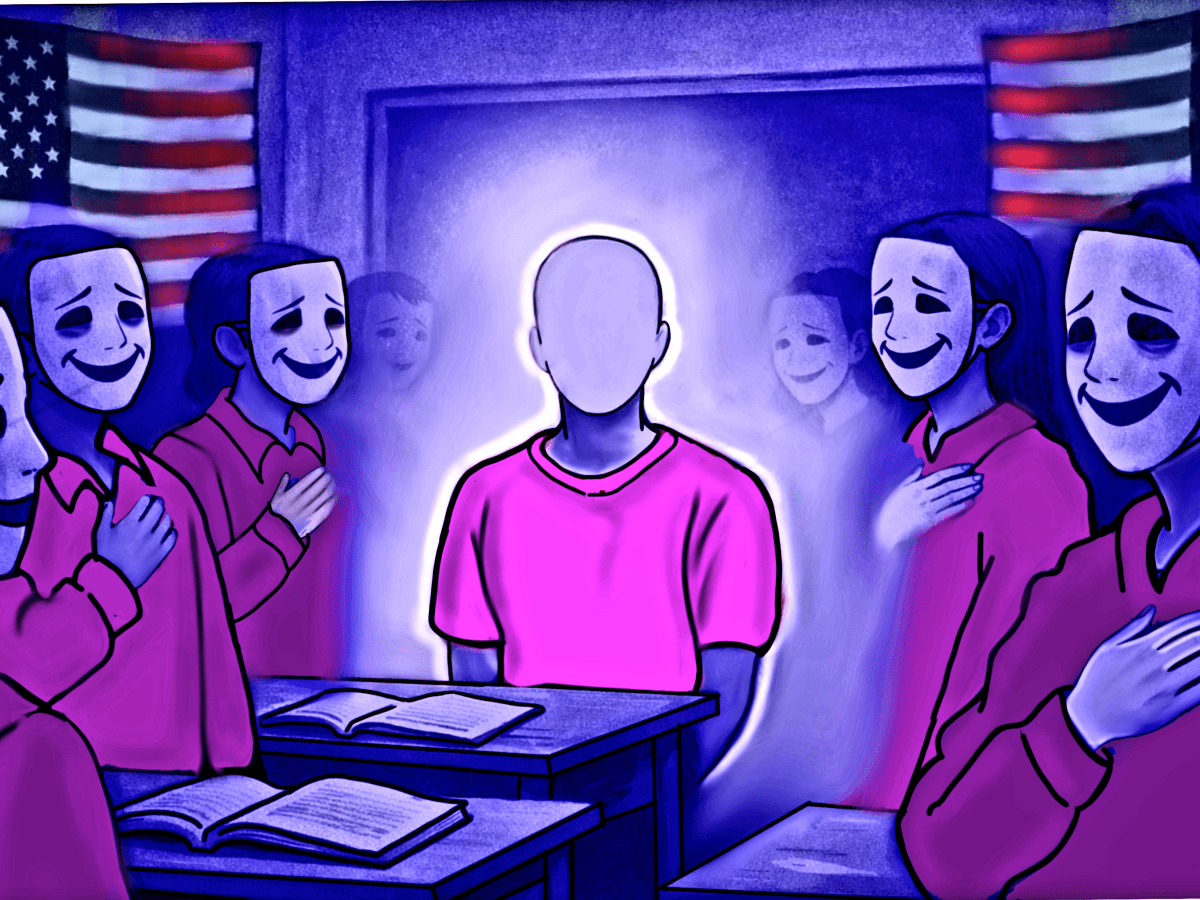
Being a civilian in America can be exhausting — constant propaganda, death, and injustice. America is portrayed as a “haven” for all who enter. The “Pledge of Allegiance” is known as a symbol of integrity, loyalty, and respect for America. Still, the shimmering mirage of our Pledge is fading, revealing that the words and their meanings are untrue.

Throughout the U.S. at the beginning of the school day, students are expected to recite the Pledge of Allegiance with their heads held high, standing tall, and their right hands over their hearts. Then, we carry it with us throughout our lives, because we have been conditioned to do so from an early age. We know the words, but have we comprehended the meaning?

Art by Cella Hutton.

The first line states, “I pledge allegiance to the Flag of the United States of America.” As we recite this line, we are making a promise to ourselves and our country to uphold important documents, such as the Constitution.

The second line states, “…to the Republic for which it stands.” The Republic is a form of government where supreme power is held by the people and exercised through elected representatives, rather than by a hereditary ruler or dictator. However, currently in our country, our executive and judicial branches of government have forgotten this important detail. The people elected those in power, yes, but those in power are not listening to the people’s cries.

The third line states, “…one Nation under God, indivisible…” This could be interpreted as we’re all equal as a people beneath the “protection of God,” but how I wish in my core that this were true. If we’re all “One Nation under God, indivisible…” then why is oppression still active today despite our history?

The last line states, “…with liberty and justice for all.” Once an eternal promise, that line is now a plea for help. Inside the “land of the free,” the civilians of America are pleading for justice for their loved ones, a rescue through liberation. Citizens of a “justified nation” should not have to beg for something that should have been given beforehand; that’s not what was taught.

With the never ending unlawful acts of President Donald Trump and his administration, the number of nationwide protests against their policies increases.

According to The Guardian News, “There were more than 10,700 protests in 2025, a 133% increase from the 4,588 recorded in 2017, the first year of President Donald Trump’s first term.” 

The significant leap in protest participation from 2017 to 2025 justifies America’s cries. The combined protests of 2017-2025 (15,288) are for different reasons, but they are all aimed at the same variables: justice, peace, and hope. The population affected by injustice and constant conflict is rallying together and using their voices to strive for a better outcome. 

Recently and more frequently, ICE agents are wreaking havoc to no end – targeting and assaulting defenseless protesters, bystanders, and families. Not only that, but they are attacking schools. Women, men, and children are being taken away, harassed, and attacked with no explanation. No one is safe. In Minneapolis, Minnesota, ICE agents have not only terrorized but also killed people. 

On Jan. 7, 2026, ICE agents stormed Roosevelt High, a school in Minneapolis. Reports from MPR News states, “Armed U.S. Border Patrol officers came on school property during dismissal Wednesday and began tackling people, handcuffed two staff members, and released chemical weapons on bystanders.” This incident occurred just a few hours after Renee Good was killed, approximately three miles away from Roosevelt High School.

Seventeen days later, on Jan. 24, 2026, ICE fatally shot an ICU nurse named Alex Pretti. The New York Times breaks down video footage from a witness at the scene.

The United States of America has become inverted: Rights are being constantly violated, humanity is a myth, and safety is no longer a luxury.

As a teenager in America, I’m watching the colors of my home turn red with bloodshed and the skies grow dark with despair, blocking the hopeful light.

People of America, we are our own light; bendable, but not breakable.

Source: New York Times, Jan. 25, 2026. Graphic by Ayianna Maddox.

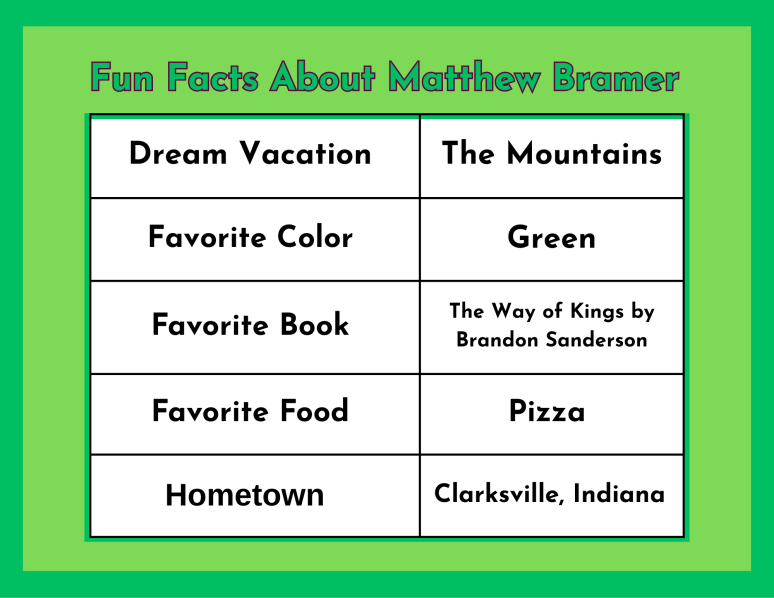
Science teacher Matthew Bramer reflects on the year that changed everything

by Kori Washington

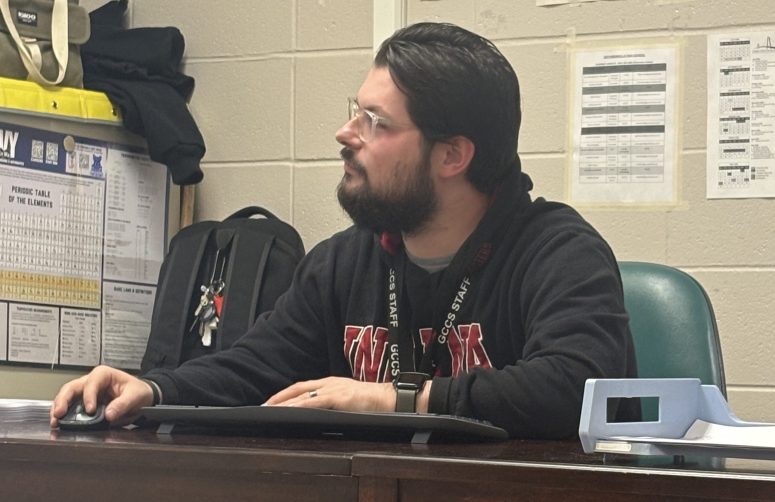
Chemistry and physics teacher Matthew Bramer made a major life change when he left the tech world to become a teacher at Jeff High.

“My previous work was IT work, and it was fun, but it didn’t feel like it had a big impact,” said Bramer, who worked in technology at Mercer Transportation. 

ICP teacher Matthew Bramer goes over student slides and corrects them to put it in a grade. Bramer is happy that the student had finished the work. ”I love being a teacher; I can show them a easy way to do things,” he said. Photo by Kayleen Alvarado.

After reflecting on his time in the tech industry, Bramer realized that while he enjoyed his work in IT, he didn’t feel like he had a deeper purpose. This made him want to change his career to something where he could positively impact others’ lives and make them feel like they have a purpose, too. 

“I wanted to be a teacher so that I could impact the lives of the students,” said Bramer.

Although Bramer thought he would only impact the lives of students in class, he has also impacted them outside of the classroom as well.

“I like how he’s very patient with the students and also listens to my drama,” said freshman Ariana Smith.  

“Patient” and “kindness” are some of the many words that students and staff would use to describe him.

“He’s kind. He definitely is one of the kindest people I’ve met. He doesn’t get stressed out by the situations that every day of teaching can give you. He’s able to keep it cool,” said science teacher James Huffman, who has been teaching for 10 years. 

“He’s so enthusiastic and happy all the time. Oh, my gosh. Always has a smile so kind. It’s a really good guy,” said science teacher Hope Rector, who has been teaching for 19 years. 

While Bramer is known for his kindness and patience, his first year of teaching has also come with challenges and rewarding moments.

“Classroom management has been pretty hard. And that’s just managing all of the personalities,” said Bramer. 

But despite having a lot of personalities in one classroom, Bramer enjoys getting to know all the students and also getting to see them understand what he’s teaching. 

“I think seeing the students get it and understand the curriculum was really nice, and it was also really nice to have a lot of students come up to my desk and hang.”

These rewarding moments are one of the many positives that keep Bramer motivated to keep teaching. But one of the most important aspects that has kept him moving forward is the help from his fellow staff members.

Graphic by Kori Washington.

“Ms. Rector and Mr. Huffman have been very helpful,” said Bramer. 

Huffman and Ms. Rector’s advice have played a role in Bramer’s growth as a teacher since the start of the year.

“I think when you walk in, like as a teacher, and you have like over 30 kids staring at you, it’s overwhelming for sure. But I’ve seen him grow in his confidence,” said Rector. 

“He’s gone from being nervous to and kind of using me and Miss Rector and other teachers that are veteran teachers as helpers; he’s almost doing most of it on his own. He’s asking us for some, like help every once in a while, but he has gotten to the point where he’s creating things and sending them to us,” said Huffman.

After experiencing the challenges of his first year and growing with the help of his mentors Bramer has learned valuable lessons he would like to share with otherothe first year teachers:

“I set aside time for grading, cause coming in, I was like, ‘yeah, I’m gonna grade.’ And then I actually have to grade. And it’s like, ‘oh my gosh.”

Track teams prepare to compete beginning next week

by Marcus Baker

Back again with another year of the Red Devil track team. It doesn’t begin with medals or crowds; it starts with sweat, sore legs, and a belief that this year will be different. 

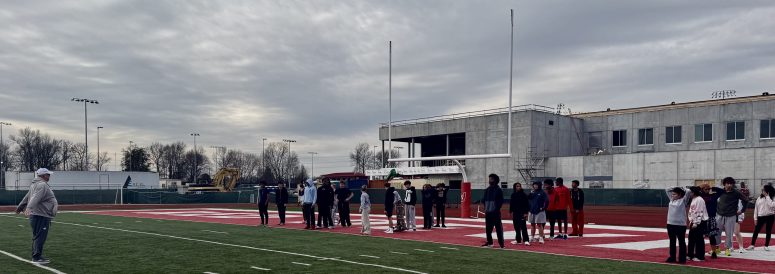
As JHS runners get back into their old routines, they have been having conditioning practice, such as weight lifting, practicing running on the track, jumping mats, pool workouts, and training their legs and form. They prepare before they head back to their actual practice, which began Feb. 9. 

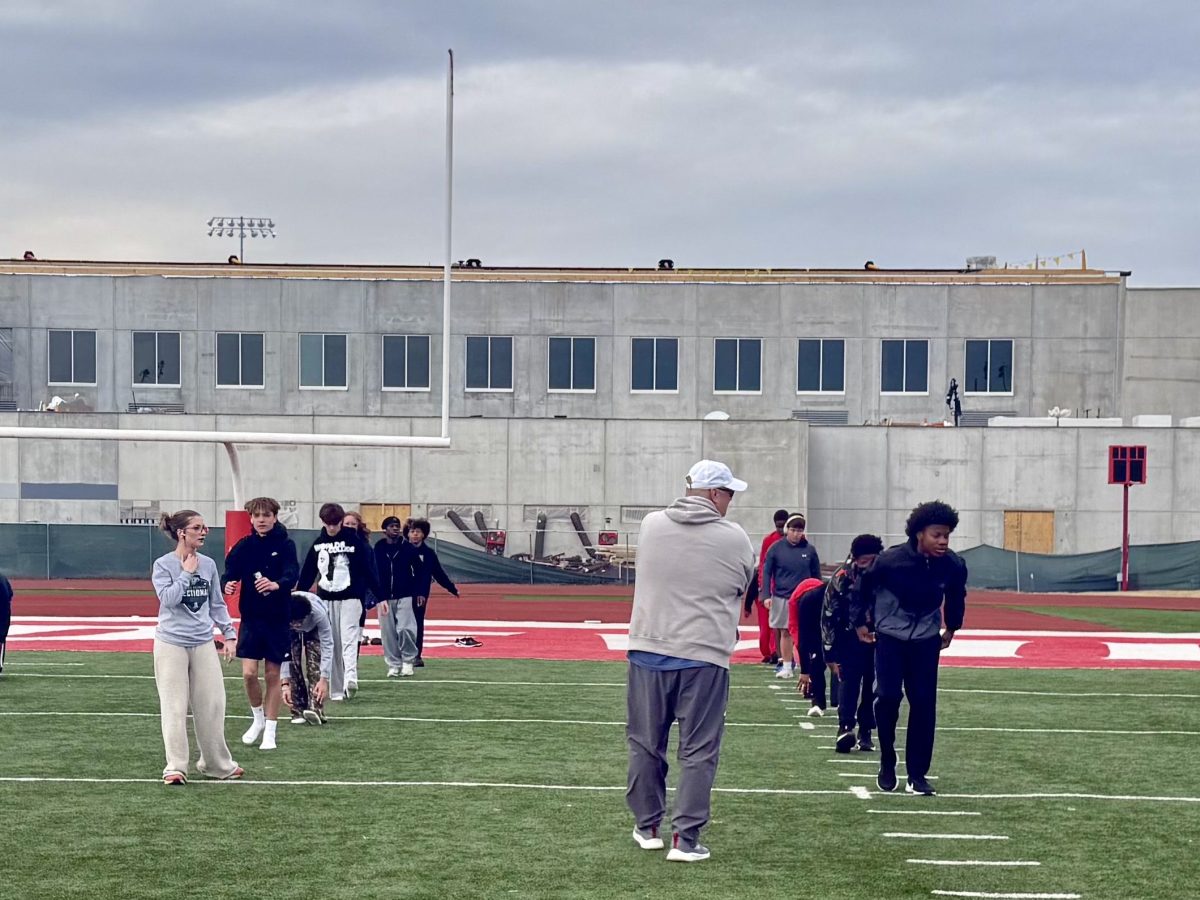
Head coach Sam Mull oversees boys’ and girls’ track team members as they stretch to prepare for practice. Track meets for both teams begin in early March. Photo by Marcus Baker.

They use “Sports You” as an app to communicate with their coaches and check for any information that is needed for their athletes. 

There are five coaches on the track team. Sam Mull is the head coach. Klarissa Early is the new distance coach. Kim Zink is in charge of the throwers. Carlis Phillips is in charge of the sprinters. And Lucas Couron is the pole vault coach.

Mull’s goals for the season are to continue to grow and develop technical skill sets for his athletes and avoid injuries for their safety. He said his best way to handle a pressure situation is by setting rules and goals for each individual. The workouts vary in discipline, but they all follow the same basic outline, he said.

Early’s goals for this season are to help everyone become mentally tougher and more disciplined as the season goes on. She wants to learn how to use her strategies to help her long-distance athletes get better every day. 

Each event group has at least one leader who guides their team:  Long-distance group — senior Larry Lucio;  girls’ long-distance group — Keira Jackson; sprinter group, senior Elijah Cheeks;  girls’ sprinter group Emliy Perissi;  and throwers’ group, junior Jomall Owens. 

Athletic director A.J. Moye said he plans to help the team by “offering my presence” and being a “servant” for the coaching staff and athletes. 

Lucio is most excited to run the 4x800m relay and the open 800m. He is preparing in the off-season by eating well and staying fit for when the season comes. 

Lucio started running in middle school and did it for his friends, and when he moved to Indiana from Texas, he just naturally joined the team. He says motivated to keep going when practice gets hard by talking to his friends and teammates.  

He doesn’t like to tell himself anything before the start of the race, like instantly, he likes to clear his head and focus on the race while trying to bring his heart rate down. 

“Distance running isn’t a race to beat others, it’s about outlasting the voice in your head telling you to stop,” he said. 

Jackson is excited to start the 1600s as a new event in her last year of high school. Jackson has been training extra hard with savory fitness and running on her own to prepare for track season. Her parents inspired her to keep pushing, so she doesn’t give up on herself. 

Her goal is to “rock this 1600s because I will be good at it.” She said she always looks up at God, knowing that he puts her on this earth to run. “Hard work beats talent when talent doesn’t work hard,” said Jackson.

Head coach Sam Mull meets with boys’ and girls’ track team members at practice, explaining procedures for the day’s after-school practice. Photo by Marcus Baker.

Junior Jayden Kelly is excited to compete in the 110 mh and 300mh. After his short last season, he is looking to improve and progress to be able to compete and possibly win the state. He’s been preparing by lifting weights and staying in shape during off season while working on improving his hurdle form. 

He ran track since elementary school, but the people who really inspired him are his coaches and teammates. His one goal is to compete at state. When practice gets hard, he reminds himself of his goals, and that will take a lot of work and dedication. 

Perissi is most excited for the 100s this season. Last year in her sectionals, she false-started and had a terrible moment, but this year she’s ready to make a comeback and prove people wrong. She goes to the gym three times a week and works out to get stronger. 

Nizaish Carr and Lyric Steele,  a former old trackmate, gave her a perspective to stay motivated through last year. Her goal is to stay focused on her health and push through longer and have her body ready for the end of her track season.

Sophomore Samy Carrlio is most excited for the 400 dash, 4×4, and 800s. She has been preparing herself by eating and sleeping well. She goes to the gym three times a week and gotten mentally strong. Her friend Lila from 6th grade was inspired by her to join the team. She loves it since then. One of her biggest goals is to make it to state or at least get a sub-minute in her 400 dash. She always tells herself that god has a plan and believes in her.

As the Red Devil track team starts, they will develop their skills and improve their capability for the season. 

“Every day brings a new challenge, and while we can’t always master those changes, we must have the will and desire to do our best and accept where we end up,” said Mull.

Junior author Jeremy Baker publishes his own faith-based books

by Shelby Keesee

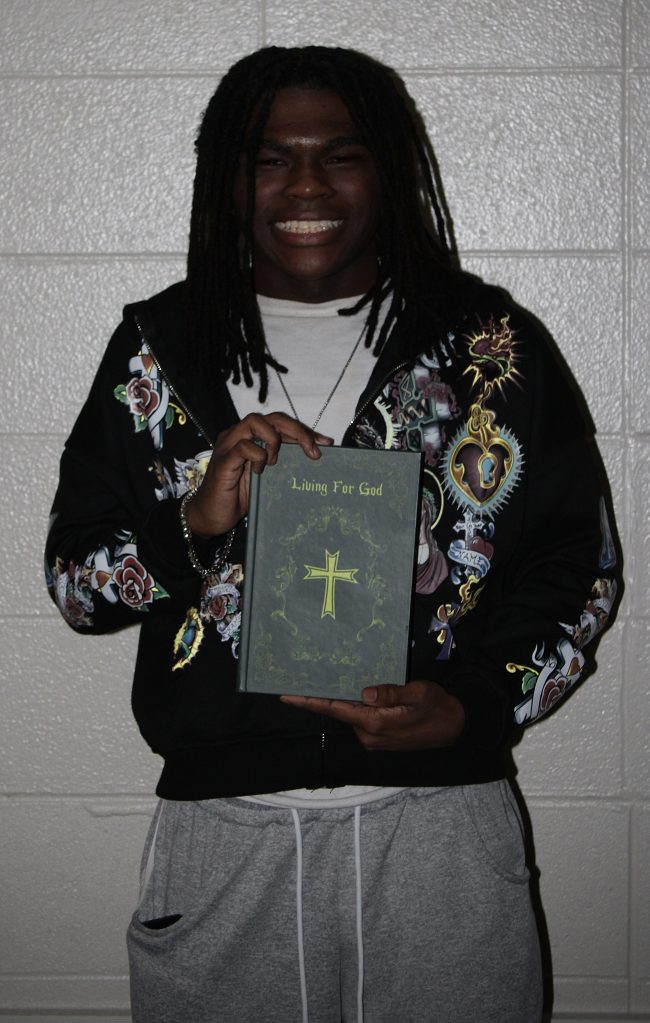
Recently, a book titled Living for God was published by JHS student author Jeremy Baker, a junior. The book’s inspiration came from Baker’s own reflection and experiences and discusses daily faith and intentional living.

Junior author Jeremy Baker displays his most recently-published book, Living for God. Photo by Shelby Keesee.

Baker has published two books, A Heart for God and Living for God on Amazon. Both books provide guidance and acceptance through God. A Heart for God, Baker’s first book, originates from a time where Baker realized he wanted God to be part of his life. This experience later developed into the book’s cover and overall concept.

“I have experience in journaling a lot, especially about situations, struggles, lessons and conversations I had with God,” said Baker. “What started it all was I had an image in mind of a torch with a blazing flame; then I thought about a heart – my own heart, and it made me think about having a burning desire for God in your heart.”

A Heart for God rewarded Baker with personal growth, reflection, and an idea for Living for God, Baker’s recent book.

“From there, I started growing more and more, and there was a time when I was reflecting on what I’ve been doing and how much I changed, and how much I was wanting to live for God, which became the idea for my second book, Living for God,” he said.

Baker summarized both of his works, offering insight for anyone interested in his books”

A Heart for God

A Heart for God is a guide for anyone who feels lost, feels emptiness in their heart, or is spiritually distant and wants something that’s real. This book guides the readers through recognizing the emptiness they have, to understanding purpose, overcoming struggles like temptations and distractions and builds a strong spiritual foundation.”

Living for God

Living For God is a book that is like, shifting from that desire of the heart for God, to daily action and applying it once you have that heart for Him. The first book focuses on developing the heart; Living for God focuses on living it out.”

The two books contain progression, starting from transformation to applying faith and belief our daily lives.

Junior Jeremy Baker’s two self-published books, A Heart for God and Living for God. Photo by Shelby Keesee.

Baker said his favorite book was A Heart for God because it was the first book he published, and due to its topics of desire and faith.

Describing his first book as the start for everything, Baker said, “Before you can truly live intentionally or live for God, there has to be a genuine desire in your heart, [and] without that desire, it doesn’t last. It’s also my favorite because it represents the beginning of my journey, which without it I probably would’ve never made the second book, Living For God.”

An experience on the school bus opened a door for Baker to explore his own faith and eventually begin his writing journey.

“What inspired me to write my books started on the bus when school was over. I saw this one girl who was speaking about God and strong foundations; it deeply impacted me a lot and I felt so much peace in the area. It sparked a strong desire in me to pursue God intentionally.”

Baker said this strong desire led him to follow God, which allowed him to write about his experiences and gain another desire: impacting his readers.

“The impact I want to make with my books is helping (young/adults) people feel very purposeful and hopeful, and reminding them that they were placed here intentionally by God,” stated Baker. “I want the readers to recognize that God is present in every moment of their lives, whether they’re happy, angry, or going through something difficult. I want people to think more deeply about their actions, their motives, and the direction of their lives.”

Faith and purpose are both crucial to Baker because he believes in individuality and that each person has his or her own talents and purposes in life.

“This is important to me because I’ve seen how people, especially around my age, get distracted,” he said. “A lot of people live by only the moment without asking, ‘What can I do now that will matter in the future?’ I feel called to speak to my generation about faith in a way that encourages discipline and intentional living. I don’t want people to waste the gifts and the potential that God has given them.”

Both works are recommended by Baker if readers need faith, purpose and direction.

“I would recommend these books to anyone, young and older. Or if anyone feels maybe unsure about their direction in life, or feel distracted. I also want readers to know that faith is about being willing to seek, grow, and live intentionally.”

Canva’s beginner-like tools enabled Baker to design his book covers. Baker has experience in graphic design and recommends Adobe Illustrator for advanced designs.

Baker discovered the Amazon Kindle Direct Publishing platform, which guided him to publishing his books online.

“I researched the Amazon Kindle Direct Publishing (KDP) and watched tutorials on YouTube to understand each step on how I can get my book on Amazon,” said Baker. “I learned about formatting, trim sizes, and cover dimensions. At one point I was hiring someone through Fiverr to fix some errors with my book, but after looking into Amazon’s Cover Creator tool, I was able to fix the errors myself, which is how I was able to publish my second book.”

Not only is Baker a growing author, but he is working in the fashion industry.

“In addition to writing, I’m also at the moment working on a future clothing brand business, working in the fashion industry, which is a long term thing I am committed to doing.”

Additionally, he is committed to publishing a third book, which remains untitled for now, as he is in the “researching stages of working on a third book, taking time to study, reflect and gather everything I need before I fully jump into it.”

Baker said he wishes to reach readers from every religion and inform them about their worth.

“Even for those who may not believe, I do hope my books at least encourage them to recognize that their life has purpose, and that they were placed here for a reason.”

Financial stress affects high school students 

by Chloe Newton

For many high school students, the day doesn’t end with the last bell. After class, some head to part-time jobs, others to extracurriculars, and many try to balance both, often because of financial pressure.  At Jeffersonville High School, students say that money plays a growing role in their daily decisions, from whether they can attend school events to how many hours they work each week.

“I started working to sell smoothies because I wanted to help pay for my own things,” junior Onesty Gipson said, “but once I started. I realized  how hard it is to manage schoolwork and a job at the same time.” 

According to students, common expenses include gas, clothing, food, phone bills, and saving for college. While some work to cover personal spending, others say their income contributes directly to household expenses.

Sophomore Shane Adkins works around 20 hours a week at a local department store. “I help pay for my clothes, phone bill, and sometimes groceries,” he said. “It’s stressful,l but it feels good paying for my own expenses.”

Teachers have noticed similar patterns as well. French teacher Dana Schenk said students who work longer hours sometimes struggle to keep up academically.

“They’re motivated and responsible, but there are only so many hours in a day.”

Not all students experience financial stress in the same way. Some students say they do not need to work and receive financial support from their families. Sophomore Vivianna Hill said money is not a major concern for her right now. 

“I don’t have a job so I can focus more on school and clubs, but I know that’s not everyone’s situation.” 

The difference in financial responsibility can affect social life as well. Several students said they skip outings or school events because of cost. 

“Sometimes I just say I’m busy; it’s easier than explaining I can’t afford it,” said sophomore Monseratt Gonzalez.

Despite the challenges, some students say working has taught them important skills. Sophomore Lucy Roberts said managing her paycheck has helped her learn budgeting.

“It’s stressful, but it’s also made me more aware of how money works,” she said.

Schenk also encourages students feeling overwhelmed to seek support. 

“Whether it’s adjusting work hours, accessing school resources, or just talking it through, students don’t have to handle financial stress alone,” she said. 

As students juggle academics, work, and personal responsibilities, financial pressure remains a quiet but significant part of high school life, and it is something that will always affect students differently depending on their circumstances. 

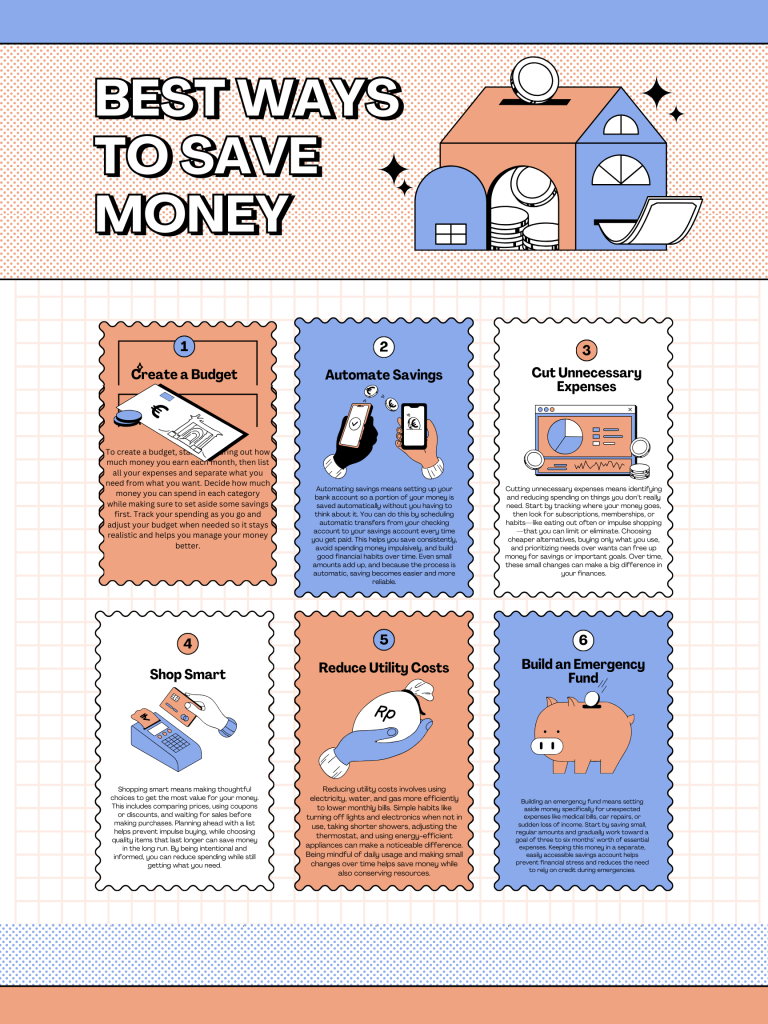
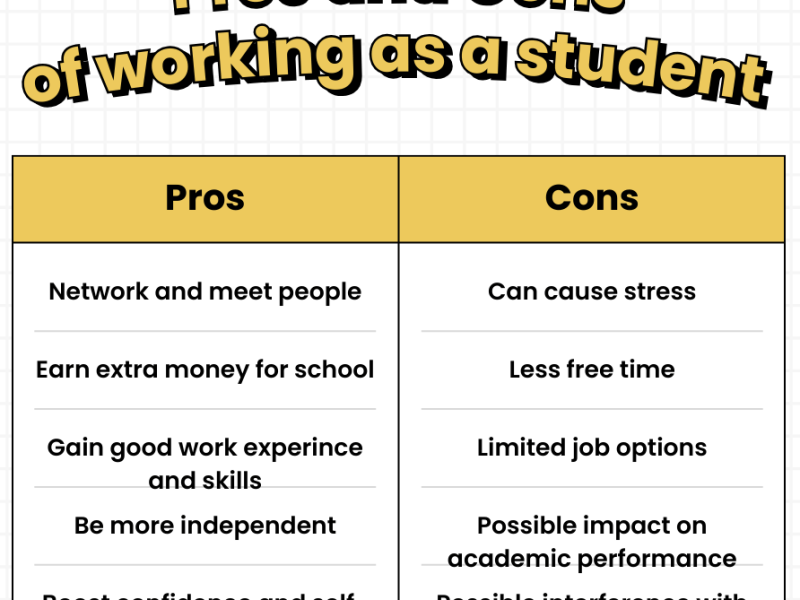
Graphic by Chloe Newton.

Planning and support help JHS teens balance school with part-time jobs

by Breslyn Dozal

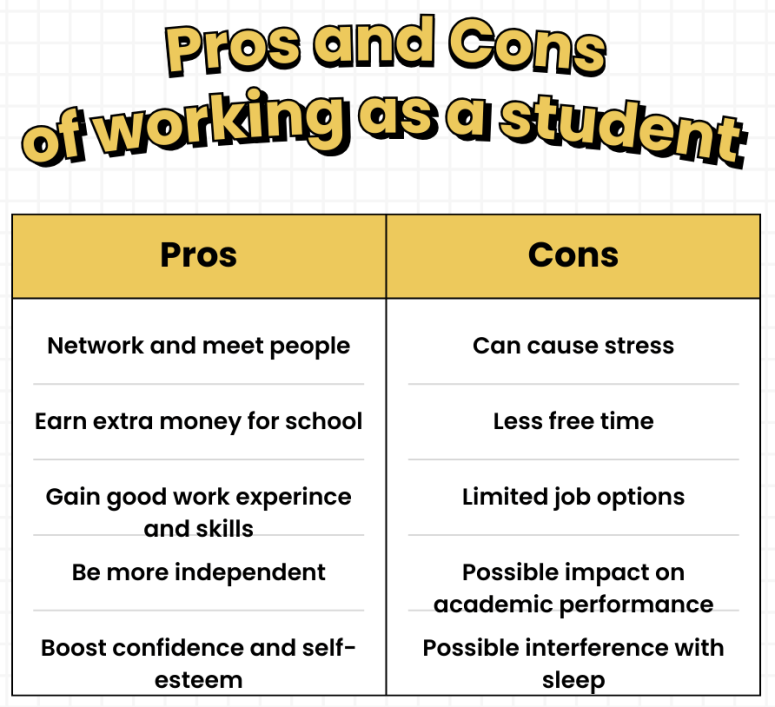
Balancing school and a job can be tough for students. It takes good time management to handle both without falling behind.

All students are different. Whether it’s studying or dressing a certain way, there’s one thing they all have in common. They need jobs! The real thing is, how do they maintain a job while being a student?

“I usually only work at least three days a week unless I pick up more shifts, but I try and get most of my school work done if I work that specific night. Sometimes I’ll plan out my week just so I know everything that I have going on,” said senior Kendall Curry, who works at 7brew Coffee.

When planning a routine, making sure students have everything sorted out is one of the hardest things. Many steps come when making a routine or schedule. The biggest thing teens can do is set a goal and have self motivation.

“I would say, my mindset helps me focus on what the next step is to the ending step,” said sophomore Marcus Baker, who works at Taco Bell.

Graphic by Breslyn Dozal.

Being a student athlete may also be a challenge when it comes to balancing work and school. On top of school work, students have practice and games which might make it hard to get to work on time or get there in general. 

“Do school work quick, work the days I can, and practice when I can,” said sophomore Kaden Waters, who works at Culver’s

When asked, Baker said being considerate of the time given and managing time well helps him most when it comes to being a student athlete and balancing work.

Talking to coaches and employers about working around students’ schedules is the best way to form a good working relationship alongside school work. Most coaches find a way to plan important stuff around athletes’ schedules. 

Another good way to plan is asking others in the same situation how they do things. What their strategies are and how they manage everything. How they keep up with school, work, and sometimes sports too.

“I keep up with my job by working no more than 30 hours and not working multiple days back to back,” said senior Maxwell Schoonover, who works at Kroger.

It’s also important for students to enjoy high school years. If students are always spending time doing work or sports and school, they’ll forget to have fun. Another thing is overwork. Working too much and not giving enough will make everything 10 times harder.

“It is important to work but it’s also important to have fun in high school and school is already like a job so it’s important to give yourself a rest,” said Schoonover

One thing that Jeffersonville High School offers is academic pathways. These pathways are mandatory but very useful. It helps students to take certain classes to be prepared for out of school work. It also offers real job sites during students senior and junior year. Helping them prep and know what you’re stepping into.

Another thing being offered is Prosser. Prosser is a real life learning experience. With work based teaching, Prosser helps students get the experience they need.

“One of the beautiful things now about high school education is because of the ways the pathways are able to work your senior year during the school day and that is a part of your academic portfolio. You can get a grade for it, you get release time from school. You can get school credit, earn money, get your job during the school day. And that’s a part of the state’s initiative on this work- based learning,” said Jeffersonville High School principal Pam Hall

Balancing work and school takes effort, but with good planning and support, students can succeed in both. It’s all about staying flexible and focused on their goals.

,

“Elemental” Is a Mix of Vibrancy and Heart

By Lacy Blanton

“Elemental” (2023) is the newest animated film produced by Disney and Pixar. Although marketed for young viewers, the film has two adult stories to share: one of romance and the other of immigration.

In a world where the four natural elements (Fire, Water, Air, and Earth) are the anthropomorphic inhabitants comes Ember Lumen: A young Fire woman who’s the daughter of “Fireland”-immigrants, living tucked away in Firetown, a district of Element City. Her family and culture mean everything to her – evident through her goal of becoming the next owner of her aging father’s convenience store. Just when she believes her future life is all figured out, Ember meets an unlikely friend (and her very unlikely Prince Charming), Wade Ripple: a young Water man, through certain circumstances. Their relationship may appear to look doomed from the start as the societal belief of Element City is that “elements don’t mix”, but that idea may be challenged as Ember and Wade grow closer as friends, and even a little more than that. 

One of the main highlights that can draw any person into watching the film is its animation. Almost every scene was beautifully colorful; from the backgrounds, locations, and character designs. The greatest comparison of its style is of a watercolor painting – vibrant, fresh, yet so calming. Its shimmering flair never grew too overwhelming for the eyes to see and multiple scenes had something new for viewers to see, such as the Lumen’s bustling convenience shop, the ‘Cyclone Stadium’ and Brook Ripple’s (Wade’s mother) aquatic luxury penthouse.

The character designs were remarkably impressive by how much their movements were reminiscent of their real-life counterparts. The artists and animators truly embraced the concept of the characters being their respective elements in scenes of having them display their own unique abilities, to how they can struggle or benefit from another elemental force. 

Both stories of Ember’s family, and the love story between her and Wade balance with each other. Impressively, they even intertwine at times. The Lumen family’s struggles and resiliency as Fire people residing in Element City is a reflection of what many real-life immigrants in our everyday world experience. It’s something insightful and inspiring to see. 

As an animated movie: was it a rom-com, and was it romantic? Very much so! Wade and Ember had an adorably wholesome relationship thanks to their chemistry, appreciation for each other, and willingness to help lift one another up. Wade intuitively goes out of his way to make Ember happy, and the latter is always attempting to protect him from her parents’ distrust toward Water people. Being of different elements: the couple is a perfect metaphor of an interracial couple – It has its difficulties, but they make it work out of means of true love. 

The film had a way of making the audience feel for the main characters. All you wanted was for Wade and Ember to be happily together without any challenges, and for Ember to have the best of both worlds with her parents, career, and her newly found love.

Peter Sohn, the director, was inspired to create “Elemental” based on his own personal experience of being born to Korean-immigrant parents in 1970’s New York City. To hear such an inspiration that originated from childhood is a highly vulnerable yet special thing. When watching the film, you could feel the love that Sohn had poured into it with scenes or background information on the Lumen’s being native to Fireland. 

Around the time of its release, “Elemental” received generally positive reception, with merely a few mixed reviews from critics; praising the picture for its visuals but pointing out how the storytelling felt underwhelming – a very unusual detriment for a “Pixar” flick. While it doesn’t live up to the sheer masterpieces of “Wall-E”, the “Toy Story” franchise, “Finding Nemo”, or even “Soul”: “Elemental” is still an enjoyable, heartfelt picture that tells a mixed but balanced story of an opposites-attract romance, the importance of family and their sacrifices they make. No matter any accusations of “underwhelming” storytelling from critics: the vibrant animation, endearing lead characters and their bond, and the director’s inspiration outway such criticism.

As a self-declared “Pixar” fan: this wasn’t a definite favorite film from the company’s collection, but nonetheless, a charming picture that one can hold dear to them for a long time, and that can be most likely said the same for Peter Sohn. 


Abortion: A Woman’s Choice or In the Hands of Our Government?

  By: Lacy Blanton, Guest Journalist

June 2022: It was a dark time for many Americans across the nation, as on the 24th of that month, the Supreme Court had issued a decision concerning the Dobbs v. Jackson Women’s Health bill, overturning Roe v. Wade. The protection to the legal right to abortion was eliminated; with this, numerous states had begun to ban the rights and access to abortion. 

On September 15th, 2022: The state of Indiana, my home-state, fell victim to this deadly decision of a bill. The mere exceptions of legal access in Indiana are in the the cases of rape, incest, fatal fetal abnormalities, or to preserve the life and physical health of the person who is pregnant before 10 weeks after conceivement. 

I vividly remember the time it had all occurred. Ads, social media posts, news segments, and YouTube videos capturing images of those fighting in protest, or in support of this controversial bill. I recall many clinics being ushered to shut down in response, and the unwavering sound of victory at my evangelistic church. In addition, my church has recently implemented a drive to donate infant products and necessities to a pro-life organization for “mothers in desperate need”. 

I am here to express my anguish and disgust at such passing of a bill, how morally wrong it is in many ways, and how this option in mind must be the pregnant woman’s decision, not the government’s.

Many opposers will try to express how abortion is the murderous hunting of innocent unborn children. How the women who are proceeding with abortion are selfish, cold-hearted vipers. How clinics such as “Planned Parenthood” are greedy corporations who are unapologetically open about eliminating unborn life.

According to “KFF’s ‘Key Facts on Abortion in the United States’”, data before the Dobbs decision had gathered that a vast 92% of abortions occur during the first trimester of pregnancy. With this knowledge: we know that in the first trimester in a woman’s pregnancy, the embryo or fetus is a clump of biological molecules undergoing chemical reactions. Therefore, this leads us to the idea that this “baby” is not considered truly living.

Those who seek abortion as an option are a whole spectrum. They go through the procedures all for differing reasons. It is an immense injustice to label them and envision them in a negative light. “Planned Parenthood’s ‘Our Abortions, Our Stories’” shares the anecdotes of women from around the US, giving their reasons as to why they chose the path they did. One woman said in the article, “My stepfather abused me from age 8 to 17. At 15 I became pregnant and lied to my mother that it was my boyfriend’s. I had an abortion because the mental and physical abuse continued afterwards…”. Another lady said, “When I was 20 I had an abortion. Being so young and barely getting by financially, I was in no position whatsoever to have a child…”. A third said, “…At age 31, I had a 3 ½ year old son and was pregnant with my second child… My husband and I found that the baby had several heart defects. We went to see several specialists to see if his heart could be fixed after he was born. They told us that he would live and grow in utero, but would die after birth… We decided to spare him the suffering and interrupted the pregnancy at 22 weeks.”

“Planned Parenthood” is a health organization that has a 3% abortion service, with the majority of their work consisting of STD testing and treatment, cancer screenings, infertility services, and offering sex education. To get an abortion through them, the organization has you meet with your doctor, nurse, or health counselor to discuss whether abortion is the best decision for you. Even if one is adamant about going through the procedure, they emphasize that they will halt everything if you change your mind, even as far as the surgical removal. With these facts, it shows how precise and supportive Planned Parenthood is, and always looks to the best interest no matter what one decides. 

“Capital B”’s Kenya Hunter gave insight on a reproductive rights group launching a campaign, and also gave how they advocate that abortion bans are racist against the Black community in America. The group, known as “Unite for Reproductive and Gender Equity” or “URGE”, had its Georgia organizer say, “We aren’t just strictly coming from a lens of what’s happening with our wombs or with our uterus,.. [Abortion bans] have a trickle-down effect. People with low income have to bring in another child that they can’t afford. The point of the ‘Abortion Bans Are Racist’ campaign is to make sure the conversation isn’t just about abortion… but how does this further create disparities within our communities?”. Additionally, their campaign had researchers who predicted to them that with more people forced to carry out their pregnancy, this will result in increased risks in bad maternal health. As a Georgia-based news organization: Hunter points out how the state’s Black women are already three-times more likely to die from pregnancy-related complications than White women.

As of 2023, only three US states have the right to abortion in full status. These states being California, Michigan, and Vermont. 

I, like many others, find this decision from our Supreme Court to be disappointing and discouraging. This is a reminder that our country still has room for improvement regarding a human’s right. 

We cannot change the mind’s of every individual, but if we can show the Supreme Court the dangers to this passed bill, perhaps they can reconsider this injustice. 

Fortunately, we are not alone in this protest. As Kenya Hunter had discussed, URGE’s ‘Abortion Bans Are Racist’ campaign is just one of many groups fighting against this ban. 

 This isn’t based on a viewpoint that is politically-motivated, and with the harms that this ban is capable of as mentioned: it is unavoidable to point out its concerning flaws. Kaelea Lucas, the Georgia organizer for URGE, said it best; “The decision of what somebody does with their body and whether or not they are going to get an abortion ultimately should be between that person, family, and maybe a medical provider if that’s what feels comfortable to them,… But who should not be involved is the government. There should be no political reasoning for anything like abortion bans.” Banning the right to abortion sends the wrong message to so many. It silences voices, gives misinformation about clinics like “Planned Parenthood”, gives ignorance to the idea that “babies” are being “killed”, and drastically affects the Black community in health and finances. With this ban and absurd claims continuing to be established, we are going to do more harm than good toward women and their overall health. 

The Creativity in Restrictions

By Sam Ottinger

Getting into the arts can be a challenging quest, whether it’s getting the ideas or actually putting said ideas into the world. In this time of confusion, I believe that having a rubric of restrictions can be the support that lifts creativity to its highest form. Having a set of rules to follow can help ideas flow, it can be a more relieving position, and help the artist try new things.

Many can agree that one of the most difficult parts of the arts is creating the idea, yet when you have to work your way around certain things, then it can be an easier way to find the path that will lead you to a fall of ideas. Restrictions put in the building blocks, then the artist can complete the designed task, and after they are able to push certain aspects (that aren’t restricted) to make the piece their own. It can also help cut down on decisions that are put in the artist’s hands, so they don’t get overwhelmed and burned out as quickly by the overflow of creative ideas. As stated by Thomas Oppong in his article about creativity, on Inc., “With constraints, you dedicate your mental energy to acting more resourcefully. When challenged, you figure out new ways to be better.” Having a specific direction for where your energy can go can help you get more ideas and thus the artist goes through a slower decline in their rate of ideas.

Instead of having total freedom and being surrounded by stress from blankness in the creative department, you are able to get a new point of view which can help you get a better understanding of different techniques for a new set of tools. Some may say that with restrictions, it can be difficult to fully shine because of the choices being so limited, and they aren’t entirely wrong. When creative rubrics are too restricting, it can lead to the same amount of problems that having too much freedom contains, extra stress to stay in the lines and lack of related ideas. It’s just like everything else, too much of anything is bad. Yet when these placements are done right, it can be extraordinarily beneficial for the artist. As said by Jason Bell, an Associate Professor of Marketing at Saïd Business School, “When well placed, constraints can force us to step out of our mental comfort zone and connect a schema to something new. This can very often lead to innovative ideas”.

Unclear directions and the fear of experimentation can hold many people back, including the need for near perfection is a craving that many artists, whether new or old, chase after for years. When using restrictions in your craft, it will give you clearer directions, help you be forced to try something new, and it can push you to slowly become ok with not reaching the status of perfect perfection. A batch of restraints can not only force you to try something new, it can also help you focus and create better ideas then you would have before. An article published by the official Harvard Business Review helps to support this claim by stating, “Constraints, in contrast, provide focus and a creative challenge that motivates people to search for and connect information from different sources to generate novel ideas for new products, services, or business processes”.

With all these reasons, it is clear that adding in restrictions can be extremely beneficial. From how it helps increase idea flow, how it leads to less pressure, and finally how it can help artists try new ideas that the artist normally wouldn’t try otherwise. So if you are ever stuck, try adding in some restrictions, and don’t be afraid to try something new.

Women’s History Month 2023: Celebrating Storytellers 

By Lacy Blanton, Guest Journalist

March is upon us once again. With this, the annual events of this month include the highly-anticipated March Madness, the mournful (or celebratory) ending of winter, and the welcoming of spring.

Another special event arises during this time: Women’s History Month, an annual declared month that highlights the honorable contributions of women from our society. Each year within the United States, a distinctive theme is chosen by “The Women’s History Alliance”. Recognizing the diversity and different roles that women have played throughout history. 

This year’s theme is a very special one. That theme being “Celebrating Women Who Tell Our Stories”. Highlighting those who have dedicated their lives and been active through press, broadcasting, blogs, podcasts, playwrights, scholars, and much more.

I wish to recognize and honor the trailblazing female journalists, from yesterday and today, who have made and continue to create a potent bridge between women and the world of journalism.

Barbara Walters – (1929-2022)

Legendary broadcast journalist and television personality, Barbara Walters has been in the journalism world for remarkably over sixty years.    

After receiving a bachelor’s degree in English from Sarah Lawerence College, Walters would land a position in writing press releases for NBC network’s flagship station “WNTB-TV”, now known as “WNBC”. In 1961, she joined “The Today Show” as a researcher and writer, and later became the program’s ‘Today Girl’. Only handling light stories and discussing the weather. A time Walters herself described, when a woman discussing “hard news” wasn’t an idea that many took seriously. She broke that mold however in 1974 by being the first female co-host of a US news program.

By 1979, Walters had teamed up with Hugh Downs for “ABC”’s program “20/20” as correspondent and later co-host. Where she flourished until her eventual retirement in 2004. Seven years prior, she became the co-creator, co-executive producer, and co-host for daytime talk show “The View”, and later retired from her career as a noteworthy anchor and journalist in 2014.

Throughout the course of Walters’ career: she was most eminent for her interviews involving high-profiled individuals. Such as former US president Jimmy Carter and wife Rosalyn Carter, current Russian president Vladimir Putin, actress icon Lucille Ball, and ‘King of Pop’ Michael Jackson. She was also well-known in asking the most brutal of questions amidst interviews.

Barbara Walters passed away peacefully in her Manhattan home on December 30th, 2022. She was 93 years old. In death, she leaves behind a daughter, close friends, and a legacy of helping pave the way for future female journalists.

Belva Davis – 

Born in 1932, Belvagene “Belva” Melton-Davis is another phenomenal example of shaping the world of storytelling. She was the first ever African-American woman to be a television reporter for the US west coast, and worked as a radio broadcaster and news anchor for multiple stations.

Upon performing a freelance assignment for African-American magazine “Jet”, and receiving a mere $5 with no byline from it: Davis found herself writing pieces for other minority publications such as the “Sun Reporter”. 

Throughout the 1960’s, Davis worked radio stations across radio stations with “KSAN”, “KDIA”, and “KNEW”. She then ultimately landed a spot for “KPIX-TV” in San Francisco, where she was positioned for thirty years. 

Davis made herself recognizable for her coverages involving politics, race, and gender. As well as her calm, collected disposition. She has gone on to win eight “Emmy Award”’s and has been recognized by the “American Women in Radio and Television” and the “National Association of Black Journalists”.

Belva Davis is still alive and well today; having been retired since 2012. She cheerily lives in Petaluma, California with husband Bill Moore. She has two children with ex-husband Frank Davis. Despite her current age and reported diminishing memory, the journalism community still sees the versatile, talented woman who has ‘opened the heavy doors’ for so many. 

Juju Chang – 

Korean-born television journalist, Hyunju “Juju” Chang has created an impressive career for herself with backgrounds in “ABC News” and “Nightline”.

From Stanford University, Chang graduated with a bachelor’s degree in Political Science and Communications. After school, she began working for “ABC” as a desk assistant in 1984, and would later work for “ABC World News Tonight” as a producer and off-air reporter.

By 2009, Chang had made history in becoming the first Korean-American with an essential role in US morning news television through being a part of “Good Morning America”; where she was the news anchor and helped contribute news stories. She would eventually leave to work full-time for the program “Nightline”.

With her work-ethic and dedication, Chang has received numerous awards throughout the course of her career. Some of her achievements include the “Alfred I. DuPont”, multiple “Gracie’s” and “Emmy’s”, and a “Freddie” award.

Chang now lives on the west side of lavish Manhattan with husband Neal Shapiro (whom she has three children with), proudly continuing to serve as anchor for “Nightline”. She is an involved member of the Asian-American community as she is a founding board member of the “Korean American Community Foundation” and member of the “Council on Foreign Relations”.

Akoto Ofori-Atta – 

Proud co-founder and chief audience officer for the Black-led national news organization “Capital B”: Akoto Ofori-Atta is one of a kind in her work.

In her early life, Ofori-Atta earned her bachelor’s degree in Print Journalism from Hampton University, and received a master’s in Communication, and Culture and Technology from Georgetown University.

She would go on to become the associate editor and social media manager for “The Root” and hold the position of senior editor at “Essence Magazine”.

Before leaving to pursue further development of “Capital B”, Ofori-Atta was previously the managing editor for “The Trace”, where she took full accountability for partnerships, special projects, and editorial operations. She had also completed a John S. Knight Journalism Fellowship at Stanford University in 2015, focusing on issues regarding the Black press and diversity.

Today, Akoto Ofori-Atta continues to help “Capital B” flourish. Her “Instagram” account showcases the vibrant life she lives. Through promoting “Capital B”, sharing past heartfelt memories of friends and family, and pictures of her and the love of her life. She and her husband also share a beautiful baby girl together.

Shahrnaz Javid – 

Woman of words, wearer of all hats, vivid photographer, and traveling-dreamer: Shahrnaz Javid is no doubt a soul many people should aspire to be.

Born in Louisville, Kentucky and graduated from Jeffersonville High School in 2011, Javid’s background and story is one that touches many of us.

Upon graduation, Javid attended Columbia College Chicago to major in magazine writing and was under a scholarship when attending. In 2016, she graduated with a bachelor’s degree in Journalism.

Since then she has been involved in a number of enterprises as a writer and/or content creator. Several of her works include being an intern submissions editor for “Toksick Magazine”, a content creator for “The Times”, and currently holding the positions as a creative writer for “Unsaid” and contributing writer for “SVRN”. On top of that, Javid is her own boss as she is self-employed as a freelance writer and photographer.

Residing in Antwerp, Belgium with her husband and their beautiful little daughter, Shahrnaz Javid is very open about her career and life through her “Instagram” page. Upon reading and catching glimpses of her page, one can say it’s like a storybook come to life. Shots of urban European landscapes, eccentricities, lovely colors, and captions with words belonging to a poetry book. 

Shahrnaz Javid, like the rest of these outstanding storytellers, is someone who is beyond influential.

Reading and/or listening to all of their professional work is an absolute must. They are all a mix of talent, truth, and devotion combined. These five journalists did more than merely write. They created a story of their own that many more female storytellers will look up to.

The Repetition of Star Wars

by Sam Broady

Star Wars has been releasing a lot of content lately. You can watch it all on Disney Plus. But will you enjoy it? Do you like repetitive spinoffs that keep you attached to the past? Or do you like refreshing stories with new characters and expansive lore? I believe the writers should focus more on originality than formula. This was the great mistake of the Disney purchase in 2012. They continue to show their desperate merchandise intentions through all these films, series, games, and more. But Star Wars isn’t the only cash-grab franchise; that term applies to Marvel, Pixar, and the rest of Disney as well.

Let’s start with the sequel trilogy. Whether you enjoy it or not, there’s no denying its similarity to the original trilogy and its reliance on fan service. Disney didn’t plan a storyline, their writing was based on the audience’s reactions to each installment. For example, the amount of backlash that “The Last Jedi” received led to a retcon of everything in “The Rise of Skywalker”. Rey is a Palpatine instead of a nobody; Anakin’s lightsaber is fixed; Kylo has his mask back; and Rose is heavily sidelined. Fast forward to season 2 of “The Mandalorian”. The first season is its own story, but the next one is a festival of cameos from well-known franchise characters including Cobb Vanth, Bo Katan, Ahsoka Tano, Luke Skywalker, and R2-D2. Then there’s an animated series entitled “The Bad Batch”, a prime example of one cliche after the other. There are some good episodes, but most of them have no stakes and old characters are thrown into the story on occasion to keep us engaged. Next we have “The Book of Boba Fett” which is literally living in the past. There are cameos everywhere and Tatooine is an overused location that loves smashing familiar sites in your face. Which is one of the problems with the series “Obi-Wan Kenobi”. It’s nothing new; it uses shaky cam too often; and it’s the third time we’ve seen the protagonist care for a child.

There’s a pattern to be noticed here. Disney is relying too much on our familiarity with the franchise in order to get viewers. I think plenty of people would still watch their content if they took a new approach. “The Mandalorian” was the first Star Wars series on Disney Plus and it succeeded because it’s a standalone story with a completely different tone. But people don’t realize that. The final arc of “The Clone Wars” is in the top tier of television. “Andor” is such a bold take on the lore and it doesn’t feel like Star Wars at all. Clearly, Disney isn’t always lazy. “Rogue One” is a great film that tells its own engaging story without the Skywalkers. “Rebels” is a fun series with many meaningful moments such as Ahsoka’s duel with Vader and Kenobi’s confrontation with Maul. The point is that Star Wars needs to be more consistent with its quality. One day, it’s the same old content. The next day, it’s the best we’ve seen in a long time. The reason Star Wars became popular in the first place is because it was something no one has ever seen before. It’s an exploratory adventure with memorable characters and iconic imagery that blew everyone’s minds with the ambition of its filmmaking. Now, they need to continue building off of that.

The other Disney projects have the same issues. The Marvel Cinematic Universe is even more formulaic and I cannot stand how unoriginal the majority of its installments are. They’re typical superhero stories with an overuse of poor CGI. Again, not all of them are like that. It mostly applies to Phase 4 and the amount of content released isn’t helping. They need more time to craft thoughtful and passionate projects. Pixar isn’t necessarily in the same boat, but even their films have a tiring formula at this point. Sure, each installment has its own creative premise and execution. But they all have very similar messages. Whether they’re about life, family, or friendship.

The moral is that people don’t like seeing the same thing over and over. We only pay to do so because we expect something from franchises that we fell in love with. Writers like Dave Filoni, Jon Favreau, and Rian Johnson need to stay in the business because they have bold takes on storytelling in Star Wars. Dave Filoni dove so deep into the lore of the universe; Jon Favreau crafted an original and immersive western story; and Rian Johnson wasn’t afraid to take a trilogy into a new direction. I believe techniques like those are what’s most important.