Most Recent

Cowgill, Callan bring media experience to WJHI

by Sam Ottinger

The focus of WJHI has always been on the subject that they are focusing on, yet turning the cameras back on those running the TV & Radio process is an important part to truly understand the work that they all do.

One of these hard workers is one of the new TV & Radio teachers, Fred Cowgill, who brings his expertise to WJHI and JHS. 

As fate would have it, right after grad school, Cowgill would get a position on CNN and be “thrown on national tv,” as Cowgill put it, at the age of 22. After being a stand-in for someone who was sick, he has been on the air ever since.

After spending 44 straight years on air, Cowgill has settled down in JHS’s broadcast department and officially got the job in June. Prior to this, he worked at U of L and WLKY as a sportscaster for 38 out of the 44 years.

He started in Atlanta, Georgia, with CNN Sports, then went on to shift over to ABC Rochester New York for four years, until he made his way down to Kentucky for WLKY, in 1986.

While there, he “fell in love with the city and everything around it,” enjoying the horse racing, like the Derby that he was able to cover for 38 years straight, and the college sports that filled the town. This enjoyment led it to becoming a very personal and bittersweet departure, but as Cowgill put it, it was time for him to go.

Even though he had pursued the live broadcasting side of the industry, he still had just as much passion in teaching. Cowgill graduated with a masters in broadcast journalism, seeing this as the only way for him to get into the business, hoping that one day he would be able to teach. And he got that day after U of L asked him, and he agreed to teach part time back in the 80s. He had then left the teaching business until this past spring to teach a course in Producing Kentucky Derby stories after he retired from his job at WKLY in May. 

Now, Cowgill may have been out of his broadcast job, but even in his retirement, the fire to teach had not gone out. He wasn’t sure if he would get another job, even though he was searching, there were none that checked all the boxes. 

This also applied to our school when principal Pam Hall and athletic director Larry Owen contacted Cowgill in late May, informing him of the developing position, during his final week at WKLY. 

He was willing to listen, but admitted, “At first, when I came over, I was ready to say no a couple times” due to the amount of work it would take for one person, yet Hall wasn’t going to let go of this opportunity. And due to her willingness to help aid the changes Cowgill suggested, he decided to take the job.

Cowgill’s reluctance to take the job was not due to him being picky; it was due to the massive workload that taking this position would have on one person. The lessons he teaches are unlike lessons from the past teachers, which forces him to take the knowledge and reverse engineer it to make an understandable curriculum. 

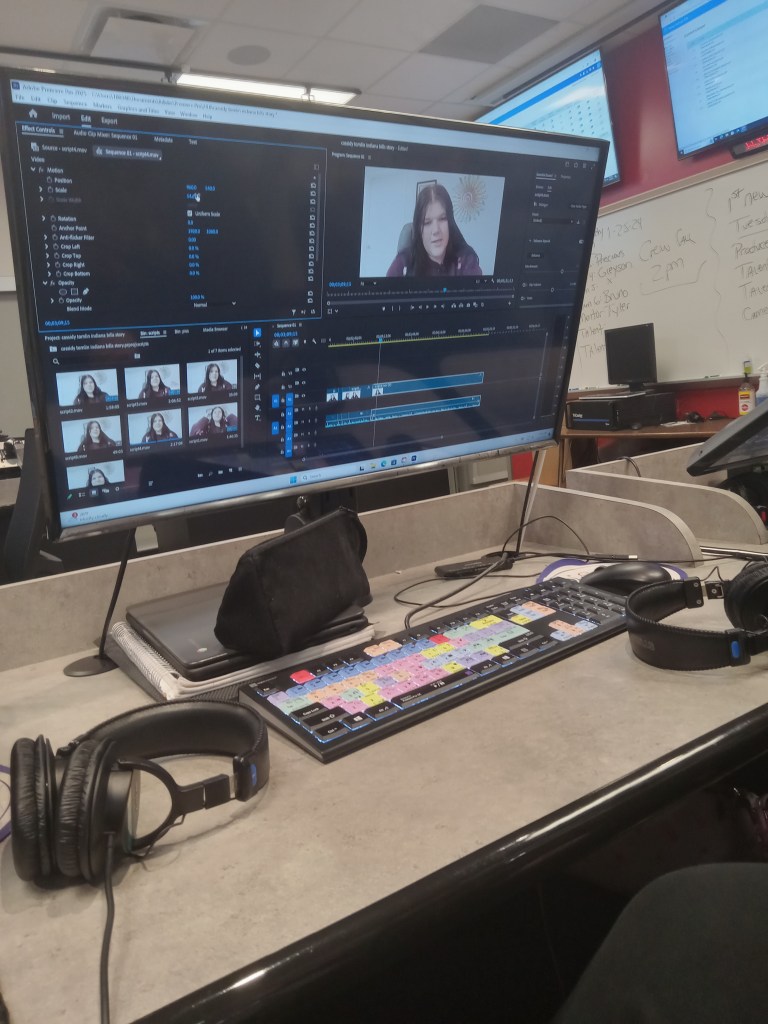
Having to become a master in different editing programs all at the same time can be a struggle, even to those like Cowgill who have been working in this type of field for as long as he has. 

This struggle has been eased due to the help from the other new production teacher, David Callan.

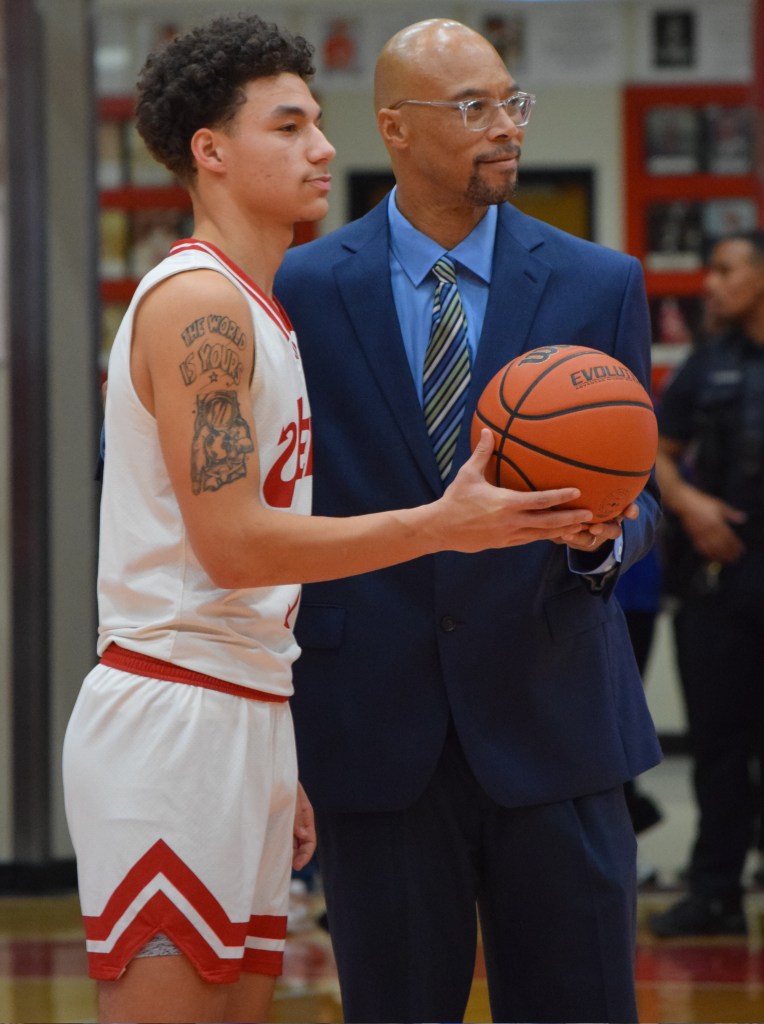
New JHS broadcasting team Dave Callan and Fred Cowgill in the WJHI studio. Photo by Bruno Diaz.

“If that basketball court was Adobe Premier, Mr. Callan could tear it apart and put it back together again, while I just play basketball on it. The same thing is true here. I can play in the neighborhood, I just don’t know how it was built,” said Cowgill.

Cowgill and Callan knew and worked with each other from 1986 when they were both on WLKY, Callan having worked there for 28 years, up until 2003 when Callan transferred to WRDB, where he worked for 21 years. Callan left on a Friday and started working at WRDB the following Tuesday. 

Callan started his radio journey as a station runner for WLKY. He would run errands like picking up video tapes, film, and audio tracks. 

This may sound like a small job, but this was all prior to his senior year in high school where he was able to get up close and personal to the equipment.

Callan has a total of 49 years in radio, which he’s now leading into his 50th year with working in radio at JHS, and freelance jobs, like working on and off for the Cincinnati Bengals, where he is an operator of the big screens.

Callan “blames Cowgill” for first hearing of the position at JHS when Cowgill brought along Troy Middaugh, Production Manager at Hearst Television, to help him teach the more technical side of TV & Radio. Middaugh was a past employee of Callan, and a past coworker to Cowgill, so he understood both of their abilities and thought that Callan was the one he knew to call.

“I feel honored and blessed,” Callan stated.

Callan said it was as if his planets aligned when he got the call from Cowgill, recalling how his path on WDRB was changing due to choices being made to the station by the owners.

“I helped build something great, and now they wanted me to tear it down”, so when the company was offering people of a certain age early retirement to reduce staff, he took the retirement, unexpectedly by the company, “I’m going to take the retirement, and I’m going to come over here and have fun.”

Hall described the hiring of the new broadcast team as a great moment for the program and the school.

“Any time it comes to bringing on staff to work with our Red Devils, I want to hire the best. I try to swing for the fence, every time. This school year, I was able to hit many home runs with the hires, across the broad in all subject areas. Hiring Mr. Cowgill and Mr. Callan was a grand slam!” she said.

One final project that Cowgill was keen on mentioning was one goal being worked on in TV & Radio, “I am Jeff.”

Similar to the “I am Horseracing” campaign launched in 2019 by those in the industry, in order to improve the public’s view on horseracing, yet this new plan has little to do with horses, and more to do with improving our own self image.

Cowgill stating, “There is a lot more here to be proud of, and people don’t necessarily get that.”

Freshmen adjust to high school life

by Ja’shia Mathews

High school is an adjustment for any student. Every person is trying to discover who they are in a not-so-forgiving climate. It’s very stressful to transition from middle school to high school.

Freshman Isabella Stewart said, “I talked to my big sister who is already in high school. She helped me prepare for high school, and I try to prepare myself mentally.  It isn’t easy making friends. Everybody is very judgy and looks mean. Work has been easy for me for the first couple of weeks.” 

She added, “The food is better than my middle school food. The lunchroom is much more organized, and I like sitting anywhere I want with my friends.” 

Freshman Kayla Taylor, said, “High school is harder than eighth grade because it is tough to learn the work. Jeff High is a huge school, but most of the kids and teachers are nice and help a lot.” 

High school is a struggle for freshmen coming into a large school from middle school, especially when adjusting to the amount of academic work.

For example, freshman Chris Allen said, “There is a lot of work. We get new assignments each day.”

Allen said he relies on his older siblings for help in school. 

“If I don’t know it I ask my older sister and brothers. I have a lot of support at home that helps me throughout the school year.”

Some classes are very easy for Allen and remind him of middle school.

“Coming into high school is tough. People try to pick on you because you’re very small and they think because you’re a freshman you can’t be good at certain things.”

JHS does have programs in place to help incoming freshmen adjust to high school life.

For example, some freshmen expressed gratitude towards their Academy principal, Holly Bernard-Bramlett, for her efforts in facilitating their academic journey. 

According to her, “They are all on teams, and we have meetings to discuss any issues and touch base.”

Bernard-Bramlett assumed the role of Freshman Academy principal in 2020, acknowledging the significant influence of freshmen in high school. She emphasized that just as the freshmen were learning about high school life, she was also acclimating herself to the role.  

High school is a journey of self-discovery, and every adolescent who enters it leaves changed by their experience. That is the true meaning of high school. 

New directors highlight band goals 

by Isaac Steven Raymer

New director Briston Hatchell instructs band students after school. Photo by Esme Estrin.

JHS has two new band directors Briston Hatchell and Sidney McDonald, who are co-teaching everything music related and like jazz, band, and guitar. 

Both band directors have said that they’ve considered themselves friends for a fair amount of years; both having music teaching experience before joining JHS. Hatchell said he has 10 years of teaching band, which includes several years at Floyd Central High School. McDonald has three years of teaching experience at both the middle and high school levels. 

It’s definitely clear they both have a passion for teaching music, and music as a whole. Both teachers have had their lives impacted by music.

Hatchell, early in life, said he wanted to be an architect until he realized there’s a lot of math involved. While he “wasn’t good at math,” he was talented with the trumpet, so in middle school he decided he wanted to teach music.

McDonald did not take the same path as Hatchell in high school, as she really liked chemistry and ended up becoming a chemistry major in college for a year. She decided to transfer schools for a music program since she missed music and decided to do drum core, which led to her transferring to Indiana State as a music major.  

Both teachers described that they love teaching, and they both put in a lot of work to make sure they are helping all their students the most they can. But it does become a very time consuming job.

An average week of teaching for them normally consists of marching band on Tuesdays, Thursdays, Fridays, and most Saturdays after school, with an open band room around three days a week so kids can practice if they would like with either of the musical directors. 

A school day for them normally consists of AP music theory, guitar and then for the last three periods – 4th, 6th, and 7th – they collaborate and teach intermediate band, a big guitar class, and advanced band. 

Even though they are both doing a lot for all of JHS’s music-related activities, there is still much more they want to do with an emphasis on the band program.

Hatchell said, “We want it bigger, we want more kids and, you can put this in print, we have a school of 2,300 kids and our goal over five years is 10% of the school, so that’s 230 kids, so if we get to that then I say we achieved our goal.”

He makes it very clear that they both want to be able to teach the most they possibly can. They also stated that, even though the band is pretty well funded, they do run fundraisers to help JHS music-related classes be the highest quality they can be.  

Those interested in marching band can go to https://jeffersonvillebands.org to find every upcoming event involving JHS music.

Mark Reilly Tennis Center honored at U.S. Open

by Dahlia Karey

The Mark Reilly Tennis Center was recognized this Tuesday with the prestigious 2024 Outstanding Facility Award from the United States Tennis Association (USTA) at the U.S. Open in Queens, NY.

Former tennis coach Mark Reilly at the U.S. Open in New York to accept the USTA 2024 Outstanding Facility Award. Submitted photo.

The Mark Reilly Tennis Center is named after the former Jeffersonville High School tennis coach and teacher, who has also been inducted into the Indiana Tennis Hall of Fame. This award is in the Large Public Facilities category, one of the five offered.

The 12-court facility serves the community in a variety of ways, including programming like youth camps, tournaments, and promotion of tennis in the community. These factors pushed the Mark Reilly Tennis Center past other nominees to win the award.

Current tennis coach Jerid Inman said, “We have implemented year-round clinics for elementary through grade school students, launched an elementary tennis initiative to introduce tennis to 5000 elementary students, hosted numerous high school and college tournaments, and have continued to build the facility into one of the best in the nation for high schools.”

Principal Pam Hall traveled with Reilly, his family, and athletic director Larry Owens to New York this week to accept the award and said that it was an honor.

“I can’t think of a more iconic place to celebrate than on the hallowed grounds where the greats of the sport, Billie Jean King and Arthur Ashe, won open championships,” said Hall. “What an amazing day to be a Red Devil!”

Inman said, “A huge thank you goes out to the Jeffersonville Tennis CTA, the city of Jeffersonville, Jeffersonville High School, and the USTA for supporting the tennis program.”

The award will be displayed at the Mark Reilly Tennis Center.

Former tennis coach Mark Reilly and principal Pam Hall accept the 2024 Outstanding Tennis Facility Award at the U.S. Open in New York on Tuesday. Submitted Photo.

Starting off the year with the Student Council

by Sarah Masingo

Student Council President and senior Koy Ramer has big goals he wants to meet. Ramer plans to rebuild. 

“My plans for this year are mostly a rebuild year. Senior Co-President ,Madison Pritchard, and I really want to focus on bringing a lot of things back that were lost to COVID. We still haven’t seen a lot of things like the homecoming dance,” Ramer said.

Ramer wants to bring back special events that he thinks means a lot to the school and himself, Including the homecoming dance, taking place this September 28th. 

“The homecoming and pep rallies, we just want to have a lot more fun events to bring back up. We really want to set a foundation for future Student Councils and presidents to be able to do more,” Ramer said confidently. Ramer wants to get back in the habit of having fun events for everyone. 

Ramer felt very welcomed becoming Student Council president, especially considering he moved into the school from another district.

“It was very welcoming, coming from a school that wasn’t in Greater Clark. I came into Jeff High knowing 10 to 15 max. People only that I knew from my swim team to being able to go from knowing almost no one to being elected president to essentially becoming president of the whole student body. It was really assuring. I’m going to be able to make a change in this school.” 

Ramer would recommend joining the Student Council. 

“Even if people don’t know you personally, as being a part of this council you’re able to make decisions that affect everyone in the school. If there is something you really want to see you have the opportunity to bring that to council and see that get worked on and see that get changed.”

Ramer saw results, and he thinks students will be able to see them if they too join Student Council.

 “I wanted a homecoming dance, and I went to (principal) Mrs. Hall and now it’s going to happen. And you are able to see real results of what you want done in this school.”

The perks of being president to Ramer is that he is allowed to make things happen that he wants done. “I’m able to bring things back that haven’t happened in a while and I’m able to make sure that everybody on this council has a voice.” 

Ramer will take suggestions to Hall or the administration. He added he will take what students say into consideration. 

“As a president I like that I can make things happen and make sure that every event that the Student Council wants to hold is getting to the people that can make it happen.” 

Ramer is looking forward to the events that the Student Council has planned.

“I’m looking forward to homecoming short term since we haven’t seen it in many years and it’s something that students want, but long term i’m really excited to see Madison and I as Co-President able to set these plans that will not just affect our senior year but hopefully this sets a pattern for many Jeff High years. And it’s not just us making the homecoming dance this year and it starts a pattern of homecoming dances every year after this, so that every class can enjoy it.”

Ramer encouraged students to follow Student Council plans on social media, saying:

“For any readers out there, there’s a lot that we’re planning this year that I think is really exciting. People should be aware of making sure you’re listening to announcements, follow our Instagram so you know of any events that we’re planning and just keep an eye out because it may be easy to miss. We are going to be doing a lot this year that I think will be really exciting.” 

Starting off a new year with NHS and its sponsors

by Sarah Masingo

The National Honor Society has big plans for this school year. Co-sponsors Justin Linde and Emmaly Rose are leading the National Honor Society as a team. Unlike last year, Linde and Rose want to put officers together, induct juniors to celebrate and honor seniors of the NHS.

  Linde and Rose want to talk about roles and responsibilities. They also would like to have announced officers in September. In addition, they will be having a meeting with just the seniors. 

Linde wants to be able to let the students run this group. “While running this group of academic leaders, I would like to have students involved in the NHS to take charge, be able to lead the group themselves and make decisions,” he said.

Another activity the NHS would like to have this year is another blood drive since last year was so successful. Students could potentially work the event. 

Linde said he feels “excited and nervous” about the officer election coming up soon.

He would like students with a high academic ranking to be able to feel free to join the NHS. “Whoever is elected as the NHS president should be able to help support students,” Linde said.

 Linde would like other students to join this group to set themselves apart from their peers. “It looks good on a college application and to be a part of this prestigious organization.”

Linde emphasized the community leadership focus of the NHS.  The organization is “very community service focused, but now we have an E.C.O. club. Which shows that we can continue to support other clubs and lend voices but most of all this group sets us apart from others because we are very academically focused,” Linde said.

Linde is looking forward to officers being more involved; he stated he expects “officers being more involved in ownership, projects running smoothly, becoming more creative, new members, new ideas, and becoming better.” 

“National Honor Society isn’t just another club, it’s an organization of scholars. It’s that one group, students want to join to become a leader in their community. Juniors, be on the lookout for invitations, and seniors be ready with new ideas,” stated Linde.

Red Devil football team kicks off with stellar scrimmage

by Ifrah Daber

Let’s all give a large hooray and hurrah for a strong, entertaining scrimmage from the Red Devils football team. 

Last Friday, August 9th, our boys’ football team held a scrimmage, and there was zero disappointment in either performance or in turnout. 

“The school is doing a great job supporting the team, even though we didn’t do well last year,” Stated Raijon Laird, a senior football player who attended the Scrimmage. The Red Devils’ plan to hit the ground running this year. 

The whole crowd was a sea of red and white as the school showed great pride for its Devils’ football team. 

The cheers in the stadium were like waves of sound spreading across the large field. 

From students, to teachers, to families coming together to show just how excited Jeffersonville High School is for this new year.

Tearing up the House with Bill 1608

By: Savannah Ottinger

On May 4th, 2023, Governor Eric Holcomb signed the House Bill 1608 into law; this was after the bill got a vote of 65 to 29. Once 1608 was signed, it was put into effect on July 1st of the same year. Some may hear this and think that it isn’t important to mention this specific bill, but to those it directly attacks, well, they would beg to differ. House Bill 1608 was originally written as Indiana’s version of Florida’s “Don’t Say Gay” bill, yet it was changed once in court and dropped most of its parts that closely aligned with Florida’s original version, specifically changing the necessary consent for a name change. Sadly, that doesn’t mean that members of the LGBTQ community are safe from attack. For now, this bill specifically targets trans youth and their right to a private identity. It has now put children in possible danger, though the publishing group would like to say they only care about keeping the kids ‘safe’, and has even gotten rid of many people’s only public safe space. To numerous individuals, this is a ridiculously unnecessary law which ultimately does more harm than any possible good. And the problem isn’t just for trans individuals, but also people who just prefer to be called a shortened name.

The passage of House Bill 1608 truly shines light on a frustrating pattern of hits against LGBTQ rights and individual autonomy. While the advocates might try and argue that this bill is about child protection and prioritizing their safety, yet a slightly closer look, or even an interaction between these groups of people, reveals a thinly veiled attempt to undermine the personal rights of a vulnerable demographic. When interviewing someone, who would like to remain unnamed, they echoed the same sentiments of many, that since this law was put in place, they have felt more in danger than before because of how the notification of their chosen name being revealed could lead to harmful reactions from their parents (going against the entire supposed purpose of this bill). The publishing group’s claims of ‘protecting kids” ring hollow as their actions take away an essential lifeline for many. By stripping away this seemingly minor act of personal preference, the legislation highlights a bigger concern – the intrusion of the state into the private matters of their citizens.

By targeting trans youth and their right to a private identity, the legislation inadvertently perpetuates an environment of fear and discrimination, thus pushing these young individuals further into the shadows. The impact goes beyond just hypothetical issues, but it directly affects the sense of safety and community for LGBTQ youth in every aspect. The bill’s passage effectively erases what was once a sanctuary of self-expression – a public safe space where these individuals could seek refuge and affirmation, for once one section of the community is forced to take a step back, the others will surely be dragged behind as well. All of the people who were interviewed all stand against what they see as an unjust and harmful measure. The battle line has been drawn, and the discourse with the legislation, heard from people around our school, will undoubtedly shape the future of LGBTQ rights within schools and the state.

In the end, House Bill 1608 stands as a stark reminder that even in an era of progress, there are those who would willingly turn back the clock on personal freedom and equality. The consequences of this bill go far beyond its original intent, sparking debates about individual autonomy, safe spaces, and the fight for justice in a society that should be moving forward, not backwards.

Guide to Surviving Freshman Year 

By: Ifrah Daber 

How sweet was 8th grade? You used to be a big fish in a small pond. You were at the top of the food chain, and now? You have been thrown into the ocean with the sharks. Welcome to Freshman Year! The school, the number of classes, the number of students— everything is vast, and now you are forced to swim. But don’t stress yet, because I, your wise upperclassman, am here to help! With my survival guide for freshman year, I will give you tips and tricks to help you get through it, so let’s get to it! 

First, you must understand the difference between quarter and semester grades. Your quarter grade is the sum of your assessments and assignments. Assessments take up 70% of your grade, while assignments take up the other 30%. So each quarter you will get a final grade, and that affects your semester grade. You have four quarters and two semesters (two quarters per semester). So if you get an A in your first quarter and a C in your second quarter, then you will likely get a B as your semester grade. Simple, right? Well, your grades determine your GPA, and depending on that, they will give you a number between 0 and 4. 0.0 GPA means you have done zero work, getting Fs across the board, and the numbers go up, representing the letter grades. 3.0 GPA means you get mostly B’s, and 4.0 means mostly A’s. I know that all sounds extremely boring, but it’s important to know. 

I could go on for many pages, but who wants to read that? Plus, there is more to school than work. One of the joys of attending a high school like Jeff’s is the number of clubs they offer. From my experience as a young freshman, my biggest problem was just being too scared to join clubs or not knowing where they were. The latter is easier to solve since a lot of clubs promote themselves on the pride slides. These are slides that should be shown to you during impact, but just in case your teachers don’t show them, don’t panic. A lot of clubs also promote themselves during morning announcements. So in the morning after the pledge, you will hear about all the essential information for the day. Also keep in mind how clubs will greatly affect your schedule. High school is the perfect time to branch out and try new things. So don’t miss out on the new opportunities that Jeff High has to offer!

Freshman year can feel overwhelming. It may feel like it will never end, but it’s shorter than you think. Many have survived the torture of freshman year, and so will you. I have put together a list of advice from different groups of people, including graduates, mental health specialists, and upperclassmen. 

The first list of advice is from your upperclassmen; some of them have been kind enough to pass down their logic to you. 

1. Don’t Date Upperclassmen. Just remember the classic rule! If the grades don’t touch, neither should you. 

2. Develop Good Study Habits. You have a decent amount of work to do and tests to complete. So developing a solid study habit now can help you in the future. If you don’t wanna fail, STUDY! STUDY! STUDY! 

3. Don’t Stand In Big Groups. It may seem like no big deal, but once you have experienced the stress of rushing to class only to end up being blocked by a sea of kids moving as fast as morning traffic, you will understand the frustration. You try to go left, you try to go right, but alas, there is no way around them. It’s annoying; If needed try to stay near the sides. don’t be those kids; no one likes traffic. 

4. Stay Caught Up! You get a lot of schoolwork during the school year, so it’s a pain for both you and your teachers to have a lot of missing assignments. So make sure to stay caught up! 

The second list of advice is from a mental health specialist; high school is a hard time for most people mentally. It is hard for a lot of people to deal with the stresses of school, so here is some advice and some resources for you. 

1. Develop a Routine With Your Mental Health In Mind. Just like your study habits, your mental health needs routine; doing certain activities every week or day can help with this. Either exercise, meditate, or do anything that works for you.

2. Don’t Be Afraid To Ask For Help! Whether it’s schoolwork or something more personal, don’t stop yourself from getting help if you need it. I have added some mental health resources at the end of the article in case you ever need someone safe to reach out to. 

The third list of advice is given by previous students, long past their freshman year. These graduates were kind enough to take their years of wisdom and pass it down to you, naive young folk. 

1. Figure Out Your Interest. High school is a great opportunity to explore your interests with a sense of security because you are likely not paying for them. So try new things; don’t be afraid to explore your interests. One of the joys of attending a high school like Jeff’s is the number of clubs they offer. From chess to archery, Jeff is filled with different opportunities to broaden your horizons. 

2. Don’t Go Exploring The Hallways During Passing Periods.You only have five minutes in the hallway. Don’t waste it on unnecessary exploration. You ain’t Dora the Explorer, so just go to class. 

Well that is all I have for you. I wish you the best of luck in your journey of discovery and hope you have a fun and exhilarating freshman year. 

Mental Health Resources: 

Suicide and Crisis Helpline: 1-800-784-2433 

National Eating Disorder Association: 1-800-931-2237 

For LGBTQ Youth: TrevorLifeline at 1-866-488-7386, TrevorText -Text START to 678-678 Substance Abuse and Mental Health Services Administration Treatment Referral Helpline: 1-877-726-4727

Student Jobs 101

By. Juan Carrillo, Lola Mays, Wesley Lanham, Rhianna Ledbetter

Getting your first job is something all parents and guardians dread, but it’s also  something teenagers can’t wait for. Getting a job means you gain more responsibility and freedom, but there are so many questions one might have about picking that one special place to work: How much do they pay? How do I apply? What’s the work like? In this, we will be discussing answers to all of these questions, as well as some tips for that first day on the job! 

Some may say it is bad for teenagers to get a job because it could add stress to the ever changing balance of school and social life. Having to balance school, work, and other activities builds your resume and helps one to develop time management skills. Speaking of resumes, that might be one thing you need for that first job. Most places hiring highschool aged people don’t require a resume, but it might be wise to offer one to show previous credentials. Points that you can add to your resume include the sports you play, hobbies, or extracurriculars. Employers like to see what you have to offer, so having a resume can show them your character and teamwork skills. 

Applying for a job may sound daunting but it’s a lot easier than you would think. A lot of businesses have online applications that you can fill out by looking up the website or by typing certain keywords into your browser. For example, if you wanted to work at a pizza place in Jeffersonville, Indiana you could type, “Pizza place hiring in Jeffersonville, IN”. You can also ask for an application in person, just by asking an employee if their job is hiring; the worst they can say is no.

One location that is perfect for a first job is Chick-fil-A, typically they begin hiring at 16 years old. The Hyphen interviewed a tenth grader who goes to JHS about her experience working there. “I like my job most of the time, customers and co-workers can be exhausting and not worth it, but it can be said the same vice versa.” The pay may vary based on location, experience, and age. That is why we recommend asking your interviewer about wages like how often you will get paid and what your pay will be. A majority of employers pay every two weeks, but some pay once a week or by the shift as well. 

Another local employer is Stone Cold Creamery, an ice cream shop located near Kroger on Tenth Street. They hire aged 16 and up. We interviewed a few students who said the hours can be demanding at times, and would not recommend working there if you are focused on school but that doesn’t take away from the friendly environment. The employee also said “It’s chill and I love basically playing Papa’s Freezeria in real life.”

Other businesses hiring 16-year-olds around Jeffersonville are Kroger, Meijer, and Rural King. These are great options if you are looking for a retail position, and if you like talking to people and enjoy walking around this job might be for you. In most cases, you will be stocking shelves and helping people with their questions. Some days you might be in different departments or working the cash register. Their paying range is around $12-16 depending on the location.

Other things you will need to know while entering the workforce is how income taxes, state and federal, will affect your paychecks. It is also important to know your rights at your job to make sure you are not being taken advantage of by your employer. Depending on your age you can only work a certain amount of hours a week. Make sure to do your proper research about federal and state labor laws concerning minors before you get a job.

Getting a job is something that can bring responsibility to any teenager. It’s part of becoming who you are and shaping your life. It’s always necessary to make sure you’re going through the correct steps of applying for a job. It is also important to have someone who is experienced to check things over on your application like your grammar and spelling and the correct information you want to be known. We hope you take in consideration the considerable amount of jobs in our article and get inspired to try to make some money.

The Newly Implemented Halo Sensors

What are they?

By: Teagan Cofie

As the teen vaping rates rise once again, High schools across the nation (including ours) have been trying to eliminate the usage of nicotine by its students. To accomplish this, schools have turned to HALO smart sensors to solve their nicotine predicament. As stated on the HALO Smart Detector’s website, HALOs have won over 60 awards and can detect flammables, hazardous chemicals, and air quality changes such as vaping and smoking and changes in temperature and humidity but will it truly help prevent vaping in schools altogether? 

One could definitely say that vaping is a large problem that our school faces in the 21st century, but it’s not just us. As of 2022, about 1 in 10 high school students currently use e-cigarettes. An Oct. 25, 2021 study found that the number of vaping teens doubled between 2013 and 2020, and the number of minors who stated they’d vaped in the past 30 days rose from 1.6% to 8.4% in the same time. But because of the implementation of HALO sensors, this number could potentially decrease and improve the well-being of our school. One review available on their website claims that prior to the installation they had over 20 EMS calls for students that they believed were suffering from effects of vaping and they said that since the devices had been in place they have not had to make any. According to feedback from our staff, they said that overall there are probably fewer kids vaping as often so they think there’s been improvement post installation. When asked about the environment before the sensors “it was so bad that there were times I would walk in the bathroom and it would look like I was in a sauna, it was literally like hazy air…it was crazy, ” said Mr. Henderson, 9th grade English and bathroom monitor. 

Based on these opinions alone it seems as though in the short amount of time the sensors have been put in place they’ve been improving the vaping issue to a certain degree, and will hopefully make a larger impact on vape use in our school. If all goes well the HALOs, the #1 vape detector worldwide that is in over 1,500 school districts throughout the country, will make this year healthier and potentially form Jeff into a smoke free campus.

How Do We Deal With Subconscious Trauma?

By: Lacy Blanton

Image: “Mind Vomit” by Saira-Jayne Jones, the Perspective Project

Imagine this: you’re mindfully strolling through life in a cheery manner. All is well until you are met with an unwelcoming memory, a memory from the past that you look back on with regret, cringe, or even resentment. 

The negative memory can be a variety of events. Was it about you saying some hurtful things to someone when you were in the heat of anger? Or was it that bitter time of feeling socially rejected by your fellow classmates at school? No matter the situation, it’s something that seems to follow you like a shadow. Frequently, the image pops into your mind and leaves you emotionally defeated.

This incident is, what I call, subconscious trauma, and from personal experience, it’s definitely not an enjoyable time when having its discouraging episodes. Fortunately, through time, I’ve found a solution in how to cope with these negative thoughts.

When feeling an episode starting to come on – i.e. thinking about a memory and sensing my emotions toward the subject: I seclude myself to a quieter room, sit down and close my eyes, turn on meditation music through my phone, and begin talking to myself.

Firstly, I admit the negative emotions I’m feeling and the trauma I’m having. Then, I focus on navigating myself through the situation by talking about a potential solution to the problem and remind the positives about myself. 

The sessions of mine are usually a tremendous success with moving forward.

Of course, there are other plentiful methods in coping through such a problem, and this is evident through the several students of Jeffersonville High School I had the chance to interview.

The following Q & A is from my interview with a Jeff High Senior:

Q: Do you have any bad memories that haunt you? If so, would you mind sharing?

A: Honestly, when my dog passed away. It really affected me.

Q: I’m sorry for your loss. What was your dog’s name?

A: His name was Shadrach. It’s a biblical name. He was the best dog I’ve ever had.

Q: How does it make you feel when the memory pops up?

A: It makes me upset and reminisce on the good times we had together.

Q: How do you cope with this bad memory?

A: Whenever I’m upset about the memory, I write. It’s very peaceful and relaxing. Whenever you write, it’s like being in your own world.

In my interview with a Jeff High Junior, the student expressed how there was indeed a negative memory that haunts them in life, and how they feel upset and even humiliated when reflecting back on the moment. In their copings, they found journaling and communicating with another person to be the most therapeutic.

 These different techniques of different students show how there is no official “right” way to cope through a personal crisis. Everyone is unique, but we struggle similarly at the same time, and that should be a comforting fact to know of.

Another helpful mechanism that many also look to is seeking mental evaluation through a professional (counselors, therapists, psychologists, etcetera). 

If one’s subconscious trauma appears more severely dire, or struggling with unhealthy coping habits, this solution is the most appropriate for that situation. 

Mental health still carries a plethora of stigma. It isn’t easy for one to reveal their vulnerability to others or even themselves. 

However, today’s climate has become more accepting in acknowledging such problems, and its door is something that will most likely continue to open as time progresses.