
by Areli Hernandez
As cell phone use has become a controversial topic nationwide, Indiana lawmakers debate a stricter measure that could prevent any cell phone usage by Hoosier students during the school day.
Indiana State Representative Wendy Dant Chesser, who represents District 71 that includes Jeffersonville, finds the proposed legislation effective to improve students’ education and health.
“I do support this legislation. The goal is to improve students’ focus in class and increase face-to-face interactions with their peers. About 46% of teens say they’re online almost constantly, which is worrisome. We know that a high amount of screen time can negatively impact teens’ self-esteem, social interactions, and mental health,” she said.
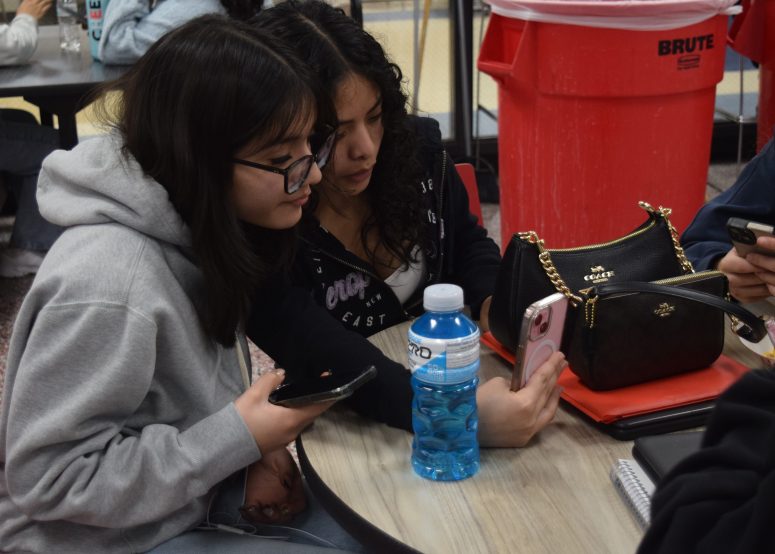
Math teacher Jaclyn Fifer breaks down current issues students have encountered with phones in her classroom.
“The regulation policy is that students are not supposed to have phones during instructional time. Unfortunately, we don’t have all students abiding by that, and because I also deal with upperclassmen, I do feel like they make a lot of decisions for themselves and need to learn about responsibility,” said Fifer.
As technology continues to integrate to the daily life of students, it has also become an issue with students complying with certain expectations.
“It just seems as phones have become so much more social; it’s hard to ask the students to try to do something on their phone educationally because they are so drawn to what else they can do beyond other sites. That is even true with chromebooks and technology,” said Fifer.
Chesser agreed that putting a stop to cell phones during school hours allows students to become responsible about their devices.
“By giving them the full school day without phones, we can help teens learn to self-regulate their phone use before they become adults,” said Chesser.
Even though this hasn’t become a severe issue for Anatomy and AP biology teacher Missy Brewer, she hopes for a better alternative to help students.
“I think students understand that the phones are a distraction, but they’re unable to put them away without someone forcing them to. I wish we were able to teach students strategies for not needing their phones all the time rather than just making that a rule, but we’ve tried that, and it doesn’t work,” Brewer said.
Brewer also has certain expectations for her classroom in order to maintain their efficiency.
“I start each class reminding students to clear off their desks, including their phones. If I see someone on their phone, I’ll say something to them. I let them have their phones for the last five minutes of class and also have them put their phones in a ‘caddie’ during testing. I think it’s important that students don’t have that physical distraction in front of them,” she said.
Radio/TV teacher Fred Cowgill finds himself questioning the legislation regarding students’ educations and well-being.
“l’ve got very mixed emotions on what’s being done or trying to be done. I disagree with it at the end of the day, honestly, because I don’t want someone to tell me what I can or can’t teach, and this is an important ingredient because kids would rather tear off an arm than give you their phone, and we’ve got to be able to educate these kids in a better way so they don’t feel that way anymore,” Cowgill said.
Cell phone usage is a serious topic for Cowgill, whose lessons rely on media equipment on a daily basis.
“The problem for us is that we use our phones; the kids use their phones as part of the process of doing what we do here, which is turning in stories for social media, for the internet, and for our newscast we do every Tuesday,” he said.
On the other hand, he is also concerned about the amount of screen time dominating teenagers’ lives.
“Attention spans are down to five minutes at a time, that’s it. I’m like, ‘Wow.’ Apparently the peak was two hours before smartphones came out; the smartphones and the internet have damaged that quite a bit. It’s a serious topic, I won’t fib, and there are a lot of layers to it, which is why so many people react to it in such a negative way, especially teachers,” he said.
While the current law limits cell phone usage during instructional time and allows students to use devices during lunches and passing periods, Chesser said the new legislation would add more restrictions if passed by the Indiana legislature and signed into law.
“This year’s proposed legislation, Senate Bill 78 from Sen. Jeff Raatz, would completely restrict cell phone use in schools,” said Chesser, who mentioned several ways schools could comply with the proposed legislation.
“Schools could choose between two enforcement policies: students can’t bring phones to school at all, or schools can implement a secure storage policy. It expands the definition of a wireless communication device to include smartwatches that connect to cell phones,” she said.
Senior Camila Levario finds the proposed legislation unwise and even dangerous for not only herself, but for other students who are self-aware of current events impacting their lives.
“A complete cell phone ban would not kill me, but with everything going on in the world right now it’s not a good idea at all. I understand if anything important happens the office will notify us, but what if by the time they tell us or find us it’s already too late? I just wouldn’t be able to live with that,” she said.
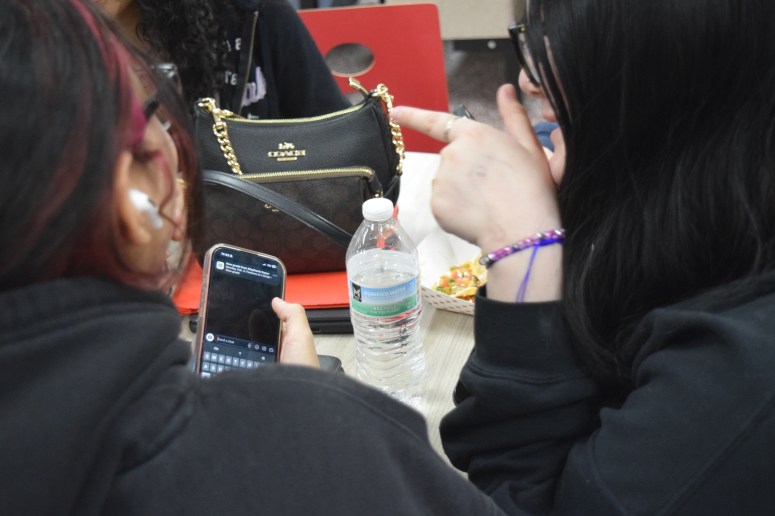
With the number of students having their devices, Cowgill said this would be prominent for the safety of students and the school.
“God forbid anybody ever tries to break into the school and do some harm to us. In our case, right now we have roughly 24-2500 people who would have phones and would get the message out to their loved ones and authorities,” he said.
For sophomore Arieslie Tejeda, a near-total ban for cellphones would be an adjustment.
“I wouldn’t think a complete phone ban would affect me personally because if I put my mind into learning I’ll get the work done without AI, but I feel like we should still be able to listen to music or get on our phones when we have free time and during lunch time. We should also still be able to carry them in case of an emergency,” she said.
Many students find cellular devices useful as it increases focus when completing certain tasks. Senior Susan Ochoa said a cell phone ban would not improve learning or safety.
“Things would be changed around since I wouldn’t be able to quickly contact my parents in case of an emergency and wouldn’t be able to listen to music to focus in class. It would be hard to communicate with friends if we need to borrow a Chromebook or school notes,” she said.
Senior Luis Rebolledo is apprehensive about the current cellphone issues, emphasizing the importance of having a cell phone for safety precautions.
“A complete phone ban wouldn’t bother me at all. You’d get used to it eventually. What would concern me though is — what if we or our loved ones were in a situation and we had to contact each other? Stuff goes on around the world and we could be involved in a dire situation. The office wouldn’t act fast enough to contact the other. Scenarios like these are where we would need our phones to alert anyone and let them know about our well-being,” said Rebolledo.
Cell phone use has been a debatable topic for several Indiana school corporations. While some are in favor of a complete cell phone ban that would enhance the education and performance of Hoosier students and teachers, others oppose to the potential outcomes this legislation would create for several students.
“It’s the state’s job to provide Indiana students’ with a quality education. We also have a role to play in ensuring teachers and administrators can do their jobs to the best of their ability — cell phone use hinders both,” said Chesser.
Additional reporting by Jackson Anderson and Magdalene Conrad.
 thehyphennews.com