by Liddia Waterbury
Snow days are supposed to keep students safe, but late cancellations could do the opposite. When schools wait until the last minute to cancel classes, students are forced to wake up early and prepare to travel on icy, dangerous roads. This delay can create unnecessary stress and put safety at risk, especially for students who walk, bike, or ride buses to school.
According to the National Weather Service and local weather stations, winter storms and icy road conditions in southern Indiana are often predicted at least a day in advance. This raises questions about why school cancellations are sometimes delayed until early morning.
We’ve had snow days with asynchronous learning this school year. This is because the night before, there was snow. It was under 32 degrees, and that caused the snow to freeze and the roads to be icy. But Greater Clark County Schools didn’t call off school until the next morning.
This caused students to wake up early and could have caused stress for them, their parents, and people like bus drivers.
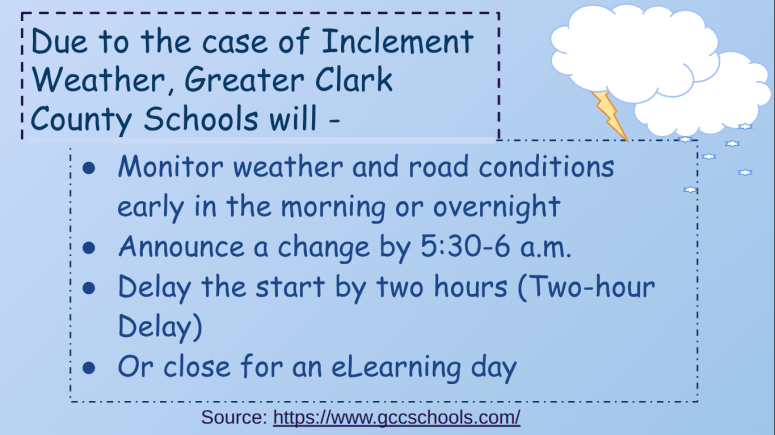
As well as stress, situations like this can also cause major safety concerns. According to Zipdo, there are an average of 10,800 winter weather-related crashes per month in the U.S.
Then the National Weather Service says that 24% of weather-related crashes occur on snowy/icy roads, and about 15% occur during active snowfall.
With this safety risk, driving in bad weather can cause fear and anxiety about accidents, especially for parents and teachers who commute. If the decision comes very late, students and teachers might not get enough rest. Sleep loss can make people more irritable, tired, and less focused.
If people feel the decision could have been made earlier, it may lead to frustration or the feeling that their well-being isn’t being considered. With the loss of sleep, people can also lose focus on homework, grading, or preparing lessons if they are unsure if school will be in session.
When people lose trust in an organization, like Greater Clark County Schools, it creates more frustration and uncertainty. Without trust, communication suffers, and problems worsen.
Late snow day decisions can increase safety risks, stress, and sleep loss for many students, staff, and families. Making earlier, well-communicated decisions can help protect well-being and maintain trust within the school community.
 thehyphennews.com