Student athletes need encouragement, support when facing pressure

by Gabriella Kraft

I have done cheer for nine years; I know as well as anyone that burnout and pressure made the sport I once loved the most exhausting part of my life. It eventually damaged my sleep schedule, my grades, and my mental health.

According to the Centers for Disease Control and Prevention’s 1991-2019 High School Youth Risk Behavior Survey Data, about 57% of high school students played on at least one school or community sports team in the past year.

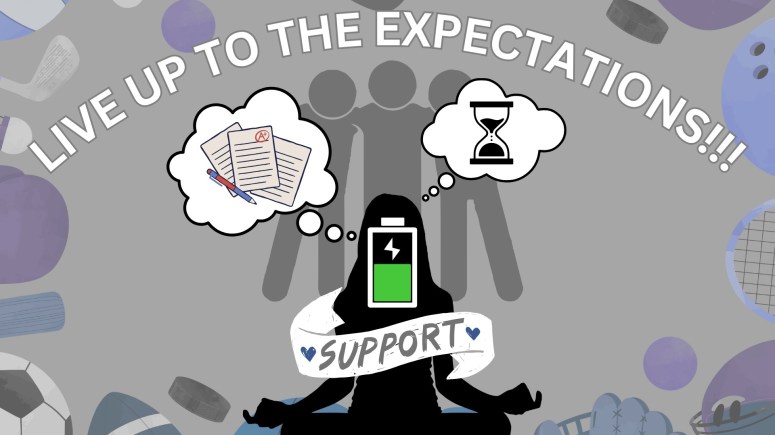
It is not only the pressure of performing well in a sport the athletes love, but also getting good grades and living up to the expectations of the closest people around them.

Junior Alicia Mangrum, the shooting guard for the girls’ basketball team, said that with the right support, success is possible.

“My parents are always encouraging me during tough times. When I’m down on myself, they always tell me to pick up my head and give me words of encouragement,” Mangrum said.

Athletes who have people in their lives, like a coach who cares, are an important part of playing sports; without them, or with a bad coach, it can ruin the whole experience.

Junior Makenna Taylor, who plays point guard for girls’ basketball, said head coach AJ Moye is an example of being a supportive coach.

“Athletic director and girls’ basketball head coach AJ Moye is a very vocal coach, so even on the bad days, he is always pushing us to do better and talking to me about not getting down on myself. As a leader on the team, you have set an example regardless of how you feel, so he does very well with uplifting and encouraging me,” Taylor said.

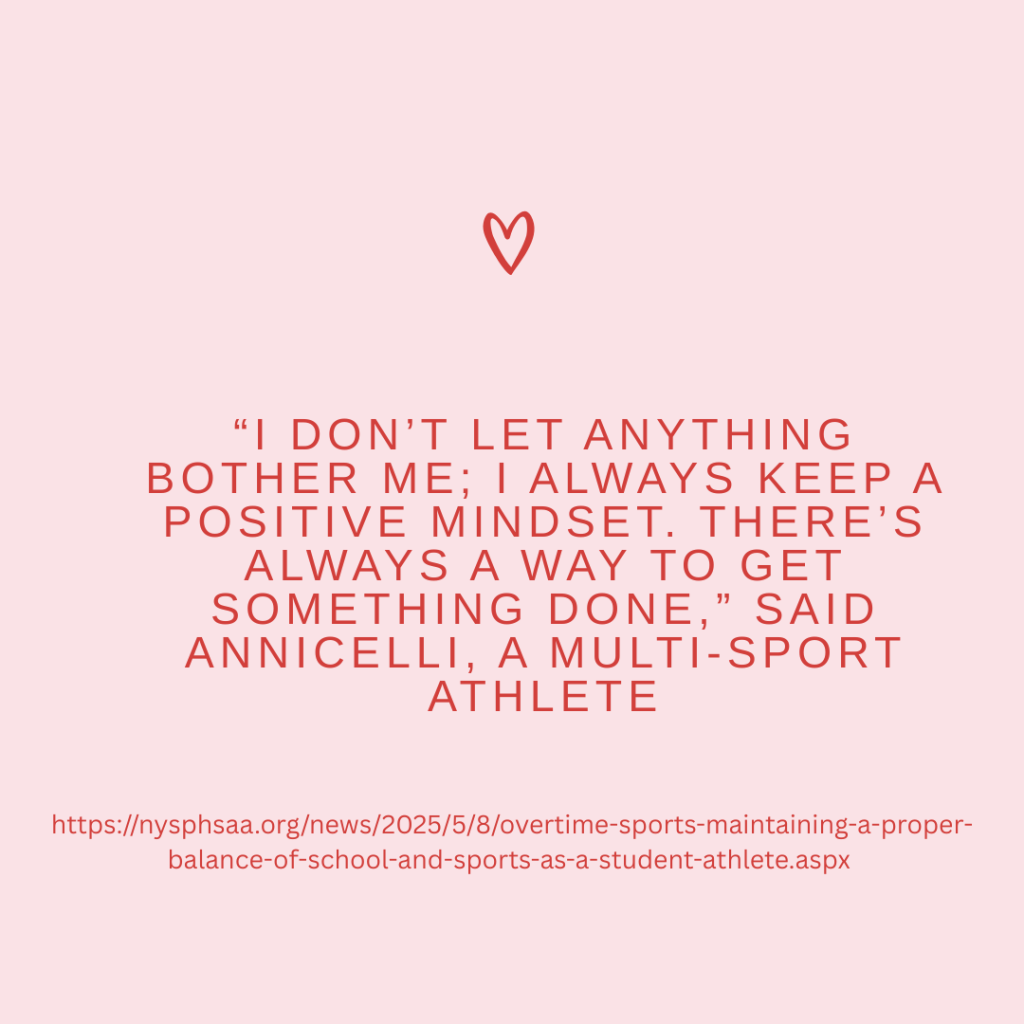
Without the proper care, athletes can get very burnt out. I remember when I was a kid, and I had cheer practice every day except Fridays and Saturdays. But I also had basketball training on Saturday mornings. My dad had to bribe me to go to something that I should have wanted to do, but I was so burned out, I could not function. But for Taylor, she always stays ahead of the game to avoid burnout.

“I usually plan out my weeks ahead of time, so I’m aware of my schedule and know when things are due and when practices are. It can be difficult to juggle homework and practice sometimes, but honestly, some days I just have to stay up later than others. That’s part of being a student-athlete,” she explained.

Junior volleyball player Jayli Burris, who plays the position of outside hitter, finds balancing schoolwork and activities a challenge.

“Sometimes it can be a challenge with the amount of time I have to do my assignments. I try to stay on top of my work, even if that means staying up late after a game,” she said.

Being a student-athlete is almost a full-time job. Athletes have to manage their time, focus on specific assignments, and find ways to keep their mental health up. It’s a struggle trying to excel in everything, but it’s possible as long as they have the people they need to support them.
Graphic by Ayianna Maddox.

Column: Education system should do more to relieve neverending pressure

by Jilliann Denbo

As a kid, I’ve always thought I would be a teacher, or maybe do something with ocean animals. And I always thought I could just change my job whenever and it wouldn’t affect me. I used to have so many goals and different career paths I had wanted. But now all that is just a fantasy.

Kids like me didn’t even know there were many options for careers only because I was never opened up to the idea of ‘different jobs’.

Now that I’m a sophomore, the next two years really impact my career. I’ve always been indecisive on what I want to do or how I want to do things. And knowing I have to make the right choices sometime this year really scares me even though I know exactly what I want to be, I just don’t know where to start.

I never really thought about how much money I’m going to make, or how confusing it would be to pick the right paths for my career. There are always little Google forms about picking classes to help with a career choice , I never know which ones to pick. It always makes me nervous because I don’t have any idea if I chose the right thing or how it will affect me.

Many people like me feel this way too. There is just a never ending pressure about picking our career. Maybe it’s all too soon?

Teachers don’t give us enough opportunities to explore their career, yes we get to move paths only once maybe twice. But what if that isn’t even enough?

Education should focus on more than making us pick a path early, it should equip us with a broad knowledge base, and explore many different possibilities open to us.

Some students mix up degrees and careers, leading them to pick the wrong classes. I feel us students should have a little more of an understanding about exactly what classes to choose for each career. 

Yes, picking a wrong career will not ruin anything. But pressure from friends, family, and society make it feel like it will. Even if we know exactly what they want to be, people can push us to pick classes that have nothing to do with our career. 

Feeling stressed about a career can affect our mind and body, as well as, a lot of students overthinking options before making a decision. 

Teachers can start giving kids more options at a young age by opening our minds to different ideas and pathways.

In all, students shouldn’t have to stress out as badly as they do just because they have zero idea where to start. Education should have more openings into teaching students where to start.

Column: Student athletes must live a well-balanced life

by Gabriella Kraft

Pressure can make or break a person.

A well-balanced lifestyle is hard enough as just a regular student. The added stress of being an athlete brings so much more pressure. 

When I first started two sports, I was on two teams for cheerleading, with practice every day except Fridays and Saturdays. And with basketball, I had practice scheduled right before it on Mondays, Wednesdays, and Saturday mornings. 

I felt like I was drowning trying to balance school work, sports, friends, and life. It felt impossible until I quit basketball. I felt like I was finally able to breathe. It didn’t make a major difference, but it was big enough that I could feel alive again. 

Without basketball, I was able to actually hang out with my friends outside of school, get my homework done at night, and I wasn’t stressing over little things. 

“A well-balanced life revolves around having a schedule while also giving ourselves time to breathe. If it’s all work and no play, the sport starts feeling like a job that’s holding us back from our full potential.” 

A well-balanced life revolves around having a schedule while also giving ourselves time to breathe. If it’s all work and no play, the sport starts feeling like a job that’s holding us back from our full potential. 

A better way to manage our time as a student-athlete involves prioritizing what is most important, learning to say “no,” setting realistic goals, and using downtime wisely.

It’s easy for athletes to over-commit, to push ourselves until we can’t push anymore, simply, because we feel obligated to be the best at everything — not because we are cocky, but because we want to push ourselves to be the best we can be. Most don’t feel that it’s possible if we aren’t pushing until we cannot anymore.

Sooner or later, our mental health declines. We aren’t the best at our sport, our grades fall, and we feel like we are alone. We feel that if we aren’t excelling in at least one or all aspects of our lives, we are failing.

Most people don’t even notice an athlete who’s spiraling out of control until we are completely pulled away and have distanced ourselves. We feel as if we are too far from saving.

Parents play an important role in a student-athlete’s life as well. Kids can only give as much as we get. When teens get a pushy parent who only yells and does not provide much support otherwise, they eventually just give up.

Athletes need all the support we can get, or we break under the pressure.