Behind-the-scenes look reveals the challenge of performing and competing in marching band
Editor’s Note: Check out pages 12 and 13 of the December, 2025 print Hyphen for a photo essay on the marching band season.
by Cherish Brown
“You’re just walking, it’s not that hard.”
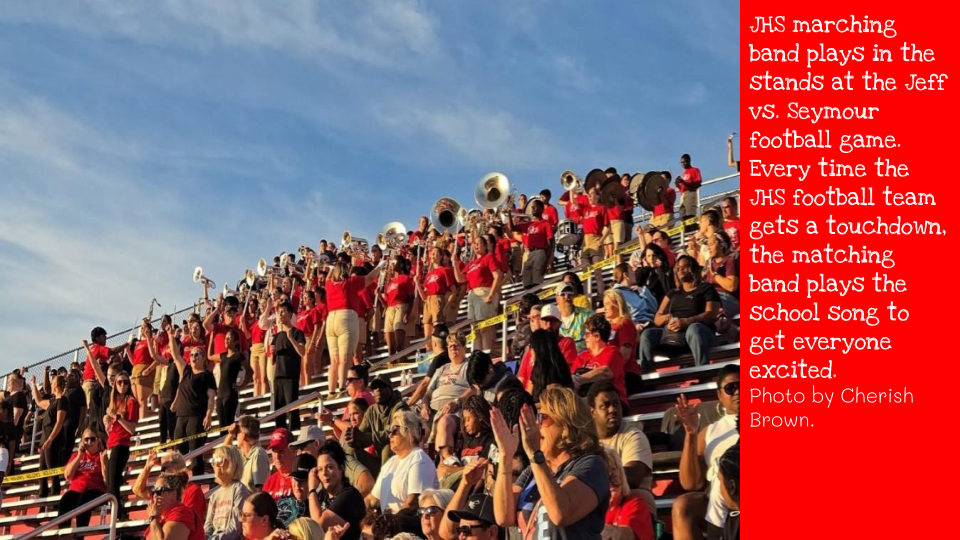
This is what I hear when I try to express that marching band is just as hard as a sport. I wouldn’t be too upset if people told basketball players that “you’re just throwing a ball in a hole,” or told baseball players that “you’re just hitting a ball with a stick.” But no. Instead, they get praised for their hard work, while people overlook ours. So here’s what actually goes into the halftime show that you see at football games.
The first lesson we had to learn was how to march correctly. It might look like walking to some, but it’s a little bit more than that. There’s a specific technique that we have to use going forwards and backwards. To go forwards we had to learn to walk while keeping our legs straight, and also roll stepping. Roll stepping is rolling off your foot into the next step to make it look smooth instead of robotic.
Now for backwards. We have to walk on our tippy toes, while keeping our legs straight, and we can’t look backwards. If we don’t march on our tippy toes when we go fast, we will fall.
Now that we know how to go forwards and backwards, we now have to learn how to go sideways. The weird part about it is, we can’t have our shoulders facing anywhere but forward unless we are told otherwise. So, to march sideways, our bottom half has to face sideways, but our top half is facing forwards. The only people who don’t do that are the drumline, who crabwalk, and the battery, who don’t move.
“So no, we’re not just walking. We’re working hard, competing, and most of all, performing.”
We can’t just have you watch us march, though; that would be too boring. We had to learn how to play the music. To be honest, it’s really hard music. In the first piece we all have to play 16th notes, which is four notes per beat, which means you have to be quick with the notes, even at a slow tempo. And the second piece is at 160 beats per minute, which is double the speed of the second piece. And all that is hard enough while sitting down and looking at it, but when we’re marching, we have to play off of memory.
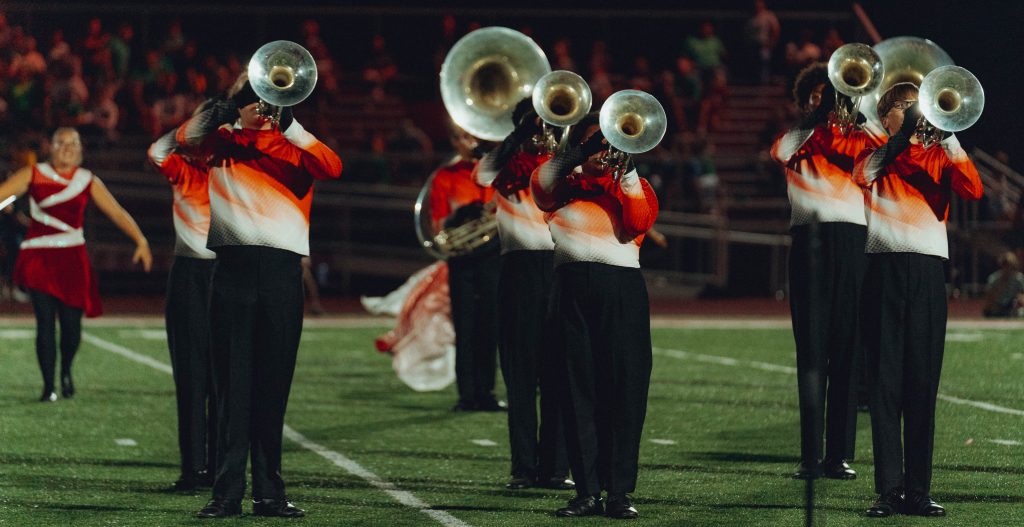
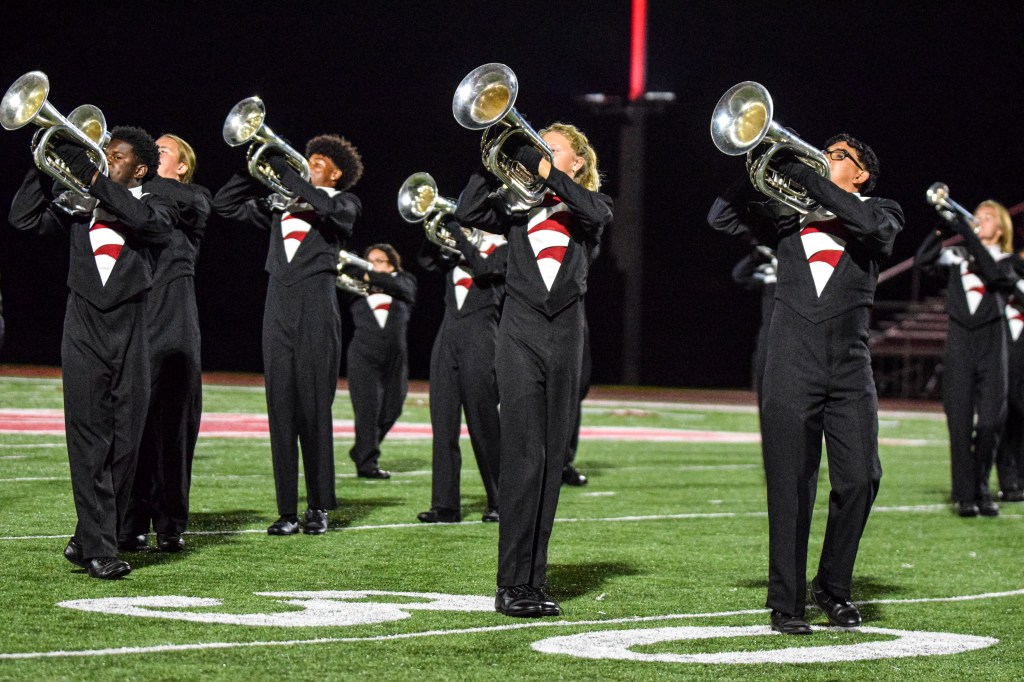
Now, we have to learn where we’re going, and how the music relates to how we march. The thing is, we aren’t just marching to random places. If you’re high enough in the stands, you can see that we make shapes with where we’re standing. We have to march to specific places, which are called our sets. And we have to learn the entire song while only marching before we can even grab our instruments.
Then we start playing. We have to go by each set (or spot we’re marching to) and learn which part of the music goes where. It takes a long time, especially because there are three different pieces we have to put together. So, we take many days of practice just learning how the music and our sets relate to each other, when we’re supposed to get where, and how big or small of steps that we have to take to make it on time.
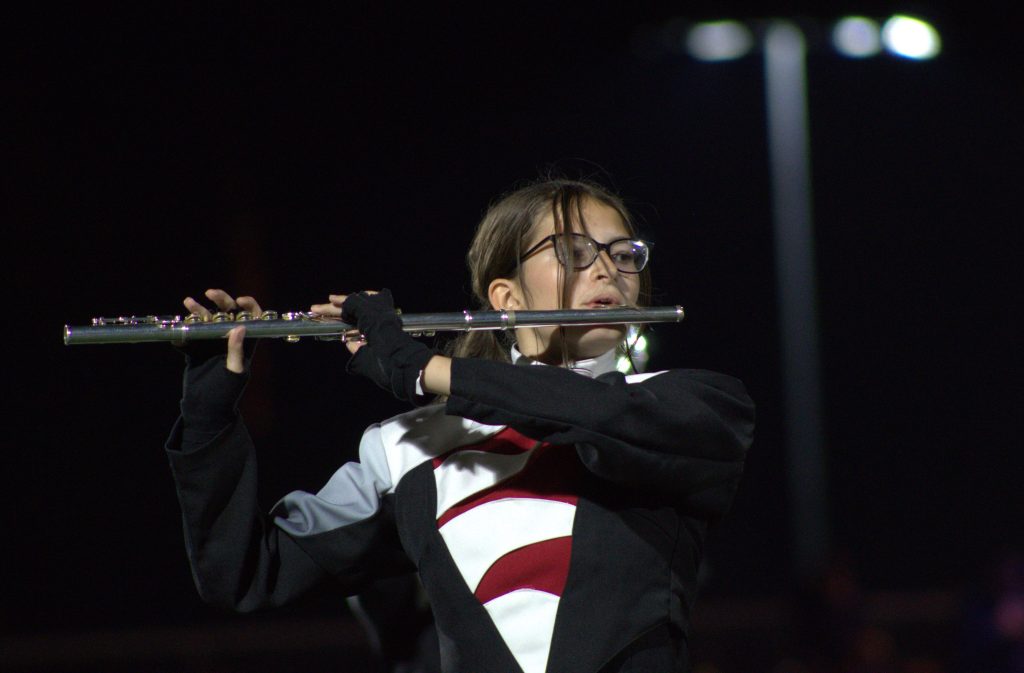
Then, we have to make it look cool. We add what we call our choreography. It’s not actually dancing, like the color guard does with their flags. We do different things. Our choreography includes lunges, pliés, and forced arches. And we usually do those while we’re not moving, so we don’t look like we’re just awkwardly standing there. We also do these while we’re playing our music, so it has to match up with what’s happening musically.
Now we take all of this, that we started learning before school even started, and put it together for everyone’s entertainment. But there is something we do that many people don’t get to see.
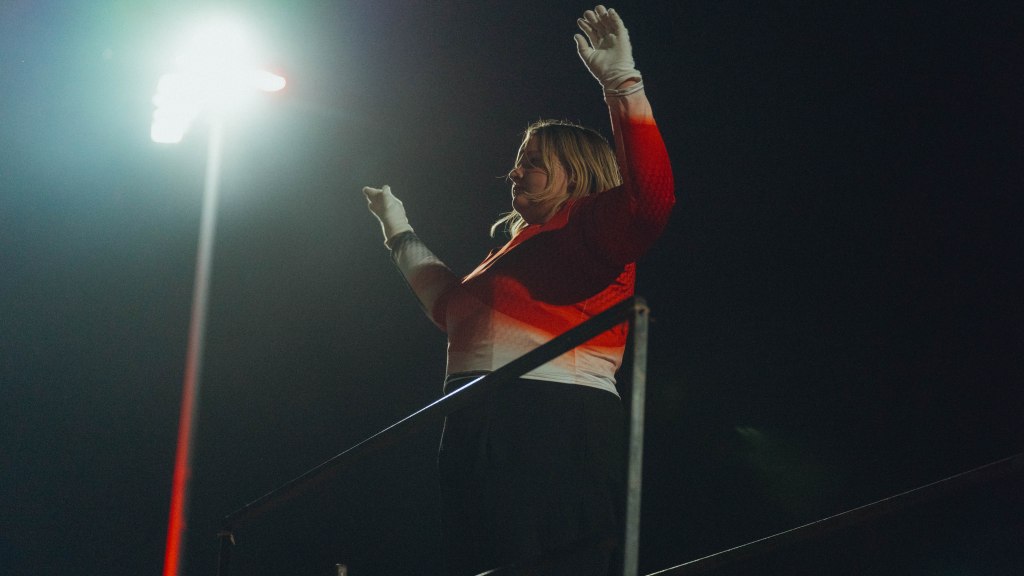
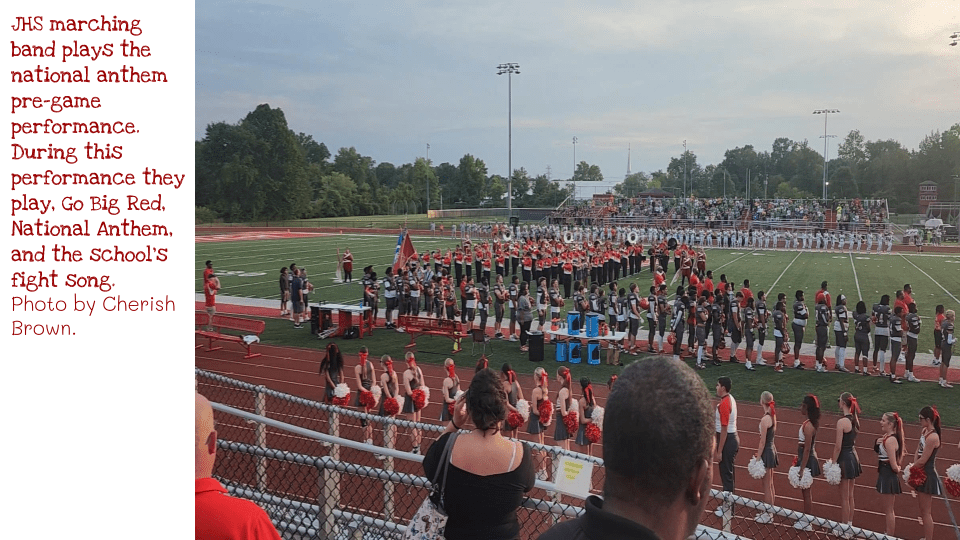
We perform and represent the Jeffersonville Red Devils at our own competitions. We competitively perform in front of judges, against many bands in our district. This season our hard work led to an appearance at the state finals, where we placed 15th.
Our hard work got us there — work done over many months, and for some of us, years. I hope this season we’ve made everyone proud, especially the seniors, who have helped us all throughout this season.
So no, we’re not just walking. We’re working hard, competing, and most of all, performing.

Marching band is clearly a sport
by Caitlyn Brock
Marching is a sport.
I’ve done my first season now in drumline, and it was some work. We had to learn how to march, and we stood for hours on end and didn’t get many breaks. During a typical school week, we practice for 8 1/2 hours of just practice alone, not counting all of band camp and competition days, with some Saturday rehearsals We went to scholastic prelims to qualify for finals and ended up getting 6/7 bands and went to scholastic finals, which took place in October.
Marching band is obviously a sport. First off, it requires physical exertion and skill, just like football or soccer. Next, we compete against other marching bands for a score which also can lead to finals, which other sports have, such as basketball. Finally, it’s done for entertainment, especially because of all the visuals and drill.
Initially, people would think that marching bands are laid back and easy, that all the instruments are not that big and don’t weigh that much, but that is wrong.
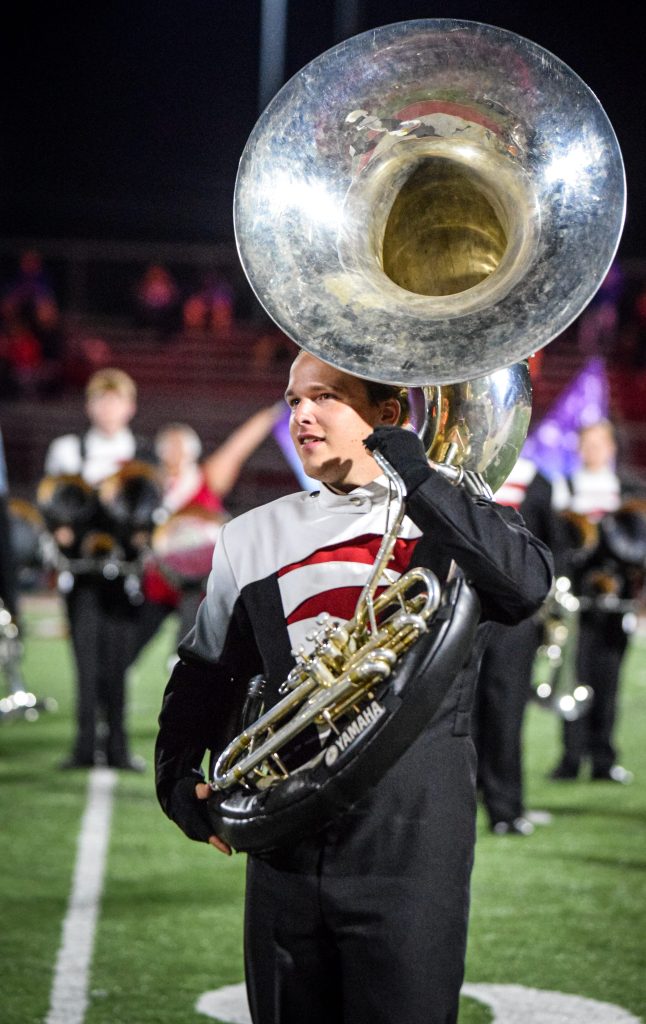
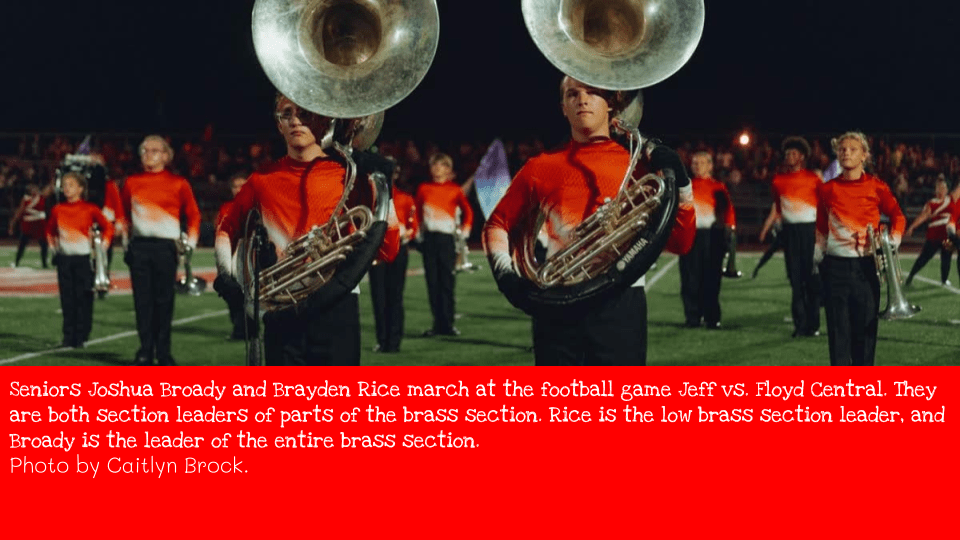
Drums can go from being 16 pounds all the way up to 70 pounds with gravity, which can be super difficult. Sousaphones weigh about 50 pounds, and all of those weights can be difficult depending on the person and size, with also having the marching around for 6-9 minutes (depending on the show length) while hitting all of the visuals and drill spots and playing all of the music by memory. That is a lot of expectations for high school musicians.
“Marching band is obviously a sport. First off, it requires physical exertion and skill, just like football or soccer. Next, we compete against other marching bands for a score which also can lead to finals, which other sports have, such as basketball. Finally, it’s done for entertainment, especially because of all the visuals and drill.”
Nobody talks about the demand for marching bands. We’re expected to learn music and hit the drill fairly quickly, given the limited time available, as rehearsals are often lengthy. Some days we are expected to start rehearsal as early as 6:30 a.m., going as late as 5 p.m., and marching in the heat is a whole different story.
We compete just like other sports. We have scholastic prelims — which would be called sectionals for other sports — and scholastic finals, which we get to go to. But we compete against other bands at different schools and get a score. Our scoring may be different than other sports, but we still compete.
Others may say that we don’t run around and throw around a ball or even have the same scoring as other sports, and we don’t do it for any entertainment, and that’s where they are wrong.
That comes to my final reason. Doing all of this work for one show is all for entertainment. We make the whole show look good just for the eyes of the judges and the people watching. We play music that people know for their enjoyment, too.
So that brings us back to one question. Is a marching band a sport? Yes, it is. We dedicate a lot time to it, and we march and play music for hours on end and compete for a score.
And we obviously do it for entertainment, because that is what it is all for in the end.







 thehyphennews.com