by Harper Gordon and Jilliann Denbo
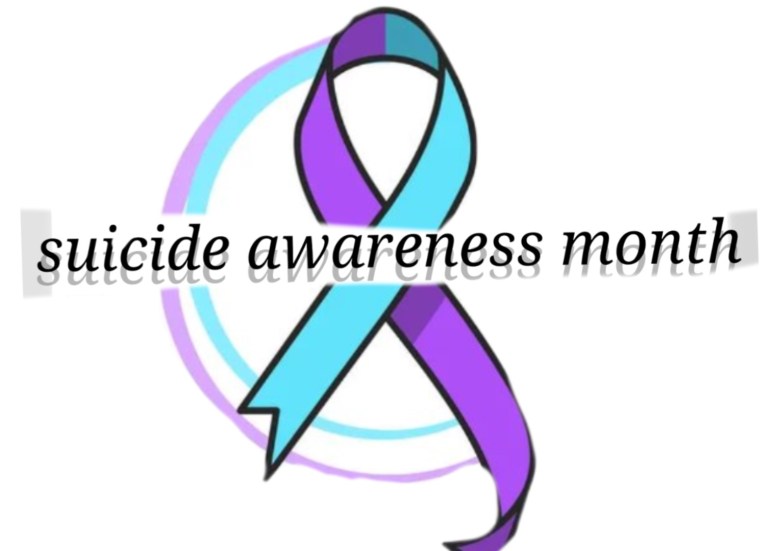
September is designated as National Suicide Prevention Month to raise awareness, reduce stigma, and share life-saving mental health resources. Statistics from the CDC show that over 49,000 people die by suicide annually in the United States. Suicidal thoughts appear more often than most think; we all need to look out for and help others no matter what. Luckily, many help lines and organizations are available whenever we need them.

¨Organizations like SAMHSA and NAMI use September to teach warning signs, promote evidence-based treatment, and remind people that support is available 24/7,¨ stated the National Alliance on Mental Illness.
Mental health is something that is treated as such a taboo subject, but it shouldn’t be. It’s something people struggle with every day, and it should be normalized to talk about it.
“Suicide is still too often met with silence, stigma, or shame. At NAMI, we believe that silence should never be the response to someone’s pain. That’s why we’re working tirelessly to change that. This September, you can be the difference,” stated the National Alliance on Mental Illness.
Sources for help can remain completely anonymous, meaning the people helping will not need to know names unless the caller is in complete danger.
¨The purpose of 988 is to provide a free, confidential, 24/7 988 Suicide & Crisis Lifeline for anyone experiencing mental health-related distress, emotional crisis, or substance use issues,¨ stated SAMHSA.
We must never be afraid to ask for or get help when we need it most. Always look out for people struggling; they’re most likely a lot closer than we think.
My name is Jilliann Denbo, and I used to struggle with many thoughts of suicide. I never felt like I belonged anywhere and that every single person was against me; even my parents.
I never understood what reaching out for help would mean; I always thought I was weak or not worthy of life if I actually asked for help. When my mental health started to get noticeably bad, my parents asked if I was okay. I denied it until I couldn’t anymore, which made almost everything much worse. But when I finally accepted help, the weight lifted off my chest; I could talk to people who could help me get back on the right path. With the help I received, I could breathe again. I will forever be grateful for the people who were right by my side to make sure everything was okay.
While talking to someone may seem awful, it truly is the right thing to do, no matter what it is. There is always someone to reach out to.
My name is Harper Gordon. I used to struggle heavily with suicidal ideation. I thought I had no belonging anywhere, and I constantly felt alone. In eighth grade, my best friend Dorothy unexpectedly passed away.
After that, I thought there was no getting better; I lost my person, and I constantly felt disconnected from everything. I always tried to act okay and act like I wasn’t struggling. I didn’t want anyone to worry about me; I always felt like everyone else had bigger problems. My family and friends eventually started noticing how much I was struggling. They all tried to help, but I pushed them away because I thought I’d be better without their help.
I wasn’t ready to admit I needed help; I didn’t want to admit it. But in the end, when I realized we can’t get better without help. When I needed them, they were all still there.
Never be scared to reach out and ask for help; someone’s always there.
¨If you or someone you know is struggling or in crisis, help is available 24/7. Call or text 988 to reach the Suicide & Crisis Lifeline in the United States and Canada,¨ stated News Center.