Column: Listening to music provides healthy benefits

by Brooklynn Stevenson

Music has long been a part of human culture for centuries, serving both as a form of expression and a way to communicate. Music plays a significant role in enhancing our mental, emotional, and even physical well-being. Engaging with music can foster personal growth and improve our overall quality of life.

One of the most notable benefits of music is its impact on mood. According to Right As Rain, listening to music can trigger the release of dopamine in the brain. This is why many people turn to music during times of stress or sadness. Playing a favorite song can uplift spirits and provide a deep sense of comfort. 

Music allows individuals to process their feelings and experiences in a healthy way.

In addition to the emotional benefits it provides, music has been shown to have several advantages as well. According to PMC, engaging with music can enhance memory and boost focus. Learning to play an instrument requires multitasking and commitment, all of which are skills that can bring good academic performance and problem-solving abilities. APA states that students involved in music education often score better in math, science, and English than their nonmusical peers.

A significant part of music is the social aspect. Music often brings people together, bringing connections. Whether through concerts or just listening with friends, the communal experience of music can enhance social bonds. Collaborating in music also encourages teamwork and communication skills, which are essential in personal and professional environments

Music can have therapeutic effects as well. Music therapy is recognized for its effectiveness in treating mental health conditions, such as anxiety, depression, and PTSD. It can help individuals express emotions that may be difficult to express or articulate. Additionally, music is often used in rehab programs to aid in physical recovery. Overall, the benefits of music highlight its importance as a huge aspect of human experience.

Column: Education system should do more to relieve neverending pressure

by Jilliann Denbo

As a kid, I’ve always thought I would be a teacher, or maybe do something with ocean animals. And I always thought I could just change my job whenever and it wouldn’t affect me. I used to have so many goals and different career paths I had wanted. But now all that is just a fantasy.

Kids like me didn’t even know there were many options for careers only because I was never opened up to the idea of ‘different jobs’.

Now that I’m a sophomore, the next two years really impact my career. I’ve always been indecisive on what I want to do or how I want to do things. And knowing I have to make the right choices sometime this year really scares me even though I know exactly what I want to be, I just don’t know where to start.

I never really thought about how much money I’m going to make, or how confusing it would be to pick the right paths for my career. There are always little Google forms about picking classes to help with a career choice , I never know which ones to pick. It always makes me nervous because I don’t have any idea if I chose the right thing or how it will affect me.

Many people like me feel this way too. There is just a never ending pressure about picking our career. Maybe it’s all too soon?

Teachers don’t give us enough opportunities to explore their career, yes we get to move paths only once maybe twice. But what if that isn’t even enough?

Education should focus on more than making us pick a path early, it should equip us with a broad knowledge base, and explore many different possibilities open to us.

Some students mix up degrees and careers, leading them to pick the wrong classes. I feel us students should have a little more of an understanding about exactly what classes to choose for each career. 

Yes, picking a wrong career will not ruin anything. But pressure from friends, family, and society make it feel like it will. Even if we know exactly what they want to be, people can push us to pick classes that have nothing to do with our career. 

Feeling stressed about a career can affect our mind and body, as well as, a lot of students overthinking options before making a decision. 

Teachers can start giving kids more options at a young age by opening our minds to different ideas and pathways.

In all, students shouldn’t have to stress out as badly as they do just because they have zero idea where to start. Education should have more openings into teaching students where to start.

Column: Using cell phones in school requires a balanced approach

by Mikail Cetiner

Whether we like it or not, phones are everywhere at school. We see them in pockets, peeking from under desks, or being used to text someone who’s just a few seats away. As much as teachers try to control it, smartphones are part of our daily lives now. So, the question is, should they be allowed in school?

Honestly, I think phones can be really useful, like if we need to look up something for a project, want to record notes, or take a picture of the homework on the board. There’s an app for almost anything school related. There’s no question that in today’s world, we use technology for everything from work to communication, so learning how to use it responsibly seems important.

“With the right balance, smartphones could help us learn more and not distract us from learning at all.”

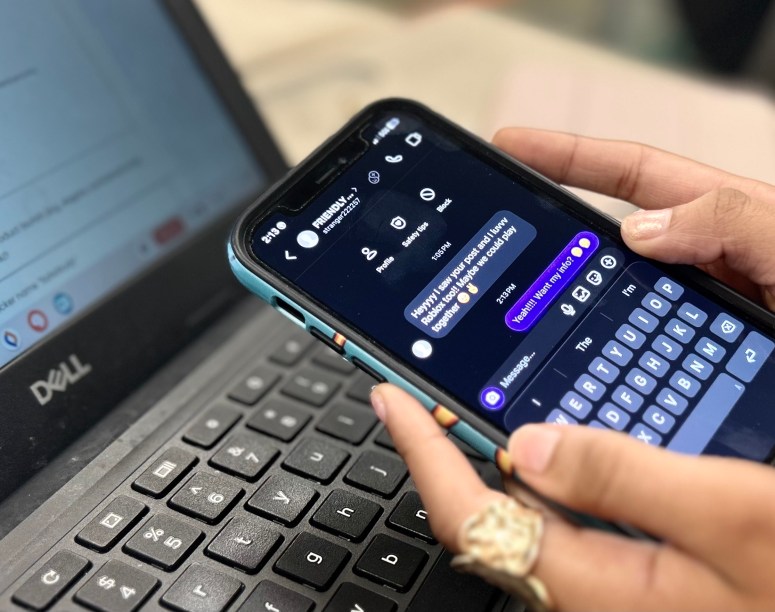
But let’s be real. Phones can also ruin focus faster than anything else. One message, one notification, and suddenly we are scrolling through TikTok for just a minute, that turns into ten. It’s not just distraction, either; phones can cause drama, make cheating easier, or create pressure to look perfect online. School should be a place to learn, and not a place to compare who has the newest iPhone or the most followers.

So, what’s the solution? Completely banning phones doesn’t seem realistic, and letting everyone use them freely definitely doesn’t work. The best option is somewhere in the middle. Use them only when they’re actually needed for schoolwork or let students have them during breaks. And more importantly, teach students how to use technology responsibly instead of just taking it away.

In the end, phones aren’t a bad thing, they’re just tools. How they affect school depends on how we use them. With the right balance, smartphones could help us learn more and not distract us from learning at all.

Solutions:

Make free phone zones.

Bigger consequences if we use your phones in class.

The school can give us phones with no games on so they can use it as a tool.

Column: ‘The stories we read shape us just as much as the events we experience’

by Rain Gresham

In 1637 New English Canaan by Thomas Morton was officially the first book to be banned in the USA. 

It was banned because it was seen as “a too harsh critique of puritan customs.” Of course the ban was just a sign of times. This wouldn’t happen now, would it? 

One of the most recent books to be banned in American public schools was Sold by Patricia McCormick. This book is about a young girl who was sold into prostitution but finds strength within herself to go on. 

Why would a book like this be banned? If not for control? Why would we shade things like this from a 13-year-old girl when someone the exact same age is living the story. César A. Cru once said, “Art should comfort the disturbed and disturb the comfortable.” 

So should we allow just any books in schools? All for the sake of reality? Should adult fiction novels like A Court Of Thorns And Roses  be allowed in school because “No book should be banned.” Where is the line drawn? 

The line is drawn for the sake of intent. A book that shows cruelty and explicitly for the sake of story telling is a lot different than one that shows it for entertainment. 

What is this “intent” ? Sure we can use the concept of the word “meaningful and telling” but what does it mean? I could say that it has intent because it makes me feel happy, right?

No, because the intent is literary intent. It’s about the purpose of the art and how effectively it is dealt with.  

In A Court Of Thorns And Roses there are countless adult topics but they are not handled with care or nuance,  the reader both gains and loses nothing from reading it. Compared to say The Handmaid’s Tale where it also shares adult topics but in a way that these topics have meaning. Meaning other than to just entertain; meaning to teach. 

This small difference in comparison makes a big difference in impact. I can’t tell you much about the last few romance novels I’ve read over the years but I can tell you how the first time I read Anne Frank’s diary in the sixth grade and how it truly made me realise injustice. How it made me want to look for voices that I might not have heard before. 

You can tell children about bad things happening, but unless you show them from their views of those people it’s nothing but a cautionary tale for them. Another reason why they should be thankful for what they have. 

But they shouldn’t just be thankful, they should be aware of what children their same age go through in the world no matter how “uncomfortable” that conversation might be.

The stories we read shape us just as much as the events we experience. In today’s world we are so capable of seeing each other so why limit that?  Why continue ignorance for the sake of comfortability? 

Hate comes from ignorance, so why not open a book? 

Column: Guitar Hero brings both fun and nostalgia

by Kaylin Bowman

“Easy, medium, hard, and expert.”

These are the choices for what mode you want to play in a famous 2000s game called Guitar Hero. Guitar Hero was a very popular game, with its first release of Guitar Hero 1 in 2005. The game itself was originally designed for the PS2 and PS3. Still, it eventually expanded to other consoles, including the Xbox 360, Wii, PS4, Xbox One, Wii U, and even mobile devices and handhelds like the Nintendo DS.

There are at least 25 Guitar Hero games. From Guitar Hero (2005) to Guitar Hero Live (2015), and other games based on Guitar Hero like Rock Band, Clone Hero, and DJ Hero as well! I prefer the original, but it’s always fun to try the other games as well. Now I have Guitar Hero for the Xbox 360. Sure, there are some lag spikes here and there, but other than that, it runs smoothly, and I enjoy the game a lot.

There are different ways to play Guitar Hero, too. You can use the Guitars, Drums, Microphone, and even your console controller. I prefer to use the Guitar controller; it makes the experience more immersive and more enjoyable. Guitar Hero even has a practice mode, as well as a learning mode. Practice mode allows players to practice the songs in the game, while learning mode teaches new players how to hit the notes and strum the bar to time it perfectly. It also teaches you cool techniques you can use when playing the songs to help you understand the game’s concept. 

Not many people play Guitar Hero anymore. When I’ve talked to my parents, teachers, and even other students, which sucks because, sure, it’s an older game that’s outdated, but it can still be fun to play if you actually try it out. 

Should other people play it? Yes, for sure it’s not a violent game, and you battle your opponents with guitar skills instead of guns, chainsaws, knives, etc, and once you beat the game, you’ll have all the songs unlocked so you can practice your skills even more and eventually make your way to expert, which is the highest you can get.

When I’m playing Guitar Hero, I’m fully immersed in the game, from how entertaining it is, and I’ve been playing it for over a year now, and I still love the game. Even though it took me forever, I finally made it to expert, and I’m proud that I made it that far with the game.

“Jump straight to expert. It’ll be difficult at first, but it’ll get easier as you play.”

Those are words that my dad told me when I first started playing, and that’s what I did, and turns out I could do it when I thought that I couldn’t at all, and when I listened to what he told me that day, it all made sense why he said that. When I first tried it, I sucked at it because of how fast the notes were moving, but over time, I learned how to do it, and I got better at it, and that’s how I got to where I am today on Guitar Hero.

Guitar Hero even has a lot of bands in it; some bands even have their own Guitar Hero game dedicated to them. Like Guitar Hero: Aerosmith, Guitar Hero: Metallica, Guitar Hero: Van Halen, and more. Some bands that are in the main games are Nirvana, AC/DC, DragonForce, Foo Fighters, Queen, Slipknot, KISS, and so much more. Another game that a lot of rock songs are on is Guitar Hero: Smash Hits, which has a lot of rock songs that a majority of people know about.

Sadly, over time, Guitar Hero stopped due to market saturation and declining sales, which is sad, but the games that are out, you can still buy and play them. Another reason why they stopped is that Guitar Hero peripherals often did not work with new game versions, requiring further investment, and Activision officially discontinued the series and disbanded its music game division to refocus on other online and interactive entertainment. Even tho RedOctane is the original publisher of Guitar Hero, and over time they closed Guitar Hero for other new rhythm games. But will there be more games in the future?

So what will it be? “Easy, Medium, Hard, or Expert?”

Column: When used correctly, social media can help teens make connections

by Kaylee Borelli

Around 96% of teens aged 13 to 17 are reported to spend time on social media each day. Social media is significant to today’s generation. For example, social media allows teens to connect with their friends, express themselves, and find communities of people with similar interests.

Social media is, for the most part, a good thing. But social media can also be quite harmful and can lead to mental health problems in teens. According to a Pew Research study, roughly 48% of teens say social media has a mostly negative impact on people their age, but only 14% say it harms them.

According to the same study, parents of teens are more likely to be concerned about teens’ mental health than teens themselves. Overall, 55% of parents say they are extremely concerned about the mental health of teens. In contrast, only 35% of teens make the same claim.

Women are also more significantly impacted by social media than men. According to a study by Memorial University of Newfoundland, 88% of women compare themselves to other women online, compared to 65% of men who do the same. This can lead to many problematic things, like self-esteem issues, body dysphoria, and, in extreme cases, can lead to an eating disorder.

Not only does social media harm teens’ body image, but it can also increase the risk of teens having other mental health problems like depression and anxiety.

According to a  Yale Medicine study, American teens aged from 12-15 who use social media for three or more hours a day faced twice the risk of things like anxiety and depression.

Even with all these problems that social media can cause, it isn’t all a bad thing. Actually, social media can also be good in many ways.

According to a National Institute of Health study,  social media can help teens maintain and build connections with their friends and peers. It also helps teens who might have a long-distance friend or relationship keep in touch. The study states that teen girls who spent time with their friends on social media made their friendships closer.

Social media doesn’t just allow teens to connect with others, but it can also give teens a place of belonging.

The same study shows that different groups of people use social media to find other people like them and create and build communities. For example, teens with chronic or rare diseases used social media to find more people like them to connect and combat isolation.

Social media is both a good and a bad thing. Yes, it can cause mental health problems like anxiety and depression, but it can also allow people to find their community and connect with friends. I believe that if teens use social media correctly, they will find it much more helpful than harmful.

Column: Teenagers are too young to have their whole futures figured out 

by Liddia Waterbury

Teenagers shouldn’t be forced into choosing a career before they even know themselves.

Freshmen, especially here at school, are encouraged to select a career academy and are required to be in the college and career program. 

Indiana added readiness seals to the diploma last year, “to better prepare Hoosier students for the future.” Out of the three, one seal is required to be on our diplomas when we graduate. One of these seals is the employment seal.

The employment seal requires students to complete a market-driven credential of value aligned to a specific occupation, three courses in a Career and Technology Education (CTE) pathway, an approved career preparation experience aligned to Indiana’s CSA program, or an approved, locally-created pathway. 

With the employment seal or the plus version, students need 150+ hours of pre-apprenticeship or moderate youth apprenticeship of work-based learning. This can cause a lot of stress, as it requires choosing a pathway and completing all these hours to obtain this seal.  

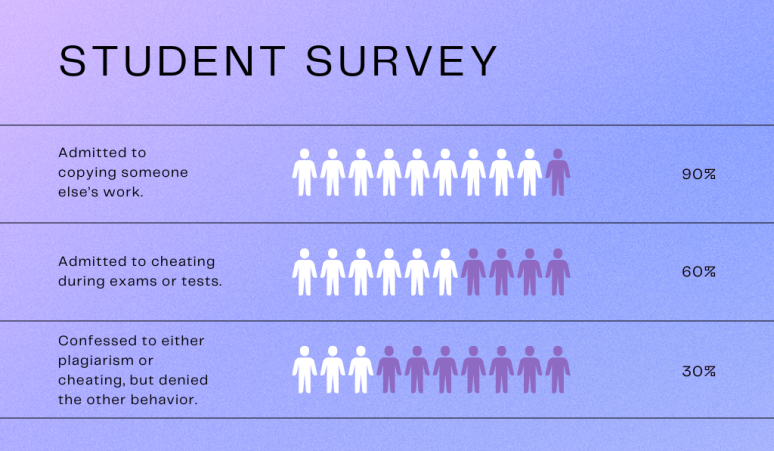
Chart by Liddia Waterbury.

Teens often feel pressured to choose a career path early due to expectations from parents, society, and schools, which include programs such as college and career readiness initiatives and seals of approval. This pressure can lead to anxiety, burnout, or regret later, especially if our early decisions don’t align with our evolving interests.

Many teenagers don’t feel they have enough information to make such a big decision. According to an OECD report, a large number of students feel unprepared. 47% agree “I worry that I am not prepared for life after… school.” 34% say they don’t feel well-informed about possible career paths. 

Adolescence is a period of “storm and stress,” marked by emotional changes, identity formation, and uncertainty about the future, particularly in school. This is because teens’ self-identity and interests are still developing. Forcing a career decision too early can limit our exploration and lead to a poor long-term fit. 

Long-term stress in adolescence doesn’t just affect well-being now; it can also impact participation while doing work in early adulthood. 

Teenagers might lock into a career choice too early, only to realize later we don’t enjoy it. This can lead to switching majors, careers, wasted time, or regret. As our interests and identities evolve, early commitments can limit our future options. 

College and career programs, as well as readiness seals, play a crucial role in shaping our future in college and the workforce. However, schools should emphasize exploration over commitment. 

As teens, we need time to understand ourselves before making significant decisions about our futures. When we are rushed into choosing a career, we are only pressured and confused. Giving us space to explore helps us choose a path that truly fits who we are.

Column: All Eyes on Sudan

Americans must learn about modern humanitarian crisis

by Ameerah Gbadamosi

Sometimes there are problems that exist on the other side of the world that we don’t know about or pay much attention to. For example ,Sudan.

Sudan is facing one of the worst humanitarian crises in modern history due to the ongoing conflict happening between the Sudanese Armed Forces (SAF) and the parliamentary Rapid Support Forces (RSF) plunges the nation deeper into turmoil.

The war, which started in April 2023, has devastated communities, displaced millions and worsened an already dire humanitarian crisis.

Even before the war erupted in 2023, Sudan was already experiencing a severe humanitarian crisis that left 15.8 million people in need of aid. Now over two years of war have drastically worsened the living conditions, displacing over 12 million people and leaving 30.4 million people, more than half of Sudan’s population in need of humanitarian support.

More than two years of the civil war going on in Sudan, the civilians are subject to frequent attacks and human right violation, while the country’s health care system has collapsed as life-threatening famine sets in. The attacks on humanitarian aid workers have made it difficult to deliver life saving  aid to some of the most fragile and vulnerable communities in the world.

The famine spreading around Sudan as violence hinders humanitarian’s ability to deliver food. Meanwhile soaring food prices and collapse of food supply left families starving.

Between December 2024 and May 2025, over 26.4 million are trapped in a health deteriorating food insecurity, over 630,000 people including in the country’s largest camp for displaced people are experiencing extreme famine conditions and a very high risk of death, the severe food shortage also leaves people vulnerable to illness and infection due to lack of essential nutrients.  

Children are among the most vulnerable to famine. An estimated 15 million boys and girls require humanitarian assistance in Sudan, nearly double the 7.8 million at the start of 2023. More than 2.9 million children in Sudan are acutely malnourished, and an additional 729,000 children under five suffer from severe acute malnutrition.

Despite the threats of the famine ongoing in Sudan, both the SAF and RSF are actively restricting aid delivery across Sudan. International organizations like the World Food Programme say they cannot access 90% of the people facing emergency levels of hunger in Sudan.

As if the famine and their suffering isn’t enough, there is an increased risk of sexual violence and an alarming rise of gender based violence against women and girls during times of armed conflict.

In war torn Sudan, rape is likely being used as a weapon of war, and in less than two years, the number of people at risk of gender-based violence has more than tripled. 

An estimate of 12.1 million people or 25 percent of the population are at risk of gender based violence with frontline responders and survivors reporting alarming rates of rape, abuse, coersion, and child marriage, trafficking, while survivors struggle to access support.

In Darfur alarming rates of sexual violence underscore the immense suffering endured in those dire situations, which reveals the exceptional vulnerability of women and girls that live there.

As of April 2025, nearly 13 million people living in Sudan have been forced to flee their homes in search of safety. 8 million have been internally displaced by the conflict in Sudan, 1 million refugees lived in Sudan prior to the current conflict-the second highest refugee population in Africa.   

The war and genocide in Sudan has not been talked about enough, with what they go through each day. People fear for their own lives because they never know when the war will end or what will happen to them. Women and little girls being raped, famine spreading everywhere, People fleeing their homes because of bombings.

What we can do to help the people living in Sudan is donate anything to a charity cause that helps Sudan, make videos or posts about what’s happening so others can know or donate.  

10 facts about Sudan

  • Sudan is located in Northeast Africa sharing its border with seven countries.
  • Sudan is home to more pyramids than Egypt.
  • The capital of Sudan is Khartoum, with an estimated population of 9.3 million in the city.
  • Arabic is the main language of Sudan.
  • The majority of Sudan’s population is Muslim.
  • Sudan hosts over 500 ethnic groups.
  • Sudan was once home to the Kingdom of Kush, an African kingdom.
  • Sudan was the largest country in size until 2011.
  • There are over 100 indigenous languages spoken in Sudan.
  • The Arab population makes up approximately 70% of the country.

Column: Why we should still read physical books 

by Chloe Newton

In a non-stop motion world that just keeps speeding up, we can be tempted to let screens take over every aspect of our lives – even our reading. E-books are convenient, and our phones are always in reach; it might seem like the easier option. But there’s a reason physical books are still around and continue to hang on, even when the rest of our world and routine has gone digital. A real book does something a screen can not replace, and pretending they are the same experience is selling reading short. 

Graphic by Chloe Newton.

Firstly, a physical book forces you to be present. When you’re holding a book, you are not constantly checking the time or flipping to another app every time our mind wanders to something new. There’s a kind of focus that only physical media can give you – it requires you to sit and stay for a moment without thinking about all of the other distractions in our lives. That kind of slow attention is getting rare, and it is worth protecting.

There is also something physical about the memory of these moments. People often remember where something happened on the page, whether it be in the middle of the chapter or the top left corner. That spatial awareness helps us absorb and recall information better than reading on a glowing screen. Reading books physically helps our  brain build a map of the story, not just a trail of scrolling or hitting the turn page button.

“Reading is supposed to be more than content consumption. It’s supposed to be an immersive experience. While technology can have a place in our lives, there’s still nothing better than the feeling of opening and closing a book, turning physical pages, and letting the rest of the world take a backseat.”

 Honestly, there is the simple pleasure of the book itself. A book has weight. It ages with the world. It can be loaned, shared, annotated, or thrown in a bag without worrying about a charger or if you will have internet access. A shelf of books tells a story about the kind of person you are in a way a Kindle or tablet never will. When you finish a book and can close it, there’s a sense of accomplishment-something real in our  hands, not just a digital checkmark or finish line. 

Finally, physical books give us a break from the constant digital noise. We spend so much time on screen at school, work, home, and even in communication that reading becomes one of the only chances to unplug. It’s healthy to step away from the fluorescent light and algorithms and just let our mind wander through our thoughts and through a story that isn’t competing for attention.

Reading is supposed to be more than content consumption. It’s supposed to be an immersive experience. While technology can have a place in our lives, there’s still nothing better than the feeling of opening and closing a book, turning physical pages, and letting the rest of the world take a backseat. That is something worth keeping in mind.

Column: Recent government shutdown harmed students and families

by Tyler Conley

In the United States, a government shutdown occurs when Congress cannot reach a deal to pass a funding bill before the deadline. After the deadline, the government shuts down, and some federal employees are laid off, while others work without pay. 

This may not seem detrimental to students and families, but the 2025 Government Shutdown, the longest ever at 43 days, put a hold on many necessities. 

The Trump Administration planned for mass firings, despite the illegality in doing so, mainly for governmental positions; the firings were planned to be permanent even after the shutdown ends. Over 900,000 federal employees were laid off, and another 2 million worked for 43 days without pay. The Trump Administration stated their goal was to downsize the government and cut costs, but what isn’t taken into consideration is that many families lost their only income.

The government also funds food programs, such as SNAP (Supplemental Nutrition Assistance Program), commonly known as food stamps. These programs are protected by contingency plans, but those become strained in later stages of a government shutdown, and even afterwards. Benefits do not come back immediately.

On Oct. 24, Brooke Rollins, The U.S Secretary of Agriculture, claimed in a memo circulated through the Department of Agriculture, that the contingency funds for SNAP are for natural disasters and not for government shutdowns. This put over 42 million Americans at risk of losing their benefits during the shutdown.

National school lunch and breakfast programs will suffer a similar fate, as they are on contingency plans as well. This will affect anyone who needs government assistance for food, and will leave many families hungry through any shutdown.

“A shutdown is more than just a disagreement on funding. It’s an emergency that needs proper attention and action taken.”

In addition to SNAP losing funding, the Special Supplemental Nutrition Program for Women, Infants, and Children will also be in trouble, even with the attempts from the Trump Administration to keep it afloat. This will put over 7 million pregnant women and new mothers in danger of not being able to feed their infants and buy necessities for their families.

The longer a shutdown lasts, the more programs that the nation relies on will fall. The Trump administration did the bare minimum to keep funds for necessary programs, and flat out refused to work with Democrats to fix this issue. They also didn’t tap into contingency funds to help keep food aid for millions of families. 

A shutdown is more than just a disagreement on funding. It’s an emergency that needs proper attention and action taken. Some people live off the programs that were and still are currently at stake, and as President, Trump needed to address the issue before it’s too late.

The Trump Administration came to an agreement to pay active military personnel, but still did not find a way to feed people who cannot eat. The priorities of the Trump Administration do not align with the problems that we as people are facing. 

I personally have family members who work in government who are struggling financially because they had to work without pay. Making people work normal hours and maintain the same level of integrity even while receiving nothing in return is disrespectful.

Even after the government shutdown has ended, the aftermath still lingers. SNAP funding is slowly making a return, but not in a timely fashion. Funding is still going to suffer long-term and families will still experience issues at the end of the year.

Republicans claimed that the shutdown is due to democrats wanting to protest against republicans instead of making a compromise with them. This is simply just false. Now that an agreement has been reached to end the shutdown, it’s very clear that the democrats were being as cooperative as possible without hurting the needs of families. 

Republicans planned on cutting funding for certain programs, including health care. They say the subsidies for the Affordable Care Act should not be tied to the immediate funding bill, and should be discussed later. However, Democrats were not being uncooperative as a power play. This was a move to try and save millions of families and give them the life they deserve.

Column: Immigration policies hurt people contributing to our nation

by Dana Romero Regalado

It’s Nov. 5, 2024, and to many, that day was a countdown to tragedies for many immigrant families. 

I come from an immigrant family, like many children in America. Many come to America because it’s known as “The Land Of The Free.” They leave everything they know behind, everyone they love, their homes, and their culture for a better future for themselves or their children. 

“I kept thinking: this is for my baby. This is for my family. I want to help them live a smoother life,” stated a Filipino woman in a 2025 Reuters report.

“Aliens,” that’s what they’re called. Living human people, no green skin, just people who look different and have a different shade than the “American Ideal.” However, these “aliens” have significantly contributed to the U.S. through science, business, and culture, supported by studies on their economic and educational impact.

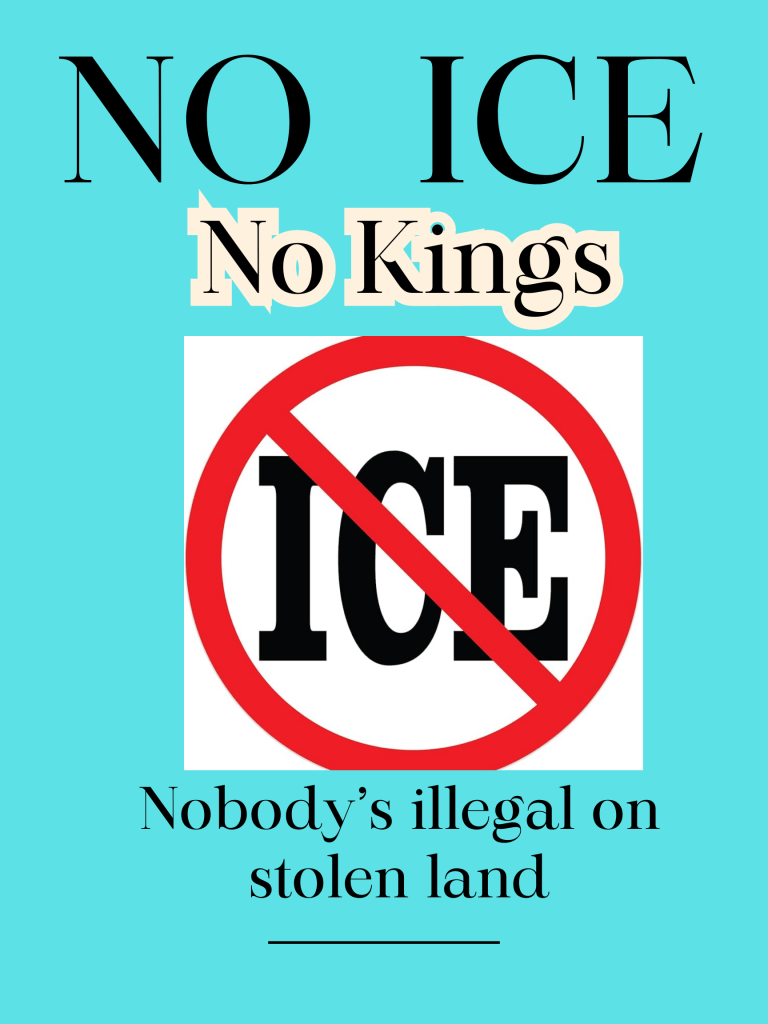
Graphic by Dana Romero Regalado.

For example, immigrants are highly represented in STEM fields, with 86.5% holding at least a bachelor’s degree in 2019, compared to 67.3% of U.S.-born STEM workers. Data also shows that immigrant-founded companies, such as Google, and 40% of Fortune 500 companies, were founded by immigrants, highlighting their entrepreneurial drive.

“The high-skilled immigrants we have in the U.S. are incredibly productive and innovative, and they’re disproportionately contributing to innovation in our society,” said Larry Diamond, a professor of economics at Stanford Graduate School of Business and senior fellow at the Stanford Institute for Economic Policy Research (SIEPR).

Being born as a Gen Z has helped me see how cruel the world is if you don’t fit the “ideal” image in America. I remember being terrified that I would go to school like any other day and come to find out that my mother was taken away — a hardworking woman who has her own business, hardworking employees by her side, and most importantly, a woman who would do anything for her two kids. 

To many children, that has become a reality. In 2018, it was estimated that 4.4 million U.S. citizen children were living with at least one undocumented parent. A significant number of these citizen children have been separated from a parent due to detention or deportation. A 2025 American Immigration Council report highlighted that nearly half a million U.S. citizens under 18 had at least one parent deported between 2011 and 2013.

“Government, please show some heart, let my parent be free with everybody else, please…” she said through sobs. “…My dad didn’t do nothing. He’s not a criminal,” stated 11-year-old Magdalena Gomez Gregorio, who tearfully begged for her father’s release

Many say that politics shouldn’t be part of conversations, that they shouldn’t be talked about because it doesn’t affect “anyone.” That’s beyond the truth; it just doesn’t affect them. Politics isn’t just about what you believe is “right” or should be “done.” It directly affects people and their lives.

Politics has a huge impact on immigrants and their everyday lives. The laws and policies created by political leaders often decide whether immigrants feel accepted and safe, or isolated and unwanted. Immigration policies can determine who gets the chance to build a better life, reunite with family, or even stay in the country they now call home. 

When political debates turn harsh or unfair, immigrants often become targets of discrimination and fear, even though most of them are just trying to work hard and create a future for themselves and their families. 

The system is failing the people they swore to protect, holding people illegally, and for a sum of money. Even local law enforcement officials, including Clark County Sheriff Scottie Maples, are holding ICE detainees at the Clark County jail.

So yes, who you support or follow does matter to me because it affects a community that is close to my heart, and it directly reflects the person you are and your morals. If the roles were reversed, would you still believe in your morals? Would you still say or think that they deserve this if they were your family? Or if they were your kids?

“Our attitude towards immigration reflects our faith in the American ideal. We have always believed it possible for men and women who start at the bottom to rise as far as the talent and energy allow. Neither race nor place of birth should affect their chances.”

Senator Robert F. Kennedy

Column: Public transportation can improve the beauty of our communities

by Rain Gresham

In this day and age, all we focus on is ourselves. But if you just took the time to stop and look around, you would see the beauty of people. The beauty of community. 

An estimated 28 million people use public transportation. That’s roughly 8% of the U.S. population and despite this, mass transit is in danger of losing its footing. 

During the pandemic, when people stopped using federal transportation and other infrastructure of economic importance the government put the Coronavirus Aid, Relief, and Economic Security Act (or CARES Act) into place in March of 2020. 

Graphic by Rain Gresham.

This act was a 2.2 trillion economic stimulus, and 25 billion of that was allocated to the protection of public transportation; it was followed by the Coronavirus Response and Relief Supplemental Appropriations Act later in the same year with 14 billion more dollars.

Then in March of the following year the “American Rescue Plan Act of 2021” was put into effect via a giant 30.5 billion dollar relief fund to the same cause.

Though over the four years since this, that 69.5 billion has been exhausted. It wouldn’t necessarily be a problem except for the fact that they never truly recovered from the pandemic rider-ship wise. Without the funding it is truly impossible for public transit to continue running effectively and fruitfully.   

I’m sure you’re wondering “Why should I care?” I mean we go everywhere with our parents, we have our own cars. What does public transportation have to do with us?

Everything, because public transportation isn’t just about buses or trains; it’s about the people.

The dad going home to his kids, the nurse on her way back from a long shift, the student just trying to get home early enough to eat dinner with her family. Without these little things, these quiet connections that bring us together, what are we? If not held together by the glue of these everyday moments, we are a shell of a community.  

We need to fight for this because who else will. So what can you do? 

You can give it your attention. Take the bus instead of calling an uber or door dash. Every ride counts even if it’s just once in a while. It may seem silly and useless because what can one person do? But that’s how change starts with one person taking initiative. 

Showing that you care, care enough to help the drivers keep their jobs, enough to help systems stay funded, and enough to show the people in power that this isn’t a lost cause 

Sure, we can’t vote. We’re not adults? But we are not children either, we can use our voices as little as it might seem. It makes a difference. 

Bring the problem to the forefront of people’s minds. If you can’t make them care, at least make them think.