by Breslyn Dozal
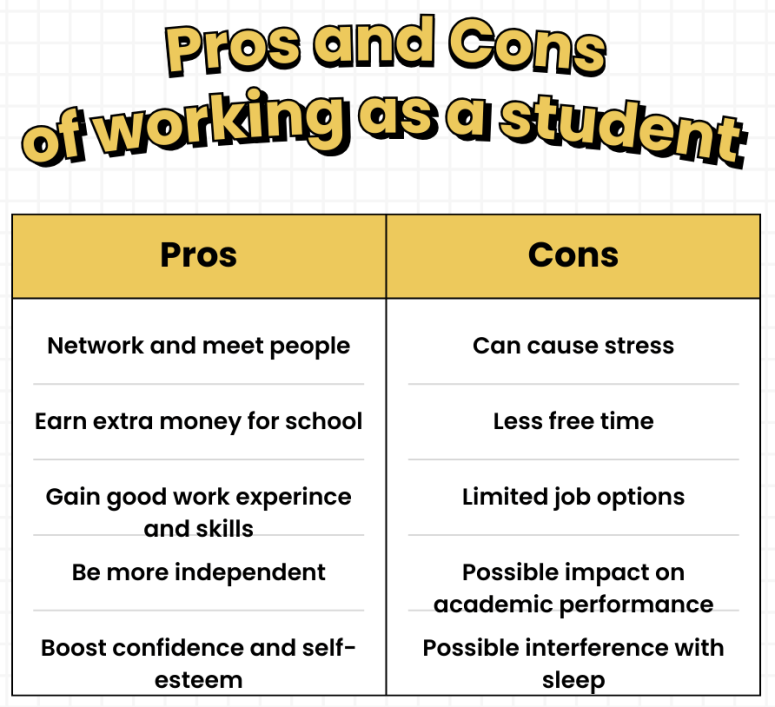
Balancing school and a job can be tough for students. It takes good time management to handle both without falling behind.
All students are different. Whether it’s studying or dressing a certain way, there’s one thing they all have in common. They need jobs! The real thing is, how do they maintain a job while being a student?
“I usually only work at least three days a week unless I pick up more shifts, but I try and get most of my school work done if I work that specific night. Sometimes I’ll plan out my week just so I know everything that I have going on,” said senior Kendall Curry, who works at 7brew Coffee.
When planning a routine, making sure students have everything sorted out is one of the hardest things. Many steps come when making a routine or schedule. The biggest thing teens can do is set a goal and have self motivation.
“I would say, my mindset helps me focus on what the next step is to the ending step,” said sophomore Marcus Baker, who works at Taco Bell.
Being a student athlete may also be a challenge when it comes to balancing work and school. On top of school work, students have practice and games which might make it hard to get to work on time or get there in general.
“Do school work quick, work the days I can, and practice when I can,” said sophomore Kaden Waters, who works at Culver’s
When asked, Baker said being considerate of the time given and managing time well helps him most when it comes to being a student athlete and balancing work.
Talking to coaches and employers about working around students’ schedules is the best way to form a good working relationship alongside school work. Most coaches find a way to plan important stuff around athletes’ schedules.
Another good way to plan is asking others in the same situation how they do things. What their strategies are and how they manage everything. How they keep up with school, work, and sometimes sports too.
“I keep up with my job by working no more than 30 hours and not working multiple days back to back,” said senior Maxwell Schoonover, who works at Kroger.
It’s also important for students to enjoy high school years. If students are always spending time doing work or sports and school, they’ll forget to have fun. Another thing is overwork. Working too much and not giving enough will make everything 10 times harder.
“It is important to work but it’s also important to have fun in high school and school is already like a job so it’s important to give yourself a rest,” said Schoonover
One thing that Jeffersonville High School offers is academic pathways. These pathways are mandatory but very useful. It helps students to take certain classes to be prepared for out of school work. It also offers real job sites during students senior and junior year. Helping them prep and know what you’re stepping into.
Another thing being offered is Prosser. Prosser is a real life learning experience. With work based teaching, Prosser helps students get the experience they need.
“One of the beautiful things now about high school education is because of the ways the pathways are able to work your senior year during the school day and that is a part of your academic portfolio. You can get a grade for it, you get release time from school. You can get school credit, earn money, get your job during the school day. And that’s a part of the state’s initiative on this work- based learning,” said Jeffersonville High School principal Pam Hall
Balancing work and school takes effort, but with good planning and support, students can succeed in both. It’s all about staying flexible and focused on their goals.

 thehyphennews.com