by Gabriella Kraft
I have done cheer for nine years; I know as well as anyone that burnout and pressure made the sport I once loved the most exhausting part of my life. It eventually damaged my sleep schedule, my grades, and my mental health.

According to the Centers for Disease Control and Prevention’s 1991-2019 High School Youth Risk Behavior Survey Data, about 57% of high school students played on at least one school or community sports team in the past year.
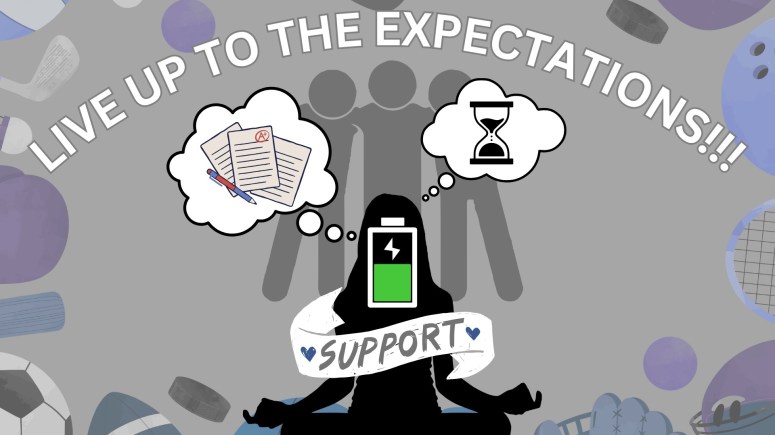
It is not only the pressure of performing well in a sport the athletes love, but also getting good grades and living up to the expectations of the closest people around them.
Junior Alicia Mangrum, the shooting guard for the girls’ basketball team, said that with the right support, success is possible.
“My parents are always encouraging me during tough times. When I’m down on myself, they always tell me to pick up my head and give me words of encouragement,” Mangrum said.
Athletes who have people in their lives, like a coach who cares, are an important part of playing sports; without them, or with a bad coach, it can ruin the whole experience.
Junior Makenna Taylor, who plays point guard for girls’ basketball, said head coach AJ Moye is an example of being a supportive coach.
“Athletic director and girls’ basketball head coach AJ Moye is a very vocal coach, so even on the bad days, he is always pushing us to do better and talking to me about not getting down on myself. As a leader on the team, you have set an example regardless of how you feel, so he does very well with uplifting and encouraging me,” Taylor said.
Without the proper care, athletes can get very burnt out. I remember when I was a kid, and I had cheer practice every day except Fridays and Saturdays. But I also had basketball training on Saturday mornings. My dad had to bribe me to go to something that I should have wanted to do, but I was so burned out, I could not function. But for Taylor, she always stays ahead of the game to avoid burnout.
“I usually plan out my weeks ahead of time, so I’m aware of my schedule and know when things are due and when practices are. It can be difficult to juggle homework and practice sometimes, but honestly, some days I just have to stay up later than others. That’s part of being a student-athlete,” she explained.
Junior volleyball player Jayli Burris, who plays the position of outside hitter, finds balancing schoolwork and activities a challenge.
“Sometimes it can be a challenge with the amount of time I have to do my assignments. I try to stay on top of my work, even if that means staying up late after a game,” she said.
Being a student-athlete is almost a full-time job. Athletes have to manage their time, focus on specific assignments, and find ways to keep their mental health up. It’s a struggle trying to excel in everything, but it’s possible as long as they have the people they need to support them.