Column: Music-sharing platforms can be ethically questionable

Art by Kallie Warnock.

by London Williams

Daniel Eks’ recent investment of $702 million as the founder of Prima Matra in the German AI military combat-defense company, Helsing, has sparked considerable controversy among several artists, starting discussions on what our art is funding and the moralities of using platforms that fund programs such as war technology. Many artists have responded with a boycott, and it has made people reconsider their methods of streaming music.

San Francisco band Deerhoof was the first to leave the platform over this; they first announced their departure on June 30, 2025. Deerhoof stated that they didn’t want their music contributing to “AI Battle tech” and that, “We don’t want our music killing people.” 

Deerhoof isn’t the only band that responded to the boycott; Xiu Xiu announced on their Instagram page just after Deerhoof: “We are currently working to take all of our music off the garbage hole violent armageddon portal Spotify.” They followed by encouraging fans to cancel their Spotify subscriptions. 

King Gizzard & Lizard Wizard followed suit, and so have other smaller artists. Godspeed You! Black Emperor just recently announced their departure from all streaming services this August 17. This problem certainly has the potential to spread to other streaming services. 

It seems that many bands have been looking for excuses to leave the platform, claiming the pay isn’t worth it and that the main benefit to Spotify is its “discoverability.” Some artists believe this takes away from the experience as it’s overly accessible, and on the go isn’t the way music was intended to be appreciated. Spotify isn’t a friend of the music industry. It impacts traditional music sales and is by no means a sustainable income on its own. On average, artists make 0.004 cents per stream. That’s 1 cent for every 25 listens.

Jamie Stewart, the frontperson of Xiu Xiu, put it bluntly: “There’s no amount of money that would make us want to participate in a company that is trying to murder people.” 

Spotify is the only in favor of this, artists are gaining no benefit. Listeners want their favorite artists getting paid. For example, freshman Sophie Ellis said, “The money should be going to the artists, and the people that actually run Spotify,” and freshman Rowaan Stephens agreed.  

This isn’t new news. Daniel Eks’ interests in Helsing go all the way back to 2021. In February of 2021, he vowed to invest over 1 billion through venture capital firm Prima Matra. At this time he made his initial investment and joined the company’s board. Since he has become the founder of Helsing, he claims that his donations are important for Europe’s technological defense, and that his firm’s decision is “right for Europe” and that he is unconcerned with the backlash, emphasizing the importance of AI development and its use on the battlefield. 

The majority of bands are against their art funding war in any way, and so are many of listeners. After asking students, it is clear where the moralities stand on AI and Daniel Eks funding. 

“It’s scummy,” said junior Kaylee Austin after hearing about the controversy. “AI takes away from art, it helps people be lazy.” 

Spotify is the world’s most popular music streaming service. AI being such a big part of it is bound to start discussion. Daniel Ek’s interest in AI goes beyond Helsing; AI is all over Spotify. It’s in our daylists and our DJ, it’s in the weird four-minute video that was at the end of our yearly recap. It’s the mind behind all of our recommendations. Data is being directly put into this AI algorithm; listeners are the product. It seems to be a good idea to switch platforms, and many people do use other platforms. 

After asking several students what their alternatives were, it is still clear Spotify is in the lead. But Apple Music, Pandora, Soundcloud, YouTube music are still relevant. 

Senior Ciara Lee is a listener of Spotity, but after hearing the news she said she “might not continue.” 

Many people online recommend  alternatives, but they aren’t exactly perfect either. Many musicians feel putting their music on these platforms is a necessary evil. However, there are many ways to directly support artists. Bandcamp is a great alternative, as artists get to keep 82-85% of their sales. Buying tickets and seeing shows, and making visits to local music shops is also a perfect way to support the minds behind the music. 

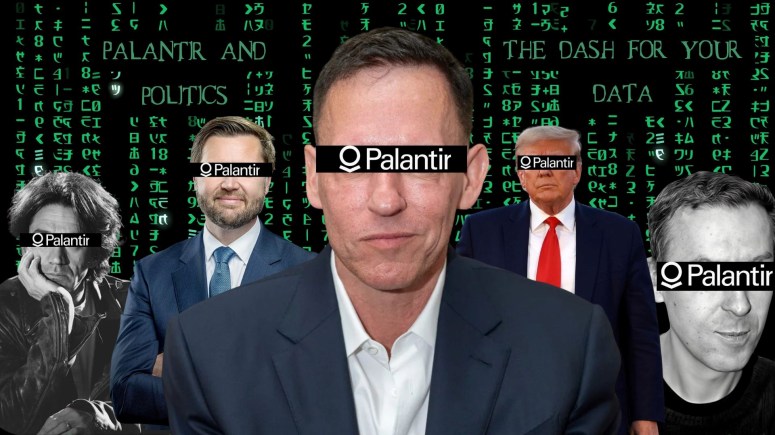
Column: Palantir and Politics : We must prioritize peace over profit

by Tyler Johnson

In Philip K. Dick’s 1956 novelette “Minority Report” a group of psychics is used by the police department to predict future crimes. 

In J.R.R. In Tolkien’s classic “Lord of The Rings” the palantir stone is the magical crystal ball which allows the user to spy on others from distances. 

In our world Peter Thiel is the billionaire trying to bring these concepts from fiction to reality and it is anything but utopian.

Thiel founded the company “Palantir,” whose namesake is an on-the-nose reference to the fictional item. The function of the company is simple: Provide AI-powered software platforms to help organizations manage data sets. 

But these organizations aren’t the local computer store, and these data sets aren’t just any type of information. They are providing the systems that governments use to predict citizen crimes. They are the authors of an ai used to automate drone strikes. The United States, Israel, the United Kingdom, France, Germany, India, Canada, and Spain all have government contracts with this company.  

The entire shadow of our internet presence is to be collected and used against us. You may call it a surveillance conspiracy; they will call it marketing; and this is the problem with unchecked corporations. The U.S. government on our half has surrendered the information of Americans to Palantir and in exchange for what? We must ask ourselves , exactly who is this benefiting?

To understand who this benefits we must understand Peter Thiel, the Infamous billionaire who’s claimed “Freedom and Democracy are not compatible” and who has a passing interest in blood transfusions for eternal life.

 In a now viral interview with the CEO, he was asked the simple question: “Should humanity endure?” His answer to this was a vomit of stuttering and a plethora of pseudo-intellectual “Well, what do you mean by that” statements. 

Should we trust someone who can’t answer this question simply? Especially with the entire nation’s information? 

Current Vice President JD Vance thinks so. Vance had worked in Thiel’s venture capital firm and had 15 million dollars of his Senate campaign funded by Thiel. So whose interests does Vance really have at heart? Well, if we take the so-called “Philosopher behind JD Vance” Curtis Yarvin’s word for it, his interests lie in monarchy. 

Yarvin and the as well infamous British Philosopher Nick Land spearheaded “The Dark Enlightenment” movement. An ideology built out of an accelerationist view of the future. That democracy is dead and we must have a CEO monarch take hold of society. This belief also posits that humanity in fact will not endure and AI will create a singularity that we will not be able to come back from.

This may seem like something right out of another Philip K Dick novel but this is our current reality. We must not forgo our democracy to authoritarian lunatics. Palantir’s use of AI under these circumstances is even more alarming. While Thiel might not admit AI is bringing about the end of humanity, OpenAI (ChatGPT) CEO Sam Altman is, openly stating: “AI will probably most likely lead to the end of the world, but in the meantime, there’ll be great companies.”

Prioritizing company and corporation over the survival of humanity is the goal of these people. They are not populists. They’re no longer neoliberals. These are radical monarchists who are ushering in an era of dying democracy. This is the New Right.

 But we must remember AI is not sentient, omnipresent, nor metaphysical. It lies in data centers. Data centers which could be torn down and replaced with almost anything better. With Microsoft recently investing 1 billion into datacenters in Indiana, the chance to counter is closer than ever. It isn’t over once they’ve built them as long as we have the strength to fight, to protest, and to speak. These democratic ideals are what they intend on taking from us and no one person living in this country should stand for it any longer.

A sort of dark nihilism has gripped the youth of this country. You know them, the “that’s just the system” or the “nothing ever happens” crowd. But we have to keep in mind that this is not the end and there is no end for humanity in sight as long as we keep our democratic spirit. No longer must we relegate the decisions of infrastructure, labor rights, and civil liberties to the will of a few profit driven maniacs. 

This isn’t to say we need to drive our force behind the Democrat Party; truthfully, it’s quite obvious that the Democrat Party has failed us. These are people just as disconnected from who they’re supposed to be representing. Hundreds of miles away from their home states, sitting in Washington, with the same corporations who bought the other side, buying them.

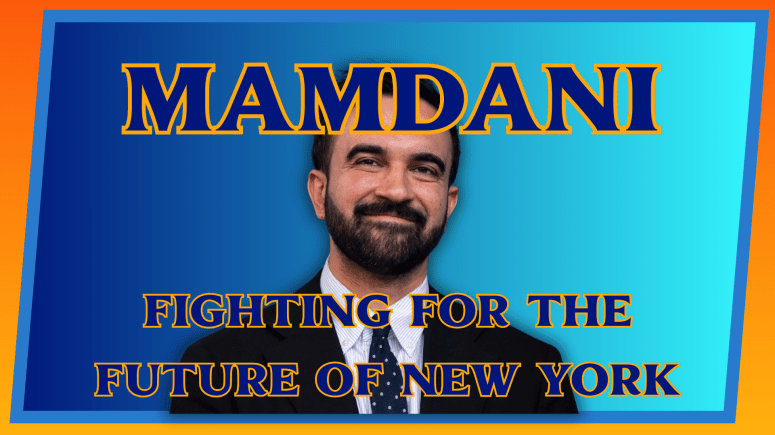
But hope is not lost. With grass roots and anti-establishment Democrats gaining traction in cities like New York and Minneapolis, the term Democratic-Socialist is something progressives are starting to warm up to. With Zohran Mamdani’s looming victory over Andrew Cuomo and Omar Fateh’s endorsement by the DFL against Jacob Frey, it’s clear there is a shift within the party’s values.

Going forward as a country we need to understand just who we’re supporting and who’s financially supporting them. We must become the free country we so often boast of being — free of tyrannical surveillance and corporate lobbyists. We cannot let them tear down our homes for  their data centers. We cannot have our peace destroyed for their profit. We must stand and shout louder for every voice they silence. There is a future for us, but we are the ones who have to build it.

Column: Social media negatively affects student mental health

by Mallory Mattingly

Mental health is an extremely intricate topic because there are so many different components to it, yet all of them are equally as important as the other. Mental health issues are really common in youth, ranging anywhere from 10 years old to 20 years old, and more; however, these are the most common. An age range that mental health is an extremely big issue for is the mid teens, like 13-17 years old. 

With teenagers, mental health has only become a bigger issue throughout the past few years, stemming especially from 2020 in the COVID-19 pandemic. Mental health is greatly associated with the overuse of social media with teenagers and being stuck in the house in 2020, significantly affecting people’s mental health in a negative manner because one of the main things we all resorted to for entertainment was social media. 

Social media can negatively affect anyone because it has come such a long way, and in some cases, that isn’t a good thing. For example, cyberbullying. 

Cyberbullying is the use of electronic communication to bully an individual, or multiple individuals. Social media is one of the main ways people communicate in today’s society, and specific platforms and apps are rapidly becoming more and more popular, like the application TikTok. TikTok was essentially a dancing and lip-syncing app and it was meant for ages 13 and up, but several children would get ahold of the app and somehow make their own account and enter a false birth date. 

As the popularity of this app continued to rise, the original meaning for the app changed. It went from being a dancing and singing app to an app where graphic news stories would be uploaded or negative posts would appear. These posts were so unlike the other fun posts, that they blew up and went viral, creating more people to want to create that same content. In addition, since almost the entire world has access to this app and the age restriction is able to be bypassed, there are subjects being revealed to young minds that shouldn’t be revealed to them and all kinds of people use this app and many other apps for cyberbullying.

There are accounts on TikTok whose main goal in posting is to degrade certain individuals and then on top of that, people in the comments that are also belittling these people and agreeing with the creator of the account. When someone is being insulted by thousands of people, that is going to take a toll on their mental health without a doubt. Some people will even get bullied by their own friends and peers, which can be worse because these are people you see everyday and have to be around. 

A specific story that I always tend to bring up when speaking about mental health is about a girl named Aubreigh Wyatt. Aubreigh Wyatt was a 13-year-old girl that committed suicide due to bullying. Her mother, Heather Wyatt, has used a TikTok platform used to bring awareness to mental health and prevent bullying, whether it’s cyberbullying or in-person. Her mother using her platform for a positive impact on people is what we should be doing with our social media. 

If you or anyone you know struggles with mental health or suicidal inclinations, the national suicide prevention hotline is 988.

You matter!

The Last Word: One Little Girl’s Memory

Editor’s Note: Journalism I students who have published on the Hyphen website this school year were given the opportunity to write and publish a final message to readers on a topic and with a style of their choice.

by Juliette Acuna Garcia

I’ve been told I’m “too sensitive” more times than I can count. People laugh off comments about race, act like they don’t matter, or tell me “it was just a joke.” But the truth is that those comments do stick. They stay with you. I know, because one has stayed with me since I was seven years old.

I was only in second grade when I realized that the color of my skin made people see me differently. 

It was recess. I was wearing a bright yellow shirt, my melanin skin beaming in the sun. I was ready to play whatever, with whoever. When this little blonde haired girl appeared in front of me, I was filled with excitement. As I was young, I had no shame. I asked her if she wanted to play with me.

“No…I’m scared of your skin color.”

I froze. I didn’t even know what to say. I didn’t cry or run away. I just stood there, confused and embarrassed, wondering what about me was so scary. When I walked away,  I pretended not to care. But I did. That one comment stuck to me like glue. 

I wasn’t being bullied out loud, but something in that sentence felt deep, ugly, and wrong.

I didn’t understand at the time, but now I know that was a form of micro racism — those small, everyday comments or actions that show bias without being as obvious as a racial slur. People think racism only looks like shouting or violence, but it can look like a classmate flinching when you sit too close. It can sound like “You’re pretty for a brown girl.” It can feel like being left out of certain things, being trapped in your own mind.

What happened to me that day on the playground wasn’t just one moment — it was the start of a pattern I would notice again and again growing up. That memory made me more aware, made me listen harder to what people really mean when they speak. I started realizing how normal it is for people to make those kinds of comments without thinking twice.

It’s in the jokes, when someone makes a comment about how “surprisingly well” you speak English, even though you were born here. Or when someone says, “I don’t see color,” as if pretending racism doesn’t exist is the same as stopping it.

Micro racism is so normalized that people don’t even realize they’re doing it. It hides behind jokes, “preferences,” and stereotypes. And when you call it out, you often get told you’re “overreacting.”  It’s frustrating. It’s tiring. 

That day on the playground might seem small to some people. But to me, it was the beginning of realizing that the world sometimes sees me differently, and not in a good way … just because of my skin. And I think that’s why it matters so much to talk about it. Because if we stay quiet, these moments will keep being brushed off as “just a joke.” 

I’m not angry at that girl anymore. She was young and probably repeating some things she heard at home. But I do wish someone had taught her better. Because we all deserve to feel safe, welcome, and equal. I know I will never really feel that way, but I’m not that little girl on the playground anymore. I’m stronger, and I’m louder. It made me want to speak out, because no one should feel “scary” just for existing in their skin. 

I’ve learned to be proud of my skin, my roots, and who I am. Being ashamed of what I look like will never happen again. I will always remember that little girl at recess, and how one sentence made me question who I was. That’s why I am writing this. Maybe if we start calling out these moments, we can stop them from becoming someone else’s memory, too.

The Last Word: Innocence to Reality

Editor’s Note: Journalism I students who have published on the Hyphen website this school year were given the opportunity to write and publish a final message to readers on a topic and with a style of their choice.

by Ayianna Maddox

To be naive once again.

The world out here is cruel.

To not see crystal clear, but to see a cartoon.

To see the world bright and colorful again, instead of bland and dull.

How I miss hearing the ice cream truck’s tune.

Now I wake to a snooze alarm.

To not have a care in the world.

To yearn for the newest toy, not an extra 5 minutes.

The years passed by, believing they’d last forever.

The memories slip away, but small fragments of nostalgia remain.

Excavated memories and treasures.

Innocence to reality.

The world has never looked the same.

Looking back is realizing that every day that naive child is still present.

That naive child lives in my heart, where she’s always been since the start.

Column: Bleak generative AI cannot replace genuine handmade media

by Sam Ottinger

AI has had an ever increasing prevalence since OpenAI’s introduction of DALL-E in January of 2021, and ChatGPT in November of 2022. It has been a popular addition to company websites, search engines, and social media platforms.

The presence of artificial intelligence is nothing new, for Tik Toks “For You” page is able to be what it is due to the use of AI to personalize recommendations for each user. This is similar to X, formally known as Twitter, that also uses this same type of algorithm-based timeline, starting all the way back in 2016.

Yet the current use of generative AI, now not just relying on analyzing existing data, but instead using this data to “create” text or images, is more invasive than it has ever been.

Art by Sam Ottinger.

It’s hard to go onto any major platform without running into generative AI being implemented within it. Search engines like Google have Gemini, website creators like Squarespace have Squarespace AI, and social media companies like Meta have Meta AI.

Many of these inclusions come with a lesser known contract to those that use it. For some companies, this use of AI features gives them permission to use the users data to train their AI models.

Even those that don’t use these tools, or specifically opt out of this use, can still have their work used against their will.

This has been a major problem for many creatives, especially with the presence of popular generative AI websites like DALL-E 2, Midjourney, Craiyon, and recently ChatGPT. Each using datasets, often scrapping images and artworks from artists and photographers all over the internet, in order to produce images that try to replicate their human creation.

Generative AI isn’t just used by a subset of individuals; it’s also found its home through different social media trends.

Some have participated in generating turnarounds from an image, also known as the microwave trend, while others have used it to turn themselves into dolls, mimicking the style and packaging of Barbies or classic action figures. Yet most recently there has been a trend of turning images into the style of Studio Ghibli, using ChatGPT.

This latest trend has caused the most controversy. Hayao Miyazaki, a co-founder of the aforementioned studio, has been outspoken of his dislike of AI since all the way back in 2016. In a documentary called “Never-Ending Man: Hayao Miyazaki,” he comments on an AI-generated demo shown to him, stating that AI’s use is “an insult to life itself.”

This dislike of the technology producing these images has caused many Ghibli fans to be concerned about the disrespect of using AI to copy the hand drawn and intricate style of the real Studio Ghibli – only producing a cheap soulless copy.

The hate on generative AI isn’t only for the stealing from others’ works; it’s also the way its presence has been used to put down the creatives that made it. Many who swear by AI-generated images boast about the quick generating speeds and how it puts out near “perfect” products in that shorter time frame, ignoring the true meaning of creating something through your own living hands.

Without genuine human creation in the world, there would be no data for these AI models to rely on, showing the hypocrisy of this belief that generative AI will somehow ever replace the value in handmade media.

Review: The Doors’ debut album achieves perfection from top to bottom

by Tyler Conley

Before the release of the first album, way before the legacy and creation that The Doors became, no one, not even the band themselves, would realize the lasting impact they would have on the music industry and rock and roll as we know it today.

The Doors first got their kicks of being a band in 1965, playing small venues, with nervous frontman Jim Morrison turning his back on the audience as he sang to avoid stage fright. Also included were Ray Manzarek at the helm of keyboard bass and organ, Robby Krieger laying down chords and bluesy solos, and John Densmore putting down rhythms unmatched and unheard of at the time. This lineup would stick together until the eventual breakup of the band. 

When 1967 struck, it was time to record the first record. For 10 thousand dollars a 4- track recorder was purchased. With the help of Paul A. Rothchild, the band began their sessions for their self-titled debut. Rehearsal outtakes were recorded of songs that would appear on later records, but the first actual songs recorded were “I Looked at You” and “Take It as It Comes.” 

Graphic by Tyler Conley.

With the combined power and input of all band members, the band completed recording. “Light My Fire” became an instant success, reaching #1 on Billboard charts, along with “Break on Through (To the Other Side.)” At the time The Doors arrived, rock was in absolute infancy, especially when compared to today’s standards for what “rock” is. With a mixture of blues, soul, rock, and everything in between, this album is a gem for anyone a fan of those genres. 

Morrison’s lyricism is a big factor in what makes the music magical. His outlook on life, his expressions of feelings and ideas are perfect. The final song on the record, an 11-minute epic, details fighting past trauma and getting over the past. Most of the love songs the Doors would write on this record and many more are about Morrison’s longtime girlfriend, Pamela. 

Over Morrison’s life, controversy has played a big part in how people perceive him. People label the singer as a drunk, and stupid. But behind those bad, vulnerable moments is a person who was caring and compassionate. Back in the 60s, mental help wasn’t as easily accessible as it is now.

This album changed my life when I first heard it. The beautifulness of “The Crystal Ship” And “End of The Night,” and the killer tunes of “Break on through (To the Other Side)” and “Twentieth Century Fox.” These songs, and much more, make up one of the best debut albums of all time.

And if that alone isn’t enough to pique your interest, artists like Jay-Z and Lauryn Hill have sampled The Doors’ music in their works. The Doors are respected by every genre, and heavily influential.

The Doors are engraved into the heart of rock and roll, and the music industry as a whole. Jim Morrison, and all members respectively, are like cosmic brothers, and their music is there for the listener whenever they need it. When people are strange, music will always be waiting with open arms, and this album is no exception. Top to bottom, perfection.

Column: Hateful rhetoric paints immigrants in an unfair light

by Ifrah Daber 

In the past few months, anyone who is paying attention to the news has seen how the conversation surrounding undocumented immigrants has been stealing headlines. Sadly, these discussions have been another example of loud misinformed hate-filled rhetoric from people who attempt to paint a group of individuals as the main problem with America. 

Immigration, even when done through the legal process, has always been a hot-button issue. Still, with mass deportations and debate as to whether undocumented immigrants should be afforded the same rights as “real” Americans, the quiet part that racist people have been screaming about for years is finally out in the open:

“You aren’t a person unless you look and act like me.” 

People might call me dramatic, but this has been how America has set up its immigration policy for decades now. The Immigration Act of 1924 was an immigration plan that set quotas and heavily restricted immigration from Asia and certain European areas. Why was this? A fear of change, and a fear of those who are different steers this mentality of sweeping racist ideology. 

And this hasn’t changed, it’s simply been repackaged. An immigration policy in 2017 that is commonly referred to as the “Muslim ban” made it so that countries that were majority could not travel to America. But it has been repurposed again in the current Trump Administration with a colored tier list for which countries can and cannot travel to America.

Those who have seen the list will note just how strict the travel ban is – and that the majority are from Muslim countries. These restrictions that feed the mentality of danger that those from these countries are inherently more harmful than others are insulting. 

Many claim other reasons for why they think undocumented immigrants, or just high immigration in general, is harmful to America. Immigrant restrictionists claim that undocumented immigrants are a drain on the economy, but this is simply an unfounded belief. 

The American Immigration Council found that undocumented immigrants paid around 90 billion dollars in taxes. The research found by Congress in “Effects of Immigration on the Economy” from 2024 shows that in the long term, immigrants help the workforce and lead to innovation. The Council of Foreign Relations even found that the “nonpartisan Congressional Budget Office estimates that increased immigration could reduce the U.S. federal budget deficit by some $897 billion over the next decade.” 

So those who claim that immigrants are a detriment to the U.S. economy simply do not actually understand the immense benefits that immigrants bring by boosting the economy and doing their part for society just like anyone else. 

The other main argument against undocumented immigrants is that they are criminals and are coming here illegally. That statement in itself is incorrect. 

Entering the country without proper documentation is not a crime. It is a civil violation, so immigrants are not “illegal.” Some may call that semantics, but if you are stopped for speeding, you would probably care to know that it’s not a criminal charge. 

This second idea that all or most undocumented immigrants are criminals is a fear-mongering tactic that people are falling for and have been for centuries. 

The American Immigration Council used data from the FBI and the U.S. Census Bureau and did not find any correlation between higher levels of immigration and an increase in crime levels. In addition, the National Institute of Justice presented a study that argued that undocumented immigrants are less likely to commit crimes when compared to native-born citizens, or citizens born in America. 

So where did the idea that immigrants were violent or dangerous come from?  Well, there are multiple factors, but in the end, it all boils down to two things: racism and the logical fallacy of hasty generalizations. 

Society sees one person of color or undocumented committing a crime and they believe that somehow is a representation of all undocumented immigrants. However, this is partly the fault of the media and the way that immigrants and people of color are portrayed. Often when a person of color commits a crime, the first thing in the headlines is their race. Crimes are a reflection of the person, and yet people expect their whole race and demographic to pay the price for it. 

The last ethical fallacy is the “breaking into my house” analogy, that those who enter America without the proper documentation are unwelcomed guests in their home, and that if they were to “break in” to another person’s country or home that they would have to leave.

Here’s why neither of these examples works. First, if you were to destroy someone’s home, and then they came to you asking for housing from the destruction you caused, I believe you would have a moral obligation to house them. That’s a more accurate description of the situation that America is in. America has taken resources from other countries for years and yet now acts shocked when these countries’ citizens are suffering and wish to leave. 

The other issue with the comparison of “if I was just going to another country” is the same reason there is a difference between the man who steals to buy a new phone and the man who steals to feed his family and survive. If someone goes to another country just to have a fun vacation and overstays their visa or commits a horrible crime and they get deported, I’ll cry no tears. The problem is distinguishing who is here with good intentions and who is not. ICE and the whole Trump administration have shown time and time again that they aren’t taking the proper steps to give each immigrant the due process he or she deserves to hear each case out. 

But why does this matter? Well, as I said at the beginning, if you have been paying attention to the news there is a clear rise of immigrant hate in America. This is happening for all the reasons I have stated, and it’s why people are cheering when people are being thrown in cages. It’s why people who have every legal right to be in America are treated like criminals, and it’s why people argue if undocumented immigrants deserve basic fundamental American rights – because all the issues I’ve described circle back to the dehumanization of immigrants. 

For some invisible reason, many believe documented and undocumented immigrants do not deserve due process, a right that is guaranteed under the Constitution. Too many believe that young immigrant children do not deserve lawyers to defend themselves, and that they are guilty until proven innocent. 

The direction that America is going to take is scary for anyone who chooses to care. Undocumented immigrants are not criminals – they are afforded all the same rights that any other person would receive. They are human, and that should be enough to make us feel horrible for what is happening. The fact they are human should be enough. 

Column: Make Mother’s Day count with love and time

by Brian Juarez

As the second Sunday in May approaches, so does one of the most cherished holidays of the year: Mother’s Day. Set for May 11 in 2025, it’s a time to pause our busy lives and reflect on the women who raised us, guided us, and sacrificed for us in countless quiet ways.

Mother’s Day isn’t just about flowers, cards, or brunch reservations (although those are always appreciated). At its core, it’s about appreciation—real, deep, and personal. It’s about taking a step back and recognizing everything our mothers and mother-figures have done, often without thanks or fanfare. From sleepless nights to being our biggest cheerleaders, mothers show up in ways big and small every day.

This year, maybe it’s worth asking ourselves how we can make the day more meaningful. A phone call or a thoughtful letter might matter more than an expensive gift. Recreating a childhood memory, cooking her favorite meal, or simply spending time together without distraction can be just as powerful.

For those who no longer have their mothers with them, this day can carry a quieter, more emotional weight. Lighting a candle, sharing stories, or visiting a special place can be ways to honor their memory. Grief and gratitude often live side by side on Mother’s Day.

It’s easy to take for granted the steady love of a mother, but this day reminds us to hold it a little closer. No matter how old we get, there’s something grounding about a mother’s voice, her advice, or just her presence.

As the saying goes: “A mother is she who can take the place of all others, but whose place no one else can take.” – Cardinal Mermillod

Let’s make this Mother’s Day count—not just with gifts, but with genuine love and time.

Column: Reading is beneficial for the brain

by Daysha Gray

Hypothetically, open a book. Read a few sentences. Did it benefit the brain?

We all know that reading is good for people in general and helps us understand words and different scenarios, but how does it positively affect our brains?

Reading is the process of looking at written symbols and letters and understanding their meaning. It exposes us to new knowledge and vocabulary in our minds. It introduces us to a new world, sparking creativity and fostering cognitive thinking. 

Taking out 15 minutes of the day to read at least 25 pages a day strengthens our brains and critical thinking skills. According to the Boston Children’s Hospital, reading can rewire the brain, create new neural networks, and strengthen the white matter in the corpus callosum, which enhances communication between the two brain hemispheres. This allows us to process information more efficiently, allowing us to learn faster.

Here are 5 tips for how we can better our reading:

Column: The solution to problematic people is for all of us to be kinder

by Breann Jackson

Problematic people are the most annoying people you will ever meet and hear from in this world.

What is a problematic person?  According to the Dictionary, problematic is when someone is tending or likely to elicit objections or disapproval, or offensive. It can come from other people, for example, your friends, influencers, or a president. Being problematic is being a toxic person, especially when there are people out there who tell you that you are but you don’t care. 

These people can be easily marked as the most common trait, negativity. But most of them don’t make it obvious. Of course, when you’re having a conversation with someone, you would want to make your first impression with positive vibes,  but the more you build your relationship with the person, the more it starts to crumble.

Problematic people mostly come from being manipulative. They see the relationship we build with them as a waste of time, so they’ll just play a selfish action and start to use us. They are lying, feeling dry whenever they’re near, tricking our minds, and blaming us for things they did. 

You may not have experienced this but you can see it through TV and movies and how it is portrayed through characters. For example, Angelica Charlotte from the cartoon show, “Rugrats.” She is a 3-year-old spoiled brat who’s rude to the main characters and manipulates them into bad behavior but acts like an angel in front of the adults. Edward Cullen, from the movie, “Twilight,” doesn’t take the main character’s feelings seriously or set boundaries. 

Being problematic doesn’t have a specific place or time, it can happen whenever we go. If we’re going to work, school, a restaurant, or inside a store, someone could be seen as problematic by their actions. Since there are billions of people around the world, there is no chance that we will avoid these types of situations. But we can solve it.

How can we treat people better? We can try to be nicer and kinder. Being rude is going to cause more problems and make you similar to the person of this topic.

Column: Year-end projects create stress for students

by Sophia Waldridge

In middle school teachers will tell students that high school will be a lot harder and feel longer because of how much work is assigned; and they are not wrong. JHS students are starting to feel the pressure and are realizing how hard school really gets towards the end of the year. 

Freshman Mahalia Smith said the work is getting so hard that she is far behind. “Teachers assign so much work all at once with such a short amount of time to do it before the due date, and it causes students to panic and give up with getting work done; it’s too much.”

However, English teacher Eric Watson disagreed, saying, “Having many assignments all at once allows the students to practice essential skills like time management, multitasking, and prioritization; students should test their limits. It’s good for the mind.”

With personal experience I can agree with both sides of this argument, but I myself am stressed with the workload that the teachers have put on students the last couple of weeks left in school. I feel teachers should have meetings where they agree to do a week-long project in each class until the very last week of school; not all at once.

Another freshman, Calob Somoro, agreed with Watson. “All the assignments the teachers have assigned are easy. Most of them are just slideshow projects that take no longer than a day to complete.”

English co-teacher Michelle Houchin is one of the teachers that sees the situation from a student’s point of view, but since she is also a teacher like Watson, she thinks that a student should never give up on getting assignments done.

“I understand that students receive numerous projects and homework assignments daily. Knowing this and the fact that many students have after-school obligations, I do not assign big projects or any homework, and I communicate with my classes,” said Houchin.

In my honest opinion, I do not think that teachers assign too much work, but I do think that they make the work a little too hard sometimes and they expect students to get it done in less than a week. 

I struggle with keeping up with work a lot of the time, so I can truly relate to these students  and their concerns, but I also try my hardest and know that students should trust their teachers and remember that they’re not here to hurt us, but just to make us better and help us learn more for when we’re older.