Review: ‘A Complete Unknown’ paints a picture of Bob Dylan’s life

by Lola Mays

Bob Dylan was someone who until now had never had much of an impact on my life. The film “A Complete Unknown” painted a new picture in my brain of what it was like to rise to fame in the 1960s as a folk singer. 

Bob Dylan who was portrayed by actor Timothee Chalamet showed the bigger story behind so many important things in life. Through the simple times of living in New York in the 60s, it was interesting to see how much life has changed and how one person can make such a big difference in so many people’s lives.

The movie begins by showing Bob arriving in New York City to visit one of his idols, Woody Guthrie, who was in the hospital at the time for Huntington’s Disease, which severely affected his nerves and brain. We also get introduced to Pete Sagar, who started Dylan’s singing career by helping him play at new gigs and showing him the ropes by taking him to one of his shows. It was very interesting to see Pete be so kind to someone he would have barely known at this point. 

Seeing how rapidly Bob’s life jump-started in just a few years of playing small shows was astonishing. As someone who is always on the outside of fame, I enjoyed the route they took for the viewer to understand and comprehend how fame truly feels and how overwhelming it can be. 

Bob eventually gets a girlfriend he meets at a church he was playing at, and she ends up being a big part of his early career. In the movie her name was Sylvie Russo; however, in real life Bob’s girlfriend at the time was Suze Rotolo, and it is projected that this change was made because Bob Dylan requested to have her name altered. 

In the movie Sylvie is a main/side character. While she is actively dating Dylan she seems to really get tossed to the side by Bob and is often treated unfairly. Something that is often referenced are Bob’s feelings for singer Joan while he has a current girlfriend, even going as far as cheating on Sylvie when she is out of town and while Joan had no clue about Sylvie. It was disappointing to see how Bob’s character seemed to also change as he gained more traction. He is perceived as a man with a very large ego in the film just by the way he treats a lot of the staff and his partners in the movie. 

Another thing that caught my eye was even as Dylan was growing and getting more money from his hit records, he continued to keep his original small apartment in the city, as is shown several times even later in his career. A big side plot in the film is when Dylan decided to change his music from when he was known for folk music, making a drastic switch to adding more rock and a sense of punkyness in his songs that many fans did not appreciate. 

Throughout the film a concert venue was shown many times; it was the Newport Folk Festival that Bob Dylan and many others played at over the years. A very small side plot I enjoyed in the film was Bob’s relationship with singer Johnny Cash, played by Boyd Holbrook, where they were pen pals and then finally met in person at the festival. 

One important aspect of this festival was how for a couple of years in a row Joan and Bob would do a duet on the stage that fans seemed to enjoy. The mid-end of the movie walks through more of the changes Bob made when he was changing his music to more rock and using electric guitars instead of a classic one and ended up having people playing with him rather than just playing solo. 

After we see how they perform together we get slightly introduced to some of the people playing with Bob. Towards the end of the film, we see how upset Bob’s management and fans are when they hear how he might be switching his music. Bob believed that making this switch was important to his style and that the people would change with him. In the end, the people were not a fan of this change.

In the end, I enjoyed this film and would recommend it to anyone who would be interested in seeing the music industry. “A Complete Unknown” was truly unknown to me, as I have never been a fan of Bob Dylan and haven’t been up to date on the impact that he had made on our society. 

Bob Dylan wasn’t afraid to be different or change the norm; he was able to take something and make it his own just with his raw talent and the people around him. I think that all the actors in this movie, especially Chalamet, were excellent in the execution of portraying their characters. 

All of this said, my point of view was changed, and I think that’s about all you can ask for in a film. So next time you’re having a rainy day, sit down with some people you love and give this film a try, even if it may be out of your comfort zone because, after all, it might be just what you needed.


Column: Lights can be turned back on to seek help for depression

by Maxine Prickett and Alyssa Lawson

Art by Ayala Appling.

The doorway becomes open. The dark winding pathway to depression is in sight. A pathway no person should have to walk no matter how young or old.

An estimated 280 million people in the world suffer from the mental illness depression. In people under the age of 50 the leading cause of death is suicide. Five percent of people self-harm by cutting themselves. Eighty-one percent of people from the ages 15-24  who have vaped say they started to decrease their stress, anxiety, or depression. 

Most depression starts in late fall to early winter. The main major leading cause of depression is stressful life events. In the United States depression peaks at the age of 40 for women and 50 for men. The depression rate of people in Indiana is 32.9%. 

It’s safe to say depression is a very serious and dangerous illness.

More than an estimated of 30 million people have thought about committing suicide, almost four million people have made a plan to commit suicide, and nearly two million people have committed suicide. Depression can be a very serious illness that can lead to suicide. 

Suicidal thoughts in teens can turn deadly. Too many families have lost their children due to their battle with depression. It’s truly a tragic tale repeated time and time again a tale that doesn’t end with a happy ever after.

There are many ways to get help if you are experiencing suicidal thoughts and/or actions. Texting or calling 988 Suicide and Crisis Lifeline or going to their website at 988lifeline.org is one. Another would be texting BRAVE to 741741 and a trained crisis counselor will help. 

Suicide leaves many beaten and bruised. Not just those who have tried but those who knew the ones who have or did successfully attempt. It leaves families and friends crushed, a forever scar on the inside, the scars people don’t and won’t see unless they’re shown. Sometimes showing people these scars creates new ones, but we have to learn to live with our past rather than let it haunt and taunt us. We will not and cannot stop until we have shown these people with these scars still cutting deep that they will be okay.

Lights can be turned back on,  just let them. Don’t be fooled by this darkness. That walkway ends, and that door will be shut. 

Column: Israel and Palestine — Why This ‘War’ is Truly a Genocide

by Tyler Johnson

Humanity has once more found itself at a critical moment. Future generations will look back on our reactions and judge us accordingly. The Israel-Palestine conflict is no ‘war’; it is an ethnic genocide perpetrated by a settler colonial state. History will not absolve us for our compliance in this act of inhumanity. We must disassociate ourselves with it and disavow it.

It must be first stated that you are not anti-Semetic for questioning Israel’s actions. This idea that protests are anti-Semetic is perpetrated by the media to manufacture consent to violate the First Amendment rights of protestors. There are plenty of Jewish figures who disavow the actions of Israel as well, such as Holocaust scholar Norman Finkelstein, political intellectual Noam Chomsky, and Marxist economist Richard Wolff. 

But how do we begin to question Israel? We must first remove ourselves from bias. It is time for us to take a sobering look at the situation in Gaza. It is what could be considered an “open air prison”; many would also refer to this as a concentration camp. This may seem like a rough term, but let’s look at the facts of the situation. The Gazans are walled in on the Israeli border. The Palestinian people were slowly pushed out of their own land into a smaller and smaller area. In this area, Israel has complete control over their water, food, and electricity. The Gazans cannot escape across the Egyptian border, as Egypt refuses to take them. This is a completely controlled place where the people have no escape and are ruthlessly terrorized, making it by definition a concentration camp.

These are not livable conditions; these are not humane conditions, and these are not conditions we should be okay with. They have been trapped in this space and ruthlessly bombed. Homes, schools, churches, hospitals, all bombed in the name of fighting terrorism. Is this not terrorizing? 

It hasn’t always been like this. Palestine used to consist of a much larger area before 1967. But then, the Israeli settlers asserted they had a biblical claim on the land and began to colonize it. Subsequently, over the decades, the Palestinians have been pushed out of their own land. If the situation were reversed and it had been the Palestinians claiming Israeli land, westerners would have asserted it to be a radical jihad. Why is that the Israelis get to do this free of scrutiny? Why do we act surprised when the oppressed begin to fight back in radical ways?

Art by Sam Ottinger.

The uncomfortable truth of the situation lies in its all too familiar excuse of “fighting terrorism.” As Americans we know what it’s like to be affected by terrorism. But we also know what it’s like to lie for the sake of imperialism. When Colin Powell lied about Iraq having WMDs to justify invasion, the public began to distrust government powers, and we need to bring this skepticism to Israel.

Yes, October 7 did happen. Yes, it was a tragedy. But this could have been avoided. The decades of the Palestinian people’s oppression bred this hatred. To terrorize a people and be surprised when they retaliate in a violent and radical way is ridiculous. It is not to say Hamas’ actions are justified or that they are a group of freedom fighters. It is to say that the hatred and violence they perpetuate was born from their own history of being oppressed and terrorized. The Israeli government has then weaponized this tragedy against the Palestinian people. There is absolutely zero justification for the murder that has occurred in Gaza. 

46,009 people, including 17,492 children, have been massacred, and more than 11,000 are missing. How could you say that this is all done in the name of counter-terrorism? Israel can say it’s limiting casualties, but it is clear as day right in front of our eyes that they are not, as Israel designated safe zones in Gaza and then proceeded to bomb those as well. Israel denies, denies, denies, and relies on the weaponization of October 7 to substantiate these lies.

But what is to be done about this tragedy? Well, it’s hard to say, as the West stays a strong ally to Israel. Especially America, with Israel being essentially an extension of American interests in the Middle East. 

The best course of action is the use of the First Amendment to rally more people to this issue. We must show the government that we will not stay silent for genocide. We cannot repeat the mistakes we made in the 30s and 40s. 

We can find solidarity as a people and fight back against imperial forces. To free Palestine is to free everyone.

Column: American violence as seen by an exchange student

by Sarah Baloucoune

When I was a kid, an idea popularized within African countries was the very known and fantasized about “American dream.”

I grew up with it in some African movies related to freedom from certain situations like poverty or war, which made us Africans believe America was the best and most fantastic land on Earth and that being here is an almighty blessing for any person. But nowadays I think that this idea is dead, and I am not the only one. And now I just wonder, what happened to the American dream? Was this country always like this?

As I am speaking for the African citizens as an exchange student, I have barely seen a country downgrade in popularity as fast as the U.S. during the last decade. This country, which we now see as hate land, an anti-everything nation, a shoot-and-run territory, is moving further and further away from the glorious America that made people dream in the past.

These days most people that want to come live here are either seen as fearless conquerors ready to fight to be powerful in this world, or poor hopeless humans, ready to give their lives to live a normal life.

We exchange students come here to learn from you and teach you. Just like the name states, it is an exchange of my knowledge for yours. Just like not all immigrants come here to save themselves; sometimes it is just because they want to see how it is in the U.S.

One of the biggest reasons why the country is a victim of the reputation it has now is because of the violence that strikes it regularly. Murder, rape, kidnapping – all of those issues are found all over the world, but in the U.S., they are on another level. Not to mention the easy access to guns, which opens doors to violent people who don’t take time to think about what they do.

The media, which at first glance is so nice about this country, talking about everything that happens here, is, in reality, double-faced, as it also talks about everything negative here as well. The U.S. media may not talk about other countries, but those countries constantly see what is happening in the U.S. Because of that, the violence is even more visible to nations around the world and appears to be more regular than in reality. 

For the young population, the ordinary American became a comic image of violence and machismo; and for some, obese gluttonous beasts that hate anything but fast food and their moms. Because of the influence of movies and media that show Americans in a bad light, they have been reduced to caricatures of the stereotypes people created around the world.

But to be honest, I didn’t meet anyone that acts like that or looks like they could act like this, so I can tell this is a misrepresentation that was unfortunately normalized around the world, one that was created to mock Americans.

But I have met only friendly people here. I still haven’t seen in four months, outside of people in the TV or rumors, someone here to harm me or anyone for fun. Some of you even talk to people without knowing them. That’s nice, even if kind of weird.

I won’t say anything about the way people see the political side of the U.S. I try to stay neutral in that, but I can tell that health care is seen as a joke for how expensive it is, and that gun violence is seen as a part of this country by foreigners who can’t see the U.S without it. If I can say something about both, it is that they are serious problems that people view as jokes, even if they are threats to American society.

The country is seen as a successful land with a lot of messes everywhere and many problems hidden behind a beautiful flag, and one of the most popular problems is the educational system, which, as I said in a previous column, is considered to be the worst and most “baby-like” on earth.

You can ask any exchange student if an American school is complicated, and most of the time the answer will be a big “no.” But something we exchange students aren’t ready for is how dangerous America really is. I never expected when I came to this country I would witness an event like the recent shooting at New Albany’s Harvest Homecoming. I know it happened a while ago, but I needed time to process the shooting there.

Every day, a new life is taken for no real reason. Every night someone takes their own life because of how complicated life is. The first idea that comes to my mind when I think of this is: Is America really worth traveling to?

In my opinion, America is worth coming to, with more opportunities to discover than we know, and more fun when we are careful. This country may be violent, but it doesn’t take away that it is an evolving country like any other, with its flaws and graces.

Like I said, we already know about the violence that exists in the U.S., but it is different once you live it. I am very profoundly hurt for everyone who lost their lives, and I pray that their families find comfort in their sorrow.

Remember, your life matters. Take care of yourself and others always and at all costs. Live. Love. Laugh.

Column: Populism vs Policy — Why Bernie was the only chance against Trump

by Tyler Johnson

With another Donald Trump presidency on the horizon, many Democrats and even establishment Republicans are finding themselves asking how this could happen. To find the answer to this we must go back eight years to the 2016 election cycle and examine the monumental paradigm shift in American politics that was the Trump campaign. 

Trump’s rise to public favor was heavily supported by his debate tactics. Gone were the days of Obama-Romney era civil arguments. Trump would usher in the age of personal insults and populist rhetoric. In the Republican primaries there was a now-iconic moment in which Trump addressed the audience of lobbyists, calling them out, insisting he did not need their help. This is, of course, completely false as he has taken from a plethora of bourgeois donors like Elon Musk, the McMahons, and Timothy Mellon. 

Art by Sam Ottinger.

It wasn’t about the facts. It was about the appeal to the American public. By the time Trump secured the Republican nomination he was in full attack mode. He repeatedly called on Hillary Clinton to be arrested. He infamously brought the many sexual assault accusers of Bill Clinton to the presidential debate. He was not running on policy; he was running on populism. He was able to convince millions of hard working Americans that immigrants were stealing their jobs. He was going to build a wall between America and Mexico with Mexico’s money. Does it matter that the wall just abruptly ends and has been proven scalable?  Does it matter that American taxpayer money is what funded it? No, it doesn’t. What mattered was that someone was “fighting the system.”

The Democratic Party has refused to acknowledge the growing resentment of the upper class in this country. They continuously fight on behalf of the establishment. Politicians like Bill Clinton condemn working class Democrats for supporting Palestine. These politicians can act as if they are for the people, but actions show otherwise. Kamala Harris can say she’s for the legalisation of marijuana, but in her stint as district attorney she won more than 1900 marijuana prosecutions. It is precisely this hypocrisy that repeatedly costs Democrats these elections.

There is one man who could have posed a challenge to Trump in the 2024 election. Bernie Sanders is the Vermont senator who has fought on behalf of the working class of America for half a century at this point. Politicians of the Democratic Party have repeatedly torn this man down for years. But as you can see in the 2016 debate his rhetoric is very similar to Trump’s. He wants to fight for the American people. He wants to tax business owners. He wants to raise the minimum wage. The key difference in the two candidates lies in policy. Sanders had very clearly defined policy and plans for the American people, whereas Trump merely had, in his own words, “Concepts of a plan” and left many of his policies such as the repeal of Obamacare and the unfinished border wall, unfulfilled. 

Even in the 2024 election Sanders did all he could to support the Democratic Party, which wouldn’t support him back. Sanders released a video in which he empathized with voters who were against Harris for her support of the Israeli government’s actions in Gaza. He fought for what he thought was best for the American people, even when it meant supporting those who tore him down.

Both Bernie and Trump shared a base of support predicated on rhetoric as opposed to policy, including Joe Rogan who was an outspoken Bernie supporter before moving to the right and even platforming Donald Trump. Other podcasters such as Theo Von have platformed both of them and expressed the sentiment that they are the only two who fight for the working class.

The only way Democrats can win back this growing voting block is by opposing the upper class. If there’s one lesson Democrats could learn from this loss it is that they must not only appropriate the populist rhetoric of Donald Trump, but have the policy to back it up. They must appeal to the people of this country. They must not lecture the public. They must empathize. 


Column: The Untold Feelings of Traveling

by Emelyn Gantulga

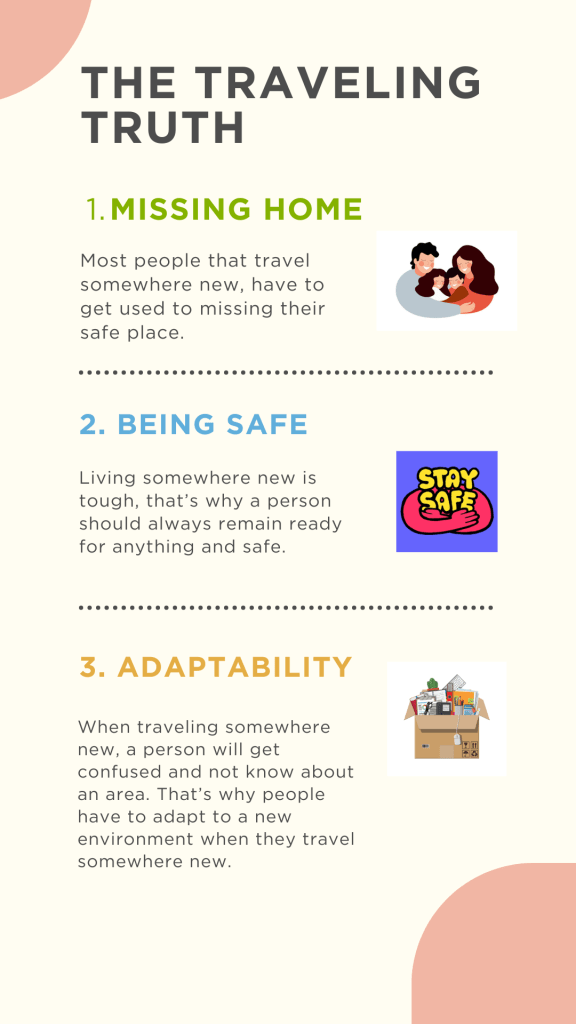
When I was younger, I yelled at my parents for not getting me what I wanted. Now, looking back at it, one can realize how much time has passed since then. Traveling to a new foreign place is tough, but going through it alone is even tougher. That’s why people should cherish the time they have, although they may not get along with someone else. Moreover, as a student who had to travel to a new continent, there are many key elements to be aware of. These key elements include being homesick, being safe, and getting used to the new environment.

A home is considered a safe place, or the people that make a person feel safe. And when a person travels somewhere else, they’ll miss their home and culture. Home is what makes a person feel warm and happy because they’ll always know that they have somewhere to go.

However, moving somewhere new takes that feeling away because a person will find out that it’s never going feel the same way it did. Additionally, that’s why most people get homesick the minute they step into a new place because they know it will never replace the feeling of home, which is why when a person travels to somewhere new, they need to be aware of getting homesick and being safe and getting used to what’s around them. 

It’s important to be safe. An article by the United Nations states, “More than 50,000 migrants die in search of a better life.” From this article, we know that even though people travel for new opportunities, they should still consider the myriad amount of risks that come along the way.

Furthermore, people should also be aware when traveling, because it’s hard to predict what will happen that day. This is only to ensure the safety of people that travel somewhere new because it’s hard to get somewhere far away. This is why people should prioritize their safety when it comes to traveling and getting used to somewhere new.

Despite getting older, people still keep familiar habits. The National Library of Medicine states, “Creating a healthy home environment in infancy is critical, as home characteristics in early infancy (six months) may remain constant into toddlerhood.”

This could signify that traveling and living somewhere new can be compared to a baby getting used to their home. Additionally, when people travel somewhere new, there can be new experiences they haven’t felt before, which will give opportunities for people to erudite in new places. Because, in some places, there could be certain foods that aren’t the same as back home, and temperature and culture may be different. This is a feeling many travelers feel when they travel somewhere new to live in because in most cases they either travel to experience a new feeling or to do it for the benefit they desire. 

In conclusion, traveling can be a tough experience. This is because traveling can make a person feel a thrill, along with many other feelings as well. On the other hand, key elements to look out for when it comes to traveling include being homesick, being safe, and getting used to the new environment. Additionally, moving somewhere completely new can be fun, but one should always be cautious no matter the circumstance.

Column: We must stop censoring teen voices

by Tyler Conley

Censorship, the most complex and confusing matter of the modern day.  All of our life, we’re told that we have a voice. But in reality, do we?

In the past millennium, so much has changed. In this new day and age, the media has changed so much. Over 5 billion people are on the internet at any given time,  no matter the time of day. Ever since the internet was created in 1983, it has been monitored heavily, just like all other forms of media at that time. 

All forms of media are under watch. And to a certain extent, it makes perfect sense, Freedom of speech and expression does not condone illegal activities. But, is it illegal to have the freedom of creativity and expression?

Youth have less and less of a voice everyday. The only way to change is to make people realize that our voices are just as important as anyone else’s. 

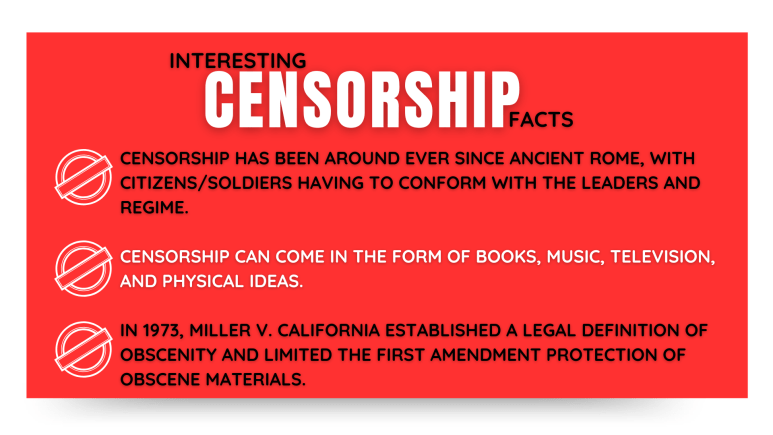
In 1985, a group called the PMRC (Parents’ Music Resource Center) was created to monitor music and educate parents on what their children listen to. But, it wasn’t just a suggestion. It seemed more like a law. Headed by former First Lady Tipper Gore, all of the music coming out at the time had to pass through them. 

Bands like WASP, Def Leppard, Prince, and Twisted Sister were no match for this organization. And to combat the oppression, some of these artists took to the stand to try and sway their opinion.

Twisted Sister singer Dee Snider was one of the most important and famous cases of the artists trying to take back their music. Twisted Sister’s song “Under The Blade” was the song in question that was going to have his album banned, for allegedly having topics the PMRC thought kids should not know about. 

And sadly, all of the fighting was for nothing. They had all decided beforehand their final verdict. The music of the accused wouldn’t be banned, but parental advisory stickers were added to every CD deemed “Nasty” by the PMRC. This is an instance of censorship terribly backfiring.

Kids all over the United States were going out and purposefully buying albums with Parental Advisory stickers. Being a part of the youth today, I would agree that the advisory sticker is eye-catching; it makes me very curious about the material of the album. 

Ironically, this almost 40-year-old incident still has relevance because it has not changed.

In March of 2023 in Boise, Idaho, an art exhibit was censored, and teens were told they could not testify in some legislative hearings.

Adults silence teenagers and young adults, telling them what they can or cannot see and listen to. And when young people try to say something about it, we are ignored and told we do know what we’re talking about.

I think there’s a stereotype that teenagers are not knowledgeable enough to speak up. Adults have lived longer than us, but we have the right to live our own lives. No one should have to conform to a certain idea or belief, yet censorship is a growing problem.

“We are seeing tremendous attacks on First Amendment freedoms across the country right now, at all levels of government. Censorship is proliferating, and it’s deeply troubling,” said Joe Cohn, legislative and policy director with the Foundation for Individual Rights and Expression. 

And now, we can even be censored for being ourselves.

“This year, we’re seeing a wave of bills targeting drag performances where simply being gender nonconforming is enough to trigger the penalty,” Cohn said.

It’s understandable to dislike or disagree with someone’s idea, but being censored for being ourselves is becoming a serious issue, and it should not be. It’s no one’s business what I wear, what I say or who I am.

We have changed in the United States over the years. Youth have less and less of a voice everyday. The only way to change is to make people realize that our voices are just as important as anyone else’s. 

No matter who you are, you have a voice. No one can tell you differently.

Column: Hurricane Helene’s destruction includes favorite North Carolina destinations

by Viviana Gonzalez Chavez

The recent Hurricane Helene destruction affected many places, including a town very close to my heart. 

Chimney Rock, located in Chimney Rock State Park North Carolina, is a small village near the summit of one of many large mountains in the state. It is home to all kinds of wildlife, from King Snakes to Box Turtles; its large establishment has become a home for many animals and takes the necessary precautions to keep them safe.

Chimney Rock actually began with the Morse family, which owned the land the park stands on. After being privately owned for many years, the state of North Carolina decided to buy it from the family to be able to open it up to the public. With its gorgeous views and peaceful trails, its lively town, and welcoming staff, why not share it with other families too, and let them enjoy its wonders?

That is actually what motivated my family and I to visit it for ourselves. My father had actually talked so often about its beauty that we decided that the next time we visited NC, we had to go. And with that, we packed up our bags and hit the road. We had gone with some relatives who lived nearby, and I vividly remember looking outside at the nearby forests, the summer sun peaking through the tree leaves, its warmth on our faces with the sunroof open. 

When first entering Chimney Rock, you get to drive past Lake Lure Beach where kids have fun all summer long, many kinds of different shops and restaurants where you can buy all sorts of souvenirs. You see families all hanging out, having fun, enjoying summer, and oblivious to how little time they have left to spend at such a captivating site. 

Visiting Chimney Rock was the highlight of my 2024 summer break, and for a good reason, it gave us so many great experiences. The fun trails where my cousins and I laughed as we played silly games and talked about our lives. The waterfall where my sister fell and a kind worker cleaned up and aided her scraped knee. Or the cute shops near the beach where we spent our allowances trying to get all the fun souvenirs. And to top it all off, a delicious ice cream from a nearby restaurant after walking for hours exploring the park. 

Everyone in my family had fun, which is why it came as a big surprise when a couple of weeks ago news broke out that the village of Chimney Rock was completely destroyed and gone. 

What was once a lively town is now nothing but sludge, where vast amounts of water completely wiped it out. 

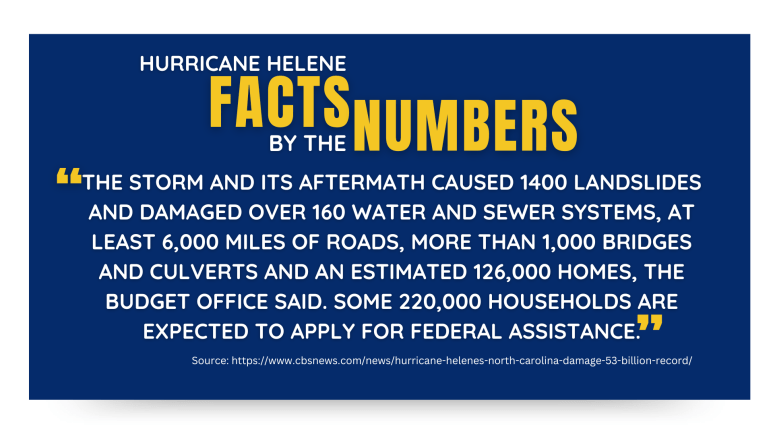
Hurricane Helene was a tropical storm that made its way across the southeast coast of the U.S. and into the Carolina states. According to an online article in the Economist, it was so devastating that in just the city of Asheville, NC, 35 people passed away and at least 600 residents are missing. WBTV stated that an estimated 20 homes were lost in the disaster, as well as 40 businesses. 

Not only did it take the people and their homes, but it also trapped the survivors in its dangerous remains. Chimney Rock’s main roads and river banks were all flooded with debris, blocking any access to or from the outside world. In the same feature on WBTV, Mayor Peter O’Leary spoke of the irreversible damage and its lengthy recovery. 

But this didn’t just happen in Chimney Rock. All around North Carolina towns were devastated by Helene. In a recent report by Axios Charlotte, North Carolina Governor Roy Cooper talked about the damage caused during the hurricane’s rampage, with around 30 and a half billion dollars worth of damage from flooding and winds, as well as a total estimated of about $53 billion, the largest monetary cost for a storm in the state’s history. 

Hearing the news, my heart sank knowing that such a large portion of my family lived so nearby. Our home became a mess of phone calls and text messages trying to get through to someone, anyone, to see if they had heard back from my cousins. 

We didn’t get a secure line until three days after the hurricane struck. 

During the past weeks, there has been much commotion about the hurricane and the chaos surrounding many coastal communities. But what about the missing people, the wiped out towns, the lost families and homes of other states like North Carolina?

In early October the NC Department of Public Safety published a column depicting the aid the state has been receiving. It talks about search and rescue efforts that are ongoing in Western North Carolina, alongside coordinated efforts to restore essential infrastructure and deliver urgently needed food, water, and supplies to communities affected by Hurricane Helene.

While these efforts help aid needy communities, there is still so much more that can be done. There are hundreds of nonprofit organizations that you can donate to, not just for NC but to all communities in need of your help. Fannie Mae, World Vision, The Salvation Army, and the Kiplinger Foundation are all excellent examples of involved and effective organizations that specialize in the helping of others. 

It is thanks to the help of the outside world that people like my cousins can stay in contact with us, they can live in a comfortable environment with food and shelter. It is thanks to the help and generosity of others that they can begin to try to regain a sense of normalcy in their lives, going back to the way things were before they were inundated by Hurricane Helene. 

Just a simple act of kindness could help facilitate the lives of those in need. 

Column: We must work together to prevent climate change devastation

by Miranda Flores

6 years, 1 month, and 24 days.

As of Oct. 18, 2024, that is how much time we have left until our climate clock hits zero. Our carbon budget would be depleted and the possibility of devastating global climate impacts would be colossal.

The biggest contributor to climate change is the use of fossil fuels. They account for over 75 percent of all greenhouse gas emissions and just about 90 percent of carbon dioxide emissions globally. These gasses wrap around our Earth and trap the sun’s heat inside the atmosphere. This, in turn, raises our global temperature, causing global warming.

With the rise of global warming comes intense heat waves, melting of glaciers and ice sheets, and rising sea levels. These things directly affect us and our daily lives.

Just this past month there have been three hurricanes and one intense tropical storm in the Northern Hemisphere. Since Oct. 28, the storms have collectively caused at least 372 fatalities and more than $190 billion in damages. As the years go on and global climate change worsens, the destructive potential of these natural disasters will continually increase.

The effect that global warming has on the economy will also affect us negatively. 

The social cost of carbon is an estimate, in dollars, of the economic damages that would result from emitting one additional ton of carbon dioxide into the atmosphere. It is currently used by local, state, and federal governments to inform billions of dollars of policy and investment decisions in the United States and abroad. 

Studies by Adrien Bilal and Diego Känzig estimate that by the year 2050 climate damages could amount to 10-20% of GDP, with a social cost of carbon exceeding $1,000 per ton. Preventing future climate change is far cheaper than coping with its costly damages, but what can we do?

Climate change is a serious issue we all face today, but luckily there are many different solutions we can do to help reverse it before its effects become too much.

Keeping fossil fuels in the ground, investing in renewable energy, and restoring and protecting nature are all ways we can fix the climate issue. For some people, these solutions might seem too difficult and overwhelming but there are simpler options for everyday people. 

Recycling and reducing the consumption of single-use plastics can be a great way to help stop pollution that causes global warming. We can also slow down how much we consume things like fast fashion, certain food products, and our transportation. Switching to electric vehicles and minimizing plane travel will not only help stop climate change, it will reduce air pollution too.

Doing these simple tasks can help keep our planet alive for many generations to come but we can’t do this alone. Only working together can make a difference, so why not give it a try?

“Coming together is a beginning, staying together is progress and working together is success.” Henry Ford

Column: Music should be allowed in the classroom

by Ricky Cummins

Music is everywhere. It is in the streets, our homes, concerts, radios, and our phones. But, why not in school? Schools should be one of the many places where music is allowed and even encouraged.

Music is an integral part of our lives. From riding down the freeway to washing the dishes, we can find music almost anywhere at any time. I have used music my entire life to calm myself and focus on tasks that may be hard or difficult. When it comes to music, it is very important to me and my overall well being to the point where I can hardly focus in class without it.

Did you know that exposure to music can improve learning and increase a positive classroom atmosphere? Active engagement in music promotes how the brain functions. It sharpens and refines language and speech.

Music has also shown that it has the ability to help children learn how to read. In addition several studies have proven that calming and engaging music reduces stress, anxiety, and aggressive behavior. Teachers need to take this into consideration next time they have a student that has trouble paying attention or getting work done on time.

The type of music also matters; students perform better when listening to music they perceive as calming rather than music that is perceived as more aggressive. By considering these elements, teachers can find intentional and responsive ways to integrate music into their classrooms effectively.

Regardless of your prior experience with music, there are many exciting possibilities for having music into your learning environment. Whether it is working to create a calm mood for focused work, liven up a lesson on poetry, or build community, music can be used to positively shape the classroom environment and support student thriving.