Food Pantry provides support to students, families

by Areli Hernandez

Due to SNAP benefits being delayed in November following the government shut down, the JHS Food Pantry provides resources for students and families in need. 

Special Education teacher Michelle Houchin, who has been assisting the food pantry, has noticed the impact on students over the years. 

“We started this around three years ago on a small basis. People would come if they needed something quick for breakfast who were unable to get breakfast in the morning or at home. It really ramped up within the past year because we noticed so many students were going without food,” Houchin said. 

To assist students, Houchin along with staff members, work together to provide items for the pantry. 

“Teachers donate stuff all the time and then I usually keep it filled up. The counselors and I, if we see or hear of a student needing food, one of us will make an arrangement to pull a kid and let them pick some things that they need,” Houchin said. 

To ensure privacy, staff members take measures that allow students to feel comfortable when visiting the pantry. 

“We pull them when we know there’s not going to be other people in here and then we just have them leave the food in their 7th period teachers class or trusted person. That way they can swing back and leave school with no questions from other students.”           

Furthermore, counselors have created a Google form that was sent to all students as a way to communicate about basic necessities. 

“We know there are students with needs that may not be comfortable coming up and saying something. The Google form that we sent out is more anonymous,” she said. 

Houchin is moved by the impact of the food pantry and hopes for students to feel welcomed. She also encourages many to contribute to the pantry later during the season. 

“We will always need supplies, we will always need donations, and that it is open for any student that needs help. We don’t want any students to be hungry and not be able to focus.” 

Being able to contribute to the food pantry has been an accomplishment for Houchin and looks forward to helping more students. 

 “This makes me feel good. It’s my small part to help people be better,” she said. 

Other Resources:

Students MUST be escorted by an adviser (all visits are done privately) 

Food Pantry: mhouchin@gccschools.com 

Connor’s Closet:  ssoper@gccschools.com 

Blessing Closet:  mdensford@gccschools.com

Additional reporting by Tyler Conley.

‘Stranger Things’ final season creates nostalgia

by Kori Washington

From fan theories to TikTok countdown clocks, the excitement for Stranger Things season 5 is everywhere. As this Wednesday’s Netflix release gets closer, fans around the world share their predictions and thoughts about the show and its final season.

Stranger Things premiered in 2016, and over the course of nine years, the show has become one of the top shows of all time.

Graphic by Daysha Gray.

Stranger Things is set in 1980s Indiana, and the story begins when four boys are playing Dungeons & Dragons in Mike’s basement. Once the game is over, they all go home. However, the next day, they discovered that Will never made it home safely and is now missing. This is when the story hits its climax, and the whole first season is about three boys, his family, and a newfound friend trying to solve the mystery of Will’s disappearance. 

The following seasons continue with many conspiracies, twists, turns, and deep emotions. Still, throughout the seasons, viewers watch everyone grow up, fix or make new relationships, or change themselves for the better.

Throughout all of this, they all still find time to try and save Hawkins, and their journeys has intrigued fans for over nine years.

For English teacher Allison Clary, Stranger Things brought back nostalgic memories.

“It looked like an interesting show and I really loved that it was set in the 1980s, which was when I was a teenager,” she said. 

Science teacher Melissa Brewer agreed. “I like the nostalgia aspect of it. I like the 80s throwback stuff, because I’m from the 80s.”

Social media also played a role in why people started watching the show.

“I saw it on TikTok, and I thought it looked cool, and then that’s when I got really interested in the show,” said freshman Jerome Sanders.

But social media and nostalgia aren’t the only qualities that make Stranger Things stand out from other sci-fi shows. 

“They’ve also really brought us into the lives of all those characters. So I feel like they’re all my friends,” said Clary 

“It’s emotional to watch because you get so emotionally attached to the characters,” said Sanders. 

As the final season approaches fans share the same mix of excitement and sadness.

“I feel sad because because weŕe not going to see out favorite characters again, but I have been hearing they release a trailer of an animated series, and I’m excited,” said Sanders. 

“I’m super sad and very bittersweet. I have loved a lot of series, but this one is just unique,” said Clary.

After nearly a decade with these characters, saying goodbye feels upsetting. Even the show’s characters capture that feeling, like when Eleven said, “Friends don’t lie.” That line sums up the loyalty and connection that made Stranger Things so meaningful to fans.

The first four episodes of Season 5 of Stranger Things premiere on Netflix on Wednesday evening. The remaining episodes premiere on Netflix on Dec. 25, with the series finale on Dec. 31.

JHS competes in scrimmage at Charlestown

All photos by Magdalene Conrad and Malachi Conrad.

Column: Recent government shutdown harmed students and families

by Tyler Conley

In the United States, a government shutdown occurs when Congress cannot reach a deal to pass a funding bill before the deadline. After the deadline, the government shuts down, and some federal employees are laid off, while others work without pay. 

This may not seem detrimental to students and families, but the 2025 Government Shutdown, the longest ever at 43 days, put a hold on many necessities. 

The Trump Administration planned for mass firings, despite the illegality in doing so, mainly for governmental positions; the firings were planned to be permanent even after the shutdown ends. Over 900,000 federal employees were laid off, and another 2 million worked for 43 days without pay. The Trump Administration stated their goal was to downsize the government and cut costs, but what isn’t taken into consideration is that many families lost their only income.

The government also funds food programs, such as SNAP (Supplemental Nutrition Assistance Program), commonly known as food stamps. These programs are protected by contingency plans, but those become strained in later stages of a government shutdown, and even afterwards. Benefits do not come back immediately.

On Oct. 24, Brooke Rollins, The U.S Secretary of Agriculture, claimed in a memo circulated through the Department of Agriculture, that the contingency funds for SNAP are for natural disasters and not for government shutdowns. This put over 42 million Americans at risk of losing their benefits during the shutdown.

National school lunch and breakfast programs will suffer a similar fate, as they are on contingency plans as well. This will affect anyone who needs government assistance for food, and will leave many families hungry through any shutdown.

“A shutdown is more than just a disagreement on funding. It’s an emergency that needs proper attention and action taken.”

In addition to SNAP losing funding, the Special Supplemental Nutrition Program for Women, Infants, and Children will also be in trouble, even with the attempts from the Trump Administration to keep it afloat. This will put over 7 million pregnant women and new mothers in danger of not being able to feed their infants and buy necessities for their families.

The longer a shutdown lasts, the more programs that the nation relies on will fall. The Trump administration did the bare minimum to keep funds for necessary programs, and flat out refused to work with Democrats to fix this issue. They also didn’t tap into contingency funds to help keep food aid for millions of families. 

A shutdown is more than just a disagreement on funding. It’s an emergency that needs proper attention and action taken. Some people live off the programs that were and still are currently at stake, and as President, Trump needed to address the issue before it’s too late.

The Trump Administration came to an agreement to pay active military personnel, but still did not find a way to feed people who cannot eat. The priorities of the Trump Administration do not align with the problems that we as people are facing. 

I personally have family members who work in government who are struggling financially because they had to work without pay. Making people work normal hours and maintain the same level of integrity even while receiving nothing in return is disrespectful.

Even after the government shutdown has ended, the aftermath still lingers. SNAP funding is slowly making a return, but not in a timely fashion. Funding is still going to suffer long-term and families will still experience issues at the end of the year.

Republicans claimed that the shutdown is due to democrats wanting to protest against republicans instead of making a compromise with them. This is simply just false. Now that an agreement has been reached to end the shutdown, it’s very clear that the democrats were being as cooperative as possible without hurting the needs of families. 

Republicans planned on cutting funding for certain programs, including health care. They say the subsidies for the Affordable Care Act should not be tied to the immediate funding bill, and should be discussed later. However, Democrats were not being uncooperative as a power play. This was a move to try and save millions of families and give them the life they deserve.

Column: Immigration policies hurt people contributing to our nation

by Dana Romero Regalado

It’s Nov. 5, 2024, and to many, that day was a countdown to tragedies for many immigrant families. 

I come from an immigrant family, like many children in America. Many come to America because it’s known as “The Land Of The Free.” They leave everything they know behind, everyone they love, their homes, and their culture for a better future for themselves or their children. 

“I kept thinking: this is for my baby. This is for my family. I want to help them live a smoother life,” stated a Filipino woman in a 2025 Reuters report.

“Aliens,” that’s what they’re called. Living human people, no green skin, just people who look different and have a different shade than the “American Ideal.” However, these “aliens” have significantly contributed to the U.S. through science, business, and culture, supported by studies on their economic and educational impact.

Graphic by Dana Romero Regalado.

For example, immigrants are highly represented in STEM fields, with 86.5% holding at least a bachelor’s degree in 2019, compared to 67.3% of U.S.-born STEM workers. Data also shows that immigrant-founded companies, such as Google, and 40% of Fortune 500 companies, were founded by immigrants, highlighting their entrepreneurial drive.

“The high-skilled immigrants we have in the U.S. are incredibly productive and innovative, and they’re disproportionately contributing to innovation in our society,” said Larry Diamond, a professor of economics at Stanford Graduate School of Business and senior fellow at the Stanford Institute for Economic Policy Research (SIEPR).

Being born as a Gen Z has helped me see how cruel the world is if you don’t fit the “ideal” image in America. I remember being terrified that I would go to school like any other day and come to find out that my mother was taken away — a hardworking woman who has her own business, hardworking employees by her side, and most importantly, a woman who would do anything for her two kids. 

To many children, that has become a reality. In 2018, it was estimated that 4.4 million U.S. citizen children were living with at least one undocumented parent. A significant number of these citizen children have been separated from a parent due to detention or deportation. A 2025 American Immigration Council report highlighted that nearly half a million U.S. citizens under 18 had at least one parent deported between 2011 and 2013.

“Government, please show some heart, let my parent be free with everybody else, please…” she said through sobs. “…My dad didn’t do nothing. He’s not a criminal,” stated 11-year-old Magdalena Gomez Gregorio, who tearfully begged for her father’s release

Many say that politics shouldn’t be part of conversations, that they shouldn’t be talked about because it doesn’t affect “anyone.” That’s beyond the truth; it just doesn’t affect them. Politics isn’t just about what you believe is “right” or should be “done.” It directly affects people and their lives.

Politics has a huge impact on immigrants and their everyday lives. The laws and policies created by political leaders often decide whether immigrants feel accepted and safe, or isolated and unwanted. Immigration policies can determine who gets the chance to build a better life, reunite with family, or even stay in the country they now call home. 

When political debates turn harsh or unfair, immigrants often become targets of discrimination and fear, even though most of them are just trying to work hard and create a future for themselves and their families. 

The system is failing the people they swore to protect, holding people illegally, and for a sum of money. Even local law enforcement officials, including Clark County Sheriff Scottie Maples, are holding ICE detainees at the Clark County jail.

So yes, who you support or follow does matter to me because it affects a community that is close to my heart, and it directly reflects the person you are and your morals. If the roles were reversed, would you still believe in your morals? Would you still say or think that they deserve this if they were your family? Or if they were your kids?

“Our attitude towards immigration reflects our faith in the American ideal. We have always believed it possible for men and women who start at the bottom to rise as far as the talent and energy allow. Neither race nor place of birth should affect their chances.”

Senator Robert F. Kennedy

Red Devils rally to defeat Providence 68-61

All photos by Malachi Conrad. Click on the photos to view the gallery below.

Students prepare for Thanksgiving traditions

by Sophia Waldridge

When Thanksgiving starts rolling around every student gets excited; it’s the time to eat, go on a week long break from school, and see family.

Many families have traditions for this time of year, and it’s different for many families across Indiana.

 Senior Kaeleb Hayes said that he and his family go to some type of sports game before he goes on fall break as a tradition, and that they don’t decorate but that he helps his mom cook and they prepare a big meal.

“For Thanksgiving we watch the NFL games and my mom makes a lot of food for my brother and sister to come in from out of town.” 

He said that they also prepare a meal for their chickens as a tradition and he is excited for the extra days off school and to see his siblings.

Junior Billy Wibbels is similar to Hayes and for Thanksgiving he hangs out with his family and friends. 

“We don’t really decorate, we just make a huge dinner and all hang out. My grandpa comes to town from Florida and we all just reminisce.”

But some have very different traditions and don’t do anything for Thanksgiving, like sophomore Gracie Harder. She said she just spends Thanksgiving break cleaning her room and doing a self care reset, and spends most of the break alone until later into Thanksgiving day and she goes to her grandma’s.

“For break I always spend it all alone until I go to my grandma’s late on Thanksgiving day and we eat a big dinner, and we decorate the Christmas tree; everyone who comes brings a dish and I like to bake sweets and bring them, but other than that my family doesn’t do anything special.”

Freshman Harper Gordon said that her and her family just treat it like another day — they watch Christmas movies together and make a meal together but other than that they have no traditions and the plans change every year.

“My family sometimes makes a little turkey and we turn on Christmas movies but there are some years that we just don’t do anything, a few of my family members come over but only three or four.”

So many families eat together, spend time together, but not all decorate or have traditions. There are some that don’t do anything and just spend the day alone, or just eat a regular dinner like every other day.

Column: Public transportation can improve the beauty of our communities

by Rain Gresham

In this day and age, all we focus on is ourselves. But if you just took the time to stop and look around, you would see the beauty of people. The beauty of community. 

An estimated 28 million people use public transportation. That’s roughly 8% of the U.S. population and despite this, mass transit is in danger of losing its footing. 

During the pandemic, when people stopped using federal transportation and other infrastructure of economic importance the government put the Coronavirus Aid, Relief, and Economic Security Act (or CARES Act) into place in March of 2020. 

Graphic by Rain Gresham.

This act was a 2.2 trillion economic stimulus, and 25 billion of that was allocated to the protection of public transportation; it was followed by the Coronavirus Response and Relief Supplemental Appropriations Act later in the same year with 14 billion more dollars.

Then in March of the following year the “American Rescue Plan Act of 2021” was put into effect via a giant 30.5 billion dollar relief fund to the same cause.

Though over the four years since this, that 69.5 billion has been exhausted. It wouldn’t necessarily be a problem except for the fact that they never truly recovered from the pandemic rider-ship wise. Without the funding it is truly impossible for public transit to continue running effectively and fruitfully.   

I’m sure you’re wondering “Why should I care?” I mean we go everywhere with our parents, we have our own cars. What does public transportation have to do with us?

Everything, because public transportation isn’t just about buses or trains; it’s about the people.

The dad going home to his kids, the nurse on her way back from a long shift, the student just trying to get home early enough to eat dinner with her family. Without these little things, these quiet connections that bring us together, what are we? If not held together by the glue of these everyday moments, we are a shell of a community.  

We need to fight for this because who else will. So what can you do? 

You can give it your attention. Take the bus instead of calling an uber or door dash. Every ride counts even if it’s just once in a while. It may seem silly and useless because what can one person do? But that’s how change starts with one person taking initiative. 

Showing that you care, care enough to help the drivers keep their jobs, enough to help systems stay funded, and enough to show the people in power that this isn’t a lost cause 

Sure, we can’t vote. We’re not adults? But we are not children either, we can use our voices as little as it might seem. It makes a difference. 

Bring the problem to the forefront of people’s minds. If you can’t make them care, at least make them think.

Column: There’s always a chance

by Brea’Lynn Clark

Navigating life as a teenage girl is already hard enough, trying to control all of our emotions. Losing my brother to  drug overdose has added layers of  feelings I never thought I would have to feel. Drug awareness isn’t just a cause to me. It’s a personal mission I set upon myself . I’ve seen first hand how the shadows of drugs can just  pull you under, and I want to shed light. 

Growing up my brother was light and joyful. He was my protector, the person I would run to. Growing up we would  lie for each other. Tell on each other. We just  did things only siblings would understand. We would play and get  mad at each other. Everything was perfect. It was just me and him and my mom against the world. 

Everything changed whenever we got older.  The once happy spirit I saw with  bright eyes, was now replaced by sadness and dull eyes. I never pushed myself to know what was going on, unaware of the battle he was struggling with behind his faded smile. 

The turning point was the first time he overdosed. A 15 year- old boy lost his life that day and he was never the same again.  The paramedics saved him and I had never seen my brother cry like he did. The strong person I would call whenever I needed was no longer him.

Everything changed after that. It was a constant cycle no matter what. It was a life of fear for everyone around him not to know if he would be here the next day. My mom would beg him to go to rehab. She would do everything that a mother can to make it better for him. I know he saw that.

 “Drugs were my first love.” Those were words my brother said in a letter he wrote while in jail. Drugs aren’t a joke. They are an addiction and they take you away from people who love you. 

At  the end of the cycle after over a dozen overdoses,  he lost his life on June 8, 2025. I know he felt pain and I know he felt struggles. Maybe by reading my story you will take the lesson as this. Don’t do something that may  make you not live  to see another day. There is always a chance and you don’t get  lucky every time.

Column: ‘Push, fight, and be strong.’

Your story is your testimony

by I’Yonna Boyd

Me being a daddy’s girl, I never thought in a million years that my first heartbreak would be my father. With everything I’ve been through, this one hurt me the most 

It was during a normal scorching hot Sunday. My cousins and I were upstairs playing in the playroom, and I suddenly heard a loud knock at the door; my stomach dropped. We all ran downstairs and to see who it was – it was the police. All the family, including my dad, were downstairs having family time playing cards and eating. My nana opened the door, and they asked for my father. At this moment I knew that he was going to leave, but I didn’t know why. At this time I was too young to know.

Everything hit the fan when the police said, “I’m sorry ma’am, your son has to come with us.” I cried in confusion, not understanding what was going on. I asked my aunt if he was coming back, and she said yes. Years later I felt lied to, because he didn’t come back when I expected him to. I fell into depression at the ages of 7-14. I never thought that him being incarcerated would affect me that much.

It hurt me the most because I knew I couldn’t be with him physically and him missing most of my childhood left me hurt. Falling into depression affected my relationship with my mother. We were bumping heads, and nothing just seemed to work out. All the arguing, fighting, and commotion – it was too much for me to handle. My heart was broken, and I knew that only my father and God could pick up the pieces. While my father is still locked up, he and I still remained close and he slowly picked up my pieces. 

My dad helped me grow into the person I am today. He helped me get through all my problems, and he never judges me. He’s always open ears. 

What I learned from this particular situation is that even though times can get hard or something traumatic happens in your life, you still continue to push, fight, and be strong. Don’t let anything affect you or change you into a person that’s going to destroy you. You do have a purpose in life. You are here for a reason, and God’s creation is no mistake, so cherish your life and what you have while you can. Know that your story is your testimony.

Nothing is over. Everything has just begun.

Column: We can control anxiety one step at a time

by Kori Washington

I overthink everything.

You could ask me the simplest question, and it might take me a few minutes to answer. And I always think of the worst that could happen. Sometimes I jinx myself because it does end up happening. That’s why I stick to activities that are within my comfort zone — so I don’t have to stress myself out. Still, sometimes I think that my anxiety is what holds me back from gaining new life experiences.

Source: https://www.cdc.gov/children-mental-health/data-research/index.html. Graphic by Kori Washington.

But that’s not even the worst part about it. My anxiety has also caused me insomnia, which has played a big part in my life, especially when I was younger. I remember my fourth-grade year. My grandmother had passed away, and that really took a toll on me because she was my best friend. So that summer was the first time I started having sleeping problems, and that was also the year I had my first depression episode. 

I can remember it like it was yesterday – the long nights, the feeling of nothingness, and the worst part of it all was that I lost interest in activities that I used to enjoy. For example, I didn’t go outside anymore to play with my sisters or friends, and I just stayed in bed all day, even though I couldn’t sleep. I had no motivation to do anything else. However, after a few months of feeling that way, I finally got the help I needed, and I went to talk to someone.

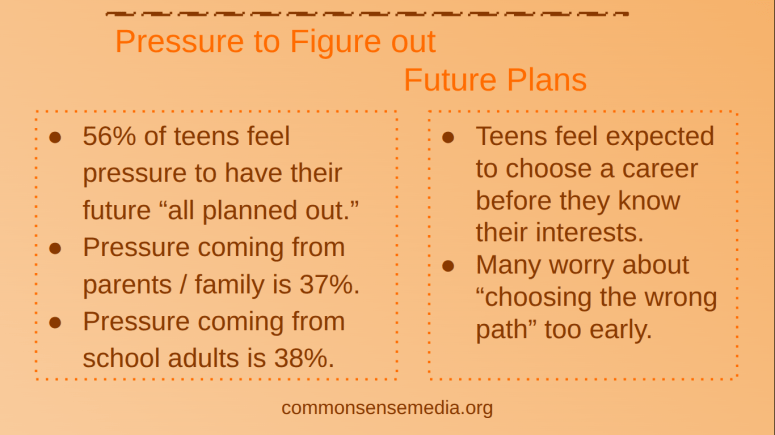
But the crazy thing is, to this day, some people believe that teens shouldn´t have anxiety because they think that teens don’t have enough life experience to be unhappy or stressed. But according to the World Health Organization, “One in six people is aged 10–19 years. Adolescence is a unique and formative time. Physical, emotional, and social changes, including exposure to poverty, abuse, or violence, can make adolescents vulnerable to mental health problems.”

This proves that out of all people, we teens have the most to worry about. We have to worry about our looks, grades, and social life while also planning for our futures.

But if we don’t worry about these issues, then we’d be irresponsible and unlikable, which causes us more stress because everyone wants to be liked, and if someone tells you they don’t, they’re lying because every person wants to feel loved or cared for by someone. 

In the end, my experiences with anxiety have taught me that it’s okay to feel overwhelmed and that it’s a common struggle for many, especially during our teen years. While I often overthink and worry about the worst outcome, I’ve been working on trying to see the better side of life.

It’s important to remember that everyone faces our own battles, and that reaching out for support is okay. By doing this, I’m starting to try new experiences, one step at a time.

Column: Social media contributes to teen mental health issues

by Reese Dobson

Mental health is a very important problem in today’s world. More specifically, teen mental health. Students struggle with it every single day, and as expected, social media is a part of it.

In 2023, an estimated 4.9 billion people worldwide were expected to use social media, according to the American Psychological Association

Social media is an environment where we can talk with our friends, post online, and just be ourselves. However, it’s so easy for teenagers to get wrapped up in it and let it take over. 

Social media consumes so many people’s lives, so it’s common to get influenced easily.

Mental health has always been a serious issue across all ages, but according to Dr. Sally Robinson, in 2020, the incidence of depression in teens was 17%, almost 1 in 5 teens.  

As a high school student, I understand the struggles and stress of being a student, balancing things every single day, and wanting just to take a break.  

Social media is an entertainment source that people should be able to go on for fun. Unfortunately, a lot of teens struggle with cyberbullying, comparing themselves to others, and negativity online. 

31% of teens who have personally experienced online harassment or bullying think they were targeted because of their physical appearance, according to the Pew Research Center’s survey

Being cyberbullied is a main cause of mental health problems in teenagers. I think theretheir is too much negativity on the internet and it consumes people’s lives. 

The effect of social media is unfortunately very negative and is a big cause of teenage mental health. 

Teenagers are constantly dealing with other things, so I think everyone needs to be kind and not say hurtful words on the internet because we never know what someone is going through.

Strategies for Teens to Have Safer Social Media