From voices to instruments to improv, the JHS arts has much to offer those who are musically inclined. While the performances highlight the many talents of the students here, the process of joining each class begins much before the performances do.
To begin a musical journey into choir, music education and choral teacher Kyle Broady said students should talk with a counselor about joining. The requirements are simple for joining chorus class.
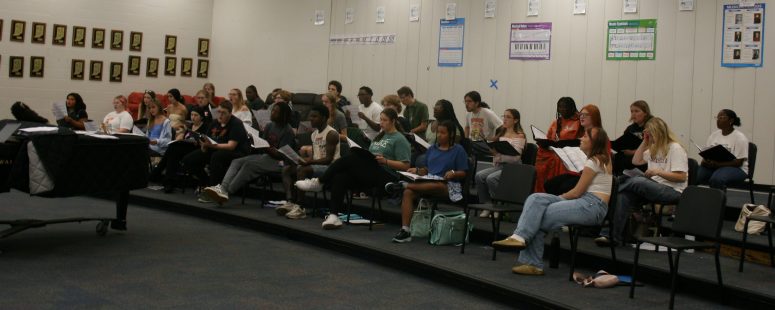
The choir practices for Gospelfest on August 11. Gospelfest will be performed next Thursday, Sept. 18. Photos by Aurora Grisham.
“For regular chorus, no skills are needed, although a past (with music) is helpful. Upper chorus, you have to qualify,” said Broady.
Students are required to be engaged during class. There are also times that students are required to stay after school to practice. However, with the chamber choir, the expectations are a bit higher because they are more experienced.
On Thursday, Sept. 18 Broady said the annual Gospelfest will be performed in the JHS auditorium. Additionally, On Dec. 9 and 11, there will be a Winter Fantasy performance with solo and ensemble musicians. In choir, students will be required to wear uniforms for performances, which consist of formal, black attire.
Continuing the journey into theater, theater arts teacher Derrick Ledbetter said to get into his class that students must audition. Ledbetter said the biggest skill to have in the theater experience is an open mind.
Ledbetter encourages students to rehearse and prepare for the JHS theatrical performances. In late October, theater students will perform “Once Upon a Mattress” and later in the year, they will perform “Cyrano de Bergerac.”
Finally, ending this journey going into band, music education and band teacher Sidney McDonald said most students participate in band during middle school and sign up when they choose classes for high school.
Band director Sidney McDonald shows her fourth-period band class how to keep tempo. Photo by Kaleb Baker.
“We’ve started a beginning band as well, for those who have never done band before,” said McDonald.
The teachers also offer extra help so that they can guide students.
“We have an open band room, which is after school on Wednesdays, so students can come work on any music they are struggling with,” she said.
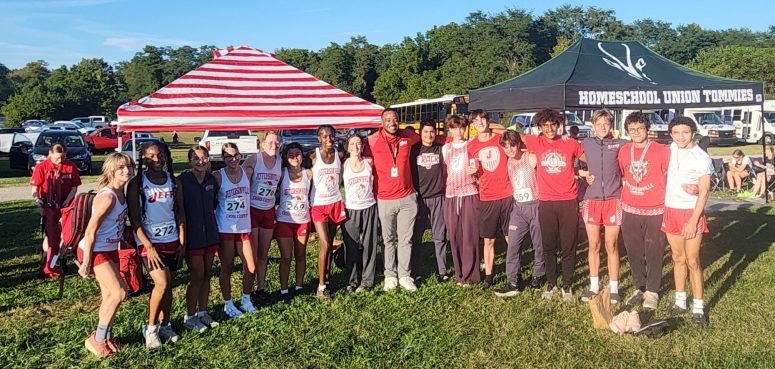
Athletic director A.J. Moye with the Jeff High cross country team at Tuesday’s meet at Scottsburg. The boys’ placed seventh and the girls’ placed third. Photo by Sam Mull.
by Isabella Stewart
This year’s cross country season has started with a lot of teamwork, running, and introducing new team members who are running their hearts out on the cross country courses.
First, with the arrival of new athletic director A.J. Moye has helped support the team. He has helped build and support Jeff’s own cross country course.
Moye has driven through the course, making sure it’s safe for others, and has also just put a lot of time into making the course everything it needs to be.
Moye has shown up to regionals with the track team and has attended cross country practices, showing his love and support for this year’s cross country team.
Moye said he believes the most important part of his job is ¨to believe in the titles and the important roles that everyone plays¨ on their respective teams. He said pours himself into the kids and coaches lives and makes sure they know their value.
Two years ago, the cross country team only had one female athlete; last year, there were four, and that shows how much the cross country team has grown over the past year.
Senior runner Keira Jackson has made many friends and as she´s finishing her senior year one of the biggest things she wants people to know is “no matter how deep you’re in, there’s always an escape.”
Senior Keira Jackson runs to the finish line at the cross country meet in Scottsburg on Tuesday, Sept. 9. She placed 25th. Photo by Marcus Baker.
Jackson is currently striving to a 20-minute PR time.
Jackson really speaks highly about how coach Sam Mull has supported the team every step of the way, just as Moye has talked about.
Mull said he wants to “help improve each and every athlete on the team in their own ways.”
The cross country team recently had a fundraiser, and they raised over $2,035 dollars for their whole team.
Sophomore runner Marcus Baker talked about how he went to 6-7 different neighborhoods going door to door to help out with the fundraiser as much as he could.
The team has their first home meet Sept. 30 at their brand new cross country course.
This upcoming Thursday is XC Night at Bubba’s, in which a portion of purchases provides food, transportation, uniforms, awards, and gear for this year’s season.
Baker said,”We hope to see you there and Iḿ wishing this cross country season the best.”
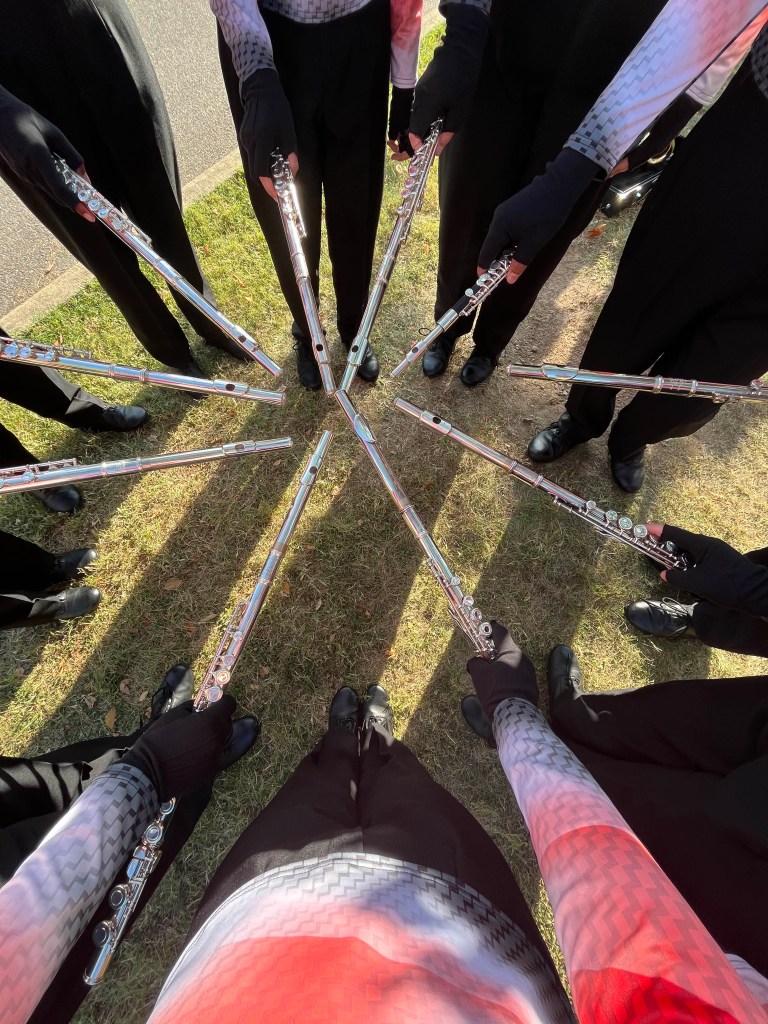
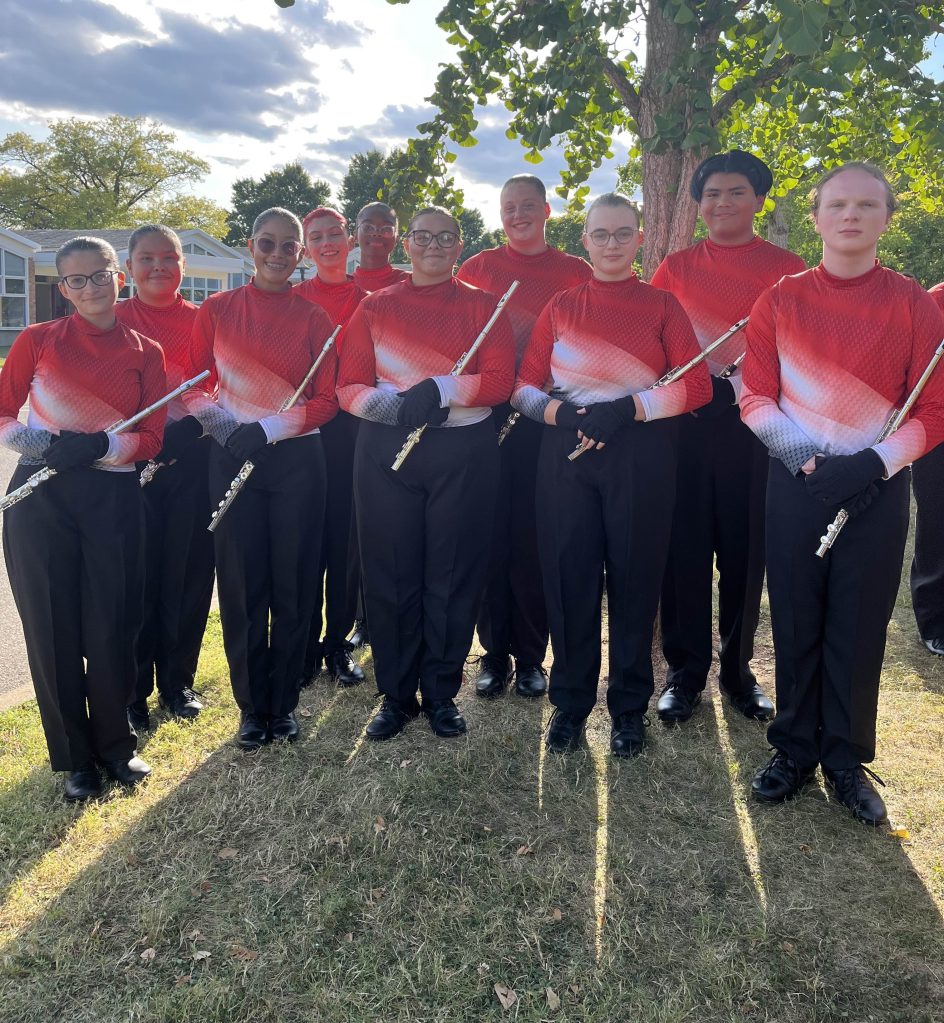
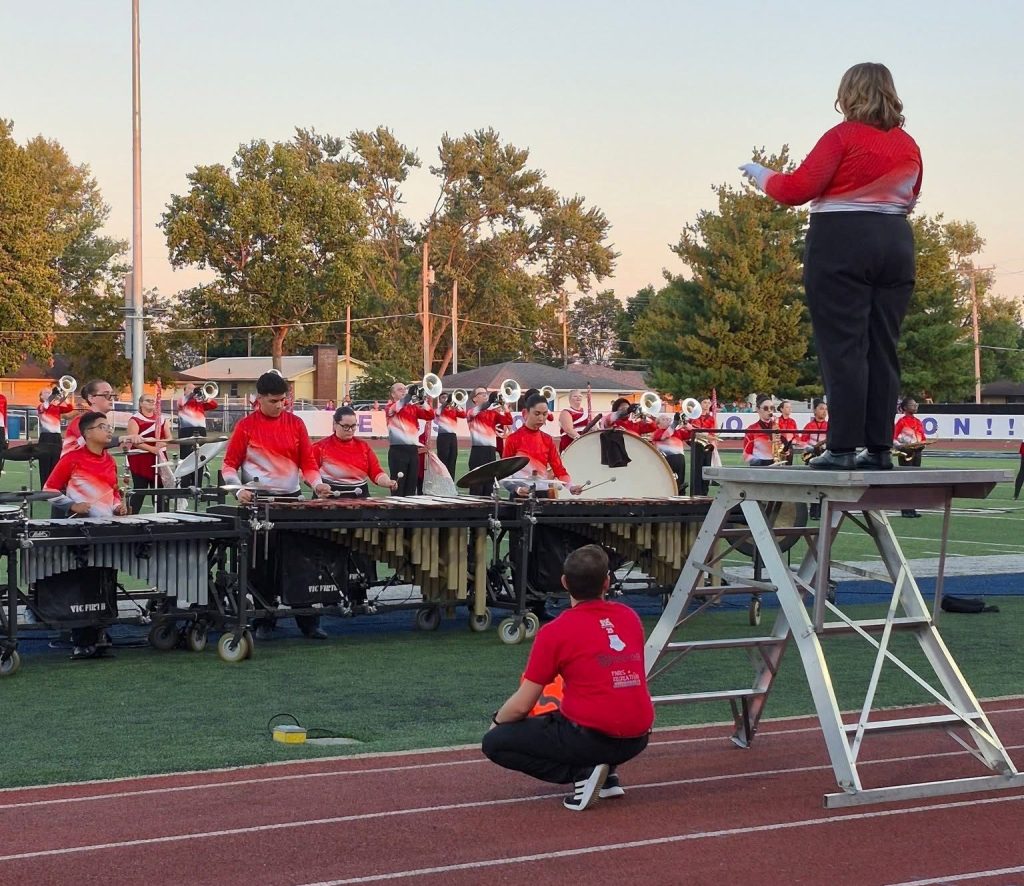
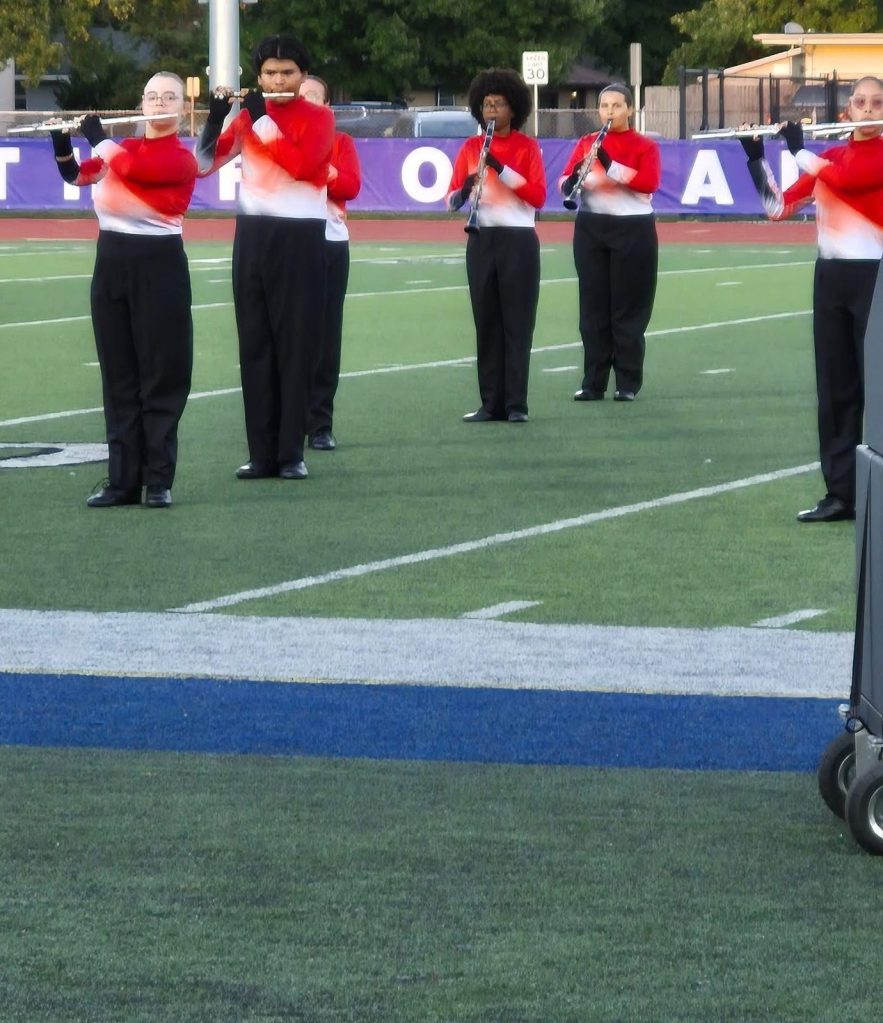
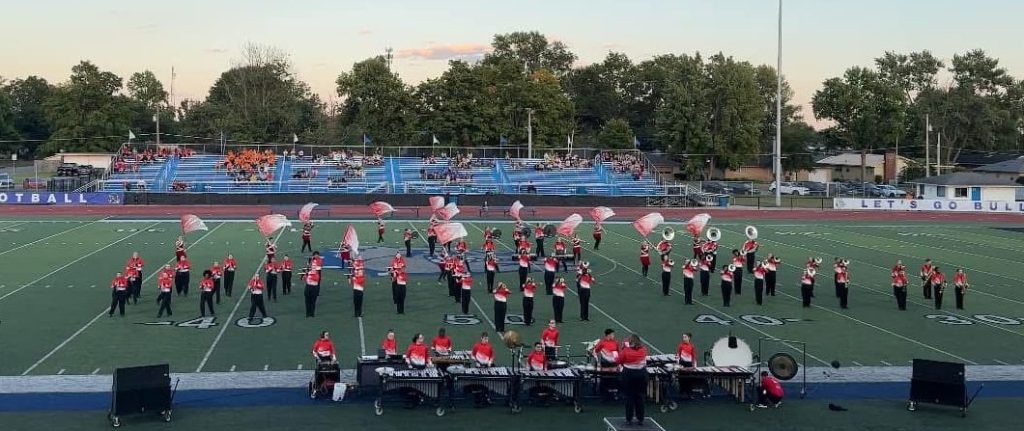
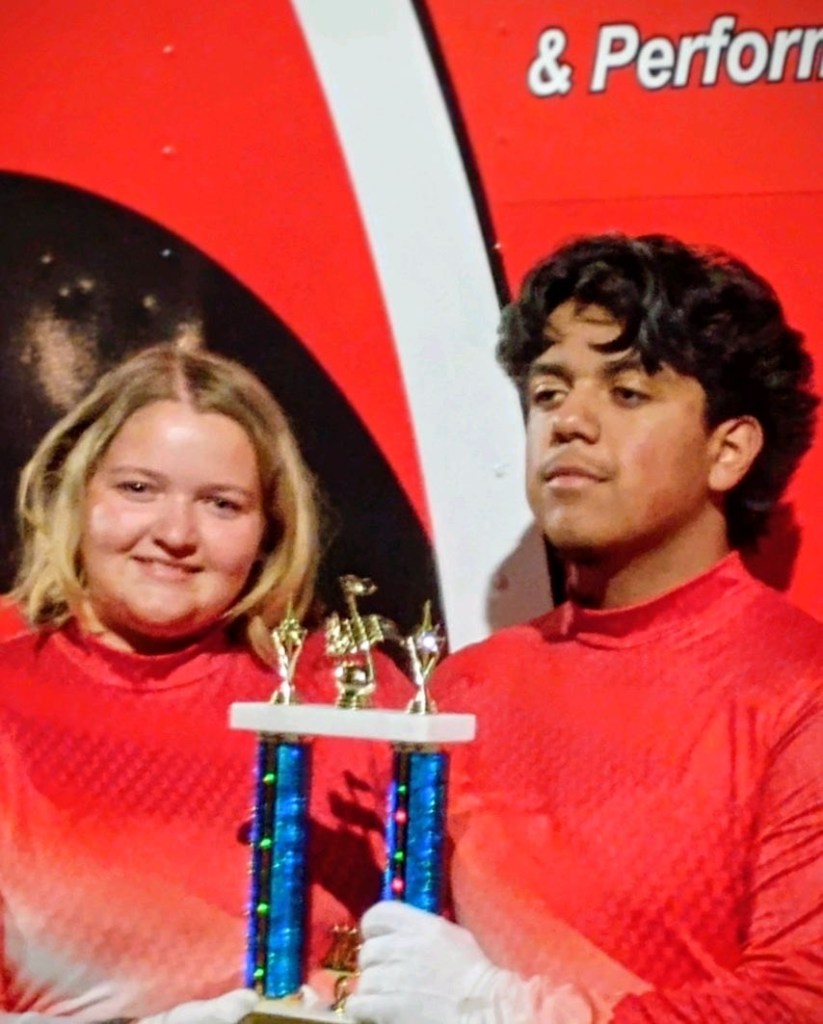
The flute section of marching band prepares for their performance at this weekend’s contest at Columbus North High School. Photo by Kyra Gibson.The flute section of the JHS marching band gathers together just before performing at Columbus North High School. Photo by Kyra Gibson. Senior drum major Alice Haynes conducts the marching band on Saturday at Columbus North High School. This Saturday will compete in Paoli. Photo by Kyra Gibson. The flute and clarinet sections compete on Saturday, Sept. 6. Photo by Kyra Gibson. The marching band performs “Everything In Its Right Place” while competing at Columbus North High School on Saturday, Sept. 6. The JHS band placed third. Photo by Kyra Gibson. Senior drum major Alice Haynes and junior drum major Sebastian Lopez hold the third-place trophy earned by the Jeff High marching band at Columbus North High School on Saturday, Sept. 6. Photo by Kyra Gibson.
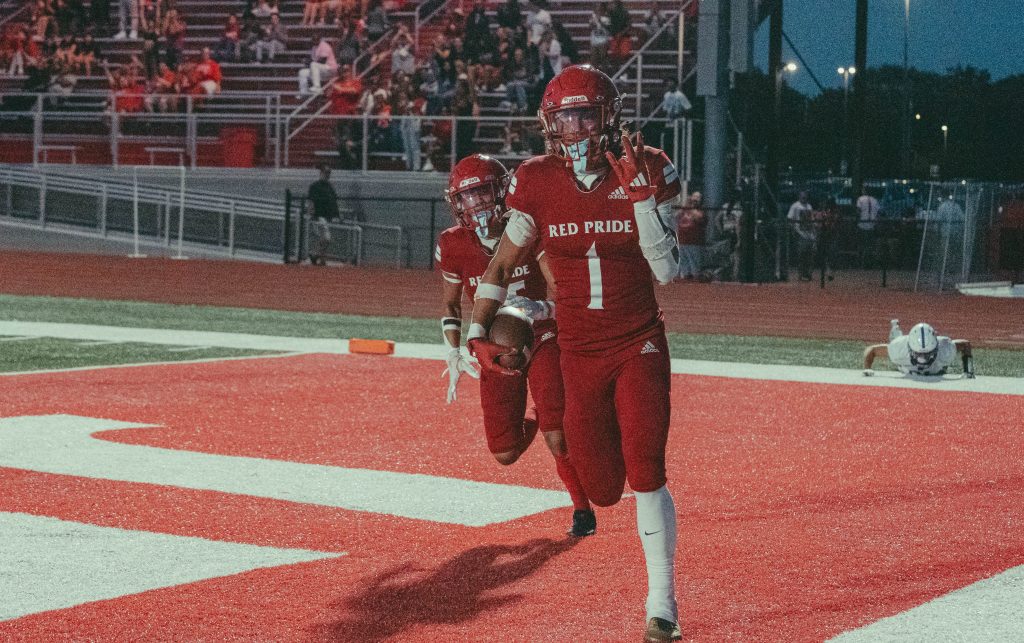
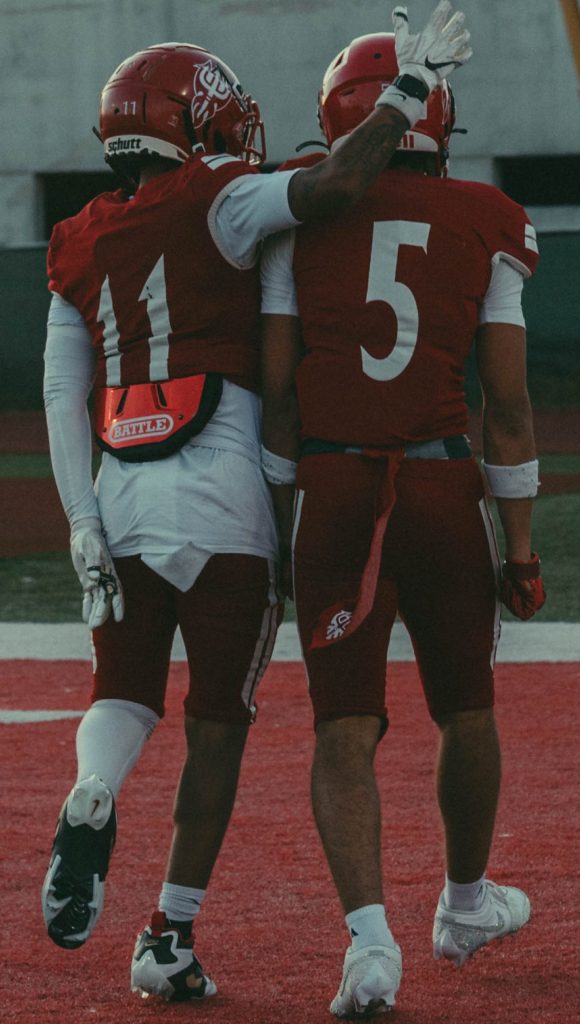
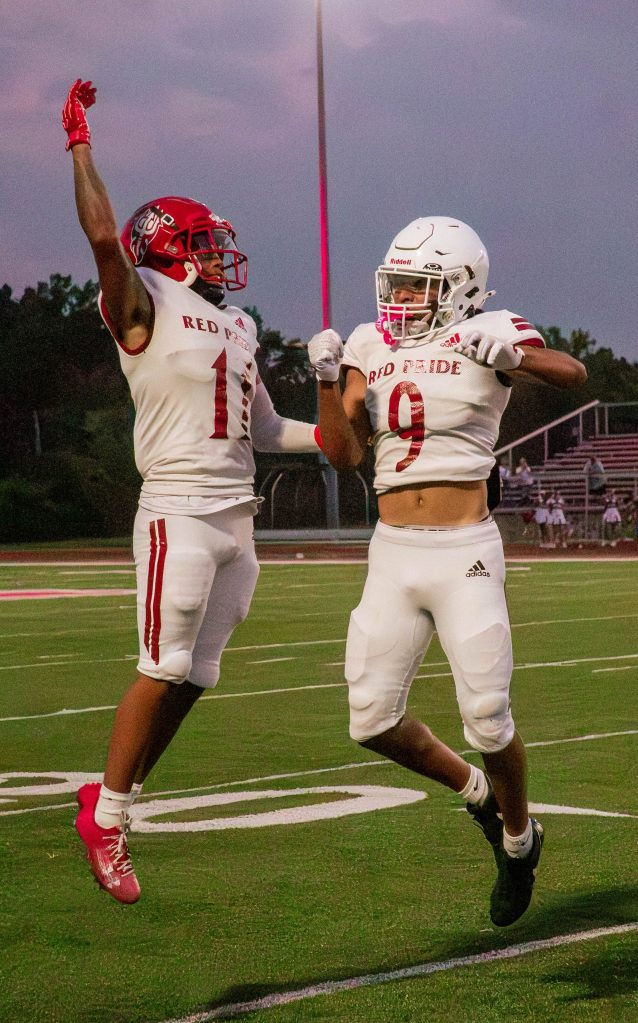
Junior Nation Roe-McBroom holds back the Seymour defense to score a touchdown for the Red Devils. JHS defeated the Owls 20-6 and will face Bedford North-Lawrence this Friday. Photo by Magdalene Conrad.The offensive line snaps the ball to junior Benji Rice for an attempt at a touchdown against the Seymour Owls on Friday. The Red Devils won 20-6, picking up the first win of the season. Photo by Magdalene Conrad.Senior Caleb Bale prepares for the matchup against the Seymour Owls this past Friday. The Red Devils won 20-6. Photo by Magdalene Conrad. Senior Kurion Thompson points at the camera as he goes to the locker room at halftime. Photo by Magdalene Conrad.Coach Tranere Nelson hugs junior Nation Roe-McBroom after a touchdown for the Red Devils. Photo by Magdalene Conrad.Junior Benji Rice poses for the camera after a touchdown against the Seymour Owls. Photo by Magdalene ConradSenior Bryce Grant and junior Nation Roe-McBroom celebrate a touchdown together. Photo by Magdalene Conrad.
Musicians brought their talent to the stage on August 15
All photos by Sophia Goforth.
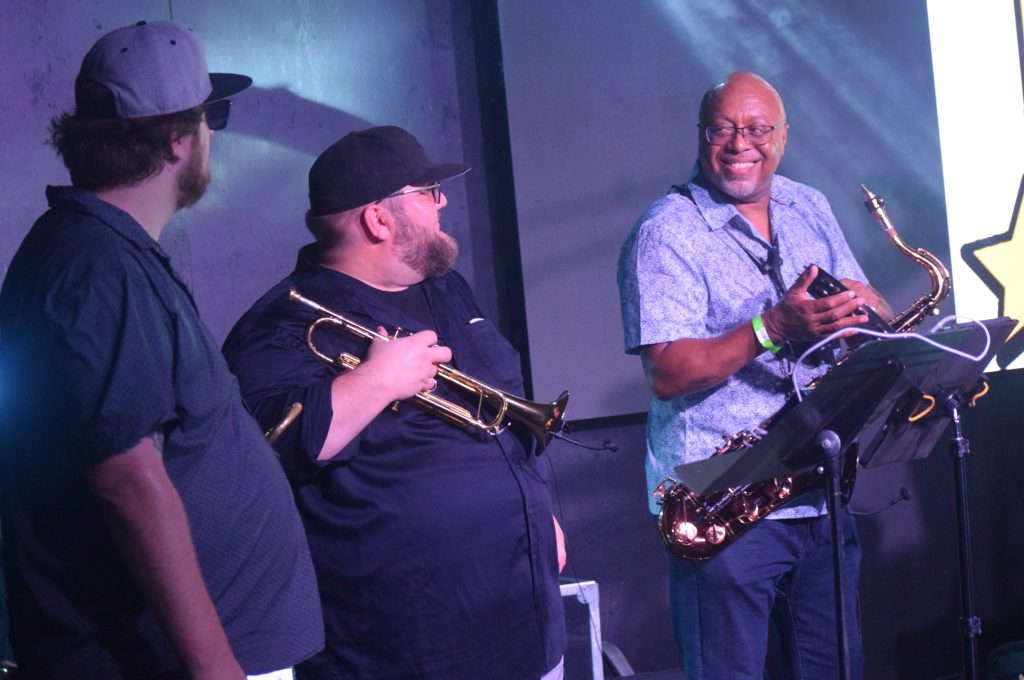
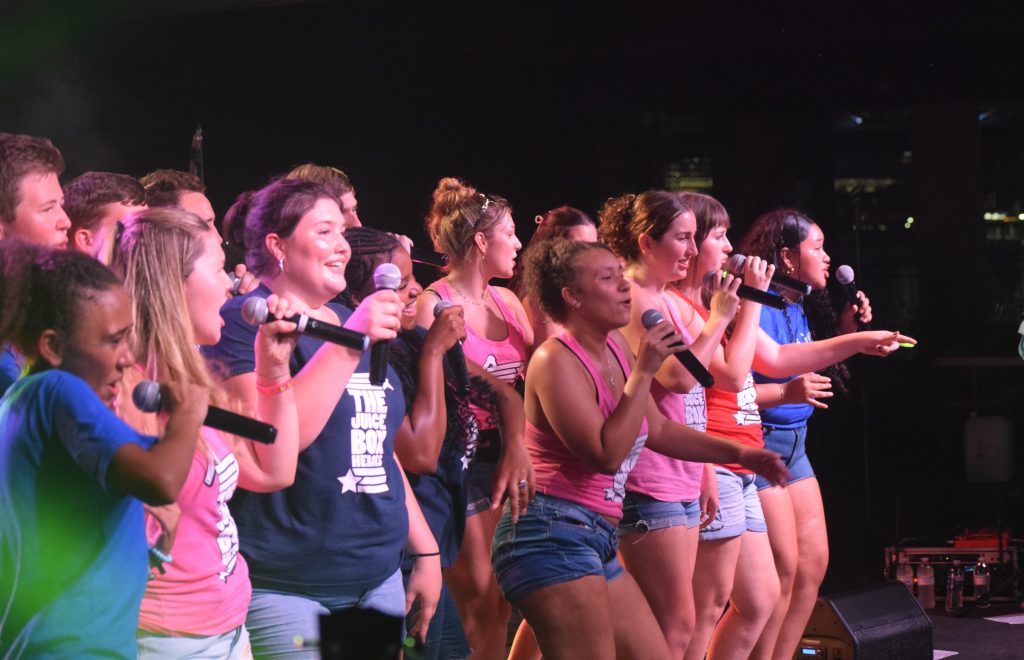
Guitarist Kyle Reagan strums his guitar during sound check. Photo by Sophia Goforth. A crowd lines up at the gate, waiting for the show to start. Photo by Sophia Goforth. Drummer Josh Howe keeps the rhythm during the Juice Box Heroes set on Friday, August 15. Photo by Sophia Goforth. Dave Miles, the band’s bassist, keeps a steady rhythm with a focused expression. Photo by Sophia Goforth. The brass section talking among each other in between songs. Photo by Sophia Goforth.The Charlestown High School choir, The Scallywags, singing backup for The Heroes. Photo by Sophia Goforth. Lead Singer Dan Farmer sings “Save a Horse” by Big and Rich. Photo by Sophia Goforth.Juice Box Heroes perform on the stage on the night of August 15 in downtown Jeffersonville. Photo by Sophia Goforth. Featured singer Peyton Connors beautifully sings during the August 15 event in downtown Jeffersonville. Photo by Sophia Goforth.
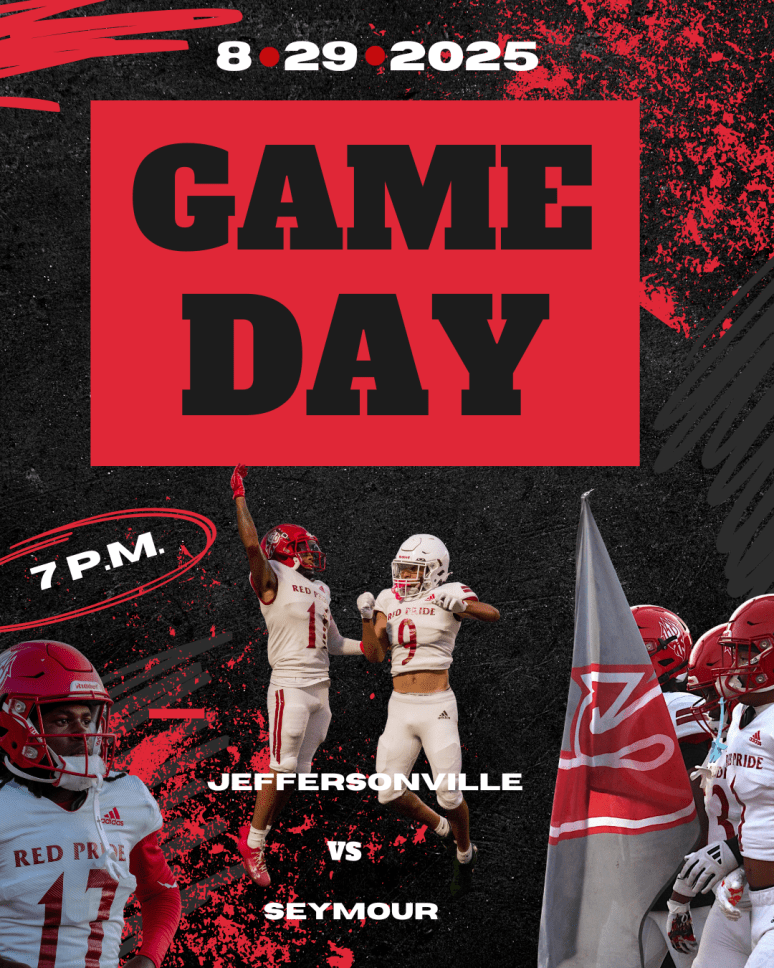
Seymour and Jeff are hunting for their first wins of the season, and everyone’s ready for the Friday Night Lights tonight.
“I’m super excited man counting the days down until Friday and just mentally preparing myself for Friday,” said head football coach Joe Washington.
Seymour showed some Week 1 slopiness last Friday in a 38-8 loss against Greenwood, throwing two interceptions.
Seniors Bryce Grant and Tyes McCondichie celebrate after a successful Red Devil play during the opening scrimmage two weeks ago. Tonight the Red Devils go for their first win of the season against Seymour. Photo by Magdalene Conrad.
“I’m hoping that we’ll be able to get a lot of turnovers this week. If they throw the ball up I think we have the guys in the secondary to make plays and hopefully turn some of those picks into touchdowns,” said Washington.
Jeff is also out to a slow start after a 37-0 loss to Cincinnati Taft, and lost their starting quarterback Cordell Thomas. Sophomore Brayden Bachman will fill in.
“It’s Bachman’s first start, so you kind of expect there to be some jitters. We’re going to help him out with short passes and running the ball effectively,” said Washington.
Jeff has confidence in this game even after the loss to Taft.
“I expect a good game from Seymour, but we are the better team,” said sophomore tackle Jaxx Long.
Jeff is trying to find a silver lining in the loss from Taft.
“I would like the loss to influence us in a positive way. Even though there’s a lot of negativity around it, if they put it into perspective Taft is probably going to be the best team we’ll play until sectionals,” said Washington.
Seymour has several impact players that could turn the tide in their favor.
“Their running back number three (Traysean Hawkins) is a real shifty guy; he runs the ball hard, and they have an offensive linemen that has worked really hard. He’s lost 50 pounds this offseason, he’s a really big kid,” said Washington.
The team has been putting in work at practice all week and feel prepared for tonight.
“We have prepared a good defense and ran scout team all week so I’m confident for this game,” said Long.
Washington had been suspended for both the Madison scrimmage and Week one against Taft. Tonight is his first opportunity to be back on the field and he’s ready.
“I’m excited. It’s like having my boys around. I’m sick of not having my guys around, and it’s my happy place, you know,” said Washington.
All photos by Magdalene Conrad and Malachi Conrad.
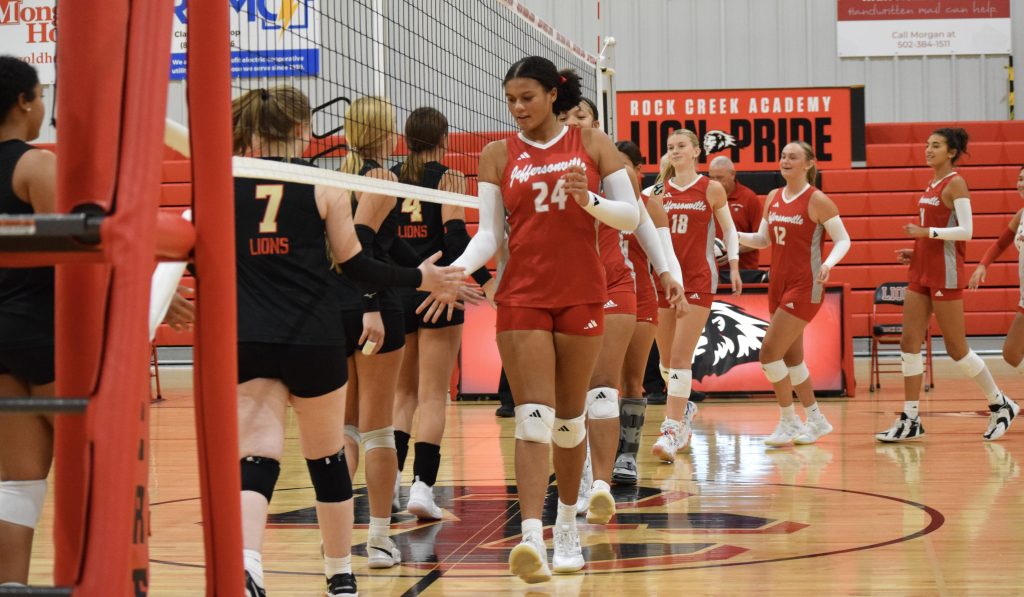
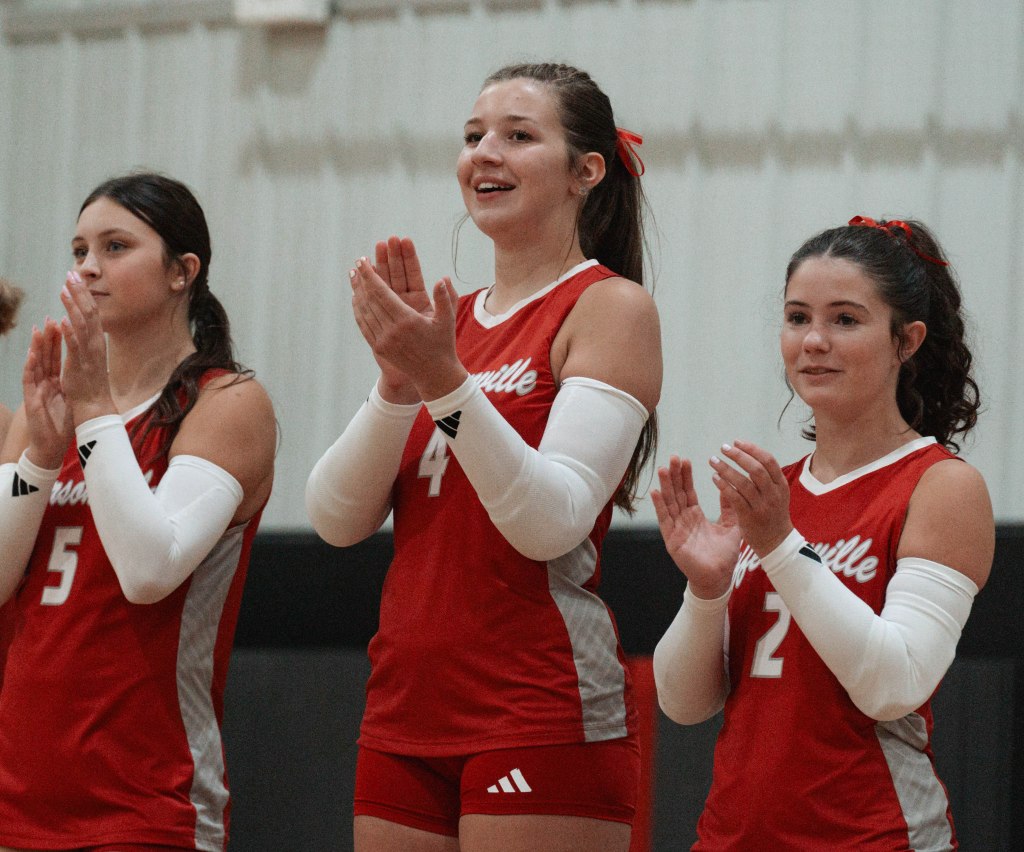
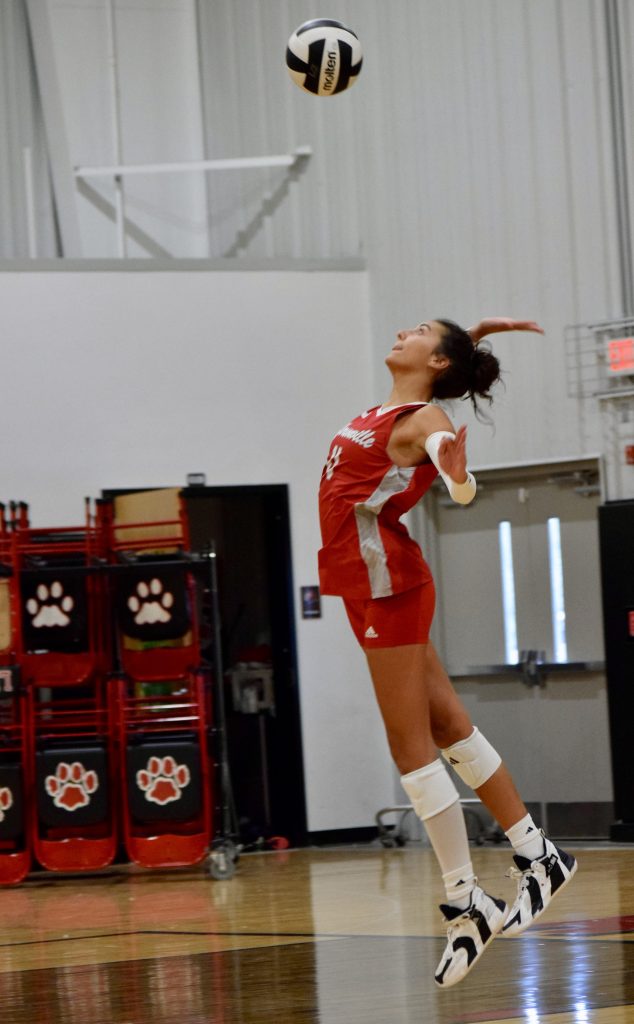
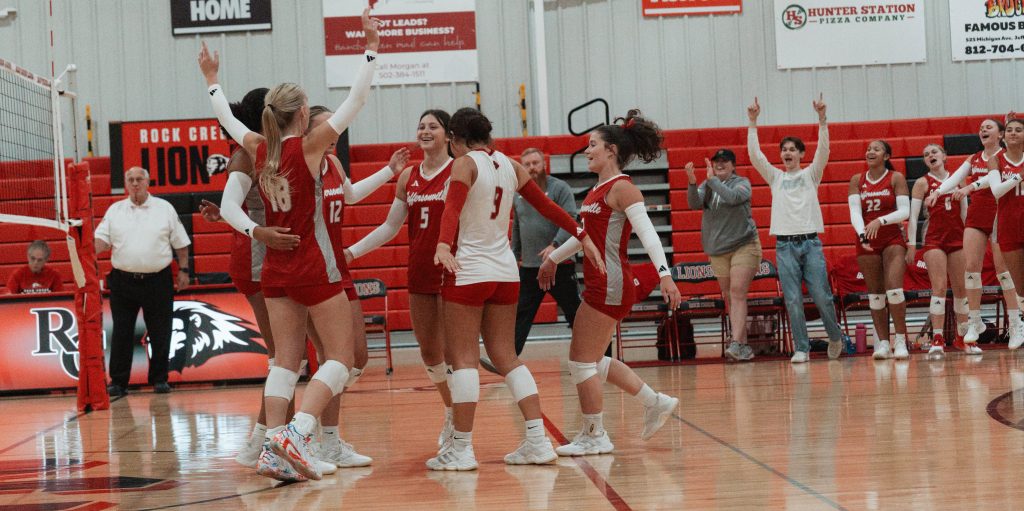
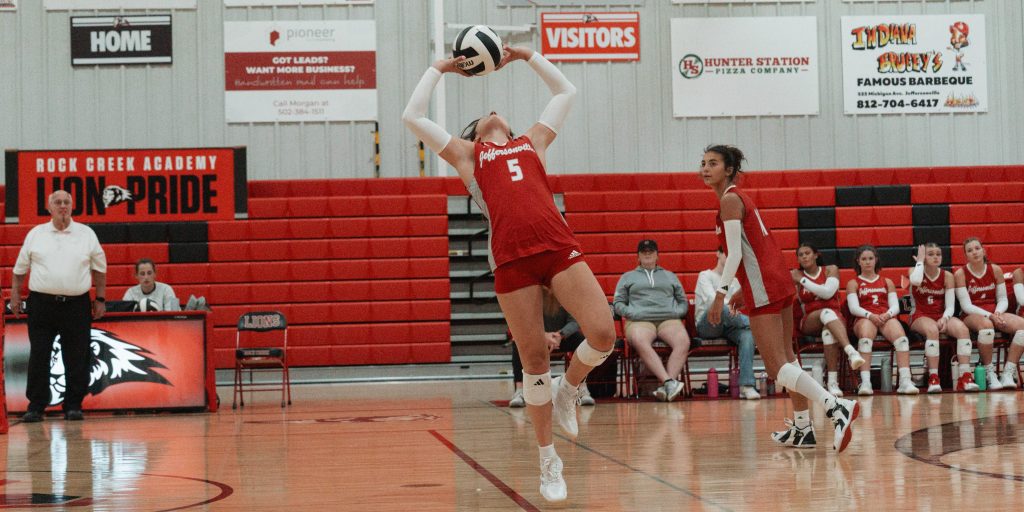
Freshman Jordyn Miller high-fives the opposing Rock Creek Lions. Photo by Malachi Conrad.Senior Riley Dobson, sophomore Joslin Wilson, and sophomore Samantha Dues clap it up before the game. Photo by Magdalene Conrad. The Red Devils huddle up before their next rally. JHS defeated Rock Creek 3-0. Photo by Malachi Conrad. Senior Aleah Byers spikes for a kill against the Lions. Photo by Magdalene Conrad.Senior Lola Rodriquez serves the ball across the net. Photo by Malachi Conrad.Junior Mattie Barker passes the ball in the matchup between Jeffersonville and Rock Creek yesterday. Photo by Magdalene Conrad.Sophomore Jaylianna Burris jumps up and tips the ball over the net. Photo by Malachi Conrad. The volleyball team celebrates after a kill by sophomore Samantha Dues. The Red Devils swept the Rock Creek Lions 3-0 Thursday night. Photo by Magdalene Conrad. Senior Riley Dobson sets to senior Lola Rodriquez. The Red Devils swept 3-0. Photo by Magdalene Conrad.Senior Lola Rodriquez spikes over the net. Photo by Magdalene Conrad.Seniors Riley Dobson and Jenna Kelley high-fives in between points. Photo by Magdalene Conrad.Sophomore Joslin Wilson prepares to serve for the Red Devils. Photo by Magdalene Conrad.
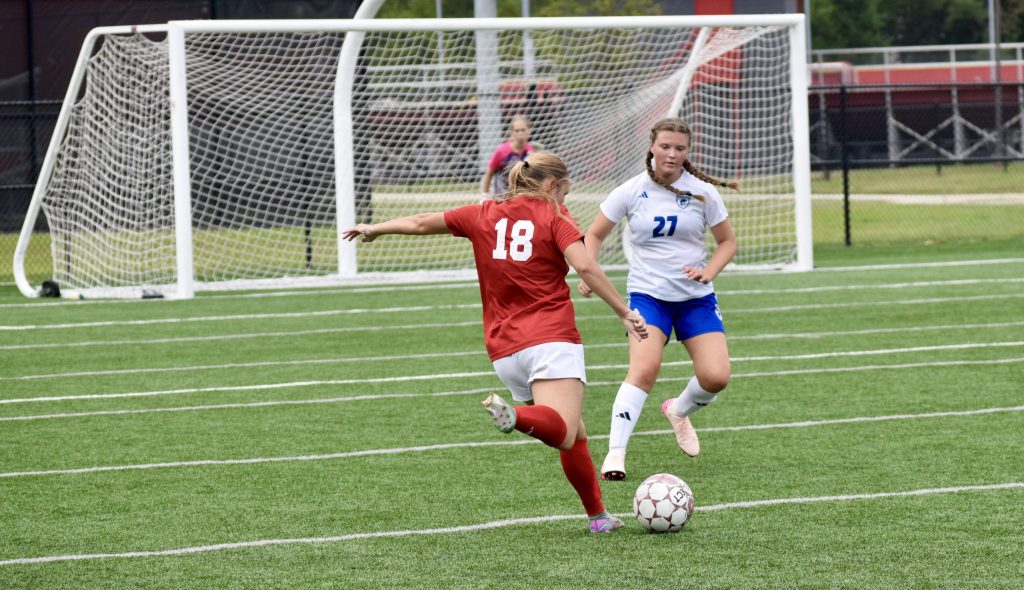
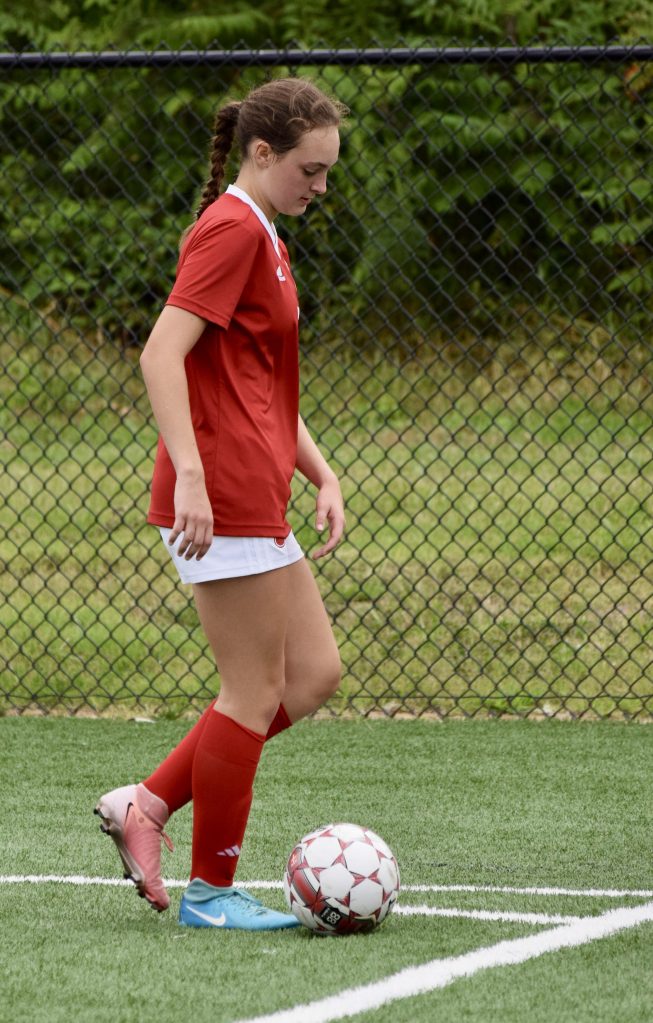
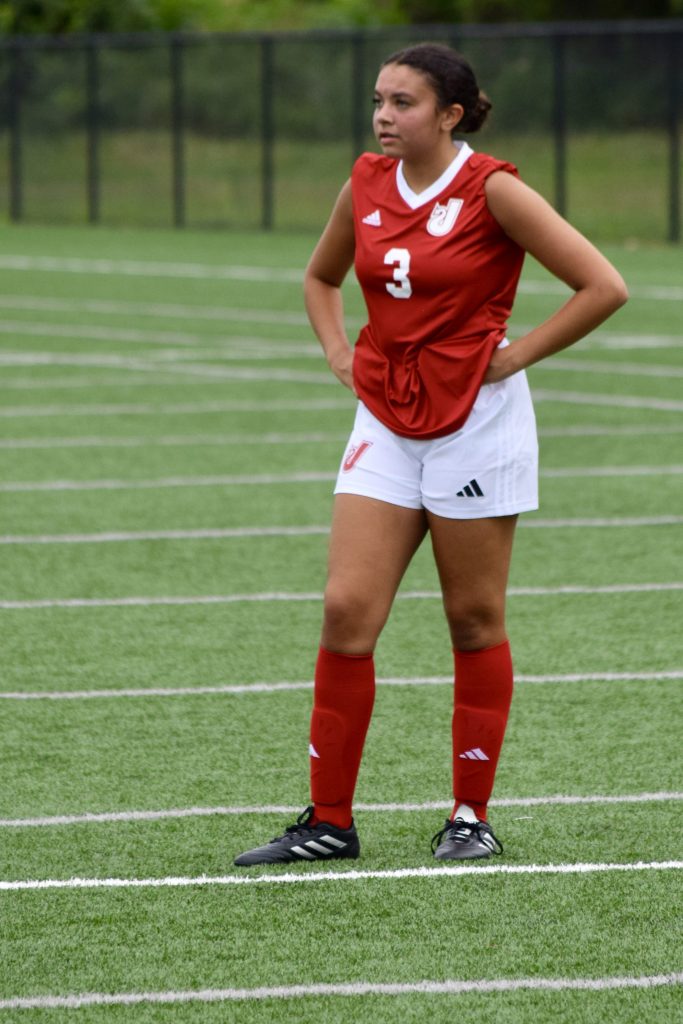
Junior Scarlet McCray strikes the ball to attempt a goal. The Red Devils defeated North Harrison 5-0. Photo by Malachi Conrad.The Red Devil bench cheers on the team. JHS soccer went on to win over North Harrison 5-0. Photo By Malachi Conrad.Junior Laela Rudicel prepares to kick the ball in fo the team. This was the sixth win in a row for JHS over North Harrison. Photo By Malachi Conrad.Junior Scarlet McCray takes a breather in between possessions. Photo by Malachi Conrad.Junior Arianna Adam is observing the field, preparing her next move. The Red Devils play Seymour on Tuesday, Sept. 2. Photo by Malachi Conrad.
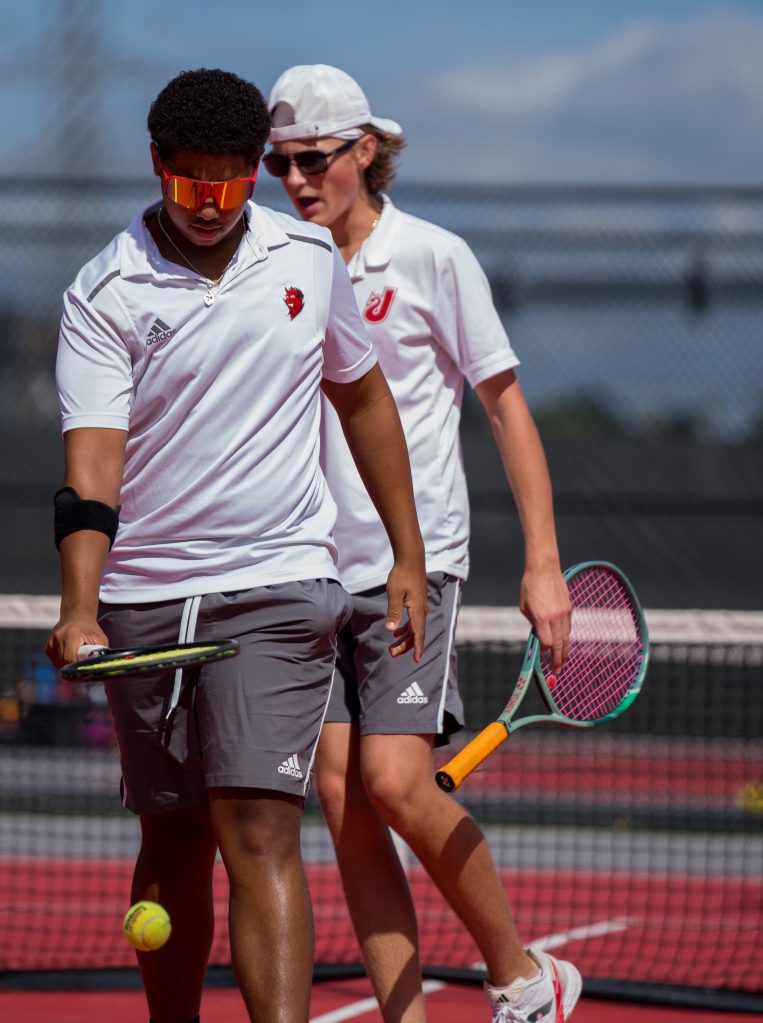
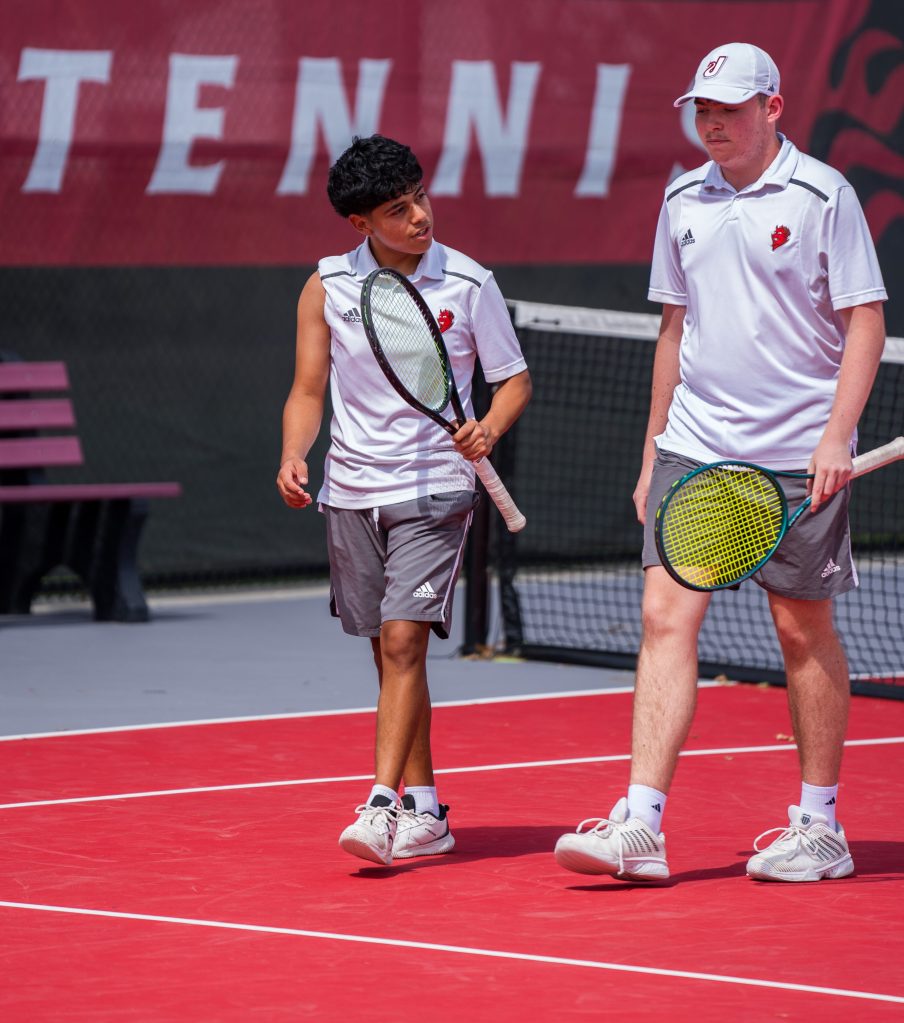
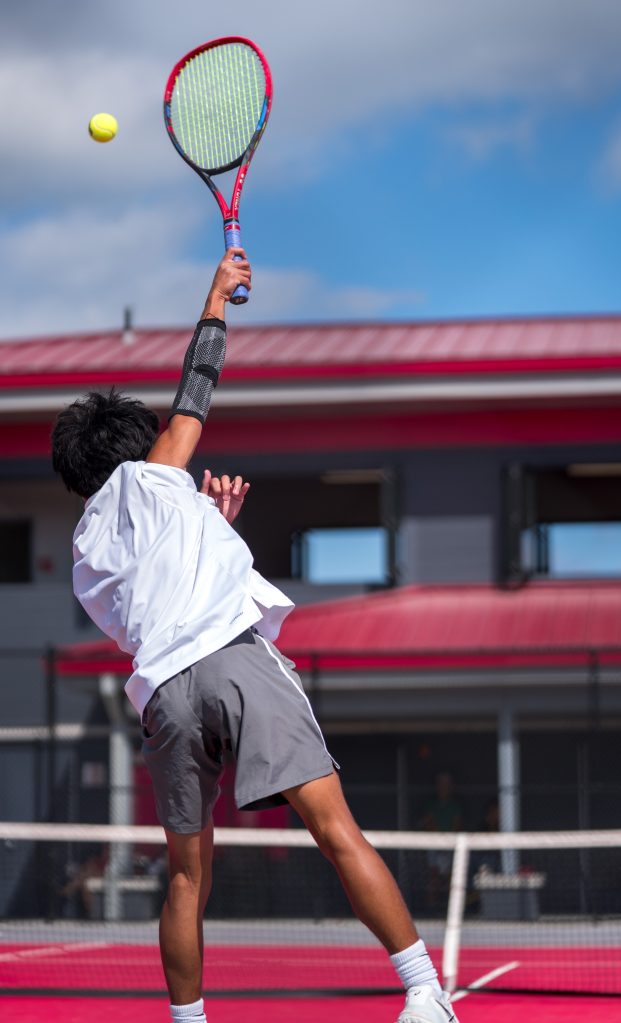
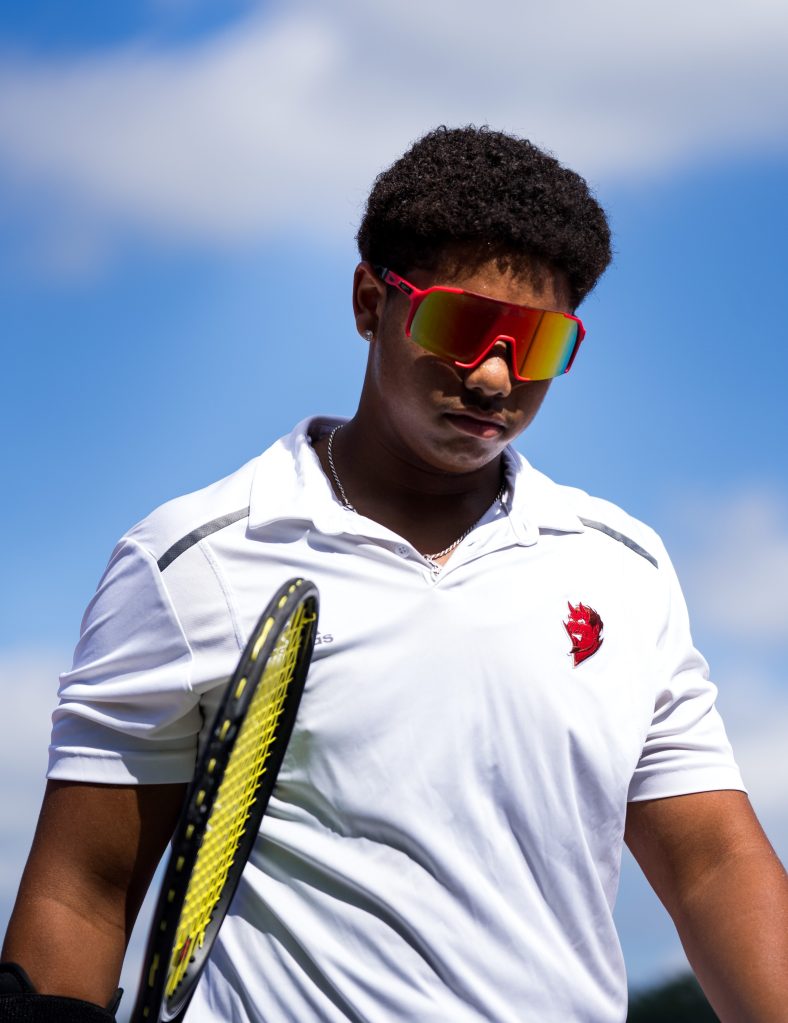
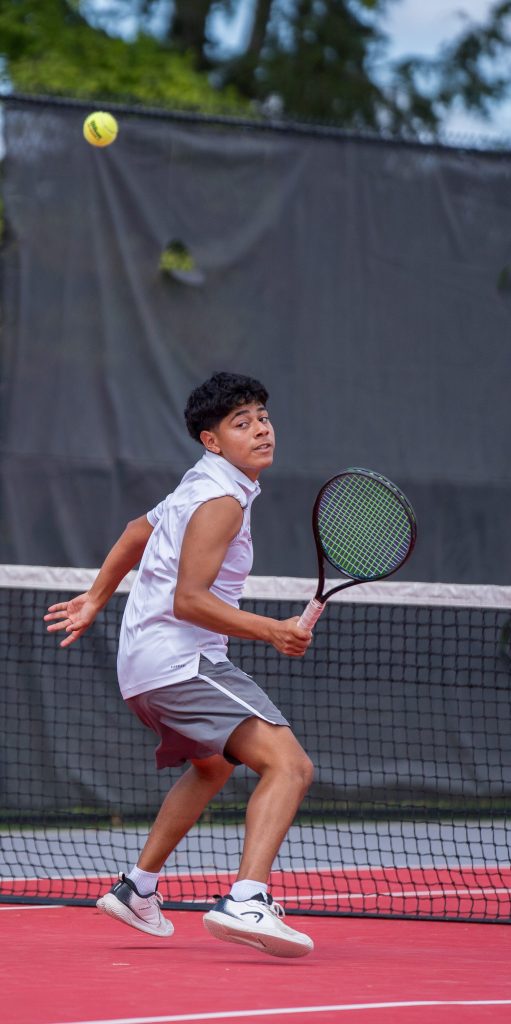
Junior Austin Gazaway and junior Kaden Westbay walk toward the baseline. The Red Devils were playing in an invitational against several other tennis teams on Saturday, August 23. Photo by Parker McCloskey.Junior Ethan Moran and junior Tyler Braitling talk about the last play. Photo by Parker McCloskey.Junior Jared Garcia jumps and hits the ball towards his opponent. Photo by Parker McCloskey. Juniors Tyler Braitling and Ethan Moran perform a handshake. Photo by Parker McCloskey. Junior Austin Gazaway walks towards the baseline. Photo by Parker McCloskey. Junior Ethan Moran looks towards the ball. Photo by Parker McCloskey.
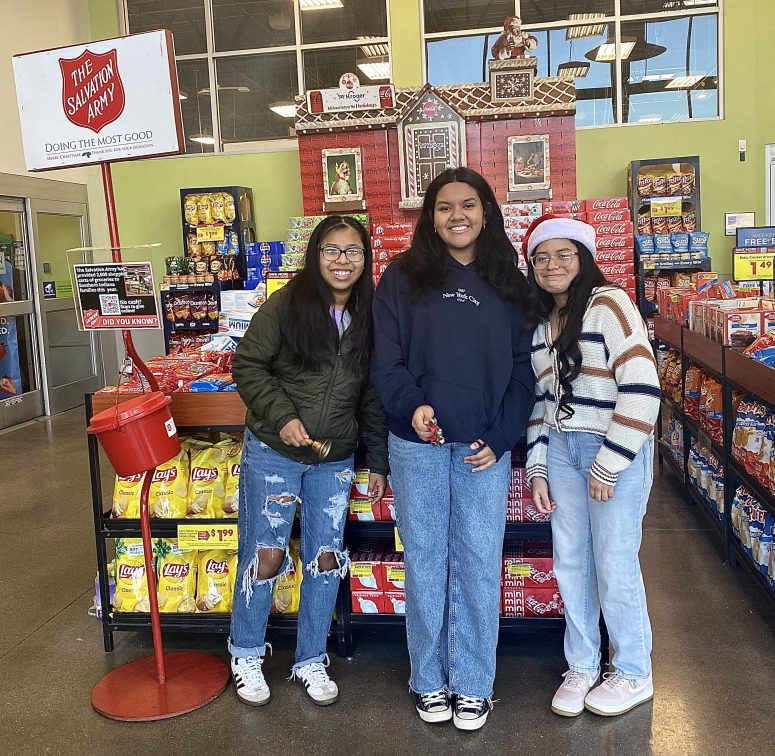
Anchor club members Ariana De La Cruz Guerrero, Eliani Schulz, and Alison Hernandez-Estrada showing leadership through their contribution of “Ringing of the Bells” on Dec 12, 2024. Anchor Club leaders are currently planning projects for the new school year. Photo by Areli Hernandez Romero.
by Areli Hernandez Romero
Anchor Club is a dedicated and supportive organization that allows the young women of JHS who are sophomores, juniors, and seniors to express their ideas and themselves while also engaging in community service. This year, with the help of sponsors and the supporting team, Anchor Club is excited to announce its upcoming season.
Club sponsor Michell Densford said at the beginning of each season, each member is welcomed by an “initiation,” which acts as the formal induction to Anchor Club that each member must attend.
“We always do an initiation. This is where you come and get a certificate, flower, and light a candle,” she said.
Members who participate for two years, including their senior year, are eligible to receive a chord that represents their dedication to the community.
Francesca Hernandez, who is also a club sponsor, refers to the “executive board” as members who are an influential foundation of Anchor club.
“Before we go over anything, the executive board goes over projects we want to do and are doing. They’re the head of the projects and make sure the girls are acting right,” said Hernandez.
Club president and Senior Cassidy Tomlin finds leadership a priority to help support members and ensure that their ideas are heard.
“So, I really try to make sure that I see all sides from all of the levels of the executive board, making sure all their opinions are being considered and making sure that they have a well-respected leader,” she said.
Her previous experiences in clubs encouraged her to join Anchor Club to seek new experiences.
“I’ve been in Anchor Club since sophomore year, and I joined because. I wanted to give back to my community. I’m a Girl Scout; I’ve been a Girl Scout since kindergarten, so I wanted to find another outlet,” said Tomlin.
I think Anchor Club is a really good way to give back to your community by serving people in Jeff, the school, also a lot of people all around the community.”
Anchor Club President Cassidy Tomlin
Junior Executive Board member Maddie Chandler nods as she mentions her experience as a member.
“I’ve been part of Anchor Club since my sophomore year. I find all the different projects we get to do for the community interesting.”
Chandler shared the impact Anchor Club has established, as well as sharing one of her favorite projects from her previous year.
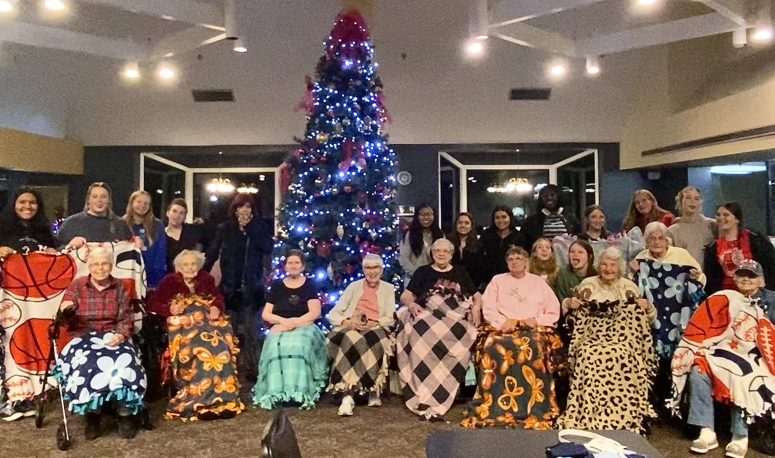
“It’s fun being part of this club. It feels like you have a lot of girls that are your friends, and you get to do new things you wouldn’t normally do. We went to Midwest Village, a nursing home. We made tide blankets for the residents. It was fun doing that.”
Sophomore Executive Board Member Haliun Otgonbayar is in her first year as a member. She anticipates contributing to the community with her friend, sophomore Samantha Dues.
“As an Anchor Club executive board member, I’m looking forward to being more involved in the community and helping people. I joined Anchor Club because not only is it a great community, but I’m hoping to plan new events and fundraisers and anything related.”
Dues, who is also in her first year as an executive board member, also anticipates organizing plans in contribution to Anchor Club along with people she cares about.
“To go off that, I’m also excited to plan events for the community, while doing it with the people I love. I joined because I wanted to help support, to make the environment even better,” she said.
Densford is satisfied with the efforts of each member and their contributions to make the club great. She proudly mentions the support of the girls and how they are representing themselves in JHS.
“I like the sisterhood, the girls coming together as a group, supporting each other, holding each other accountable, and holding themselves to a higher standard than what the school does; it’s wonderful. They represent our school well and represent themselves as wonderful young women.”
She recalled her own experience as a past “Anchor” and the influence that stood out to her.
“I was an Anchor too when I was in high school. We have some projects that have literally stood the test of time for over 20 years. We have ‘ringing of the bells’, Salvation Army, Steamboat nights — we all have a fun time,” said Densford.
Hernandez proudly mentions Anchor Club being a very supportive space, giving the impression of a sisterhood sorority to many, while also encouraging them to become remarkable leaders.
“It’s a wonderful community with great ideas. In a way, they’re future leaders. It’s a very responsible club, and all the girls are doing great things, just being great people. We are making very good future leaders.” She added, “Everybody has their own creative freedom with Anchor Club.”
Anchor club members participated in the “Blanket Making” project while sharing a unique experience with residents of Westminster Village on Dec 13, 2024. Photo by Areli Hernandez Romero.
Tomlin described the Anchor Club community as an organization worth joining for those who want to serve their community.
“I think Anchor Club is a really good way to give back to your community by serving people in Jeff, the school, also a lot of people all around the community. I think it’s a really good idea to join if you want to give back and be a part of a sisterhood, and just experience some fun new things.”
Anchor Club has stood out with its unique sense of sisterhood and teamwork, leaving fellow sponsors and members with great memories they will cherish in the future.
“If they want to be a part of a really supportive club, then this is a club for them. We do anything we can for the students of JHS and for the community, and I think that’s what makes it beautiful, a fun place to be. If you know a successful woman, they were probably an anchor,” said Densford.
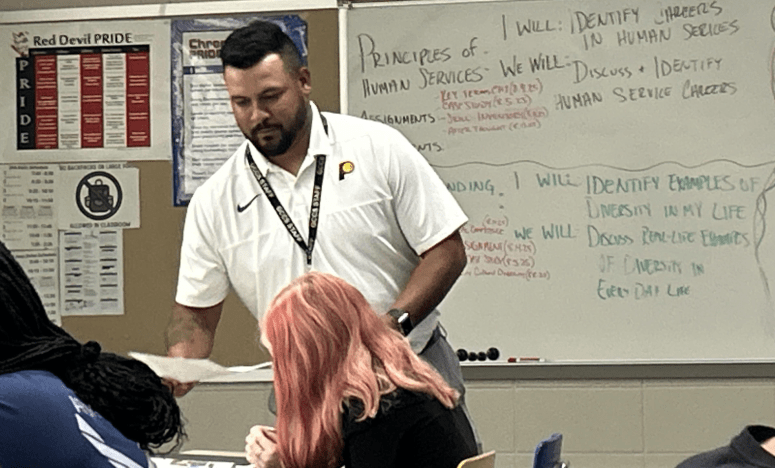
Principles of Human Services teacher Kyle Keplinger hands out assignments to his seventh-hour students. Photo by Ayianna Maddox.
by Ayianna Maddox
When someone says that they work in Human Services, the automatic thought is Child Protective Services (CPS) or counseling. But, CPS and counseling are only fractions of Human Services. What other fractions make up the whole pie?
“It’s not just counseling mental health; there are a lot of different avenues people can go down. We need each of those services, from cosmetology to police officers and firefighters. It’s all the necessities for day-to-day life,” Human Services teacher Kyle Keplinger stated.
In a way, people in the human services business sacrifice their lives every day. Firefighters fight fires, police officers fight crime, and assist in cases that involve abuse.
Psychologists and therapists put their needs aside to help guide their clients into a better lifestyle. These titles have quite a lot in common, but the most important fact is that they all selflessly put their lives on pause to aid other people.
According to the U.S. Bureau of Labor Statistics, “firefighters sleep, eat, and perform other duties during shifts that often last 24 hours.”
For psychologists, “Psychologists can expect to work 35-40 hours a week, usually Monday-Friday, 9 a.m.-5 p.m. However, they can do more or fewer hours depending on their role,” CPD Online College reports.
As children, we view these people as invincible or immortal. But we have to remember that they are just like us, human. Humans are mortal, emotional, and forces to be reckoned with, but our idols have families and friends too. Putting their lives on the line, knowing they could alter their fate differently each day, to protect others, is an act done out of selflessness and valor.
“It can be emotionally taxing, but it can be a very rewarding career. The reward far outweighs any of the negatives,” Keplinger said contentedly.
Human Services poses as an opportunity to create lasting bonds and carry them throughout life. As life progresses, there will be multiple job interviews, multiple opportunities, but with different backgrounds. Who knows, your future employer could be a life you’ve changed in the past.




















 thehyphennews.com