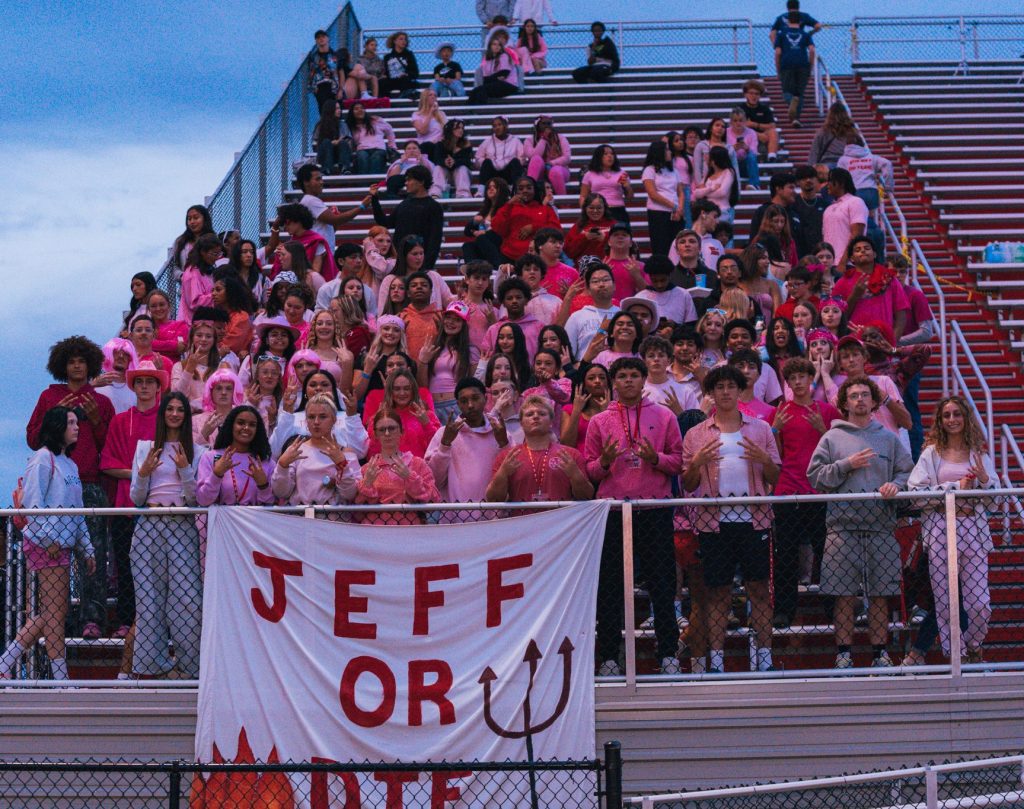
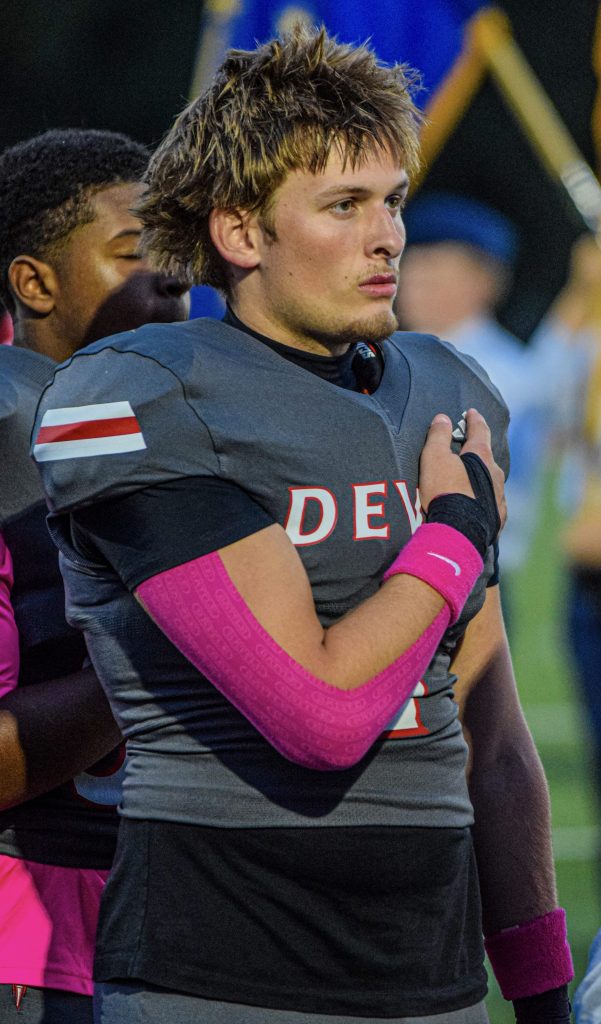
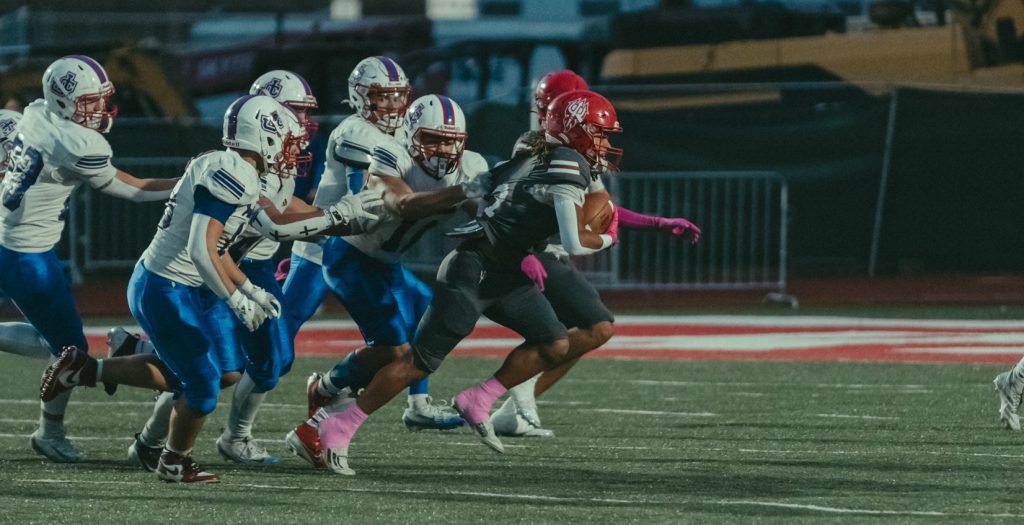
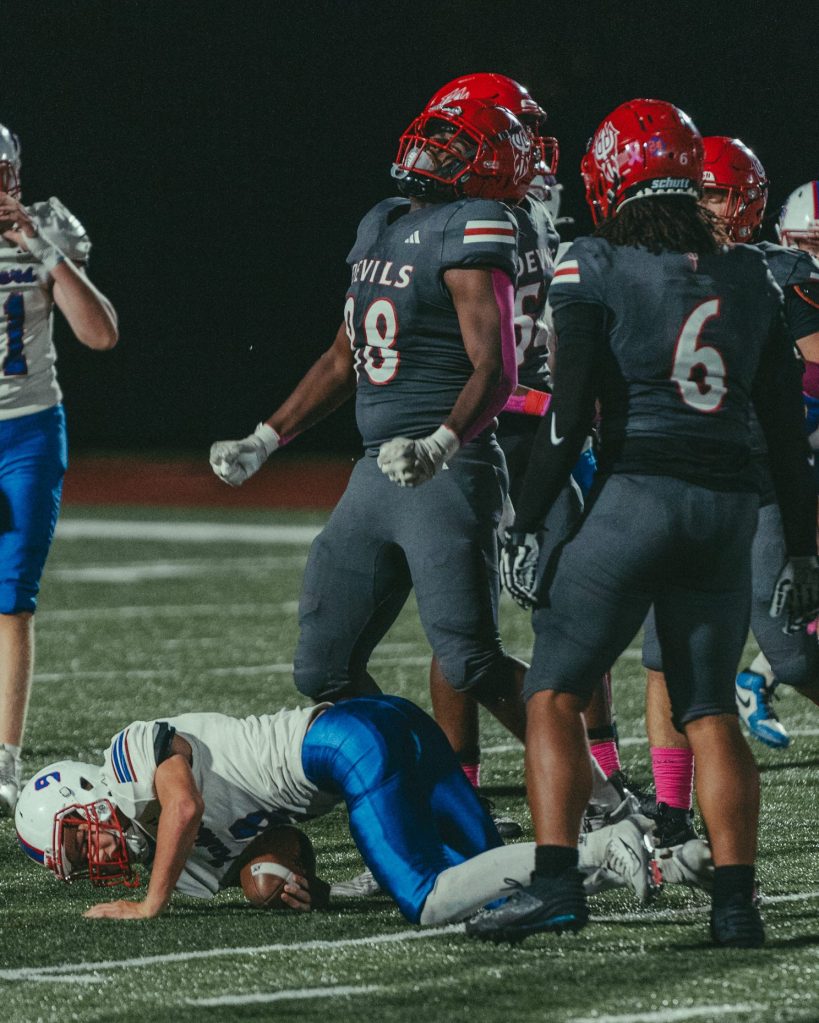
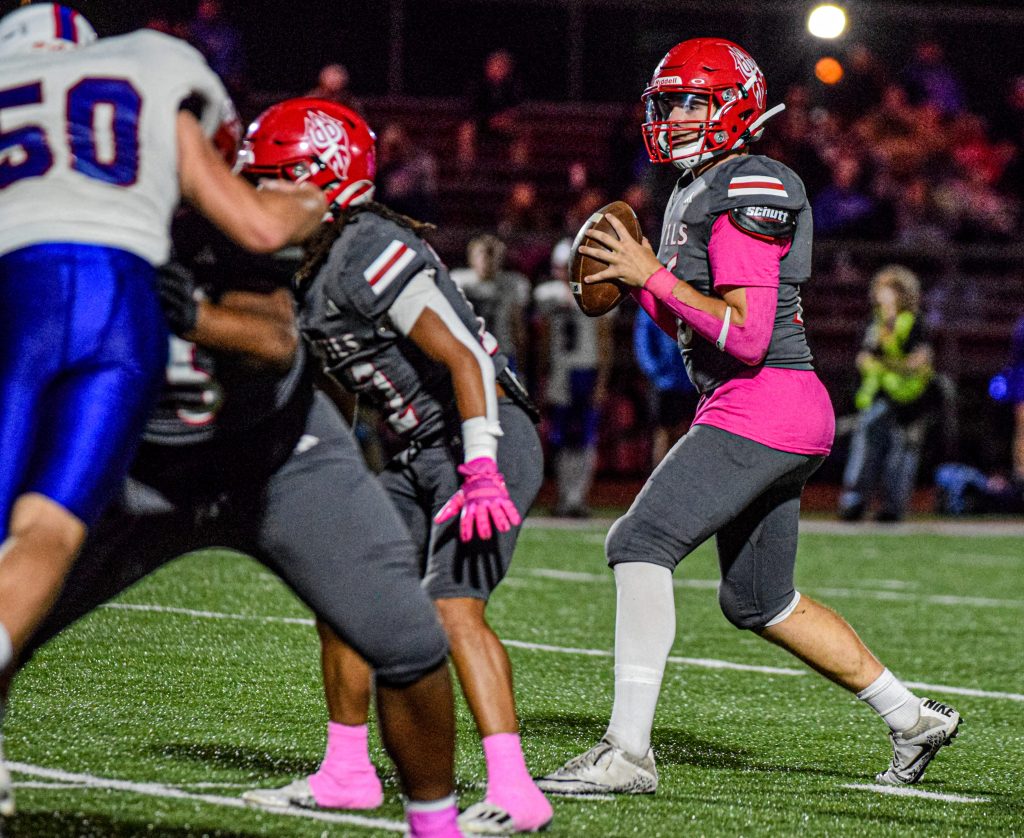
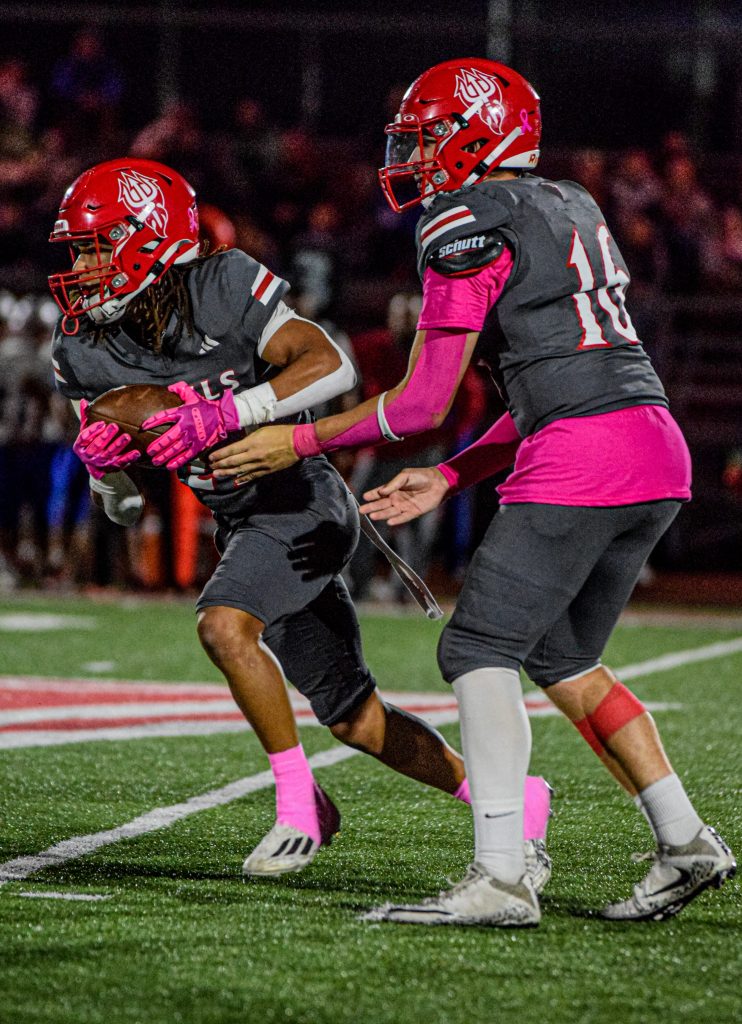
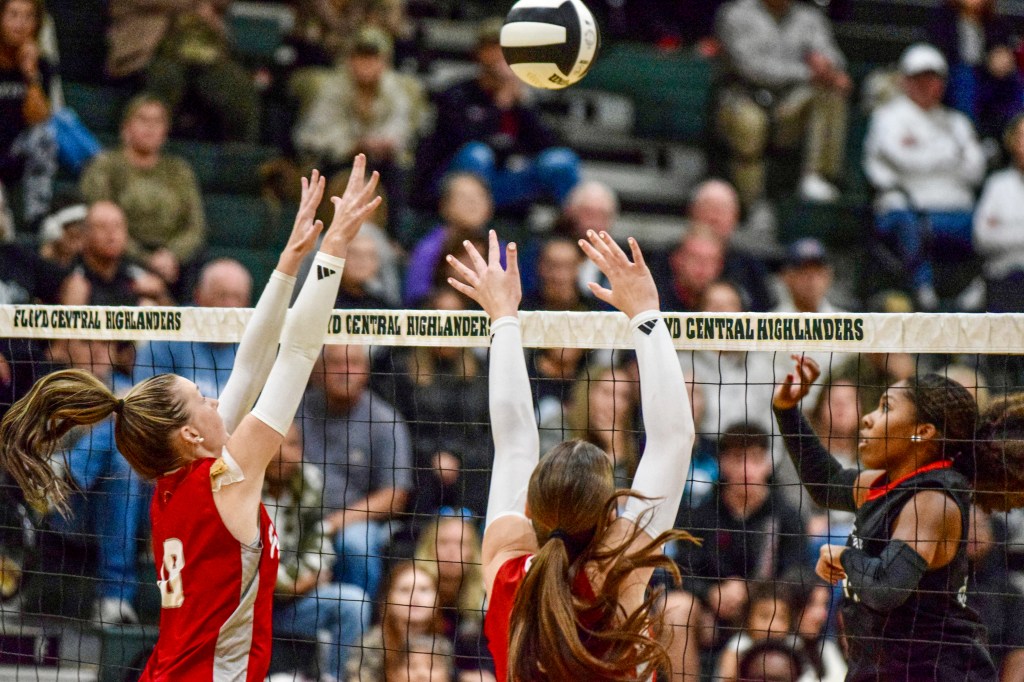
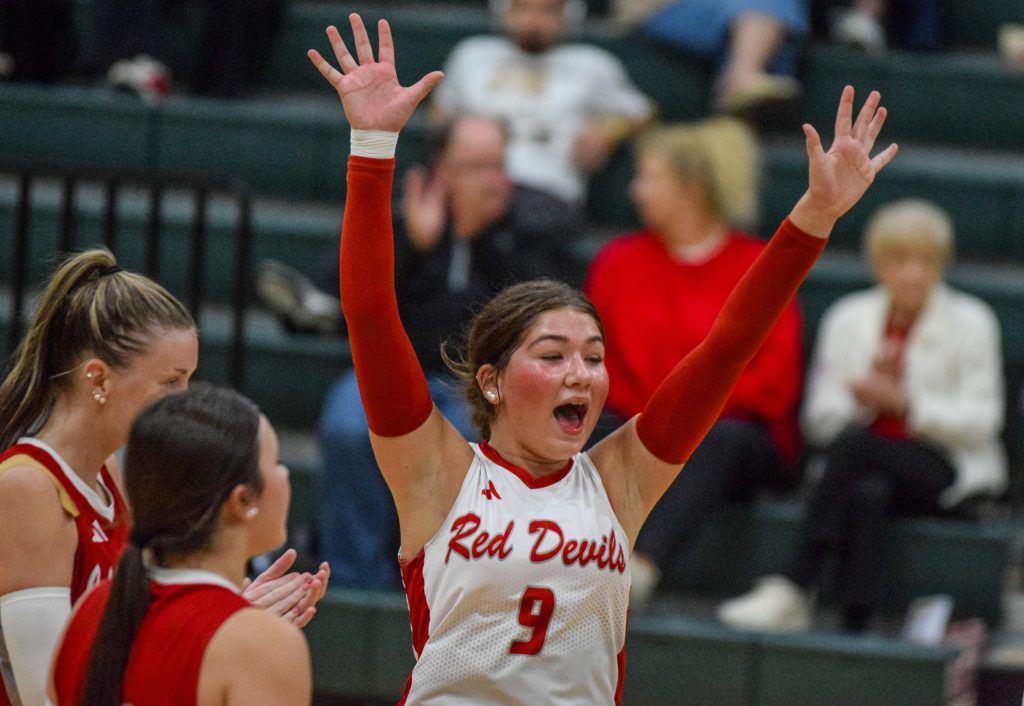
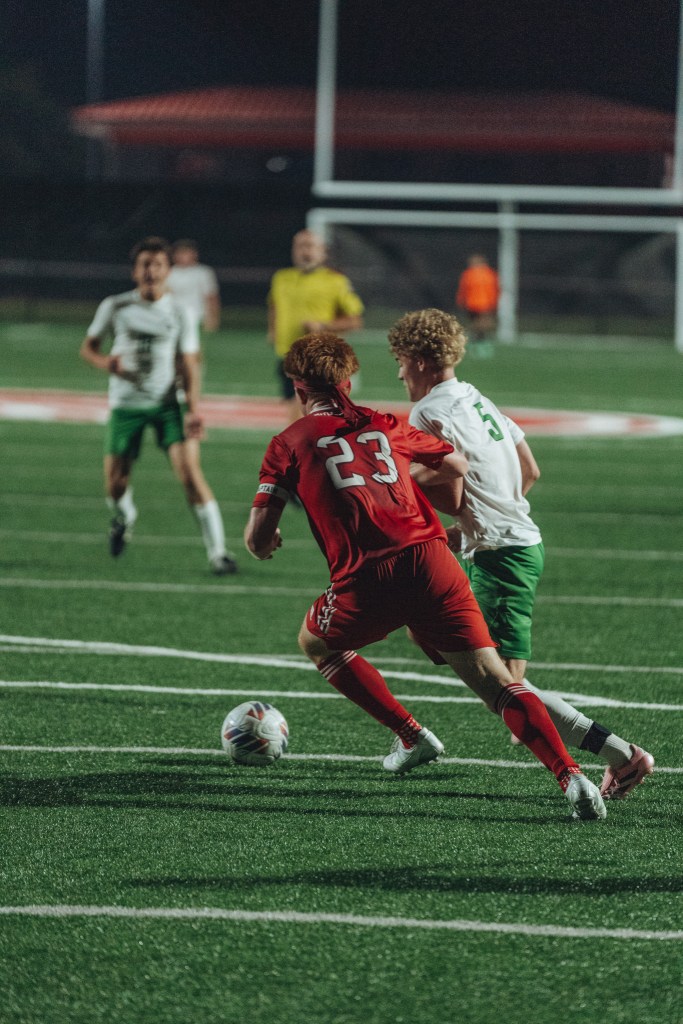
Homecoming game against Bloomington North tonight at 7 p.m.; royalty crowned at halftime


by Daysha Gray
Ceramics provides a hands-on approach to creativity for students looking to expand their artistic abilities and outputs. In ceramics, artists learn how to craft pottery and make various shapes using clay, employing methods such as wheel-throwing and hand-building. This is followed by the processes of drying, firing, and glazing, resulting in completed functional or artistic works.

3D and Art Teacher Jennifer Beckman said, “Ceramics is beneficial. It teaches students skills and can teach them to make money.”
Student artists appreciate the creative process in the ceramics classroom.
Junior Arianna Adams said, “Ceramics helps me learn that practice makes progress and that patience is key. For anyone new to ceramics, I would tell them to have patience and to make sure to listen very carefully to understand directions.
Senior Reese Somerville agreed, saying ceramics teaches patience.
“Working with clay allows me to be very creative and express my creative side. My advice for someone taking a ceramics class would be to be patient. Give yourself grace and be proud of all the progress you make.”
Senior Natalie Hollins said the classroom atmosphere adds to the creative process.
“Ms. Beckman has been an amazing teacher and I’ve loved her class since I had it my freshman year,” said Hollins. “Making things in art is something that I’ve really grown to love. I’ve always loved art and drawing and making things.”
According to Beckman, when making pottery, there are numerous uses for creations, including selling and making household products, as well as decorative pieces such as vases, wall art, and candle holders.
Clay crafting provides therapeutic advantages, encourages creative expression, and can serve as a financially beneficial hobby or enterprise when students engage with communities and acquire new skills, such as handbuilding and wheel throwing, and seek inspiration on platforms like Pinterest.
“Selling pottery projects in this class could be easily done. Considering we use professional clay, it is safe for dishes and microwaving them. A best seller could be a butter dish. They’re great and easy to sell for tons of money,” said Beckman.
Working with clay for the first time can be challenging, particularly when using a pottery wheel. That’s why taking a 3D Art class is beneficial. Creating a simple pottery piece requires a lot of effort and skill.
Beckman also explained, “We start with easier projects and progressively increase the difficulty. When assigning a project to my students, we must plan and sketch before diving straight into the clay. Ceramics can be difficult, but it does create more confidence.”
Adams agreed. “Being involved with ceramics makes me confident in various ways, because when I finish a project, I feel really good about it in the end.”
“I would say ceramics helps my confidence because it really makes me appreciate all of my hard work,” said Somerville. “It makes me proud of my artwork.”
Aside from all of the fun and beneficial activities that pottery making entails, there are indeed serious rules that must be followed in the process.
Beckman said guidelines help ensure that the art form remains safe, enjoyable, and productive for everyone involved. Whether a seasoned potter or a novice just beginning to explore the craft, understanding these rules is crucial. They establish a foundation for good practices in techniques, equipment usage, and safety measures.
Hollins added, “We get pretty messy when working with softer, wet clay. We do different things, whether that’s on the pottery wheel or by hand.”
In the end, it comes down to being careful within the artistic space.
“Remember to be careful with all utensils,” said Beckman. “Some can be dangerous, including knives and wires. Please take notes and sketch out creations to fully understand what you are going to create.”
Additional reporting by Aurora Grisham.


by Mikail Cetiner
The boys’ tennis season is coming to an end, and that only means one thing — sectional is close.
The Jeff tennis team is really excited and nervous because for most of them, this is their first time playing in a sectional.

According to singles 1 senior William Brunette, “It is very exciting, but also very stressful to play sectionals.”
The tennis team works hard and takes the practice really seriously. “We work on a lot of basic strategies to prepare for sectionals; the main focus is playing with energy and focus and staying present during matches that can often be very intense,” head coach Jerid Inman said.
Even though the practice is hard and intense, many tennis players decide to stay after practice, and one of them is junior Alex Nef.
“I stay after practice to work on my weak points so I can be ready for Sectionals.”
“We have a lot of new varsity players this year,” coach Inman said, “so we need to practice more intensely so the varsity players can learn how to play under a lot of pressure.”
Sectionals also have a side effect for the J.V players, “Sectionals affect J.V really much because we won’t have any matches since sectionals only is for varsity,” junior J.V player Ian Hoyer said.
According to senior J.V player Micah Cabell, “J.V should be taken more seriously because most of them are the future of the varsity team.”
“Even though we have no matches we will still practice and play against each other for next year,” J.V coach Clint Fackler said.
Sectional begins Tuesday, Sept. 30.

by Caitlyn Brock
RV-TV students at River Valley Middle School expect to walk into the class and find a young teacher who will simply show them a video or let them do whatever they want for the 50 minutes they’re in there, but in reality, they’re about to learn to create a newscast for all of RVMS to see.
This is the world of Yousaf Quereshi and RV-TV.

The average day in RV-TV is divided into three different paths: Podcast, Broadcast, and Newscast. The yearbook is right after that as well, as some days for Quereshi are Marathon days, in which the class spends the whole class time editing and writing content in groups. Other days are “War Days,” where the class goes outside to utilize a speaker or film a newscast at a rapid speed.
Quereshi graduated from JHS in 2023 and was employed by Greater Clark County Schools at RVMS less than a month later. How and why so soon?
“My high school experience and struggles in life all pointed to a life in teaching and coaching,” Quereshi said. His students, who fondly (sometimes) call him Mr. Q, number in the vicinity of 70 to 80, comprising both former and current students in his classes. “I’m only 20, but I hopefully pass as much older for most people.”
“Even though he is new to teaching, I personally believe he is a great teacher and is good at communicating and getting students to express themselves,” freshman Josh Cooley, a former student, said.
Mr. Q was an editor of the Hyphen newspaper during his junior and senior years, and was a part of WJHI Radio/TV, but is most proud of having been in the Model UN and the Debate Team.
“Coaches Linde, Russell, and Condon all had a great impact and influence on me. They always believed in me, and that helped me be victorious over schools like Signature and Floyd Central.”
Mr. Q became emotional about the various mentors he’s had over the years, many who taught him the skills that helped form his teaching career.
“It’s the story of my life; I could’ve failed at every step, yet a teacher saved me.”
Mr. Q then stressed a statement he especially wanted to emphasize: “If you’re willing to learn and have the work ethic to show it, there’s no shortage of good teachers who can change you.”
He chose to work at RVMS because most teachers rarely (if ever) go back to teach at the middle school they attended.
“RVMS is where my identity was born; since COVID-19 happened my freshman year, some of my best memories are from middle school. The teachers, friends, clubs, it’s all still home.”
Would he be willing to work at Jeff High? He responded with a shrug and replied, “God amazes me with the circles he fulfills; Someday, just not sure when.”
RVMS is no longer the same. With a strong culture of student media, students have never had more opportunities to do broadcasting and journalism in a middle school in Clark County. With strong relationships with JHS’s media programs and the hard work of students, Mr. Q has been able to create “RV-TV.”
Student Maddux Dobson had positive words for the class.
“It’s my favorite subject because everything is exciting and very student-oriented,” he said. “We feel like we can do things, things we normally aren’t able to.” Students are currently learning photography and video editing.
“Long ago, I had a very strict teacher. I made excuses in his class, wouldn’t show up, and got kicked out,” Mr. Q said. “The next year, when I won Student of the Month, he came out of nowhere with a smile, filled with pride. I cry every time I remember.”
Mr. Q once again got emotional and took a deep breath. He remembered his time as a student and now as a staff member at RVMS.
“Radio/TV is the business of storytelling and presentation. A motto that sticks with me is, ‘Does it tell a good story?’ Because that’s life. Does your life tell a good story?”
All photos by Magdalene Conrad and Parker McCloskey.


by Areli Hernandez
Allison Clary is an English language arts teacher, whose strong character and passion for teaching has reflected through not only her ELA courses, but also through her Holocaust class where she conveys the importance of history to students.

Clary acknowledges her former students, whose interests and curiosity led to the innovation of the Holocaust class, which was later introduced to JHS in 2007.
“The book Night; I taught that in my English classes; it’s about the Holocaust. It was so moving that my kids asked me if I could teach more around 2004. That’s how the ball got rolling. I give my kids the credit—years and years ago.”
Elie Wiesel’s book Night left a significant impact with its powerful message, creating personal connections among students, including Clary.
“That book specifically is about a teenager who ends up in Auschwitz. The main character was 15 years old. So, I think it was easy for them to relate to that and to think, ‘What if this were me?’ It’s a life-changing book for me — the horrors that they went through and how they survived.
“I felt like my kids could also identify with it.”
Clary relies on years of experience that have allowed her to teach all high school levels, along with teaching more than one course at JHS.
“This is my 34th year and I’ve taught all types of English arts. 9 through 12. Currently teaching 11th. Then, I have all of my elective courses; mythology and Holocaust.”
“History repeats itself; kids need to know what to look for. Kids need to know about the past because they are the future.”
English teacher Allison Clary
Senior Richard Morocho shared his previous experience in Clary’s ELA classroom, which later encouraged him to join her Holocaust class.
“I’ve been in this class since the start of the year. I joined it mostly because I like having her as a teacher last year. Also, because Holocaust is an interesting subject. She had a lot of experience with people whose relatives were in the Holocaust and survivors,” he said.
He highly mentioned Clary’s way of teaching and the reassurance she has given to her students to express themselves freely.
“Her opinions are really expressive whenever it comes down to bad things that people do now and how it’s influenced by the Holocaust. When it comes to freedom of speech, she is really vocal about that and we’re allowed to say what we want about that, too.”
Morocho added, “She gives us more freedom of the things that we can say and put our opinions on.”
He explained that this class has allowed him to learn history from a different perspective and encouraged students to join.
“All I can say is that they’re kind of missing out because it’s a really interesting and fun class to take. It’s not a book class, it’s an experience kind of thing. It’s really interesting stuff.”
Junior Andrew Hampton agreed with Morocho, explaining the significance of being a part of the Holocaust class, while also highlighting the engaging setting of the class itself.
“It’s a really relevant topic that we should be learning about. Her class is also engaging; it is the opposite of a boring class. There’s never been a moment when I’m not paying attention in that class. It’s too engaging not to.”
Hampton described Clary’s positive attitude and the bright influence she has made in her classroom daily.
“She is very happy to be here and that is very helpful. She makes you happy to be here as well. Her energy radiates, making it more engaging.”
Clary recalled moments where she witnessed students from different courses, personally connecting with her lessons and assignments.
“I see that all the time; I’m not going to lie. I do see it in Holocaust often, but I also see it in English. I think kids have connected with some of the stuff we’ve already done in class,” she said.
Hampton has found Clary’s lessons significant to both ELA and Holocaust class.
“For English class I enjoy the topics that she teaches. I enjoy reading the stories. Right now we are learning about Frederick, who was someone I didn’t really know about. For Holocaust class we are watching a movie right now and that movie is fire. It’s called ‘Resistance’. It’s a really good movie, honestly,” said Hampton.
Junior Lizeth Gonzalez is content with Clary’s contribution to help students succeed in her ELA class.
“I feel like she brings out specific people. People who we wouldn’t really mention in class. She tells a story and explains it to us in a way where we are experiencing it ourselves.”
Clary’s lessons have opened an interesting approach towards her ELA students. Gonzalez is satisfied with learning a new standpoint in history.
“I enjoy her lectures because it opens a perspective more whenever we talk about black history. Normally, in history class we talk about it but you don’t get into the depth of the history.”
Hampton emphasized the importance of learning history to avoid repeating mistakes from the past.
“So that we don’t repeat things. Most of our history is not good. I think that is the most important reason. So, that way we don’t keep repeating things over and over, and we become better.”
Clary agreed with Hampton, emphasizing the importance of students studying history to prepare them for the future.
“History repeats itself; kids need to know what to look for. Kids need to know about the past because they are the future.”
Clary’s impactful influence has stood out to many students at JHS, which is rewarding to her.
“There are many days that I feel like I shouldn’t be getting paid to do something that makes me feel so happy. I could’ve retired already and I don’t because I genuinely love doing this.”
She added, “I’m not sure if I know who I am, without being the teacher part of ‘Mrs.Clary’.”

by Chloe Newton
The morning sun and smoke fill the classroom windows as French teacher and fifth-generation architect Dana Schenk shifts between her desks; her voice carries through the room.

Her voice is full of the life lived between three countries. France has given her a love for language, Romania is where she grew up learning her first language and how to read and write, and America is where she has chosen to take her knowledge and share it with her students at Jeffersonville High School.
She pauses mid-sentence to smile at her students’ careful pronunciation, her eyes lighting up and reflecting the same caring atmosphere that once welcomed her into new cultures.
Schenk has never let anything stand in the way of her dreams. Born in Romania, she moved to France and eventually to the United States, each travel and experience guided by her “spirit of adventure.”
“Living in different countries teaches you a lot about yourself; you become the person who can survive in any environment,” she said.
The countries and cultures shaped her teaching style. When Schenk discusses the history of these countries, she is not just talking; she is drawing from her adventures and experiences, helping students connect beyond the classroom and curriculum.
“Be curious about life and you’re going to get very far. No task or pathway is impossible as long as you’re curious.”
French Teacher Dana Schenk
In her class, learning goes beyond just pencil and paper. She allows students to apply French terms to real-world situations and history. Students complete projects such as building an apartment floor plan or creating personalized crests.
“We try to put together as many skills as we can while we’re learning French, that’s how I make it fun and engaging.”
Her goal is not just to teach a language but to encourage students to “be citizens of the world, open their minds, and take more than just the language from my class.”
Students see that engagement firsthand. French II student Shane Adkins described her as a teacher who keeps lessons very interactive and interesting.
“She talks about her culture a lot, and it feels like a first-hand experience.”
He points out why this class is different from other language classes he has taken because of her unique teaching style and lively feeling she brings to the class.
“She’s just very expressive with her reactions and words. There’s no other way to put it,” he said.
This feeling and expressiveness have also had a lasting impact on colleagues. German teacher Lisa Stumler described feeling nervous when the previous French teacher left and Schenk came in.
“I was worried – would the new French teacher even like me? But, instantly, I thought, ‘She’s wonderful’.”
The two took a trip together to Europe over the summer. The trip lasted two weeks, during which Stumler and Schenk helped each other while seeing all the fascinating places from their cultures.
“She’s influenced me to pause more, to ask questions, to not jump to conclusions.”
Schenk’s philosophy and mindset carry the same courage and clarity she encourages in her students.
“Be curious about life and you’re going to get very far. No task or pathway is impossible as long as you’re curious. I don’t regret anything, I love my choices.”
The impact of this mindset carries beyond the classroom. Schenk recalled a student who once volunteered in Africa and had to rely on French to communicate.
“I felt so proud… he realized the importance of knowing a foreign language, and it just made my eyes light up. ”
In the classroom or abroad, Schenk’s students and peers describe her in the same way: expressive, passionate, and unforgettable. As one student described her, she was likened to a croissant, very layered and one of a kind.
All photos by Malachi Conrad.


by Jilliann Denbo
Former JHS student Maxine Prickett took English teacher Holden Henderson’s advice all the way to Florida.
Prickett, a former student of Henderson’s said, “Mr. Henderson’s words have carried with me since he told me that he was proud of me while receiving my award for most changed during freshman year. It wasn’t that he said he was proud, it was that he meant it.”
This is how Henderson makes an impact on each of his students.
“I hope that I inspire them to be themselves and to try to make the world a better place,” Henderson said.

Henderson undeniably enjoys his job daily, working with his students.
Most people only look at Henderson as a regular English teacher that has a man bun and wears crazy shirts daily, but that’s not the case. He strives to make sure he understands each of his students no matter what.
“He doesn’t try to be your friend, rather, an adult that you can trust,” said Prickett.
One of Henderson’s favorite parts of his job is to see his students’ success after leaving his classroom.
“It seems a lot of times I see growth over the course of the year, so I hope that it’s from them taking my advice,” he said.
Not only does Henderson make sure his students feel well, but he creates a positive environment for them in his classroom.
“I try to make sure that the decorations represent me and not just school stuff so that they understand that this is, you know, a place where they can be themselves. Then personally I just try to make sure to greet the students with a smile, I try to check on them to make sure that they understand that I care and that they should feel safe here,” Henderson said.
He takes pride in making sure his students feel welcomed.
“Mr Henderson was a caring and fun English teacher and always made sure we were learning something new each day,” said sophomore Reese Dobson.
Even with all the work, Henderson finds ways to pull his students into what he is teaching.
“The stories that I pick as an English teacher, I try to make sure that they aren’t terribly boring and stuff like that, even the ones that are, I try to explain the significance and bring it related to the students so that it’s not as boring because it’s hard to learn when you are bored,” He said.
Henderson takes pride in teaching at JHS, he knew from a young age that he wanted to be a part of the Red Devil community.
“When I was young, my grandparents had season tickets to Jeff games and so I was here a lot. I was kind ofa always proud of the Red Devils. Growing up in Jeff, I want to give back to the community. And by trying to be a positive influence in students’ lives, I hope that I’m making the community a better place,” Henderon said.
Henderson’s words will always carry on with his students, and they will always continue to do so.
“When I did my student teaching, I just fell in love with the school and this is where I knew I wanted to be.”
by Reese Dobson
Cheerleading is a lot more difficult than it may appear at a regular football or basketball game.
“The hardest part about cheer is probably cheering throughout all the difficulties, like weather conditions, losing, and people being absent,” said sophomore cheerleader Aaliyah Flowers.
Cheer is an all-year-long season. “I don’t think anybody realizes how much we practice. We only get one month off throughout the year, and we practice from April to competing at nationals in February,” senior Kyndal McCartin said.
McCartin said the cheer team practices on Monday, Wednesday, Thursday, and Saturday. On weekends, cheerleaders compete in competitions and cheer at sports games.
“Going to nationals with my team and competing the routine we have worked so hard on makes it all worth it,” senior Kenzie Keller stated.
UCA cheer nationals is a cheerleading competition in Orlando, Florida, where teams all over the country come and compete for state titles. Teams have to receive a bid to compete in the competition, Keller explained.
However, cheerleading isn’t always about competitiveness. A big part of cheerleading is team bonding and trust, which cheerleaders need to have for each other.
“I have always enjoyed watching others cheer, and I wanted to give it a try. I enjoy the sportsmanship and friendship on the Jeff team, and it keeps me going,” said freshman Kiela Smith.
Coming to practice with a good attitude is important to get through a hard practice, Flowers explained.
Cheer is sometimes debated as to whether it’s a sport or not. “I think cheer is definitely a sport because we practice, train, and perform. We have a minimum of four practices a week, and we have competitions against other teams,” said freshman Eliza Davis.

The Jeff High cheerleaders attended one of these competitions at New Albany High School last Saturday, Sept. 21. They came out in first place for the timeout routine and first place for the game day routine. The awards ended with the title “Grand Champs” for the overall timeout category.
“I’m glad we won because we practiced hard, and I’m glad all the work paid off,” Keller said.