JHS Students watch a wide variety of TV shows between their studies.
“My favorite TV show is ‘Young Sheldon’ because I watch it with my little sister, Mitzy. It’s important to spend time with my family and this show provides a great opportunity to bond with her.” Junior Marianna Bush
“’Bojack Horseman’ is my favorite TV show because the characters, despite being portrayed as animals, are very human. I love the fact that the main character is a bad guy and the show acknowledges that he is always in the wrong. His decisions have weight and continue to haunt him.” Junior Tobey Wilder
“’One Piece’ for sure. It has uplifting themes and beautiful storytelling. The characters are interesting and exceptionally well-written. The animation is stunning during the later parts of the series.” Senior Jovie Golko
“’Gilmore Girls’ because I’ve been able to grow up with the show. I relate to the characters in different ways, and I see my friends and family in the characters. The plotlines are interesting and fun to revisit.” Junior Cassidy Tomlin
“My favorite show is ‘Hannibal’ because I find the character dynamics and the gray scales of morality very interesting.” Senior Emrys Honaker
“My favorite is ‘One Piece.’ I enjoy the vast world-building and the large cast of fleshed-out characters. The storytelling is great with every story arc cohesively fitting together. I’d recommend it to anyone.” Senior Lane Triplett
“’The Amazing World of Gumball.’ The art style is interesting because it is unique. It’s super funny, so I have it playing all the time in my room.” Freshman Corbin Bush
“My favorite is ‘Arcane.’ The world is written in such a way that you feel like you’re part of it. You can feel how the characters feel. The animation appears to be painted which gives the whole show a unique but pleasant aesthetic.” Senior Mars Ragland
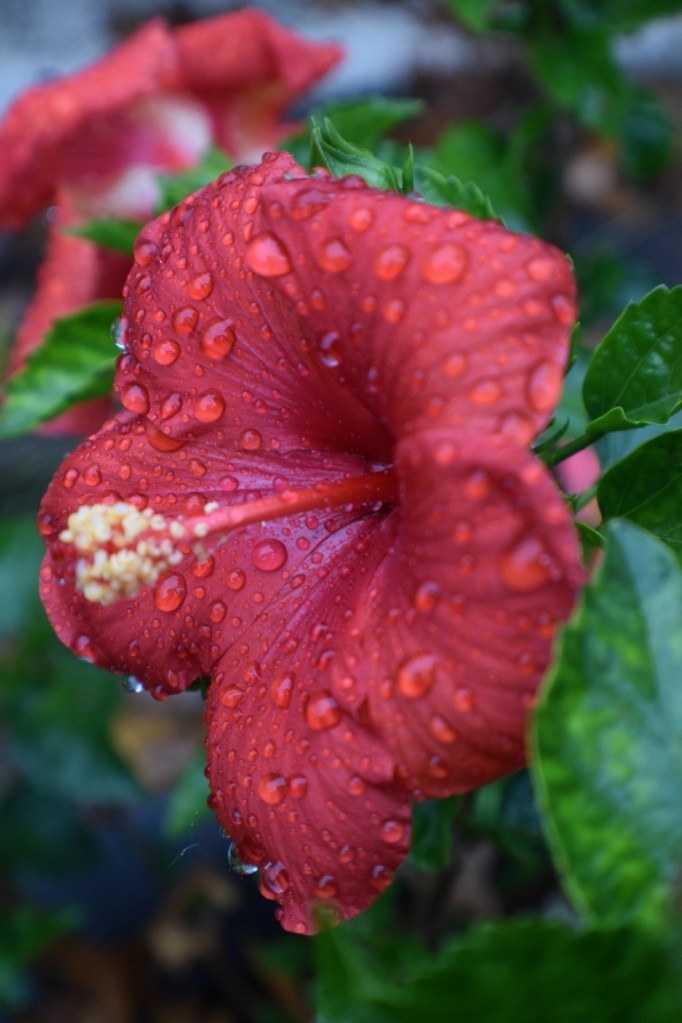
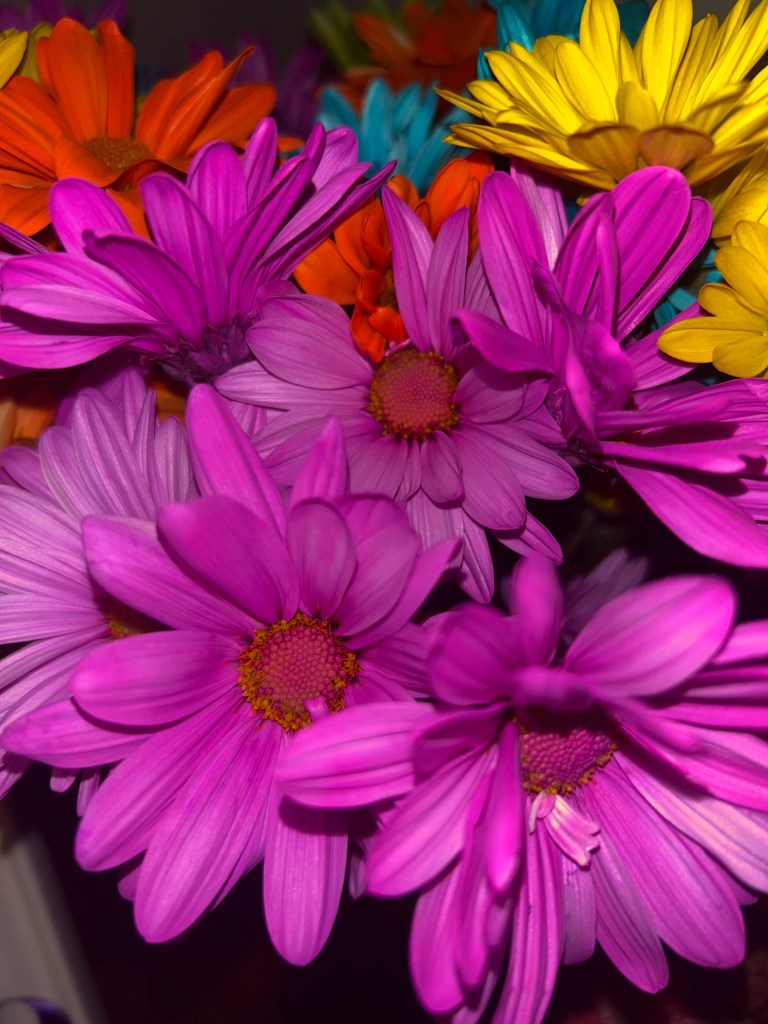
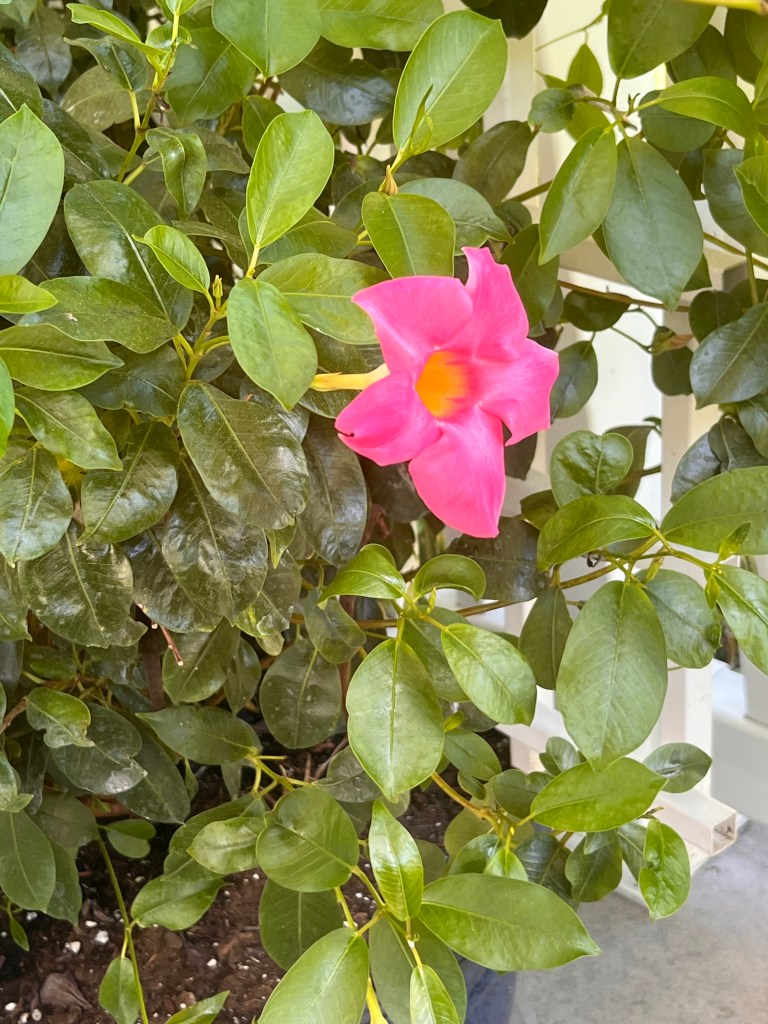
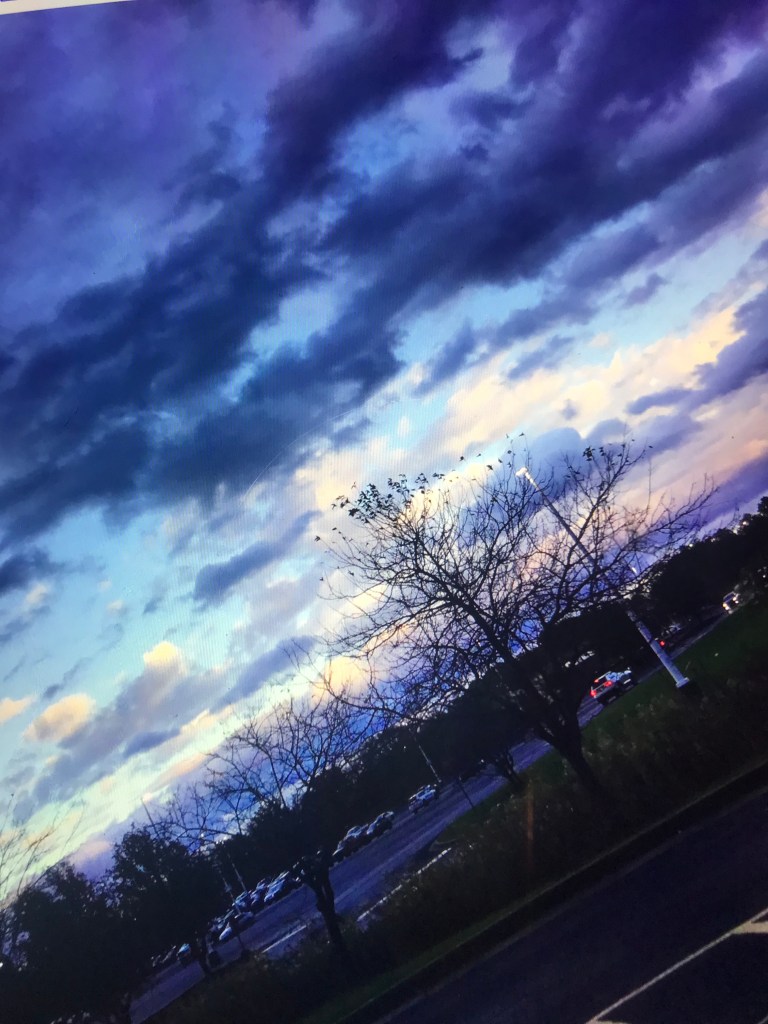
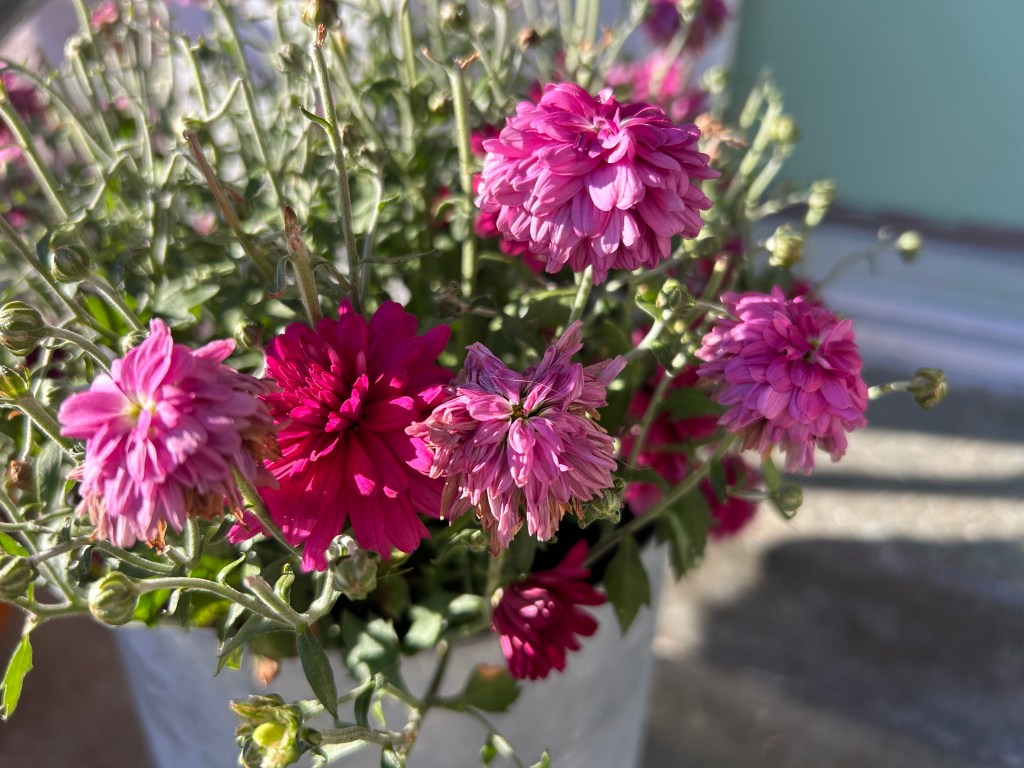
JHS digital photography students photographed vivid color for a recent project. Some of their more colorful photographs are featured in the gallery below.
Photo by Bella Thompson.Photo by Bruno Diaz Cerro.Photo by Daniela Carrillo.Photo by Esme Estrin.Photo by Fabrizio Skyner.Photo by Gabrielle Harris.Photo by Haliun Otgonbayar.Photo by Ja’Zyah Knott.Photo by Jayline Cox.Photo by Lizeth Gonzalez.Photo by Ma’Kayla Smith-Grainger.Photo by Malachi Conrad.Photo by Mattalyn Barker.Photo by Rachel Ledbetter.Photo by Silas Jones.Photo by Timothy Miller.
Freshman Ayala Appling works on a project in Jennifer Beckman’s art class. “I have been doing art for 13 years,” said Appling. Photo by Chloe Cox.
Appling continues to paint her art project. “My biggest artistic influence is my first-grade teacher, Ms. Larson,” she said. Photo by Chloe Cox.
“Art comes in many different forms,” said Appling. Photo by Chloe Cox. Appling describes her motivation as she paints. “The thing that motivates me to create is to be better than others.” Photo by Chloe Cox.
Appling shares her art project. “The piece I am in the process of is a manga-style.” Photo by Chloe Cox.
Sophomore Dane Watterson practices some camera moves before the JV girls’ basketball game on Tuesday, Nov. 12. “Broadcasting this game was a whole new different experience, I learned a lot,” said Watterson.
The varsity Red Devils defeated Jasper 71-55. Both the JV and varsity girls’ teams will travel to Warren Central this Saturday, Nov. 16. JV will play at 3 p.m.; varsity will play at 4:30 p.m.
Photo by Bruno Diaz Cerro.
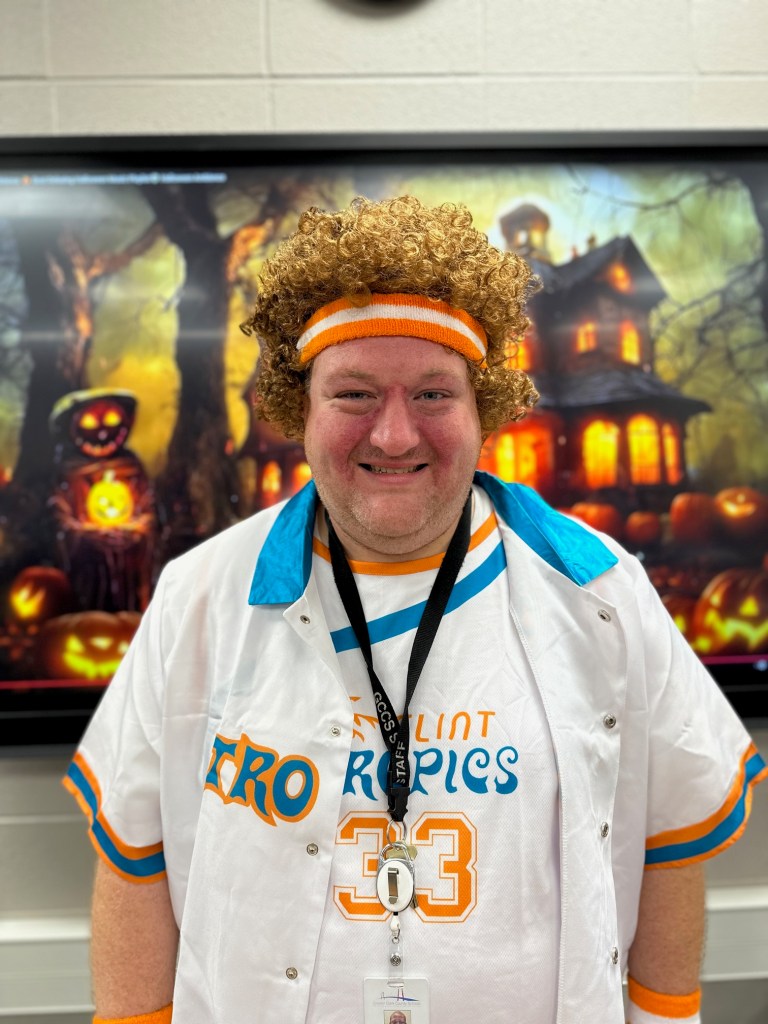
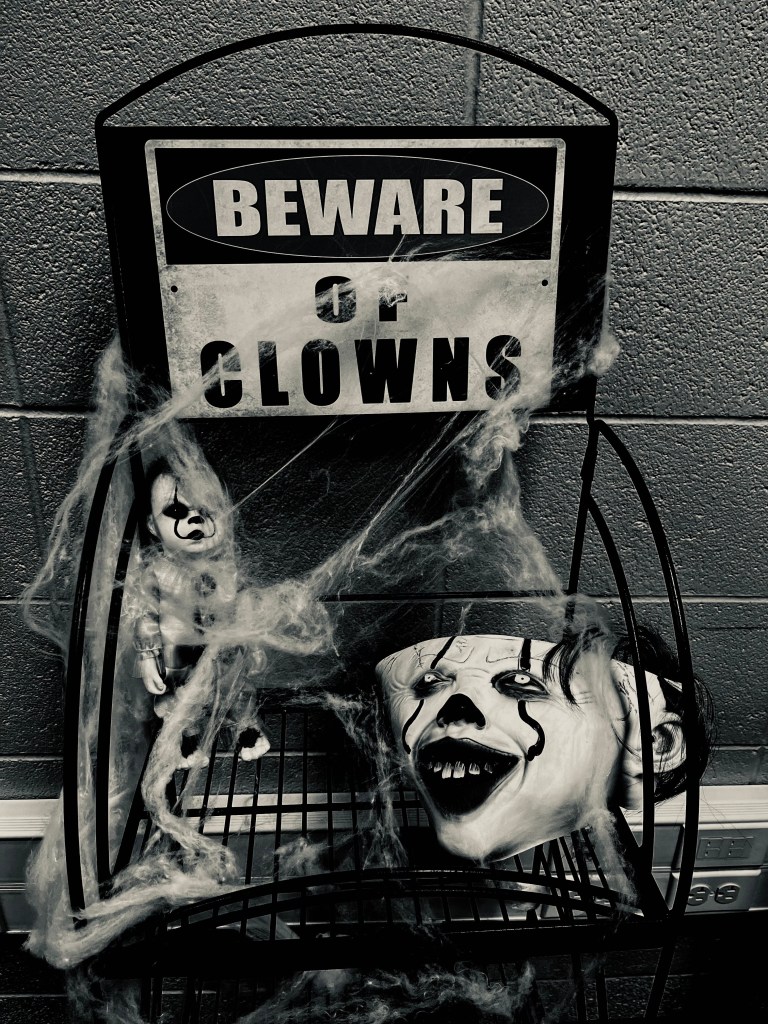
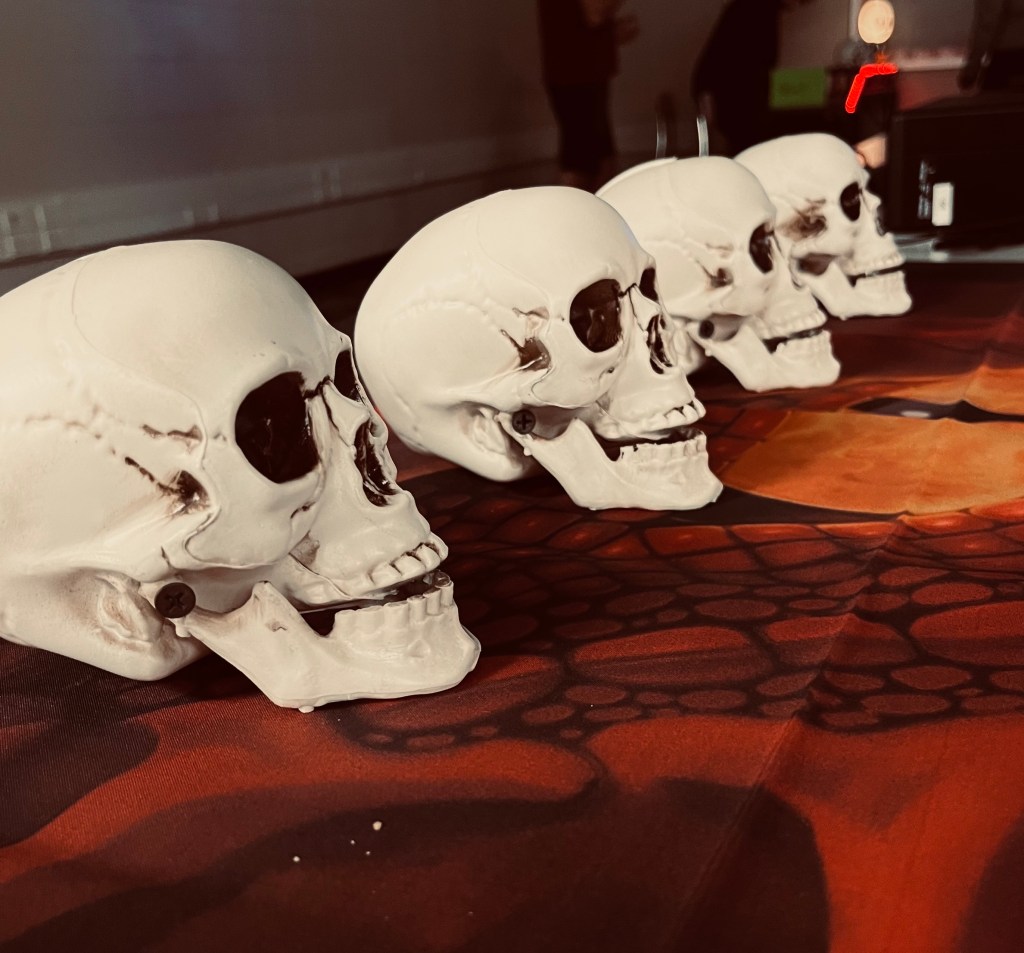
Students in first and second hour Digital Photography classes captured the spirit of Halloween at JHS last Thursday. Some of their most haunting images are displayed in the gallery below.
Cameron Dyer. Photo by Jazlynn Bryant.Christian Richardson. Photo by Aniston Young.Esme Estrin. Photo by Bella Thompson.Lisa Hylton. Photo by Ryleigh Newton.Ja’Zyah Knott. Photo by Ferris Overbey.JHS Counseling Department. Photo by Ja’Zyah Knott.Macaleb Conrad. Photo by Malachi Conrad.Ryleigh Newton. Photo by Yalashia Maddox.Counselor Tyler Colyer. Photo by Johann Flores Juarex.Biology teacher Nicolaas Wiese. Photo by Bruno Diaz Cerro.Beware of Clowns. Photo by Nevaeh McWilliams.Eliada Tshimalanga. Photo by Precia Flomo.Elianna McCurdy. Photo by Cianna Shirley.Kelley McCoy. Photo by Precia Flomo.Skull Guys. Photo by Lila Schurr.Tristan Newby. Photo by Derrick Haynes.
One of the prides that Hermitage Farm takes is how they offer a diverse selection of unique crafts from an equally diverse vendor selection.
And this was certainly the case when I attended the Meet Your Maker Art’s Festival on Sunday, Oct. 27.
Meet Your Maker was able to supply visitors with a great variety of items. This ranged from jewelry, like those found at the Love is a Seed booth ran by Amanda Mathews; clothing, like those found at Mojo Quilts and More ran by Angelique Shah; paperworks, like those found at Lion Palace ran by Liz Morely Glenn; or paintings, like those found at Makara Thach Sernett ran by a vendor by the same name, just to name a few of the crafts.
Amanda Mathews and her booth, Love is a Seed, standing next to Angelique Shah and her booth, Mojo Quilts and More. Photo by Sam Ottinger.
The wide range of items may seem like it would be an overwhelming experience, but in reality I found it to be one of the more peaceful arts festivals I have been to.
In addition to Hermitage Farm choosing a wide area for all the booths, making it feel open enough to not overwhelm but not empty to where it seemed that there was extra space, the multiple items left room for disinterest.
In many events, hearing of the presence of disinterest can be a very negative thing, but for an art event with a little over 100 vendors, it is essential to prevent feelings of missing out and rushing through.
There was enough of one type of craft to be affordable to the buyers to get something from each, while also leaving room for other types that were others’ favorites.
One aspect that does need mentioning is the accessibility.
Due to this event taking place on a farm, there were not as many accommodations as a more leveled festival may have.
The parking was located on the top of a large declining hill, yet offered handicap parking nearing the front of the lot. In order to get to the area, guests could then walk down the hill and over another smaller hill. Yet another way guests could get to the main event was on one of the two tractors for a seasonal hayride.
The first vendor area, closest to where guests entered, was unpaved, which could make it harder to navigate with those who rely on non-powered wheelchairs. However, the second vendor area, the one past the top left corner of the first area and near the petting zoo, was in a circle of paved road at the entrance of each booth.
One of the joys that came with this event is that not only did guests have an enjoyable time, but the vendors were given space to be able to enjoy it just as much.
Due to the openness of the physical area, there was room for these business owners to be able to talk more about their story behind the art they produce.
Morley Glenn, the artist behind the Lion Palace booth, commented, “Once you start creating, you never want to stop” in describing what pushes her to continue this artistic business.
Makara Thach Sernett, who managed the Makara Thach Sernett booth, shared the story of her beginnings as an artist.
After growing up in a Thai refugee camp, Sernett focused not on studying any artistic field, but on law. Yet this career path wasn’t based on passion, but on survival.
Sernett’s life always came with worldly troubles that would prevent the transition in careers, like expectations of being the oldest in an immigrant family and the negative perceptions that come with the title of ‘refugee.’
When she met her husband, he asked her a profound question. “Now that you don’t have to fight to survive, what do you really want to do?” Her answer was painting.
“In [that] world I didn’t know what art was, but I felt the joy and whimsy it could bring,” Sernett commented.
After years of being self taught, she came to Meet Your Maker to use her landscapes and story to inspire others. Seeking to connect with others, even if they may not relate to her life.
Makara Thach Sernett stands inside her booth, Makara Thach Sernett, holding one of her pieces labeled “Vibrant Birch.” Photo by Sam Ottinger.
And Mathews, the main vendor of Love is a Seed, found her love for making jewelry when given kits for her birthday and other holidays.
“I found it to be so fun and satisfying to create quick little projects that I could wear,” Mathews said, describing her progression from kits to her own creations. She would share this fun activity with her soon to be husband, Harley Mathews, after graduating high school.
“The key to making something more your own is to follow your creative curiosities, create things that make you feel good, and have fun!” Mathews added, “Don’t be afraid to reinvent pieces you may already have, mix and match, and make it more personal. You can always create special pieces of jewelry out of just about anything!”
Just as the kits were given to her on the holidays, she then decided to gift her finished jewelry to others during these times of year. Even during other times she would still get requests for unique pieces.
Mathews saw the potential, and after working more on increasing her skills through practice and some college courses, she and her husband started to look into the future of getting her art out into the grander world.
They would go to art markets and visit their friends, finding a match to respark their inspiration, Amanda Mathew’s asking “What if this is something we could do, as our life and our creativity?”
The Mathews started looking into participating in a market like those they visited. And during these looks, many would require more official business info.
“This was intimidating at first, but we were up for the task. We wanted to do this so we dove in head first!” And after talking to other vendors, friends, and family, they felt the support and founded their business, Love is a Seed, in the summer of 2014.
Hermitage Farm’s Meet Your Maker back in summer of 2022 caught Mathews’s eye when looking for more fall events. She saw the fun family fall event and applied. “It has become a place where I meet dear friends who are also amazing artisans and is my favorite event to do every year,” she commented.
Amanda Mathews inside her Love is a Seed booth, located near the entrance of the main vendor area. Photo by Sam Ottinger.
Meet Your Maker did not only allow me to purchase wonderful handmade crafts, but it also allowed me to be able to meet and connect with these business owners, of which I may not have even known about before attending, and learn more about the love of creation that fills many in our community.
Their stories not only connect us, but they also act as a light at the end of the tunnel for those who want to throw their hat in the ring and be one of these vendors, finally being able to turn their passion into an equally enjoyable work career.
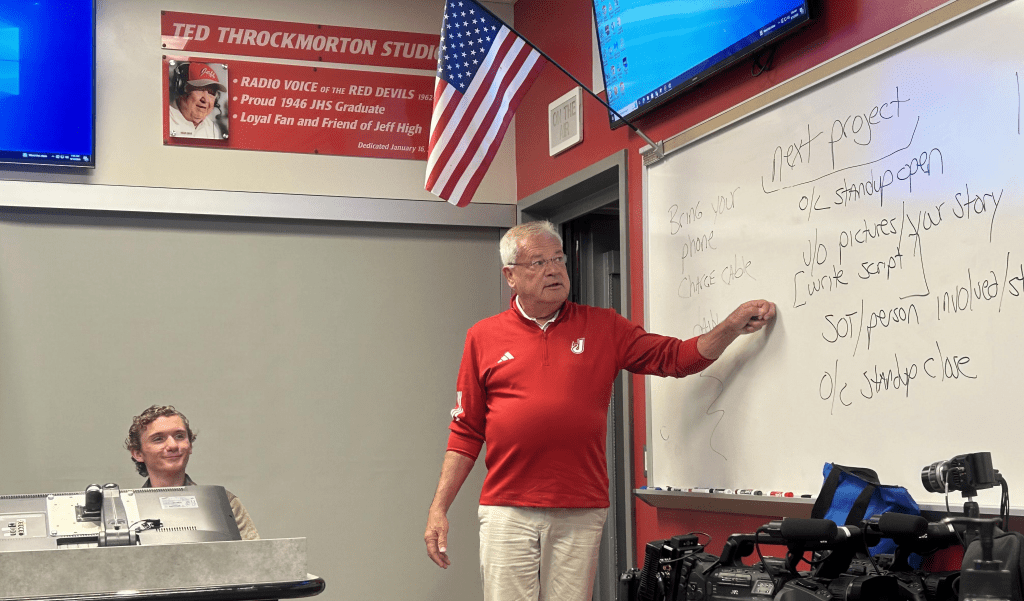
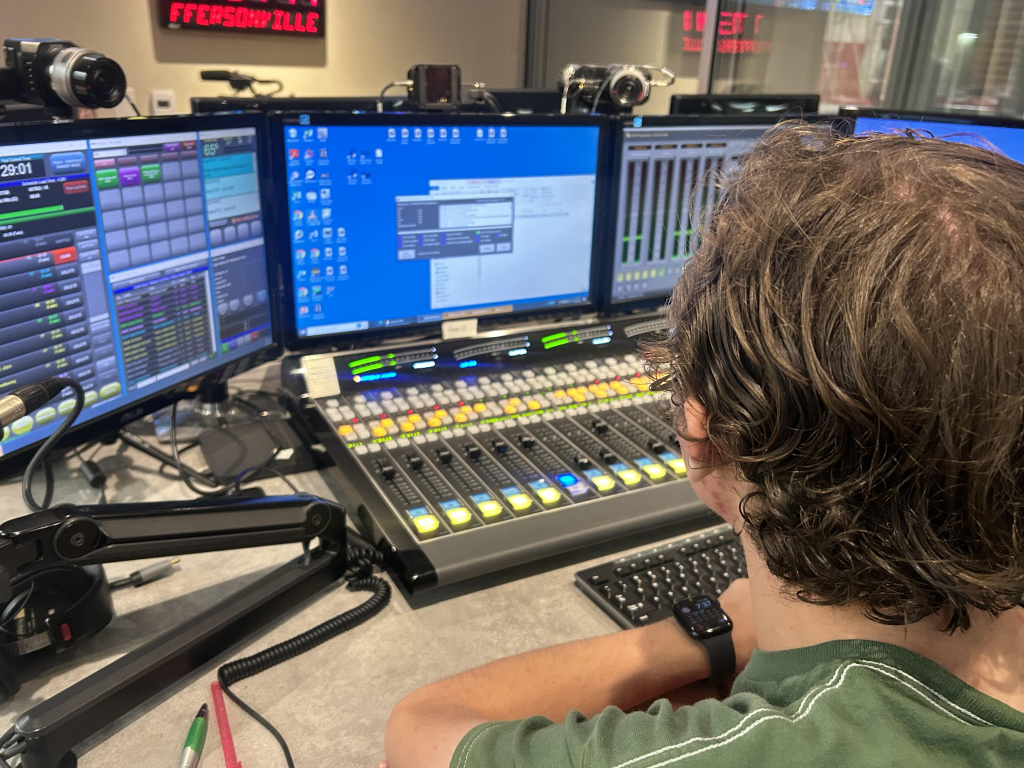
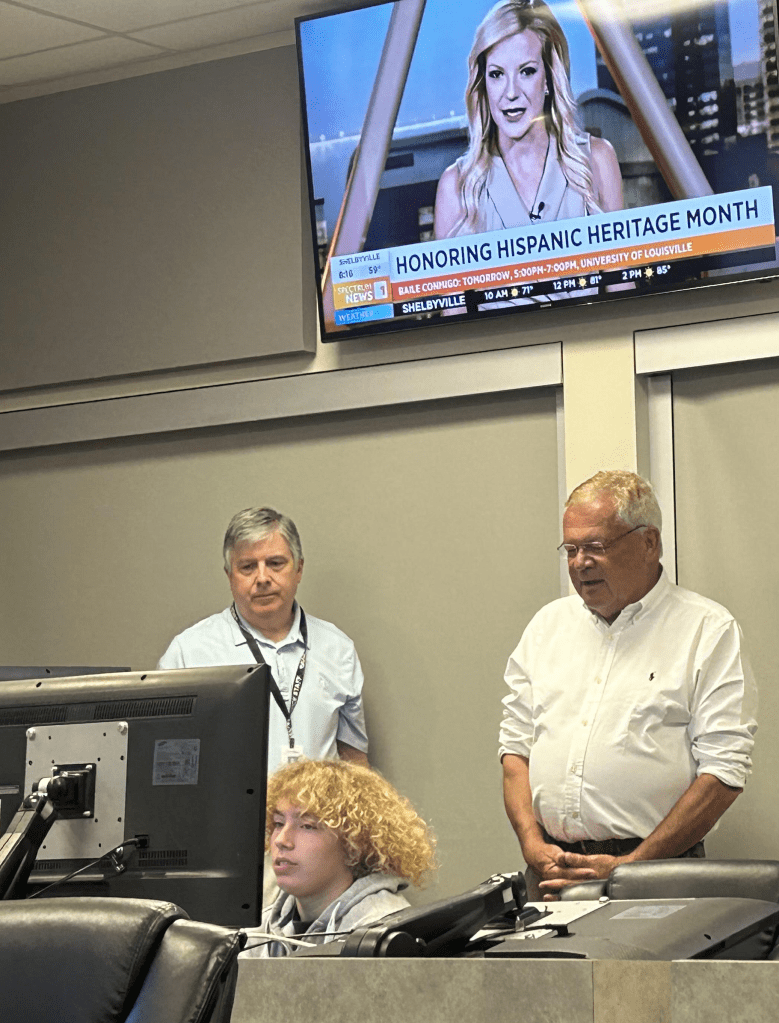
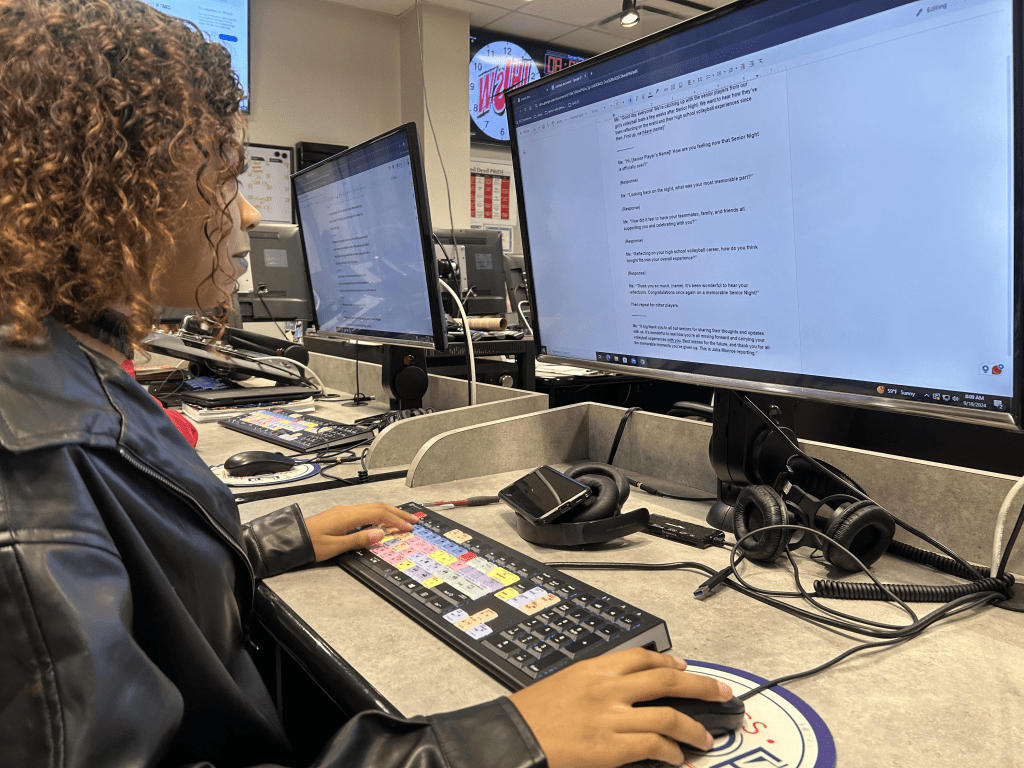
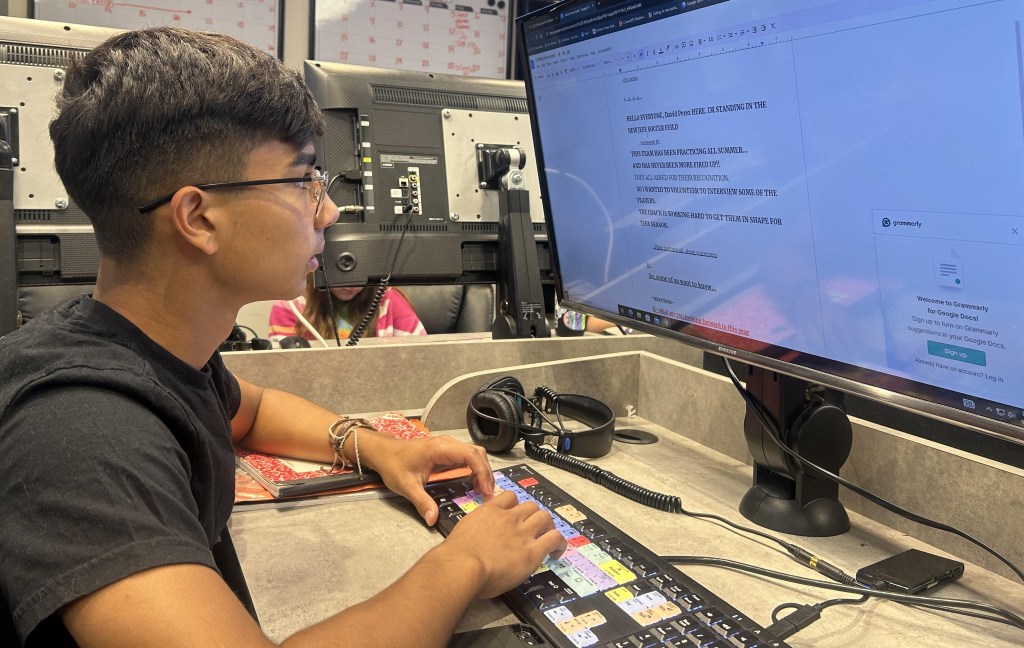
WJHI adviser Fred Cowgill instructs junior Elliot Swincher and his first-period class on the requirements for an upcoming project. This project requires students to write a script and have it prepared after the weekend. Photo by Ayianna Maddox. Swincher works on his project in the broadcasting studio. “I enjoy communicating with other people and learning the terminology about the computers,” said Swincher. Photo by Ayianna Maddox.WJHI media advisers Dave Callan and Cowgill often go around the room to make sure students are on the right track as sophomore Dane Watterson edits. There are sometimes technical issues, but they work with students to resolve them. Both Callan and Cowgill are in their first year at JHS. Photo by Ayianna Maddox.Senior Julia Monroe works on a script. “I enjoy learning more about editing and looking more into the professional world of reporting,” she said. Photo by Ayianna Maddox.
Sophomore David Perez works on his project script. Callan, in his first year with WJHI, said, “Attitude is everything. If you have a great attitude, you are going to learn.” Photo by Ayianna Maddox.
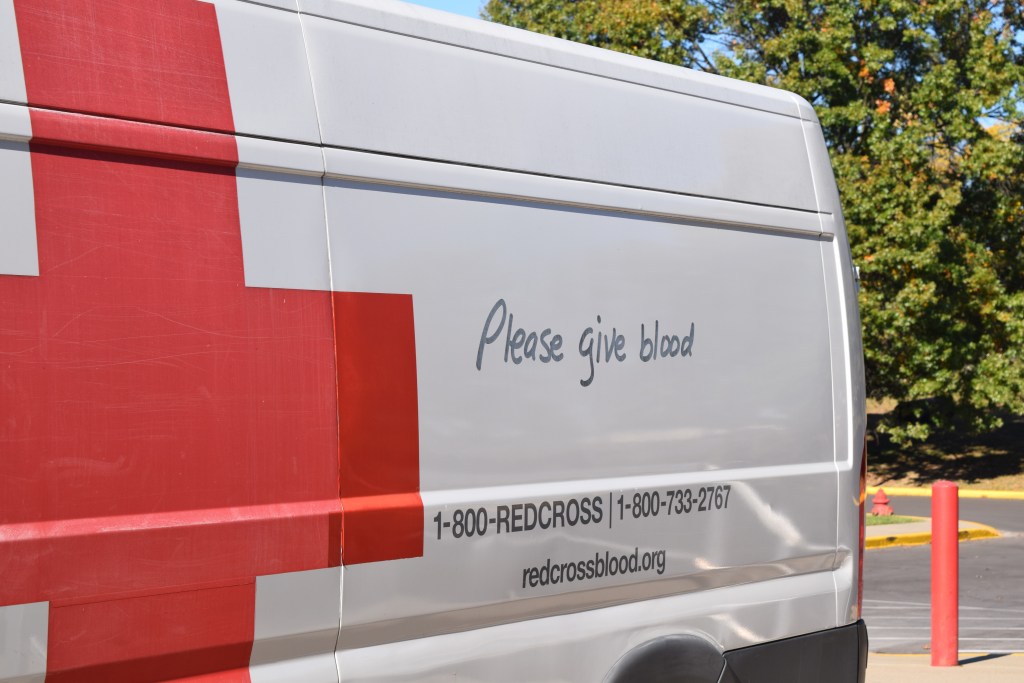
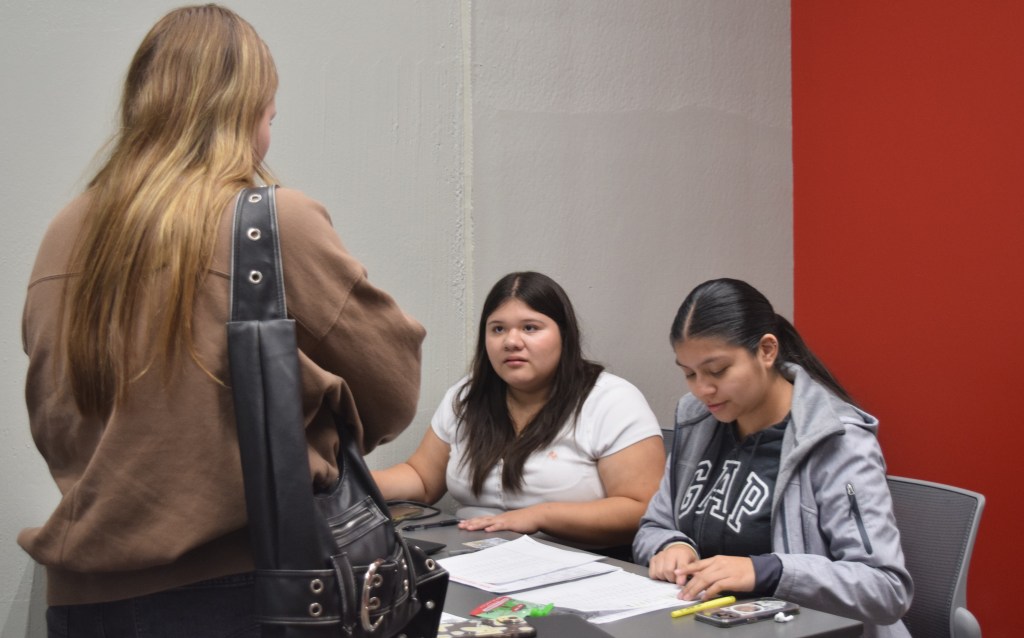
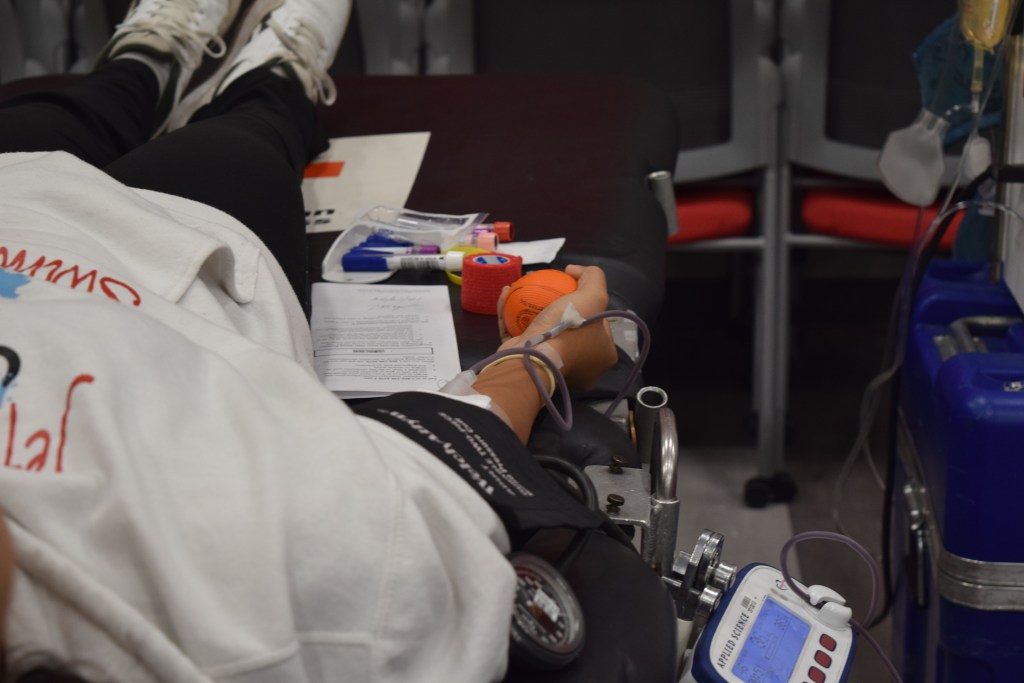
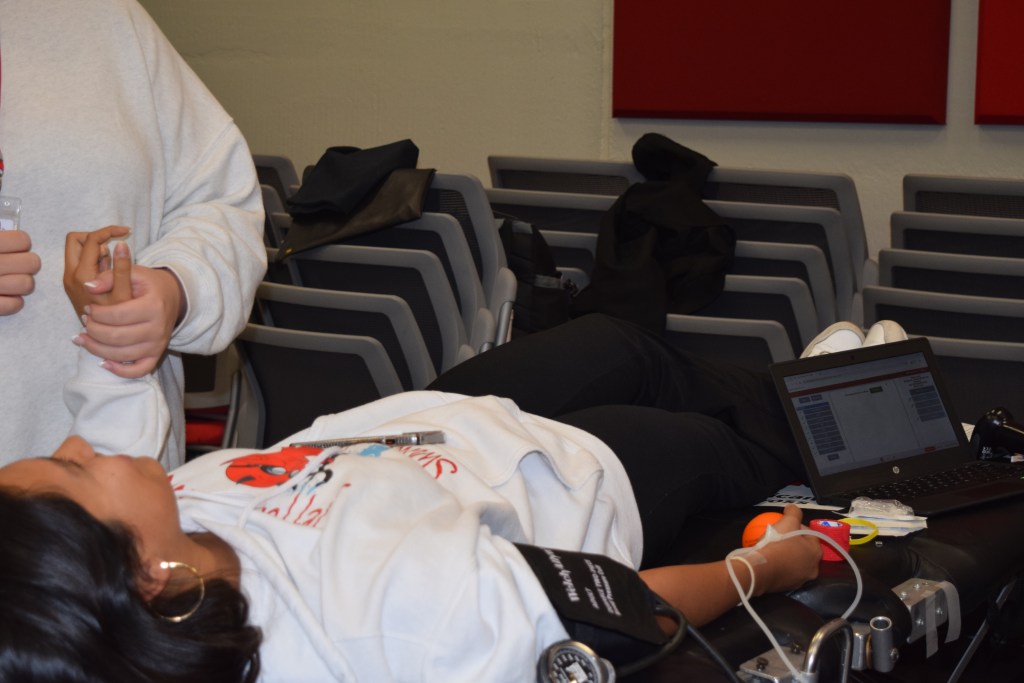
National Honor Society sponsored its annual Blood Drive in the Marshall Center on Thursday, Oct. 24. NHS is one school organization that emphasizes community service. NHS members organized and worked the drive all day. There were a total of 54 students and staff who signed up to donate blood during the day. Photo by Madison Pritchard.Junior Paiton Cahill signs in for the annual Blood Drive with seniors Sylvana Sandoval and Danna Hernandez. National Honor Society members worked the event for community service in the Marshall Center on Oct. 24. Photo by Madison Pritchard.Junior Litzy Rubio gives blood during the Blood Drive sponsored by the National Honor Society on Thursday, Oct. 23. Photo by Madison Pritchard. Junior Litzy Rubio gives blood during the Blood Drive sponsored by the National Honor Society on Thursday, Oct. 23. Photo by Madison Pritchard. Junior Litzy Rubio gives blood during the Blood Drive sponsored by the National Honor Society on Thursday, Oct. 23. Photo by Madison Pritchard.
by Riley Henson
Students can find plenty of opportunities to serve their community. They can get involved in events within the school, clubs, and plenty other activities, but they can get involved on a larger scale, too.
To start within the school, JHS clubs and organizations provide service opportunities.
National Honor Society faculty sponsor Justin Linde said NHS officers are prioritizing serving the community. “We’re trying to make it more student centered,” he said.
“I feel like in the past, nobody knew what the NHS was doing,” said Linde, emphasizing how he wanted to change that. With the newly-created role of community outreach officer, filled this year by senior Avani Doogarsingh, Linde hopes that the organization will get more of a social media presence and can shine a light on the work they’re doing.
Their main focus so far has been this week’s Red Cross Blood Drive, but Doogarsingh described plans to get NHS at local middle schools and even elementary school students involved in their work. “We can definitely get involved with their schools and help with fall festivals,” she said.
When it comes to volunteer work, Doogarsingh has plenty of experience beyond NHS.
“I go to the animal shelter, I walk dogs,” she said. She helps out just about everywhere. Overall, Doogarsingh takes on about 50 hours of volunteer work, including the 10 hours required for NHS.
“I wouldn’t be doing all the clubs I’m in if I wasn’t comfortable,” she added, further solidifying how easy the work in the community feels for her.
Spending so many hours with work can be intimidating, and sometimes not even feasible for students’ schedules.
“You’re just donating items, you aren’t donating time,” said Doogarsingh, emphasizing that students who are just dipping their toes into the water of volunteering should start with philanthropic endeavors.
Anyone can contribute to clothing drives and canned food drives. Ivy Tech has a career clothing closet, which provides clothing for job searching and interviews. In Sellersburg, students can donate to the Sellersburg Community Food Pantry and Clothes Closet.
Students can also donate money and their time to the Community Kitchen.
The Community Kitchen is located at 1611 Spring Street in Jeffersonville. However, the board president of the community kitchen, Stan Moore, has said that students don’t come by often.
“The hours are rough,” said Moore. The kitchen is only open 9 a.m. to 1 a.m., making it hard to get students involved on days other than Sundays.
“The kitchen started in 1987 – we had four people eat that day,” said Moore, emphasizing how important the kitchen has become, and how much it has grown. Volunteers can be on kitchen duty, dish duty, serving duty, and plenty more.
But Moore finds the most fulfilling work is when they have an abundance of volunteers.
“When we have an abundance of volunteers, we get to tell patrons to ‘sit down, we’ll get your food for you’,” he said, highlighting how some people may not get the sit-down restaurant experience that others do, and that it’s important to give them that experience.
They’ve had plenty of volunteers who contribute on a more monetary scale as well.
“People give us money, and we never lose focus on what that money was intended to do,” Moore said. “We don’t do luxuries, we don’t do fun, we serve people.”
At the end of the day, there is always work to be done for the community. Engineering academy counselor Whitney Roberts has plenty of resources for students.
One resource is the website Metro United Way. On the website students can find a masterlist of local opportunities such as making birthday bags for kids, and much more.
However, Roberts warns that some students take on too much.
“I do often get concerned about students like that, how they balance their work life,” said Roberts. While all of the volunteer work looks good on a transcript, it’s important to balance accordingly, she said.
And, a balance that includes helping others benefits students donating their time, too.
“Colleges want to see students who give back to their community,” said Doogarsingh.
Q&A with City Council At-Large Member Evan Stoner
The biggest part of being involved in the community is not just about volunteering, or college applications. While those are still important, Jeff city at-large council member Evan Stoner believes it’s important to make your voice heard.
“In school I was always drawn to activities that involved representing other voices,” said Stoner, talking about his time at River Valley Middle School and JHS.
In school, he noticed there was a lot of bullying, a lot of fighting. “I wanted to start a program called Victory Over Violence that pulled students together from across the school to talk about ways to de-escalate situations and use dialogue instead of violence.”
After that, he explored other ways to get involved, and even got in touch with mayor Mike Moore to try and change things inside the school during his time there.
“I’ve always wanted to make change, I’ve always been drawn to leadership positions,” he said.
His focus for a long time after school was the Southern Indiana Pride Festival. “I wanted to make sure everyone knew they had a home here – it was all about treating people like people.
“I was very focused on a single issue for a long time, and that was bullying,” said Stoner, beginning to talk about his plans going forward. “As I got older I realized I wanted to be a voice for more than just one issue,” he said.
In 2020, Stoner was appointed to the Parks Authority Board. “I really enjoyed that role because I got to focus on our quality of life issues. I got to focus on being a champion for our parks because our parks are tied directly to our quality of life, and I want everyone in Jeffersonville to have a positive quality of life.”
What was most important to Stoner about improving our quality of life through the parks was making sure they were accessible to everyone, the disabled community and senior citizen community especially.
Stoner also made sure that our parks were full of activities, such as Jamming in Jeff, Easter egg hunts, and even building new parks.
As Stoner started running for office, his plans were mainly focused on quality of life, smart spending of tax dollars, and working for the community.
“Just recently, I got an ordinance passed to allocate 30 thousand dollars for the Jeffersonville Township Library, so we’re getting different computers and smart boards so anybody can come in and access those resources.”
Stoner said young people can be a part of serving the Jeffersonville community.
“I think we have to be responsive to their concerns. We have to encourage them that they have a voice.”
Some students may feel disenfranchised, they may feel like they cannot start any projects or have a voice in their community because they’re young, or their financial situation isn’t great, or they don’t have the best grades. But Stoner said students shouldn’t let that stop them.
“I have always believed, and still believe, in the power of the youth,” he said, emphasizing that youth can go a long way in their community.
Even when Stoner started the Southern Indiana Pride Festival, he didn’t have anyone telling him where to go. He just sent emails and got started, on his own. Everyone has the ability to do that.
“We have the power and the voices right now to make a change.”
Each year hard-working students taking the Heritage Spanish class hope to receive one of two seals on their diploma and Multilingual recognition their senior year.
World language teacher Megan Cortes prepares her students to take the ‘AAPPL’ test in their junior year of high school to be able to achieve that goal.
The Two Seals
Cortes described the two types of seals Greater Clark County offers to students and what they stand for.
“Greater Clark offers two different seals that you can get. One seal is from the state of Indiana called ‘Indiana Comp,’ which is ‘Certificate Of Multilingual Proficiency’. You can take that in a lot of different languages, not just Spanish. We also offer the ‘Global Seal of Biliteracy,’ which can grow across state and national borders and is also like our state one, but just with different levels.”
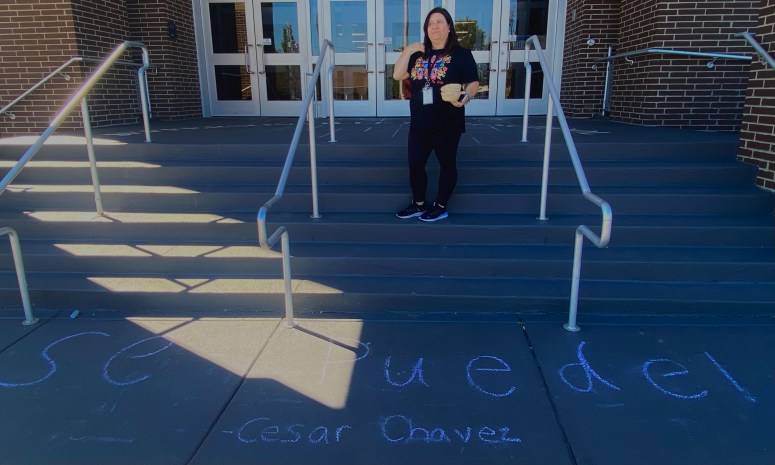
World language teacher Megan Cortes supervises her students as they write famous quotes in chalk on the sidewalk in front of JHS. Photo by Areli Hernandez Romero.
Cortes explained the different levels of the ‘Global Seal of Biliteracy’ and how they are broken down, as well as, the ‘Indiana Comp’ seal.
“It depends on what your scores are; so the ‘Global Seal Of Biliteracy’ has three different levels. In high school, you can only earn two levels, so they have functional fluency and working fluency.”
“Functional fluency is what I call the level one seal that you can get — it’s kind of like the lowest one, but still shows that you have a certain level of biliteracy, which means that you can read, write, and understand whatever language you are testing. Then, there is a higher one on the ‘Global Seal of Biliteracy’ called ‘Working Fluency,’ which means you’re in a level where you are competent in all four of those levels.”
Students who take the test can also end up getting both seals on their diplomas.
“The ‘Global Seal’ is broken down and ‘Indiana Comp’ is kind of in the middle for their test scores. So, if you get ‘Indiana Comp,’ you are already going to get ‘Functional Fluency’ on the ‘Global Seal.’ Then, the same thing if you get ‘Working Fluency’ on the ‘Global Seal’ — you’re going to get ‘Indiana Comp.’ Some people will end up with two seals,” said Cortes.
Cortes said the test ‘AAPPL’ may be taken by juniors to get one of two seals on their diploma.
“We offer the ‘AAPPL’ test at our school — it has a whole lot of different languages that we have offered in, and that test is acceptable for ‘Indiana Comp’ and it’s also acceptable for the ‘Global Seal of Biliteracy.’ The test scores will determine what level of the seal you can get and seal you are eligible for. The main difference between those levels of seals that you can get is, what scores you have on the test.”
Eligibility
Cortes said any student is eligible to take the ‘AAPPL’ test.
“However, it’s geared for people who are advanced in a language. You can take a regular foreign language test and still take it. We have several different languages,” she said.
Cortes recommended foreign language students take the test.
“If you are a student who’s never studied a second language, I wouldn’t recommend taking it until you’re at least in the third level. Just because it’s probably too advanced for someone in just like the first or second level, but, yeah, I encourage people to take it if they’re in any kind of foreign language class,” she said.
Senior Alejandra Arredondo Resendiz took the ‘AAPPL’ test her prior year and found it to be a challenge.
“I did take the ‘AAPPL’ test. I passed three of the sections; the only section I didn’t do as well was writing. I’d say I’m not struggling anymore. I think I got the concept down; I just think I wasn’t prepared last year for the test.”
Junior Fernando Leon Garcia looks forward to taking the ‘AAPPL’ test.
“I’m nervous but I’m looking forward to it, to see where my level of Spanish is at and where I could improve on,” he said.
Challenges and Successes
Arredondo said taking both regular Spanish and Heritage classes, along with personal experience, helped her.
“It’s been two years I’ve been in Heritage and took two prior years of regular Spanish I and II. I think it’s been pretty easy. I was born and raised in Mexico, so I got the language down. I don’t have a language barrier anymore for either English or Spanish, but it’s definitely helped.”
Leon spoke about his current struggle in class and the subjects he has improved on in Cortes’s class.
“This is my third year in Ms.Cortes’s class. The only struggle I have is writing, word accents, and grammar. Sometimes I don’t know how to pronounce the words, so I just try to listen and try to pronounce them correctly. My reading has gotten better and my writing has been the same. I still have to work on that,” said Leon.
“I love teaching about culture and history. I think it is really important for our students who are Heritage learners to know more about their heritage, background, and culture.”
World Language Teacher Megan Cortes
Sophomore Ariana De La Cruz Guerrero said speaking two languages has helped her.
“This is my second year in Ms.Cortes’s class. Speaking two languages has helped me because it was easier to come into that class knowing some knowledge about Spanish and it being easier to read and write.”
Cortes said students can retake sections that were missed in their junior year. However, there are certain criteria to do so.
“You don’t have to be in a foreign language class— anyone in this school is allowed to take the test if they signed up to take it. The state has certain criteria, but the way they administer the test in individual districts can be decided.”
“We have decided here that juniors can take the test. If they’re a foreign language student or Heritage student and if they don’t pass one of the four parts — they can still take time to learn in your class and retake those your senior year. Now say, a student took the test their junior year and they’re not in a foreign language class at all — If they don’t pass all four sections, they either have to enroll in a foreign language class, or they’re responsible for paying to retake the test.”
Benefits for the Future
Cortes said taking the test has advantages for students.
“Some colleges will accept it for credit. You can use it to help get a job. There are a lot of jobs that will hire you if you’re bilingual, and some of them may require a test. If you show them that you already have a certificate, then that’s already saying that you are Biliterate. It says you can listen, understand, read, write, and speak at a certain level. So it proves that you are at a certain level. I think that’s really good for a student advancing to college or looking for a job in the community and to be able to use their language skills,” she said.
In the future, Arredondo said she would be able to offer help to others in her career. She explained the different opportunities the Bilingual seals may offer.
“Well, since I’m going into real estate I would be able to help out a lot more in the Hispanic community and be able to get back to the people. It can be a pretty valuable asset in my future resume, showcasing my language proficiency to employers. It can also give me an edge in job applications. Especially, for positions requiring bilingual skills. Additionally, it could even open up opportunities for international work or travel.”
Guerrero explained how the bilingual seal would help with her future career and credited her mom for encouraging her.
“I would use the bilingual stamp in my future career to get paid more because like mom always tells me ‘Tu hablando espanol y ingles vales por dos y te pueden pagar mas,’ meaning since I speak Spanish and English I’m worth a lot because I speak two languages. Also, since I want to be a sports agent I would be able to help the players get represented and speak their minds. I want to work in women’s soccer to help represent women because I feel like it would be nice to help women’s soccer be heard more and make it grow,” said Guerrero.
Being able to speak and understand two languages is important to Leon and his future career.
“How I would use the stamp is by using it in my future career, which is being an architect. I would use it because let’s say I become one of the best architects; by being able to speak two different languages. I could get more clients and be known for being able to do so,” said Leon.
The Classes
Guerrero mentioned the challenges of being in Heritage class.
“Something challenging about her class is writing, especially spelling words because in Spanish they are spelled the way they sound. That confused me sometimes because it’s different in English,” she said.
Sophomore Evelyn Iturrios adds her quotation to the others from the class in front of JHS. Students used colored chalk to write their quotes as part of a lesson before fall break. Photo by Areli Hernandez Romero. Sophomore Evelyn Iturrios’s finalized chalk quotation. Photo by Areli Hernandez Romero.
To prepare her students, Cortes used different exercises with her students before taking the ‘AAPPL’ test
“All of the activities we do in class, whether it be grammar exercises, working on accents, speaking, reading, and writing, will help prepare for the test. But we also work on specific practices. The AAPPL test site has samples of what the test will be like. We do practice sessions before the test so students know what to expect,” she said.
Arredondo spoke about how being in a foreign language class has improved her understanding.
“I think it helps me understand the struggles that different people face regardless if it’s because of a language or not. I understand people more certainly now,” she said.
Leon agreed with Arredondo that being in a foreign language class has improved his understanding and learning.
“My Spanish is much better. When I was a kid it was hard to speak. I would have difficulties having conversations with adults and would stutter a lot. Now my grammar is getting better,” he said.
Arredondo described the current day-by-day structure of Cortes’s class.
“We start off by doing a simple ‘Diario,’ which is like a bellringer for any other class. Then, we get to the basics of the class which are grammar, vocab, spelling, mostly about what we are learning. Right now, we are learning how to go back through the text and be able to pick out certain details and specific information. It helps me find more important details in a text rather than just reading and scanning through it,” said Arredondo.
Accomplishment and Pride
Apart from the rewards students get from the test, Cortes proudly talked about the pride and accomplishment it brings to many students.
“I think apart from the job and college and benefits that you can get. I think it’s a great sense of pride for the students it’s something you have accomplished. It’s something you may have felt anxious about throughout their life. It gives you a sense of achievement. I think that is something their families can be proud of too. I think that is important for the kids to have.”
Guerrero talked about the accomplishment of passing the test and what it meant to her.
“I would feel proud of myself and I feel like it would be a big accomplishment. My family would definitely be proud of me because it would make them feel good because I’m representing my roots and my parent’s country,” she said.
Leon described how passing the test would bring accomplishment to him and his family
“I would feel amazing because if I’m one of the few students who ace the test perfectly. I wouldn’t have to redo any sections next year. My family would be very proud of me for such an accomplishment,” he said.
Arredondo credits Cortes and spoke about the encouragement and pride if she passed the test.
”I think I’d be pretty proud of myself and pretty grateful for Ms.Cortes’s contribution to my success as well. My parents would feel pretty proud and pretty happy. I’d also feel encouraged to continue trying to help out the Hispanic community by furthering my education.”
Cortes expressed the importance of being a teacher and being able to teach her students.
“I love teaching about culture and history. I think it is really important for our students who are Heritage learners to know more about their heritage, background, and culture. Specifically, because a lot of them grew up in the U.S. For me being able to help them learn more about their heritage is really important to me.”
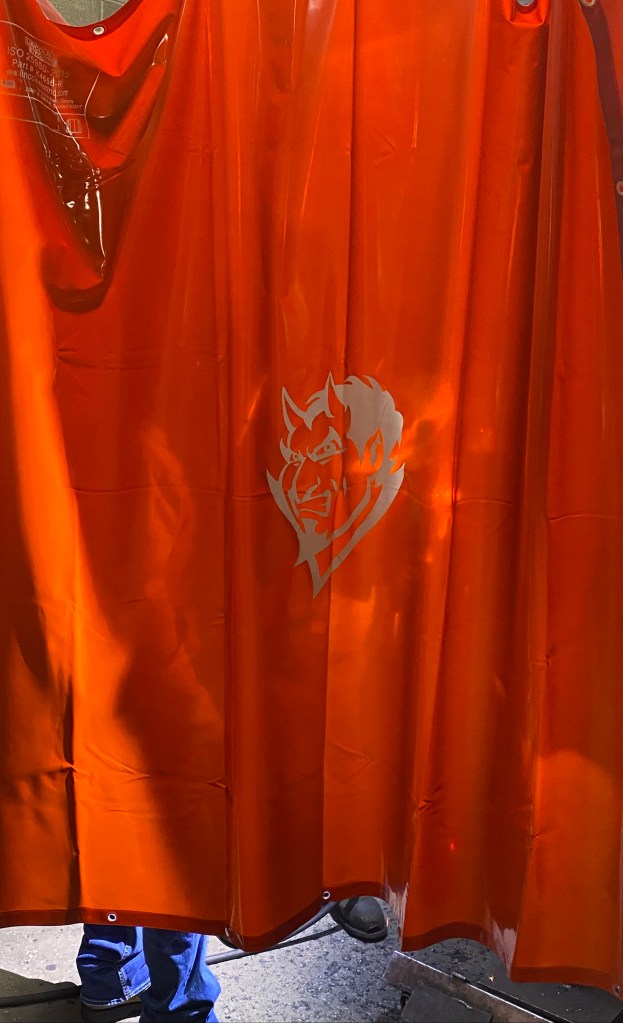
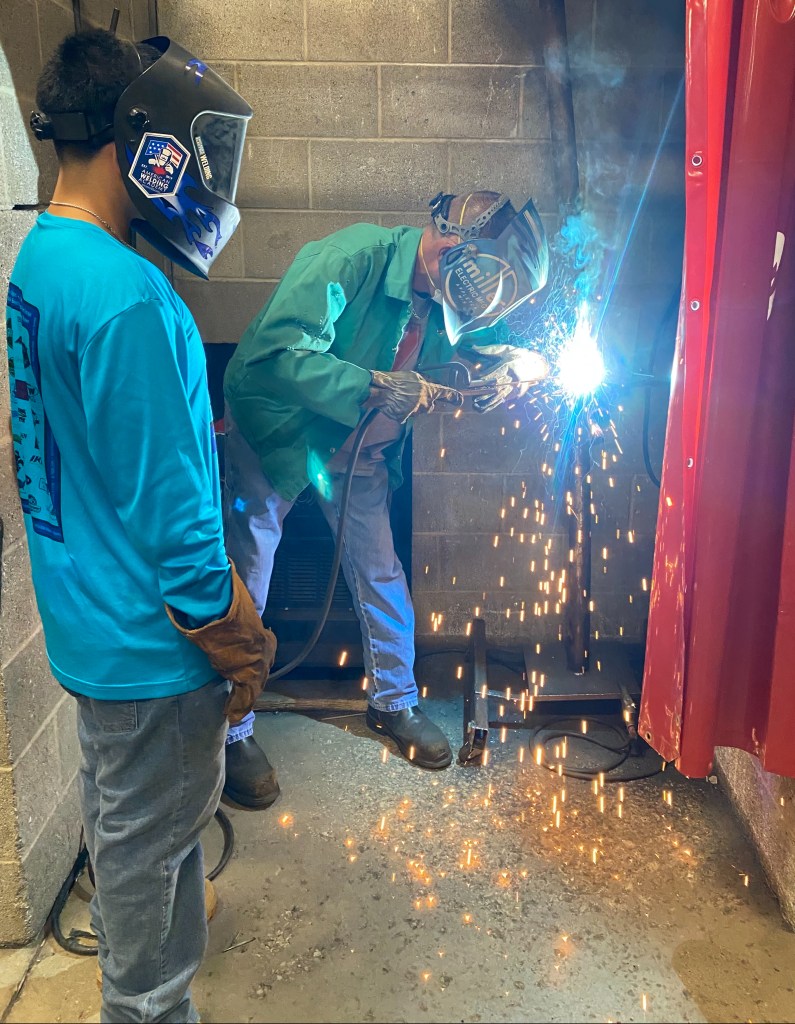
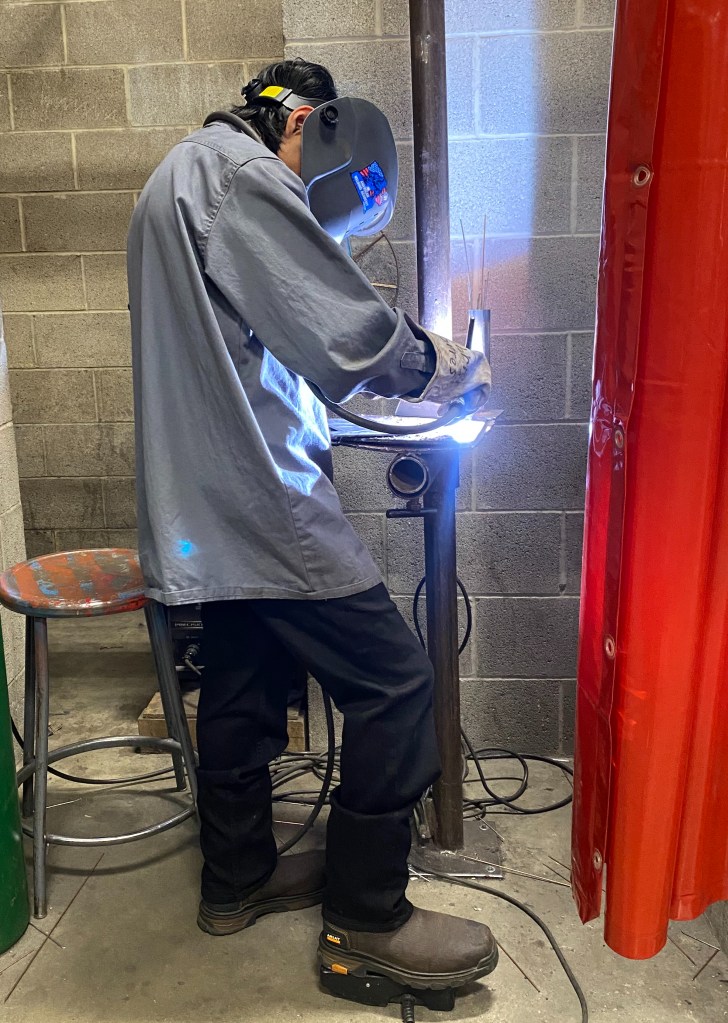
Behind the red curtain hides the world of welding teacher Christopher Tungate and his students, whose project work brings them into JHS several Saturdays each month. Tungate demonstrates how to cut metal during Saturday Shop. A JHS graduate, Tungate said he always wanted to be a teacher and help others. He chose to return to JHS “to help students, to help anyone that wanted to learn about welding.”Tungate assists sophomore Aaron Henderson, as sophomore Noah Krausen also works on his project. Tungate offers Saturday Shop so that welding students can catch up or work ahead on class projects. Families are also able to stop by the shop to visit. Tungate and junior Jonathan Garcia work collaboratively on a project during Saturday Shop. Tungate uses the extra weekend time to help his welders on a one-on-one basis. Tungate and Garcia continue their project work. Students are encouraged to ask questions as Tungate assists them. Junior Christopher Torres works on his project, showing Garcia how to do a weld. Both students are safety equipment, which is required in the shop area. Torres preps his project. Behind the red curtain, senior Angel Blas demonstrates Tungate’s insistence on safety equipment, which includes close toed shoes with the helmet down and gloves at all times during the welding process. Long-sleeved shirts and jeans are also required, and hair must be pulled back out of the face if long. Tungate also requires the area to be clean at all times.
JHS has many after-school events that cover all sorts of hobbies, sports, and interests. One of these events is, of course, an art-based club that meets every Wednesday sponsored by art teacher Jennifer Beckman.
Beckman said that previously she was a photographer before she became a JHS teacher who would photograph areas for companies, such as their factories, mines, and other important shots for whoever she worked for at the time.
This photography job eventually led her to a scholarship to the Savannah College of Art and Design and study to become a teacher, and then get a job as a JHS art teacher.
Right as Beckman joined JHS she started to notice that there were a lot of students who wanted to get into art class, but just did not have the room in their schedule or weren’t in the right academies to be able to join art class. So, she said that pushed her to host Art Club in her first year of teaching.
Since Art Club is completely self funded, she has a fair amount of creativity. Every week she does a different type of activity such as drawing, painting, clay, sculpting, and many more unique concepts that she likes to rotate as the week’s main activity. Generally $5 per project allows student artists to use all of the resources they need for their current project.
Even students not interested in the main activity at the weekly meeting can join their friends creating projects.
There are also special activities that happen every so often, like field trips to art-related events such as museums, art shows, and anything that gives students the opportunity to grow as artists and just as people in general.
Beckman has said that her favorite part is seeing the community the Art Club makes from kids of every grade and how it feels like a family when they’re together, making for an “amazing environment.” for anyone who comes to join.
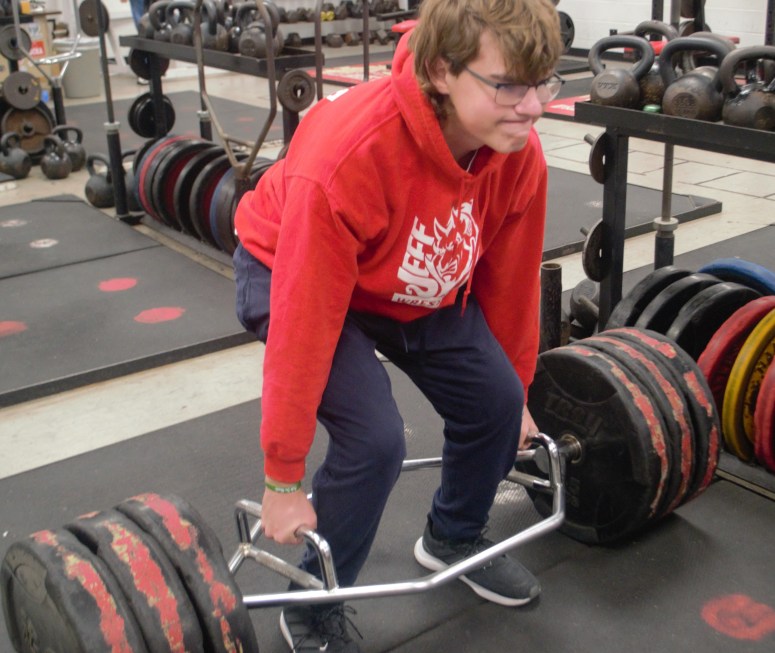
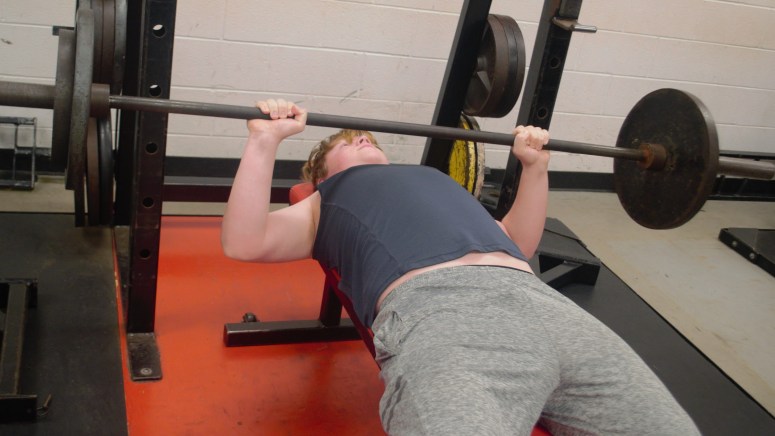
Freshman Anson Kern lifts in the weight room during first hour on Friday, Oct. 4. Photo by Steven Lucas.
Training is essential for athletes who wish to progress in their sport, but also for people who want to be in good shape and live long. With that said, the JHS weight room plays a key role in making any Jeffersonville high schooler improve their abilities with the help of the coaching staff.
Coach Danny Struck is a professional in weightlifting and wrestling. He dedicated his life to sports and helping people reach their full potential while training. His students from all grades play different sports, from volleyball to wrestling, and even bowling and track. Everyone could use a bit of help from the weight room, he said.
The National Institute of Health shows how the use of weight rooms can improve strength and dexterity, making it good for anyone.
The weight room, renovated 15 years ago by Struck, is a refuge for students hungry for power and training. The funds and donations raised by the wrestling coach helped him turn it into a multifunctional room in which students can practice weightlifting, speed training, and yoga on a daily basis.
With that being said, the weight room is a source of help and support for physical, mental, and psychological health, as it makes student-athletes push their limits and unwind from the stresses of the day, while also staying active and focusing on their health. It is good for injury prevention and power training, which is an aid when living an active life.
According to Struck, the room isn’t only beneficial for athletes, but for anyone, as it helps anyone in everyday life, such as running, lifting objects like groceries, walking a long time without getting tired, and keeping a clean and fresh mind.
Struck said the weight room is open to all students, as long as they respect the materials and other people using it with them. He added that he wants the weight room to be more inclusive by opening it to more female students.
Accessing the weight room is easy – students just need to be a student of Coach Struck’s classes or be in one of the school sports teams with a coach who uses the weight room as training.
More than a class, the weight room is like a second family that helps each other and wants to see each person improve and become a better version of themselves.
There you have brothers, sisters, friends and allies as “the best part of the weight room is supporting each other,” according to senior Mekhi Cooper, a member of the wrestling and tennis teams.
It’s also a “non-judgmental group with nice people,” according to senior Emily Bailey, a member of the bowling team.
Students who are interested in using the weight room should talk to their counselor, as Coach Struck is always open to new members.
Freshman Brady Gillette lifts in the JHS weight room during first hour on Friday, Oct. 4. Photo by Steven Lucas.


























 thehyphennews.com