“The opportunity to show you guys healthcare isn’t this tiny bubble,” biomedical sciences teacher Charles “Brian” Patton said as he explained what got him into biomedical science.
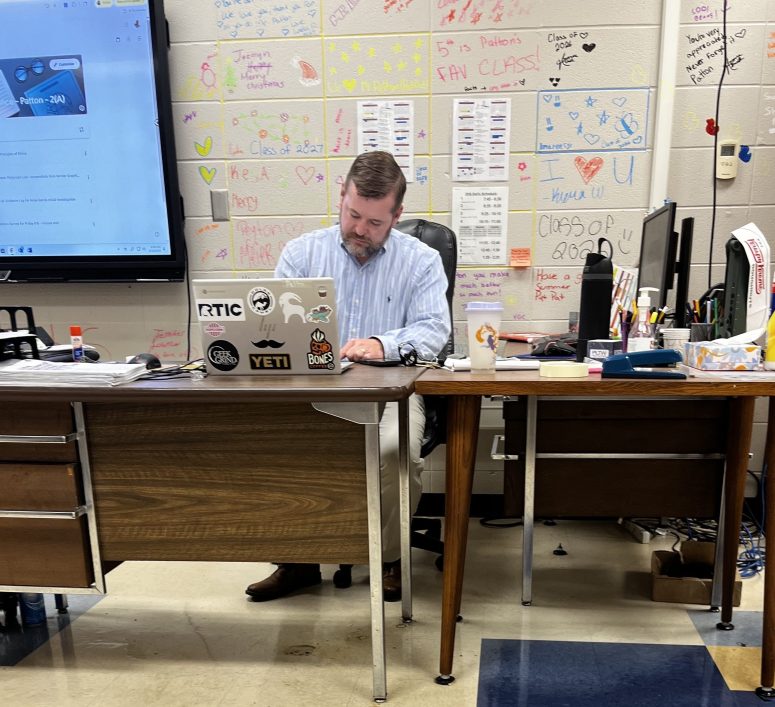
Biomedical sciences teacher Brian Patton works in his classroom in front of his wall with messages from former students. Patton said the wall decorations are a result of thinking the walls were too bare, so “I allowed my students to leave a piece of themselves behind. It was done at the end of the year after everyone was done with testing.” Patton said student Keira Timberlake painted ducks along the wall and allowed students to decorate them any way they liked. Photo by Gabriella Kraft.
Someone who attends JHS might never come across Patton, but those who do have nothing but good things to say about him and his teaching.
“He has a very friendly, open relationship with his students,” said sophomore Jaylianah Burris.
This is only his second year teaching, and he’s already made an impact on students’ lives. “This is my first teaching job; I worked in corporate healthcare for 16-17 years before this,” said Patton.
Many students describe Patton as a chill, laid-back teacher who cares, but can be serious when he needs to.
“He lets us know he’s there,” said sophomore Jessalyn Stolte.
Students also talk about how he makes sure they understand everything without having to ask further questions.
Stolte said, “He’s a great teacher; he explains everything perfectly.”
Besides explaining everything perfectly, Patton sees a purpose in everything he does.
“Everything happens for a reason; something brought me to the position I am at now, and the position before this. I encourage you to learn everything you can, but I think you get what you put into this class.”
He makes sure to give his all, even on his bad days.
“I think I have my days, because there are days when I could see the impact I could have, but then I doubt myself,” he said.
Despite the obvious doubts he has about himself, he ensures that all his students are comfortable.
“He treats us like our age, and he doesn’t coddle us. He makes sure not to treat us like children,” said Burris.
Patton is a very caring teacher who does what needs to be done for his students and their education.
“I treat my students like my own kids. Respect goes both ways — you respect me, I respect you,” said Patton.
Regardless of whether they are new or old, all his students matter to him.
Counselor Andrea Schedler’s love for educating others started from a very young age.
“I can vividly remember just playing school and baby dolls. And then in third grade I remember somebody asking me well what do you want to be when you grow up and I was like ‘I want to be a teacher’,” said Schedler.
As you can see Schedler always knew she wanted to work with children and when she got older she started working at a daycare, which led her to major in elementary education and earn a minor in psychology. These are the experiences that have led her to where she is now.
Schedler’s day begins when she steps into her second-floor office to prepare for all her incoming freshman meetings. She starts off by preparing a folder for each student with all the information they’ll need for freshman year and to make sure they get to know her as well.
“One of my main goals as a counselor is to make sure every freshman know who I am because I hate when people say, ‘I didn’t even know who my high school counselor was’.”
For the past three years that Schedler has been a Jeff High counselor she has also been working on a new goal to increase resources for teens and their mental health, and this is important to her because she wants students to know that those resources are available to them and also so they can feel more comfortable at school.
It’s Schedler’s commitment to her students that makes her the best at what she does.
“Freshman year she just helped me get through it ´cause I was fresh to high school coming from middle school, so it was a big change but she helped me out,” said sophomore Carter Durbin.
Junior Cash Waters agreed. “During freshman year she really helped me get comfortable with this school and get to know everybody.”
When Schedler welcomes her freshmen she likes to offer them advice for the school year.
“Get involved in something, whether it’s a sport, club or other upcoming school activities so that you can have a group of friends and people that you can trust. And always have a trusted adult.”
As you walk into her fully decorated classroom, you get hit with music, and get greeted with a pumped and exhilarated “BUENOS DIAS” from Heritage Spanish teacher Megan Cortes.
“I like to think that I am teaching them more about their heritage, their culture,” Cortes stated.
Heritage Spanish teacher Megan Cortes works with freshman Eliu Perez Olivares on a daily homework activity. Photo by Dana Romero.
As a child, Cortes was introduced to the teaching world early on by her aunt.
She would often visit her aunt’s school and help grade papers, which became a fond memory of her aunt and later inspired her to become a teacher. While she did get lost in College, she found herself fixated on Spanish.
As she became more familiar with the language, she began to wonder if perhaps the corporate world was a better fit for her, or if she should continue pursuing a career in the language. She often thought about becoming a translator or even an immigration lawyer. She soon received an offer for an ESL tutor position, which inspired her to pursue a career in teaching.
Some hope their plans include vacations, new homes, and new cars. Not Cortes, she hopes to expand and develop this Spanish heritage program.
“I wish to continue to develop this program, to expand this program, to get more students to be able to get their literacy seals on their diplomas,” stated Cortes
For many, college is a brief chapter of life, but for Cortes, higher education has stretched across decades and become a defining part of her career. In her early college years, she admits she “played around a lot” and didn’t take her classes seriously. The result was a low GPA that closed doors when she first applied to a master’s program in education. But rather than giving up, she spent three years paying out of pocket for classes and reapplying until she was finally accepted.
“It’s not about what I believe. It’s about empowering them to find their truth, understand the issues, and take action if they want to make a difference.”
Heritage Spanish Teacher Megan Cortes
That determination became a theme in her professional journey. Though she began her career with a Spanish certification, she was placed in an ESL classroom, which required her to return once again for additional coursework. Later, when she took on dual credit teaching, she had to pursue even further education. Today, she holds two master’s degrees and multiple certifications, but the road has been long.
“I feel like I’ve been in college my entire adult life,” she said, reflecting on her 40s and the years of classes, exams, and late nights of study.
Her story highlights the reality for many educators, who often face additional requirements, certifications, and advanced degrees to remain in the classroom—obligations that go far beyond what’s expected in most corporate jobs. While the path has been challenging, her persistence serves as a reminder that passion for teaching is often built on resilience, sacrifice, and an unwavering commitment to students.
“I feel like she is very passionate, because every day, she strives and motivates us to do more and be capable of speaking our native language more frequently,” stated senior Fernando Leon.
Her passion is evident not only in the lessons she delivers but in the way she constantly pushes her students to go beyond their comfort zones. Each day, she motivates them to strengthen their voice, urging them to use their native language more often — not simply as a subject in school, but as a living part of their identity. In doing so, she’s not just teaching words; she’s cultivating pride, confidence, and a connection to heritage that might otherwise fade. Her dedication reflects a belief that language is more than communication — it’s culture, memory, and power.
“I feel like she lets us struggle a bit and, like, let us try to figure it out ourselves, where she likes to see if we’re struggling a bit too much, she comes and offers us a quick word of advice or some just some space. If she sees us straight up struggling, she helps us out with what we need,” stated Leon.
Her approach to teaching blends independence with timely support. Instead of immediately intervening, she allows students to wrestle with challenges, giving them the space to think critically and develop problem-solving skills. This method fosters resilience and encourages a deeper engagement with the material.
At the same time, she maintains a keen awareness of when to step in. When struggles risk turning into setbacks, she offers concise advice or targeted guidance to redirect progress. This careful balance between autonomy and assistance has earned her a reputation for creating a classroom environment that is both empowering and supportive.
“I genuinely believe she’s a great person. She’s there for her students even outside of school. Kids come up to her when they see her. She’s a teacher who gets along with her students easily,” stated junior Areli Hernandez.
As a person, not a teacher, her personality is as huge as her heart. She’s seen as an empathetic person who truly listens and understands others.
“Their emotional state, and I don’t, you know, I hate that. I hate to see my kids suffer,” stated Cortes.
Her students admire the way she makes everyone feel comfortable and supported, creating a welcoming environment where they feel valued and respected. Her positive energy and dedication leave a lasting impact, showing that she cares not only about teaching but also about shaping her students into better individuals.
“I honestly feel moved by her actions about her protesting. I appreciate her for speaking up for those who can’t. Teachers like her deserve recognition and support from others around her,” stated Hernandez.
Her passion extends far beyond the classroom. As an active member of the Southern Indiana Know Your Rights group, she devotes her time to educating the community about their legal protections, especially during a politically tense climate that has brought fear to many, particularly within the Hispanic community — a group she deeply cares for and fiercely protects.
“I think it’s important to inform people and let them know what their rights are,” she explained. “I want to make sure people are aware, educated, and doing everything they can to keep themselves safe,”
Her advocacy also shapes the way she interacts with her students. She encourages them to develop their voices, research their beliefs, and stand firm in what they are passionate about.
“It’s not about what I believe,” she emphasized. “It’s about empowering them to find their truth, understand the issues, and take action if they want to make a difference.”
Freshman College and Careers teacher Mike Moody, sitting on an empty desk, somehow finding a way to relate sports to college and careers class. Engaging every student with his words of wisdom on playing in a sports team:
“You have practice everyday after school, and you had matches, games, that took up a lot of time and you had to be efficient to get your stuff done as quick as you can, otherwise you’re getting home at 8, 9, 10, 11 o’clock at night, and you got homework to do, then you have to get it done.”
Graphic by Cherish Brown.
And even though the year has just started, he’s already made a good impression on the students. Or, as good as you can get with freshmen.
“He’s kind of like my dad, like the way he talks is like specifically like my father. It’s very, like, unnerving actually at times, but very clear speaker, pretty fair, not bad.I don’t really have anything against him, so, pretty fair. Very, just teacher, very, very, funny man, surprisingly,” said freshman Riley Thompson.
He’s actually used to being around first-year high school students. According to Moody, he was a freshman counselor for two years before becoming a teacher.
“Being a counselor, I have students still come to me that have situations going on, but still with that same confidentiality that you have with the actual counselors,” stated Moody. ”I still have my school counseling license, and almost anything that we would discuss, it’s confidential between us.”
Now, even though Moody said he likes being in the classroom better, he is still able to help and connect with students in many ways.
“Sometimes it’s relationship problems, situations that students had at home or helping them get the assistance that they need to get better grades,” Moody said.
He also played sports as a kid, which helps him connect in other ways as well.
“It’s a good way of breaking the ice; it’s also, like I said in class — I use sports analogies, or I say, this situation, and this is how it relates to this, and how this relates to that,” Moody stated.
The class he chose to teach — college and careers — also helps students by teaching them how having and finding a job in the future would work.
“College and careers is giving students an opportunity that we did not have in school, when I grew up. We had to get a job, we had to get the training for a job, then get the job, and find out if we like it or not,” said Moody.
The students he teaches think it’s helpful, too — for the future, and for right now.
“It’s definitely beneficial. It teaches a lot, it’s good for credit and everything and good for the future,” stated Thompson
“It helps me figure out my future,” added freshman Somerville Conner.
He is able to find millions of ways to help all the students that go to him, and he’s happy to do it. He teaches them, guides them, and keeps them on the right track for the future.
“You will get out of high school what you put in,” Moody said. “What I mean is, teachers will do anything to help you, but don’t expect a teacher to bail you out when you’re not doing anything. It’s like a job. When you get a job, if you are making your best effort, a boss will normally help you out. They want you to succeed, which will make them look good. But if you’re not showing up, or turning in the work, your job there will be short.”
Coming from a family of soccer players, the sport has always been a big part of Scarlett McRae’s life. McRae, a junior at Jeff High, has been playing soccer for almost 10 years now.
“If I had to pick one person that has inspired me the most when it comes to soccer, I would have to say my dad. Not only has he taught me about soccer my whole life, but he is also there after games to give me feedback, good and bad,” said McRae.
Junior Scarlett McRae on the field at a soccer practice. McRae is a dual sport athlete, playing soccer and wrestling for JHS. Photo by Aubrey Cummings.
In her three years on the Jeff High girls’ soccer team, McRae has had many accomplishments. Her freshman year she was awarded with The Rookie of the Year award. Halfway through her sophomore year she set a record for the most goals scored for the girls´ team and will continue on to add to that record this year.
Earning these accomplishments has put a lot of pressure on McRae to keep being the one of the best. This pressure has taken a toll on her confidence in her abilities. In order to overcome her lack of confidence before games she said, “I pray before games and then just go with the flow, remembering that it’s okay to make mistakes and that I don’t have to be perfect.”
McRae isn’t just a part of the Jeff soccer team, but also the Racing Louisville Academy team. It’s a great opportunity to get her name out there and to be seen by colleges and professional teams.
After high school McRae plans to go to college for sports physiology. She also wants to play for her college team and eventually for a professional team.
“She makes me want to keep getting better so I can improve and beat her but not in a super competitive way but in the way that we both want to make the team the best it can be,” stated Junior Abi Lemon, a teammate of McRae’s on the field and the mat.
Though soccer is her main sport, McRae is also a part of the girls´ wrestling team. She started her freshman year when Sian Rogers, a senior on the soccer and wrestling team, convinced her to give it a try, telling her it would help her at soccer.
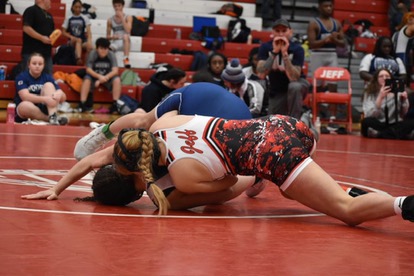
Junior Scarlett McRae wrestles her opponent at the JHS meet with Moore High School in 2024. Photo by Ethan Bronson.
After a week of wrestling she decided it wasn’t for her but she still wanted to be involved, deciding to be a manager instead. By doing this she was allowed at the practices and meets. As time passed she realized how much fun her friends were having and decided to rejoin towards the end of that season. That year she made it to Semi-state with her team before ending the season. She then chose to come back the following year to continue to improve.
Wrestling coach Danny Struck described McRae as a driven and dedicated player.
“When given the opportunity Scarlett is always open to improving; she keeps her eye on her goals and does the things that make her and her team better,” he said.
McRae said competing in both sports has helped her compete on the soccer field and on the wrestling mat.
“Soccer allowed for me to have better and quicker foot work in wrestling that most girls didn’t have, and wrestling taught me how to not get pushed off the ball as easily and stand my ground in soccer.”
McRae has been described as a leader in everything she does. She strives to be the best person she can be and to help whoever she can. She looks forward to trying to beat Floyd Central and New Albany, along with helping her teammates score more this soccer season.
Going into wrestling later this year, she wants to win as many matches as she can and make it to state.
“Coming into both seasons I am excited to win,” McRae explained. “Also to help my teammates succeed and to see how far we can go.”
All photos by Kaleb Baker. Interviews by Abbigail Hollins.
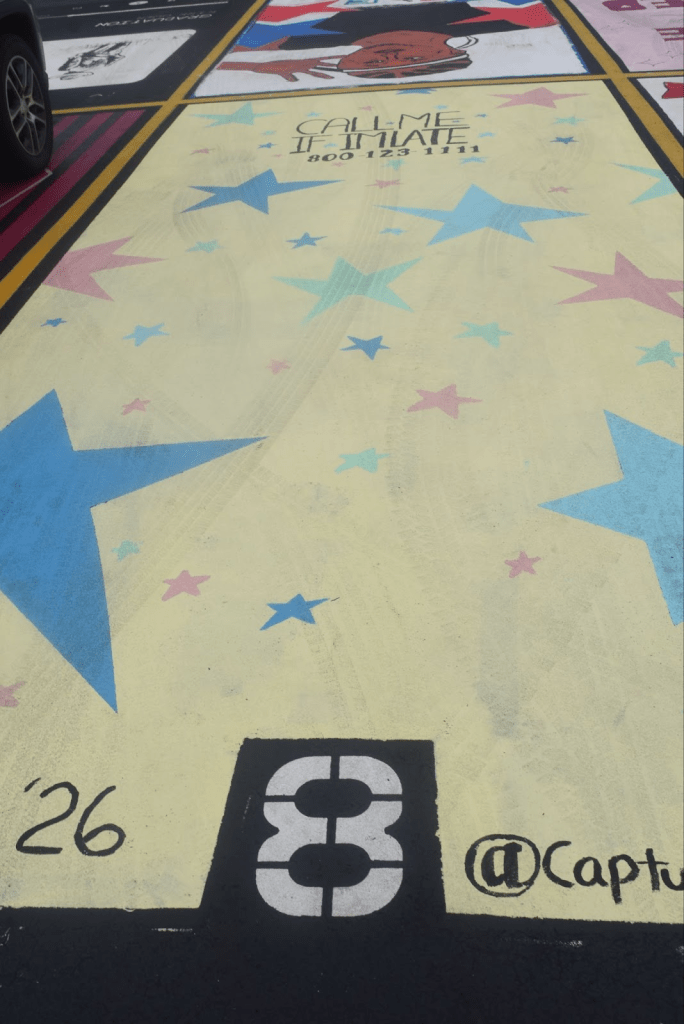
Senior Litzy Rubio: “I’ve always had the idea of minions making it to my parking spot because I think they’re cute and wanted to incorporate them.” Photo by Kaleb Baker. Senior Makayla Robinson: “I love the country and pink and I wanted to put things I love in my parking slot.” Photo by Kaleb Baker. Senior Cassidy Tomlin: “The gladiolus flower is my birth flower, which represents strength, so it is also a reference for the color guard.” Photo by Kaleb Baker. Senior Shiann Spaulding: “Over the Garden Wall is my comfort show, and I wanted a space that feels like me.” Photo by Kaleb Baker. Senior Magdalene Conrad: “I chose this design because Tyler the Creator is my biggest inspiration.” Photo by Kaleb Baker.
Musicians brought their talent to the stage on August 15
All photos by Sophia Goforth.
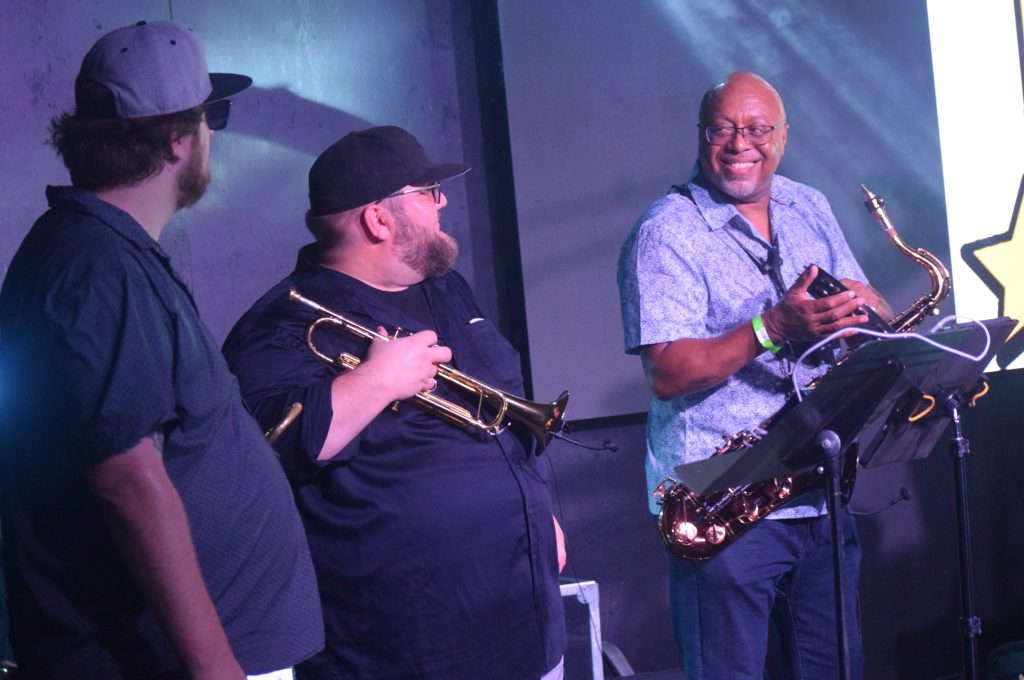
Guitarist Kyle Reagan strums his guitar during sound check. Photo by Sophia Goforth. A crowd lines up at the gate, waiting for the show to start. Photo by Sophia Goforth. Drummer Josh Howe keeps the rhythm during the Juice Box Heroes set on Friday, August 15. Photo by Sophia Goforth. Dave Miles, the band’s bassist, keeps a steady rhythm with a focused expression. Photo by Sophia Goforth. The brass section talking among each other in between songs. Photo by Sophia Goforth.The Charlestown High School choir, The Scallywags, singing backup for The Heroes. Photo by Sophia Goforth. Lead Singer Dan Farmer sings “Save a Horse” by Big and Rich. Photo by Sophia Goforth.Juice Box Heroes perform on the stage on the night of August 15 in downtown Jeffersonville. Photo by Sophia Goforth. Featured singer Peyton Connors beautifully sings during the August 15 event in downtown Jeffersonville. Photo by Sophia Goforth.
Anchor club members Ariana De La Cruz Guerrero, Eliani Schulz, and Alison Hernandez-Estrada showing leadership through their contribution of “Ringing of the Bells” on Dec 12, 2024. Anchor Club leaders are currently planning projects for the new school year. Photo by Areli Hernandez Romero.
by Areli Hernandez Romero
Anchor Club is a dedicated and supportive organization that allows the young women of JHS who are sophomores, juniors, and seniors to express their ideas and themselves while also engaging in community service. This year, with the help of sponsors and the supporting team, Anchor Club is excited to announce its upcoming season.
Club sponsor Michell Densford said at the beginning of each season, each member is welcomed by an “initiation,” which acts as the formal induction to Anchor Club that each member must attend.
“We always do an initiation. This is where you come and get a certificate, flower, and light a candle,” she said.
Members who participate for two years, including their senior year, are eligible to receive a chord that represents their dedication to the community.
Francesca Hernandez, who is also a club sponsor, refers to the “executive board” as members who are an influential foundation of Anchor club.
“Before we go over anything, the executive board goes over projects we want to do and are doing. They’re the head of the projects and make sure the girls are acting right,” said Hernandez.
Club president and Senior Cassidy Tomlin finds leadership a priority to help support members and ensure that their ideas are heard.
“So, I really try to make sure that I see all sides from all of the levels of the executive board, making sure all their opinions are being considered and making sure that they have a well-respected leader,” she said.
Her previous experiences in clubs encouraged her to join Anchor Club to seek new experiences.
“I’ve been in Anchor Club since sophomore year, and I joined because. I wanted to give back to my community. I’m a Girl Scout; I’ve been a Girl Scout since kindergarten, so I wanted to find another outlet,” said Tomlin.
I think Anchor Club is a really good way to give back to your community by serving people in Jeff, the school, also a lot of people all around the community.”
Anchor Club President Cassidy Tomlin
Junior Executive Board member Maddie Chandler nods as she mentions her experience as a member.
“I’ve been part of Anchor Club since my sophomore year. I find all the different projects we get to do for the community interesting.”
Chandler shared the impact Anchor Club has established, as well as sharing one of her favorite projects from her previous year.
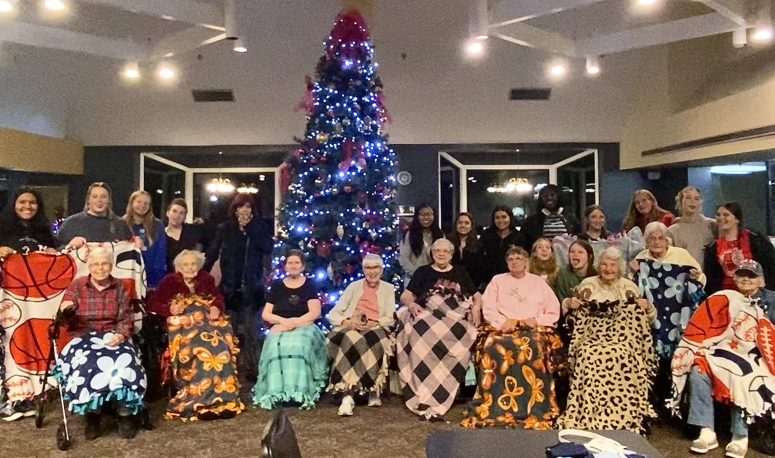
“It’s fun being part of this club. It feels like you have a lot of girls that are your friends, and you get to do new things you wouldn’t normally do. We went to Midwest Village, a nursing home. We made tide blankets for the residents. It was fun doing that.”
Sophomore Executive Board Member Haliun Otgonbayar is in her first year as a member. She anticipates contributing to the community with her friend, sophomore Samantha Dues.
“As an Anchor Club executive board member, I’m looking forward to being more involved in the community and helping people. I joined Anchor Club because not only is it a great community, but I’m hoping to plan new events and fundraisers and anything related.”
Dues, who is also in her first year as an executive board member, also anticipates organizing plans in contribution to Anchor Club along with people she cares about.
“To go off that, I’m also excited to plan events for the community, while doing it with the people I love. I joined because I wanted to help support, to make the environment even better,” she said.
Densford is satisfied with the efforts of each member and their contributions to make the club great. She proudly mentions the support of the girls and how they are representing themselves in JHS.
“I like the sisterhood, the girls coming together as a group, supporting each other, holding each other accountable, and holding themselves to a higher standard than what the school does; it’s wonderful. They represent our school well and represent themselves as wonderful young women.”
She recalled her own experience as a past “Anchor” and the influence that stood out to her.
“I was an Anchor too when I was in high school. We have some projects that have literally stood the test of time for over 20 years. We have ‘ringing of the bells’, Salvation Army, Steamboat nights — we all have a fun time,” said Densford.
Hernandez proudly mentions Anchor Club being a very supportive space, giving the impression of a sisterhood sorority to many, while also encouraging them to become remarkable leaders.
“It’s a wonderful community with great ideas. In a way, they’re future leaders. It’s a very responsible club, and all the girls are doing great things, just being great people. We are making very good future leaders.” She added, “Everybody has their own creative freedom with Anchor Club.”
Anchor club members participated in the “Blanket Making” project while sharing a unique experience with residents of Westminster Village on Dec 13, 2024. Photo by Areli Hernandez Romero.
Tomlin described the Anchor Club community as an organization worth joining for those who want to serve their community.
“I think Anchor Club is a really good way to give back to your community by serving people in Jeff, the school, also a lot of people all around the community. I think it’s a really good idea to join if you want to give back and be a part of a sisterhood, and just experience some fun new things.”
Anchor Club has stood out with its unique sense of sisterhood and teamwork, leaving fellow sponsors and members with great memories they will cherish in the future.
“If they want to be a part of a really supportive club, then this is a club for them. We do anything we can for the students of JHS and for the community, and I think that’s what makes it beautiful, a fun place to be. If you know a successful woman, they were probably an anchor,” said Densford.
Everyone has a past that’s different, but English 10 teacher and wrestling coach Evan Myers, sports performance wrestling coach Daniel Struck, and English 9 teacher David Kummer all have similar backgrounds.
All three Red Devil teachers are published authors.
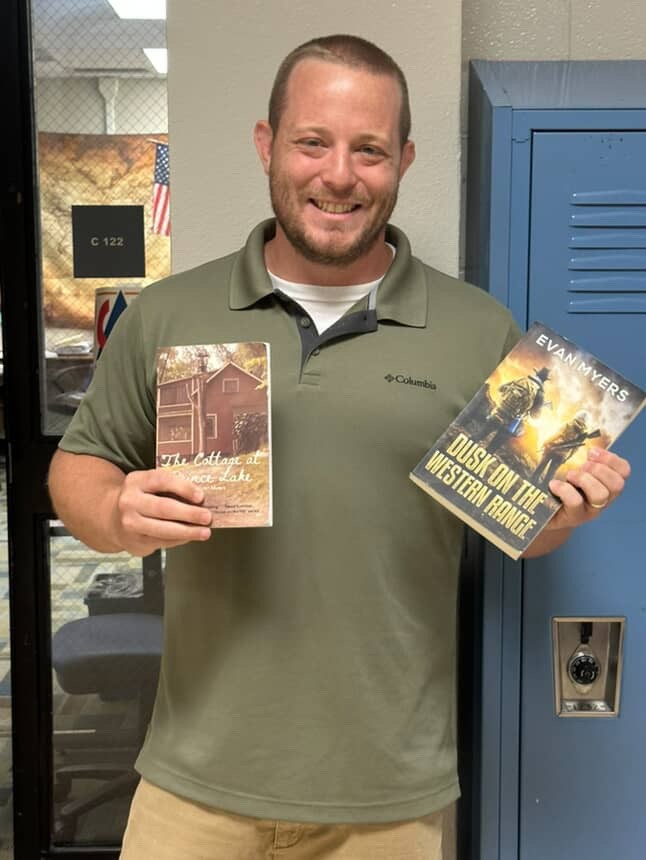
English teacher Evan Myers holds two of his two books, Dusk on the Western Range and The Cottage at Prince Lake. Photo by Raven Baker.
Myers said he has been writing for six years. He began writing in 2011. He went to Purdue University and got his bachelor’s degree, and when he was in the Army he did three years of military journalism from 2015 to 2018.
During his years he went to Fort Meade Defense Information School and latre worked at Greenfield Daily Reporter in Greenfield, Indiana. Myers says he started writing and got interested in it because of the Superman comics he read during his teen years.
I started loving writing because of the way Clark Kent wasn’t only helping people by being a hero, but also by telling them stories and the hard truths.”
English Teacher and Author Evan Myers
“I started loving writing because of the way Clark Kent wasn’t only helping people by being a hero, but also by telling them stories and the hard truths.”
Myers has some pieces of wisdom for journalists about interviewing and writing.
“When writing make sure you know spelling, punctuation and titles, because if not it could turn disrespectful. As for interviewing, making conversation, and connecting with your source makes it feel less like an interrogation and more like a conversation; it establishes trust.”
Myers has written three books: Dusk on the Western Range, The Oldest Sport, and The Cottage at Prince Lake.
Wrestling coach and weight room supervisor Danny Struck holds his book Climbing for Gold. Photo by Raven Baker.
Struck started writing his book in 2023 and it took him two years to complete. He described the process of writing his book as “a good decision” because he thought of it while attending the Olympics and felt as if a travel book for coaches would be a good read.
He read Myers’s first book and really enjoyed it because it was fantasy and loved the second book because it was about a wrestling program like theirs. Struck said Myers pushed him to be a good writer and publish his book, Climbing for Gold: See the World Through Wrestling, so he did.
He has really good advice for upcoming writers: “Start with journaling. It helps with practice and seeing how you do with first drafts, and also write one liners. I spent 30 years working with one liners because they help spark my memory for when I’m ready to write a full book.”
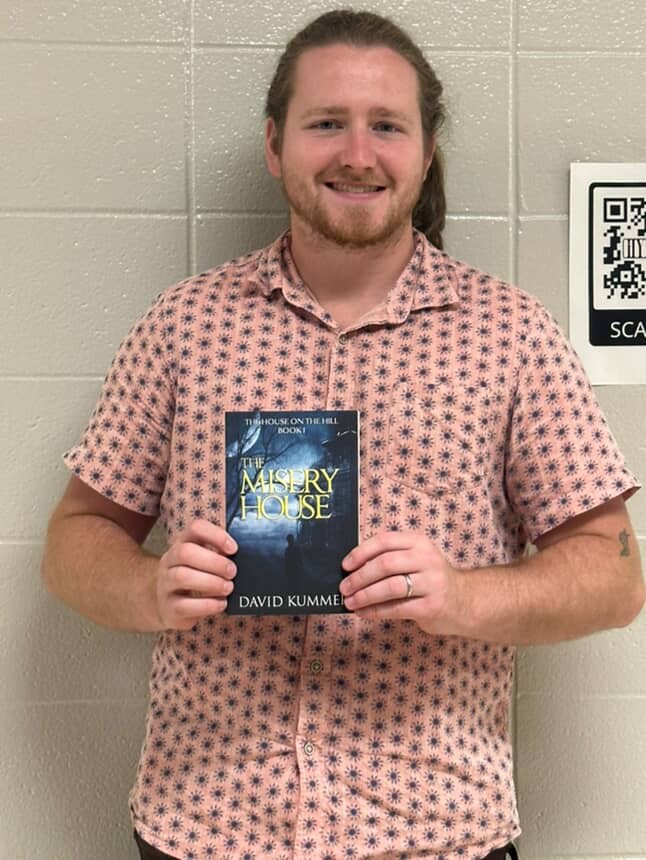
English teacher David Kummer holds his book The Misery House. Photo by Raven Baker.
Kummer wrote as a kid but took writing more seriously in high school and has been writing ever since. “I’ve been writing so long that I feel old, but not as old as Myers,” he joked.
After he graduated he made local connections so he could be able to publish. Kummer believes that people who want to write should read as much as they are able, and writing the first draft matters.
“Once you start writing the first draft you can go from there.”
Kummer has published three books: The Silent Forest, The Band, and The Misery House. The final book in the Silent Forest trilogy, The Empty Room, will be published later this fall.
Daniel Eks’ recent investment of $702 million as the founder of Prima Matra in the German AI military combat-defense company, Helsing, has sparked considerable controversy among several artists, starting discussions on what our art is funding and the moralities of using platforms that fund programs such as war technology. Many artists have responded with a boycott, and it has made people reconsider their methods of streaming music.
San Francisco band Deerhoof was the first to leave the platform over this; they first announced their departure on June 30, 2025. Deerhoof stated that they didn’t want their music contributing to “AI Battle tech” and that, “We don’t want our music killing people.”
Deerhoof isn’t the only band that responded to the boycott; Xiu Xiu announced on their Instagram page just after Deerhoof: “We are currently working to take all of our music off the garbage hole violent armageddon portal Spotify.” They followed by encouraging fans to cancel their Spotify subscriptions.
King Gizzard & Lizard Wizard followed suit, and so have other smaller artists. Godspeed You! Black Emperor just recently announced their departure from all streaming services this August 17. This problem certainly has the potential to spread to other streaming services.
It seems that many bands have been looking for excuses to leave the platform, claiming the pay isn’t worth it and that the main benefit to Spotify is its “discoverability.” Some artists believe this takes away from the experience as it’s overly accessible, and on the go isn’t the way music was intended to be appreciated. Spotify isn’t a friend of the music industry. It impacts traditional music sales and is by no means a sustainable income on its own. On average, artists make 0.004 cents per stream. That’s 1 cent for every 25 listens.
Jamie Stewart, the frontperson of Xiu Xiu, put it bluntly: “There’s no amount of money that would make us want to participate in a company that is trying to murder people.”
Spotify is the only in favor of this, artists are gaining no benefit. Listeners want their favorite artists getting paid. For example, freshman Sophie Ellis said, “The money should be going to the artists, and the people that actually run Spotify,” and freshman Rowaan Stephens agreed.
This isn’t new news. Daniel Eks’ interests in Helsing go all the way back to 2021. In February of 2021, he vowed to invest over 1 billion through venture capital firm Prima Matra. At this time he made his initial investment and joined the company’s board. Since he has become the founder of Helsing, he claims that his donations are important for Europe’s technological defense, and that his firm’s decision is “right for Europe” and that he is unconcerned with the backlash, emphasizing the importance of AI development and its use on the battlefield.
The majority of bands are against their art funding war in any way, and so are many of listeners. After asking students, it is clear where the moralities stand on AI and Daniel Eks funding.
“It’s scummy,” said junior Kaylee Austin after hearing about the controversy. “AI takes away from art, it helps people be lazy.”
Spotify is the world’s most popular music streaming service. AI being such a big part of it is bound to start discussion. Daniel Ek’s interest in AI goes beyond Helsing; AI is all over Spotify. It’s in our daylists and our DJ, it’s in the weird four-minute video that was at the end of our yearly recap. It’s the mind behind all of our recommendations. Data is being directly put into this AI algorithm; listeners are the product. It seems to be a good idea to switch platforms, and many people do use other platforms.
After asking several students what their alternatives were, it is still clear Spotify is in the lead. But Apple Music, Pandora, Soundcloud, YouTube music are still relevant.
Senior Ciara Lee is a listener of Spotity, but after hearing the news she said she “might not continue.”
Many people online recommend alternatives, but they aren’t exactly perfect either. Many musicians feel putting their music on these platforms is a necessary evil. However, there are many ways to directly support artists. Bandcamp is a great alternative, as artists get to keep 82-85% of their sales. Buying tickets and seeing shows, and making visits to local music shops is also a perfect way to support the minds behind the music.
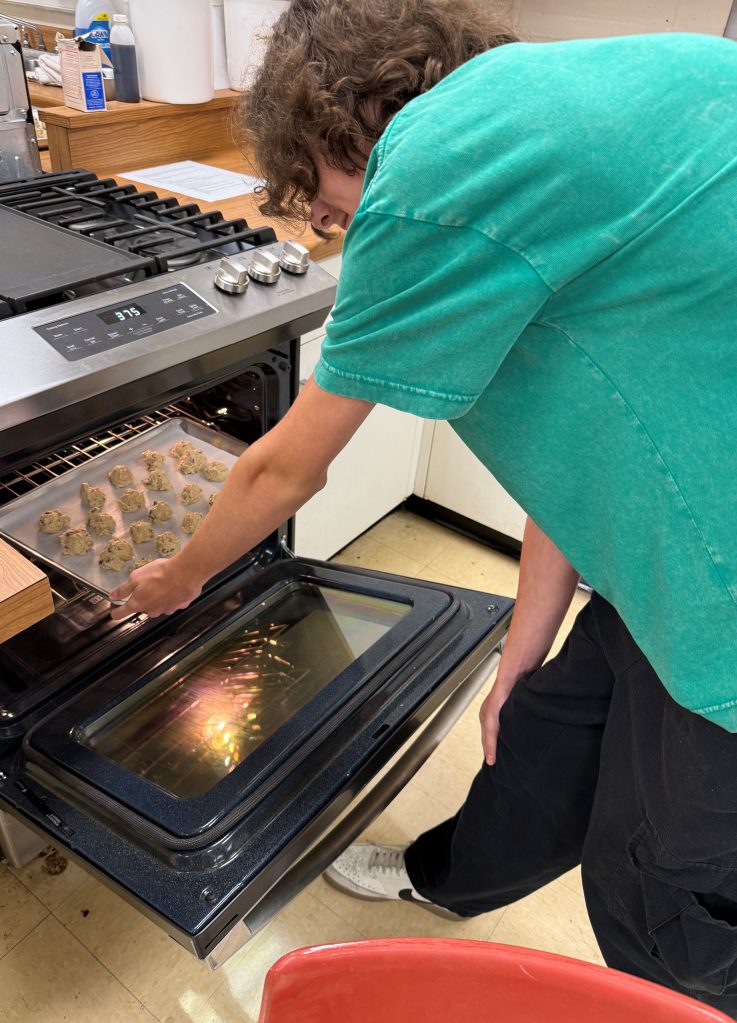
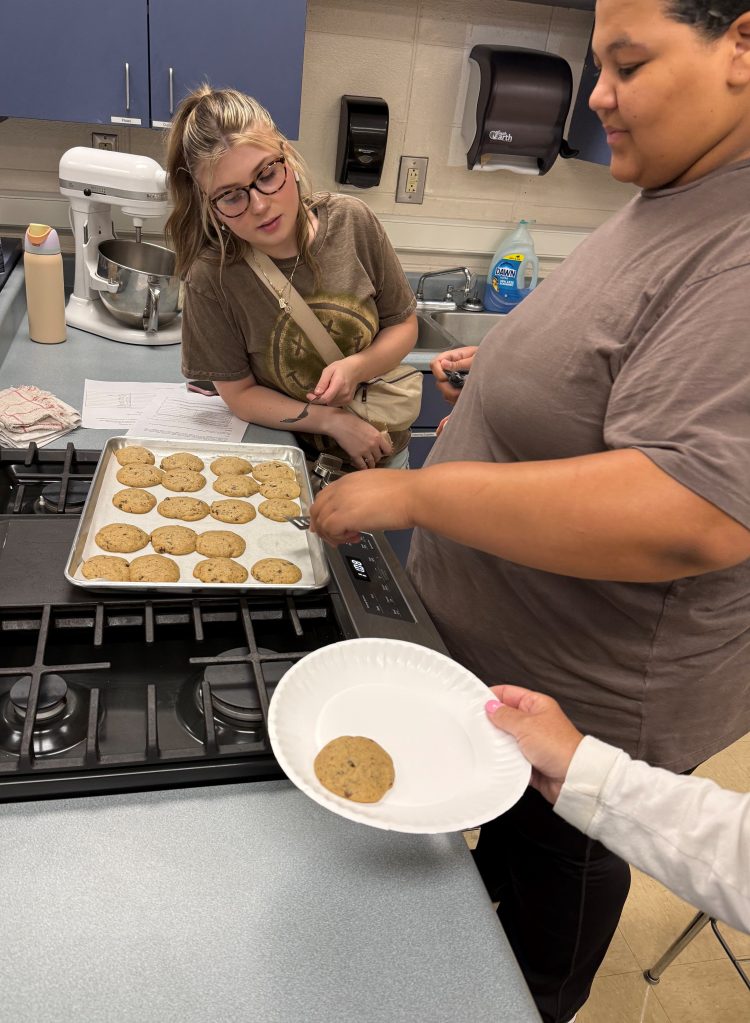
Amy Whitaker’s second period culinary arts class, seniors Kaydence Lanham and Jasmine McLead bake chocolate chip cookies from scratch. Lanham scoops the dough onto a baking pan while waiting for the oven to preheat. Photo by Liliana Castellanos. Senior Isabella Gibson scoops her chocolate chip cookie dough onto her baking pan during second-period culinary arts. Photo by Liliana Castellanos. Senior Timothy Brown has finished preheating the oven. He now places his cookie dough into the 375-degree oven. Photo by Liliana Castellanos. Whitaker assists Brown by cutting out his cookies and then placing the baked cookies onto a plate for a blind tasting with the class. Photo by Liliana Castellanos. Senior Jasmine McLead, with senior Kaydence Lanham, places her cookies onto a plate with Whitaker’s help, preparing for her blind taste test. Photo by Liliana Castellanos.
Students, Community come together to collect school supplies and display school spirit
All photos by Magdalene Conrad.
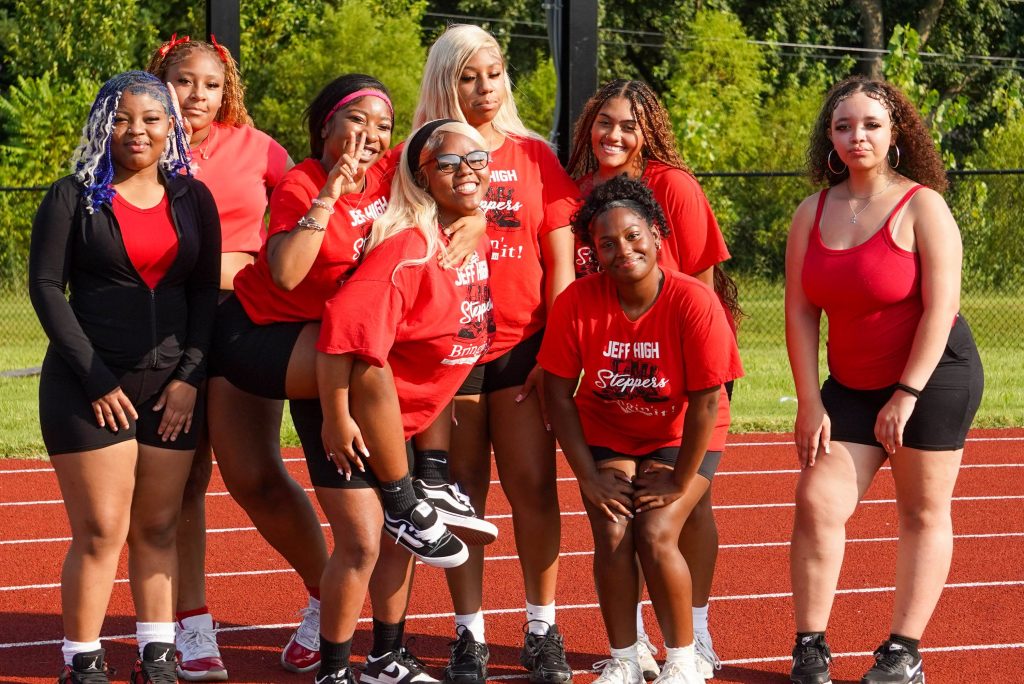
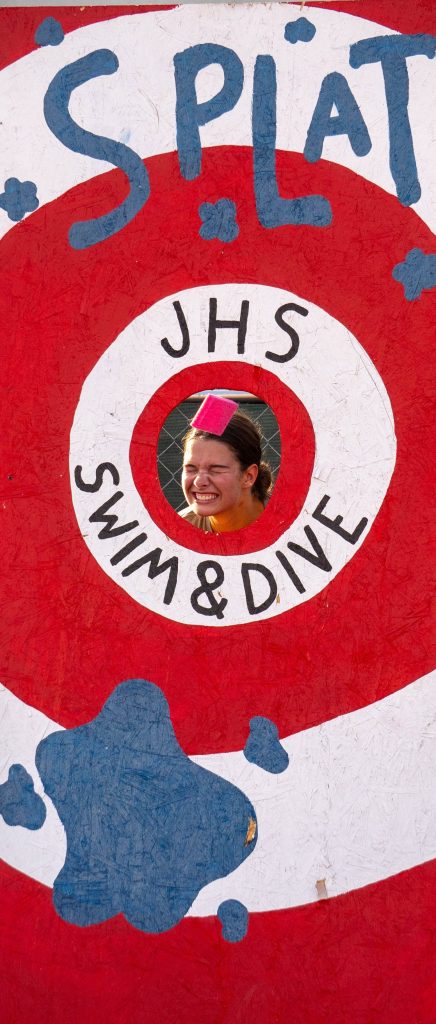
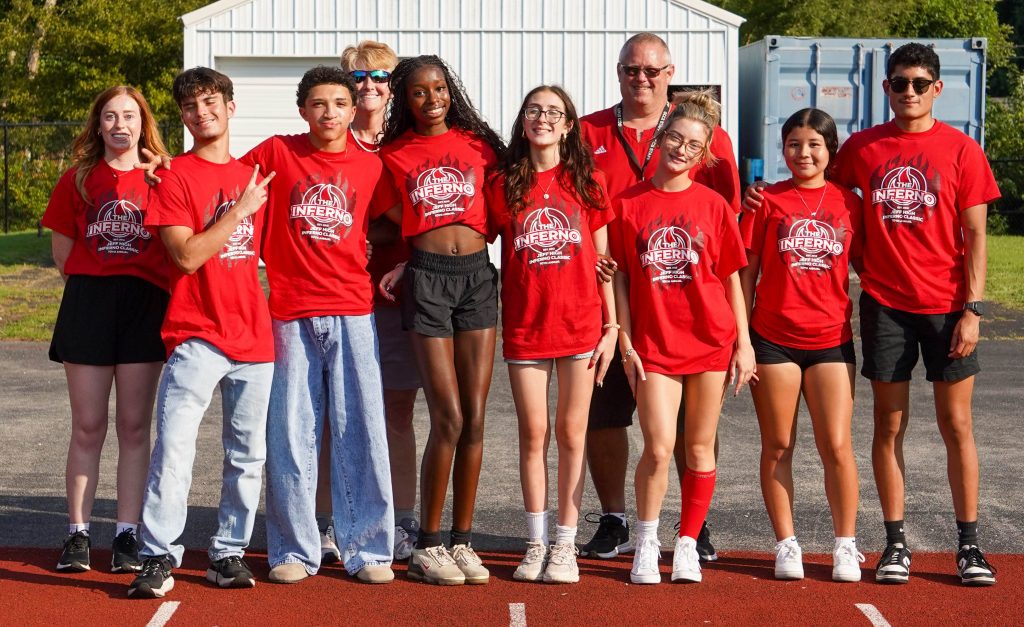
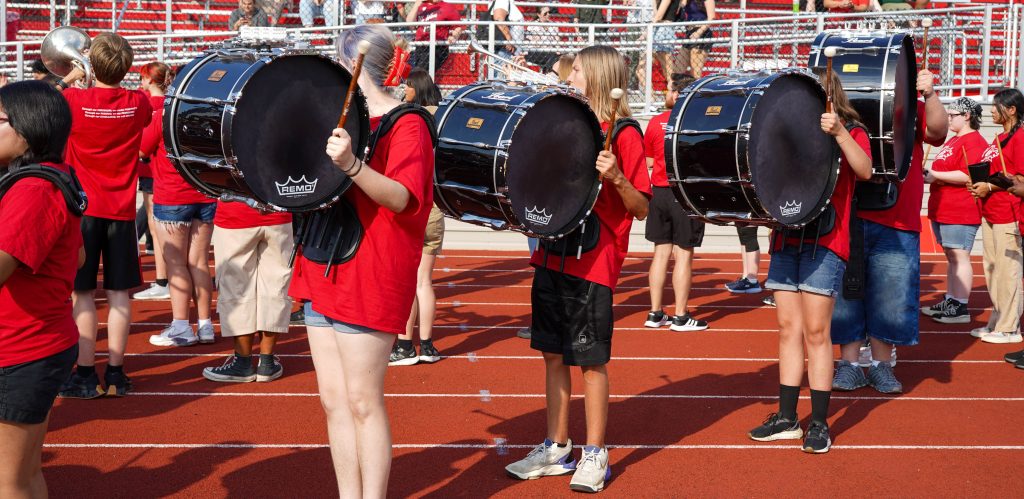
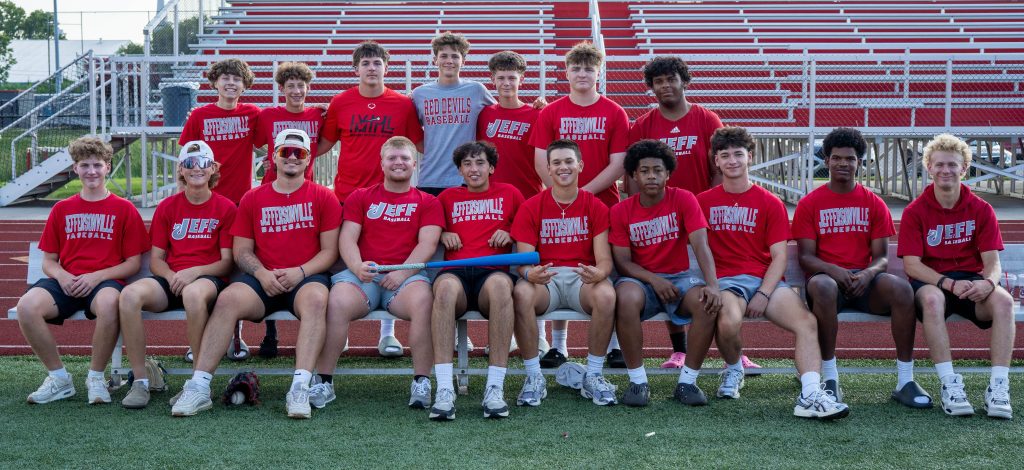
The Jeff High Step Team represents the school at Thursday’s Community Pep Rally. Photo by Magdalene Conrad. Junior Stella Siewert participates in the swim and dive interactive station. Photo by Magdalene Conrad. The cheerleaders perform for the crowd. Photo by Magdalene Conrad. The Jeff High cross country runners pose for a photograph. Photo by Magdalene Conrad. The Jeff High band performs at the Community Pep Rally on Thursday, August 7. Photo by Magdalene Conrad. Seniors Brody Fulkerson, Quintin Smith and Maverick McAllister enjoy the Community Pep Rally, which took place on Thursday, August 7 from 6-8 p.m. on Bill Ware Field. Photo by Magdalene Conrad. The girls’ soccer coaches Rachel Foster and Emily Foster soak in the sun at Thursday’s Community Pep Rally. Photo by Magdalene Conrad. Red Devil baseball teammates represent the team at this past Thursday’s Community Pep Rally. Athletes and coaches from multiple Jeff High sports greeted the community at the event. Photo by Magdalene Conrad.Sophomore Aaliyah Flowers and the cheer team perform stunts and ignite school spirit for the crowd. Photo by Magdalene Conrad.























 thehyphennews.com