Social media impacts fashion in teens

by Brennan Zoeller and Jilliann Denbo

Men’s Fashion

Many fashion styles have changed over the years, some good, some bad. Teens’ fashion, specifically boys, however, changes the most, usually from social media impacting the way they dress. Seeing the way many people style and express themselves impacts how a lot of people dress, in many different ways.

When seeing other people on social media make outfits in different ways, it changes how students want to dress.

Class of 2025 graduate Shawn Boyd stated, “By seeing other types of clothes and styles, it gives me a broader imagination on the different types of styles I can mix and match.”

Many teens don’t necessarily get their outfits directly from social media, but they get inspiration from it.

“I get a lot of inspiration from different fashion influencers and wouldn’t know a lot of brands without advertisement on social media platforms,” sophomore Isaiah Valenzuela said about how much social media impacts his style.

Social media lets students express themselves in ways that they’ve wanted to do but couldn’t because of the pressure of it not looking good. Now with social media, they can express themselves in ways they want.

Boyd said,”Social media really allowed the things I wear to be more acceptable and accessible,” while Valenzuela said,”I wouldn’t really think to put some things on without seeing it on social media first.”

Sophomore Ryder Lott also stated, “The things I wear are meant to express myself.”

The way that students dress isn’t entirely changed, but it’s inspired and blossomed out because of what they see on social media.

“The way I dress really comes from how I feel within. I’ve gotten to a point where I just use social media to see the different types of clothing that are available, rather than following the latest trend,” Boyd said

Women’s Fashion

Most girls sit in front of their closets and wonder what they are wearing for the day, while others scroll on their phones trying to pick out outfits. Social media helps most girls pick out their outfits; it also can influence them to change their styles all the time. But others don’t use social media at all to pick their outfits.

“I don’t feel pressure to change what I wear. But the way I keep up with fashion trends is normally when I think a style is cute I’ll look up inspiration. But I normally don’t rush to change my style every couple of months,” said sophomore Cheyanne Bogan

Despite some girls not using social media for their outfits, others typically rely heavily on social media for those reasons.

“Social media definitely affects what I wear because I constantly see new styles and outfits when getting on Tik Tok or Instagram. It makes me feel like I need to buy new items and wear what that person is wearing to feel confident and to feel like I look good,” said sophomore Miaa Caporale

Most girls also like to have many different outfits and styles, but a lot of the time they need help figuring out which ones to choose from.

“Influencers definitely affect what I wear. If I like what they are wearing, I buy outfits off of that. I normally use different influencers to choose from multiple different styles,” said sophomore Malloree Fletcher

While a lot of girls think it is a positive influence, changing styles when trends change is hard to keep up with, along with most girls thinking they have to change styles when others do.

“I do feel pressure to wear what I do because I don’t want to be left out or not fit in a trend. With Tik Tok and many other social platforms, there’s so many new trends that it’s hard to keep up with. These trends make me feel like I need to adjust my style to fit in,” said Caporale. 

While it’s tempting to jump on every little trend, always know that a style is about a person’s personality and lifestyle. And not always about the latest trends and looks.

Waves of Music

Music in the classroom can enhance student learning

by Dana Romero Regalado

Music is often viewed as a controversial topic; some question whether it should be included in the classroom or prohibited. Many see music as a distraction or unethical to have at a school, when it’s supposed to be a learning experience and environment for many students. 

“I think it helps them, again, to improve their pronunciation. It widens their knowledge of vocabulary,”  stated educator Megan Cortez.

Additionally, incorporating music into the classroom can further strengthen these skills. Music provides students with exposure to authentic language use, offering rhythm, tone, and repetition that aid in mastering correct pronunciation. It also introduces new vocabulary in meaningful and memorable contexts, allowing students to expand their language skills in an engaging way.

By integrating music into lessons, teachers can create a more dynamic learning environment that motivates students and supports long-term retention, according to Cortez.

“Yes, I do believe that music helps me strive to learn because it reduces stress as I listen to mostly calm songs, and it helps my brain process information more easily instead of shutting down under pressure,” stated sophomore Zihan Lin.

Music also serves as a powerful aid in reducing stress and enhancing students’ ability to process information. By creating a soothing and supportive atmosphere, music helps alleviate the pressure often associated with academic settings, allowing students to approach learning with a clearer and calmer mind. This lowered stress not only improves focus but also strengthens memory retention. Moreover, the rhythm and structure of music stimulate cognitive functions, enabling students to organize and internalize new information more effectively.

“Music has the potential to help students succeed in school, build self-confidence, and create leaders and well-rounded young people,” according to the Save the Music Foundation, a charity program that supports students by providing schools with instruments, training, and resources.

Music not only enriches academic performance but also strengthens essential life skills. When students engage with music, whether through playing an instrument, singing, or analyzing lyrics, they learn discipline, patience, and teamwork. These skills translate beyond the classroom, preparing them for real-world challenges and opportunities.

By fostering creativity and emotional expression, music also provides a healthy outlet for stress, allowing students to balance their mental and emotional well-being with their academic responsibilities.

“Yes, I believe music helps me strive to learn more because some songs just hit, and they make you study more, rather than just not listening to anything because I usually don’t like studying, but with music, it makes me want to study more,” said freshman Diego Hernandez.

Music can also serve as a powerful tool to enhance concentration and productivity while studying. The rhythm and melodies of certain songs can create a stimulating environment that keeps the mind engaged and reduces boredom. Instead of viewing studying as a tedious task, music transforms it into a more enjoyable experience, allowing students to remain focused for longer periods of time. This positive effect on motivation can ultimately improve both learning efficiency and academic performance.

“Music helps me express myself because it shows what kind of person I am without directly telling the other person. And it could also express my feelings. For example, if I’m listening to happy music or upbeat music, then you could assume I’m happy, and if I’m listening to sad music, then I could be sad. Music helps me in a lot of ways. I personally enjoy music. I can’t go a day without listening to music. Music soothes me, it helps me relax, and puts me in a good mood. Listening to your favorite music helps you calm down/relax, and the good thing now is that you can listen to music anywhere with a portable device,” said senior Luis Reb.

In addition to reflecting emotions, music also serves as a universal language that connects people across different backgrounds. It can communicate feelings and ideas that words sometimes cannot, creating a deeper understanding between individuals.

Whether through shared playlists, concerts, or simply enjoying the same song, music builds bonds and brings people together. This ability to both express individuality and foster connection makes music an important part of daily life and personal growth.

Musical interests connect teens, keep them in tune with emotions

by Noah Lopez Salazar

“It just makes me feel like I’m not alone or lets me know that people out there are also going through things in their lives.” 

This is what sophomore Jayliana Burris thinks about music and what many other students consider about when listening to music. They agree that music gets them in tune with feelings and emotions.

“Music means a lot to me and without music I don’t think I could get through some days,” said sophomore Chimamanda Chidi-Okorie. “Music definitely changes my emotions, mostly in a positive way and it helps with my anger and distress, which has made me more of a calm person.”

Some students relate to specific artists, which makes them feel understood.

“Central Cee is British, so I like how he’s different from other artists, and both Sza and Frank make very relatable music that I can feel to,” said Burris. 

Music means a lot to listeners, especially because of the artists that write lyrics in meaningful ways which help teens relate to the music they’re listening to. 

“I listen to Ariana Grande, Sabrina and Laufey as well; the reason why is because it gives me a warm, comforting feeling when I listen to them,” Chidi-Okorie stated.  

“Music takes me away from real life some times,” added senior Jezel Garcia.  

Garcia agreed with Chidi-Okorie that music brings people together with artists they share in common, or as an icebreaker to help get closer with other people. 

“I let people pick what songs they want to listen to while driving so I get to know them more,” said Garcia.  

Even freshmen rely on music to cheer them up. 

“It gives me somewhere to connect my feelings to so that I know I’m not the only one who has felt what I am feeling currently,” said freshmen Sanina Robinson. “Lyrics hit close to home and bring me memories.”

Robinson said lyrics and style of songs help connect people with similar musical interests.

“I listen to lots of popular and common artists; I feel like lots of people listen to my music,”  added Robinson. “Music cancels out what I feel normally and it is kind of like a background thing to keep me grounded.”

No matter the age or grade, music will always affect and impact teenagers. 

As Burris said, “Music is a kind of way of expressing yourself and it’s something that means a lot  to some people, but it’s something that everyone can do or make.”

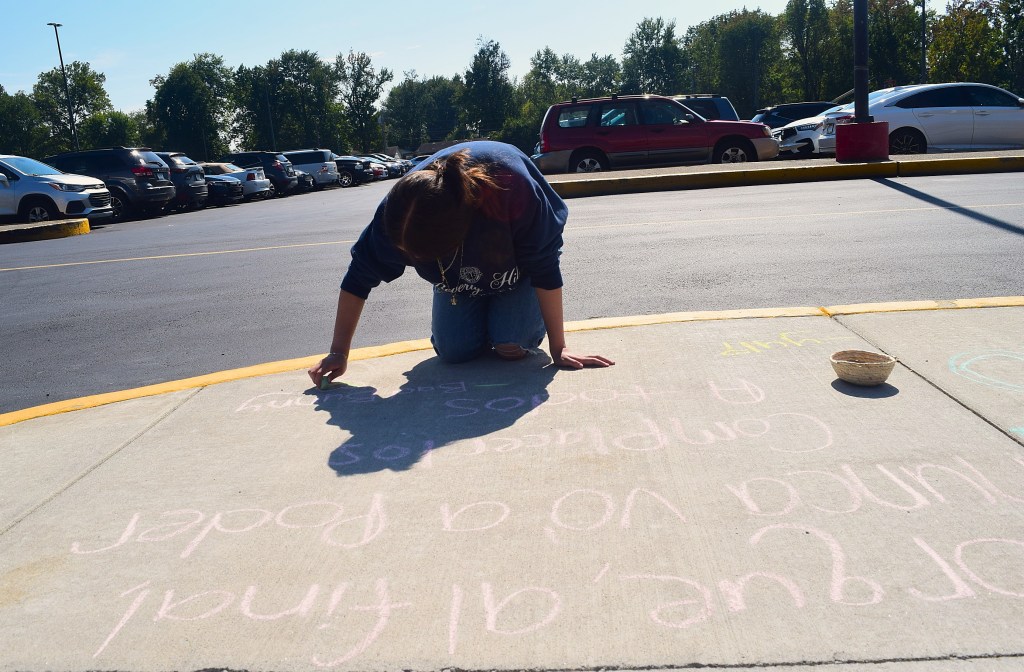
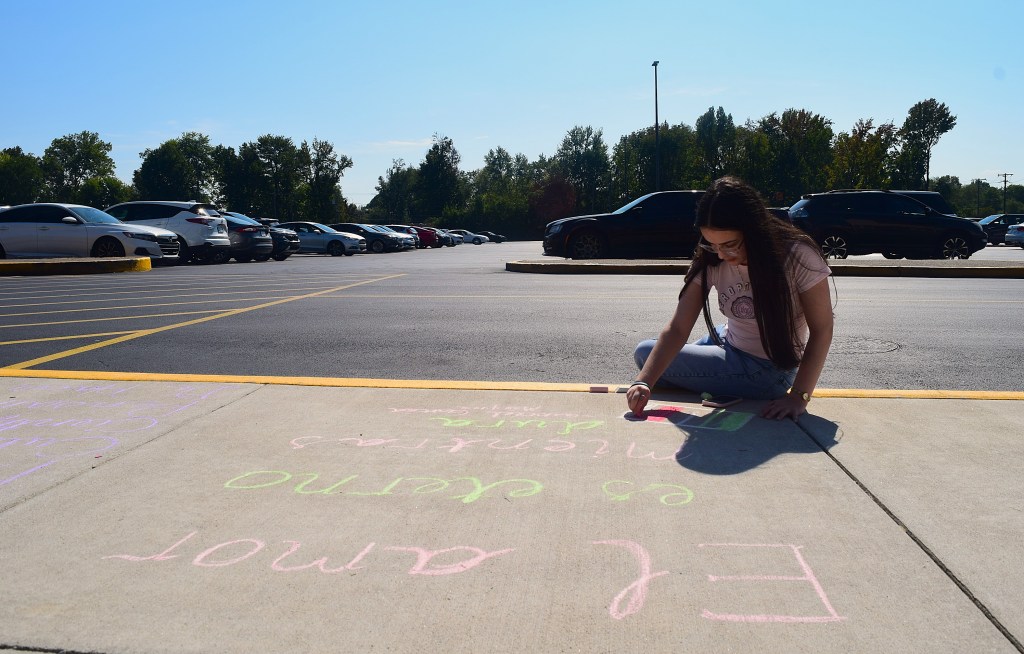
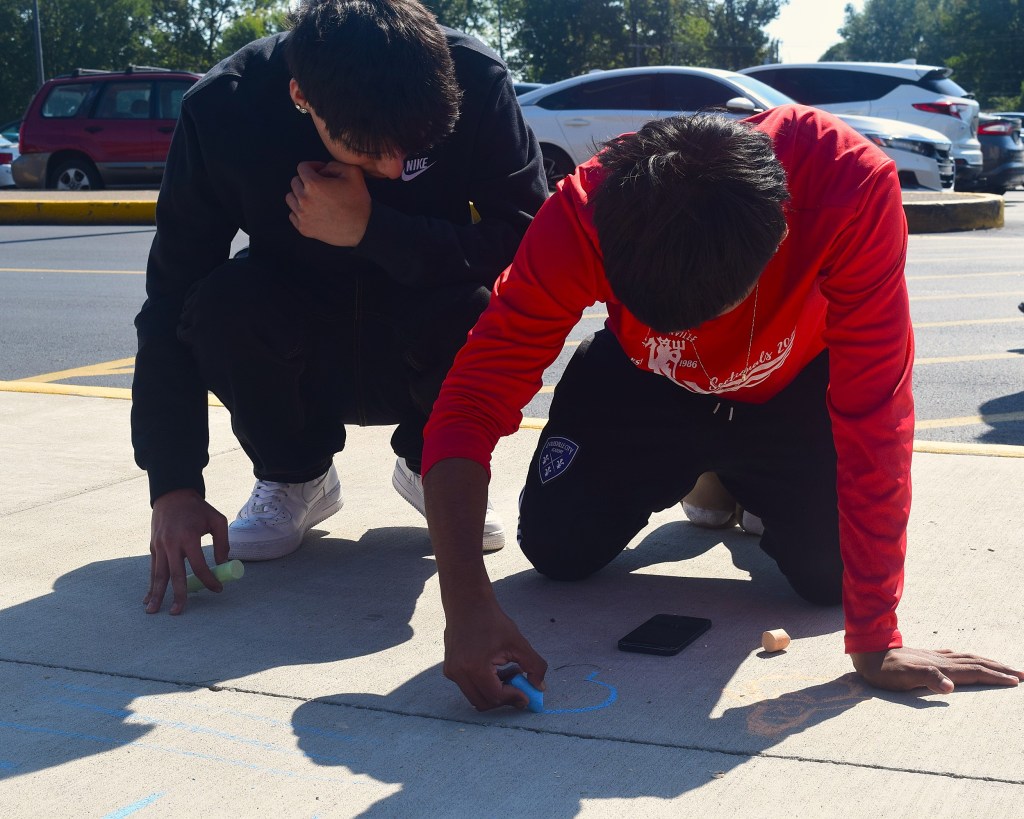
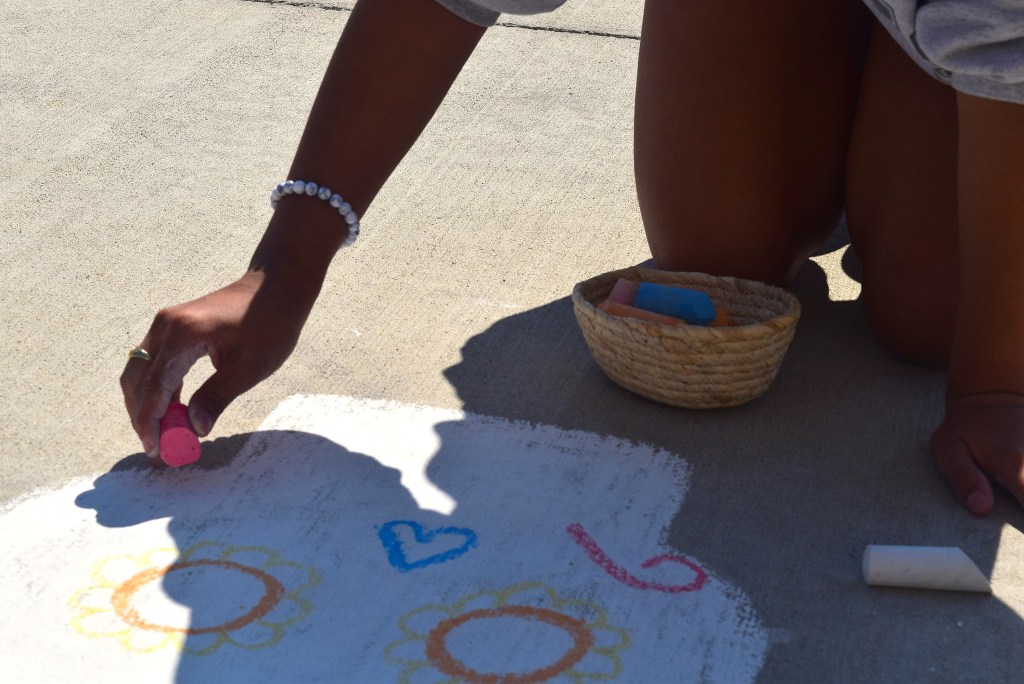
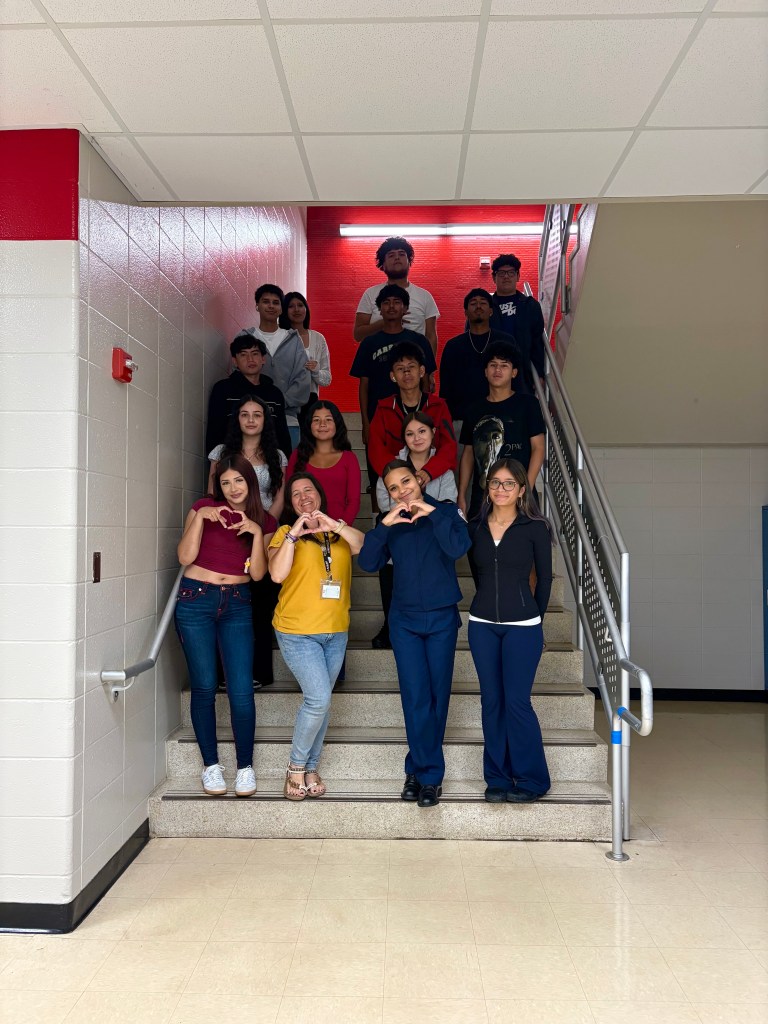
‘Chalk the Walk’ artwork: students showcase pride in honor of Hispanic Heritage Month

Photos by Areli Hernandez Romero 

Additional editor Tyler Conley.

In honor of Hispanic heritage month, Spanish teacher Megan Cortes has shown a strong ethic for education highlighting her leadership in the community. Through her contributions, she’s been able to well represent herself and this influential program.

Ceramics class blends creativity and real world skills

by Daysha Gray

Ceramics provides a hands-on approach to creativity for students looking to expand their artistic abilities and outputs. In ceramics, artists learn how to craft pottery and make various shapes using clay, employing methods such as wheel-throwing and hand-building. This is followed by the processes of drying, firing, and glazing, resulting in completed functional or artistic works.

Senior Evan Shelton makes a spoon holder out of clay for his third-hour ceramic class. Photo by Audrey Ball

3D and Art Teacher Jennifer Beckman said, “Ceramics is beneficial. It teaches students skills and can teach them to make money.”

Student artists appreciate the creative process in the ceramics classroom. 

Junior Arianna Adams said, “Ceramics helps me learn that practice makes progress and that patience is key. For anyone new to ceramics, I would tell them to have patience and to make sure to listen very carefully to understand directions. 

Senior Reese Somerville agreed, saying ceramics teaches patience.

“Working with clay allows me to be very creative and express my creative side. My advice for someone taking a ceramics class would be to be patient. Give yourself grace and be proud of all the progress you make.”

Senior Natalie Hollins said the classroom atmosphere adds to the creative process.

 “Ms. Beckman has been an amazing teacher and I’ve loved her class since I had it my freshman year,” said Hollins. “Making things in art is something that I’ve really grown to love. I’ve always loved art and drawing and making things.”

According to Beckman, when making pottery, there are numerous uses for creations, including selling and making household products, as well as decorative pieces such as vases, wall art, and candle holders. 

Clay crafting provides therapeutic advantages, encourages creative expression, and can serve as a financially beneficial hobby or enterprise when students engage with communities and acquire new skills, such as handbuilding and wheel throwing, and seek inspiration on platforms like Pinterest.

“Selling pottery projects in this class could be easily done. Considering we use professional clay, it is safe for dishes and microwaving them. A best seller could be a butter dish. They’re great and easy to sell for tons of money,” said Beckman.

Working with clay for the first time can be challenging, particularly when using a pottery wheel. That’s why taking a 3D Art class is beneficial. Creating a simple pottery piece requires a lot of effort and skill. 

Beckman also explained, “We start with easier projects and progressively increase the difficulty. When assigning a project to my students, we must plan and sketch before diving straight into the clay. Ceramics can be difficult, but it does create more confidence.”
Adams agreed. “Being involved with ceramics makes me confident in various ways, because when I finish a project, I feel really good about it in the end.”
“I would say ceramics helps my confidence because it really makes me appreciate all of my hard work,” said Somerville. “It makes me proud of my artwork.”
Aside from all of the fun and beneficial activities that pottery making entails, there are indeed serious rules that must be followed in the process. 

Beckman said guidelines help ensure that the art form remains safe, enjoyable, and productive for everyone involved. Whether a seasoned potter or a novice just beginning to explore the craft, understanding these rules is crucial. They establish a foundation for good practices in techniques, equipment usage, and safety measures. 

Hollins added, “We get pretty messy when working with softer, wet clay.  We do different things, whether that’s on the pottery wheel or by hand.”

In the end, it comes down to being careful within the artistic space.

“Remember to be careful with all utensils,” said Beckman. “Some can be dangerous, including knives and wires. Please take notes and sketch out creations to fully understand what you are going to create.”

Additional reporting by Aurora Grisham.

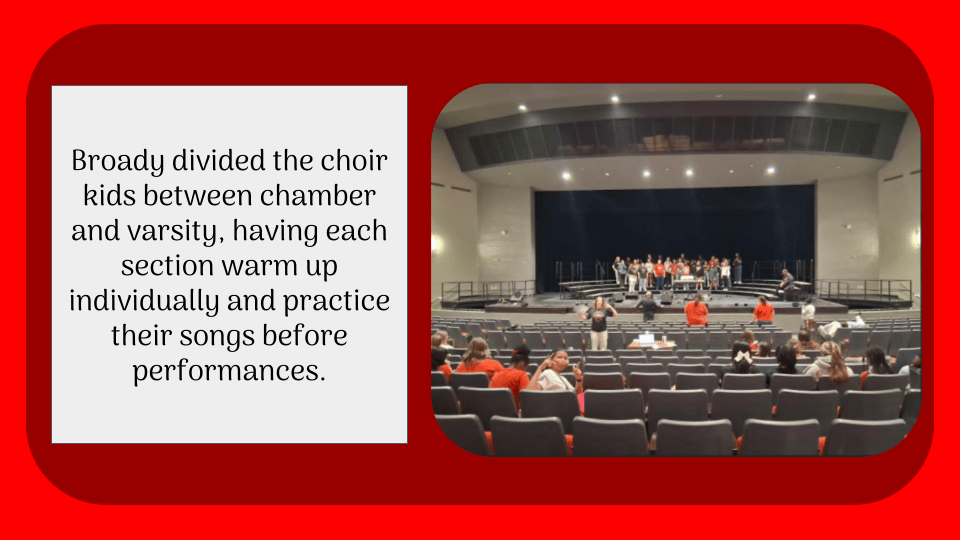
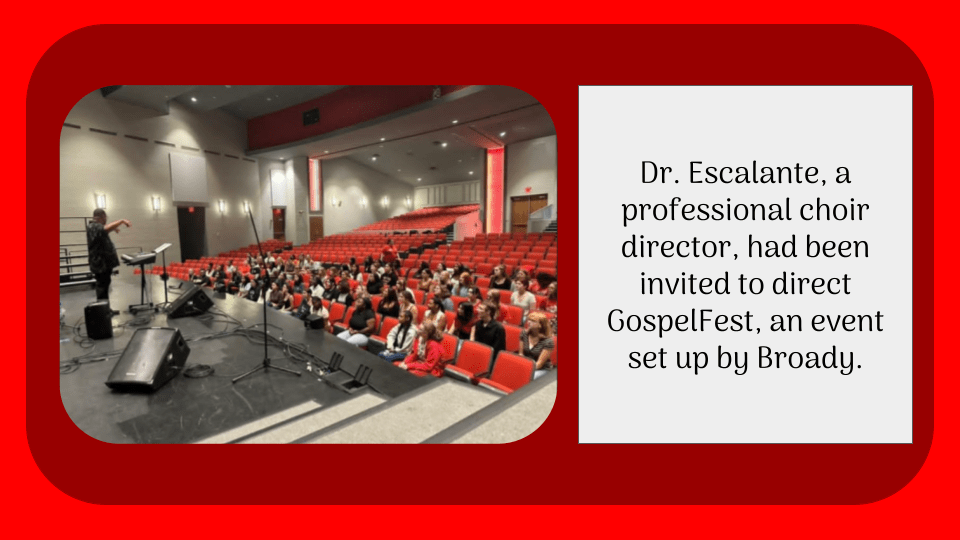
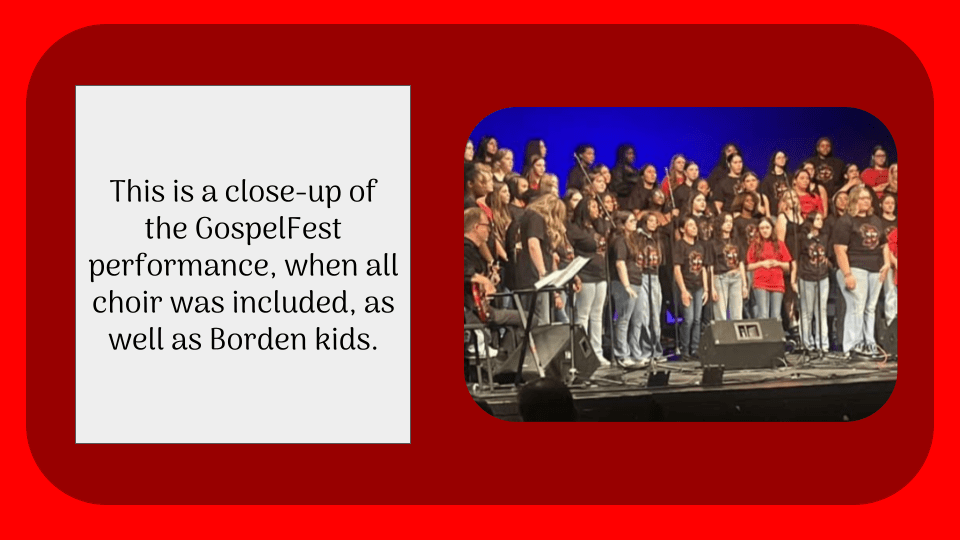
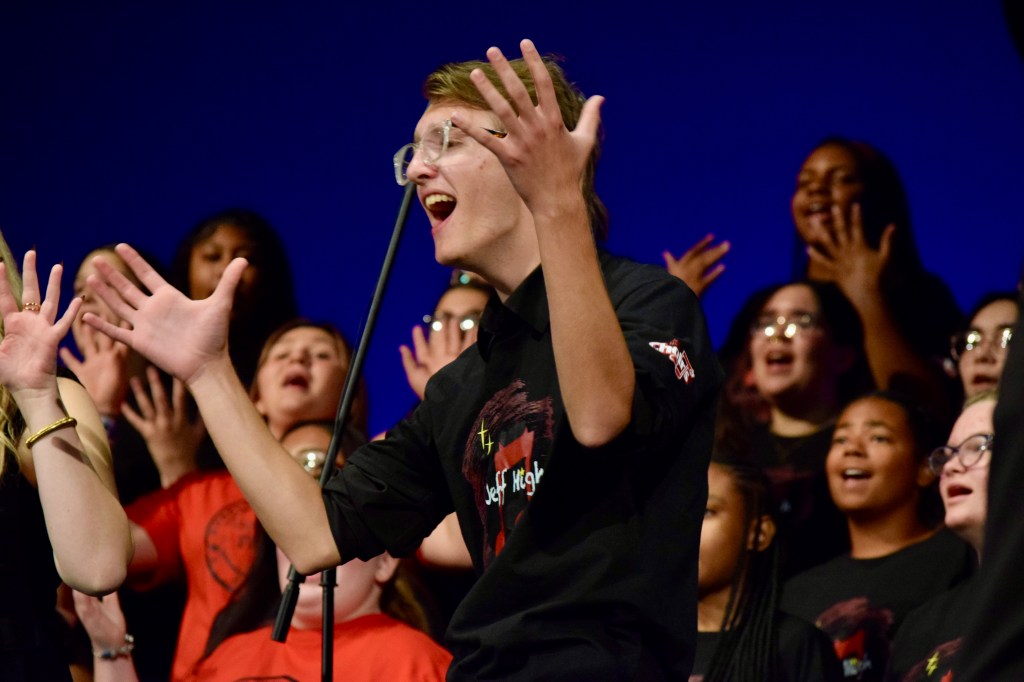
JHS choir performs annual Gospelfest

All photos by Malachi Conard.

Performing arts prepare for year of performances and events

by Abbigail Hollins and Aurora Grisham

From voices to instruments to improv, the JHS arts has much to offer those who are musically inclined. While the performances highlight the many talents of the students here, the process of joining each class begins much before the performances do. 

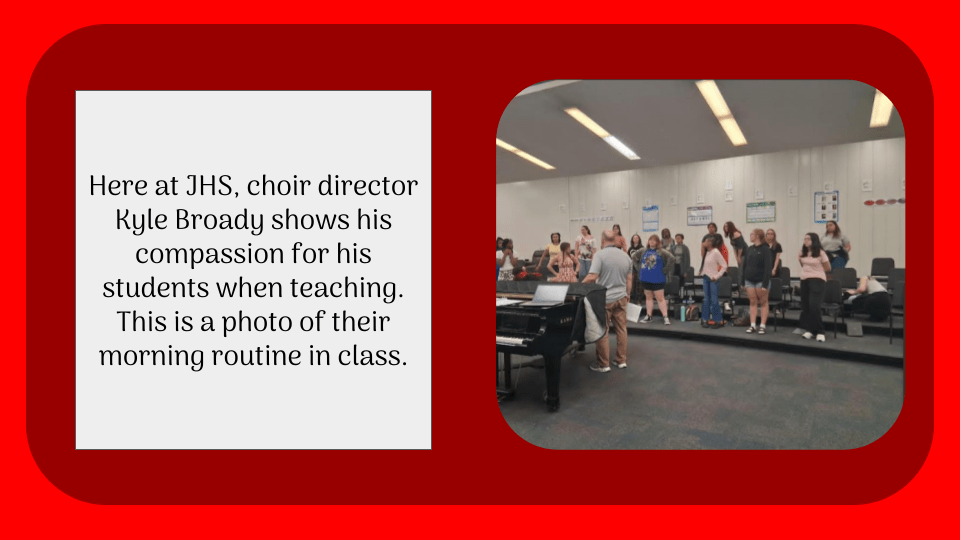
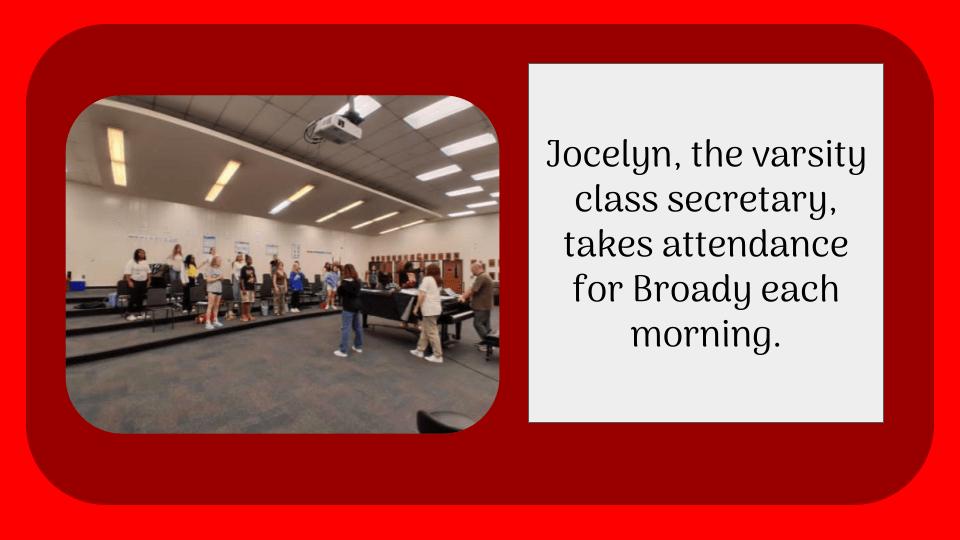
To begin a musical journey into choir, music education and choral  teacher Kyle Broady said students should talk with a counselor about joining.  The requirements are simple for joining chorus class.

The choir practices for Gospelfest on August 11. Gospelfest will be performed next Thursday, Sept. 18. Photos by Aurora Grisham.

“For regular chorus, no skills are needed, although a past (with music) is helpful.  Upper chorus, you have to qualify,” said Broady.

Students are required to be engaged during class. There are also times that students are required to stay after school to practice. However, with the chamber choir, the expectations are a bit higher because they are more experienced.

On Thursday, Sept. 18 Broady said the annual Gospelfest will be performed in the JHS auditorium.  Additionally, On Dec. 9 and 11, there will be a Winter Fantasy performance with solo and ensemble musicians.  In choir, students will be required to wear uniforms for performances, which consist of formal, black attire.  

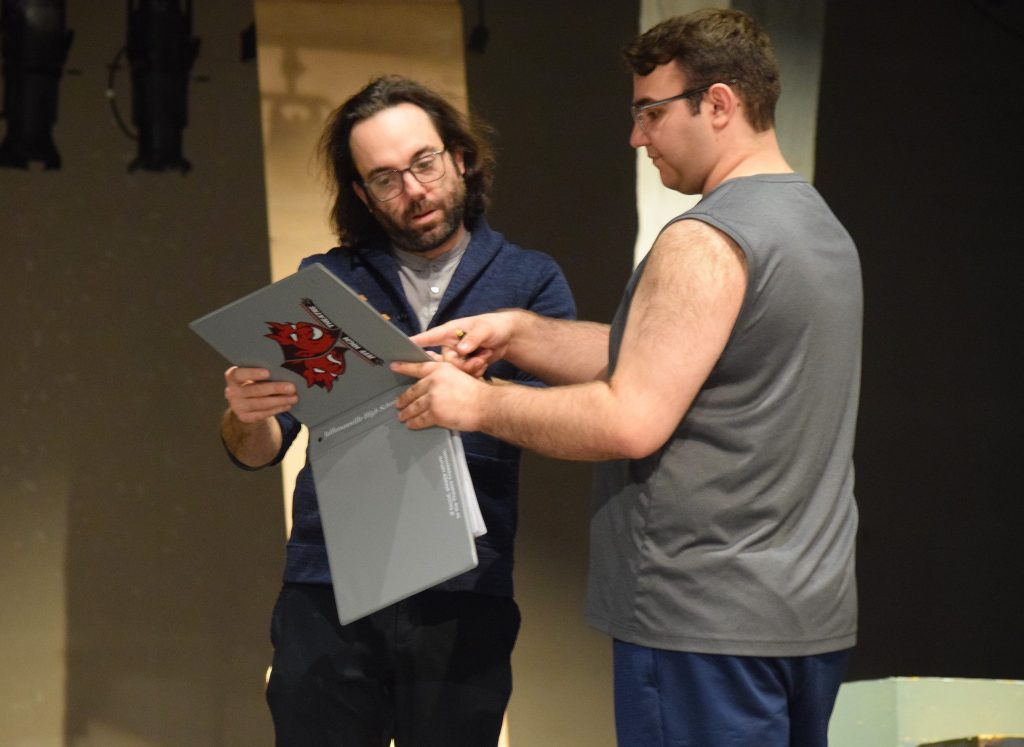
Continuing the journey into theater, theater arts teacher Derrick Ledbetter said to get into his class that students must audition.  Ledbetter said the biggest skill to have in the theater experience is an open mind.

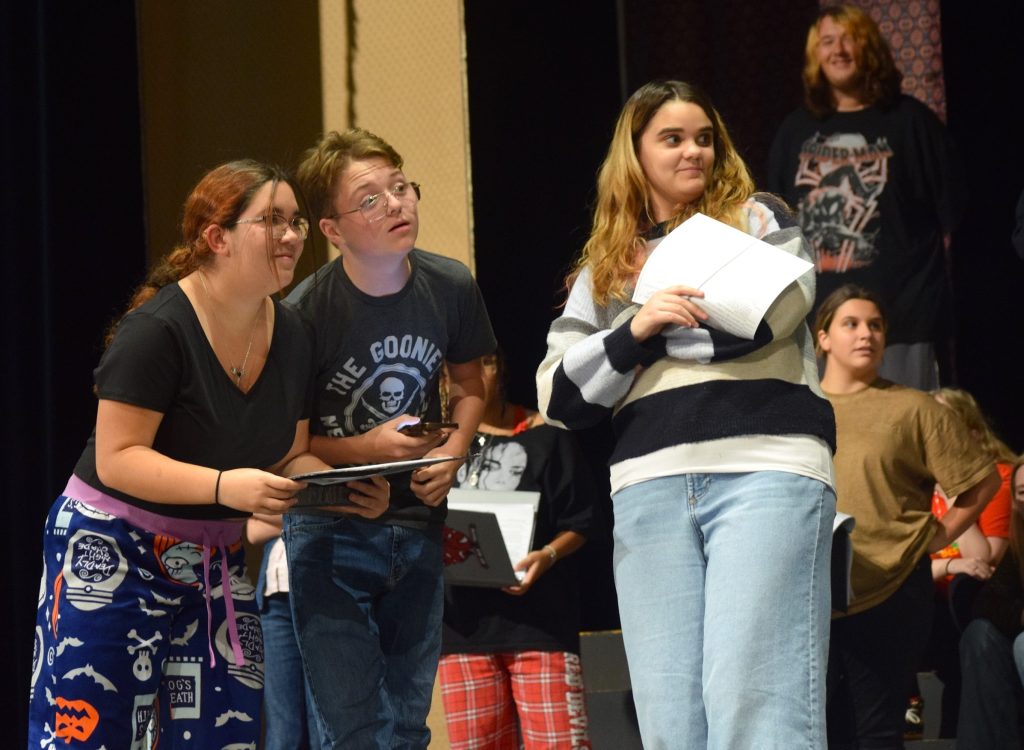
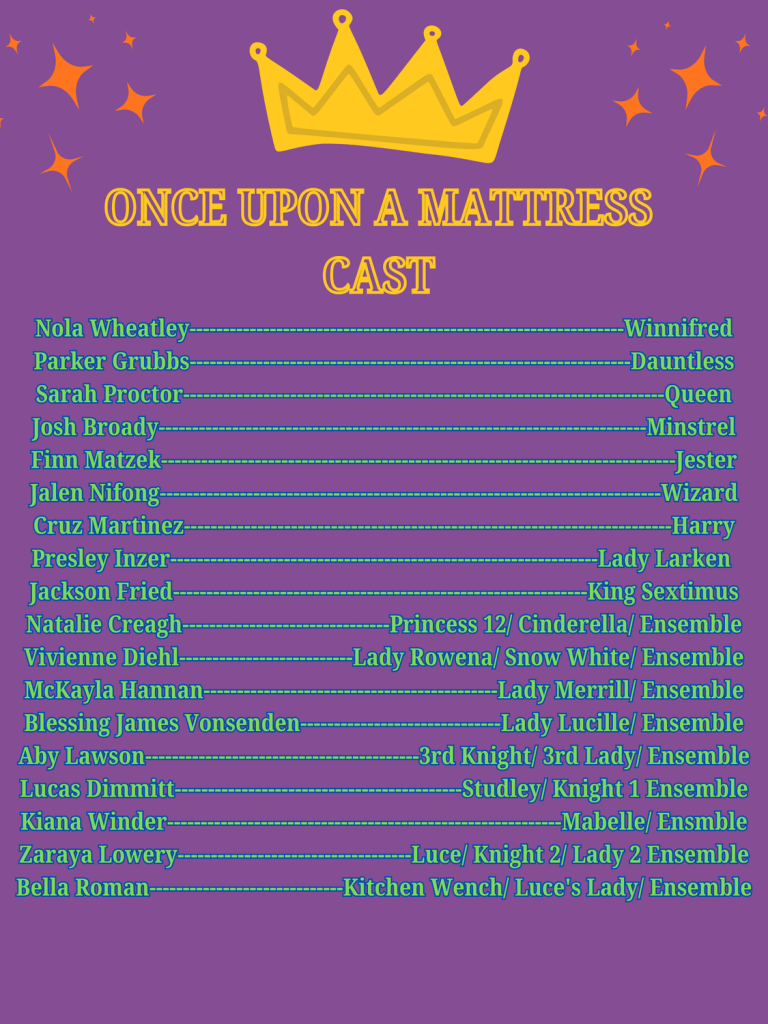
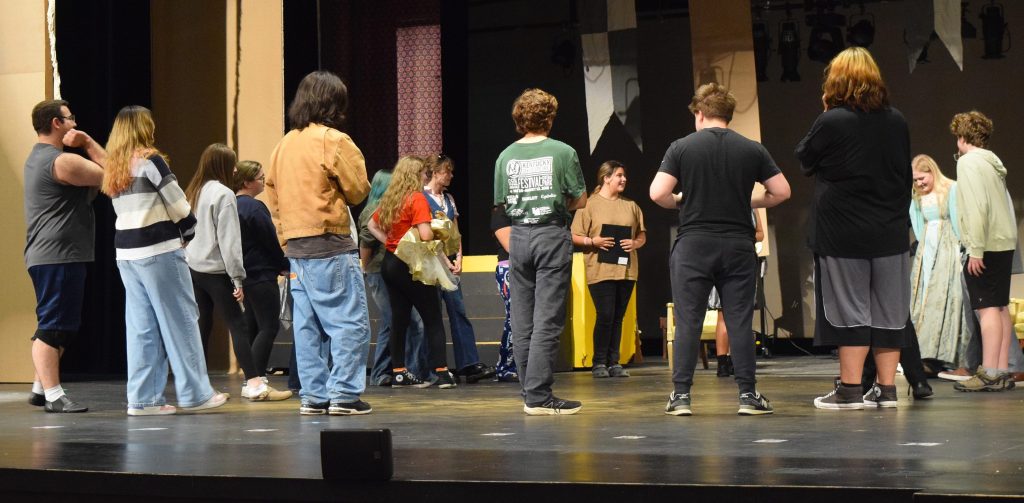
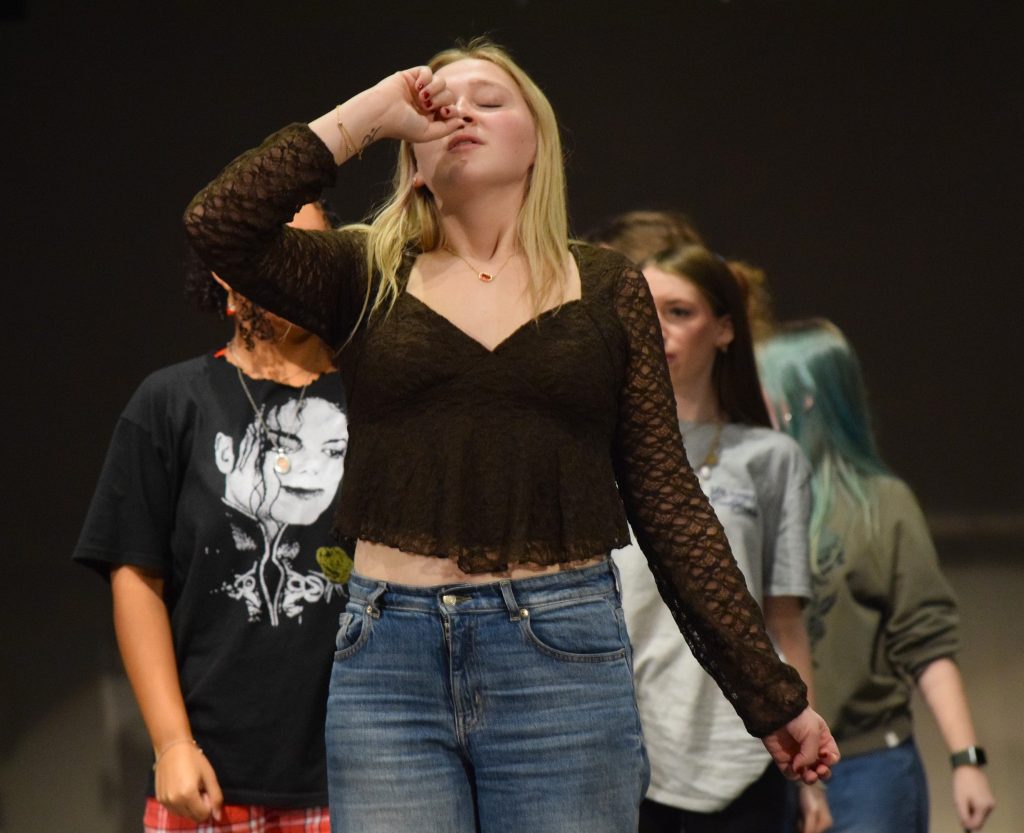
Ledbetter encourages students to rehearse and prepare for the JHS theatrical performances. In late October, theater students will perform “Once Upon a Mattress” and later in the year, they will perform “Cyrano de Bergerac.”

Finally, ending this journey going into band, music education and band teacher Sidney McDonald said most students participate in band during middle school and sign up when they choose classes for high school.  

Band director Sidney McDonald shows her fourth-period band class how to keep tempo. Photo by Kaleb Baker.

“We’ve started a beginning band as well, for those who have never done band before,” said McDonald.

The teachers also offer extra help so that they can guide students.

“We have an open band room, which is after school on Wednesdays, so students can come work on any music they are struggling with,” she said.

Juice Box Heroes bring music to Jeffersonville Riverstage

Musicians brought their talent to the stage on August 15

All photos by Sophia Goforth.

Red Devil Writers: Jeff High teachers write, publish their own books

by Sophia Waldridge

Everyone has a past that’s different, but English 10 teacher and wrestling coach Evan Myers, sports performance wrestling coach Daniel Struck, and English 9 teacher David Kummer all have similar backgrounds.

All three Red Devil teachers are published authors.

English teacher Evan Myers holds two of his two books, Dusk on the Western Range and The Cottage at Prince Lake. Photo by Raven Baker.

Myers said he has been writing for six years. He began writing in 2011. He went to Purdue University and got his bachelor’s degree, and when he was in the Army he did three years of military journalism from 2015 to 2018.

During his years he went to Fort Meade Defense Information School and latre worked at Greenfield Daily Reporter in Greenfield, Indiana. Myers says he started writing and got interested in it because of  the Superman comics he read during his teen years.

I started loving writing because of the way Clark Kent wasn’t only helping people by being a hero, but also by telling them stories and the hard truths.”

English Teacher and Author Evan Myers

“I started loving writing because of the way Clark Kent wasn’t only helping people by being a hero, but also by telling them stories and the hard truths.”

Myers has some pieces of wisdom for journalists about interviewing and writing.

“When writing make sure you know spelling, punctuation and titles, because if not it could turn disrespectful. As for interviewing, making conversation, and connecting with your source makes it feel less like an interrogation and more like a conversation; it establishes trust.” 

 Myers has written three books: Dusk on the Western Range, The Oldest Sport, and The Cottage at Prince Lake.

Wrestling coach and weight room supervisor Danny Struck holds his book Climbing for Gold. Photo by Raven Baker.

Struck started writing his book in 2023 and it took him two years to complete. He described the process of writing his book as “a good decision” because he thought of it while attending the Olympics and felt as if a travel book for coaches would be a good read.

He read Myers’s first book and really enjoyed it because it was fantasy and loved the second book because it was about a wrestling program like theirs. Struck said Myers pushed him to be a good writer and publish his book, Climbing for Gold: See the World Through Wrestling, so he did.

He has really good advice for upcoming writers: “Start with journaling. It helps with practice and seeing how you do with first drafts, and also write one liners. I spent 30 years working with one liners because they help spark my memory for when I’m ready to write a full book.”

English teacher David Kummer holds his book The Misery House. Photo by Raven Baker.

Kummer wrote as a kid but took writing more seriously in high school and has been writing ever since. “I’ve been writing so long that I feel old, but not as old as Myers,” he joked.

After he graduated he made local connections so he could be able to publish. Kummer believes that people who want to write should read as much as they are able, and writing the first draft matters.

“Once you start writing the first draft you can go from there.” 

Kummer has published three books: The Silent Forest, The Band, and The Misery House. The final book in the Silent Forest trilogy, The Empty Room, will be published later this fall.

Column: Music-sharing platforms can be ethically questionable

Art by Kallie Warnock.

by London Williams

Daniel Eks’ recent investment of $702 million as the founder of Prima Matra in the German AI military combat-defense company, Helsing, has sparked considerable controversy among several artists, starting discussions on what our art is funding and the moralities of using platforms that fund programs such as war technology. Many artists have responded with a boycott, and it has made people reconsider their methods of streaming music.

San Francisco band Deerhoof was the first to leave the platform over this; they first announced their departure on June 30, 2025. Deerhoof stated that they didn’t want their music contributing to “AI Battle tech” and that, “We don’t want our music killing people.” 

Deerhoof isn’t the only band that responded to the boycott; Xiu Xiu announced on their Instagram page just after Deerhoof: “We are currently working to take all of our music off the garbage hole violent armageddon portal Spotify.” They followed by encouraging fans to cancel their Spotify subscriptions. 

King Gizzard & Lizard Wizard followed suit, and so have other smaller artists. Godspeed You! Black Emperor just recently announced their departure from all streaming services this August 17. This problem certainly has the potential to spread to other streaming services. 

It seems that many bands have been looking for excuses to leave the platform, claiming the pay isn’t worth it and that the main benefit to Spotify is its “discoverability.” Some artists believe this takes away from the experience as it’s overly accessible, and on the go isn’t the way music was intended to be appreciated. Spotify isn’t a friend of the music industry. It impacts traditional music sales and is by no means a sustainable income on its own. On average, artists make 0.004 cents per stream. That’s 1 cent for every 25 listens.

Jamie Stewart, the frontperson of Xiu Xiu, put it bluntly: “There’s no amount of money that would make us want to participate in a company that is trying to murder people.” 

Spotify is the only in favor of this, artists are gaining no benefit. Listeners want their favorite artists getting paid. For example, freshman Sophie Ellis said, “The money should be going to the artists, and the people that actually run Spotify,” and freshman Rowaan Stephens agreed.  

This isn’t new news. Daniel Eks’ interests in Helsing go all the way back to 2021. In February of 2021, he vowed to invest over 1 billion through venture capital firm Prima Matra. At this time he made his initial investment and joined the company’s board. Since he has become the founder of Helsing, he claims that his donations are important for Europe’s technological defense, and that his firm’s decision is “right for Europe” and that he is unconcerned with the backlash, emphasizing the importance of AI development and its use on the battlefield. 

The majority of bands are against their art funding war in any way, and so are many of listeners. After asking students, it is clear where the moralities stand on AI and Daniel Eks funding. 

“It’s scummy,” said junior Kaylee Austin after hearing about the controversy. “AI takes away from art, it helps people be lazy.” 

Spotify is the world’s most popular music streaming service. AI being such a big part of it is bound to start discussion. Daniel Ek’s interest in AI goes beyond Helsing; AI is all over Spotify. It’s in our daylists and our DJ, it’s in the weird four-minute video that was at the end of our yearly recap. It’s the mind behind all of our recommendations. Data is being directly put into this AI algorithm; listeners are the product. It seems to be a good idea to switch platforms, and many people do use other platforms. 

After asking several students what their alternatives were, it is still clear Spotify is in the lead. But Apple Music, Pandora, Soundcloud, YouTube music are still relevant. 

Senior Ciara Lee is a listener of Spotity, but after hearing the news she said she “might not continue.” 

Many people online recommend  alternatives, but they aren’t exactly perfect either. Many musicians feel putting their music on these platforms is a necessary evil. However, there are many ways to directly support artists. Bandcamp is a great alternative, as artists get to keep 82-85% of their sales. Buying tickets and seeing shows, and making visits to local music shops is also a perfect way to support the minds behind the music. 

International Showcase gives students the chance to share their cultures