All photos by Magdalene Conrad and Malachi Conrad.




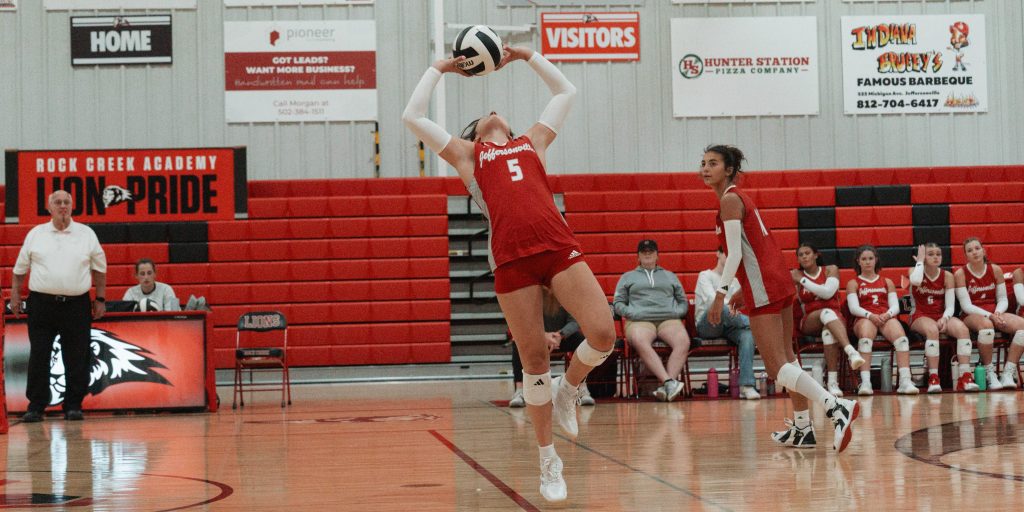


All photos by Magdalene Conrad and Malachi Conrad.
All photos by Malachi Conrad.
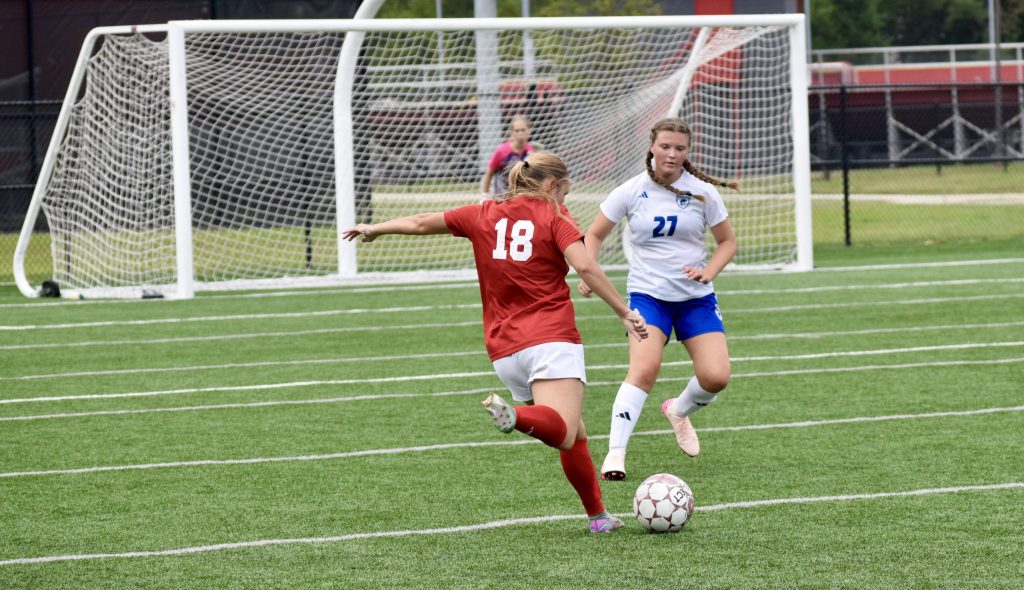

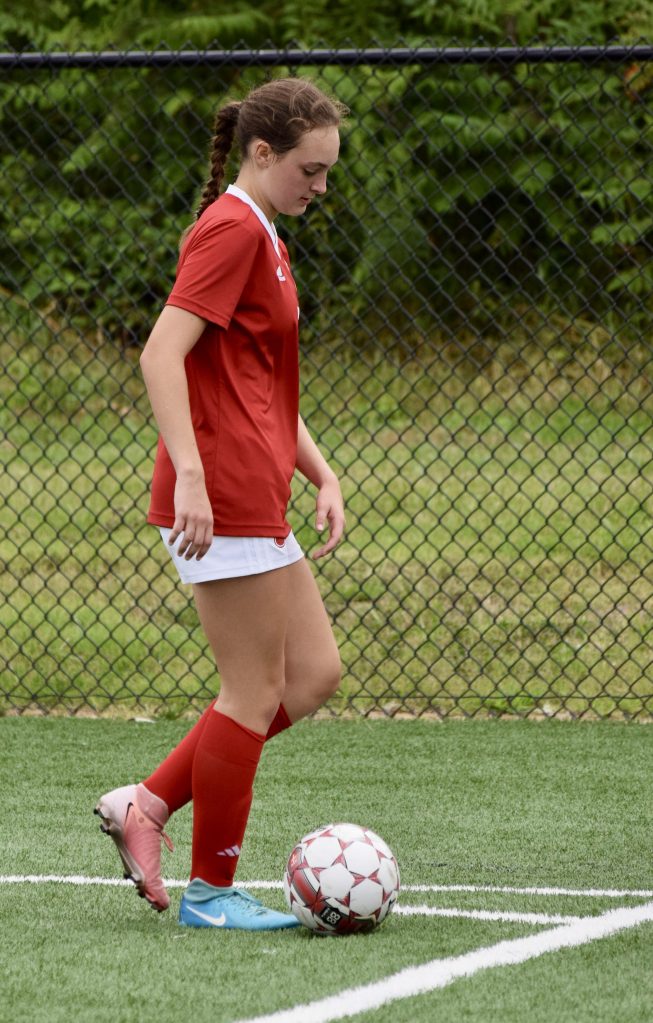

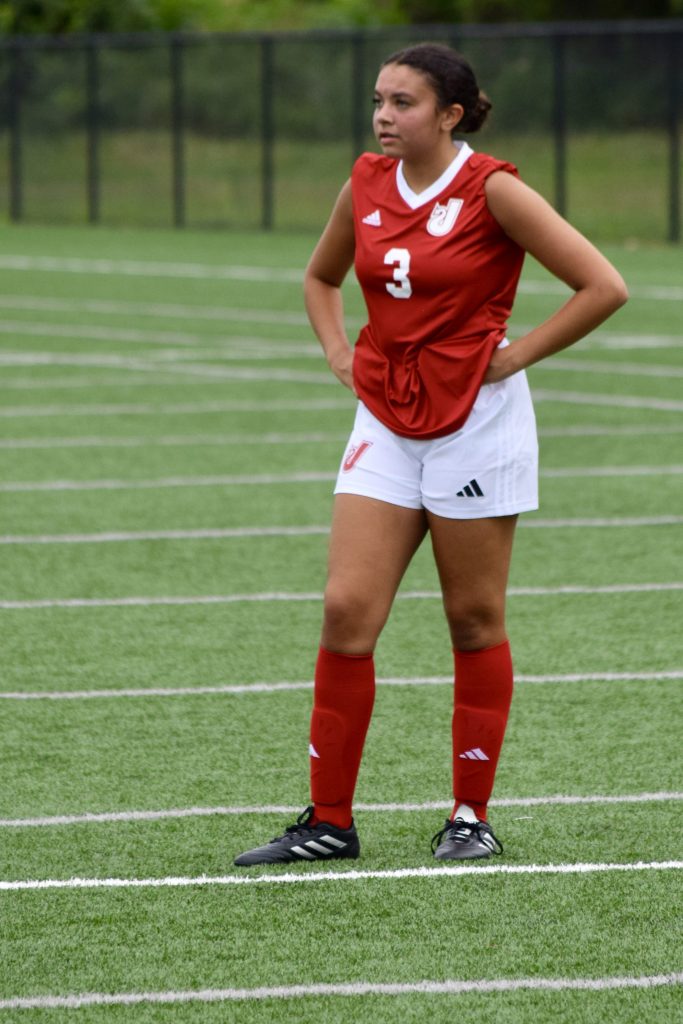
All photos by Parker McCloskey.





by Areli Hernandez Romero
Anchor Club is a dedicated and supportive organization that allows the young women of JHS who are sophomores, juniors, and seniors to express their ideas and themselves while also engaging in community service. This year, with the help of sponsors and the supporting team, Anchor Club is excited to announce its upcoming season.
Club sponsor Michell Densford said at the beginning of each season, each member is welcomed by an “initiation,” which acts as the formal induction to Anchor Club that each member must attend.
“We always do an initiation. This is where you come and get a certificate, flower, and light a candle,” she said.
Members who participate for two years, including their senior year, are eligible to receive a chord that represents their dedication to the community.
Francesca Hernandez, who is also a club sponsor, refers to the “executive board” as members who are an influential foundation of Anchor club.
“Before we go over anything, the executive board goes over projects we want to do and are doing. They’re the head of the projects and make sure the girls are acting right,” said Hernandez.
Club president and Senior Cassidy Tomlin finds leadership a priority to help support members and ensure that their ideas are heard.
“So, I really try to make sure that I see all sides from all of the levels of the executive board, making sure all their opinions are being considered and making sure that they have a well-respected leader,” she said.
Her previous experiences in clubs encouraged her to join Anchor Club to seek new experiences.
“I’ve been in Anchor Club since sophomore year, and I joined because. I wanted to give back to my community. I’m a Girl Scout; I’ve been a Girl Scout since kindergarten, so I wanted to find another outlet,” said Tomlin.
I think Anchor Club is a really good way to give back to your community by serving people in Jeff, the school, also a lot of people all around the community.”
Anchor Club President Cassidy Tomlin
Junior Executive Board member Maddie Chandler nods as she mentions her experience as a member.
“I’ve been part of Anchor Club since my sophomore year. I find all the different projects we get to do for the community interesting.”
Chandler shared the impact Anchor Club has established, as well as sharing one of her favorite projects from her previous year.
“It’s fun being part of this club. It feels like you have a lot of girls that are your friends, and you get to do new things you wouldn’t normally do. We went to Midwest Village, a nursing home. We made tide blankets for the residents. It was fun doing that.”
Sophomore Executive Board Member Haliun Otgonbayar is in her first year as a member. She anticipates contributing to the community with her friend, sophomore Samantha Dues.
“As an Anchor Club executive board member, I’m looking forward to being more involved in the community and helping people. I joined Anchor Club because not only is it a great community, but I’m hoping to plan new events and fundraisers and anything related.”
Dues, who is also in her first year as an executive board member, also anticipates organizing plans in contribution to Anchor Club along with people she cares about.
“To go off that, I’m also excited to plan events for the community, while doing it with the people I love. I joined because I wanted to help support, to make the environment even better,” she said.
Densford is satisfied with the efforts of each member and their contributions to make the club great. She proudly mentions the support of the girls and how they are representing themselves in JHS.
“I like the sisterhood, the girls coming together as a group, supporting each other, holding each other accountable, and holding themselves to a higher standard than what the school does; it’s wonderful. They represent our school well and represent themselves as wonderful young women.”
She recalled her own experience as a past “Anchor” and the influence that stood out to her.
“I was an Anchor too when I was in high school. We have some projects that have literally stood the test of time for over 20 years. We have ‘ringing of the bells’, Salvation Army, Steamboat nights — we all have a fun time,” said Densford.
Hernandez proudly mentions Anchor Club being a very supportive space, giving the impression of a sisterhood sorority to many, while also encouraging them to become remarkable leaders.
“It’s a wonderful community with great ideas. In a way, they’re future leaders. It’s a very responsible club, and all the girls are doing great things, just being great people. We are making very good future leaders.” She added, “Everybody has their own creative freedom with Anchor Club.”
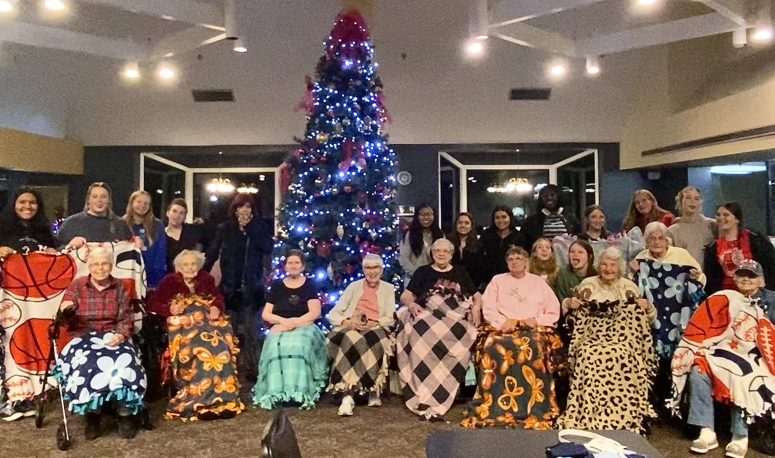
Tomlin described the Anchor Club community as an organization worth joining for those who want to serve their community.
“I think Anchor Club is a really good way to give back to your community by serving people in Jeff, the school, also a lot of people all around the community. I think it’s a really good idea to join if you want to give back and be a part of a sisterhood, and just experience some fun new things.”
Anchor Club has stood out with its unique sense of sisterhood and teamwork, leaving fellow sponsors and members with great memories they will cherish in the future.
“If they want to be a part of a really supportive club, then this is a club for them. We do anything we can for the students of JHS and for the community, and I think that’s what makes it beautiful, a fun place to be. If you know a successful woman, they were probably an anchor,” said Densford.
Additional reporting by Parker Vibbert.
by Ayianna Maddox
When someone says that they work in Human Services, the automatic thought is Child Protective Services (CPS) or counseling. But, CPS and counseling are only fractions of Human Services. What other fractions make up the whole pie?
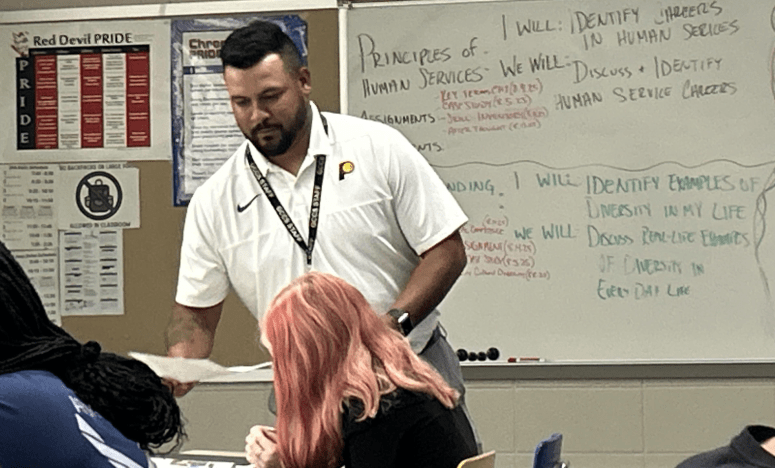
“It’s not just counseling mental health; there are a lot of different avenues people can go down. We need each of those services, from cosmetology to police officers and firefighters. It’s all the necessities for day-to-day life,” Human Services teacher Kyle Keplinger stated.
In a way, people in the human services business sacrifice their lives every day. Firefighters fight fires, police officers fight crime, and assist in cases that involve abuse.
Psychologists and therapists put their needs aside to help guide their clients into a better lifestyle. These titles have quite a lot in common, but the most important fact is that they all selflessly put their lives on pause to aid other people.
According to the U.S. Bureau of Labor Statistics, “firefighters sleep, eat, and perform other duties during shifts that often last 24 hours.”
For psychologists, “Psychologists can expect to work 35-40 hours a week, usually Monday-Friday, 9 a.m.-5 p.m. However, they can do more or fewer hours depending on their role,” CPD Online College reports.
As children, we view these people as invincible or immortal. But we have to remember that they are just like us, human. Humans are mortal, emotional, and forces to be reckoned with, but our idols have families and friends too. Putting their lives on the line, knowing they could alter their fate differently each day, to protect others, is an act done out of selflessness and valor.
“It can be emotionally taxing, but it can be a very rewarding career. The reward far outweighs any of the negatives,” Keplinger said contentedly.
Human Services poses as an opportunity to create lasting bonds and carry them throughout life. As life progresses, there will be multiple job interviews, multiple opportunities, but with different backgrounds. Who knows, your future employer could be a life you’ve changed in the past.

by Izzy Wemes and Austin Bainbridge
A.J. Moye, a well-known and loved IU basketball player remembered for his block of Duke’s Carlos Boozer in the 2002 NCAA Sweet 16, has joined JHS as the new athletic director.
While Moye is known for his skills in basketball, that wasn’t the only sport he played.
“I played almost every sport growing up,” said Moye, who sees how important it is to relate to Red Devil student athletes and coaches as part of his new job.
His colleagues have taken notice.
“I think his ability to relate to each student athlete — that’s the first thing,” said boys’ basketball coach Sherron Wilkerson. “The second thing is his experiences put him in a position where he can basically mentor any student athlete no matter the sport, and that’s priceless in this day and age.”
Moye appreciates all sports, even those that may be under-appreciated by others. He wants everyone to feel valued, especially the coaches and players.
“I try and get to every team’s practices once or twice a week. Just Saturday I went to the girls’ golf, first tournament, and saw them play, and the coaches were just like, ‘ You won’t believe how supportive this is’,” said Moye.
In particular, Moye said he realizes the impact of supporting the boys’ and girls’ teams, saying he’s adamant about supporting all equally.
“You know, I have three daughters and one son, so I understand some of the frustrations,” he said.
I’m just really watching and supporting all the coaches, but more importantly, trying to be a good shepherd for the kids, and being someone who the kids look up to.”
Athletic Director A.J. Moye
Moye said in his new role he wants to give Red Devil athletes a reason to work hard, showing them that he cares.
“I’m just really watching and supporting all the coaches, but more importantly, trying to be a good shepherd for the kids, and being someone who the kids look up to.”
Moye is taking what he has learned from his time working and coaching as an assistant coach at Valparaiso University and from his time working with NBA players like Kobe Bryant, Kyrie Irving, and DeMar Derozan to lead a way for JHS coaches to better athletes, including those who hope to play in college or professionally.
“Pro ball is going to influence how he does things. Because ultimately, for a lot of these kids, that’s their goal. So if they want to get there, we have to put these kids in a position to be successful. So with him knowing what it is to get to that pro level and the steps that he’s seen at high schools and colleges along the way, he can implement that structure,” said head football coach Joe Washington.
Moye’s colleagues say he has a contagious personality that everyone can feel and relate to.
“I feel like how I am as a person, it rubs off on everyone I meet, including the kids,” Moye said.
Moye has plans of grandeur for this athletic department. He knows what he can bring to it and what he wants from it. The main goal that he wants is to see every sport succeed. His coaches believe in his vision.
Washington said Moye has brought a “family atmosphere” to JHS athletics.
“He has a good vision for what he wants the overall athletic department to look like in athletic programs. And he’s backing a lot of us, to give us what we need to be successful as programs,” said Washington. “He’s letting me know some of the steps that I didn’t know about being a head coach and paperwork and making sure that I’m staying within the guidelines of IHSAA — just helping me out. He understands how it is to be a successful head coach.”
In particular, Moye is trying to be present, to be a part of the community. Coaches have taken notice of this and appreciate him taking the time to be present.
“I only know of one of the previous ADs, but, yeah, he’s just out in public. He comes to a lot of the practices,” said Washington. “During practice, he’ll walk up and he’s asking questions, even both of confidence, just saying I like what you’re doing. Just being visible. So that’s a real big positive for him.”
“An athletic director is probably the most important position in our department” said Wilkerson. “Athletic directors touch everybody in an organization and I think you need a dynamic person to be successful as an athletic director.”
Moye said he loves his job for many reasons, but one shines brighter than the rest.
“I love being the AD because there’s a lot of unexpected occurrences and changes,” he said.
Moye has mentioned that he has big plans for Jeff sports, the athletic department, and making Jeff embraceable.
“There are a lot of plans that I have. I want the fans, parents, and students to embrace Jeff, but in order to have that happen our sports department has to be embraceable.”

by Sophia Waldridge
Everyone has a past that’s different, but English 10 teacher and wrestling coach Evan Myers, sports performance wrestling coach Daniel Struck, and English 9 teacher David Kummer all have similar backgrounds.
All three Red Devil teachers are published authors.
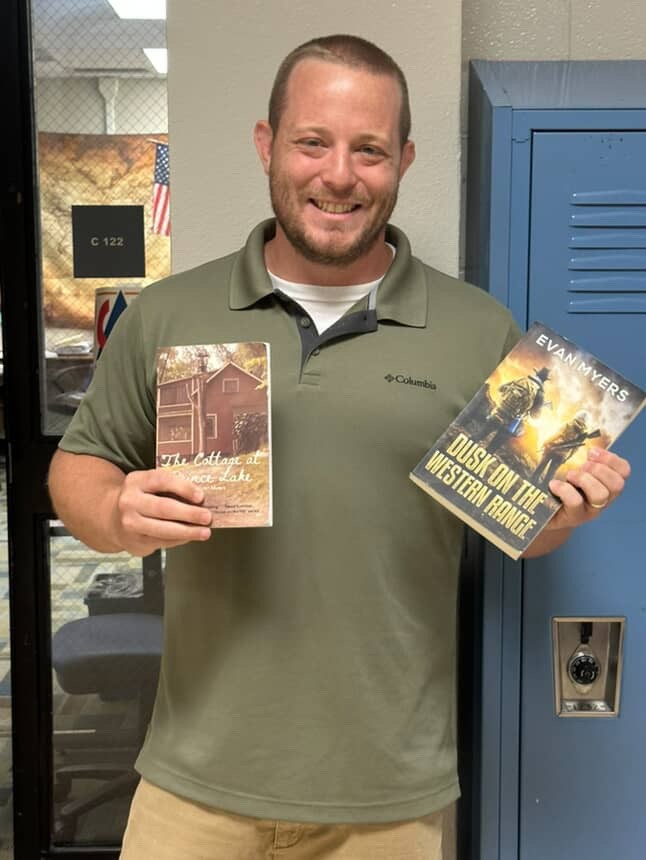
Myers said he has been writing for six years. He began writing in 2011. He went to Purdue University and got his bachelor’s degree, and when he was in the Army he did three years of military journalism from 2015 to 2018.
During his years he went to Fort Meade Defense Information School and latre worked at Greenfield Daily Reporter in Greenfield, Indiana. Myers says he started writing and got interested in it because of the Superman comics he read during his teen years.
I started loving writing because of the way Clark Kent wasn’t only helping people by being a hero, but also by telling them stories and the hard truths.”
English Teacher and Author Evan Myers
“I started loving writing because of the way Clark Kent wasn’t only helping people by being a hero, but also by telling them stories and the hard truths.”
Myers has some pieces of wisdom for journalists about interviewing and writing.
“When writing make sure you know spelling, punctuation and titles, because if not it could turn disrespectful. As for interviewing, making conversation, and connecting with your source makes it feel less like an interrogation and more like a conversation; it establishes trust.”
Myers has written three books: Dusk on the Western Range, The Oldest Sport, and The Cottage at Prince Lake.

Struck started writing his book in 2023 and it took him two years to complete. He described the process of writing his book as “a good decision” because he thought of it while attending the Olympics and felt as if a travel book for coaches would be a good read.
He read Myers’s first book and really enjoyed it because it was fantasy and loved the second book because it was about a wrestling program like theirs. Struck said Myers pushed him to be a good writer and publish his book, Climbing for Gold: See the World Through Wrestling, so he did.
He has really good advice for upcoming writers: “Start with journaling. It helps with practice and seeing how you do with first drafts, and also write one liners. I spent 30 years working with one liners because they help spark my memory for when I’m ready to write a full book.”
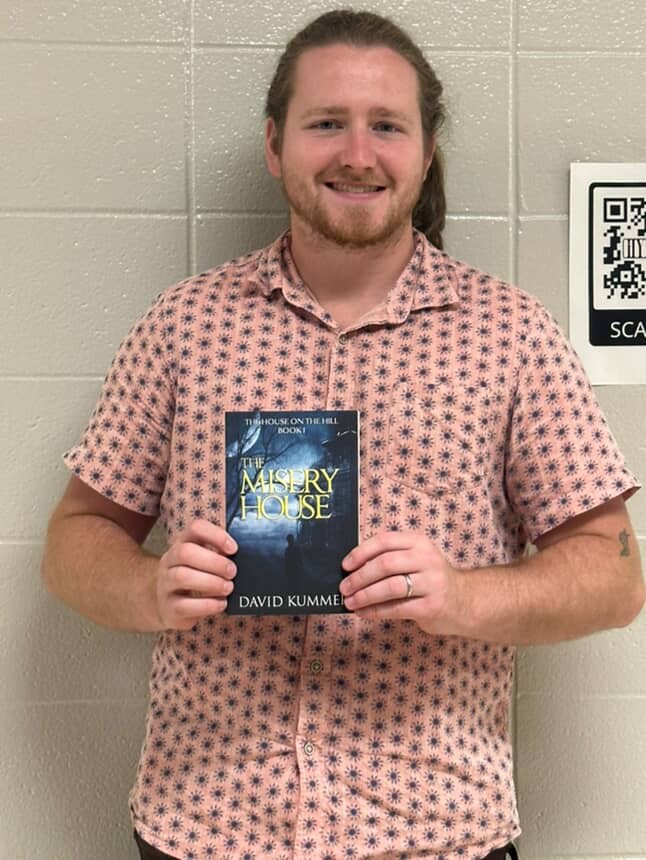
Kummer wrote as a kid but took writing more seriously in high school and has been writing ever since. “I’ve been writing so long that I feel old, but not as old as Myers,” he joked.
After he graduated he made local connections so he could be able to publish. Kummer believes that people who want to write should read as much as they are able, and writing the first draft matters.
“Once you start writing the first draft you can go from there.”
Kummer has published three books: The Silent Forest, The Band, and The Misery House. The final book in the Silent Forest trilogy, The Empty Room, will be published later this fall.

by London Williams
Daniel Eks’ recent investment of $702 million as the founder of Prima Matra in the German AI military combat-defense company, Helsing, has sparked considerable controversy among several artists, starting discussions on what our art is funding and the moralities of using platforms that fund programs such as war technology. Many artists have responded with a boycott, and it has made people reconsider their methods of streaming music.
San Francisco band Deerhoof was the first to leave the platform over this; they first announced their departure on June 30, 2025. Deerhoof stated that they didn’t want their music contributing to “AI Battle tech” and that, “We don’t want our music killing people.”
Deerhoof isn’t the only band that responded to the boycott; Xiu Xiu announced on their Instagram page just after Deerhoof: “We are currently working to take all of our music off the garbage hole violent armageddon portal Spotify.” They followed by encouraging fans to cancel their Spotify subscriptions.
King Gizzard & Lizard Wizard followed suit, and so have other smaller artists. Godspeed You! Black Emperor just recently announced their departure from all streaming services this August 17. This problem certainly has the potential to spread to other streaming services.
It seems that many bands have been looking for excuses to leave the platform, claiming the pay isn’t worth it and that the main benefit to Spotify is its “discoverability.” Some artists believe this takes away from the experience as it’s overly accessible, and on the go isn’t the way music was intended to be appreciated. Spotify isn’t a friend of the music industry. It impacts traditional music sales and is by no means a sustainable income on its own. On average, artists make 0.004 cents per stream. That’s 1 cent for every 25 listens.
Jamie Stewart, the frontperson of Xiu Xiu, put it bluntly: “There’s no amount of money that would make us want to participate in a company that is trying to murder people.”
Spotify is the only in favor of this, artists are gaining no benefit. Listeners want their favorite artists getting paid. For example, freshman Sophie Ellis said, “The money should be going to the artists, and the people that actually run Spotify,” and freshman Rowaan Stephens agreed.
This isn’t new news. Daniel Eks’ interests in Helsing go all the way back to 2021. In February of 2021, he vowed to invest over 1 billion through venture capital firm Prima Matra. At this time he made his initial investment and joined the company’s board. Since he has become the founder of Helsing, he claims that his donations are important for Europe’s technological defense, and that his firm’s decision is “right for Europe” and that he is unconcerned with the backlash, emphasizing the importance of AI development and its use on the battlefield.
The majority of bands are against their art funding war in any way, and so are many of listeners. After asking students, it is clear where the moralities stand on AI and Daniel Eks funding.
“It’s scummy,” said junior Kaylee Austin after hearing about the controversy. “AI takes away from art, it helps people be lazy.”
Spotify is the world’s most popular music streaming service. AI being such a big part of it is bound to start discussion. Daniel Ek’s interest in AI goes beyond Helsing; AI is all over Spotify. It’s in our daylists and our DJ, it’s in the weird four-minute video that was at the end of our yearly recap. It’s the mind behind all of our recommendations. Data is being directly put into this AI algorithm; listeners are the product. It seems to be a good idea to switch platforms, and many people do use other platforms.
After asking several students what their alternatives were, it is still clear Spotify is in the lead. But Apple Music, Pandora, Soundcloud, YouTube music are still relevant.
Senior Ciara Lee is a listener of Spotity, but after hearing the news she said she “might not continue.”
Many people online recommend alternatives, but they aren’t exactly perfect either. Many musicians feel putting their music on these platforms is a necessary evil. However, there are many ways to directly support artists. Bandcamp is a great alternative, as artists get to keep 82-85% of their sales. Buying tickets and seeing shows, and making visits to local music shops is also a perfect way to support the minds behind the music.
All photos by Magdalene Conrad and Parker McCloskey.









All photos by Magdalene Conrad and Kirk Owen.





by Sophia Waldridge, Tyler Conley, Parker Vibbert, Areli Hernandez, Malachi Conrad

As summer comes to an end, a new start has begun for many freshmen and staff. It’s that time of the year when you meet new people and begin new friendships.
Beginning at a new school can be unfamiliar, but with the help of friendships, it will make life calmer.
A foundation of support has guided freshman Alexis Guadalupe. “At first, I felt lost. I didn’t know where I was going. I had friends to help me, and I figured my way out. It’s interesting seeing old faces and new faces from different middle schools. Being all together feels good.”
The new environmental changes might be sudden, but Guadalupe stays on track with his schedule.
“Nothing really changes. I always wake up at the same time every single day. It isn’t really a change for me, but when leaving school, that is a change for me. It is a little crowded every time I try to leave school, but it’s okay, I still get on the bus on time,” he said.
Guadalupe plans to take courses that will help with next school year.
“I’m taking regular classes right now. But I’m going to try and take an honors class next year in English.” He recalls moments from River Valley Middle School and shares how teachers showed great support by teaching to their best abilities and being open to talk about anything when needed.
Freshman Elliott Taylor is intimidated by the size of the school in comparison to his previous years.
“I was most scared of how big the school is. My fourth and fifth periods are far away from each other, and I usually end up tardy,” he said.
Taylor isn’t stressed about the new year, and is starting off his high school years with good grades.
“I’m feeling pretty good about my classes. I have all A’s as of now, and the work isn’t too hard so far.”
In comparison to his previous school years, his freshman year is flowing much better. “I went to River Valley Middle School last year. The teachers this year and the classes are a lot better.”
Taylor has a certain class and teacher who has stood out to him so far. In comparison to previous years, “My favorite class this year is Algebra honors with Mr. (Scott) Lowe. He’s really nice to us, and he’s a great teacher.”
Starting high school can be a lot for a student, but Taylor already has a set plan for what he wants to do with his school career.
“In sophomore year, I would like to stay in honors classes and go into welding.”
College and careers teacher Angela Krueger loves being a freshman teacher so she can set her students on a path for success.
“I like being a freshman teacher because it’s a new school, a new environment, and I can help them set up their academies and pathways, and it makes me feel like I make a difference.”
Krueger went through years of school just so she could make sure she gives her students a good education.
“I went to IUS with a bachelor’s in psychology, and then I got my master’s in education at University of Cumberland. It took six years in total.”
Krueger has a few tips that may help incoming freshmen do better in school.
“You should take your classes seriously, and especially this college and careers class. It is probably your most important class, and can help you carve your entire high school career.”
Even with personal struggles, Krueger still has a goal to build a bond with her new students. “I’m about to go on maternity leave, but I hope I can still build a relationship with my students just as I did last year.”
Freshman Maddie Tetley agreed with Guadalupe and shared her experience bringing herself into a new environment,
“I was intimidated about the size of the school, so I was nervous that I was going to get lost, but now that it’s been a few days, the school doesn’t seem as big and I’m making my way around easily,” she said.
Tetley looks forward to participating in clubs and teams in hopes of academic improvement and experience.
“I’ll be on the golf team, hopefully the swim team, and as for classes, hopefully I’m in all or most of the honors, or the AP classes next year.”
School counselor Andrea Schedler encourages students to get involved in a new community of people and activities to find new aspirations.
I think that is key to high school, being involved in things and finding a passion you might want to pursue in the future.”
Freshman Counselor Andrea Schedler
“I would definitely encourage them to branch out and get to know more new people and participate in new opportunities that they haven’t had before. I think that is key to high school, being involved in things and finding a passion you might want to pursue in the future,” Schedler said.
Schedler has focused the past three years as a freshman counselor as well as relying on years of experience to mentor her students.
“This is my third year at Jeff High as a freshman counselor, but I’ve been an educator for 18 years.”
She attended the University of Kentucky as an undergraduate, earned her elementary education degree, and minor in psychology. She also attended Eastern Kentucky for her master’s and ranked one for school counseling.
Freshman Kaylee Borelli said, “I wasn’t stressed, I just didn’t want to get lost when I got here.”
Her favorite class is also math teacher Cory Densford, and she sees herself taking AP honors classes like dual credit chemistry, Honors English, and Honors Algebra, as well as doing volleyball and being on the yearbook staff in the future.
Freshman algebra teacher Patricia Midkiff shows support to her students by demonstrating adaptive teaching techniques.
“I have people in pairs so that they have additional people to work with. I also model in front of the classroom quite a bit. I do extensive examples and we slowly build in what we’re doing in class,” she said.
Midkiff shows additional support throughout the course of the year by reviewing topics with students.
“I will work as hard as you do. What I mean by that is, I always try to motivate people, but if you are working in my class and you’re still struggling, I will work with you as much as we need to, to get you through,” she said.
Midkiff shares advice to encourage incoming freshmen in their journeys. “You succeed in your responsibility. If you want to be successful in high school, you need to take initiative.”
Every year, the incoming freshmen class gets dropped into the deep end at JHS. Most of them, for a while, don’t have any good advice that they can find because it’s not something people ask.
Freshman Harper Gordon was “absolutely terrified” for high school. She sat back and sighed, then continued talking about her years in middle school and how she came from a public Montessori school, and she “had no idea how her first time in a traditional public school was going to look like.”
She is now happy to be here, making new friends and sees herself taking regular classes and in the Hyphen in her following years here at JHS.
English 9 teacher Eric Watson said he couldn’t wait for the school year to start so he can teach all his new lessons.
“Every year, teachers want to change up their lesson plan so they grow as a teacher and learn new things themselves.” He says his new freshman classes are all amazing, and they are fast-paced learners.

English 9 teacher David Kummer had a lot of tips for freshmen.
“One thing I tell my students the most is to try and find a class that they look forward to,” he said. “I think a lot of freshmen coming in this year are outgoing; the ones that are very outgoing are talkative, but also are able to buckle down and do their work.”
Kummer also had one more piece of advice for incoming freshmen:
“It gets a lot easier trying to find new friends as the year goes on. Maybe say ‘hi’ to the people you sit next to. Even if it’s nerve-wrecking, it helps out and makes things easier.”
 thehyphennews.com