
by Teagan Cofie
A historical marker with a long history, Taylor High School at 821 Wall Street in Jeffersonville was first built in 1891. It is a living representation of the turmoil and struggles that African Americans had to overcome just to receive an education.
Originally named “City School,” then later renamed after its first principal Robert Frank Taylor, Taylor High School stood as Jeffersonville’s designated black school until Jeff High’s integration in 1952.
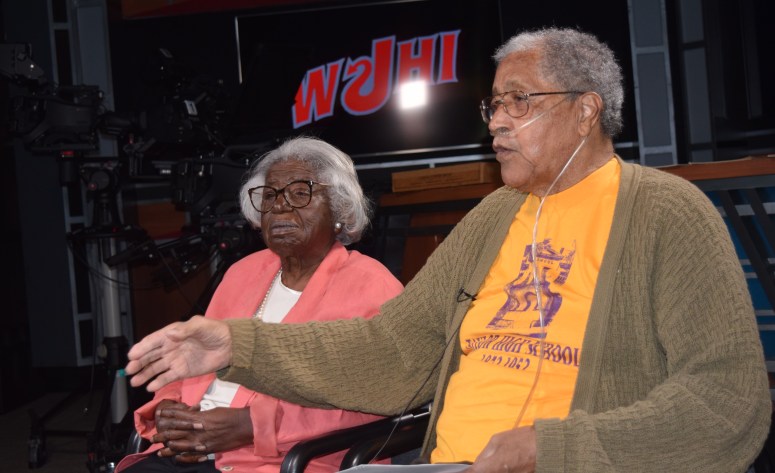
Though segregation legally ended in 1954, before then many African American students in Jeffersonville had to overcome many obstacles to receive a fair and equal education. Both Flora Clipper and Frank Baines attended Taylor High School during its operation as a segregated school in the mid-1900s.
“The time, the times are different,” said Clipper, Taylor Class graduate of 1940.
According to Clipper, the typical day at Taylor had similarities and differences to modern schooling. Now, most students are driven by bus to and from school; however, there was none of this convenient transit at Taylor. To get to school, students’ legs were their best friends.
“I remember all was walking,” said Clipper. “There was no transportation. You would start [class] by about 8. School would start and you get in your classroom and we would move from class.”
Class sizes were also significantly smaller because of the modest size of the school. ”This is my graduating class – seven girls and six boys,” said Baines, holding up a photo of 13 former Taylor students.
The school did not contain any designated room or section for extracurriculars due to lack of funding. As Clipper shared, “Taylor High School had no auditorium or anything that could accommodate. Even the high school that we had, they were just rooms.”
Flora said the lack of extracurriculars included a lack of yearbooks during her time there.
“We didn’t when I was coming up, we didn’t have any yearbooks…we [Taylor students] couldn’t afford it. But not long afterward when Frank came… in his days they had nice yearbooks.”
There were a few electives or skills that those who attended could participate in. Baines specifically spoke of typing classes. These classes were a way to give Baines opportunities in the military.
“I’m in the military and I spent the three years in the military as a clerk typist from learning typing,” he said.
Though opportunities like these were not often given to students, it’s very clear how beneficial they were in the long run for students like Baines who took these skills into the real world.
This lack of funding and extracurricular activities limited the opportunities and didn’t give the students of Taylor the same array of choices that might have been given or received by white students just around the street.
Because of the school’s underfunding and society’s prejudice, others’ opinions regarding their intelligence were often unfairly misconstrued when compared to students at other local schools.
“Jeff High, even though it was a segregated school, it was a privilege to live on the street with some white girls, who were [white], but became as close as my own sister,” Clipper said.
She had one friend in particular, who she’d expressed her thoughts to.
“I would tell her about how he would make us feel bad about it, ” Clipper stated, referring to a teacher who would compare Taylor High to Jeff.
“It’s even assumed that the students were doing much better than we…and sometimes she would help me with my work or I would help her,” she continued.
The inherent racial prejudice and judgment that was placed on the shoulders of Taylor students just because of the color of their skin and the school they attended was not an accurate representation of the intelligence of Taylor students.
There were many issues that affected the livelihood of these students at the time, such as what is referred to as the Great Flood of 1937, from the destruction of many buildings and homes. Many students were forced to quit school and get jobs to support their families. Situations out of students’ control greatly affected their lives.
Yet despite all these barriers, many African Americans still went on to have successful futures, examples like Clipper who worked for the United Methodist Church as a deaconess for over 38 years, all in community centers working with young children while living in seven different states.
Additionally, Baines played for the Taylor basketball team and then joined the military as a clerk, typing for the military. He and Clipper both said they lived successful and complete lives, despite all they both had to overcome.
There has been a major push in the last few years for some way to recognize the history of Taylor High School and its students and faculty.

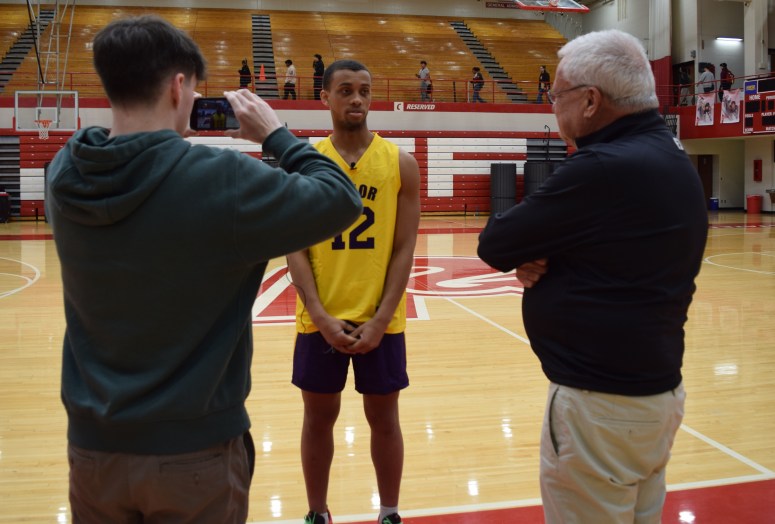
In addition to being designated as a historical marker, Jeff High will commemorate the Taylor school and community this Saturday, Feb. 15, during the Jennings County basketball game in Johnson Arena. Purple and gold Taylor High School gear will be worn by players, cheerleaders and staff as a way to pay tribute to the school’s long and important history. Taylor students and staff will be recognized, and WJHI will show a documentary during Saturday’s festivities.
Principal Pam Hall said Saturday’s event will bring light to the history of Taylor.
“It’s important to commemorate the impact it had on the city and community,” said Hall.
Senior forward P.J. Douglas said Saturday is “something that we need to know, something everybody needs to know. It’s important.”
Festivities will begin on Saturday after the junior varsity basketball game.
Check back next week at www.thehyphennews.com for coverage of Saturday’s event.
To read more about Taylor High School, read these Hyphen stories:
The History and Legacy of Jeffersonville’s Taylor High School
Taylor High School graduates share Clark County history in interview with Hyphen, WJHI
Additional reporting by Arissa Washington and Trista Denny.
 thehyphennews.com